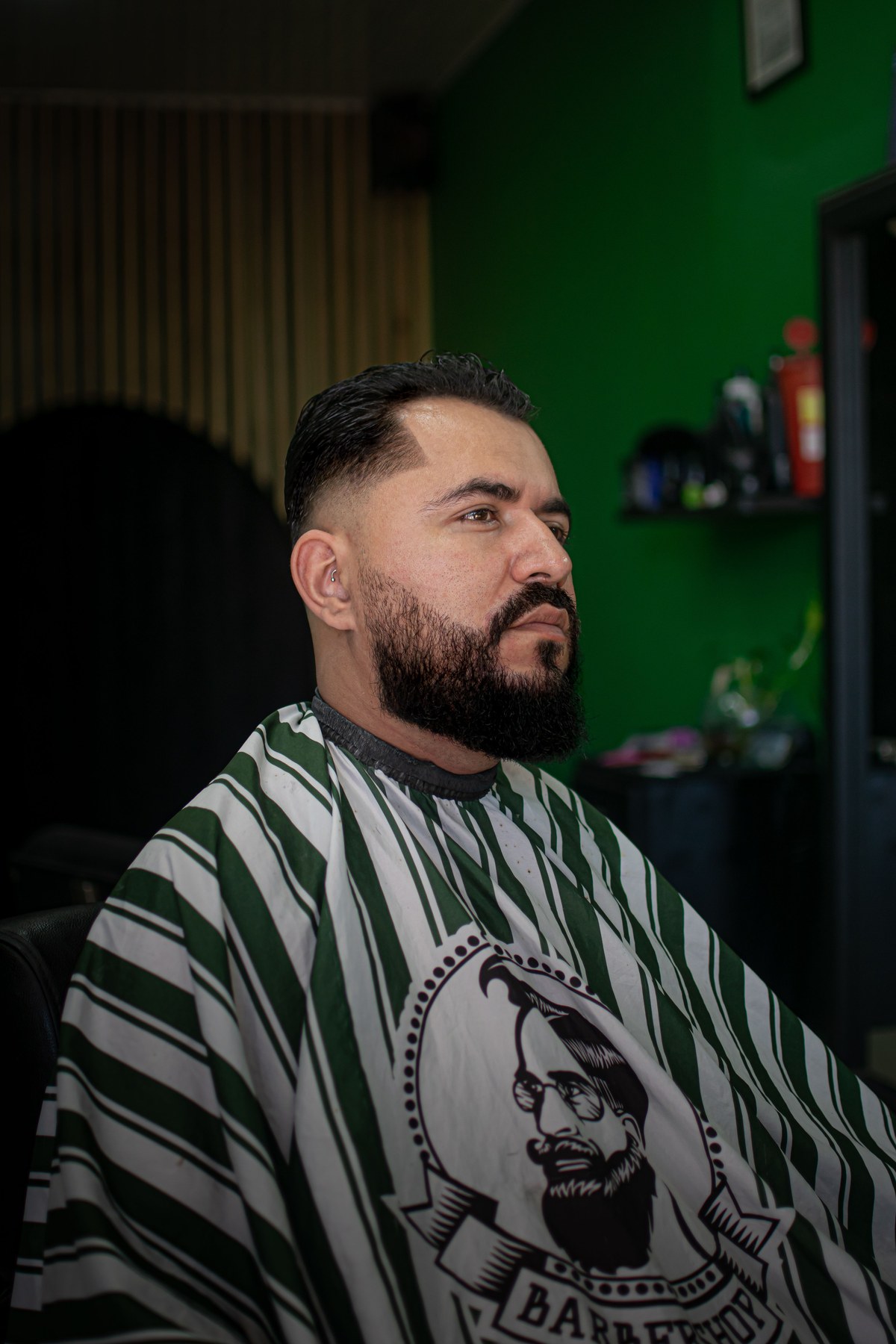
This is the complete taper burst fade guide.
A detailed guide to the taper burst fade, also called the burst taper fade: shape, neckline, texture, barber instructions, styling and maintenance. Practical guidance on shape, barber language, styling and maintenance.
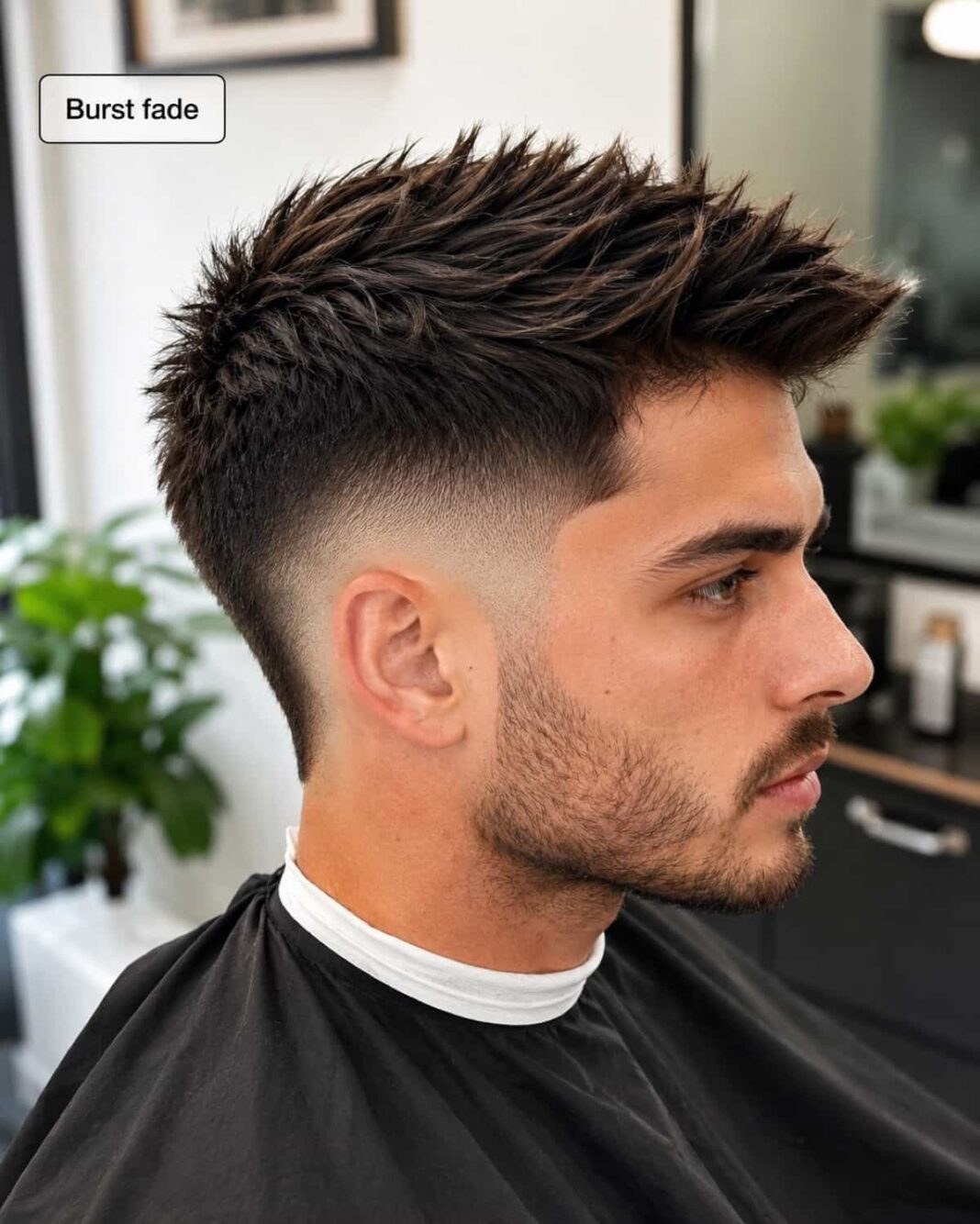
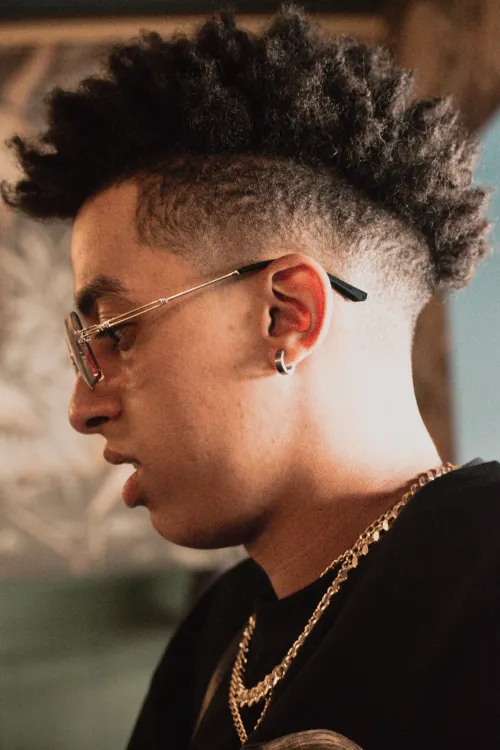
A taper burst fade, often searched as a burst taper fade, combines two ideas: the fade curves around the ear, while the temple and neckline are tapered without removing the whole side. The result keeps more weight than a conventional full fade and can look cleaner, softer and easier to grow out. The key is coordination—the burst controls the side profile, and the taper controls the perimeter. Getting that balance right is what makes a taper burst fade look deliberate instead of accidental.
What the name means
Taper burst fade and burst taper fade are commonly used for the same family of cuts. In practice, the wording matters less than the plan. The burst describes the semicircular transition around the ear. The taper describes a gradual shortening at limited zones, usually the temples and neckline. When those zones are balanced, the haircut reads clean without looking stripped around the entire head.
Some references use the label for a very exposed burst with a small nape taper; others show a soft shadow around the ear. That variation is why a photograph and a height discussion are essential. Ask the barber to identify where the taper ends and where the burst begins, then confirm how much darkness will remain between them.
How a taper burst fade differs from a standard taper
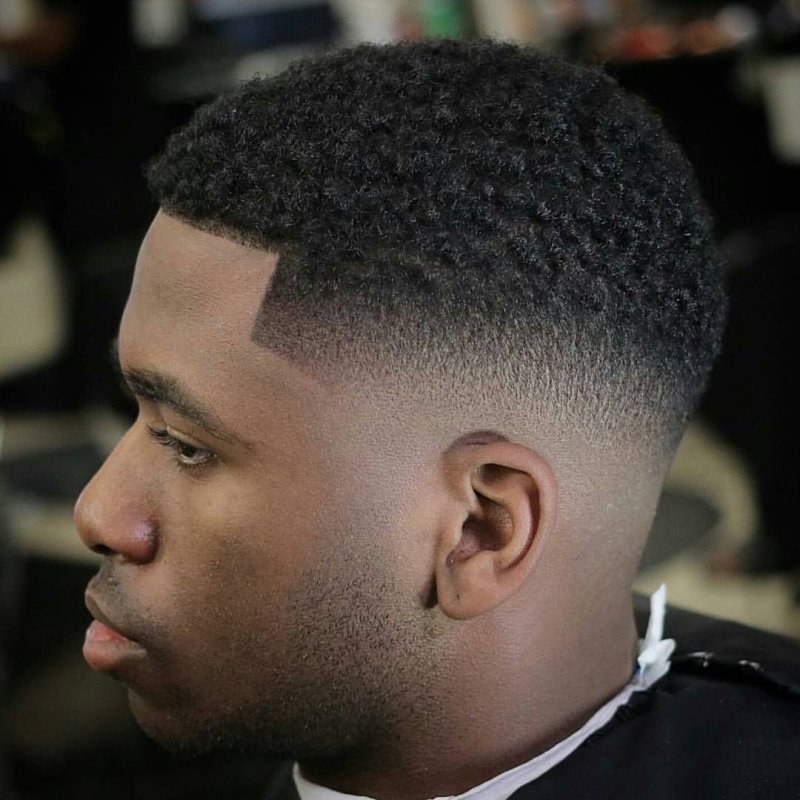
A standard taper usually concentrates on the sideburns and nape, leaving most of the side relatively full. The taper burst fade adds a visible curved reduction behind and above the ear. It therefore creates more side-profile shape than a classic taper, yet it generally preserves more hair than a full fade that continues around the head at one level.
If you want the cleanest possible perimeter with minimal scalp exposure, emphasize the taper and keep the burst low and shadowed. If you want the arc to become the focal point, raise the curve slightly while keeping the nape gradual. These are different balances within the same family, not separate mandatory haircuts.
The four placement zones
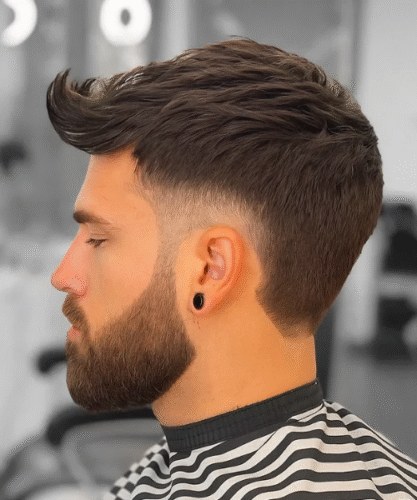
Think of the cut as four connected areas: temple, ear arc, weight line and nape. The temple taper cleans the front edge. The ear arc creates the burst. The weight line preserves enough darkness to connect the side to the top. The nape taper finishes the lower perimeter without cutting away the central back. Each zone should transition into the next instead of appearing as isolated patches.
The barber should map the highest point of the burst before removing bulk. Too high, and the haircut becomes a full fade or disconnects from the top; too low, and the curve may disappear behind the ear. At the back, the taper should support the chosen silhouette—compact for a crop, softer for flow, or longer through the center for a mullet.
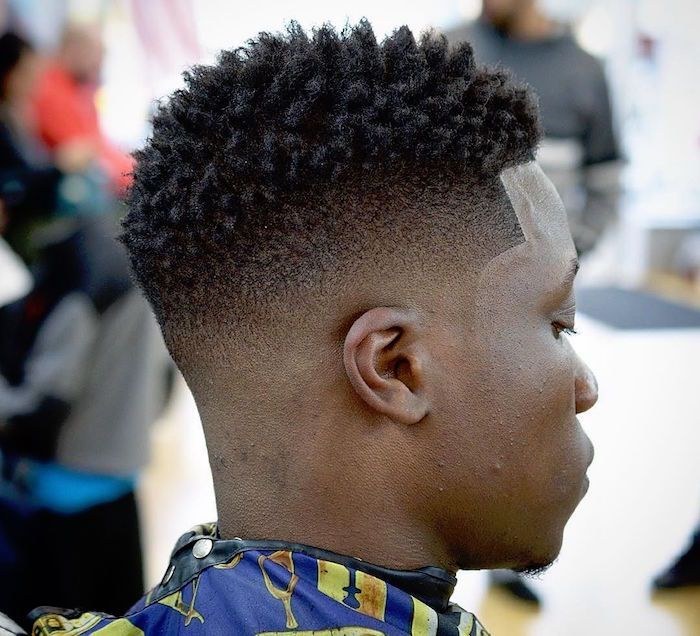
Best top styles for a taper burst fade
Textured crops, short curls, waves, quiffs and controlled blowouts all work because the taper burst leaves structure above the ear. A crop makes the perimeter the main point. Curls use the retained weight to keep a rounded shape. A quiff or blowout uses it as a platform for lift. Longer tops need a gradual connection so they do not hang over a hollow side.
A burst taper fade can also support a quiet mullet when the nape taper is kept at the edges and the center back remains longer. Describe whether the back should look compact, flowing or deliberately extended. Without that instruction, two barbers can interpret the same front and side reference very differently.
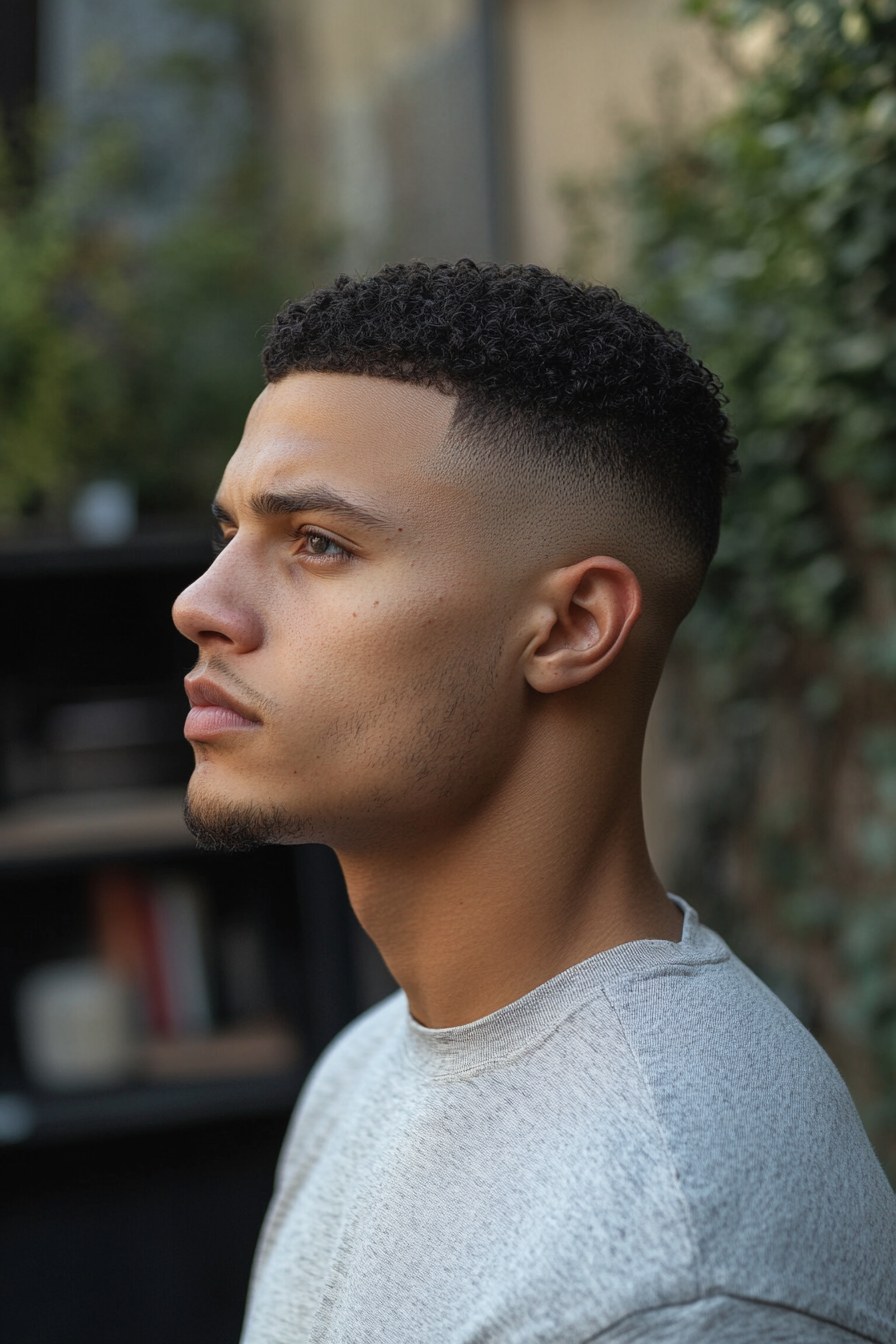
Matching texture and density
Straight hair displays every change in length, so a wide, carefully graduated transition prevents visible steps. Wavy hair can soften the connection naturally, but the barber must account for where bends compress above the ear. Curls and coils require enough retained length for the pattern to form; the blend should frame the curl shape instead of cutting into it.
On fine hair, keep the burst lower and the weight line fuller to avoid a see-through side. Dense hair can support a stronger arc, although internal debulking may be needed. The goal is not to make every side equally short. It is to distribute weight so the haircut looks balanced from the front, profile and rear.
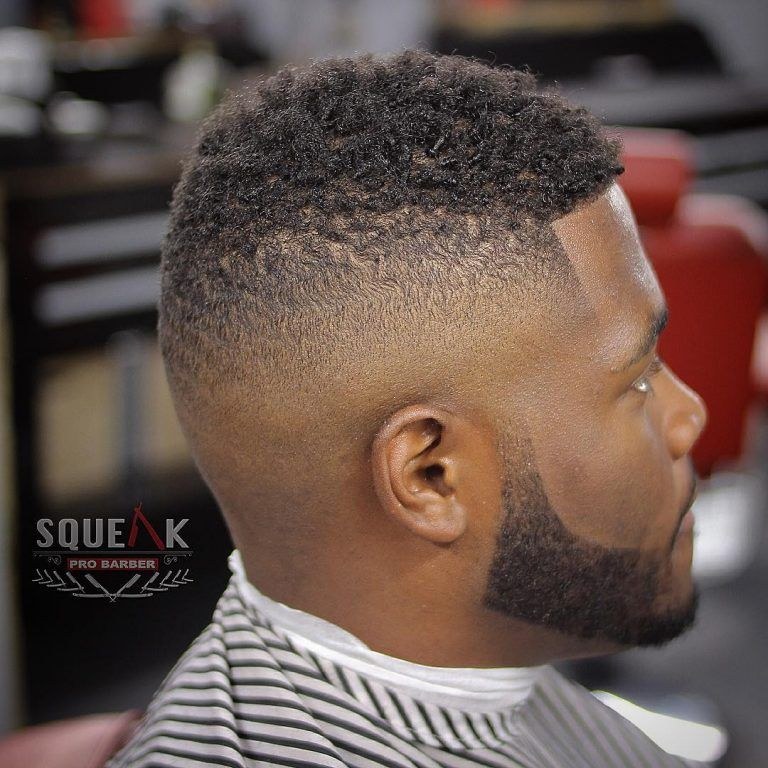
How to ask for a taper burst fade
Say: “I want the fade to burst around the ear, but keep most of the side connected. Taper the temple and nape, leave a darker weight line above the arc, and keep the back at this length.” Then show a side and rear photo. State whether the shortest point should remain a shadow or reach skin.
Avoid asking only for a burst taper and assuming every barber uses the term identically. Point to the curve and the nape. Explain your usual top direction and how often you return for a cut. Ask the barber to show the planned highest point, because that decision is difficult to reverse once the side has been taken short.
Styling without hiding the shape
Style the top away from the ear when you want the burst clearly visible, or let loose texture fall partly over it for a softer result. Work from damp hair and set direction before applying a finishing product. Light cream suits waves and flexible movement; matte paste separates shorter straight hair; curl foam or cream supports definition without coating the fade.
A tapered perimeter looks cleanest when product is kept off the shortest hair. Brush loose product away from the hairline and wash buildup regularly. If the top collapses onto the side, adjust root direction or ask for internal weight control rather than repeatedly raising the fade to create space.
Maintenance strategy
Because a taper limits the shortest work to selected zones, the grow-out can be more forgiving than a full skin fade. Still, the ear arc and sideburn may lose definition first. Schedule a full refresh when the curved outline blurs or the weight above it begins to bulge. A nape cleanup can extend the polished look if the main blend remains intact. Booking the touch-up before the outline blurs keeps a taper burst fade looking sharp between full appointments.
At home, do not move the temple line backward or widen the burst. Keep tools clean, trim only obvious perimeter hairs if you are confident, and leave the gradient to a professional. Take reference photos immediately after a successful appointment; they reveal the exact height and darkness you want repeated.
Common interpretation errors
One error is treating taper as a synonym for low fade and removing too much side hair. Another is making the nape as exposed as the ear, which can erase the softer perimeter the client expected. A third is leaving a heavy shelf above the burst because the transition was planned after bulk removal rather than before it.
Prevent these problems by naming the zones separately. Confirm temple length, ear height, retained weight and nape finish one at a time. If you want a burst taper fade with a mullet or flow, explicitly protect the center back. If you want a compact finish, say where that longer section should end.
Who should choose it
This cut suits someone who wants the profile of a burst fade but not the uniform exposure of a full fade. It works well for professional settings when kept low and shadowed, for textured tops that need side support, and for clients who want a gradual neckline. It is also a useful bridge for anyone growing from a conventional taper into a bolder silhouette.
Choose another approach if you want the entire side and back equally short, or if your priority is a hard disconnected undercut. The taper burst fade is strongest when the sections remain related. Its appeal comes from controlled contrast and preserved structure, not maximum removal. That restraint is exactly why a taper burst fade suits both professional settings and casual styling.
A repeatable barber plan
Before the cut, agree on a visual target for the temple, ear and nape. During the service, check the side profile before the blend climbs. At the end, review both sides and the rear in a second mirror. Ask which products were used and how much; a good cut should be reproducible without mystery.
For the next appointment, describe what grew out well and what felt heavy. Small adjustments to the arc or weight line are more useful than changing the whole concept. A documented, repeatable plan turns the taper burst fade from a trend image into a haircut that belongs to your routine.
How to check the finished burst taper fade
Inspect the haircut in ordinary light before judging tiny details under a bright station lamp. The temple should look clean without a hard patch, the curve should follow the ear at a consistent distance, and the transition should darken gradually into the retained side weight. Check the nape separately because a conservative taper there can make the overall cut grow out more quietly.
Move the top into the direction you actually wear it and look again. A technically smooth blend can still feel disconnected if the longer hair collapses over the transition or exposes an unintended shelf. If a change is needed, describe the location rather than asking for the whole fade to go shorter. Small targeted refinements usually protect the softer character of a taper burst fade. Finish by checking the outline with your glasses, headphones or usual headwear if those affect the side area. This practical check can reveal pressure points or an exposed edge that a stationary mirror view misses.
Record one clear side and rear photo once the shape works, because those angles will give the next barber visit a more reliable starting point than the haircut name alone.
For the closest companion reading, compare Burst Fade Haircut: The Complete Guide, then use Low Taper Burst Fade: Shape, Suitability & Styling to refine the decision before your appointment.
Frequently asked questions
Is taper burst fade the same as burst taper fade?
Usually, yes. Both phrases describe a curved fade around the ear combined with tapered temples or neckline. The reference photo and placement details matter more than word order.
Is it lower maintenance than a full fade?
It can be, especially with a shadow finish and natural neckline, because more side weight is retained.
Can it work with curls?
Yes. The barber should preserve enough length above the ear for the curl pattern and account for shrinkage before setting the blend.
Does it have to include a mullet?
No. It works with crops, waves, quiffs, curls, blowouts and longer tops as well as mullets.
Conclusion
The strongest result comes from agreeing on placement, retained weight, top direction and upkeep before the barber starts cutting. Use the references to discuss those decisions, then adapt them to your texture and growth. Keep this guide handy as a reference whenever you plan a taper burst fade with a new barber.
More verified free-stock references
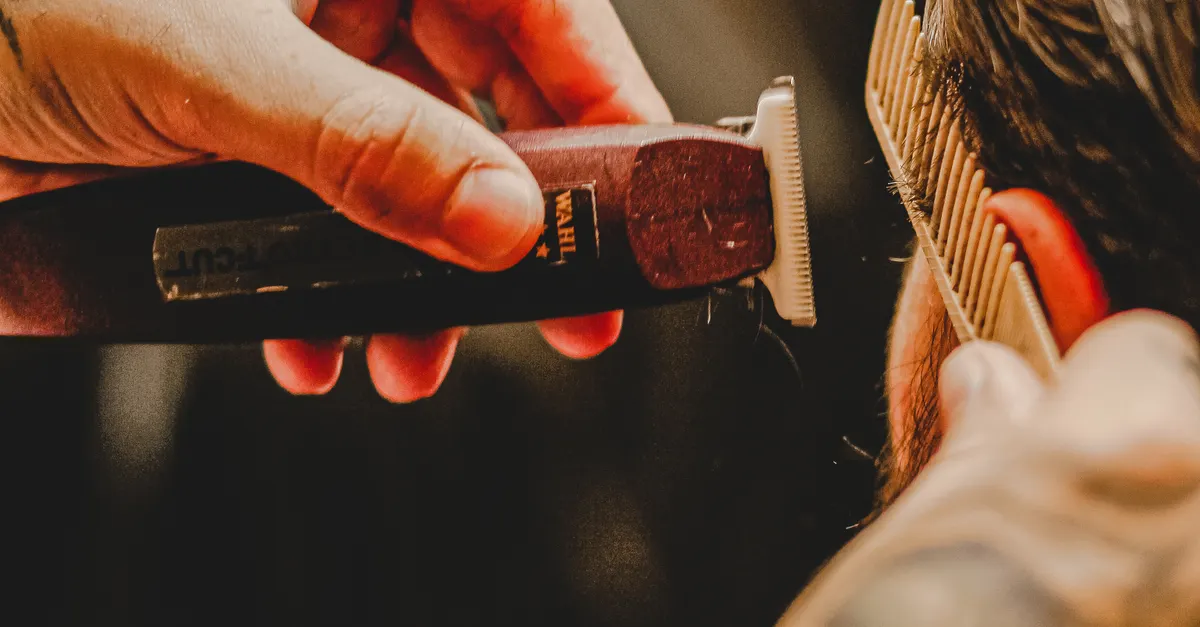
Use these additional real photographs to discuss shape, placement and finishing details.
Written by Derek Nolan, an editorial pen name used for consistent authorship. No unverified barber credential or firsthand salon claim is presented. Visual references carry source credits with each image. Credited third-party photographs remain the property of their respective owners; source attribution is provided and rights concerns are handled through the Copyright Policy.