A receding hairline is not the end of good hair
A receding hairline changes the shape of your hair, not the quality of it. The temples move back, the forehead looks taller, and the cuts that worked at 22 can suddenly pull attention to exactly the wrong place. The fix is not to hide — it is to pick a cut that works with the new shape instead of fighting it. Short, textured tops soften the corners. Clean tapers and fades balance the sides. And when the recession is deep, owning it with a short cut and a strong beard looks far better than a long comb-over ever will.
This guide covers 28 receding hairline haircuts that actually work in real life — from textured crops and Caesar cuts for early recession to buzz cuts, skin fades and beard-balanced looks for advanced stages. Every style below comes with barber instructions you can read out word for word, styling tips that take minutes, and honest notes on who it suits best. The styles are organised by stage, so start with the section that matches your hairline today. If you want a classic, office-ready version of one of these looks, our guide to the pompadour haircut goes deeper on that cut, and our round-up of professional haircuts for men covers interview-safe and office-ready styles in more detail.
Before the list, one honest note: no haircut regrows hair. A good cut changes what the eye notices — it cannot change the hairline itself. If your hairline is moving fast, shedding in patches, or itching, that is a question for a dermatologist, not a barber. For everything else, bring a photo to the barber, point at the parts you like, and say what you do not want. Now here are the 28 styles.
What’s in this guide
Early Recession — Keep It Short & Textured
When the temples have only just started to move, the goal is simple: keep the top short and broken up so the eye reads texture, not corners. These seven cuts all do that job, and they all grow out cleanly.
1. Textured Crop with Low Fade
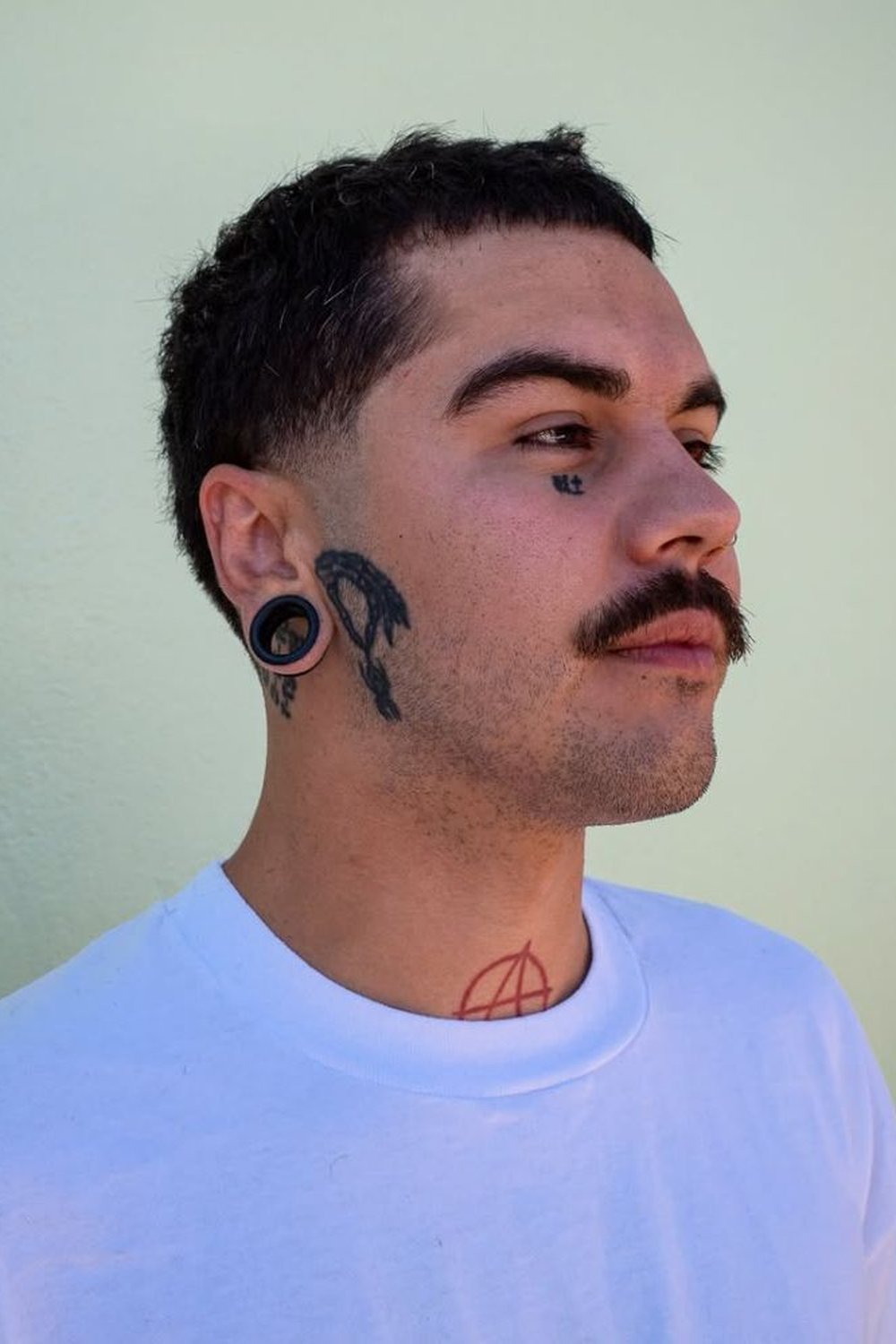
Photo: Instagram via Fabbon — source
The most forgiving cut for early recession, and the one barbers reach for first. Short, choppy layers on top are point-cut so the pieces separate instead of sitting flat, and a low fade keeps the sides neat without exposing the temples. The broken texture breaks up the hairline, so the corners stop being the first thing people see. Ask your barber for a textured crop with a low fade, top about one to two inches, fringe pushed slightly forward. It suits straight and wavy hair best, and works on oval, round and square faces. Styling: a pea-sized amount of matte clay through damp hair, thirty seconds and you are done. Trim every three to four weeks.
2. French Crop with Forward Fringe
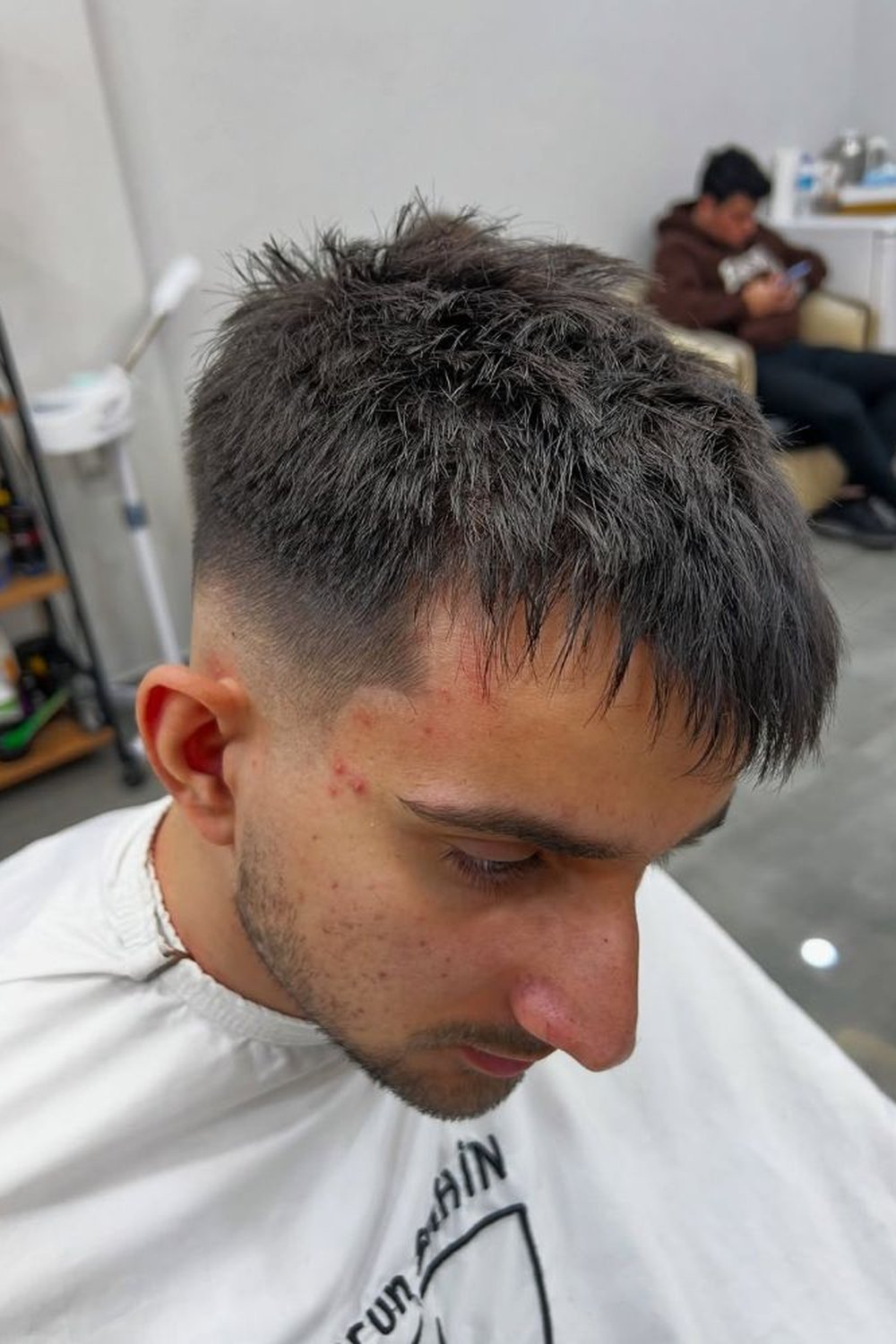
Photo: Instagram via Fabbon — source
The French crop is the textured crop’s neater cousin. The top is cut slightly longer and brushed forward into a short, straight fringe that lands just above the recession, softening the corners instead of covering them. It works best when the centre of your hairline is still strong and only the temples have moved back. Ask for a French crop with a low or mid fade, fringe kept short and textured — a heavy blunt fringe looks forced, so tell the barber to keep it light. Suits straight hair and oval or square faces. Styling: almost nothing — a little matte paste pushed forward. Trim every three to four weeks.
3. Caesar Cut with Fade
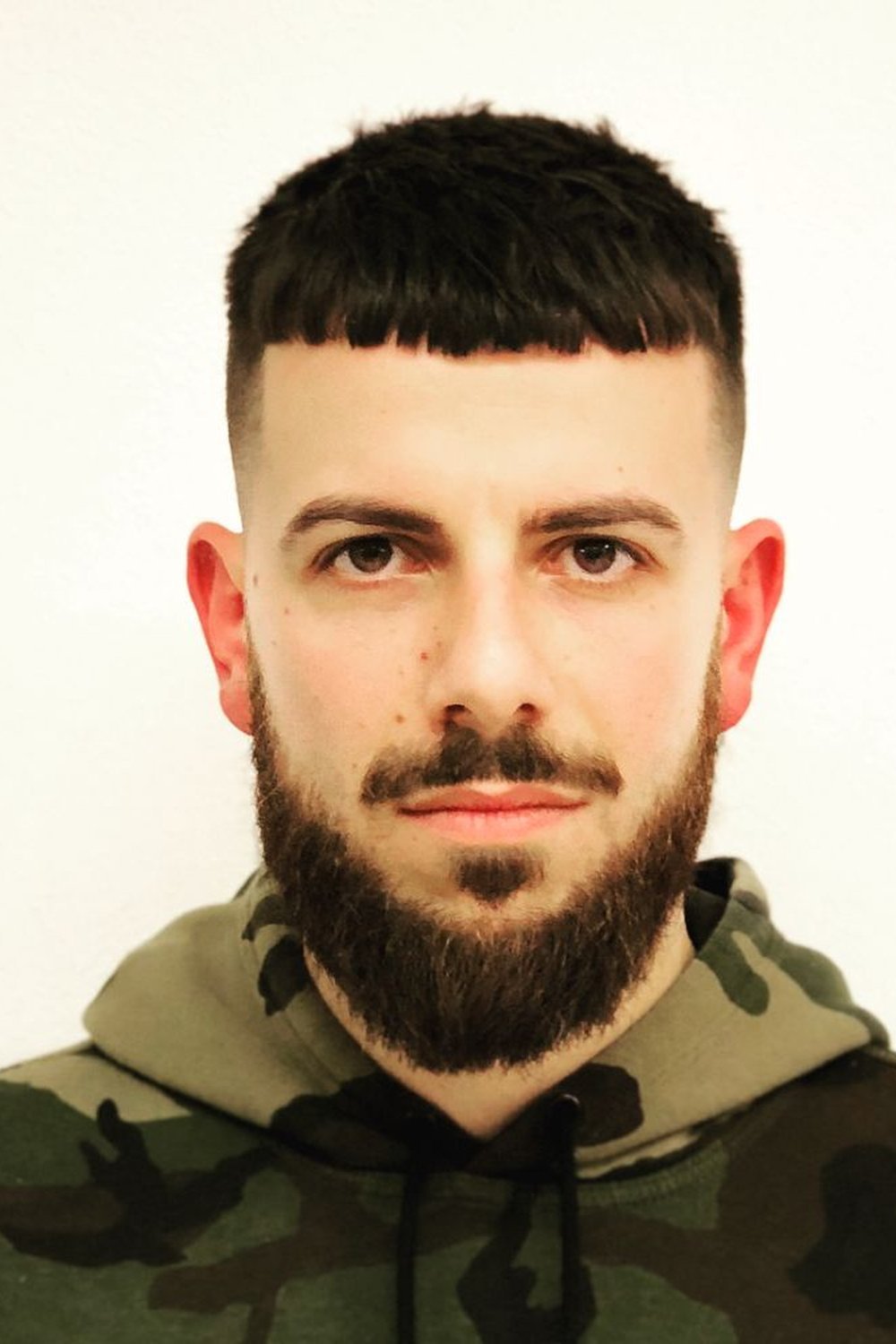
Photo: Instagram via Fabbon — source
The Caesar cut is one of the oldest answers to a moving hairline, and it still works. The hair is cut short all over with a short, even fringe combed forward, which gives the front a clean, straight edge that reads as deliberate rather than thinning. The fade on the sides keeps it modern. It suits men with straight hair and a high forehead, and it is one of the lowest-maintenance cuts on this list — no styling product needed at all. Ask your barber for a Caesar cut with a mid fade, fringe about half an inch long, and keep the line soft rather than razor-sharp. Trim every three weeks to keep the edge.
4. Ivy League Cut

Photo: Haircut Inspiration — source
The Ivy League is a longer crew cut with a soft side part, and it is the most grown-up cut for a mild recession. The top is left about one and a half to two inches and swept diagonally across the front, which pulls the eye across the forehead instead of into the corners. It only works while you still have decent density at the front — if the temples are deep, the sweep will separate and show scalp. Ask for an Ivy League with tapered sides, top swept to one side, and a soft, natural part. It suits thick straight hair and looks right in an office. Styling: a little light pomade or cream, combed to the side. Trim every three to four weeks.
5. Classic Side Part
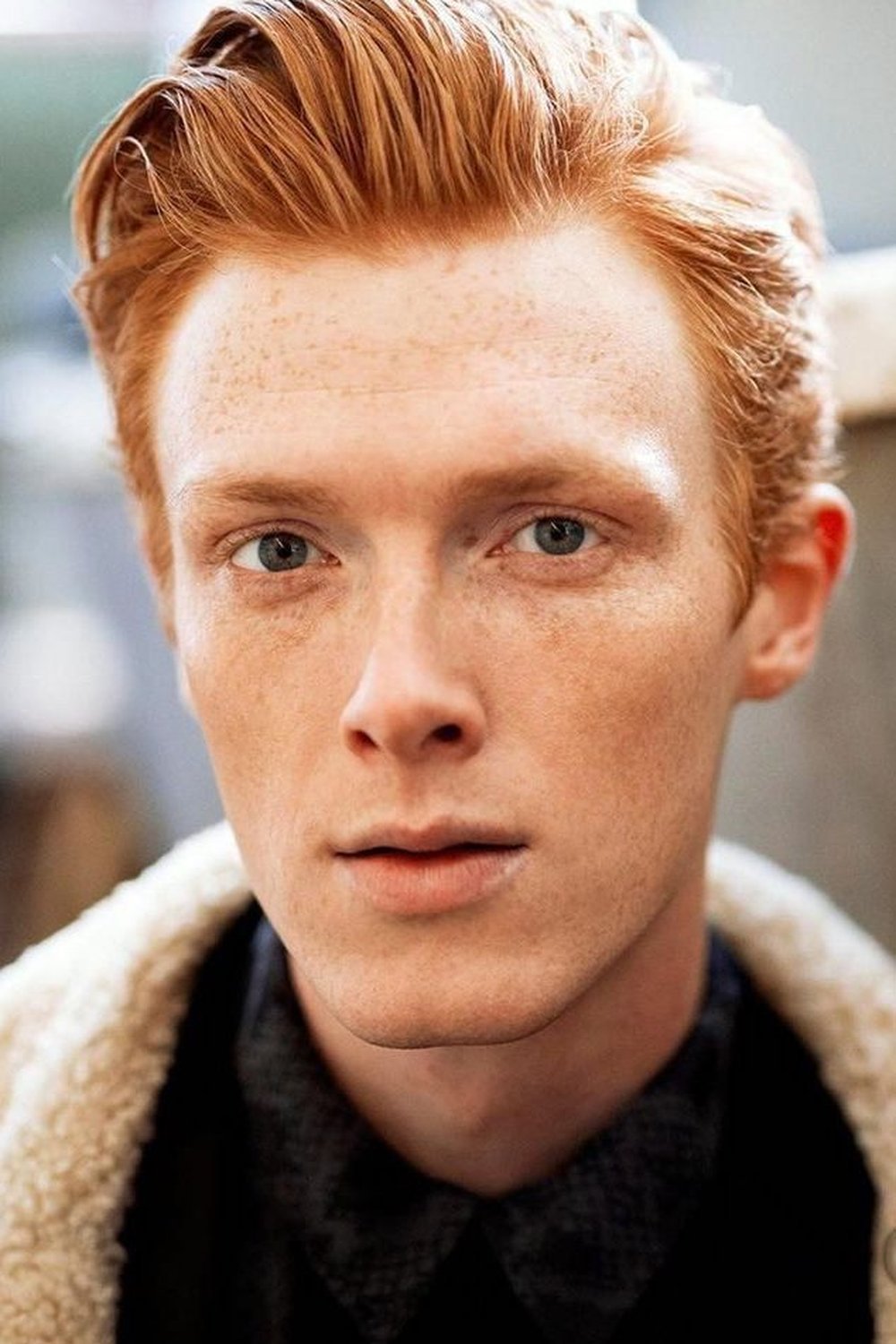
Photo: Haircut Inspiration — source
The classic side part has survived a century because it is honest: neat, controlled, and it never tries to hide anything. With a receding hairline, the trick is a low, natural part and a soft sweep — not a hard part carved into thin hair. Keep the top short enough that it cannot separate, and the sides tapered rather than faded high, so the whole shape stays calm. Ask your barber for a classic side part with a taper, top about two inches, parted where your hair naturally falls. Suits straight hair, oval and square faces, and any office. Styling: a dab of light cream, combed to the side while damp. Trim every four weeks.
6. Textured Quiff with Taper
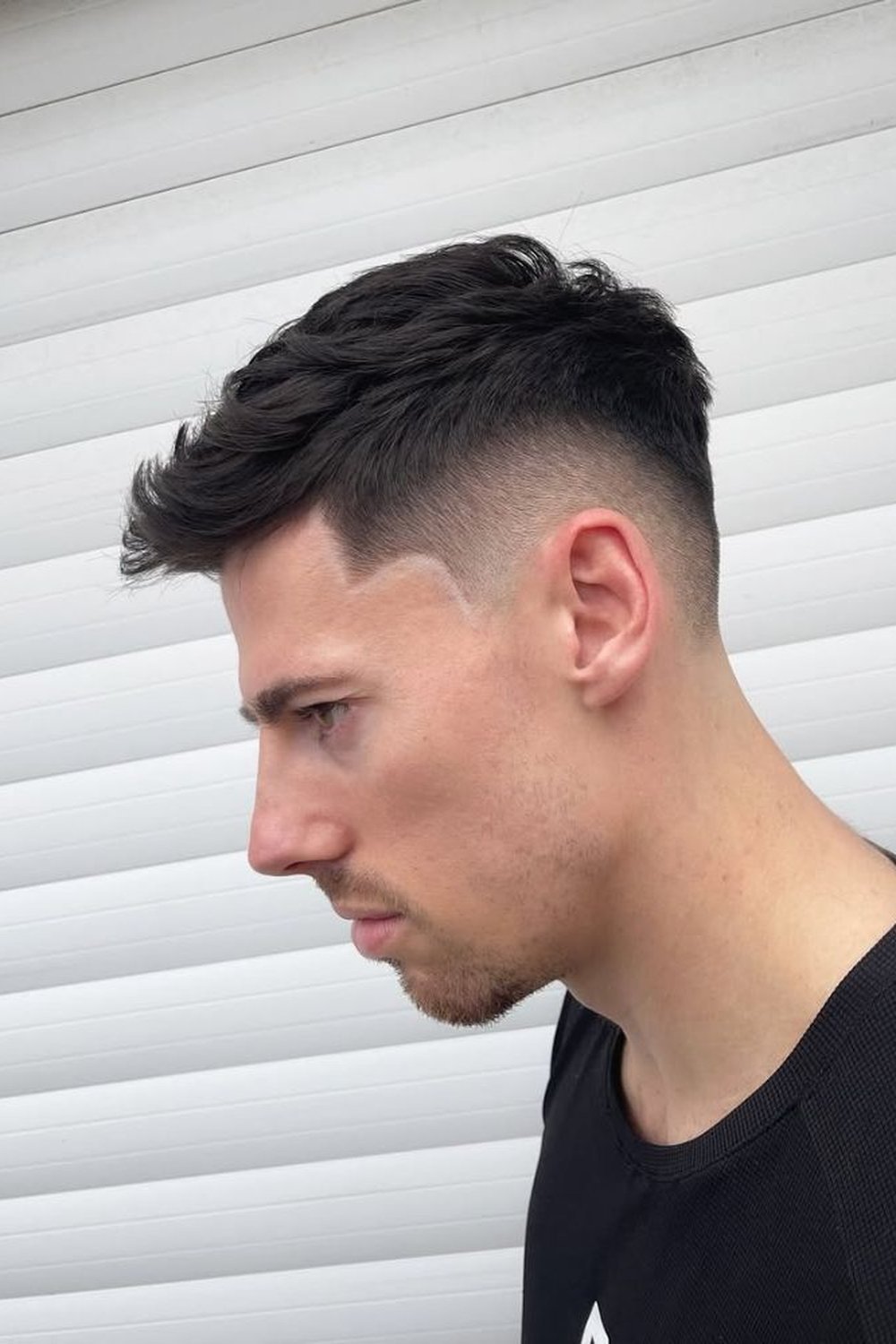
Photo: Instagram via Fabbon — source
A quiff works with a receding hairline only if it is short and textured — height at the front pulls attention upward and away from the temples, but a tall, slicked quiff does the opposite and puts the hairline on display. Keep it under two inches, texturise the top, and taper the sides. The messier the quiff, the better it hides the corners. Ask for a short textured quiff with a taper, and tell the barber you want volume, not height. It suits thick straight or wavy hair. Styling: blow-dry the front up with a vent brush, then matte clay to hold the texture. Trim every three to four weeks.
7. Short Spiky Crop
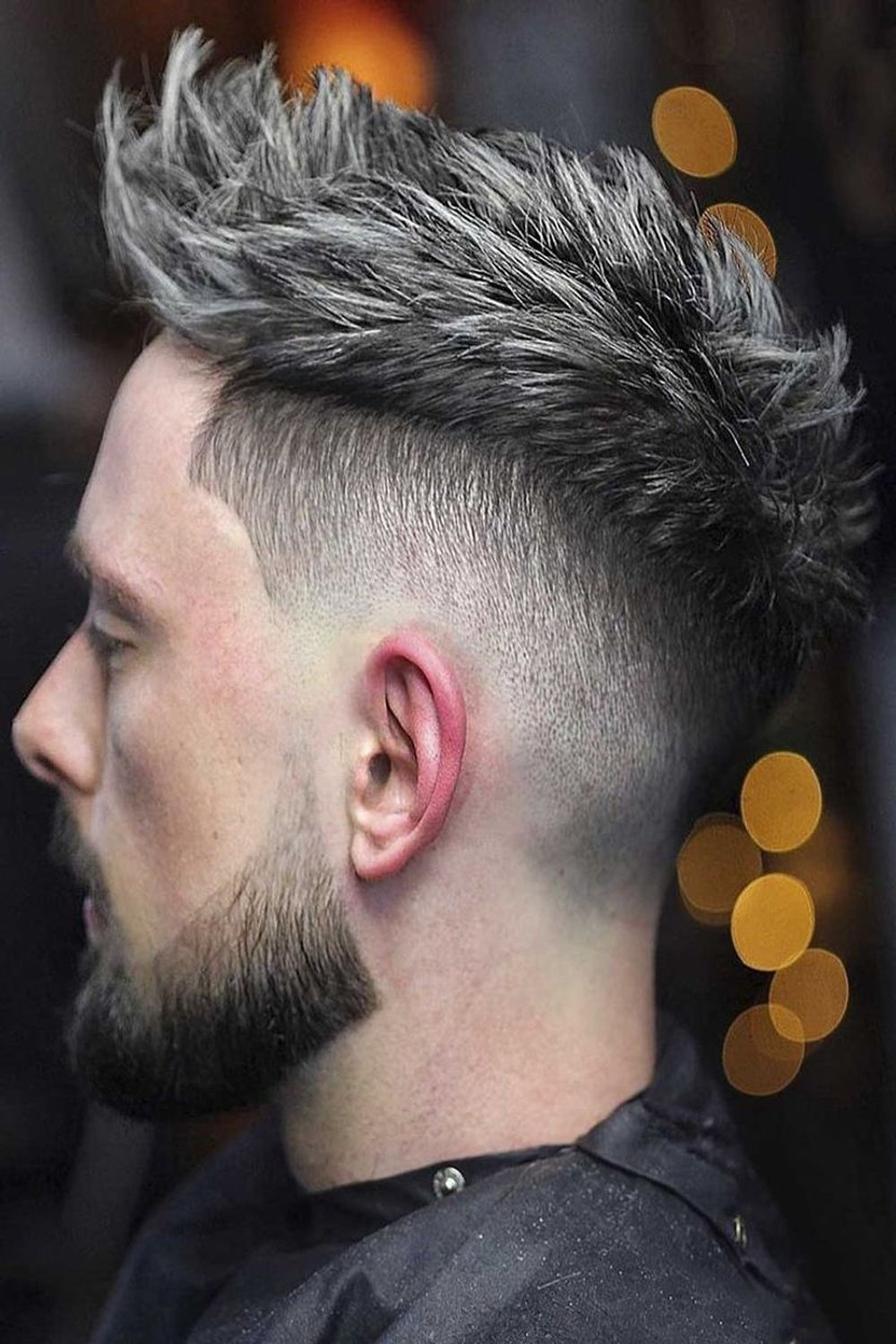
Photo: Pinterest via Hairstyle Talk — source
Short spikes are a smart move for early recession because spikes break the hairline into small pieces — there is no single straight edge for the eye to follow. The top is cut short and point-cut into texture, then pushed up with a little product. Keep the spikes short and the sides faded, and the whole cut reads as a style choice, not a cover-up. Ask your barber for a short spiky crop with a low fade, top about one inch, texture all through. It suits straight hair and younger faces, and it is one of the easiest cuts to style. Styling: a little matte clay, pushed up with your fingers. Trim every three weeks.
Mild to Moderate — Shape & Balance
When the corners are clearly deeper, short all-over cuts start to win. The goal now is reducing contrast: when everything is short, the hairline stops being a feature.
8. Buzz Cut (#2 Guard)
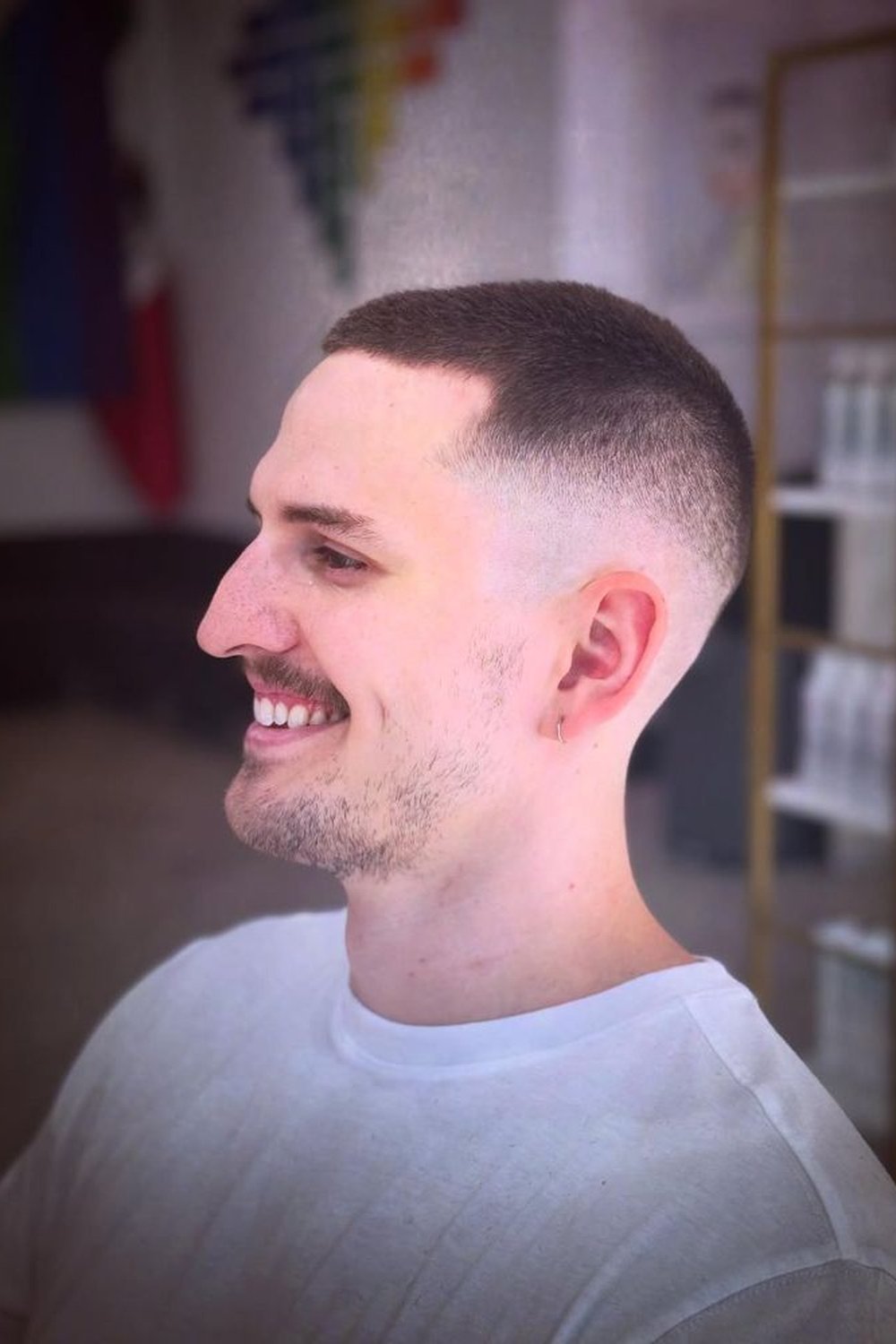
Photo: Instagram via Fabbon — source
The buzz cut is the honest answer, and for many men it is the best one. One even length all over — a number two or three guard — removes the contrast between thick and thin areas, so the temples stop standing out. It is the lowest-effort cut on this list: no styling, no product, and you can do it at home with clippers. It suits strong features, square jaws and men who want zero fuss. Ask your barber for a buzz cut with a number two guard on top, slightly shorter on the sides, or just do it yourself and clean up the neckline. Trim every two weeks to keep it even — or let it grow and enjoy the break.
9. Crew Cut with Taper
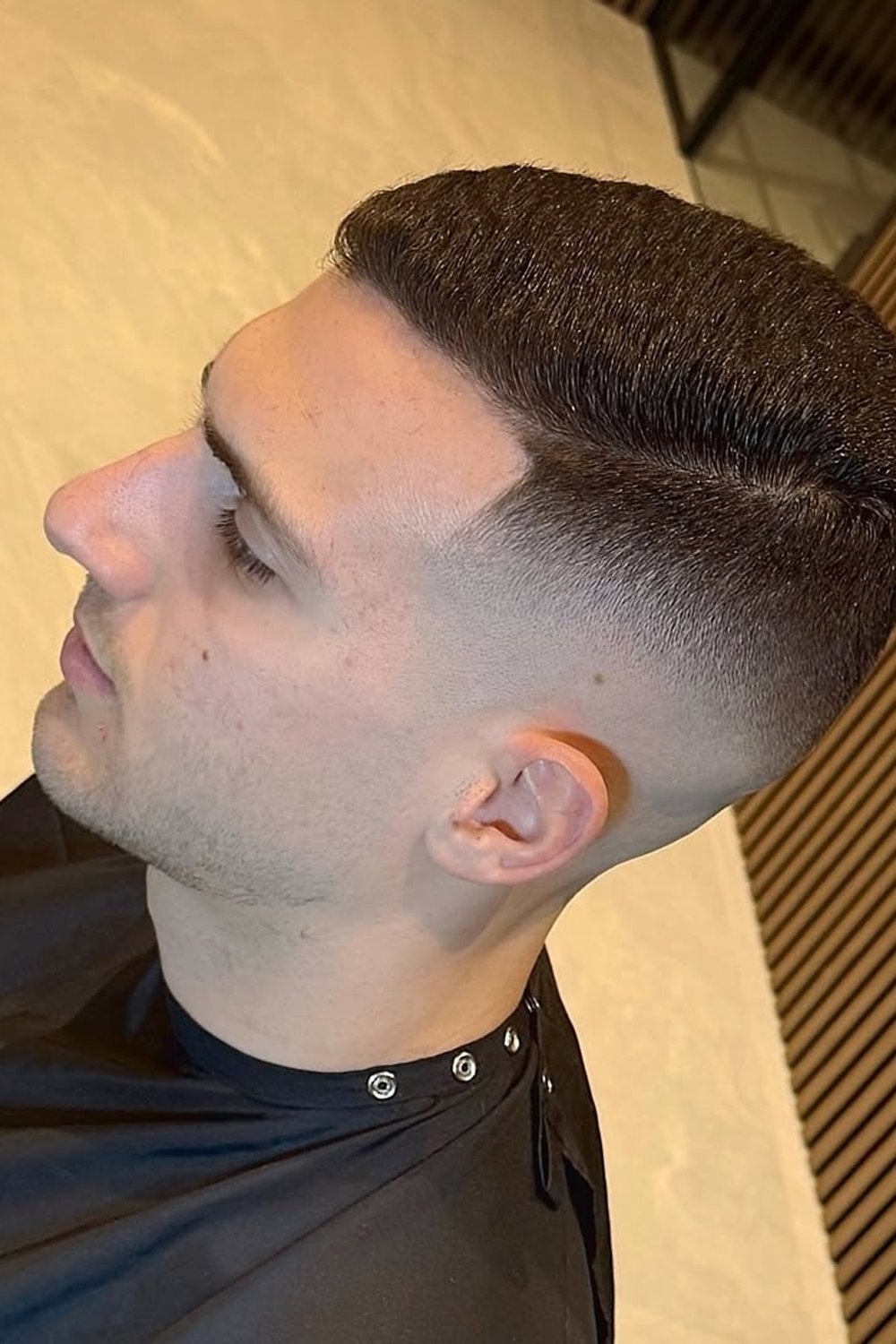
Photo: Instagram via Fabbon — source
The crew cut is the buzz cut with a little more shape: short on the sides, slightly longer at the front, tapered toward the crown. That extra length at the front gives the cut structure without relying on height, and the taper keeps the sides neat. It is one of the most forgiving cuts for moderate recession because the uniform short length removes contrast while the front still looks intentional. Our full guide to the crew cut covers 32 variations if you want more options. Ask for a crew cut with a taper, front about an inch long, brushed up and slightly messy — never slicked back. Suits almost every face shape. Styling: nothing, or a touch of matte paste. Trim every three weeks.
10. Short Brush Up

Photo: The Modest Man (@benarthurstyle) — source
The short brush up takes the crew cut’s shape and pushes the front upward instead of forward. Keeping the sides tight and putting the volume on top draws attention away from the temples, and the short length means nothing can separate and show scalp. It works best with thick hair and a bit of natural wave. Ask your barber for a short brush up with a low fade, top about one to two inches, textured so it holds without looking stiff. Styling: blow-dry the front up with your fingers, then matte clay. Trim every three to four weeks.
11. Textured Crop with Mid Fade

Photo: Pinterest via Hairstyle Talk — source
Same cut as number 1, higher fade — and the difference matters. A mid fade starts around temple level, which sharpens the whole shape and makes the top look fuller by comparison. That contrast works in your favour when the temples have moved back, because the eye reads the clean fade, not the corners. The top stays short and choppy, fringe pushed forward. Ask for a textured crop with a mid fade, top one to two inches, and tell the barber to keep the fade blended rather than harsh. Suits straight and wavy hair. Styling: matte clay, thirty seconds. Trim every two to three weeks, because mid fades show growth fast.
12. Angled Fringe

Photo: The Modest Man (@martialvivot) — source
An angled fringe is the best fringe for a receding hairline, because a diagonal line across the forehead covers one corner while the other side stays open and natural. It looks deliberate, not like a cover-up. The top is kept around two to three inches and swept diagonally, with the sides tapered or faded. It needs decent density at the front — if the fringe is too thin, it will separate and show scalp. Ask your barber for an angled fringe with a low taper, fringe swept to your stronger side. Suits straight hair and oval faces. Styling: a little matte paste, swept diagonally while damp. Trim every three to four weeks.
13. Side-Swept Undercut
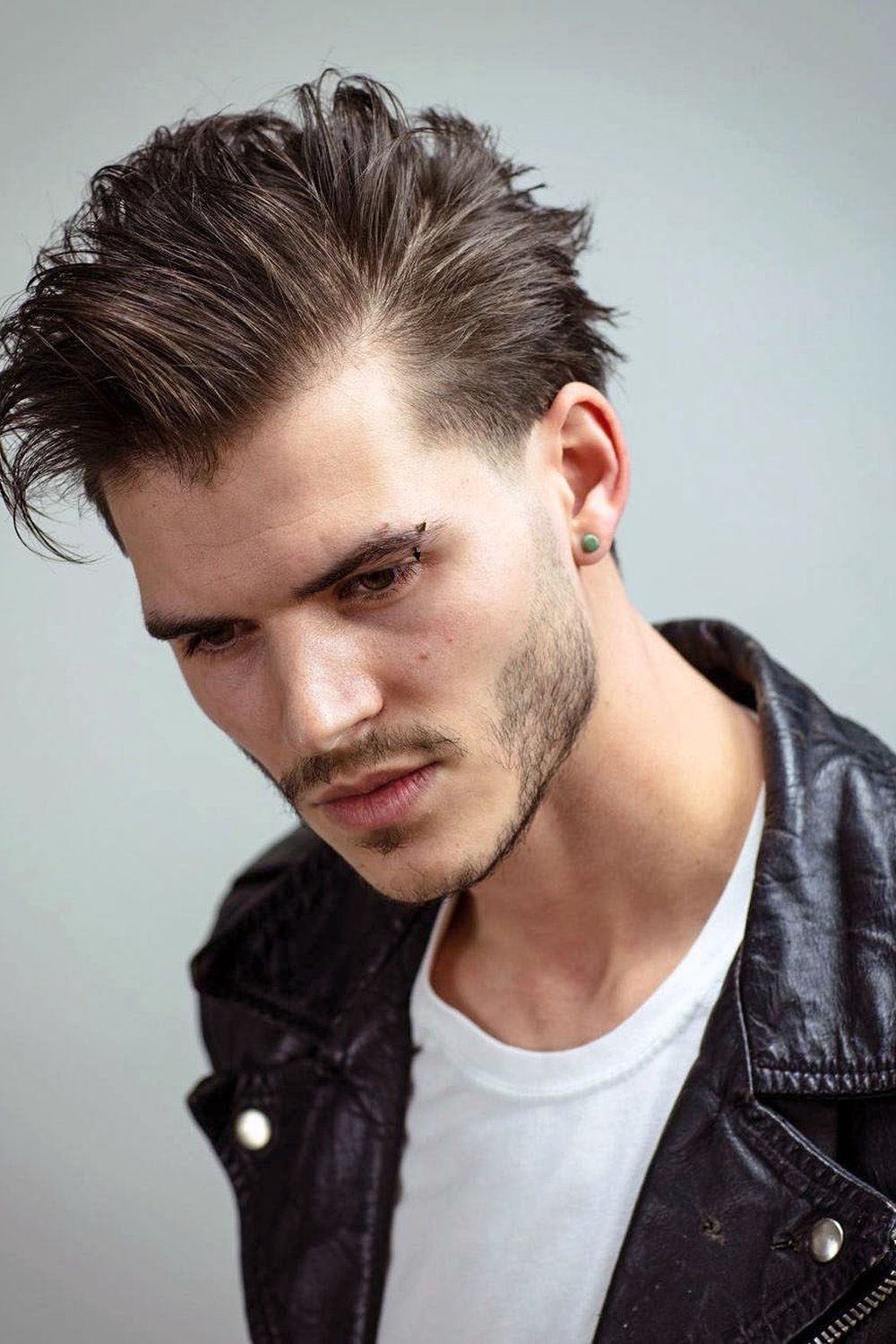
Photo: Haircut Inspiration — source
The side-swept undercut keeps length on top and takes the sides short, which gives you two things: volume where you want attention, and clean sides that frame the face. With a receding hairline it only works while the front still has density — the sweep needs enough hair to fall naturally to one side without going see-through. Keep the disconnect soft rather than harsh, and the top no longer than three inches. Ask for a side-swept undercut with tapered sides, top swept to one side. Suits thick straight or wavy hair. Styling: blow-dry to the side, light hold cream. Trim the sides every two to three weeks.
14. Slicked Back Undercut
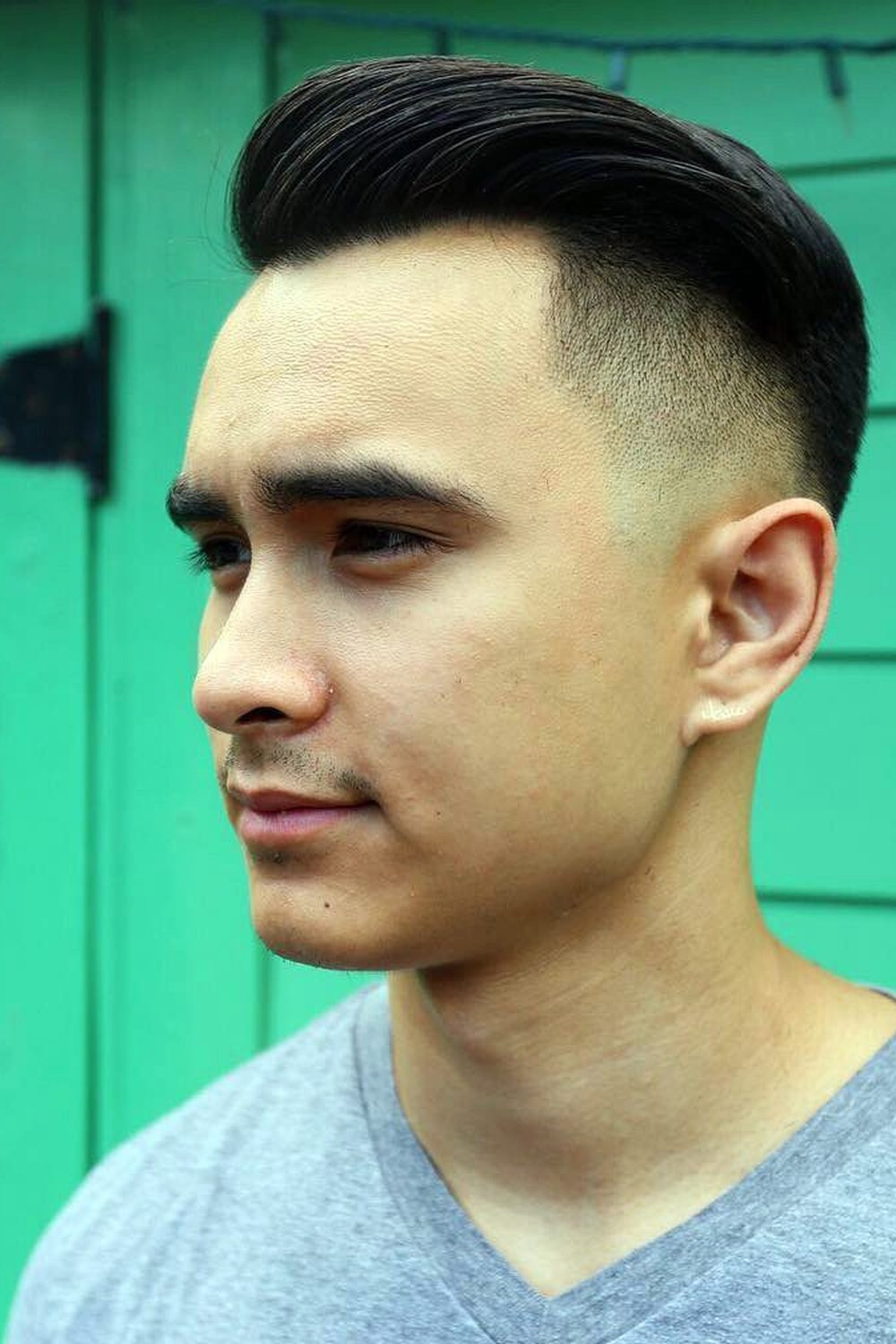
Photo: Haircut Inspiration — source
The slicked back undercut is the boldest choice in this section, and it comes with a warning: slicking thin hair straight back puts the whole hairline on display. It works only when the recession is mild and the front is still dense — then the clean shape and the sharp undercut look confident and intentional. If your temples are deep, skip this one and go for the textured quiff instead. Ask for a slicked back undercut with faded sides, top three to four inches, and keep the slick relaxed, not plastered. Suits thick straight hair and strong features. Styling: pomade or light gel, combed back while damp. Trim every three weeks.
Moderate to Advanced — Structure & Fades
At this stage the cut has to do real work: strong sides, a clear shape, and no weak length anywhere. Fades are your friend here, because a clean fade makes the top look fuller by comparison.
15. Short Pompadour with Fade

Photo: Pinterest via Hairstyle Talk — source
A short pompadour pulls the eye upward, away from the temples — but only if it is short. Keep the top under two inches and the fade clean, and the volume reads as style; let it grow tall and slick and the hairline takes over. The trick is texture, not height: a messy, matte pompadour hides the corners, a shiny tall one shows them. Ask your barber for a short textured pompadour with a mid fade, and tell them you want volume at the front, not a wall of hair. Suits thick straight hair. Styling: blow-dry up and back, matte clay to hold. Trim every three weeks.
16. Temple Fade with Textured Top

Photo: Haircut Inspiration — source
The temple fade — sometimes called a tape-up — fades just the temples and the sideburns, leaving the rest of the shape alone. It is a modern cut that works well with a receding hairline because it cleans up the exact area where the recession shows, without taking the sides high. Pair it with a short textured top and the whole cut looks sharp and intentional. Ask for a temple fade with a textured crop on top, fringe forward, and keep the fade tight around the temples. Suits straight, wavy and curly hair. Styling: matte clay through the top. Trim every two to three weeks — temple fades grow out fast.
17. Skin Fade with Short Crop

Photo: Haircut Inspiration — source
A skin fade takes the sides down to the skin, which creates the strongest contrast on this list — and that contrast is the point. With the sides that clean, the short crop on top looks deliberate and the hairline reads as part of a sharp shape rather than a problem. It is a bold, high-maintenance cut: the fade needs a touch-up every two weeks or it loses its edge. Ask for a skin fade with a short textured crop, top about an inch, and keep the blend tight. Suits strong features and men who like a clean look. Styling: almost nothing — a little matte paste if you want texture. Trim every two weeks.
18. Short Quiff with Low Taper

Photo: Haircut Inspiration — source
The short quiff with a low taper is the safer version of the pompadour: same upward movement, less height, and a taper instead of a fade so the sides stay soft. The low taper keeps the shape calm, which suits a receding hairline better than a high-contrast fade — there is less for the eye to compare against. Keep the quiff short and messy, and it hides the corners well. Ask for a short textured quiff with a low taper, top about two inches. Suits thick straight or wavy hair. Styling: blow-dry up, matte clay. Trim every three to four weeks.
19. Messy Textured Top
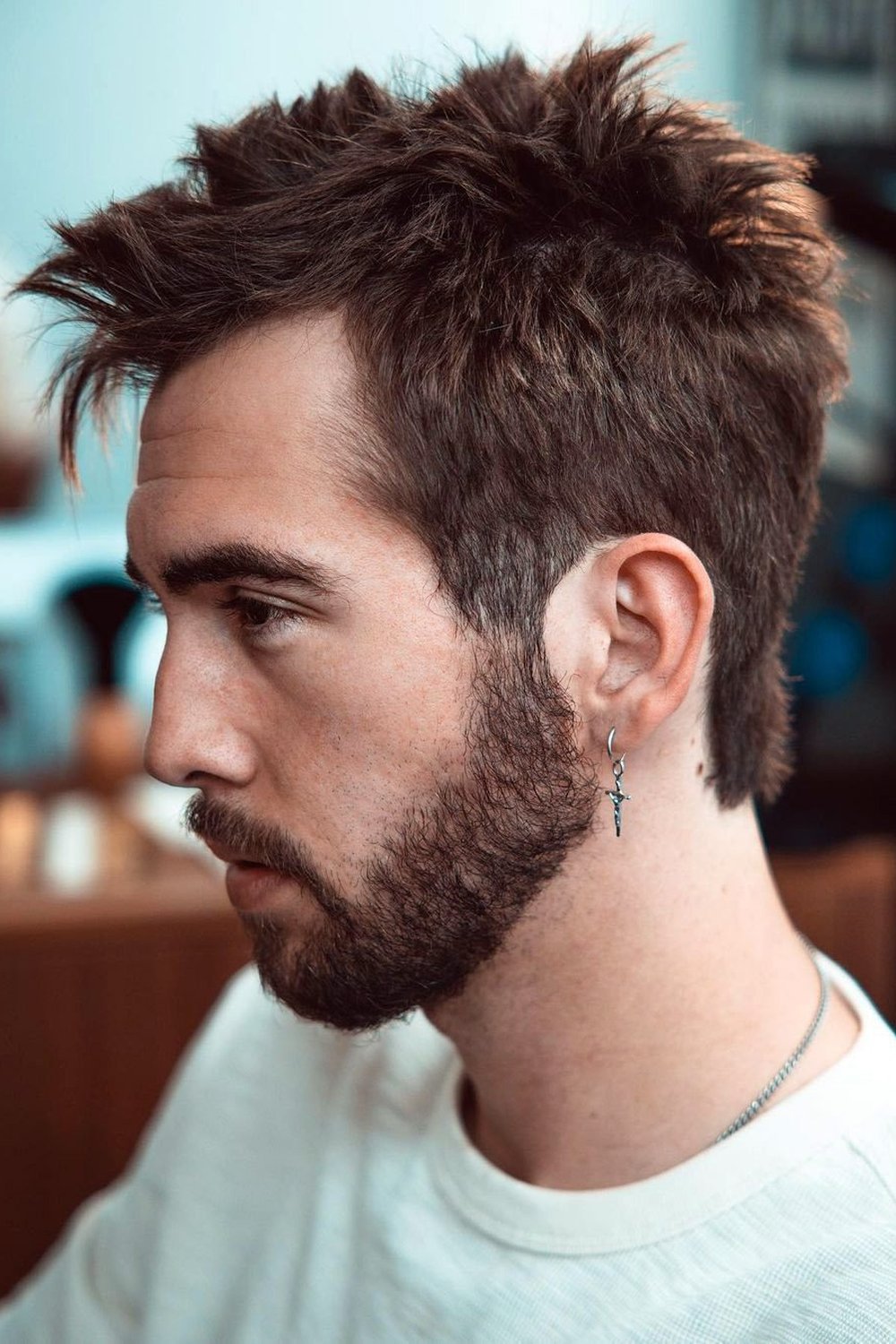
Photo: Haircut Inspiration — source
Messy is a strategy, not laziness. A tousled, uneven top has no straight lines at all, so there is no hairline edge for the eye to follow — the corners disappear into the texture. The cut is short layers, point-cut all over, with tapered sides. It is one of the best cuts for wavy hair, which does half the work naturally. Ask your barber for a messy textured top with a taper, top one to two inches, and tell them you want it to look unstyled even when it is styled. Styling: sea salt spray or matte clay, scrunched in with your fingers. Trim every three to four weeks.
20. Comb Over with Low Fade
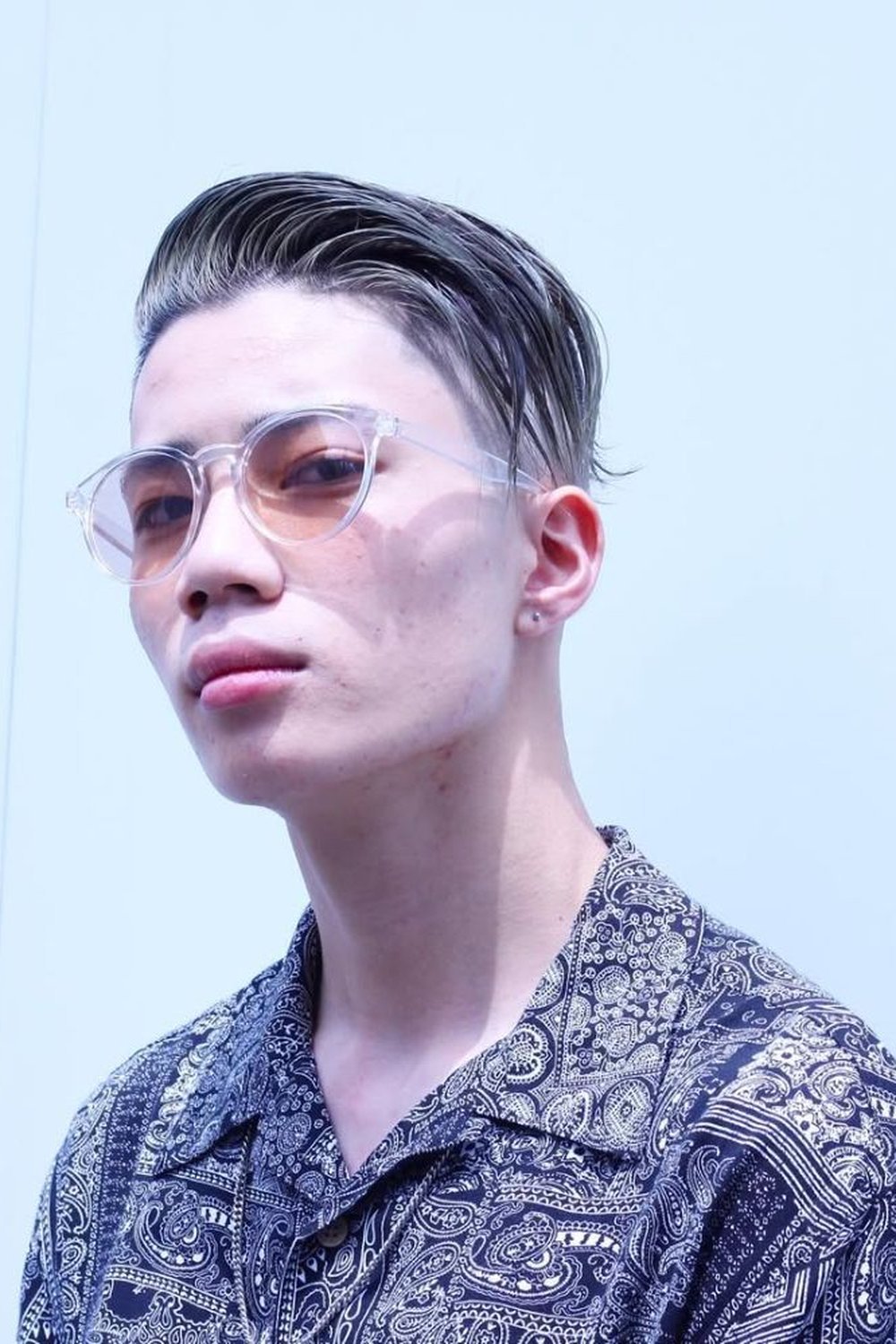
Photo: Instagram via Fabbon — source
Let us be clear: this is a comb over, not a comb-over. The difference is honesty. A short, neat sweep to one side over a low fade looks clean and classic — it is a real haircut with a real shape. The old comb-over failed because it dragged long, thin hair across a bald patch. This one keeps the top short, the part natural, and the fade sharp, so nothing is being hidden. It works only while the front still has enough density to sweep. Ask for a comb over with a low fade, top about two inches, parted where your hair naturally falls. Suits straight hair and office settings. Styling: light cream, combed to the side. Trim every three to four weeks.
Own It — Short, Shaved & Beard-Balanced
When the recession is deep or the top is noticeably thinner, the best move is to stop fighting it. Short, clean and confident beats long and hopeful every time — and a beard changes the whole balance of the face.
21. Clean Shave with Beard
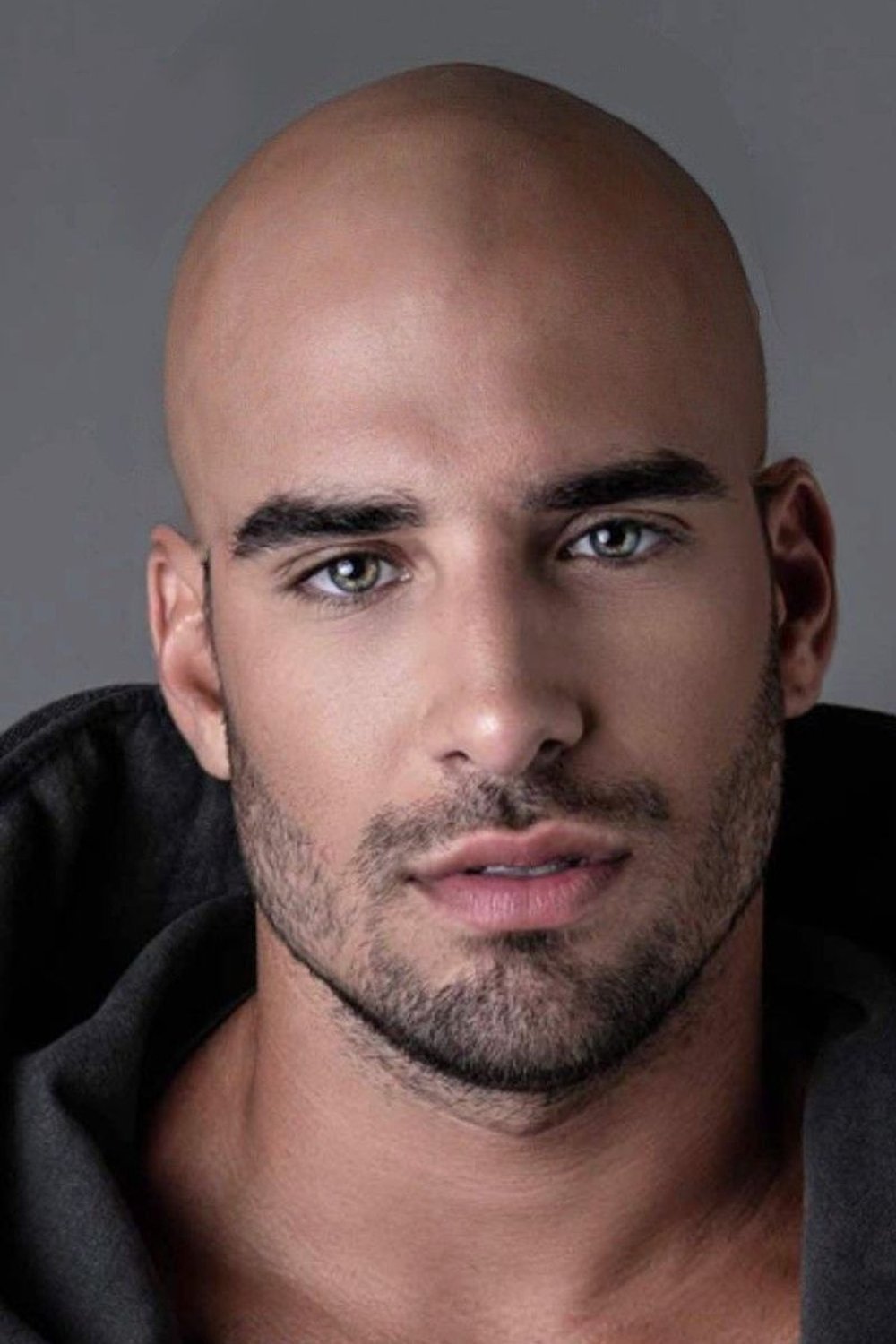
Photo: Pinterest via Hairstyle Talk — source
The clean shave is the most confident answer on this list. Shaving the head removes the hairline question entirely and turns hair loss into a deliberate look — especially when it is paired with a well-kept beard, which gives the face its shape back. It suits strong features, square jaws and men who are done worrying about their hair. Keep the beard clean and shaped: the contrast between a smooth head and a groomed beard is what makes it look intentional. Ask your barber for a clean shave with a beard shape-up, or do the shave at home and get the beard done professionally. Maintenance: shave every two to three days, beard trim weekly.
22. Buzz Cut with Beard
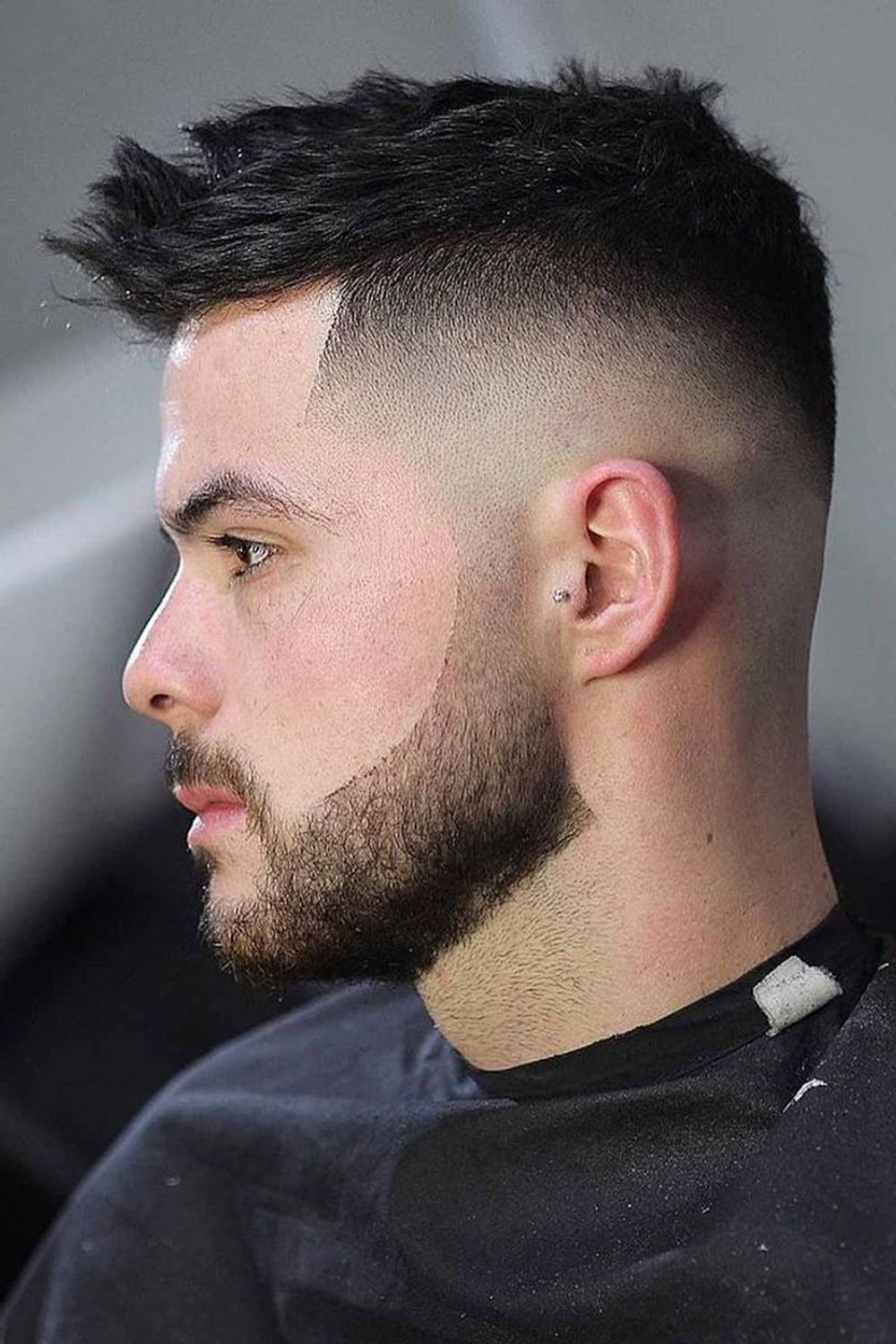
Photo: Pinterest via Hairstyle Talk — source
The buzz cut with a beard is the clean shave’s slightly softer cousin: very short hair on top — a number one or two guard, or a tight faded crop — plus a beard to balance the face. The beard does the heavy lifting here — it adds weight to the lower half of the face, so the eye stops at the jaw instead of travelling up to the temples. Keep the top very short and the beard neat, and the whole look is tough, clean and zero-effort. Ask for a short buzz or faded crop with a beard trim and a clean neckline, and keep the beard edges sharp. Styling: none. Trim the top every two weeks, the beard every week.
23. Bald Fade with Short Top
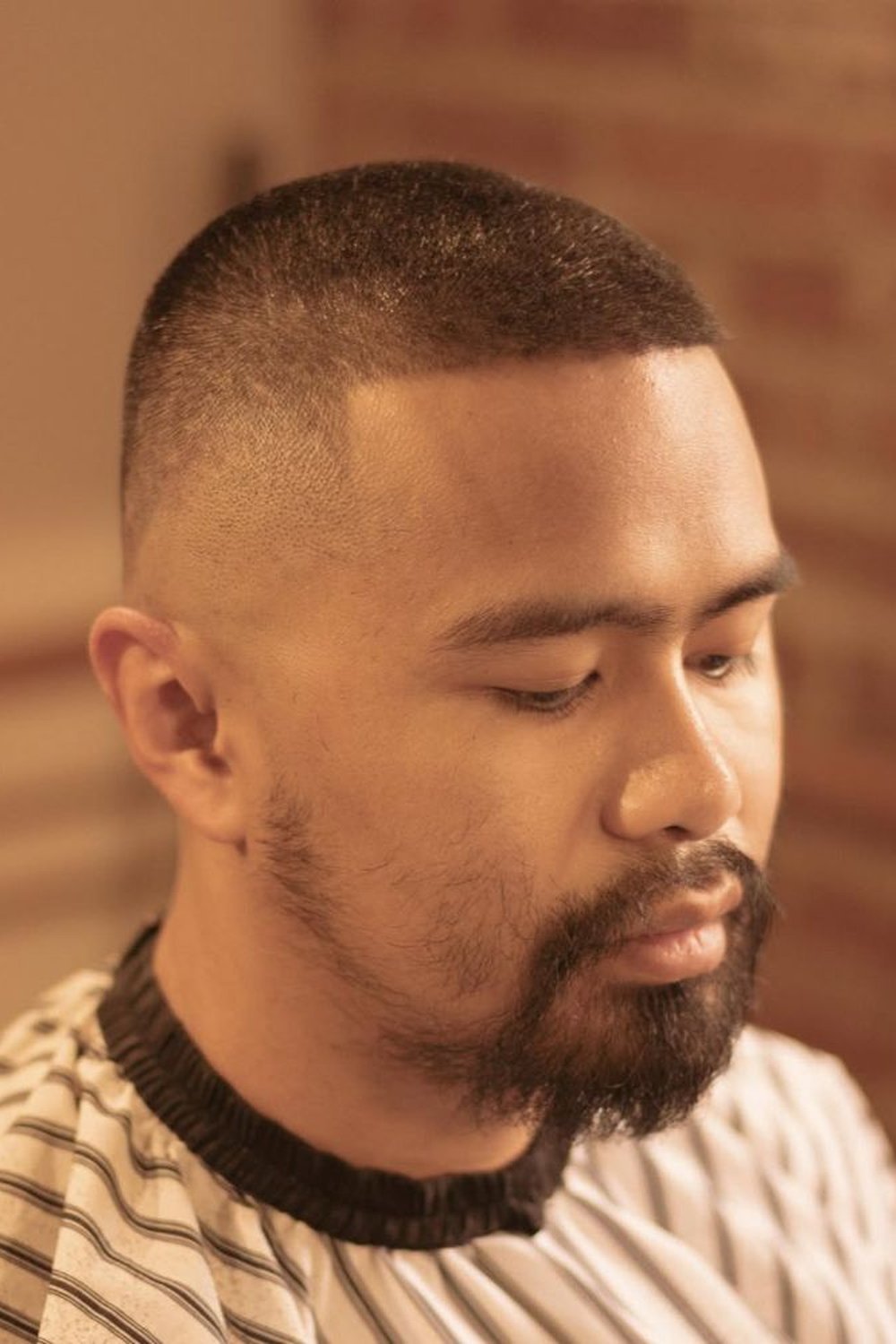
Photo: Instagram via Fabbon — source
The bald fade takes the sides all the way down to skin and leaves a short textured top, which is a strong look for advanced recession because the fade is so clean that the top reads as a choice, not a leftover. It is a barbershop cut through and through — the blend has to be perfect, so find a barber who does fades every day. Keep the top short and textured, and the fade high enough to look sharp but not so high it exposes thin areas. Ask for a bald fade with a short textured crop on top. Suits strong features and men who like a polished look. Trim every two weeks to keep the fade fresh.
24. Short Crop with Beard
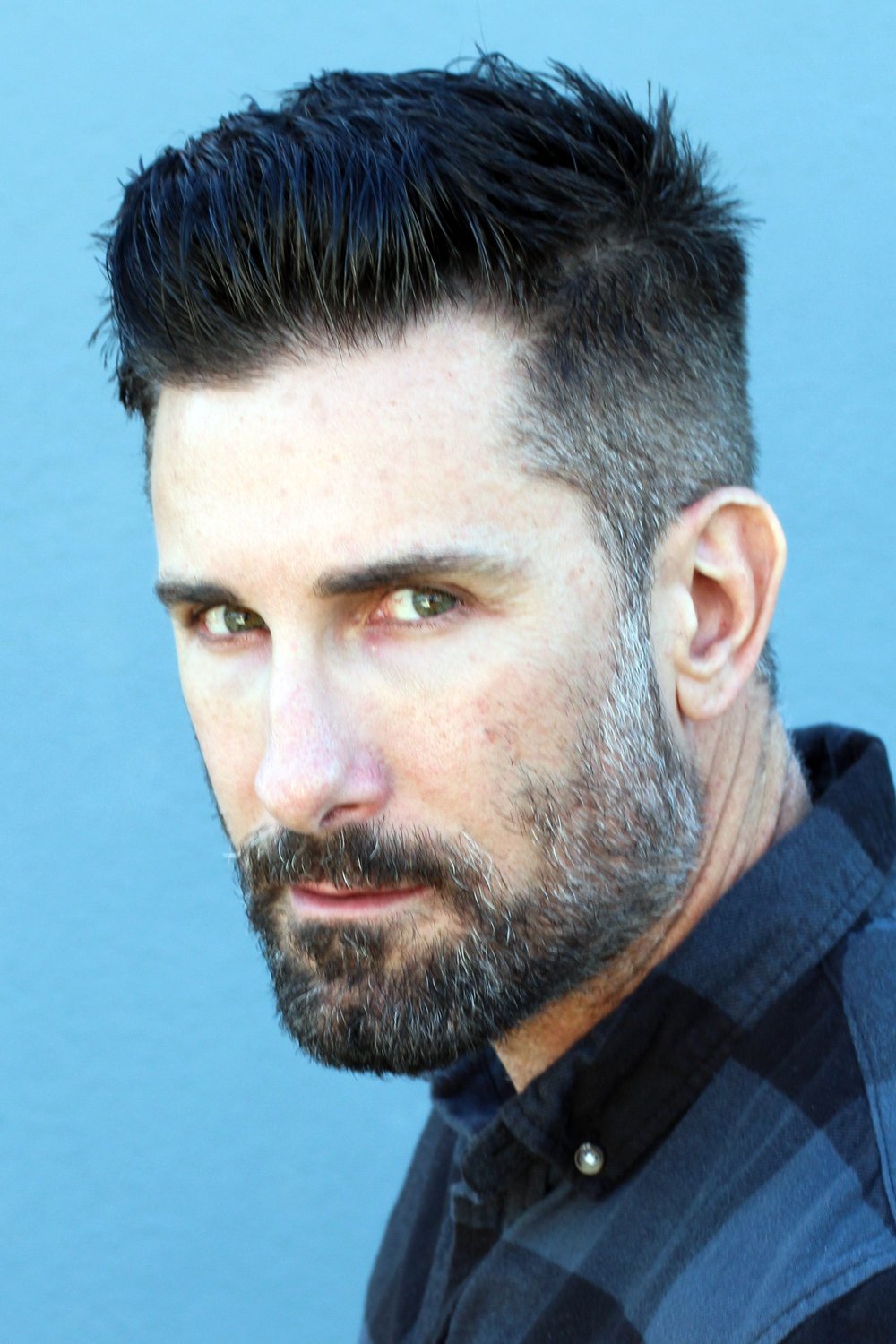
Photo: Haircut Inspiration — source
A short crop with a beard is the middle ground between the buzz cut and the full shave: a little more hair on top, a little more shape, and a beard to hold the balance. The crop is cut short and textured, the beard is kept full but shaped, and together they make the hairline a non-issue. It suits men who want to keep some hair but are done pretending the temples are not there. Ask your barber for a short textured crop with a low fade and a beard shape-up, and keep the beard’s cheek line natural rather than carved high. Styling: matte clay on top, beard oil on the beard. Trim every three weeks.
25. High and Tight
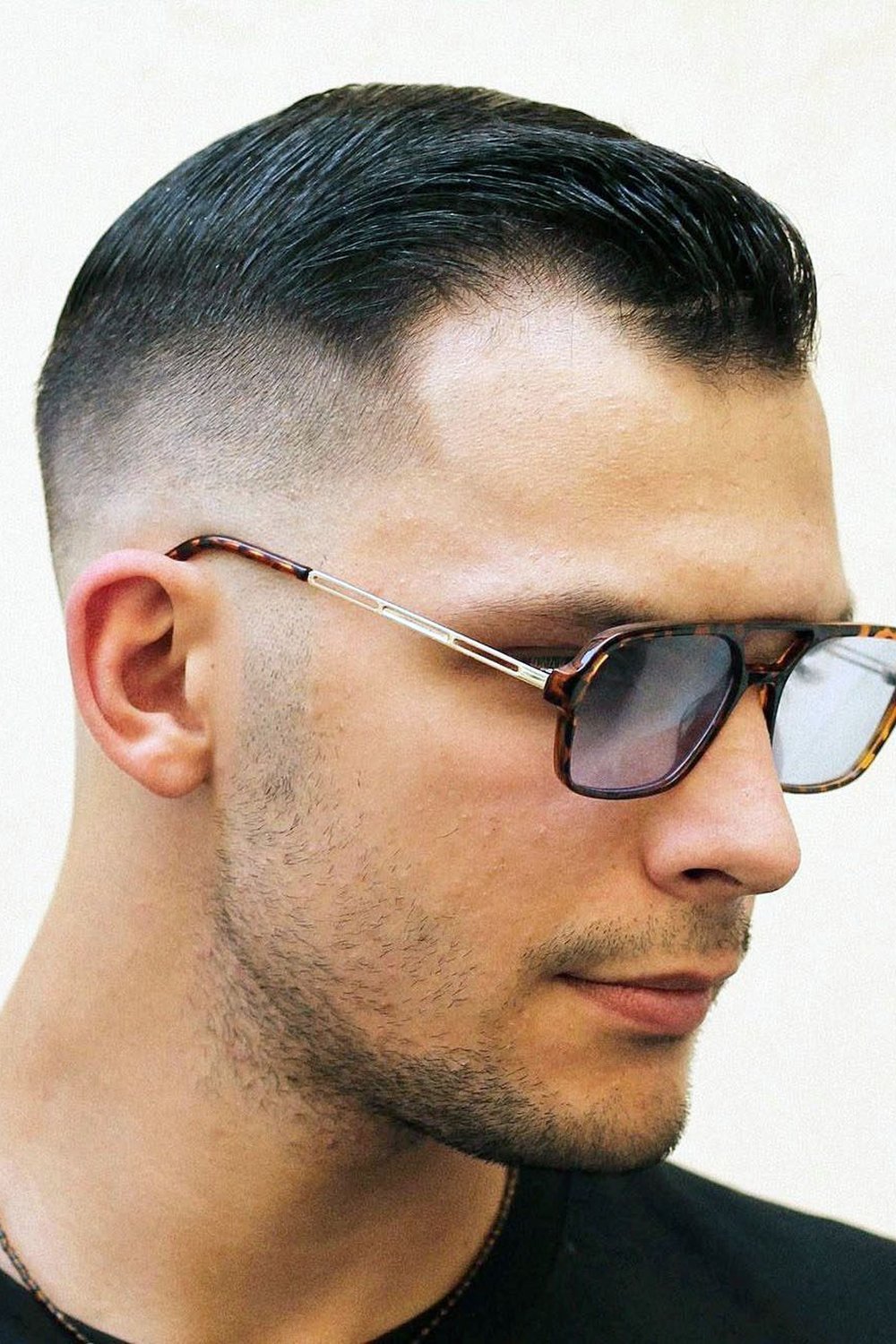
Photo: Haircut Inspiration — source
The high and tight is a military cut: sides taken very high and very short, top left short and flat. It is one of the most forgiving cuts for a receding hairline because there is almost no hair on the sides to compare against — the top is a small, neat patch, and the whole shape is clean and deliberate. It suits athletic builds, square faces and men who want a cut that needs nothing. Ask for a high and tight with a skin or zero fade on the sides and a short flat top. Styling: none at all. Trim every two weeks — the high fade grows out visibly fast.
26. Short Afro Taper
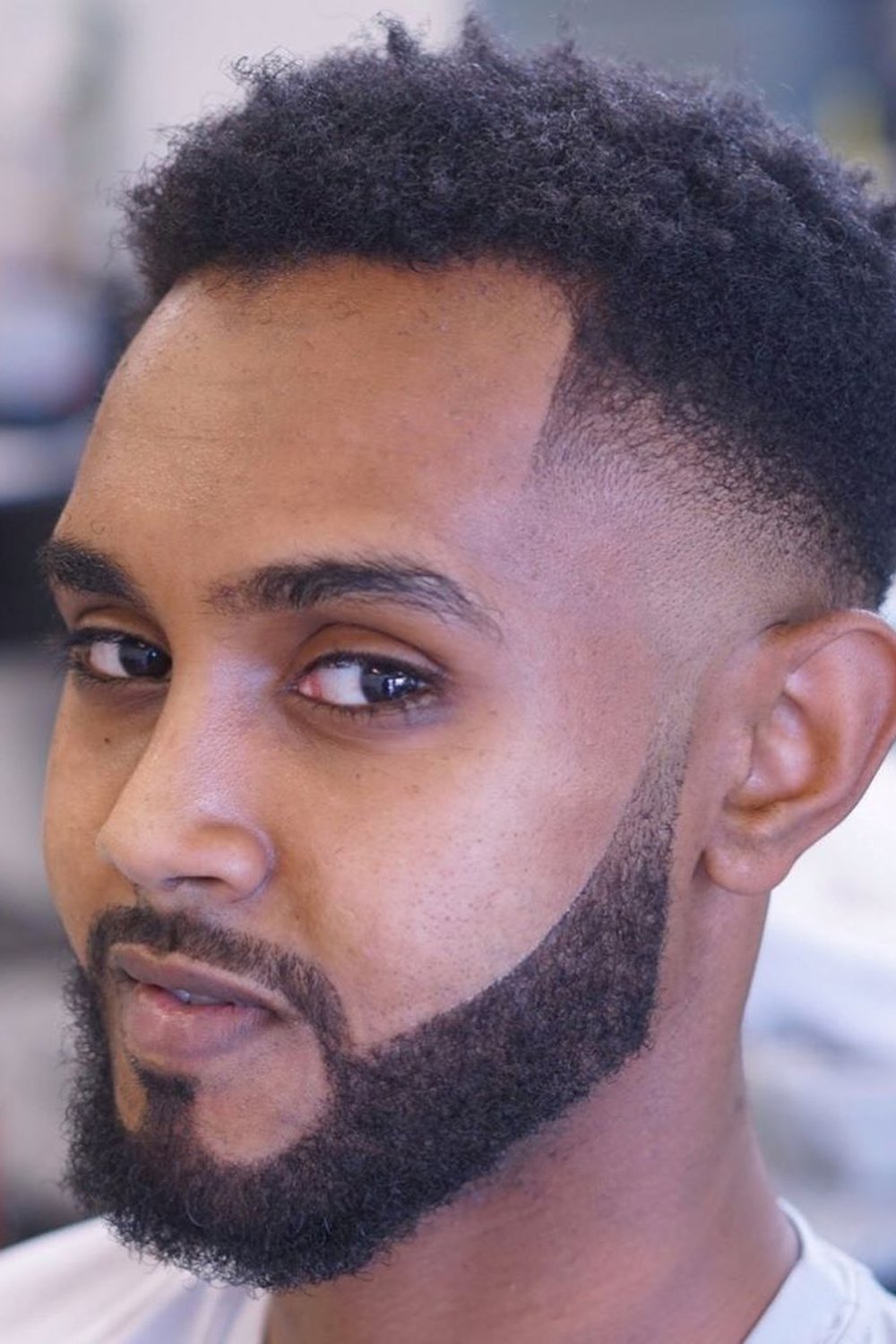
Photo: The Modest Man (@rootsbarbercompany) — source
For curly and coily hair, a short afro taper is the answer. The top is kept short and shaped, the sides tapered, and the natural texture does what a fringe does for straight hair — it breaks up the hairline so the corners never read as a straight edge. The taper keeps the shape clean without taking the sides too high, which matters because a high fade on coily hair can expose the temples. Ask your barber for a short afro taper, top shaped to your head, sides tapered — and find a barber experienced with your hair type, because the shaping is everything. Styling: curl cream or light oil, picked out gently. Trim every three to four weeks.
27. Widow’s Peak Brush Up
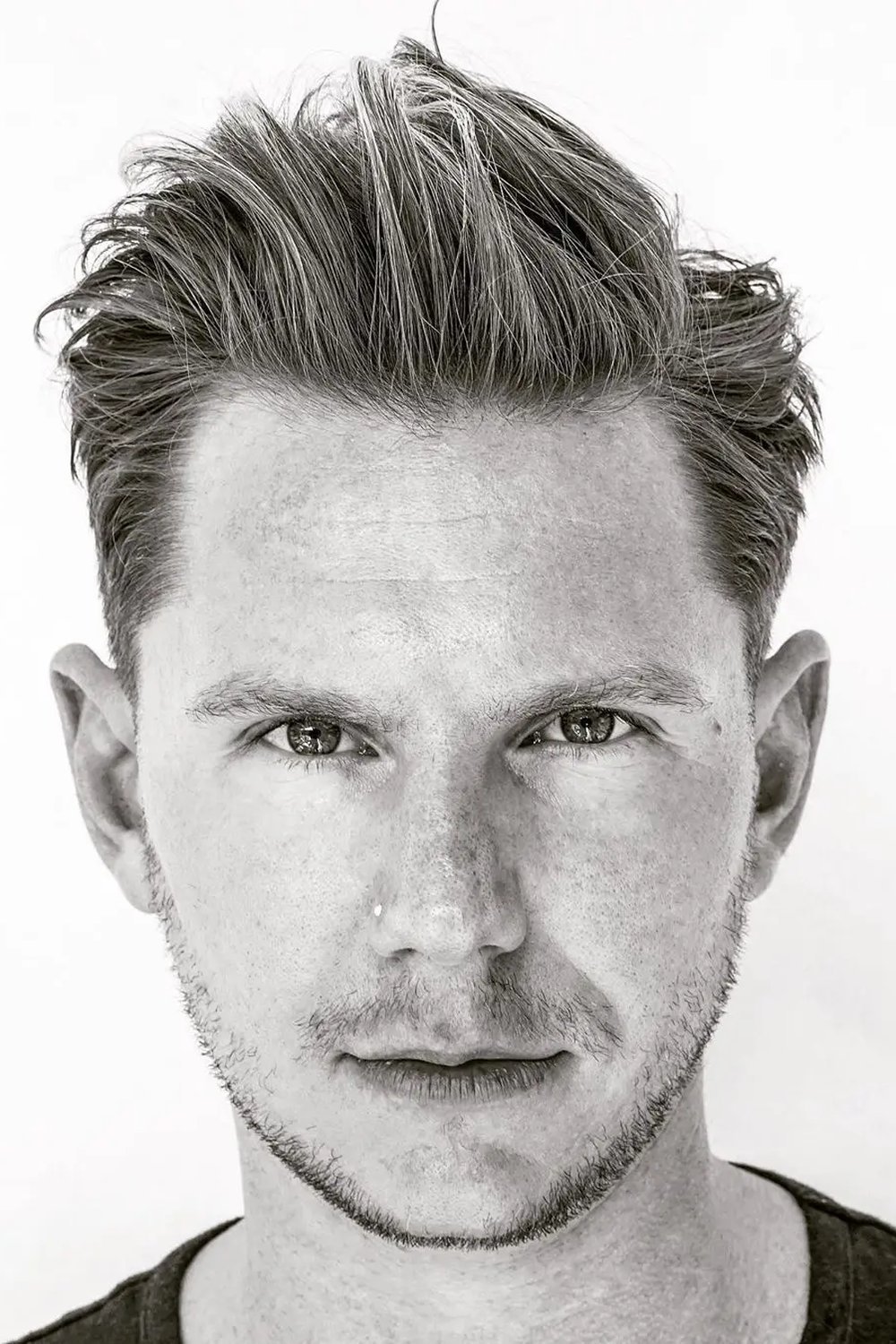
Photo: The Modest Man (@mattyconrad) — source
A widow’s peak is not a receding hairline — it is a natural V at the front — but it gets deeper as the temples move back, and the brush up is the cut that makes it look like a feature. The front is brushed up and slightly back, which frames the peak instead of hiding it, and the sides are tapered short. It only works while the peak still has density; if the V has gone thin, switch to a buzz cut. Ask for a widow’s peak brush up with a low taper, top about two inches, brushed up and to one side. Suits straight hair and strong features. Styling: matte clay, pushed up with your fingers. Trim every three to four weeks.
28. Short Textured Fringe with Drop Fade
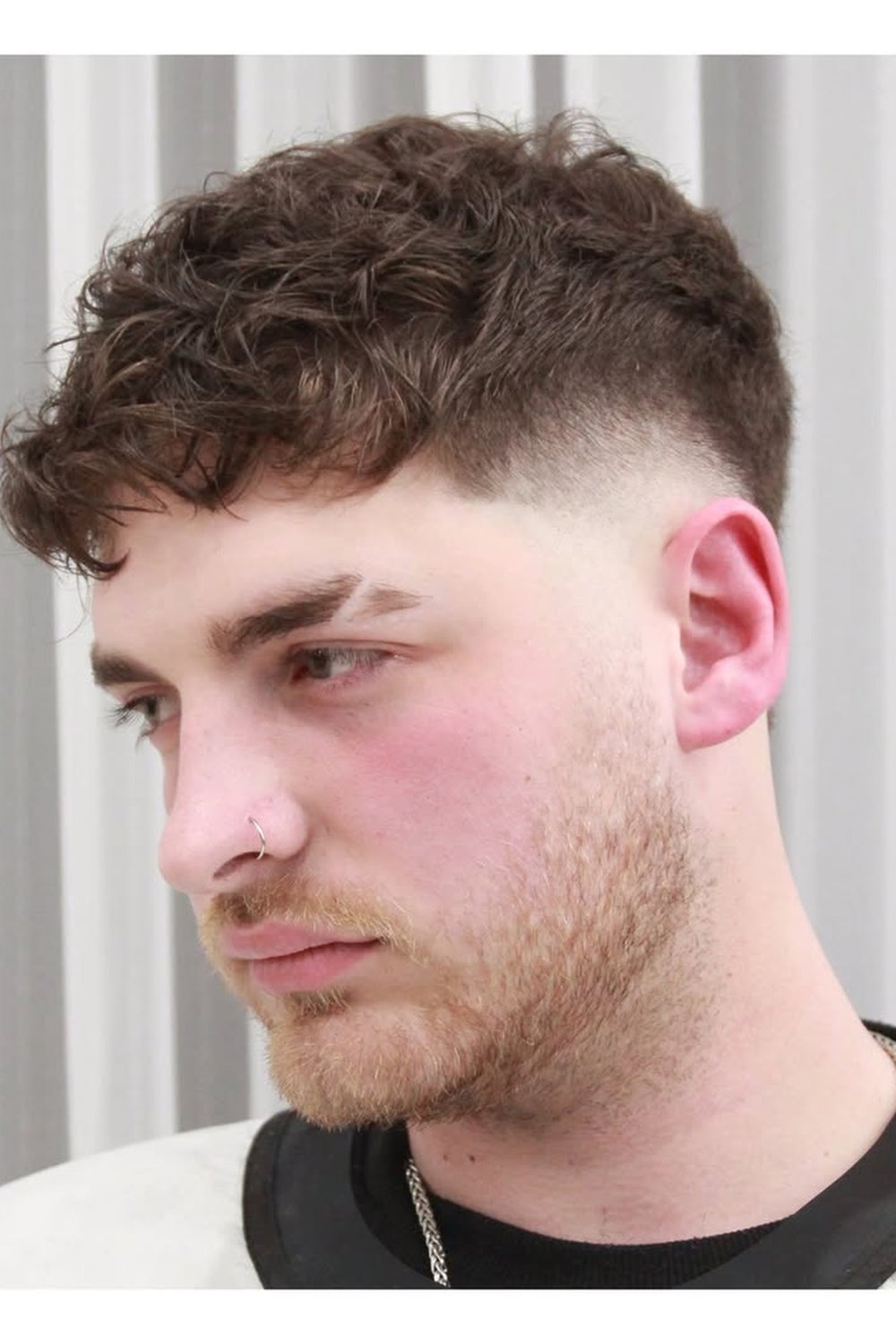
Photo: Instagram via Fabbon — source
The last cut on this list pairs a short, choppy fringe with a drop fade — a fade that curves down behind the ear instead of running straight around the head. The fringe softens the front, the drop fade adds a modern curve to the sides, and together they give a receding hairline a shape that looks designed rather than managed. It is a good final option for men who still have enough front density for a fringe but want something bolder than a crop. Ask for a short textured fringe with a drop fade, fringe pushed forward, fade curved low behind the ear. Suits straight and wavy hair. Styling: matte clay, fringe forward. Trim every two to three weeks.
How to Ask Your Barber
Walk in with a photo of the exact cut from this guide and say the name out loud. Then add three details: how short you want the sides (taper, low fade, mid fade or skin fade), how much length you want on top (in inches, not “a bit”), and whether you want the fringe forward or swept. Also say what you do not want — “no hard line-up on the temples” is the most important sentence for a receding hairline, because a barber who squares off the corners will make the recession look deeper. A good barber will tell you honestly if a cut does not suit your hair. Listen to them.
Styling & Maintenance
Three rules cover almost every style on this list. First, use matte products — matte clay, matte paste or sea salt spray. Shiny gel clumps strands together and puts the whole hairline on display. Second, keep the sides shorter than the top. Short sides make the top look fuller by comparison, which is the whole trick. Third, trim on schedule: short crops every three to four weeks, fades every two to three weeks, buzz cuts every two weeks. A receding hairline shows growth fast, so a cut that is two weeks overdue looks worse on you than on a man with a full hairline. Wash with a gentle shampoo, condition the top, and never brush thin hair when it is soaking wet.
Haircuts to Avoid
Four cuts make a receding hairline look worse. Long, flat hair separates and exposes the temples. A hard centre part draws a straight line right through the thinnest area. A slicked-back style with shiny product puts the hairline on display. And a long comb-over — dragging thin hair across a wide gap — fools nobody and photographs terribly. If you are wearing any of these now, the fix is not a product. It is a shorter cut from this list.
FAQ
What is the best haircut for a receding hairline?
For most men, a short cut with faded or tapered sides and texture on top — a textured crop, buzz cut, crew cut or French crop. The best choice depends on how far the recession has gone: early recession suits the textured crop and Ivy League (numbers 1 and 4), moderate recession suits the buzz cut and crew cut (numbers 8 and 9), and advanced recession suits the clean shave with beard (number 21).
Can a haircut hide a receding hairline?
Partly. A textured fringe or a short crop can soften the corners and change what the eye notices, but no haircut moves the hairline back. The cuts in this guide work with the recession instead of covering it, which is why they look natural. If the front is too thin to support a fringe, go shorter rather than longer.
Should I get a fade with a receding hairline?
Yes, in most cases. A low or mid fade makes the top look fuller by comparison and cleans up the temples, which is exactly what a receding hairline needs. Avoid very high fades if the top is thin, because the contrast can expose weak areas — a low taper is the safer choice there.
Is a buzz cut good for a receding hairline?
Yes — it is one of the best options. One even short length removes the contrast between thick and thin areas, so the temples stop standing out. It needs no styling, costs nothing to maintain, and suits strong features. Try a number two or three guard first, and add a beard if you want more balance.
How often should I get a haircut with a receding hairline?
Every three to four weeks for most cuts on this list, and every two weeks if you wear a skin fade or a buzz cut, because short cuts show growth fast. Longer styles like the side-swept undercut can stretch to four weeks, but never much longer — an overdue cut shows the recession more, not less.
What should I tell my barber about my hairline?
Say it plainly: “my hairline is receding at the temples.” Then say what you do not want — no hard line-up on the temples, no tall slicked-back style. Bring a photo from this guide and ask the barber whether the cut suits your density. An honest barber will steer you to the right section of this list.
Conclusion
Twenty-eight cuts, one rule: the best receding hairline haircut is the one that fits the stage you are at today. Early recession wants short texture. Moderate recession wants clean fades and low contrast. Advanced recession wants you to own it — short, shaved, beard-balanced and confident. Pick the section that matches your hairline, bring the photo to the barber, and stop fighting your hair. The right cut does not hide anything. It just makes the hairline the least interesting thing about you.