A parent’s guide to the kids taper fade: school-ready and age-appropriate by design, the low/mid/high options for children, exactly what to tell the barber, first-visit survival tips, and easy maintenance at home.

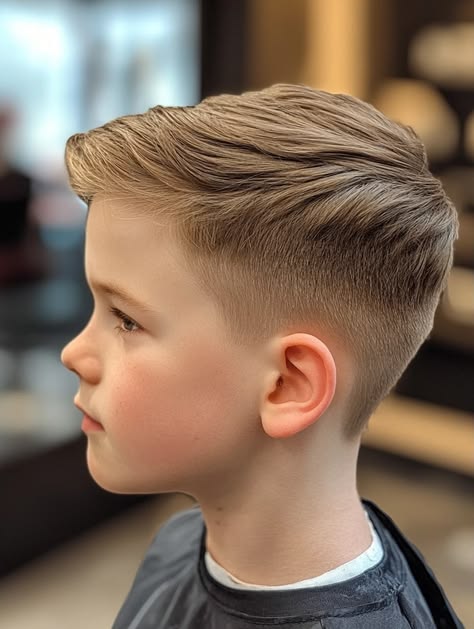
A kids taper fade is the same classic technique adults get — hair gradually shortening around the temples, ears and neckline — sized down for a child: softer blend, age-appropriate lengths on top, and nothing extreme. It is the haircut equivalent of a clean pair of sneakers: neat enough for school photos, easy enough that mornings stay calm.
What a kids taper fade actually is
Strip away the jargon and it is simple: the barber keeps the top at a sensible length and tidies the edges — around the ears, the sideburn area and the neckline — with a gradual blend instead of a harsh line. Because the taper is gradual rather than shaved, it grows out quietly, which means fewer emergency barber runs between appointments.
For kids, the taper usually stays conservative. No skin-tight finishes, no dramatic contrast — just clean edges that make the whole haircut look intentional. It works for straight, wavy, curly and coily hair alike, which is why barbers recommend it so often for children.

Why parents keep choosing it
Three reasons dominate. First, school compliance: the taper fade reads as a neat conventional haircut, which is precisely what dress codes ask for — no awkward conversations with teachers. Second, grow-out: the gradual blend hides regrowth far better than a skin fade or a bowl cut, so the cut looks respectable for weeks. Third, versatility: it works for picture day, sports, weddings and ordinary Tuesdays without any restyling.
There is a fourth, quieter reason: it photographs well. Family photos, school portraits, holiday cards — the taper keeps the hairline and edges defined, which is what the camera actually sees.
Low vs mid vs high taper for kids
Low taper: the blend starts near the ears and stays subtle. The safest choice for young children, strict schools and first haircuts. It looks like a “nice tidy haircut” rather than a “fade.”

Mid taper: the blend starts around the temple with a bit more contrast. The sweet spot for school-age kids who want to look sharp — noticeable but still dress-code friendly in most schools.
High taper: the blend climbs higher with bold contrast. Best reserved for older kids and teens; check the school rules first, and expect more frequent touch-ups.
When in doubt, start low. A barber can always take a taper higher next visit, but growing out an over-ambitious cut takes weeks. For grown-up inspiration on the same technique, see the low taper fade complete guide.
Age-appropriate lengths and textures
Toddlers (2–4): keep it simple — a tidy-up with a soft taper at the edges. Short visits, minimal clipper time, no fussy styling. Many barbers suggest the first “real” cut stay conservative while the child learns the chair.
School-age (5–10): the taper fade shines here. Keep the top long enough to look like a kid — a couple of inches for texture — with clean tapered edges. Avoid heavy product; a little leave-in conditioner is plenty.

Curly and coily hair: the taper fade is genuinely one of the best cuts for textured kids’ hair. It keeps the hairline and neckline defined while the curls keep their natural shape on top — no painful straightening, no fighting the texture. Ask the barber to cut curls dry or stretched so the length is judged honestly, and keep the top moisturised.
The barber visit: first-timer tips
Book a morning appointment when your child is fresh, not a late slot when patience is gone. Choose a barber who regularly cuts kids’ hair — they work faster around fidgeting and know how to keep it fun. Bring a reference photo on your phone: point at the sides, the top length and the neckline.
Pack a snack and something to watch; most kids’ cuts take 20–30 minutes. Sit where your child can see you if they are nervous. And keep expectations realistic for visit one: a simple, neat taper beats an ambitious style that requires a perfectly still child. For more kid-friendly inspiration, browse our burst fade haircuts for kids collection.
Easy maintenance at home
The taper fade is gloriously low-maintenance between visits. A quick brush or comb in the morning, a dab of leave-in conditioner for curly or dry hair, and you are done — no heat tools, no complicated routines. Trim stray neckline hairs with trimmers only if you are confident; otherwise leave it for the barber.
Wash every couple of days rather than daily to avoid drying young hair out, and keep a soft brush handy for smoothing the top before school.

School dress codes
Most schools simply require hair to look “neat and conventional,” and a classic taper fade passes comfortably. To stay safe: keep the taper itself (not skin-tight), skip shaved designs and lines for strict schools, and keep the top at a moderate length. If the school has written rules, a quick read before the appointment avoids an awkward regrow period.

Common mistakes to avoid
The biggest mistake is going too short too fast — a skin-tight fade on a young child grows out visibly within days and looks severe in school photos. Start conservative. Second: copying an adult reference photo directly. Adult tapers assume adult head proportions and styling routines; ask the barber to adapt the idea for a child’s hair and lifestyle.

Finally, do not chase trends that need daily styling. The best kids’ cut is the one that looks good with a two-minute morning routine — anything more ambitious belongs to the weekends.
Frequently asked questions
What age can a child get a taper fade?
There is no strict rule, but most barbers are comfortable from around age 3–4, when a child can sit relatively still for 20 minutes. For toddlers, a simple tidy-up is usually the better choice.
How often do kids need a taper touch-up?
Every three to four weeks is typical. Kids’ hair grows fast, but the taper’s gradual blend hides regrowth better than a skin fade, so the schedule stays forgiving.
Is a taper fade allowed in schools?
Usually yes — it reads as a neat, conventional haircut, which is what most dress codes require. Avoid skin-tight finishes and shaved designs if the school is strict.
How do I keep my child still in the barber chair?
Book a morning appointment, bring a snack and something to watch, and choose a barber experienced with kids. Keep the first visit short and simple.
Conclusion
The kids taper fade earns its popularity the honest way: it looks sharp, behaves between appointments, and keeps both schools and cameras happy. Start with a low taper, keep the top age-appropriate, and let the blend do the work.
For the full kids’ collection, see our burst fade haircuts for kids — 21 neat, playful and school-ready ideas.
Written by Derek Nolan, an editorial pen name used for consistent authorship. No unverified barber credential or firsthand salon claim is presented. Visual references carry source credits with each image. Credited third-party photographs remain the property of their respective owners; source attribution is provided and rights concerns are handled through the Copyright Policy.
If you’re weighing the taper against a bolder blend, our guide to boys’ fade haircuts compares eight complete styles with photos.