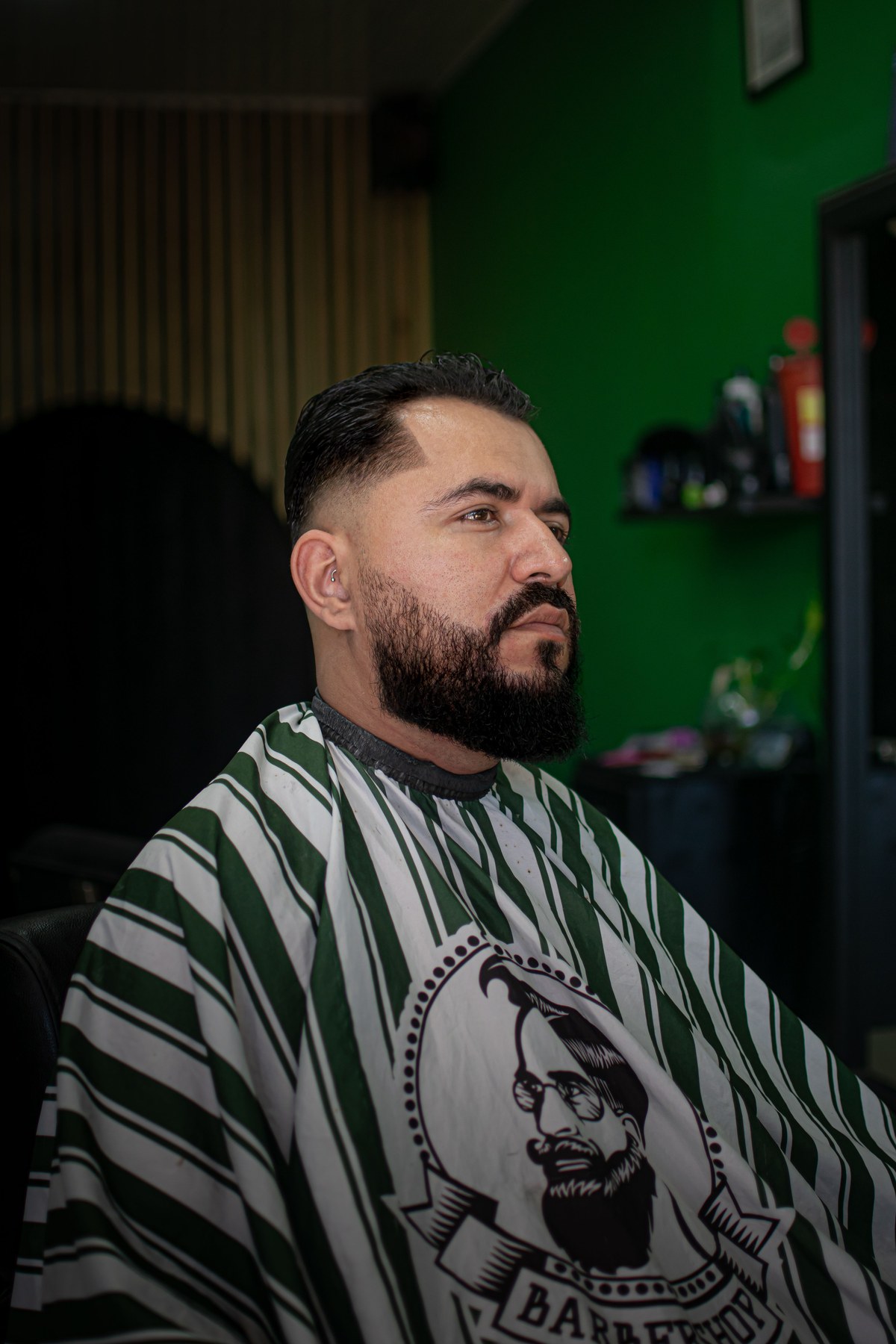
The most-searched fade in the world, explained properly: what a low taper fade is, how it differs from mid and high tapers and from a true fade, who it suits, the exact words for your barber, styling by hair type, and a realistic upkeep schedule.
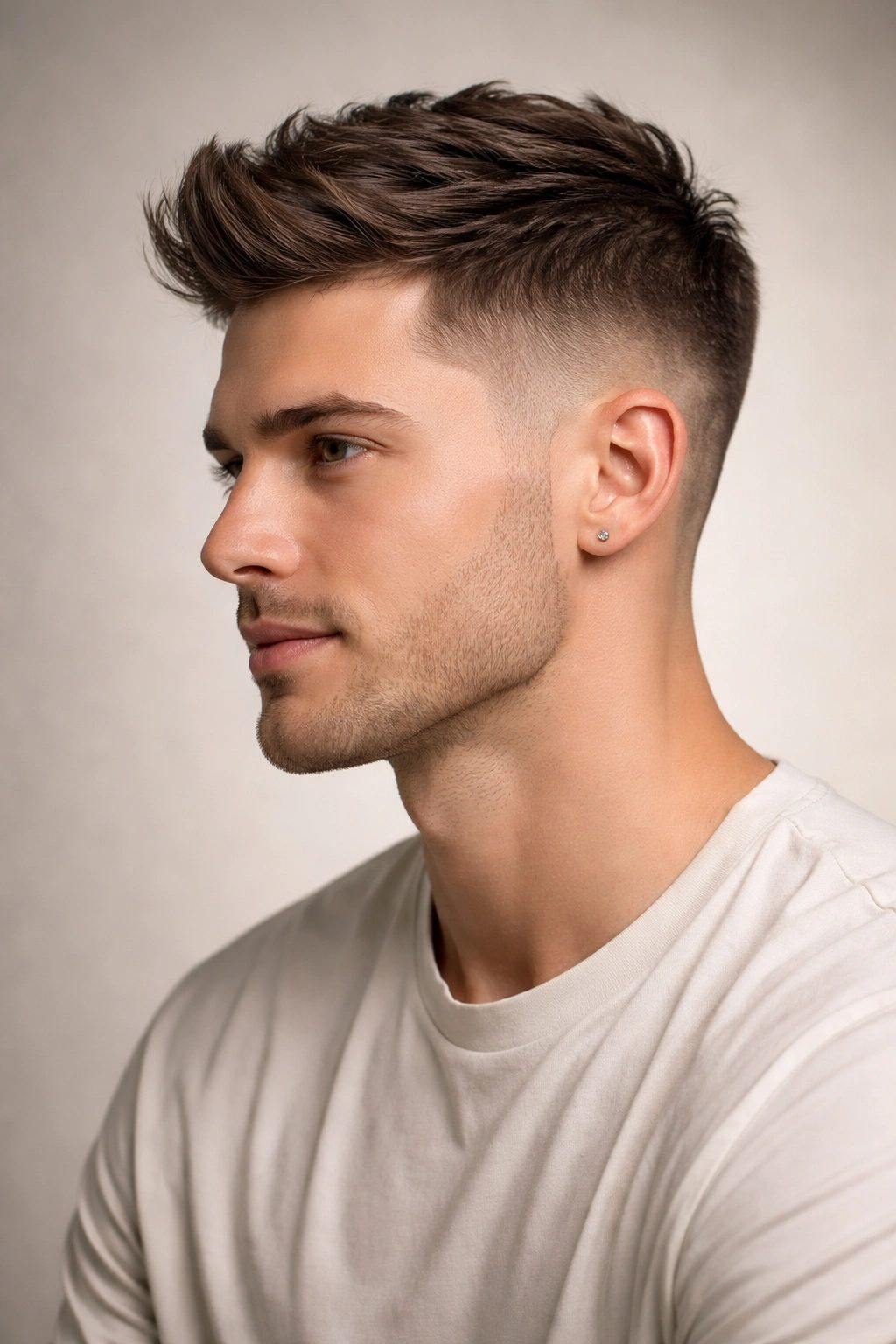
A low taper fade is a haircut where the hair gradually shortens around the temples, sideburns, ears and neckline while the top keeps its length. The word “low” describes where the blend begins: down near the ears, not high on the head. The result is clean without the drama of a high fade — which is why it works in offices, classrooms and everywhere in between.
What a low taper fade actually is
Think of the taper as a controlled gradient. At the very bottom — around the sideburn, the ear and the nape — the hair is shortest, getting slightly longer as it rises until it meets the full length of the sides and top. Because the transition starts low, most of the side keeps visible hair and the silhouette stays soft.
That softness is the whole point. A low taper tidies the perimeter of the haircut without rebuilding it. The top can be almost anything: a textured crop, a side part, curls, waves, a fringe or longer hair. Barbers love it because it is fast and forgiving; clients love it because it grows out quietly.

Low vs mid vs high taper
The only thing that changes between the three is where the blend starts. Low begins around the ears and keeps the shortest zone small. Mid starts around the temple with more contrast. High climbs toward the upper head for the boldest separation between sides and top.
Choose by lifestyle first and fashion second. The low taper is the safest choice for conservative workplaces, first-time fades and anyone who wants a cut that still looks intentional at week three. The mid taper is the most popular middle ground. The high taper makes a statement but needs more frequent cleanups. When in doubt, start low — a barber can always take a taper higher, but cannot put hair back.
Taper vs fade: the key difference
People use the words interchangeably, but barbers do not. A taper is a gradual shortening that keeps visible length; it is a classic, subtle technique. A fade goes shorter, creates stronger contrast and often blends all the way down to the skin. In short: every fade involves tapering, but not every taper is a fade.
The practical difference shows up in maintenance and boldness. A true skin fade looks razor-sharp on day one and grown-out by day ten. A low taper looks neat on day one and still respectable on day twenty. If you want edge, ask for a fade; if you want a haircut that behaves between appointments, ask for a taper. For the curved-around-the-ear alternative, see our burst fade vs taper fade guide.

Who the low taper fade suits
Almost everyone — which is the reason the cut has survived decades of trends. Because the taper stays low, it does not fight your head shape. Round faces benefit from keeping height on top; longer faces keep side weight, which the low placement preserves.
Hair type matters more than face shape. Straight hair shows the taper’s lines crisply, so the blend must be smooth. Wavy hair hides the transition beautifully. Curly and coily hair pair wonderfully with a taper because the contrast between tight sides and a full top is striking; the barber just needs to account for shrinkage. Fine or thinning hair often looks fuller with a taper than with a skin fade, since more side hair remains.
It is also one of the most workplace-friendly cuts in existence — it reads as “neat haircut” rather than “fashion statement,” which makes it safe for interviews, uniformed jobs and dress codes.
Best low taper fade styles by hair type
Straight hair: a textured crop or side part with a low taper is the classic combination. Straight hair shows every line, so ask for a smooth blend and keep the top piecey with a little matte paste.
Wavy hair: the easiest pairing. Waves naturally disguise the transition, so the taper can sit slightly tighter without looking harsh.

Curly hair: keep the curls long on top and let the taper handle the sides. The contrast is the style — tight, clean perimeter against free curls above. Do not let anyone thin the top aggressively; curls need weight to clump.
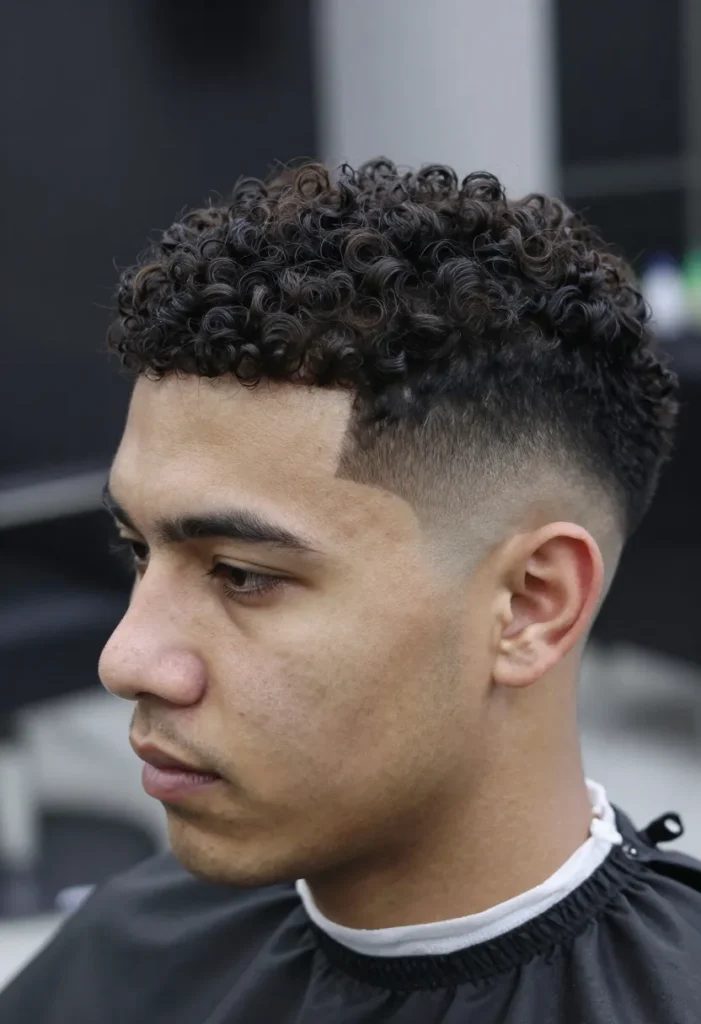
Coily and tight textures: a low taper with a sponge-twisted or freeform top is a barbershop staple. The taper keeps the hairline and neckline sharp while the top keeps its character. Discuss the lineup separately — the taper and the edge-up are two different decisions.
Why the whole internet knows this haircut
In January 2024, musician ericdoa sang “imagine if Ninja got a low taper fade” during a livestream, and the clip exploded across TikTok. Streamer Tyler “Ninja” Blevins embraced the joke, got the haircut himself, and “the low taper fade is still massive” became a meme of its own. Millions learned the barber term from a joke — and many then searched for the actual haircut.
The meme is funny, but the haircut underneath it is serious: a clean, versatile taper that was a barbershop standard long before 2024 and will be one long after. Read the full meme breakdown if you want the timeline, then come back here for the cut itself.
How to ask your barber: the exact script
Walk in with this sentence ready: “I want a low taper — start the blend low around my ears, keep the sides neat but with visible length, and leave the top [your length and style].” Then add how the neckline should finish (natural, or cleaned up tight) and whether the sideburn blends into the taper.
Bring one reference photo, side view preferred. Point at the three things you like: where the shortest hair sits, how the top looks, and the neckline. Do not just say a clipper number — a number describes length, not placement, and placement is what makes a taper a taper.
Styling a low taper fade
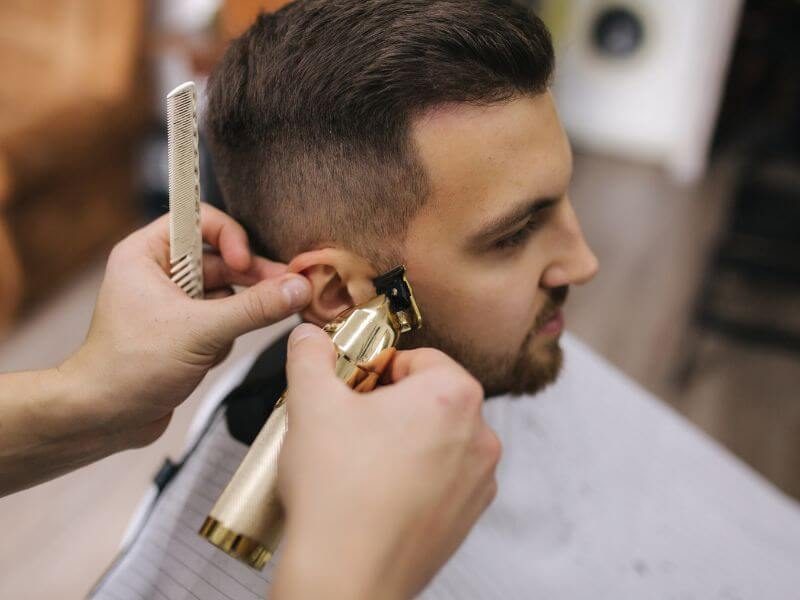
Style only the top — the taper takes care of itself. On damp hair, work a small amount of product through from roots to ends: matte paste or clay for texture, light cream for waves and curls, a touch of pomade for a classic side part. Less is more. Keep heavy waxes and oils off the tapered area — they clump short hair and make a smooth blend look patchy.

Upkeep schedule
A low taper is one of the lowest-maintenance fades, but not no-maintenance. Book a cleanup every two to three weeks — the neckline and the hair around the ears show growth first. Resist carving into the taper yourself; one wrong pass can push the blend higher than planned. Photograph the cut when it looks its best — that photo becomes your next reference.

Common mistakes to avoid
The biggest mistake is saying “taper” when you mean “fade,” or the reverse — you will get the wrong haircut and only realize it at home. The second is asking for maximum sharpness on the first visit; start conservative, since a barber can tighten a taper next time but cannot undo it. Finally, do not copy a reference photo blindly — use it to discuss placement and proportions, then let the barber adapt it to your density and growth direction.
Frequently asked questions
Is a low taper fade the same as a low fade?
No. A low taper keeps more length and blends gradually around the temples, sideburns and neckline. A low fade goes shorter, shows stronger contrast and can blend all the way to the skin.
How long does a low taper fade last?
Most people need a cleanup every two to three weeks. The neckline and the area around the ears show new growth first, while the top can keep growing undisturbed.
Does a low taper fade suit straight hair?
Yes — straight hair shows the taper’s clean lines crisply, which is one reason the cut photographs so well. Ask for a smooth blend, since any unevenness is more visible on straight hair.
What exactly do I ask my barber for?
Ask for the blend to start low around the ears, keeping visible length through the sides, then describe your top length and how you want the neckline finished. Bring a side-view reference photo.
Is the low taper fade still popular?
Yes. It i
s a long-standing barbershop staple, and a viral 2024 meme introduced the name to millions of new people — but the haircut’s popularity never depended on the joke.
Can I get a low taper fade with curly or coily hair?
Absolutely. The taper works with every texture. The barber adjusts the blend for your curl pattern, density and growth direction while the top keeps its natural character.
Conclusion
The low taper fade earns its fame honestly: clean without being loud, sharp without being fragile. Decide your placement, describe your top, settle the neckline — and enjoy the rare haircut that looks as good in week three as it did in the chair.
For the closest companion reading, see how the taper compares to its curved cousin in the taper burst fade complete guide.
Written by Derek Nolan, an editorial pen name used for consistent authorship. No unverified barber credential or firsthand salon claim is presented. Visual references carry source credits with each image. Credited third-party photographs remain the property of their respective owners; source attribution is provided and rights concerns are handled through the Copyright Policy.
For the low fade vs low taper comparison, see our low fade haircut guide.
If you want the top longer with a middle part, see our guide to the middle part taper.