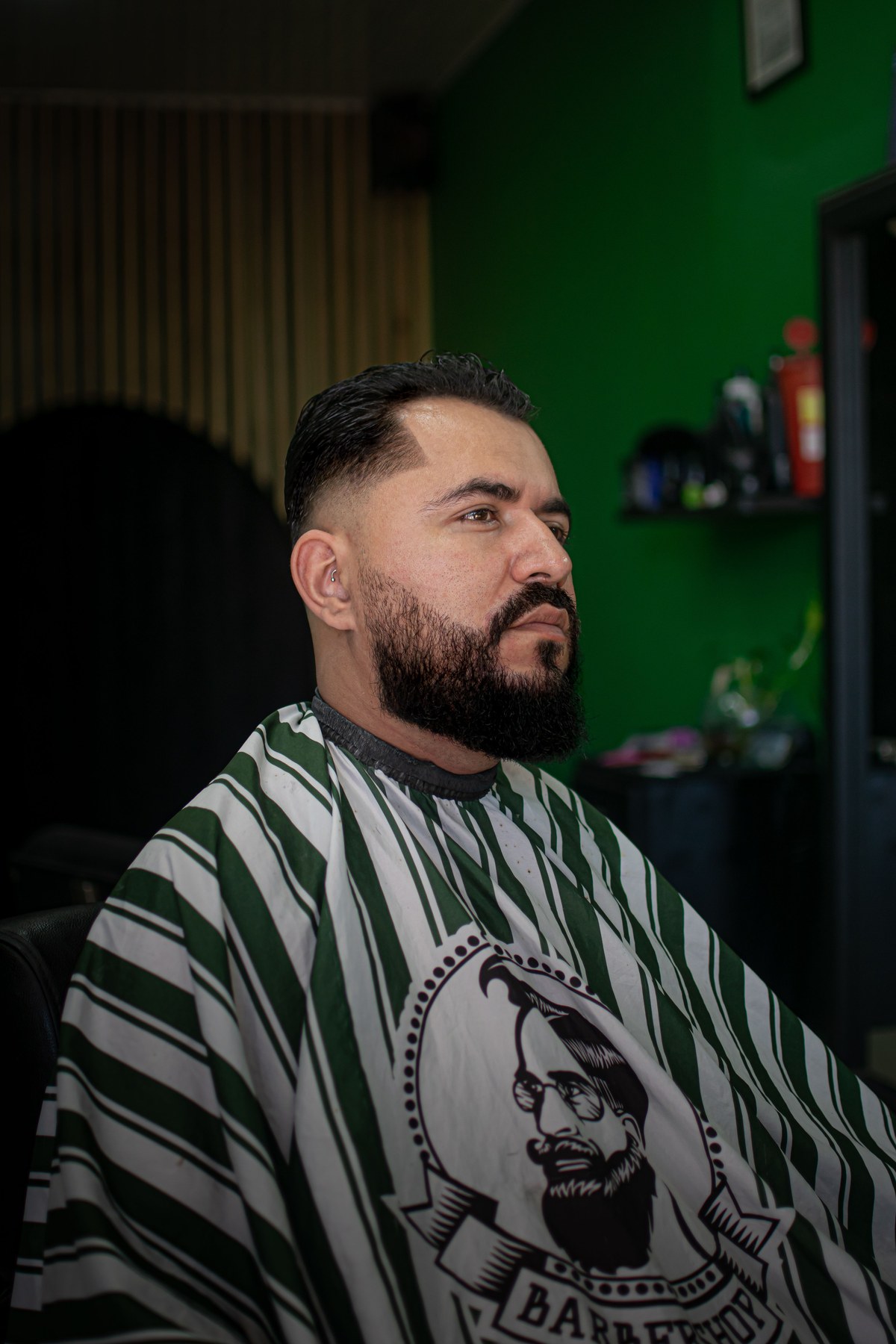
This is the complete mid taper fade curly hair guide.
The blend starts at the mid-temple and shortens through the sideburns and neckline while curls keep their natural length on top. How to choose the variation, what to tell your barber, and how to care for the curls between visits.

A mid taper fade on curly hair keeps the two jobs separate: the sides and neckline are tapered with the blend starting around the mid-temple, while the curls on top keep enough length to form their natural pattern. The result is a clean frame around a textured top, and it works because the taper never competes with the curls for attention.
What the cut actually is
A taper, unlike a full fade, concentrates the shortest work in a narrow band: the temples, sideburns and neckline. On curly hair the taper starts around the middle of the temple and graduates downward, so the sides stay neat without removing the weight the curls need above. The top is usually left at 2 to 4 inches, cut to encourage the curls to clump rather than frizz outward.
The word mid only sets where the blend begins. It says nothing about how short the taper goes at the bottom or what happens at the neckline. Settle those decisions with your barber before the clippers come out.

Why mid placement flatters curls
Curls add visual volume, and volume needs a frame. A mid taper gives the eye a clean line to follow from the temple down to the neckline, which makes the textured top look intentional rather than overgrown. A low taper can disappear under curl shrinkage; a high taper can expose too much scalp and fight the softness of the curls. Mid sits in the balanced middle.
There is also a practical reason. Curls shrink as they dry, sometimes dramatically, so the top will look shorter at the end of the day than when wet in the chair. Starting the taper at mid-temple keeps the sides proportional to the dry curls, not the wet ones.
Best variations by curl type
Wavy hair (loose S-patterns) pairs well with a slightly longer top, around 3 to 4 inches, because waves need length to show movement. The taper can stay soft and shadowed; a skin-tight blend under waves can look disconnected.
Classic curly hair (defined ringlets or corkscrews) is the sweet spot for this cut. Two to 3 inches on top lets the curls clump into their pattern while the mid taper frames them crisply.
Coily hair (tight coils and zig-zag patterns) benefits from the taper most of all, because it removes bulk exactly where coils tend to expand sideways. A sponge-twisted or picked-out top over a mid taper keeps the silhouette controlled. If you wear a lineup, agree on its shape before the taper is set, since the two edges meet at the temple.

Who it suits
The mid taper fade is one of the most adaptable cuts for curly hair because it adjusts to density rather than fighting it. Thick, dense curls get welcome relief at the sides; finer curls keep a clean outline that makes the top look fuller. Longer faces gain a little width from the horizontal line of the taper, while rounder faces benefit from the height the curls keep on top.
Lifestyle matters more than face shape charts. If you play sports or work outdoors, the short sides stay comfortable. If your workplace is conservative, a shadowed (non-skin) taper keeps the cut quiet while still showing intention.

Curl care routine
Curls are naturally drier than straight hair because scalp oils travel slowly down a coiled strand. Wash 2 to 3 times a week with a sulfate-free shampoo, focusing on the scalp, and condition every wash with the product worked through the mid-lengths and ends. Deep condition every week or two if the curls feel rough or lose definition.
Detangle only when the hair is damp and conditioned, working from the ends upward with fingers or a wide-tooth comb. Dry brushing curls breaks the pattern and creates frizz that no product fully fixes. After washing, apply a leave-in conditioner, then a light curl cream or gel while the hair is still damp, and then stop touching it. Handling curls while they dry is the fastest way to undo definition.
At night, a satin or silk pillowcase reduces friction. Refresh second-day curls with a light mist of water mixed with a little leave-in rather than a full rewash. The tapered sides need almost no care beyond keeping product off them so the blend stays crisp.

Exact barber script
Walk in with the silhouette settled in your own words first. Say you want the taper to start at the mid-temple, graduate through the sideburns, and finish clean at the neckline, while the top keeps enough length for your curl pattern to form. Point to the highest point of the blend on a reference photo and ask the barber to confirm it before cutting.
A chair brief that works: “I want a mid taper that starts around the middle of my temple, blends down through the sideburns into a natural neckline, and keeps the top long enough for my curls to clump. Show me the planned blend height before you take it shorter.” Replace the details with your own choices, and let the barber pick guards and tools for your density. If you wear a lineup or connect into a beard, state that before the taper begins, because it changes where the edges are drawn.

Styling tips
Style on damp hair, never dry. After leave-in and curl cream, scrunch gently upward to encourage clumping, then either air-dry or diffuse on low heat with the dryer pointing upward into the curls. High heat straightens the pattern you are trying to keep, so patience beats temperature.
Use less product than you think. A coin-sized amount of cream for the whole top is usually enough; excess sits on the surface and flakes once dry. Keep waxes, clays and heavy oils away from the tapered sides, where they clump short hair and make a smooth blend look patchy. If the top needs extra hold for the day, a light gel cast that you scrunch out once fully dry gives definition without crunch.
Upkeep and refresh timeline
The sides tell you when to rebook. When the blend line softens into a blur, the area above the ear starts to bulk, or the neckline distracts from the shape, the taper needs a professional cleanup — usually every 2 to 3 weeks. The top is far more forgiving: curls hide growth well, so reshaping every 6 to 8 weeks is enough unless you want a specific length maintained.
Between visits, resist carving into the taper yourself. One uneven pass with home clippers usually forces the barber to take the whole blend higher to fix it. A light neckline tidy is the only safe home maintenance, and even that is optional if the neckline was left natural. Photograph the cut from both sides when it looks its best so the next appointment starts from a record, not from memory.

Common mistakes and how to avoid them
The biggest mistake is cutting the top too short for the curl type. Tight coils cut to an inch will stand straight up rather than curl, and the whole point of the pairing is lost. When in doubt, leave the top longer at the first appointment; length can be removed in stages, but it cannot be added back.
The second is asking for a skin-tight taper without considering grow-out. A very close mid taper looks sharp for a week and then needs constant upkeep, while a shadowed taper stays presentable for longer. Match the closeness to how often you will realistically sit in the chair.
Choosing your reference photo
Bring two or three photos that show the same taper placement from different angles: one side profile for the blend height, one three-quarter view for how the top sits, and one rear view for the neckline. Choose references with a curl pattern reasonably close to yours, because shrinkage and volume behave differently across curl types.
Tell the barber which features are fixed and which are flexible. That clarity turns a photo from a demand into a discussion, and the adaptation is what makes the cut work on your head rather than the model’s.

If you are torn between a taper and a curved fade, compare the two shapes in Burst Fade vs Taper Fade: Which Cut Fits You? first. For the closest curl-specific companion, read Curly Burst Fade: Shape, Length & Barber Brief to see how the same curls behave with a different side silhouette.
Frequently asked questions
How long should the top be for a mid taper fade on curly hair?
Most versions keep 2 to 4 inches on top so curls can clump and show their pattern. Shorter than that, the curls read as texture rather than shape; longer than that, the taper becomes a supporting detail rather than the frame.
Will a taper damage my curl pattern?
The taper itself only shortens the sides and neckline, where curls are cut close anyway. The top keeps its length, so the curl pattern there is unaffected. Damage comes from heat, harsh brushing or chemical processes, not from the fade.
How often does a mid taper fade on curly hair need refreshing?
The sides usually need a professional cleanup every 2 to 3 weeks to keep the blend crisp. The top can keep growing for 6 to 8 weeks or longer before it needs reshaping, since curls hide growth well.
Mid taper vs low taper on curly hair: which is better?
A mid taper shows more contrast and frames the curls more deliberately, while a low taper is subtler and grows out more quietly. Choose mid when you want the fade to be a visible feature; choose low for a conservative or workplace-first cut.
What products work best for styling a curly mid taper?
A leave-in conditioner plus a light curl cream or gel, applied to damp hair, covers most curl types. Keep heavy waxes and oils off the tapered sides so the blend stays clean and does not clump.
Conclusion
The mid taper fade works on curly hair because it gives structure to the sides and freedom to the top. Agree on the blend height, the taper closeness and the top length before the cut starts, then let the curls do what they do naturally. Care for the pattern between visits, refresh the sides every few weeks, and the cut largely takes care of itself.
More verified free-stock references
Use these additional real photographs to discuss shape, placement and finishing details.
Written by Derek Nolan, an editorial pen name used for consistent authorship. No unverified barber credential or firsthand salon claim is presented. Visual references carry source credits with each image. Credited third-party photographs remain the property of their respective owners; source attribution is provided and rights concerns are handled through the Copyright Policy.