Photo: Haircut Inspiration
The burst fade is the haircut half your classmates already have. Around the ears the hair melts from longer to shorter in a smooth, curved arc, while the top keeps enough length to style however you want. It looks sharp walking into school on Monday and still looks intentional by Friday — no twenty-minute morning routine required.
This guide covers the burst fade for teenagers in full — what it is, why it fits teen life (school, sports, social), eight real styles worn by actual teen boys, the exact words to say to your barber, and how to keep it fresh between appointments. Every photograph below is a real haircut on a real teenager — save the one you like and show it to your barber.
What Is a Burst Fade?
A burst fade curves around the ear in a semi-circle — like a burst of sunlight — instead of running straight back along the sides. The shortest hair sits just above and behind the ear, blending upward into longer hair on top, while the neckline is usually left natural or softly tapered.
On a teenager the effect reads modern without being extreme. The curve follows the natural shape of the head, so the sides look sculpted rather than shaved, and the top stays long enough for real styling freedom.
Why the Burst Fade Works So Well for Teenagers
Most teen haircuts fall into two traps: too safe to care about, or too extreme for school. The burst fade lands between them — deliberately styled, but the top can be worn casually enough to pass any dress code.
It is also forgiving. Teenage hair grows fast and sometimes unevenly; a good fade disguises the awkward weeks between cuts. And it needs almost no daily styling — the structure of the cut does the visual work, not product.
Teen Life Fit: School, Sports & Social
School: The classic, curly-top and messy-wavy versions pass every standard dress code as neat short haircuts. The faux hawk, Edgar and mullet are bolder — fine for most schools, but check the rules if yours is strict about shaved sides or back length. For even younger boys, our boys fade haircuts guide covers school-safe styles for ages 4–12.
Sports: Short faded sides mean hair does not stick to your forehead during training, and the cut still looks sharp under a helmet or a headband. The curly-top and textured-fringe versions handle sweat better than long curtains.
Social: This is the cut that shows up in every teen hair trend roundup — current in photos and videos without a barber-level styling routine. A little texture, a shake, and you are done.
8 Burst Fade Styles for Teenagers
Every style below is shown on a real teenager. Save the photo you like and show it to your barber — a picture removes all guesswork.
1. Textured Fringe
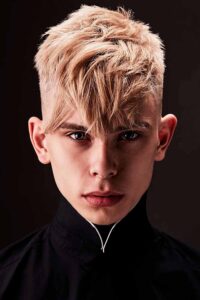
The most-worn teen burst fade right now: choppy, forward-falling fringe on top with the fade curving cleanly around the ears. It suits straight and wavy hair best, and it is the easiest of the eight to grow out — when the fringe gets long, it simply becomes a longer fringe. Ask for texture on top so it never looks flat. Our textured crop guide breaks down the choppy-top technique if you want the details.
2. Middle Part / Curtains
The curtain comeback pairs perfectly with a burst fade: longer middle-parted hair on top, faded sides keeping the shape from looking shaggy. It needs a few inches of top length to part properly, so it is the style for teens growing their hair out. A touch of cream keeps the part in place; finger-comb, never a hard comb, to keep it looking natural.

Photo: Modern Gentleman Magazine
3. Curly Top
Curly-haired teens get the best version of this cut. The burst fade carves a clean curve through the sides while the curls on top keep their natural shape and volume. Ask the barber to keep the curls’ length and only tidy the outline — cutting curls too short makes the head look rounder. A little curl cream, scrunched in while damp, keeps the top defined.
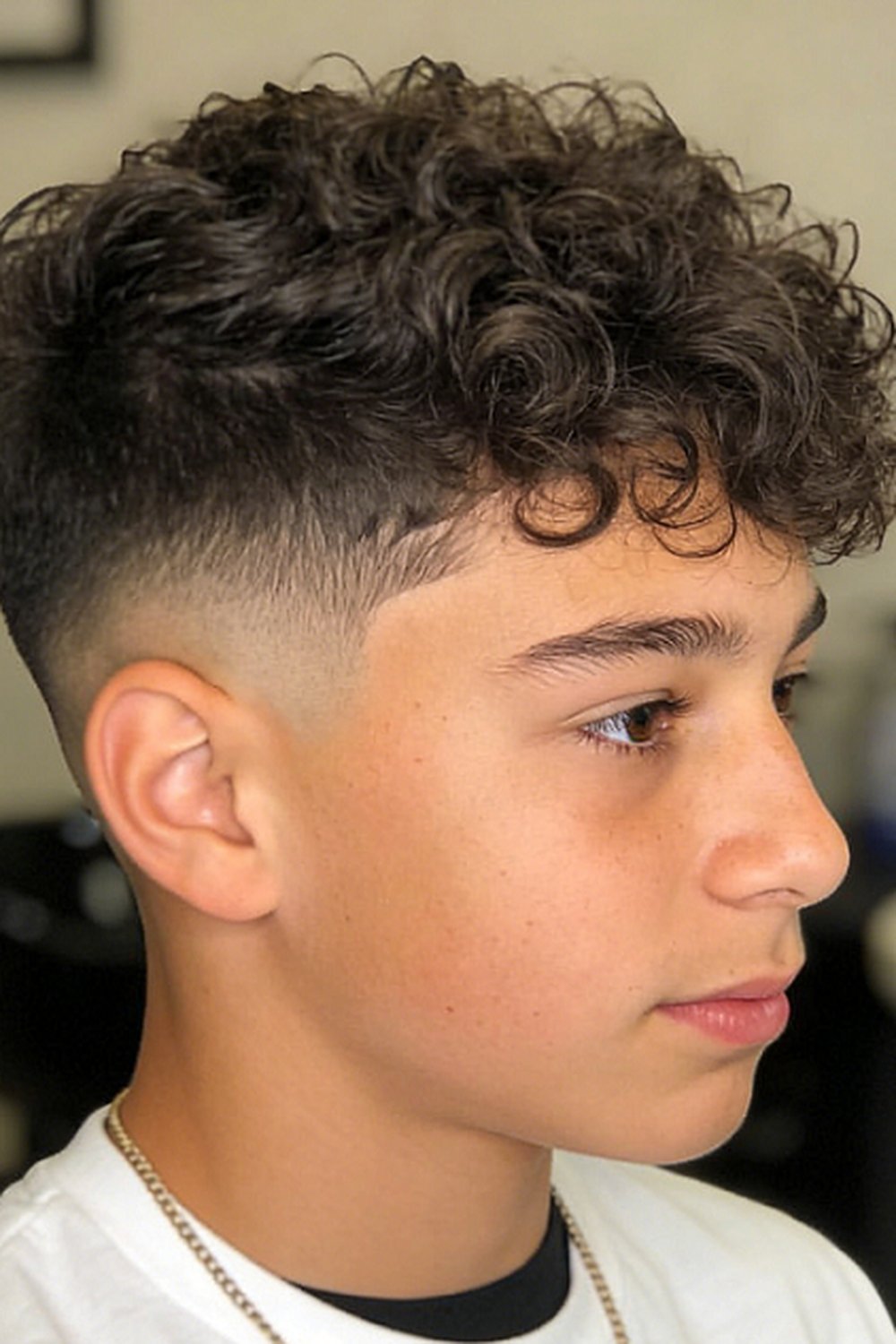
Photo: Honest Hair Factory
4. Faux Hawk
The faux hawk with a burst fade is the boldest style on this list: the top is pushed up and toward the center, and the burst curve frames it on both sides. It needs some styling product and a few minutes — the one style here that is not wash-and-go. Best for teens who want maximum impact.
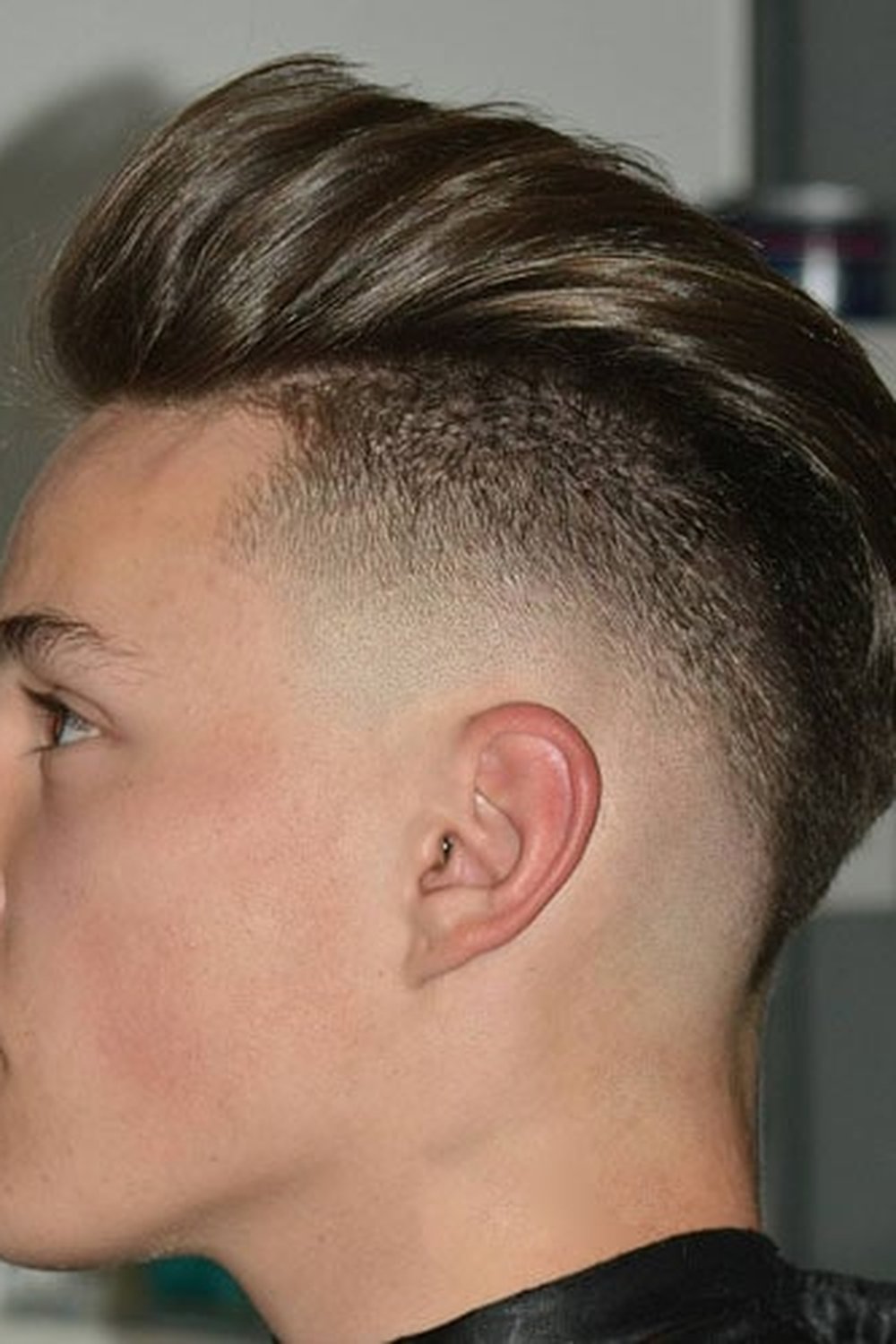
Photo: Men’s Hairstyles Now
5. Edgar
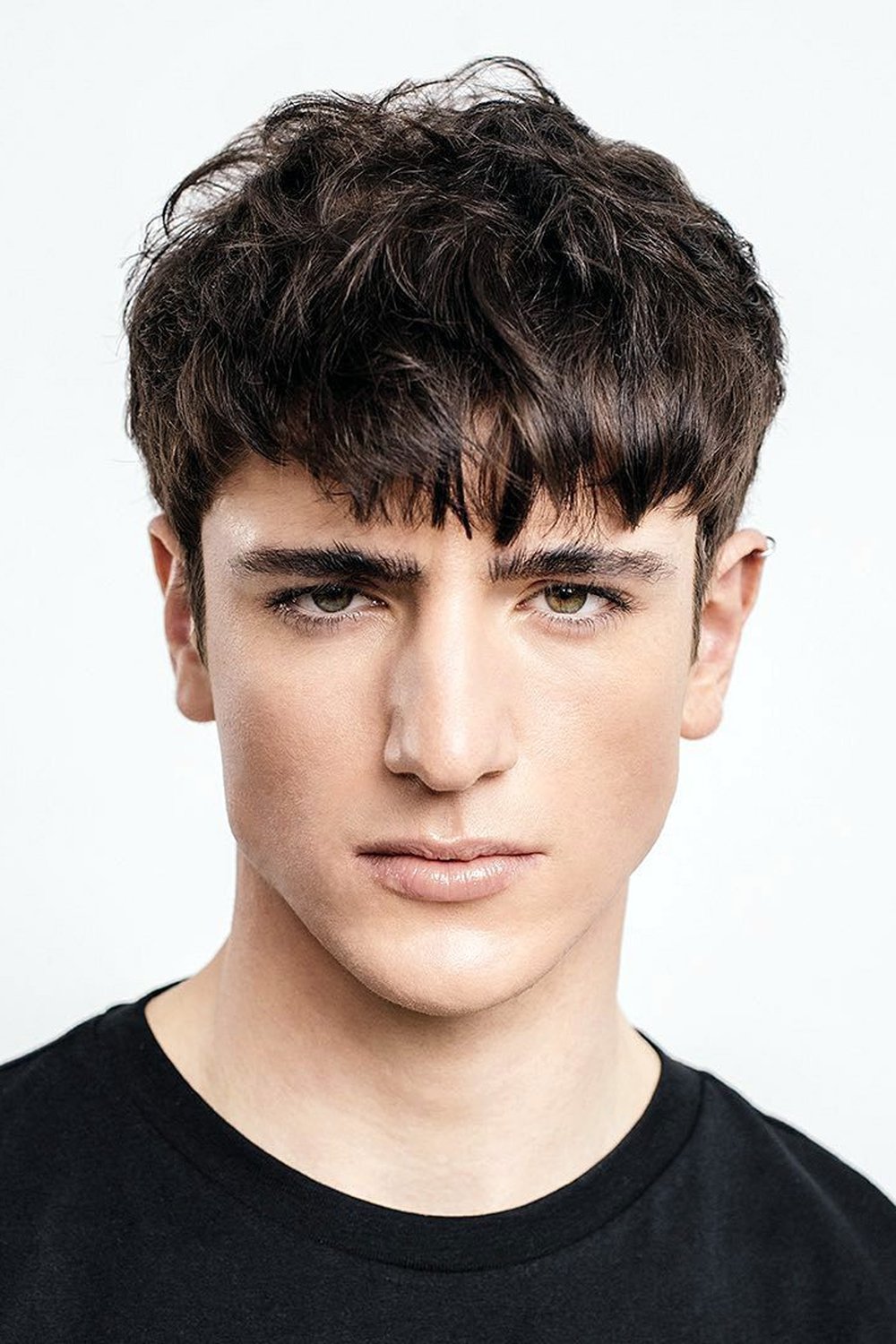
The Edgar — straight, blunt fringe with a crisp burst fade — is a teen staple. The straight fringe is the defining feature: keep it sharp and even, because the whole style depends on that clean line across the forehead. Trim the fringe line between full appointments to keep it looking intentional. If you prefer tapered sides over the burst curve, check out our mid taper edgar guide.

Photo: Sigma Stylist
6. Messy Wavy Top
For wavy hair that refuses to sit still: let the top stay messy and textured, and let the burst fade supply all the structure. Towel-dry, add a pea-sized amount of matte paste, tousle, and walk out. It is the lowest-effort style here and one of the most forgiving as it grows — the messiness hides everything.
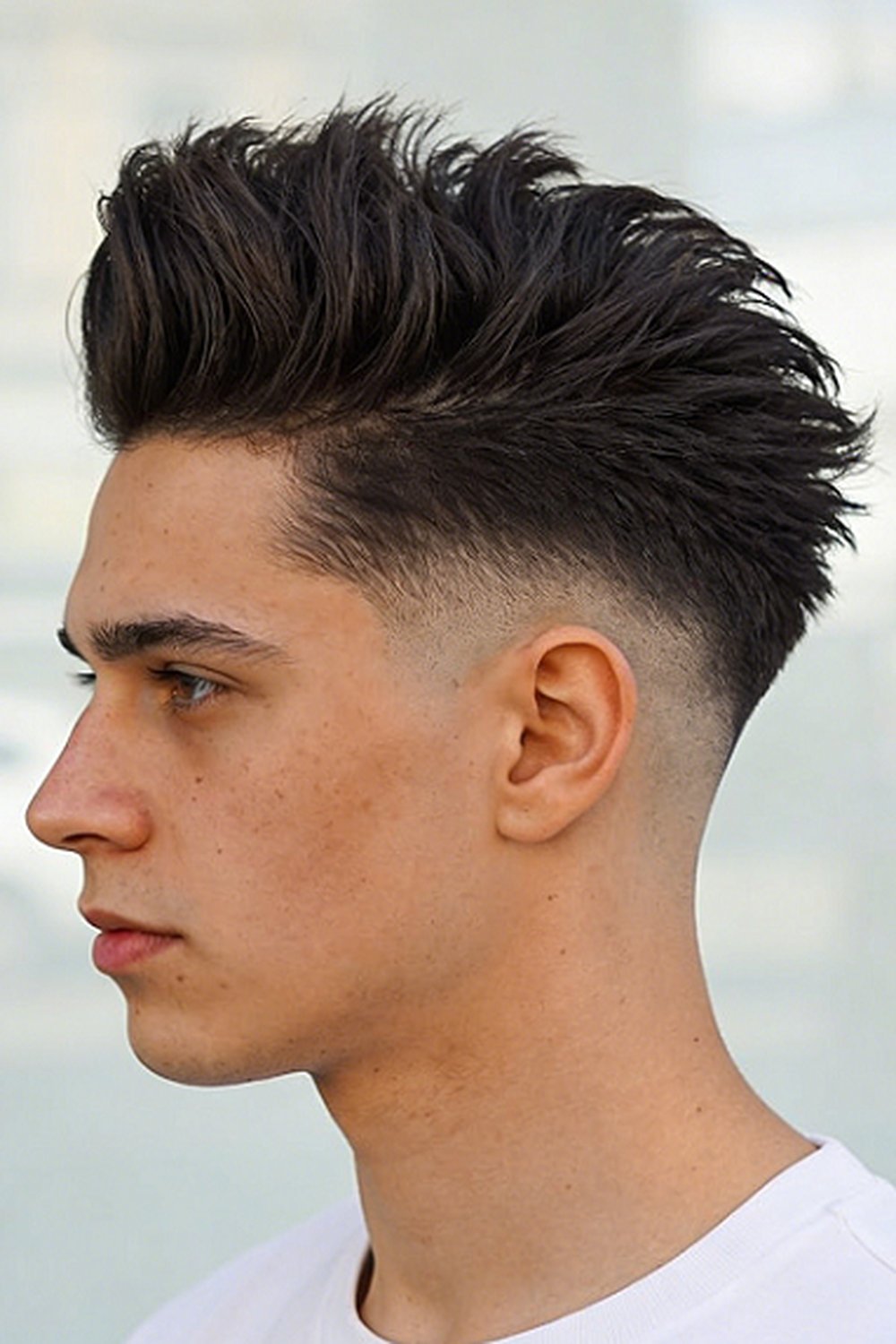
Photo: Honest Hair Factory
7. Classic Short (School-Friendly)
The safe-but-sharp option: a shorter top with a clean burst curve, neat from every angle and acceptable everywhere. If your school has strict rules or you just want a cut that never looks wrong, this is the one. It also grows out the most gracefully of the eight — the shape holds for weeks with zero styling.
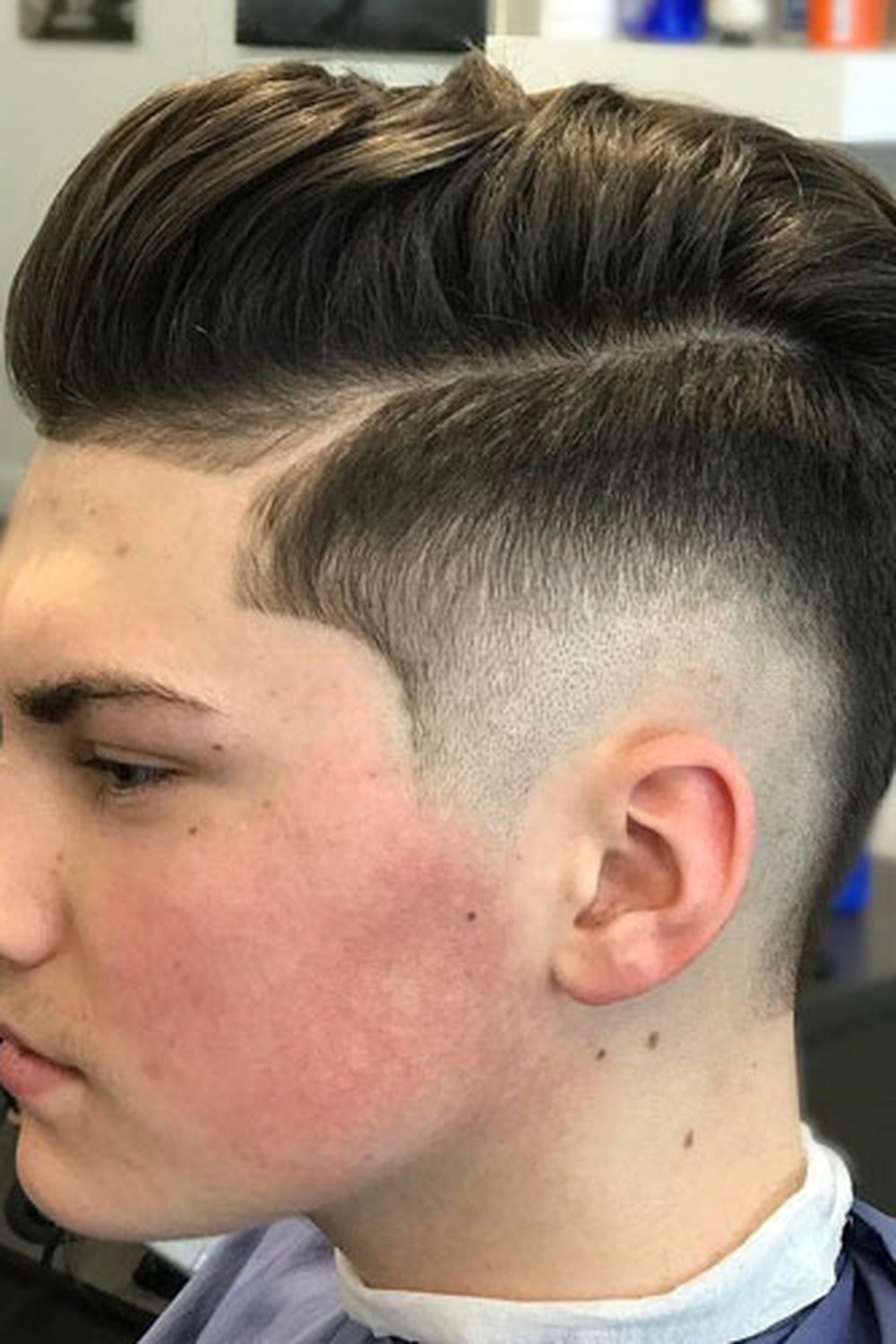
Photo: Men’s Hairstyles Today
8. Burst Fade Mullet
The mullet’s comeback runs on the burst fade: faded sides in the classic curve, length flowing over the collar at the back, and a shorter fringe up front. It is the statement style — fun, a little rebellious, and the most commitment of the eight since the back needs months to grow. Check school rules first.
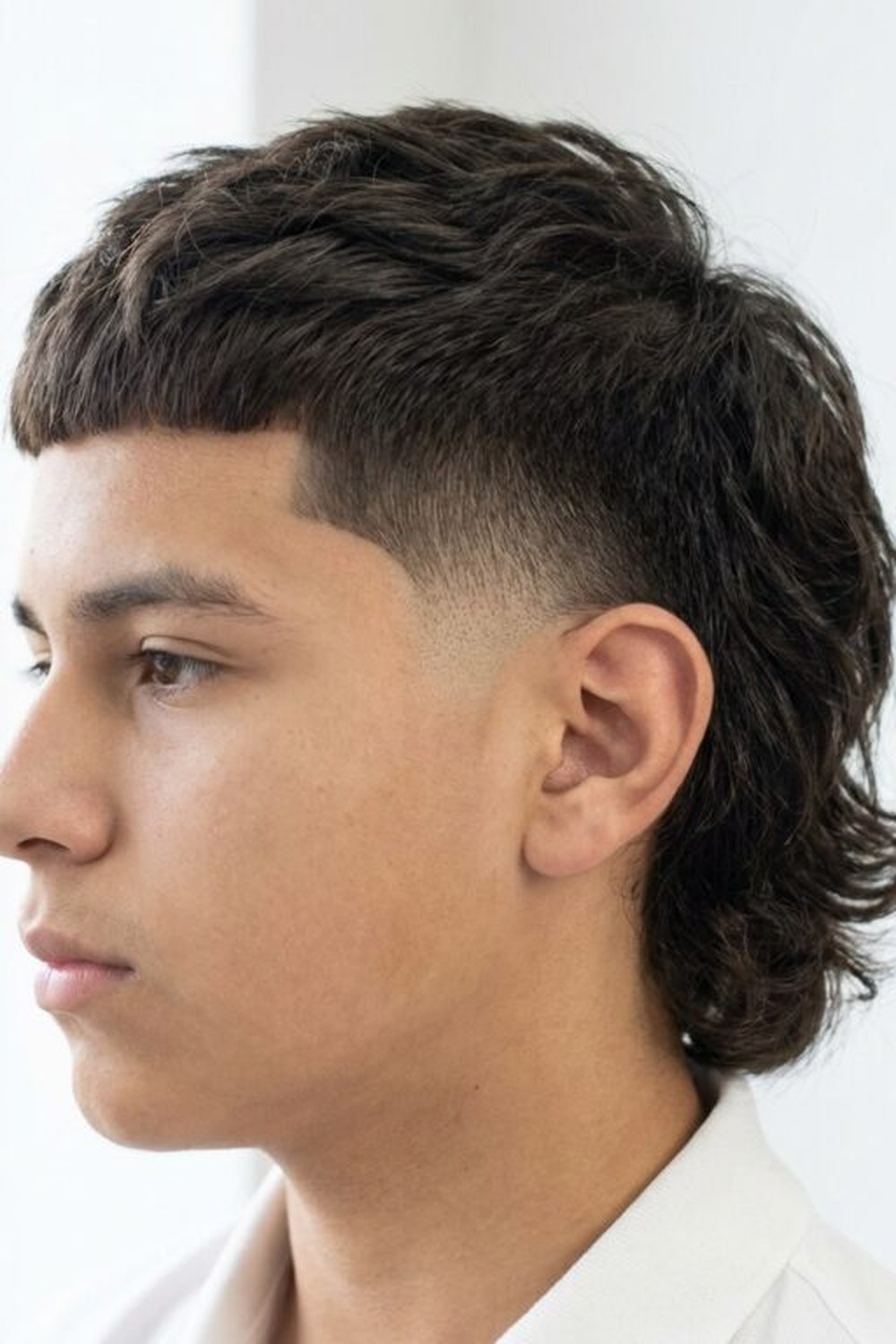
Photo: VAGA men’s magazine
What to Tell the Barber: The Exact Script
Walk in with a reference photo and say this, adjusting the top length to taste:
“A burst fade — fade curving around the ear, blended, not too high. Keep [two/three] inches on top [as a fringe / curly / parted in the middle]. Natural finish at the neckline, no hard lines.”
Also specify how high the fade goes and how short the shortest point gets (a #1 or #2 guard is plenty — skin-tight fades grow out faster and show scalp).
One practical tip: photograph the cut the day after the appointment, front, side and back. Next visit, those three photos tell the barber exactly what to recreate — better than any description. New to fade terminology? Our overview of the different types of fades is a good five-minute primer before the appointment.
Keeping the Cut Sharp Between Appointments
A teen’s burst fade holds its shape for two to three weeks — teenage hair grows fast, so book the next appointment at two to three weeks and you will skip the awkward in-between stage.
Keep product minimal: a gentle shampoo two to three times a week, and at most one styling product. A pea-sized amount of matte paste or light cream is enough. For curly tops, scrunch curl cream into damp hair; for fringe and wavy tops, shake out after towel-drying instead of combing flat.
Frequently Asked Questions
Is a burst fade good for teenagers?
Yes — it is one of the most popular teen cuts for good reason. It looks modern, works with every hair type, passes most school dress codes, and needs almost no daily styling.
How often does a teen’s burst fade need trimming?
Every two to three weeks. Teenage hair grows fast, and the fade’s curve is what makes the cut — booking at two to three weeks keeps it looking intentional.
Will a burst fade pass my school’s dress code?
The classic, curly-top and messy-wavy versions pass as neat short haircuts at almost every school. The faux hawk, Edgar and mullet are bolder — check your school’s policy on shaved sides or back length first.
What ages does a burst fade suit?
Roughly 13 to 19. Younger teens usually suit the softer versions — classic, low, curly top — while older teens carry the sharper styles like the faux hawk and Edgar better. For the 18–30 range, our burst fade for young men guide picks up where this one leaves off.
Does a burst fade work on curly or fine hair?
Both. Curly tops look excellent with length kept on top. For fine hair, ask for a soft burst taper blend so the sides do not look sparse — our mid taper fade guide explains the taper blend in detail.
How do I ask the barber for a burst fade?
Bring a reference photo and say: “burst fade, curving around the ear, blended, not too high, a few inches on top, natural neckline.” A #1 or #2 guard at the shortest point keeps it clean without going skin-tight.
The Short Version
The burst fade is the teen cut that does everything: sharp enough for photos, practical enough for sports, and easy enough for a school morning. Pick a style above, save the photo, use the barber script, and book the next trim two to three weeks out.