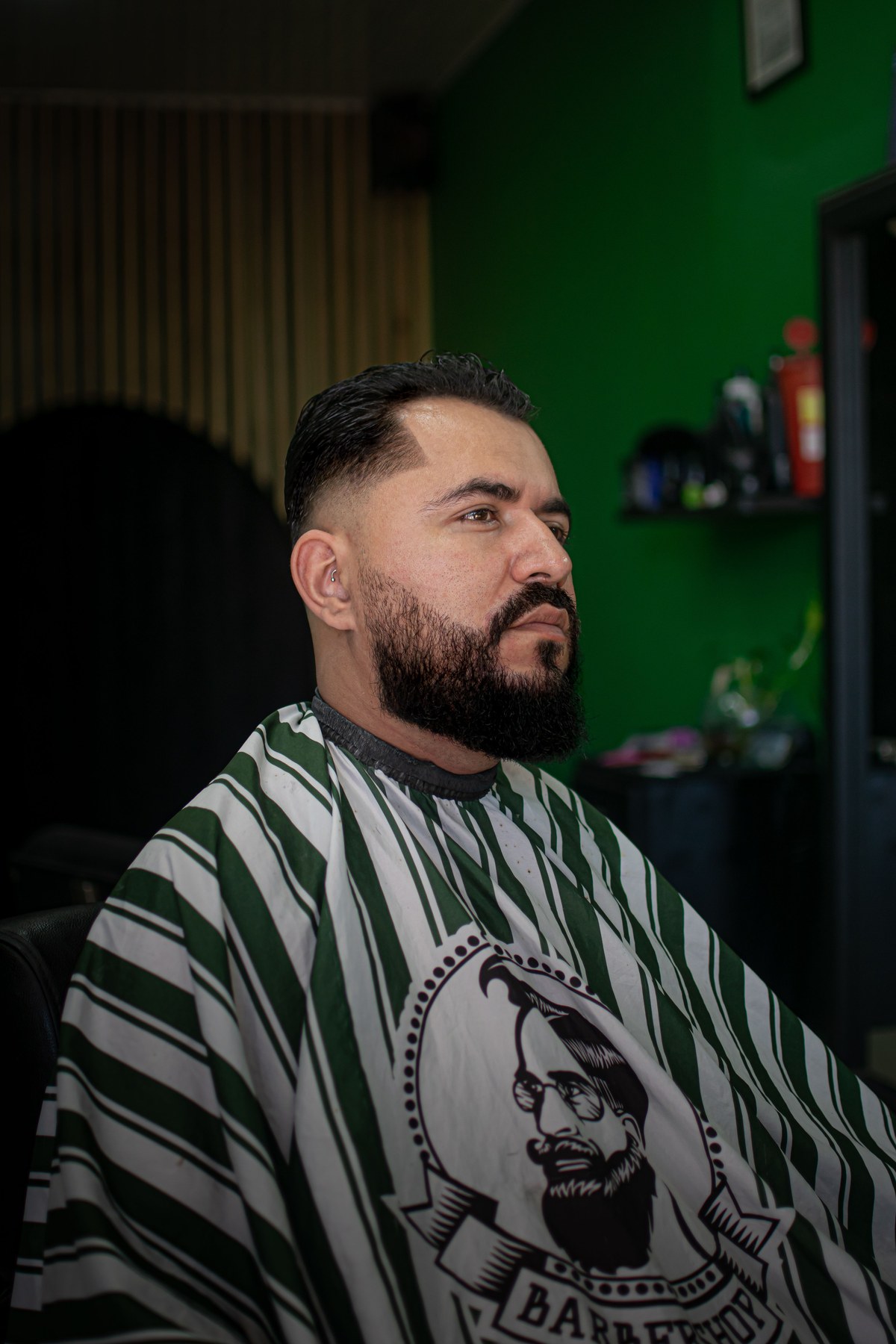
Walk into any barbershop and you will hear one word more than any other: fade. But a fade is not a single haircut — it is a whole family, and mixing up the names is the most common way to walk out with something you did not ask for.
A fade is simply a gradual blend from longer hair on top to shorter hair at the sides and back. The types of fades differ in three ways: how high the blend starts, where on the head it sits, and how short it finishes. This guide is your taxonomy — every major type defined in plain language, with who it suits and where to read the full deep-dive.
What Counts as a Fade
Every fade uses the same mechanic: the barber works through clipper guards from longer to shorter, melting each length into the next. Guard numbers run from #0 (skin, no guard) upward. Two ideas explain every type below: transition height (where the shortest part sits) and finish (bare skin, or stopping at short stubble).
Types of Fades by Height
1. Low Fade
The subtlest of the family. The blend starts just above the ears and stays low, leaving most side length intact. Neat and professional rather than edgy — ideal for side parts, slick backs, and textured crops — with the most forgiving grow-out. The safest first fade. Read our full low fade guide. Who it suits: most face shapes and hair types, from straight to coily — the low blend adds polish without changing the head’s silhouette. What to tell the barber: ask for the fade to start just above the ear and stay low, and agree the top length in advance. Upkeep: a tidy-up every three to four weeks keeps it sharp, and the grow-out stays neat between visits.

Photo: Barber’s Stake
2. Mid Fade
The barbershop default. The blend starts around the temples: clean and defined, yet enough side length to work with. It flatters most hair types and pairs with everything from pompadours to buzz-length tops. Torn between subtle and bold? This is the answer. Who it suits: genuinely most people — the temple-height blend adds definition without drama, and it behaves on straight, wavy, thick, and curly hair. What to tell the barber: ask for the blend to begin at the temples with a smooth, gradual transition, and confirm how short the shortest guard goes. Upkeep: book a clean-up every two to three weeks to keep the gradient crisp.

Photo: Barber’s Stake
3. High Fade
The bold one. The blend starts high, stripping the sides down fast for maximum contrast with the top. Sharp on thick hair and short tops, but it exposes more scalp and grows out visibly, so it needs regular clean-ups. Choose it when the cut itself should be the statement. Who it suits: thick hair that can carry the contrast; on rounder faces the height can add the illusion of length, while very fine or thinning hair can look sparser where scalp shows through. What to tell the barber: specify exactly how high the blend starts and bring a photo, since ‘high’ means different things in different chairs. Upkeep: the contrast line shows regrowth quickly, so plan a tidy-up every one to two weeks.

Photo: Men’s Hairstyles Today
4. Skin Fade (Bald Fade)
Not a height but a finish — the most dramatic one. A skin fade (bald or zero fade) blends to bare skin for the crispest possible contrast, and it combines with any height. The trade-off: the skin line blurs within days, so it needs the most frequent touch-ups. Read our full skin fade guide. Who it suits: anyone chasing maximum sharpness, on most hair types — it flatters strong jawlines and pairs well with beards. What to tell the barber: name the height (low, mid, or high) plus ‘to the skin’, and ask for a foil-shaver finish if you want it truly smooth. Upkeep: this is the highest-maintenance option — the skin line softens within days, so weekly or fortnightly touch-ups keep it crisp.

Photo: Ape to Gentleman
Types of Fades by Placement and Shape
Named for where the blend happens or the shape it takes. Each can be cut at low, mid, or high heights.
5. Taper Fade
The conservative classic. A taper shortens hair gradually — traditionally at the sideburns and neckline — for a softer, more natural finish than a skin fade. The go-to for professionals and first-timers. Read our low taper fade guide and mid taper fade guide. Who it suits: anyone who needs to look tidy without looking edgy — the safest choice for conservative workplaces — and it flatters most face shapes because it keeps the natural silhouette. Curly and coily hair wears it especially well at the neckline. What to tell the barber: say ‘taper, not a fade’ — you want the sides and back kept longer with just the edges cleaned up. Upkeep: it grows out gracefully, so every three to four weeks is plenty.

Photo: Luxe Digital
6. Drop Fade
The blend follows the head’s natural curve, dipping behind the ear instead of running straight around. That arc flatters rounder head shapes and adds a designer touch to textured tops and beards. Read our full drop fade guide. Who it suits: the dipping arc adds shape around rounder faces and head shapes, and it gives textured tops and beards a deliberate, designed edge. What to tell the barber: ask for the fade line to drop behind the ear following your head’s natural curve — not a straight line around — and agree the height at the front first. Upkeep: the arc needs a skilled hand to re-cut, so return every two to three weeks to keep the curve clean.

Photo: MensFlair
7. Temple Fade (Brooklyn Fade)
Precision work at the temples and sideburns: a tight faded zone, often with a crisp line-up at the hairline, while the rest stays longer. A staple for short tops, waves, and afros. Read our full temple fade guide. Who it suits: anyone with a short top who wants sharpness without committing the whole side — it is made for waves, short afros, and crisp hairlines. What to tell the barber: point to the temples and say how tight you want the faded zone, and whether you want a line-up at the hairline to go with it. Upkeep: the area is small so regrowth shows fast — expect a touch-up every one to two weeks to keep the edges sharp.

Photo: HairAide
8. Burst Fade
The signature curve: faded in a semicircular arc around the ear, with length left at the back. The engine behind the mohawk fade, the burst fade mullet, and the Southside fade — flattering on straight, wavy, curly, and coily hair alike. Read our complete burst fade guide. Who it suits: mohawks, faux hawks, mullets, and curly or coily tops — anything with length at the back — and the vertical emphasis flatters rounder faces. What to tell the barber: describe the arc around the ear and stress that the back stays long; bring a photo, because the curve’s shape varies. Upkeep: the arc needs re-shaping every two to three weeks, or the signature curve grows out into an ordinary fade.
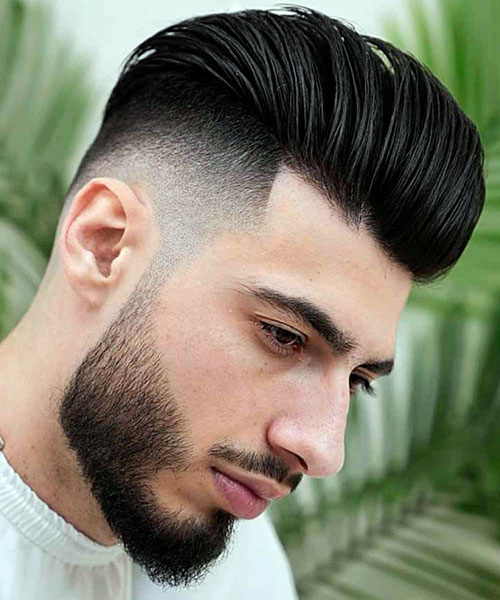
Photo: Men’s Hairstyles Today
9. Shadow Fade
The quiet luxury of fades. The shortest length stays longer — typically a #1 or #2 rather than skin — so the blend reads as a soft shadow, not a hard contrast. The most office-safe fade and the most graceful grow-out. Who it suits: first-timers, office workers, and anyone whose hair is thinning — the longer shortest length is forgiving and never reads as harsh. What to tell the barber: ask for the shortest length at a #1 or #2 rather than skin, and say you want a soft, low-contrast blend. Upkeep: the gentlest of all fades — every three to four weeks is enough, and grow-out stays presentable throughout.

Photo: Men's Hairstyles Today
10. Razor Fade
Defined by the tool, not the placement: the shortest sections are finished with a straight razor for the crispest skin line and sharpest edge-ups. Usually a barbershop-only finish, and it elevates whichever fade it is applied to. Who it suits: anyone who wants the crispest possible lines — the razor finish flatters sharp, defined styles where every edge is on show. What to tell the barber: ask for a straight-razor finish on the shortest sections, and mention sensitive skin, since a razor can irritate freshly clipped skin. Upkeep: razor edges blur fast, so plan a refresh every one to two weeks; between visits, the skin line is the first thing to soften.

Photo: Men's Hairstyles Today
Types of Fades by Style Pairing
Some “types” are really fades fused with a signature top or finish — names you will also hear at the chair.
11. Undercut Fade
Long, disconnected top with faded sides — the blend softens the classic undercut’s hard line. Suits thick, straight hair best and needs styling product every morning. Who it suits: thick, straight hair that can hold the long top, and oval or oblong faces that carry the extra height well. What to tell the barber: say you want a long, disconnected top with faded — not blended — sides, and show how you actually style it, since the cut is built around your routine. Upkeep: the sides need a clean-up every two to three weeks, while the top needs product and a few minutes every morning — this is not a wash-and-go cut.

Photo: Men's Hairstyles Today
12. Afro / High-Top Fade
Natural, coily hair shaped on top — rounded afro to flat high-top — with faded sides cleaning up the silhouette. Temple and burst fades are the most common pairings; the result depends on a barber experienced with textured hair. Who it suits: coily and curly textures worn with height — the shaped top is the haircut, and the faded sides keep the outline crisp. What to tell the barber: describe the silhouette you want — rounded, flat top, and how much height — and say how tight the sides should fade. Choose a barber experienced with textured hair. Upkeep: the outline is everything, so book a shape-up every one to two weeks; the top itself needs regular trims to hold its shape.

Photo: Men's Hairstyles Today
13. Fade With Design (Hard Part)
Any fade can take an etched design: a hard part, geometric lines, or freehand patterns. Designs blur within a week or two, so they commit you to frequent visits — but they turn a standard fade into a signature. Who it suits: anyone who wants a signature rather than a haircut — designs suit confident wearers and short styles where the pattern stays visible. What to tell the barber: bring a reference photo and agree the placement, size, and whether you want a hard part or an etched pattern; not every barber does freehand work, so ask first. Upkeep: designs blur as hair grows, so expect weekly refreshes — let it grow out and it becomes an ordinary fade again.

Photo: Men's Hairstyles Today
14. Faded Neckline (Tapered Nape)
The most minimal fade: just the neckline, tapered softly at the nape, with the rest untouched. It keeps longer styles — flow cuts, curtains — looking deliberate between full haircuts. Ask for a low taper at the neckline and nothing else. Who it suits: anyone growing their hair out or stretching time between full haircuts — it keeps longer styles looking deliberate. What to tell the barber: ask for just the neckline tapered softly at the nape, and be clear the rest stays untouched. Upkeep: this is a quick, cheap tidy between cuts rather than a haircut in itself — it buys your style an extra couple of weeks.

Photo: Haircut Inspiration
Types of Fades — Quick Comparison
| Fade type | What it is | Best for |
|---|---|---|
| Low fade | Blend starts just above the ears | First fades, office looks, easy grow-out |
| Mid fade | Blend starts at the temples | The all-rounder; most hair types |
| High fade | Blend starts high on the head | Bold contrast, thick hair, short tops |
| Skin fade | Blends to bare skin | Maximum crispness; frequent upkeep |
| Taper fade | Gradual, natural blend | Professionals, subtle clean-up |
| Drop fade | Arcs down behind the ear | Rounder heads, textured tops |
| Temple fade | Focused on temples, sharp hairline | Short tops, waves, afros |
| Burst fade | Semicircle around the ear | Mohawks, mullets, curly and coily hair |
| Shadow fade | Soft finish, not to skin | Office-safe, graceful grow-out |
| Razor fade | Straight-razor finish | Crispest lines; barbershop upkeep |
| Undercut fade | Long top, faded sides | Thick straight hair, styled daily |
| Afro / high-top fade | Shaped natural top, faded sides | Coily and curly textures |
| Fade with design | Etched lines or patterns | Personal signature; frequent visits |
| Faded neckline | Tapered nape only | Longer styles between cuts |
How to Ask Your Barber for the Right Fade
Name three things: the height (low, mid, or high), the finish (to skin or soft), and the shape (drop, burst, temple — if you want one). Then show a photo: names vary between barbers, but a photo does not.
Types of Fades — FAQ
What are the main types of fades?
The core family is low, mid, high, and skin fades (height and finish), plus taper, drop, temple, and burst fades (placement and shape) — fourteen types in total, all covered above.
What is the difference between a fade and a taper?
A fade blends the sides and back down through the guards across the whole side of the head. A taper is a gentler, gradual shortening, classically at the sideburns and neckline. Our low taper fade guide breaks the distinction down fully.
Which fade is best for a first-timer?
A low fade or a shadow fade — subtle, low-maintenance, workplace-safe, and graceful if you decide fades are not for you. Save high and skin fades for once you know you like the upkeep.
Is a skin fade the same as a zero fade?
Essentially, yes. “Zero fade” means the #0 guard (no guard) is the shortest length, blending down to the skin — exactly what a skin fade (or bald fade) is. Barbers use the terms interchangeably.
How often does a fade need trimming?
Sides lose crispness within a few weeks; most fade wearers tidy the sides every few weeks and the top every six to eight. Skin and razor fades blur fastest; shadow and low fades are the most forgiving.
Can kids get fade haircuts?
Yes — fades are among the most popular kids’ cuts, keeping sides neat while the top stays fun. Low and mid fades are the safest school-age choices. See our kids taper fade guide.
Conclusion
Fourteen types of fades, one mechanic: a gradual blend from long to short. Learn the height, the finish, and the shape, and you will never misorder a fade again. Pick your type, read its dedicated guide, and take a photo to the chair. Still torn between two? Our complete fade haircut guide for men walks through the decision.