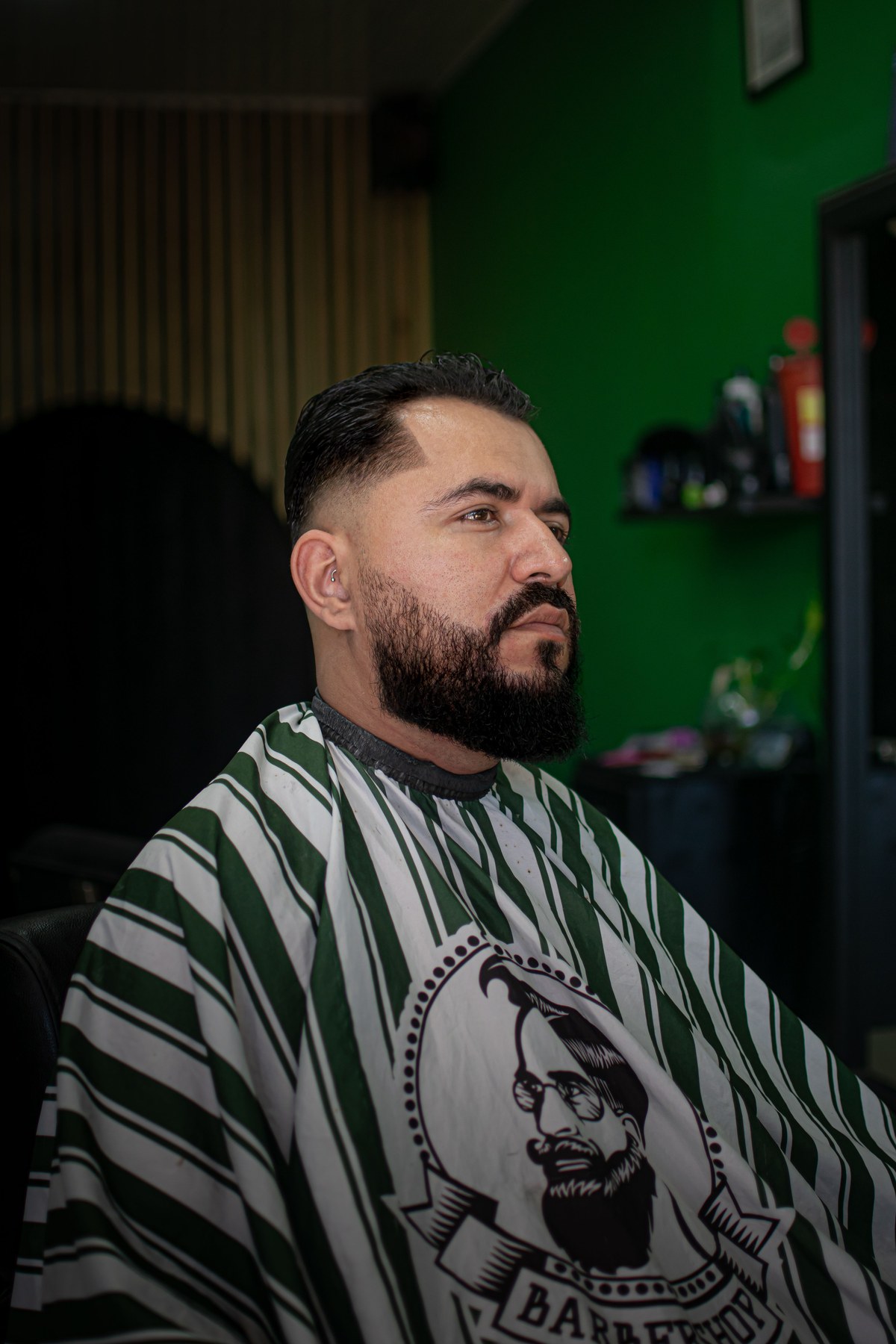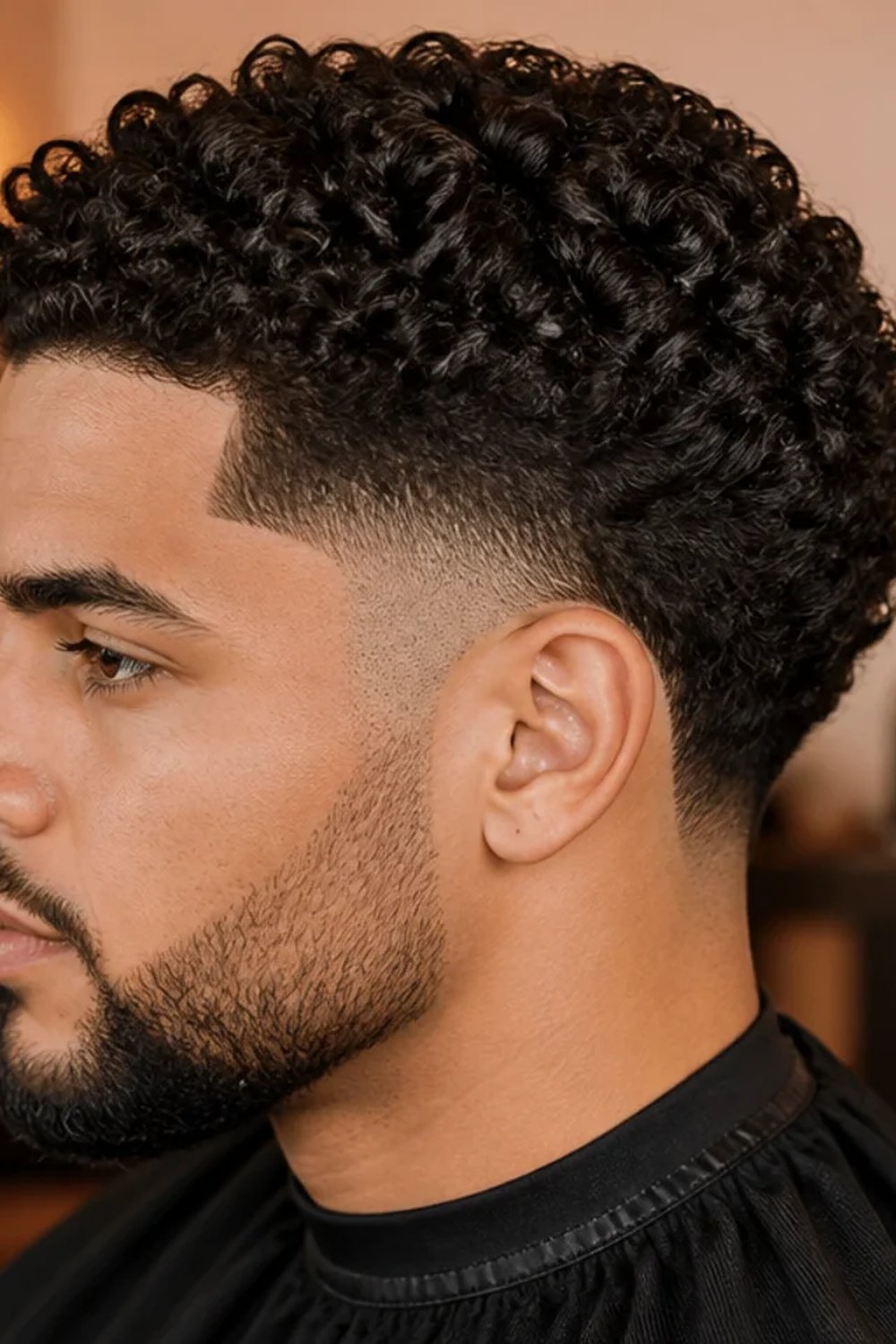
The low burst fade is the quietest way to wear a burst
The burst fade is famous for its curve — a rounded arc of short hair that wraps around the ear instead of running straight across the head. The low burst fade keeps that arc low and tight to the ear, so the shape reads as a clean detail rather than a statement. It is the gentlest version of the burst, the easiest to wear at work, and the most forgiving if you have never had a fade before.
What exactly is a low burst fade? The blend starts around the top of the ear and curves in a soft semicircle around it, with the shortest hair hugging the ear in a shallow band. Above the arc, the sides keep their length; behind the ear and across the back, the hair stays fuller. That is what makes it different from a low fade, which blends the whole side and back in a straight band, and from a low taper, which only tidies the edges. “Low” describes where the arc sits, not how short the bottom goes — the finish can be skin, a faint shadow of stubble, or a soft taper, and the back can stay short or keep its length.
Below are 30 low burst fade styles for men — from the timeless classic to skin finishes, textured tops, curls, waves and beard pairings — each with barber instructions, styling tips, and who it suits best. Whether you want the boardroom-safe classic or a bold burst mullet, you’ll find your cut here.
What’s in this guide
Classic Low Burst Fades
1. Classic Low Burst Fade
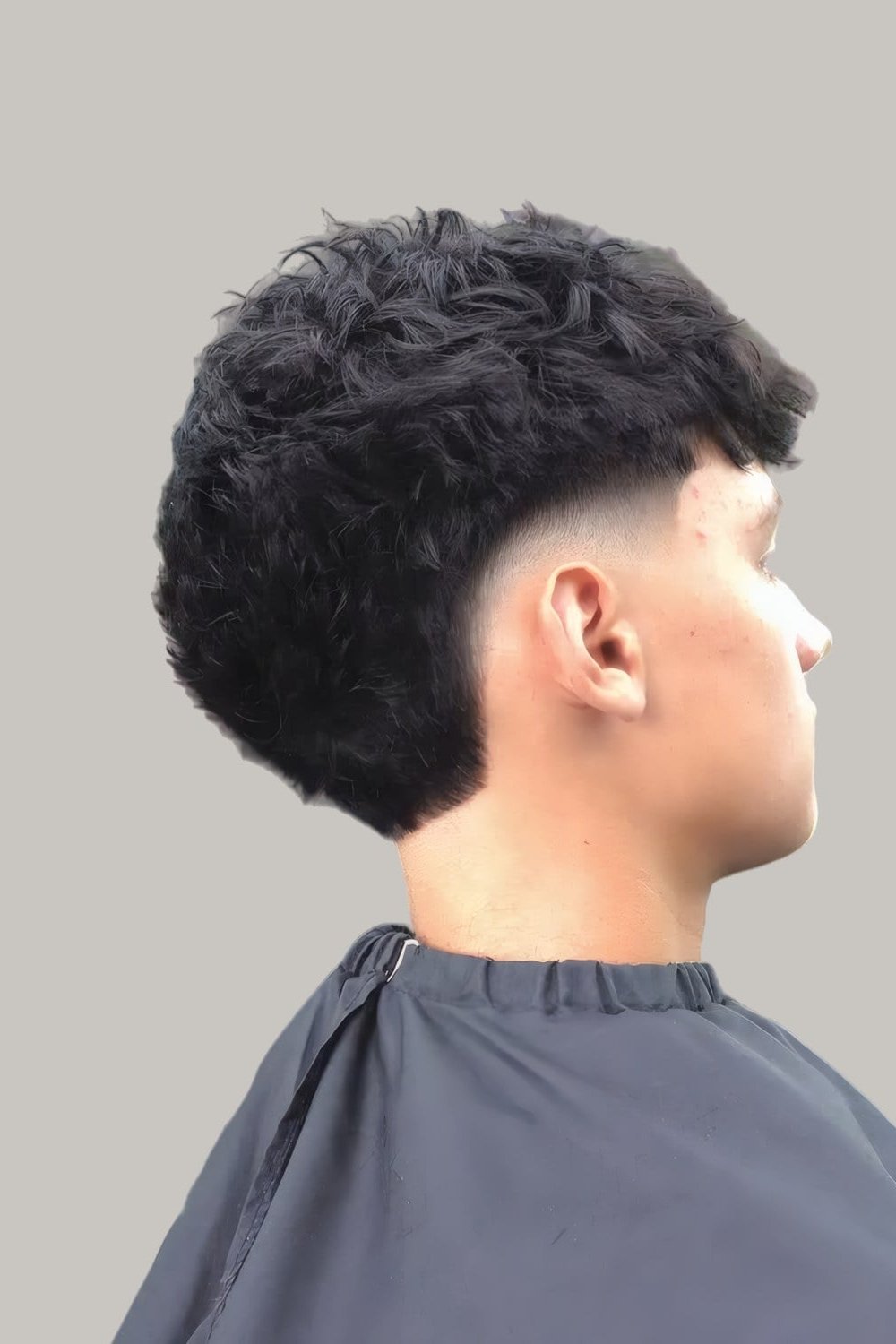
Photo: Luxe Digital — source
The one to start with. A clean, compact arc hugging the ear, a neat curly top, and the back left at natural length. Nothing about it shouts — it simply looks sharp from every angle. Ask your barber for a low burst that starts just above the ear and keeps the back full. It suits every face shape and almost every hair type, which is why barbers suggest it as a first burst fade. Styling: none required, though a little matte paste keeps the top tidy.
2. Low Burst Fade with Textured Top
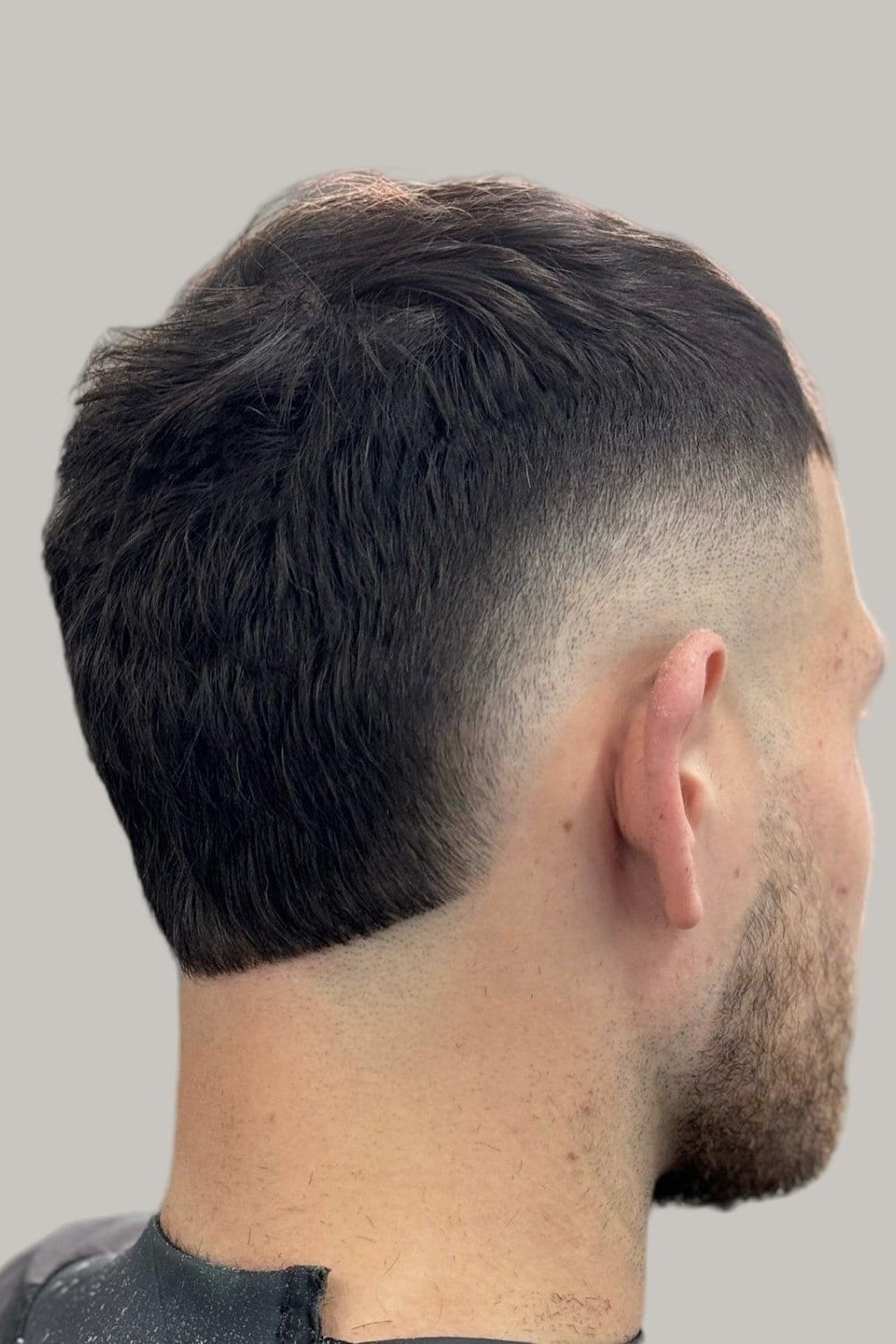
Photo: Luxe Digital — source
Point-cut texture on top gives the quiet low burst some movement. The choppy, piece-y finish makes the top look thicker and more modern, while the low arc keeps the whole cut grounded and wearable. Ask for about an inch to an inch and a half on top with texture cut in, over a low burst kept close to the ear. Best for straight and wavy hair. Style with matte clay, pushing the front up and forward with your fingers.
3. Low Burst Fade with Side Part

Photo: Luxe Digital — source
A defined side part gives the low burst an old-school, gentlemanly edge. In this version the part is razored in for a crisp line that frames the top — sharp, intentional, timeless, and a boardroom and wedding favourite. Ask for a low burst with a hard side part razored on your natural side. Works beautifully with straight hair; a comb and light pomade finish it. Note: a razored part needs re-cutting every 2 to 3 weeks as the line softens with growth.
4. Low Burst Fade with Comb Over
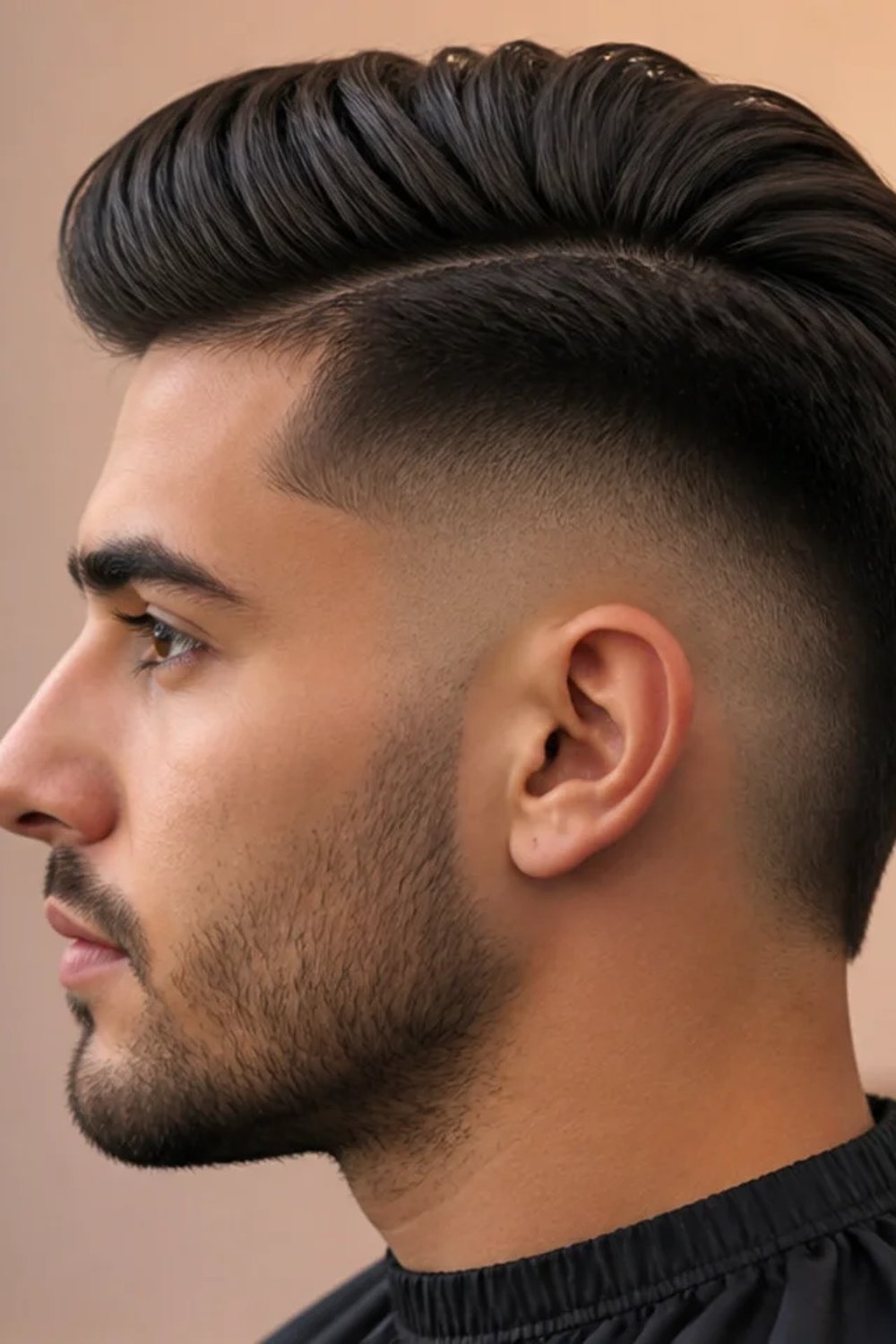
Photo: Haircut Vibes — source
The comb over sweeps the top neatly to one side over a low, subtle burst — polished without looking stiff. Because the fade stays low, the top keeps its weight and the sweep reads full rather than thin. Ask for enough length on top to comb across (about two inches), with the burst kept compact around the ear. Ideal for straight and slightly wavy hair, and for men who want a tidy, professional finish. A light pomade holds the sweep all day.
5. Low Burst Fade with Slick Back
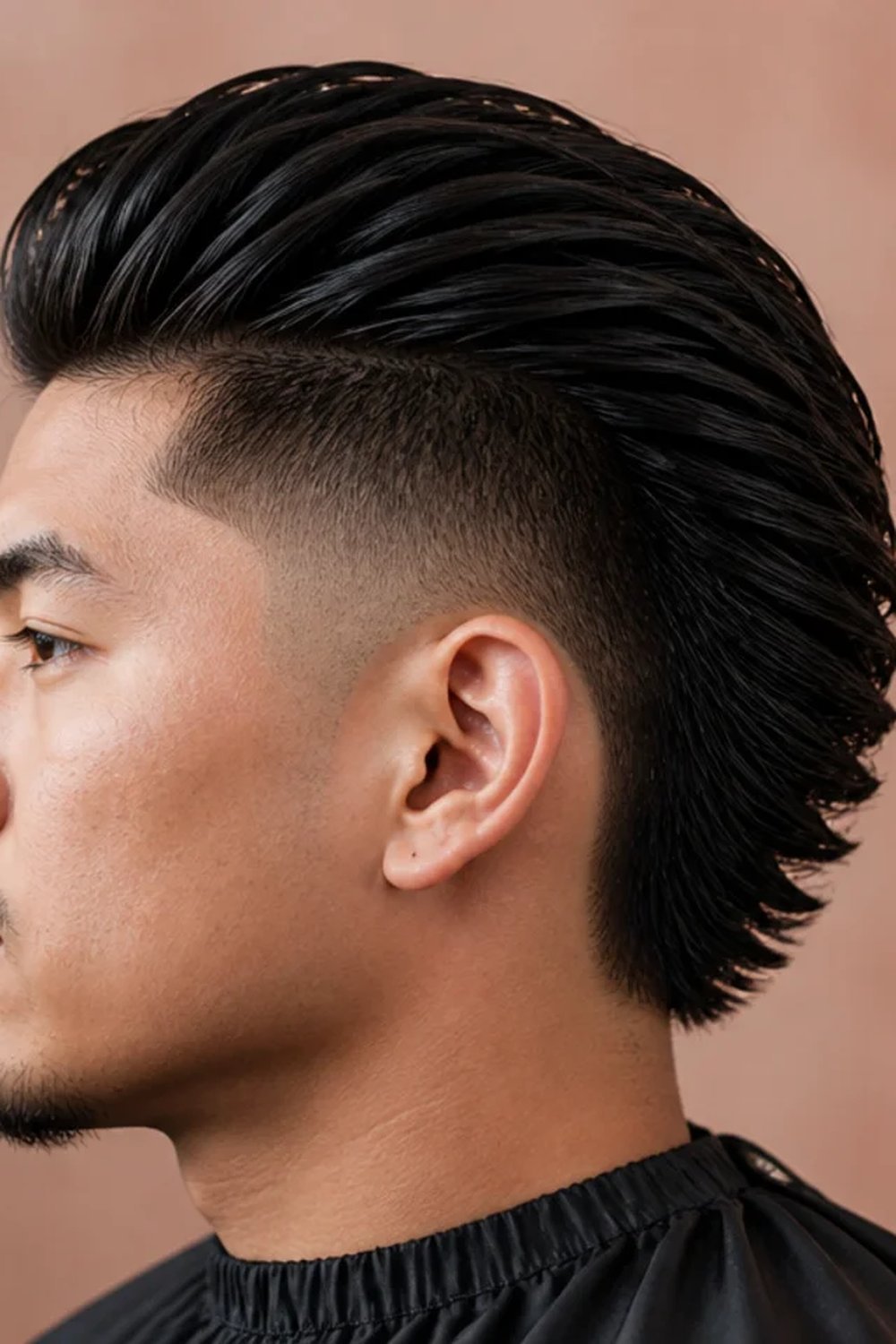
Photo: Haircut Vibes — source
Combed straight back with pomade, the slicked low burst channels old-Hollywood polish in a short, manageable package. The low arc keeps the sides calm while the swept-back top does the talking — dressed up enough for evenings and formal events. Ask for a touch more length on top than a standard burst, with the fade kept low and tight. Apply pomade to damp hair and comb straight back; a low fade on the sides keeps it modern rather than retro.
6. Low Burst Fade with Buzz Cut
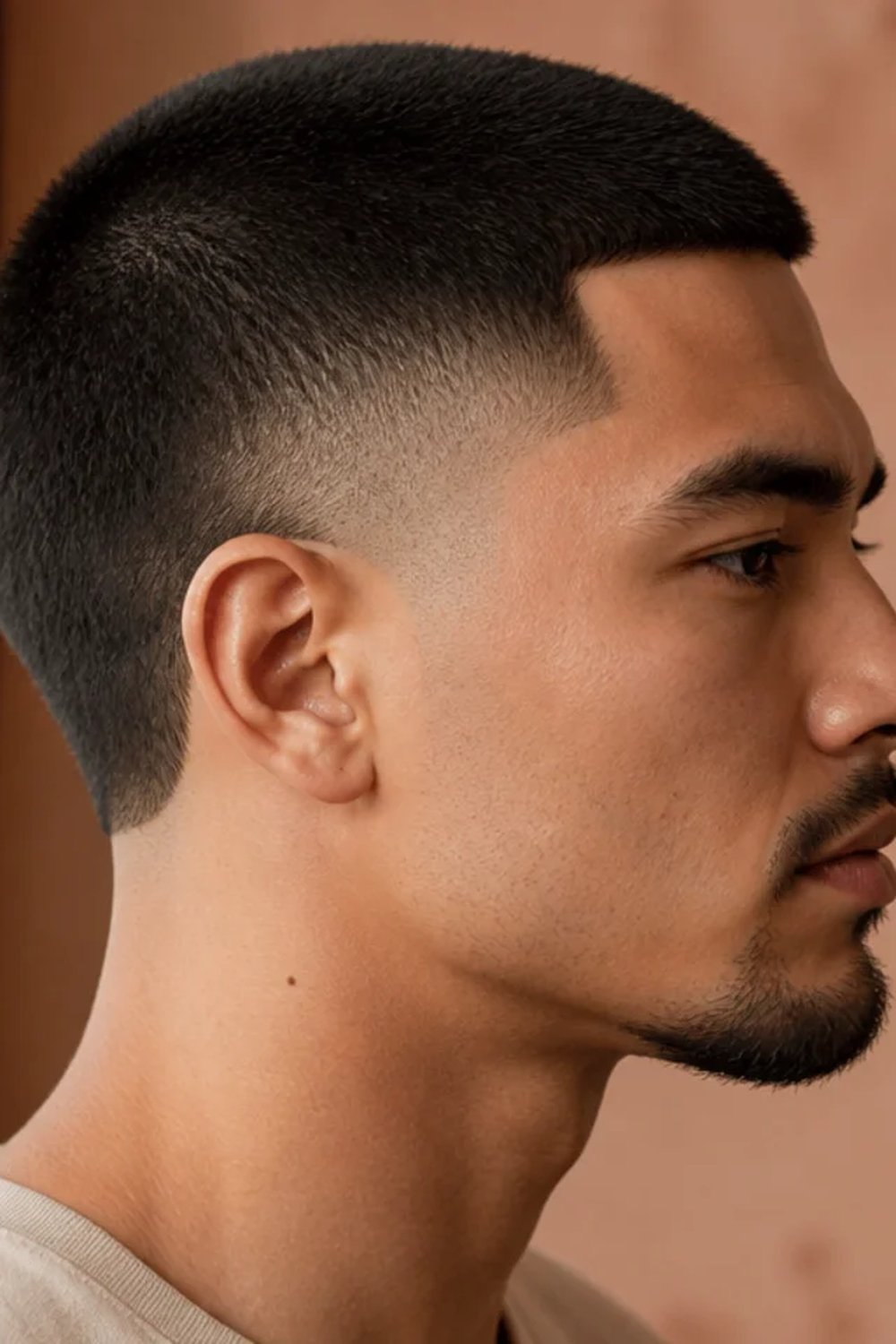
Photo: Haircut Vibes — source
The easiest low burst of all: the top is cut short with a guard, and the burst stays low around the ear and neckline. The even top makes the curved fade the only detail — clean, masculine, and almost zero maintenance. Ask for a #2 or #3 on top with a low burst blended around the ears. Perfect for active men, athletes, and anyone who hates styling products. Shower, towel dry, walk out.
7. Low Burst Fade with French Crop
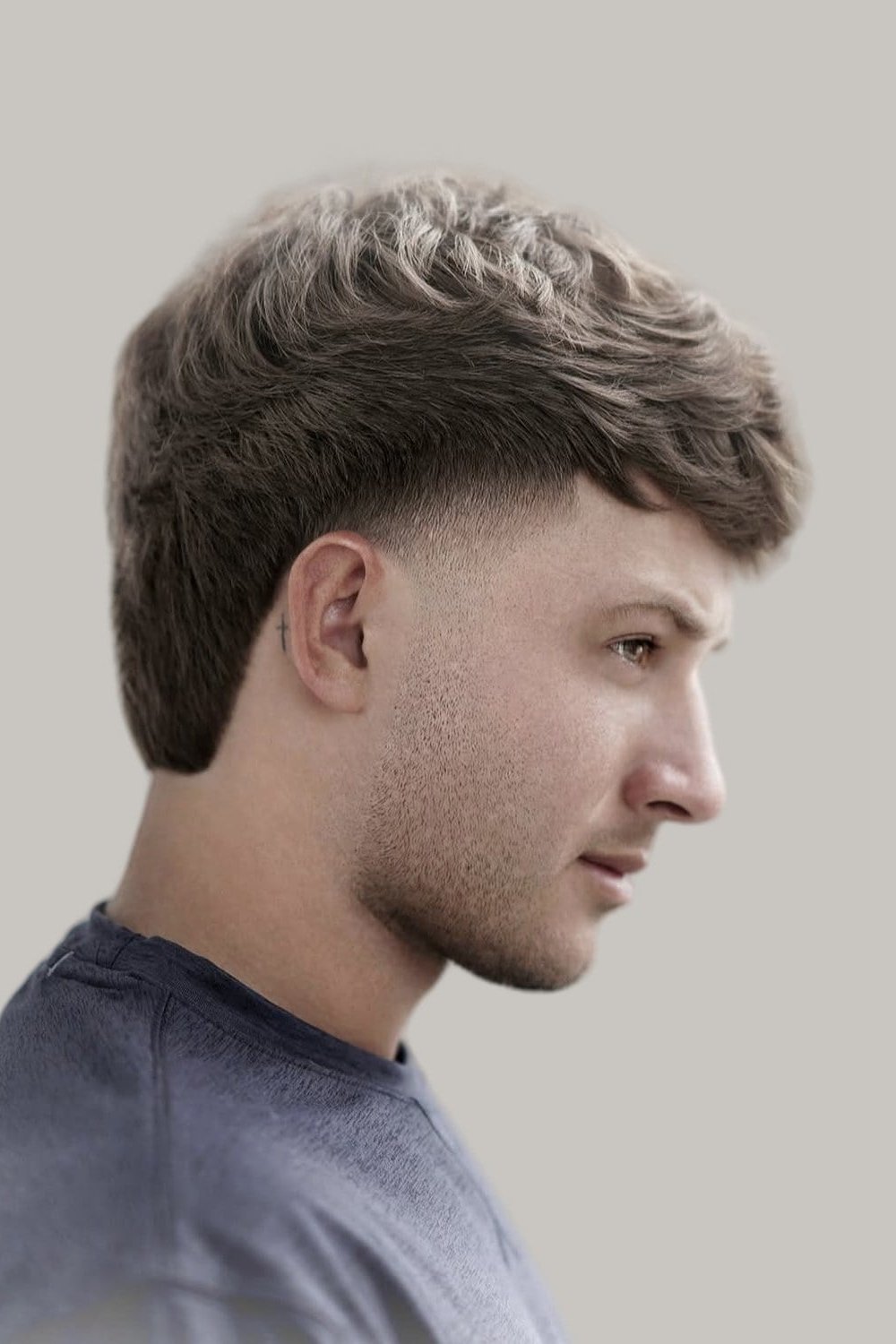
Photo: Luxe Digital — source
The French crop keeps the top short and blunt with a straight fringe, and the low burst underneath keeps the sides tidy without any drama. It is clean, low effort, and endlessly versatile — the fringe adds structure to the forehead while the burst adds shape at the ear. Ask for a short crop with a blunt fringe worn forward, over a low burst kept close to the ear. Suits straight and wavy hair best. A dab of matte paste is the whole styling routine.
8. Low Burst Fade with Textured Fringe
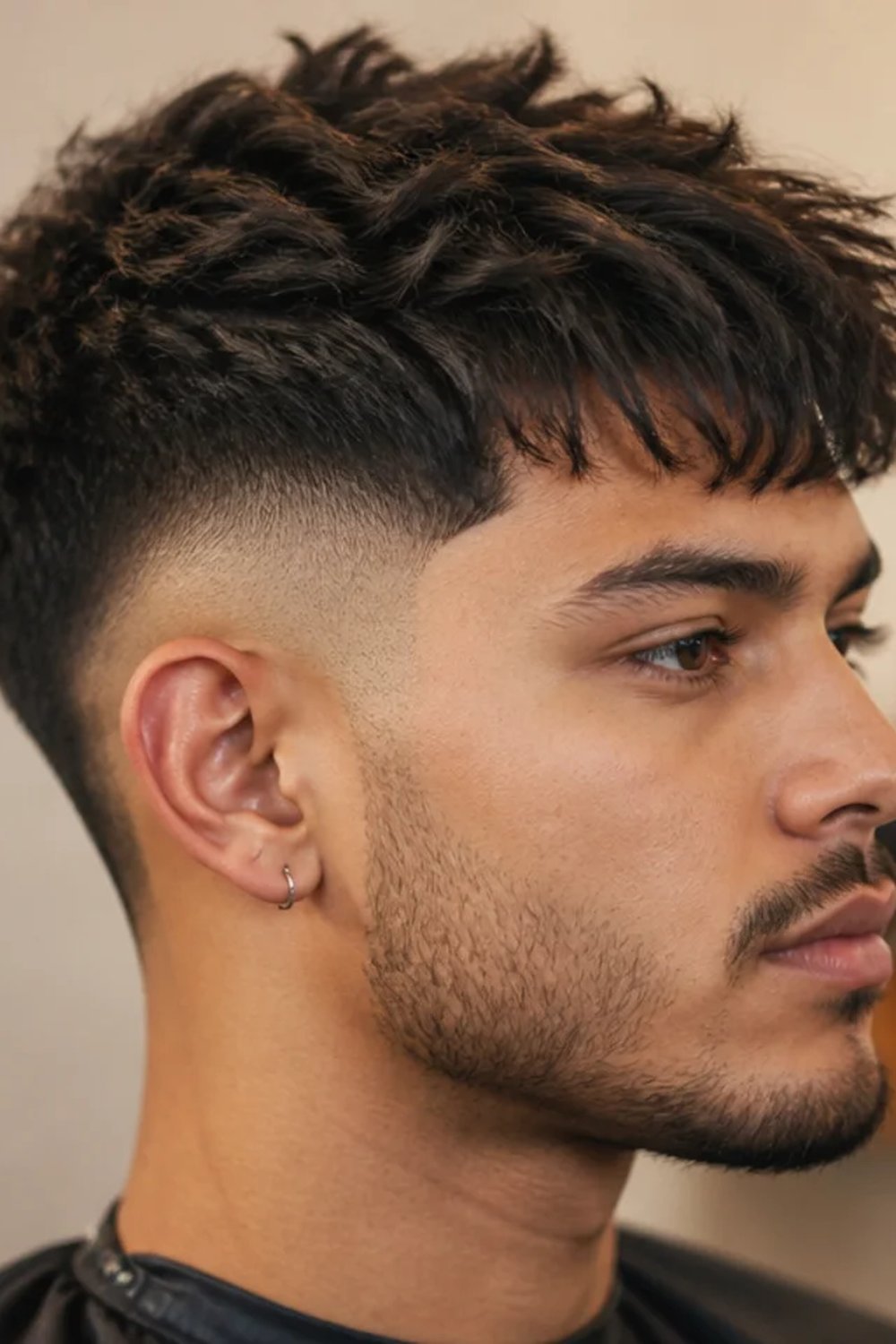
Photo: Haircut Vibes — source
A choppy, textured fringe hanging over the forehead balances the clean low fade perfectly — trendy and youthful, but the low arc keeps it wearable. The fringe softens the forehead and adds movement, while the burst keeps the sides sharp. Ask for texture cut into the front with the fringe left to fall naturally forward, over a low burst. Works especially well for younger men or anyone wanting a modern finish. Shape it forward with a touch of cream.
Low Burst Fades by Finish
9. Low Burst Fade with Skin Finish
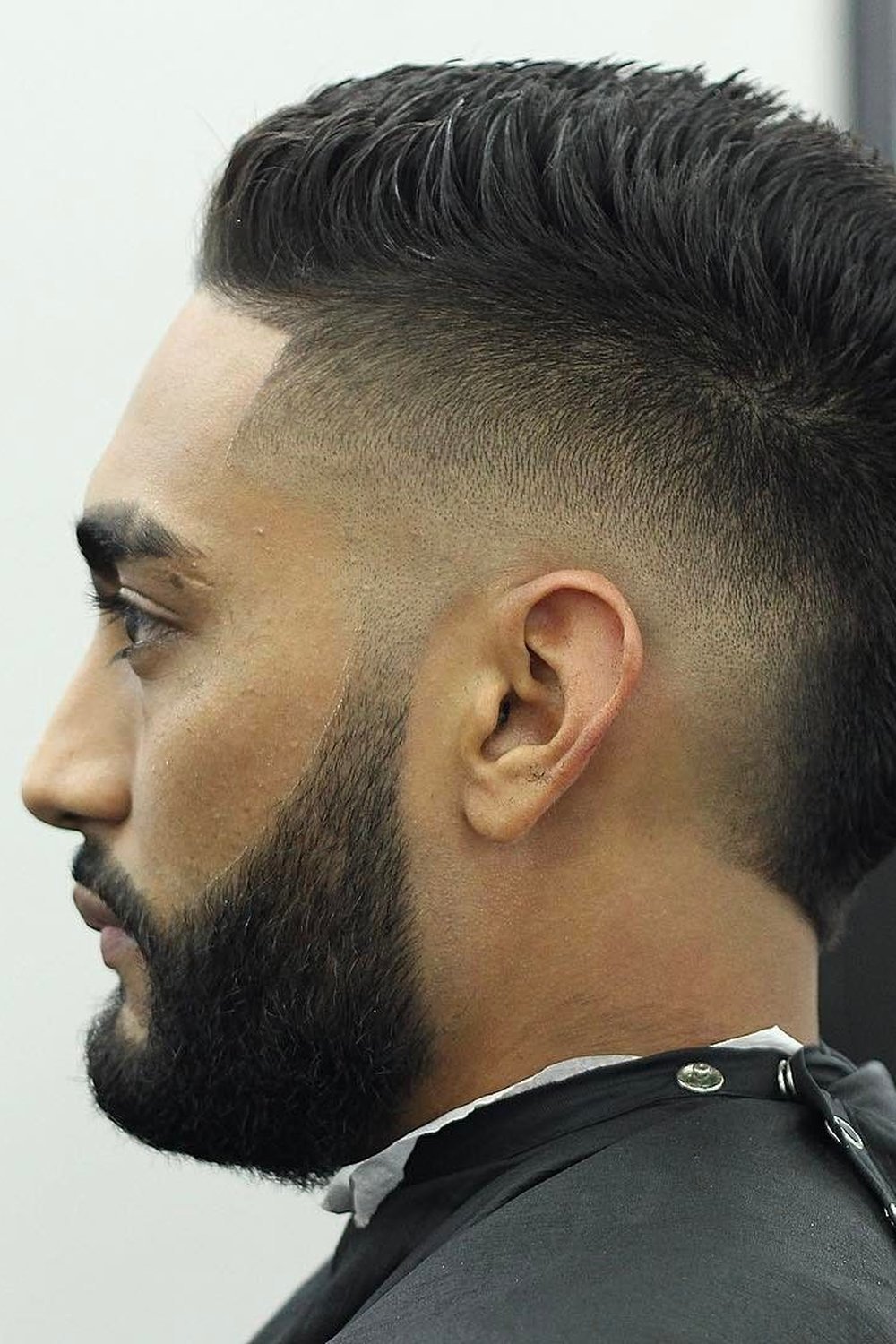
Photo: Pinterest — source
The boldest low burst: the arc is taken down to bare skin at its lowest point, so the curve reads crisp and high-contrast against the longer hair above. The placement stays low, so it never looks aggressive — just razor-sharp. If you like the idea of a skin fade but want something subtler, this is the middle ground. Ask for a low burst “to skin right behind the ear”. Note: skin shows regrowth fastest, so book a touch-up every two weeks.
10. Low Burst Fade with Shadow Finish
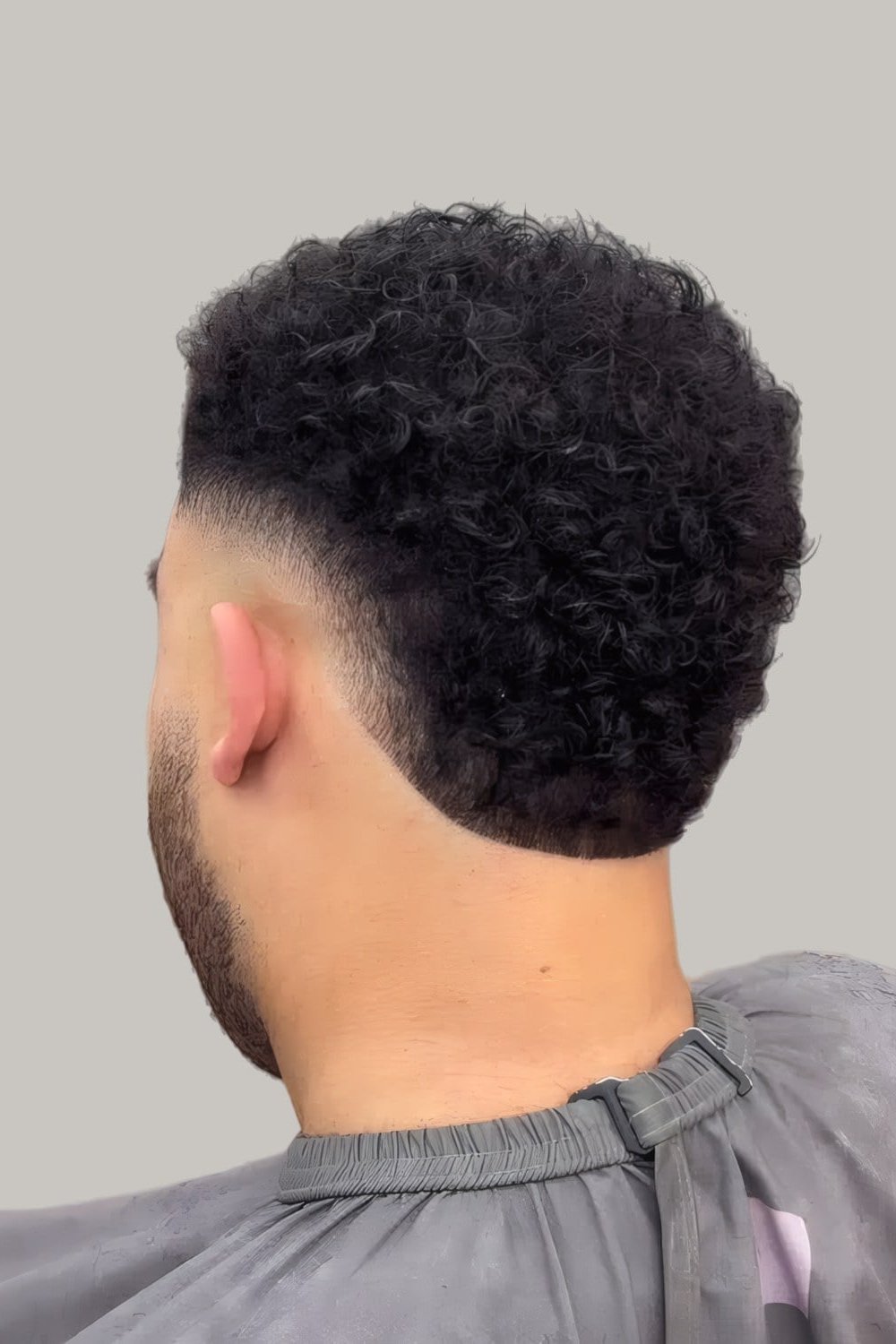
Photo: Luxe Digital — source
The softest finish: the shortest point stops at a faint shadow of hair instead of bare skin. The blend looks gentle and grows out gracefully — the most forgiving low burst there is, and the best choice if you stretch visits to four or five weeks. Ask for a low burst with a shadow finish, “no skin, just a soft blend”. It suits every face shape and every workplace, including the most conservative ones.
11. Low Burst Fade with Taper Blend

Photo: Luxe Digital — source
Instead of a hard fade line, this version melts the burst into a taper at the edges — the softest, most classic-feeling low burst. The gradual blend means the cut grows out beautifully and never shows a harsh line. If you like the burst shape but want the gentlest possible version, ask for a low burst taper with a soft, gradual blend around the ear. Ideal for first-timers, older men, and anyone who wants the shape without the edge.
12. Low Burst Fade with V-Cut Nape
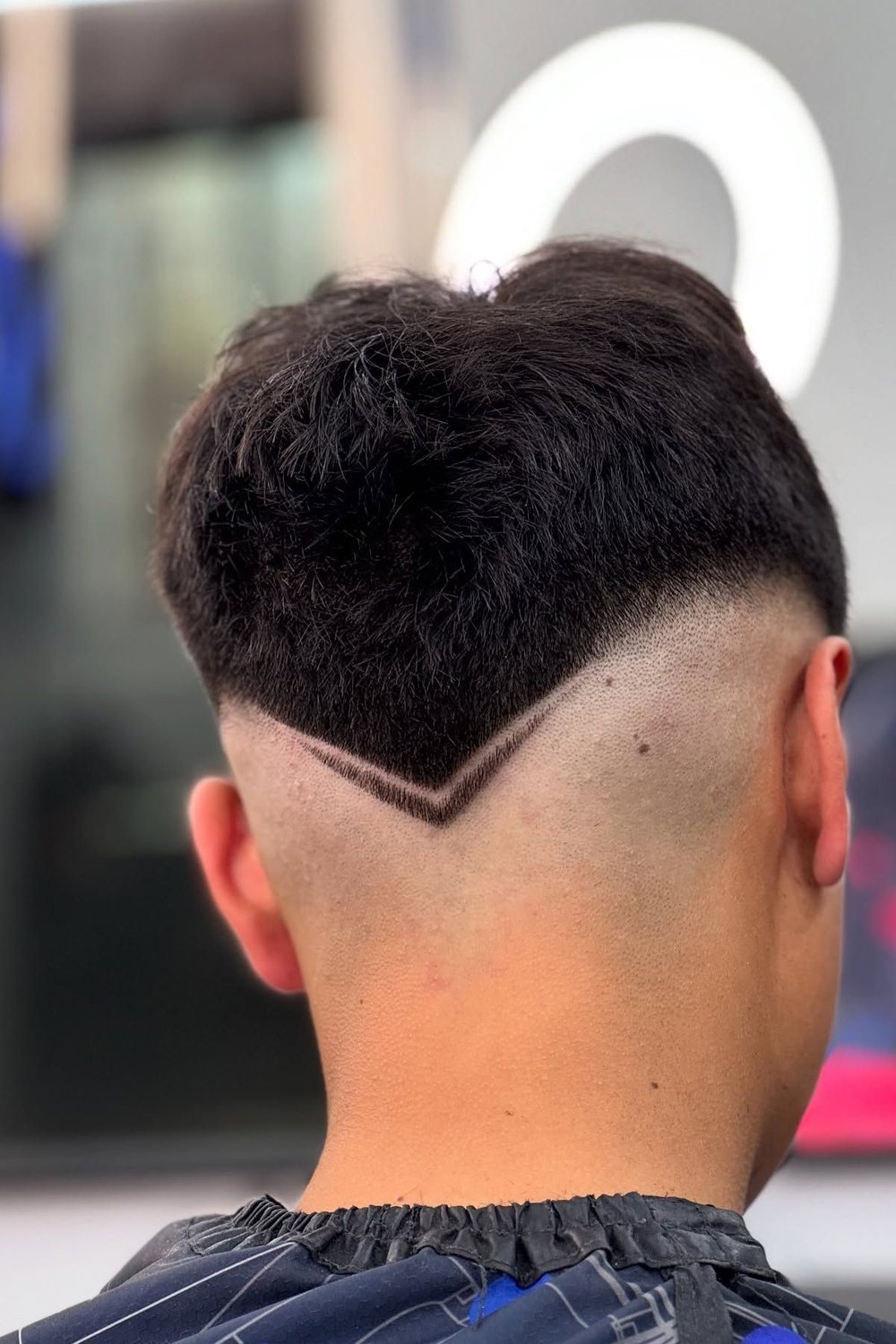
Photo: Pinterest — source
A V-shaped neckline at the back adds a custom touch: the point of the V extends the silhouette and makes the haircut look intentional from every angle, not just the front. The low burst keeps the sides calm while the V gives the back its detail. Ask for a low burst with a V-cut nape instead of a rounded one. It makes the neck look longer and the whole cut sharper — worth asking for if your barber photographs the back view.
13. Low Burst Fade with Sharp Line-Up
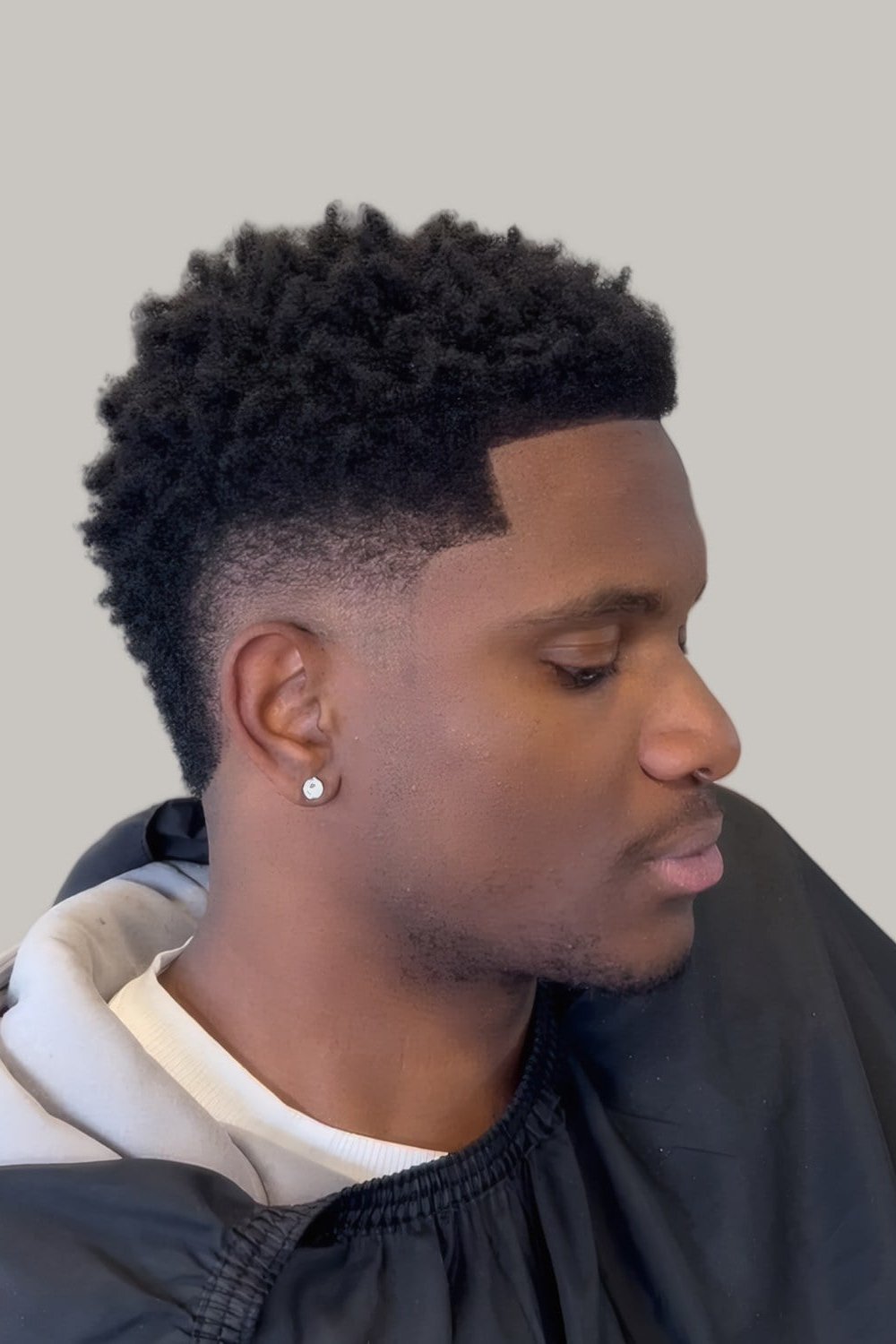
Photo: Luxe Digital — source
A razor-sharp line-up along the hairline and temples turns the quiet low burst into a precise, deliberate cut. The straight edges frame the face while the curved burst softens the sides — structure and curve in one haircut. Ask for a low burst with a sharp line-up, and keep the hairline natural rather than pushed back. The line-up needs refreshing every one to two weeks as hair grows over it, so this one suits men who visit the barber often.
14. Low Burst Fade with Razor Design

Photo: Luxe Digital — source
A single shaved line — or a small geometric pattern — etched into the faded area turns the subtle low burst into a statement. Because the fade is concentrated around the ear, it acts like a spotlight for the design. Keep it to one clean line for a look that stays professional-adjacent; go bolder for weekends. Ask your barber to carve the design after the burst is blended. The design needs refreshing every two weeks as hair grows over it.
Low Burst Fades by Hair Type
15. Low Burst Fade on Curly Hair

Photo: Luxe Digital — source
Curls and the low burst are a natural match. The low arc leaves more curl at the sides, so the pattern stays connected to the top instead of being cut away — and the contrast stays gentle. Ask for a low burst that keeps the arc close to the ear, with the curls left full on top and at the back. Use a curl cream on damp hair and let it air dry; avoid brushing curls dry. Trim every three to four weeks to keep the curve sharp.
16. Low Burst Fade on Straight Hair
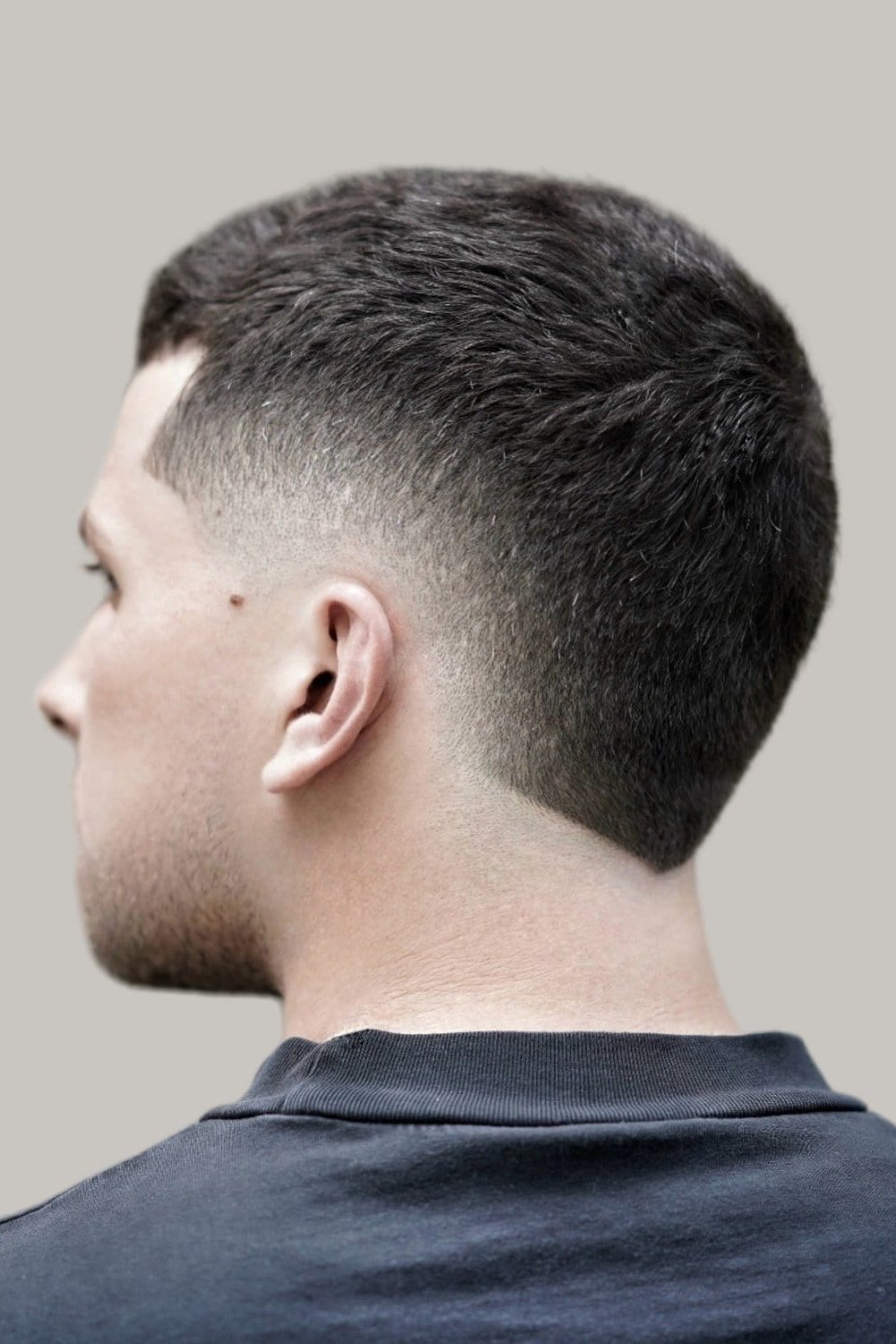
Photo: Luxe Digital — source
Straight hair shows off the low burst’s architecture — every clipper line and the clean curve around the ear reads clearly. Keep the top cropped close and brushed slightly forward; the fade should melt into the sides rather than create harsh contrast. Ask for a low burst from behind the ear with a soft blend and no hard line, about an inch of texture on top. A straight-hair low burst needs texture on top or it can look flat — a pinch of texture powder fixes that.
17. Low Burst Fade on Wavy Hair
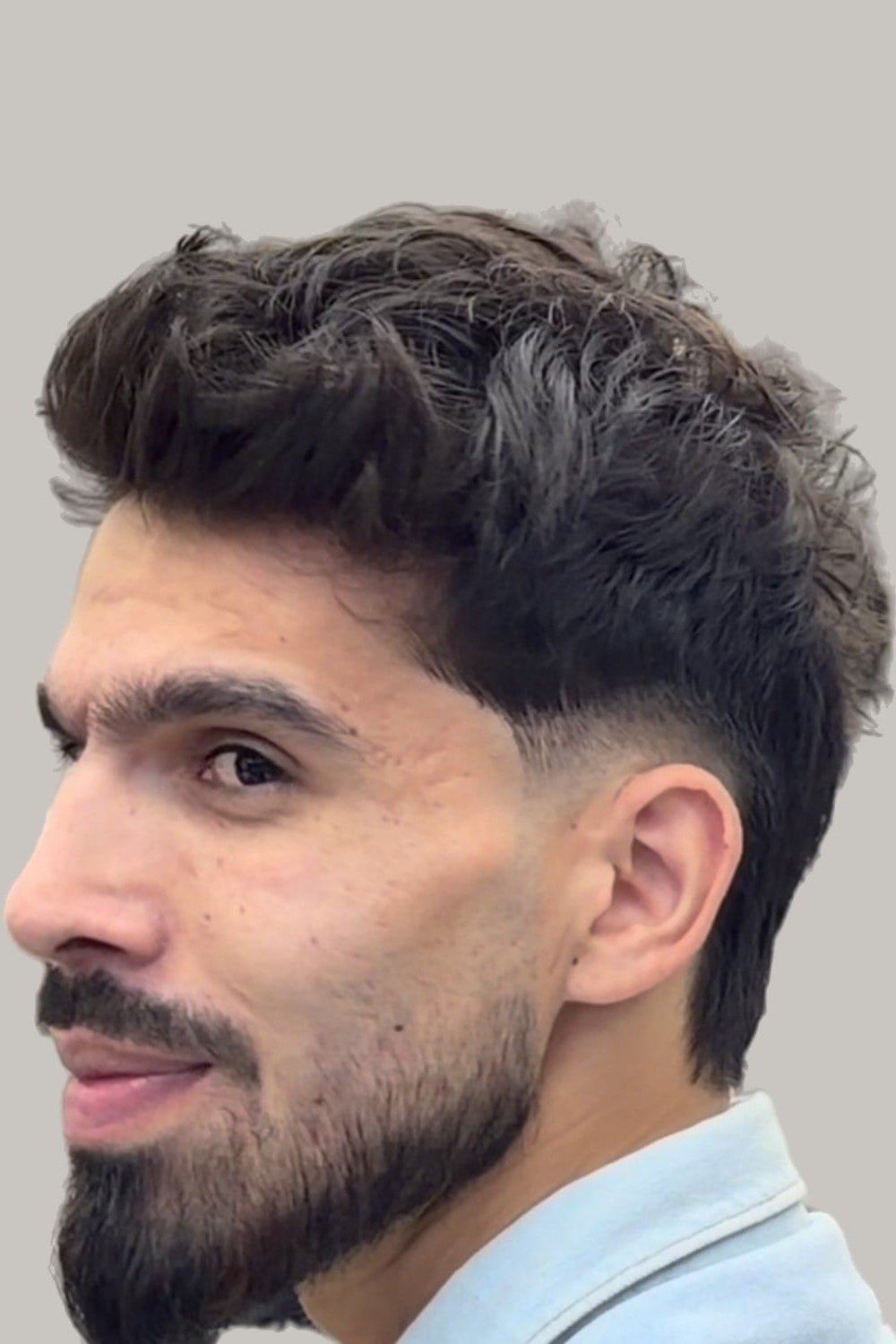
Photo: Luxe Digital — source
Natural wave gives the low burst effortless movement that straight hair has to fake with product. A wavy top with a clean low arc is one of the most attractive low-effort combinations — the wave does the styling while the burst keeps the sides sharp. Ask for texture on top with the burst kept low and tight to the ear. A pea-sized amount of matte paste scrunched into dry hair enhances the wave; sea salt spray adds more definition on humid days.
18. Low Burst Fade on Afro Hair
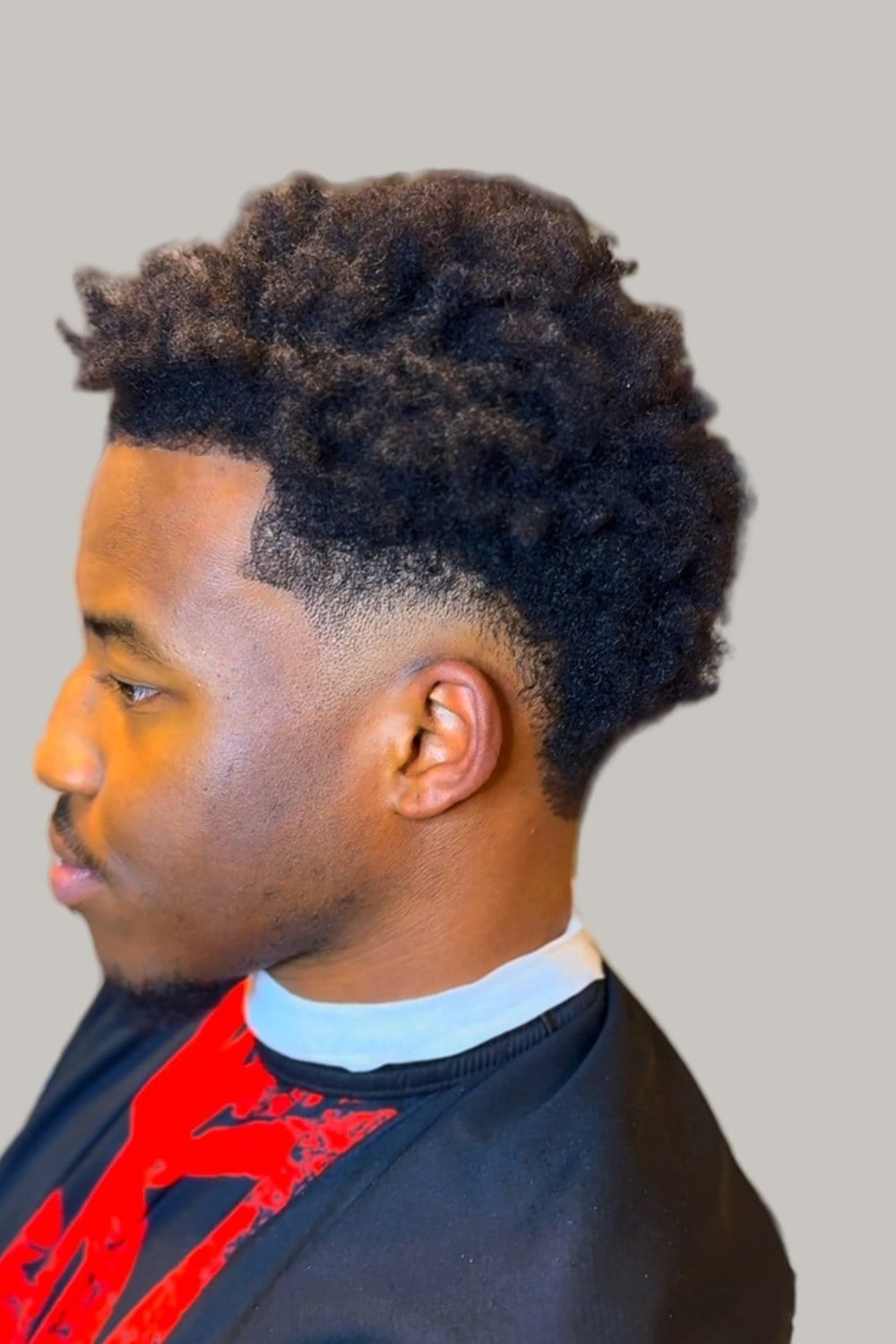
Photo: Luxe Digital — source
For tight, coily hair, the low burst keeps everything close and neat while the curve around the ear adds shape — sharp, clean, and incredibly low maintenance. The low placement is flattering because it frames the natural texture instead of fighting it. Ask for a low burst with the top kept short and even, and a shape-up for crisp edges. Moisturise the scalp regularly to keep the short hair healthy, and keep the burst line tidy with a touch-up every two to three weeks.
19. Low Burst Fade with Sponge Curls
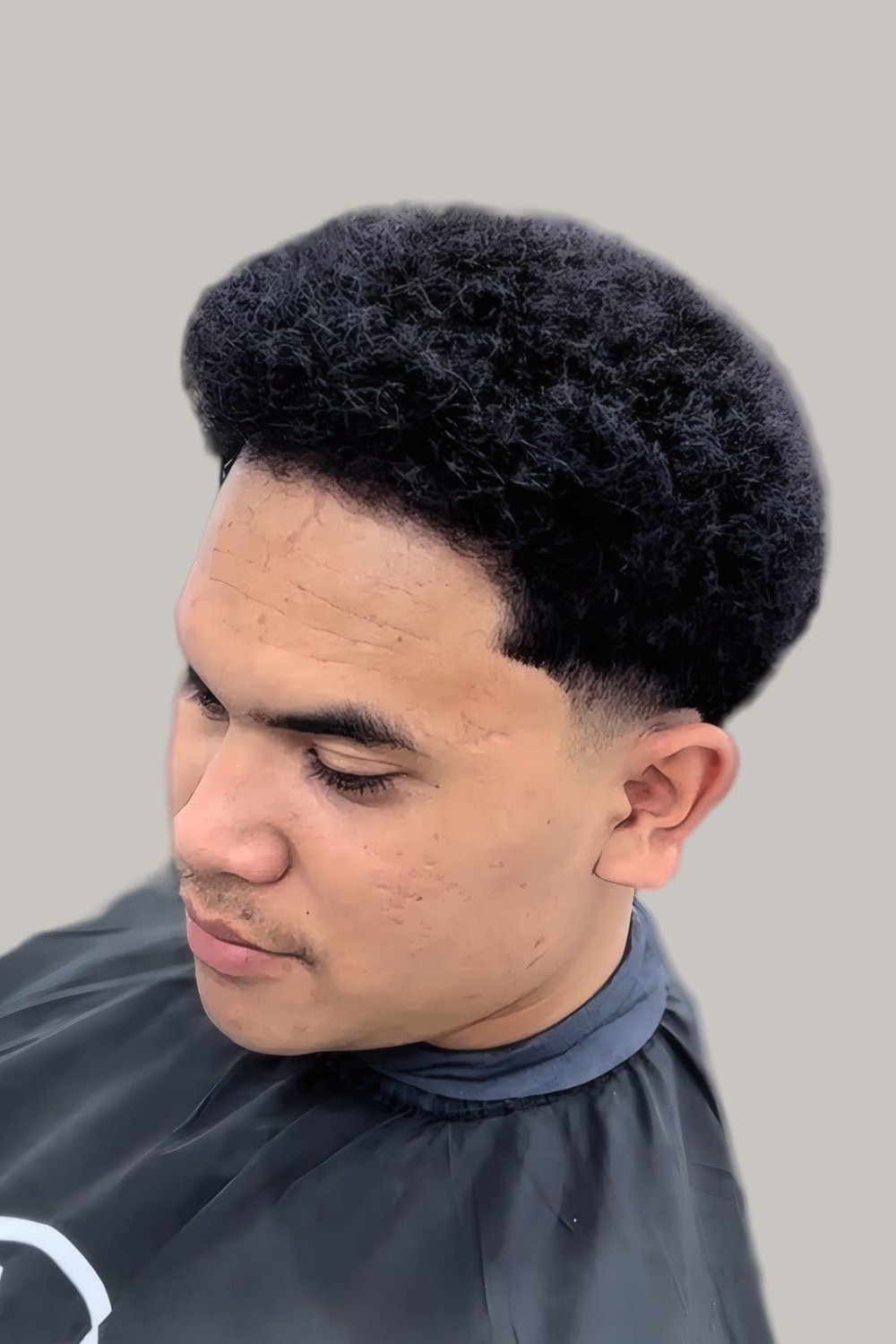
Photo: Luxe Digital — source
Sponge curls — short coils twisted up with a curl sponge — pair perfectly with a low burst. The textured, springy top contrasts with the clean curved sides, and the low arc keeps the whole look balanced rather than top-heavy. Ask for a low burst with enough length on top for the sponge to grip (about half an inch to an inch). At home, twist the top with a curl sponge on slightly damp hair, then leave it alone — touching it breaks the curls apart.
20. Low Burst Fade with 360 Waves
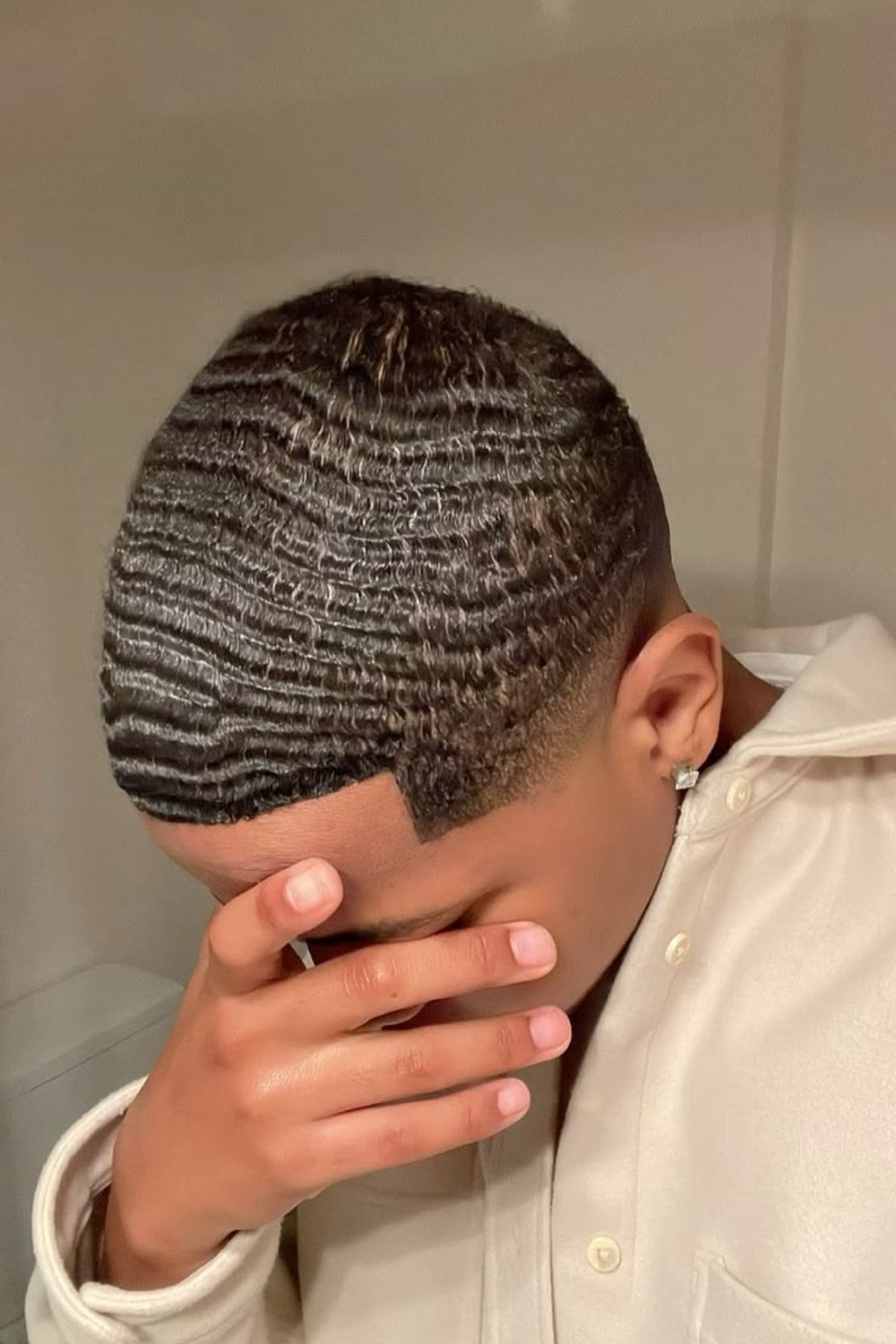
Photo: Modern Gentleman Magazine — source
360 waves rippling across the top with a clean low burst underneath is one of the sharpest combinations in the book. The waves need short, even length and a daily brushing routine; the burst frames them with a crisp curve at the ear. Ask for a low burst that keeps the arc even on both sides — uneven arcs ruin the symmetry waves depend on. Brush daily with a soft brush, wear a durag at night, and keep the neckline clean so the waves stay the star.
21. Low Burst Fade for Thick Hair
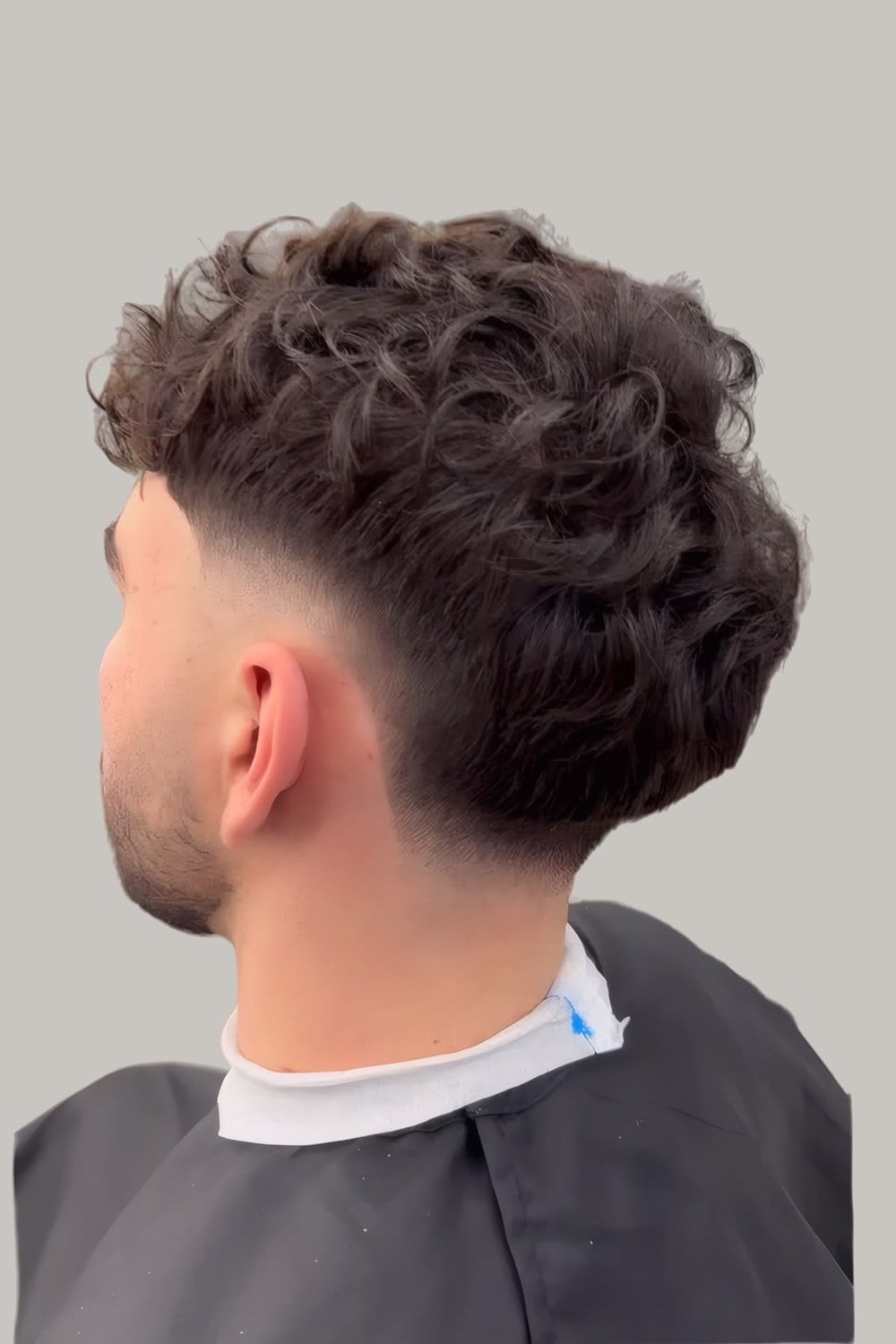
Photo: Luxe Digital — source
Thick hair is the low burst’s best friend — it stands up on its own and holds shape all day. The trick is thinning and texturising on top so the cut does not balloon outward, while the low burst keeps the sides controlled. Ask for point-cut texture to remove bulk, with the burst kept tight to the ear. Thick hair shows the burst curve beautifully, so consider a skin finish at the lowest point if you want more contrast. Style with matte clay for hold without shine.
22. Low Burst Fade for Thin Hair
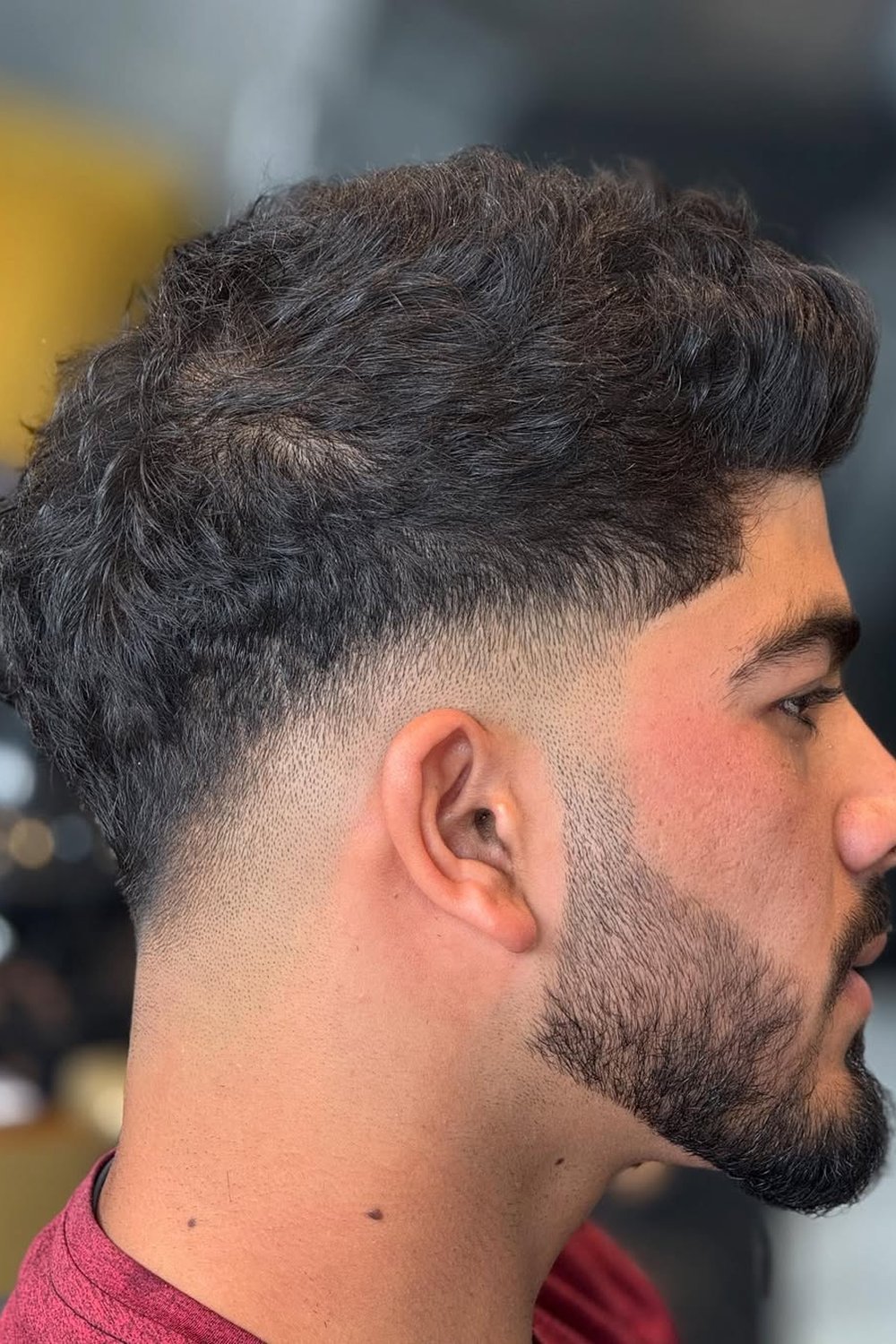
Photo: The Right Hairstyles — source
Short hair makes thin hair look thicker — there is less weight pulling it flat and less scalp contrast. The low burst keeps the sides tight so the eye reads density, while a short textured top adds the illusion of fullness. Ask for a low burst with the top kept short (under an inch) with texture, and strategic layering rather than thinning shears. A matte product adds grip and the illusion of volume; avoid heavy pomades that flatten thin hair.
23. Low Burst Fade for Receding Hairline
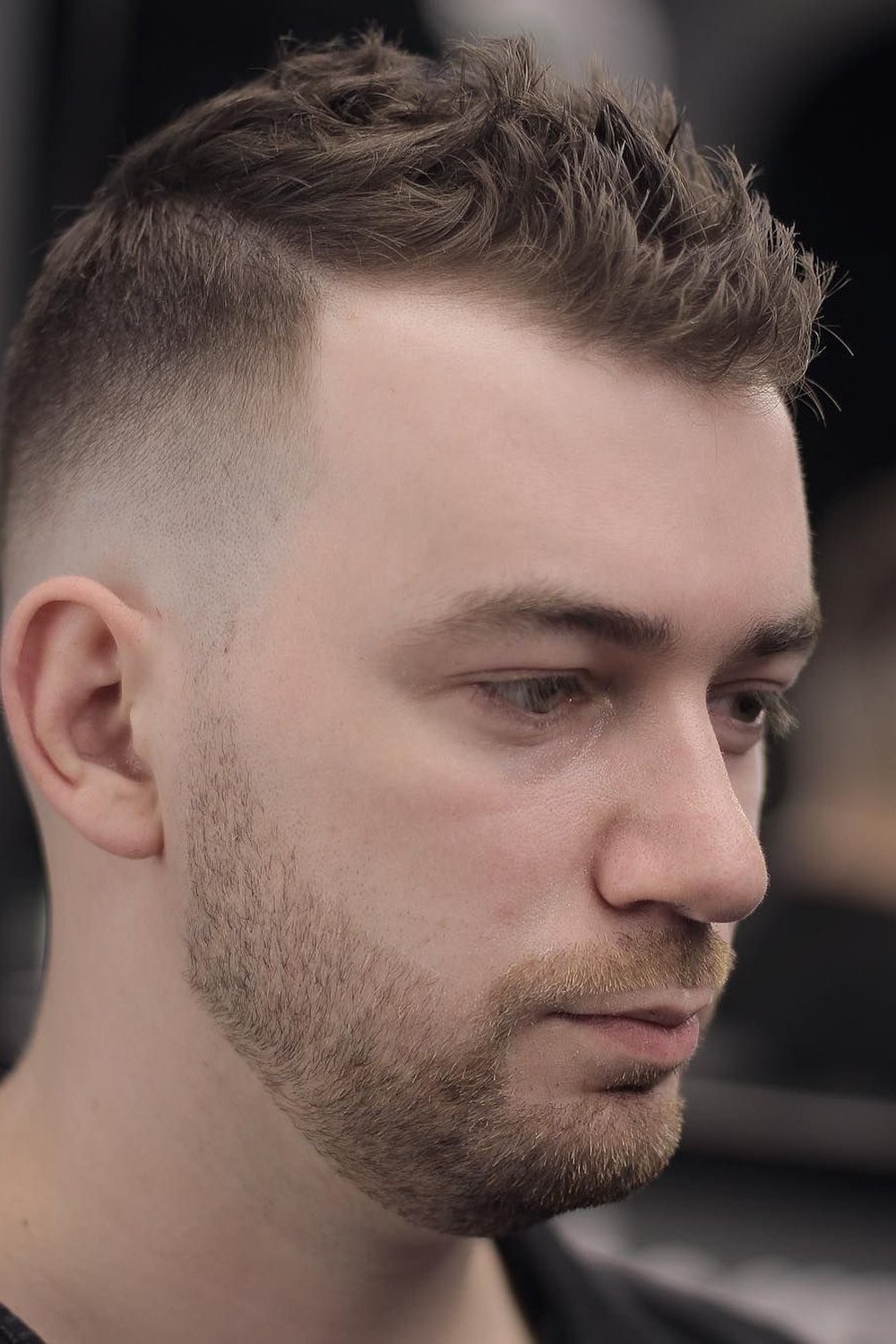
Photo: Pinterest — source
The low burst is one of the smartest choices for a receding hairline: a short, even top minimises the contrast between the hairline and the rest of the hair, so recession draws far less attention — and the low arc keeps the focus on the clean sides, not the hairline. Keep the front textured and slightly forward rather than slicked back. Ask for a classic short top with a low burst and a clean taper. Confidence does the rest.
24. Blonde Low Burst Fade
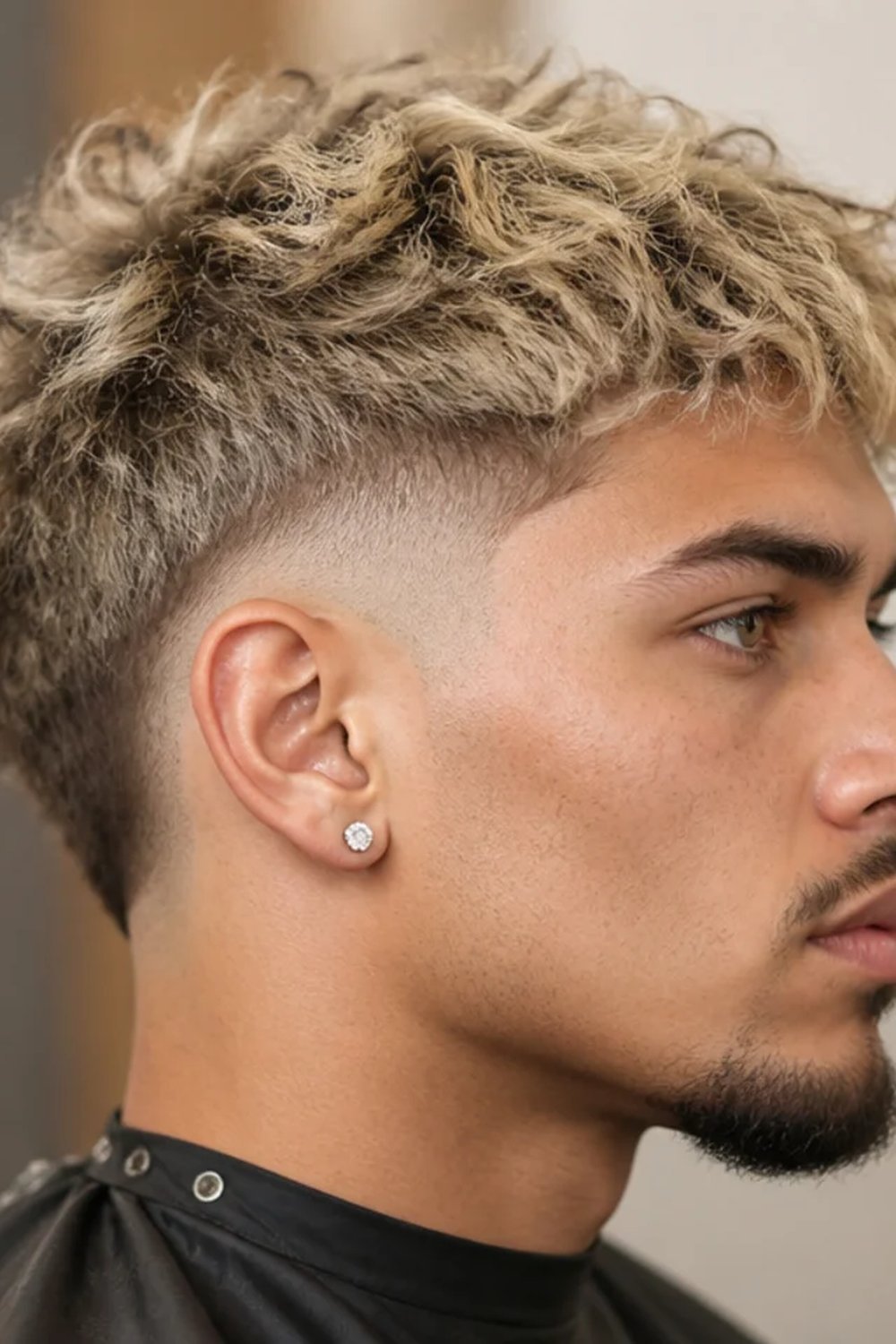
Photo: Haircut Vibes — source
Light hair shows off the low burst’s architecture — every clipper line and texture point reads clearly. Keep the top cropped close and brushed slightly forward; the fade should melt into the sides rather than create harsh contrast, which can look washed out on blonde hair. Ask for a low burst with a soft blend and a textured top. If you are naturally dark, a barber-experienced colourist should handle the blonde, not a box dye — and a silver-enhancing shampoo keeps it bright rather than yellow.
Bold Low Burst Pairings
25. Low Burst Fade with Quiff

Photo: Luxe Digital — source
A mini-quiff at the front — the top brushed up and back just at the hairline — gives the low burst lift and attitude without much extra length. It adds height that flatters round faces, while the low arc keeps the sides calm. Ask for a slightly longer front (about an inch and a half) with a low burst around the ears. Blow-dry the front upward, then set with medium-hold product for a quiff that lasts all day.
26. Low Burst Fade with Pompadour

Photo: Luxe Digital — source
The pompadour needs weight through the sides, and the low burst preserves it — the blend stays low enough that the pomp keeps its height. Swept back and up, it creates serious height and drama, a bold retro-meets-modern combination. Ask for a low burst with length left on top for the sweep, and a strong-hold pomade plus a blow dryer to build it. Best for straight and wavy hair with enough density to hold the shape.
27. Low Burst Fade with Faux Hawk
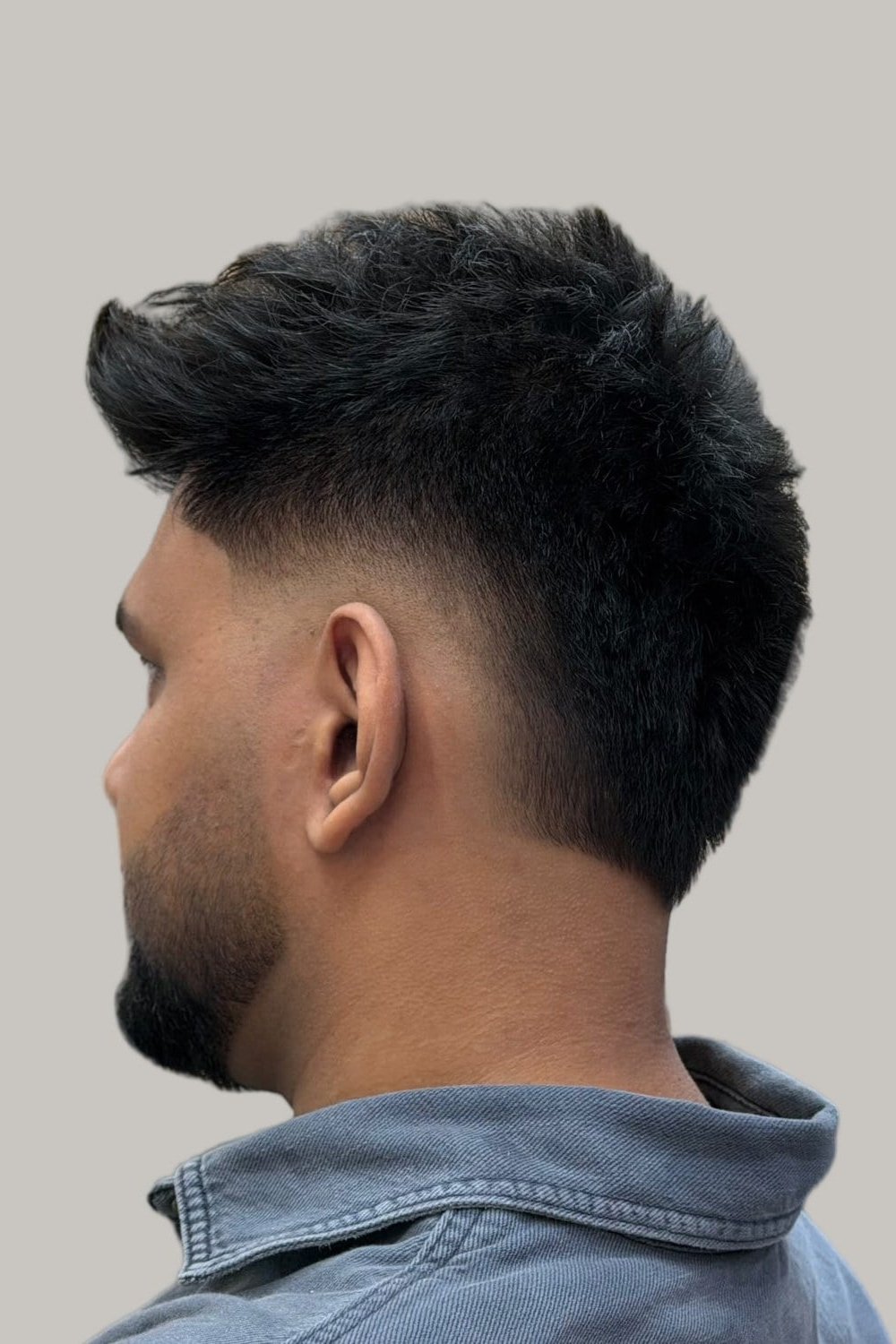
Photo: Luxe Digital — source
The faux hawk rakes the centre section upward while the low burst keeps the sides tapered — edgy without the commitment of a real mohawk. The low placement makes it surprisingly wearable: the burst softens the sides so the raised centre reads as style, not costume. Ask for a low burst with the centre left longer and textured, then rake it up with matte clay. Great for nights out and weekends; flatten it down with a comb for the office.
28. Low Burst Fade with Mohawk
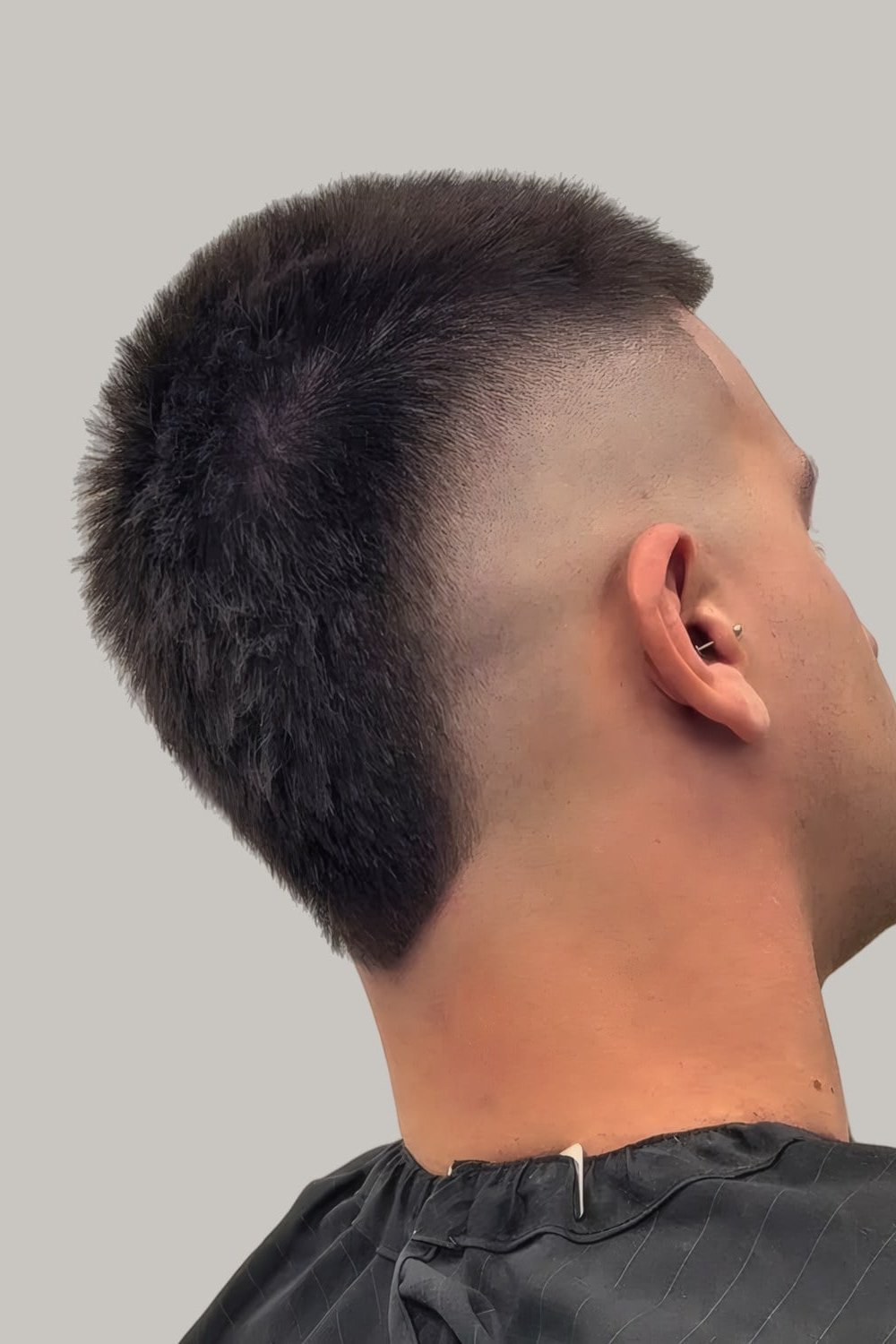
Photo: Luxe Digital — source
The full mohawk over a low burst is the boldest pairing here: a strip of length standing up in the centre, with the burst curving cleanly around the ears below it. The low arc is what makes it work — it keeps the sides sculpted instead of shaved bare, so the mohawk reads as a deliberate style rather than a costume. Ask for a low burst with the centre strip left long and the back kept full. Strong-hold product and a blow dryer are non-negotiable for the height.
29. Low Burst Fade Mullet
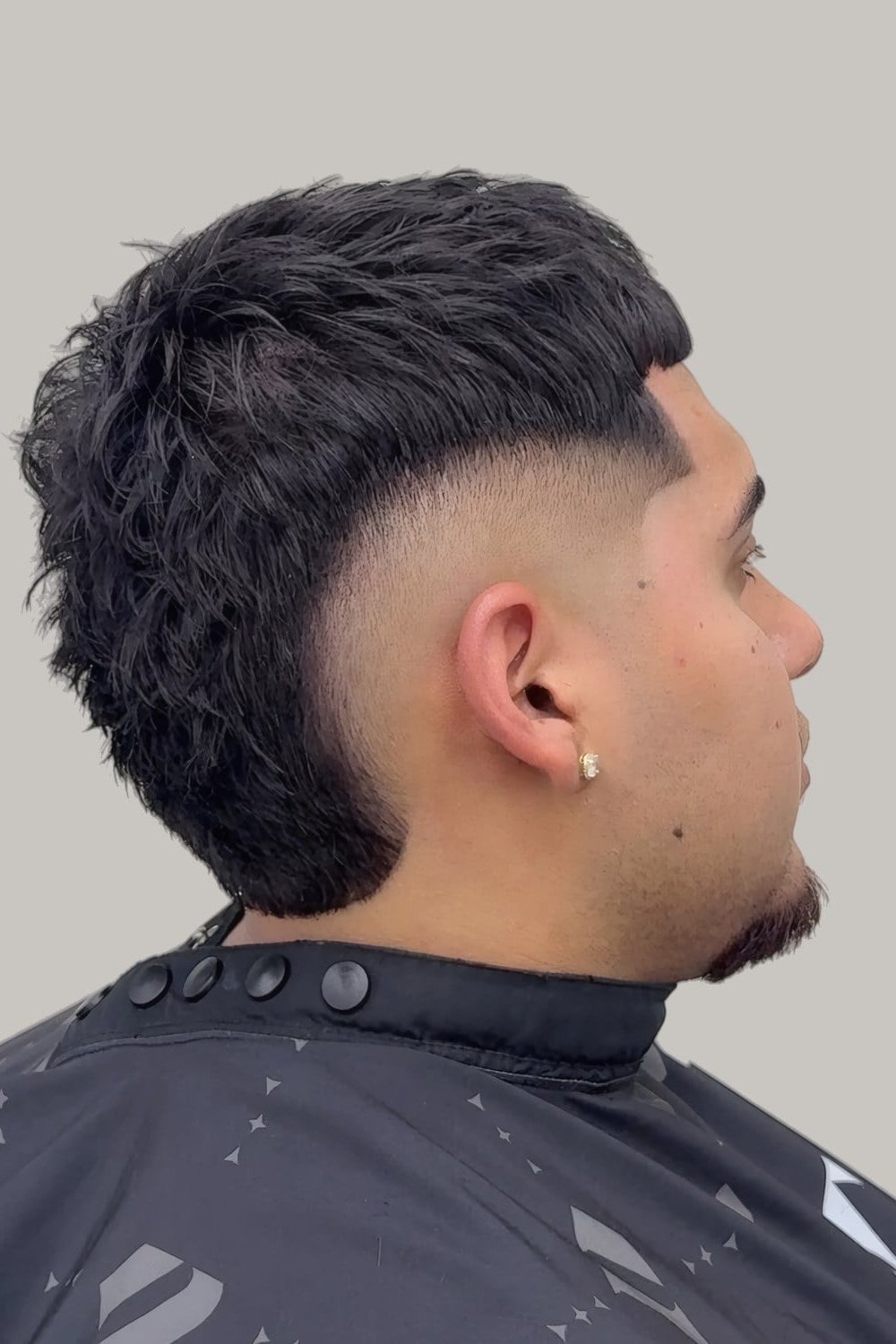
Photo: Luxe Digital — source
The burst mullet keeps length at the back while the low burst fades the sides in that signature curved shape — the modern mullet, without the 1980s baggage. The low version keeps the fade starting near the bottom of the ear, offering a more subtle transition that is great if you want a hint of the mullet look without full commitment. Ask for a low burst with the back left long past the collar and the top swept back. A little texture powder through the top is all the styling it needs.
30. Low Burst Fade with Beard
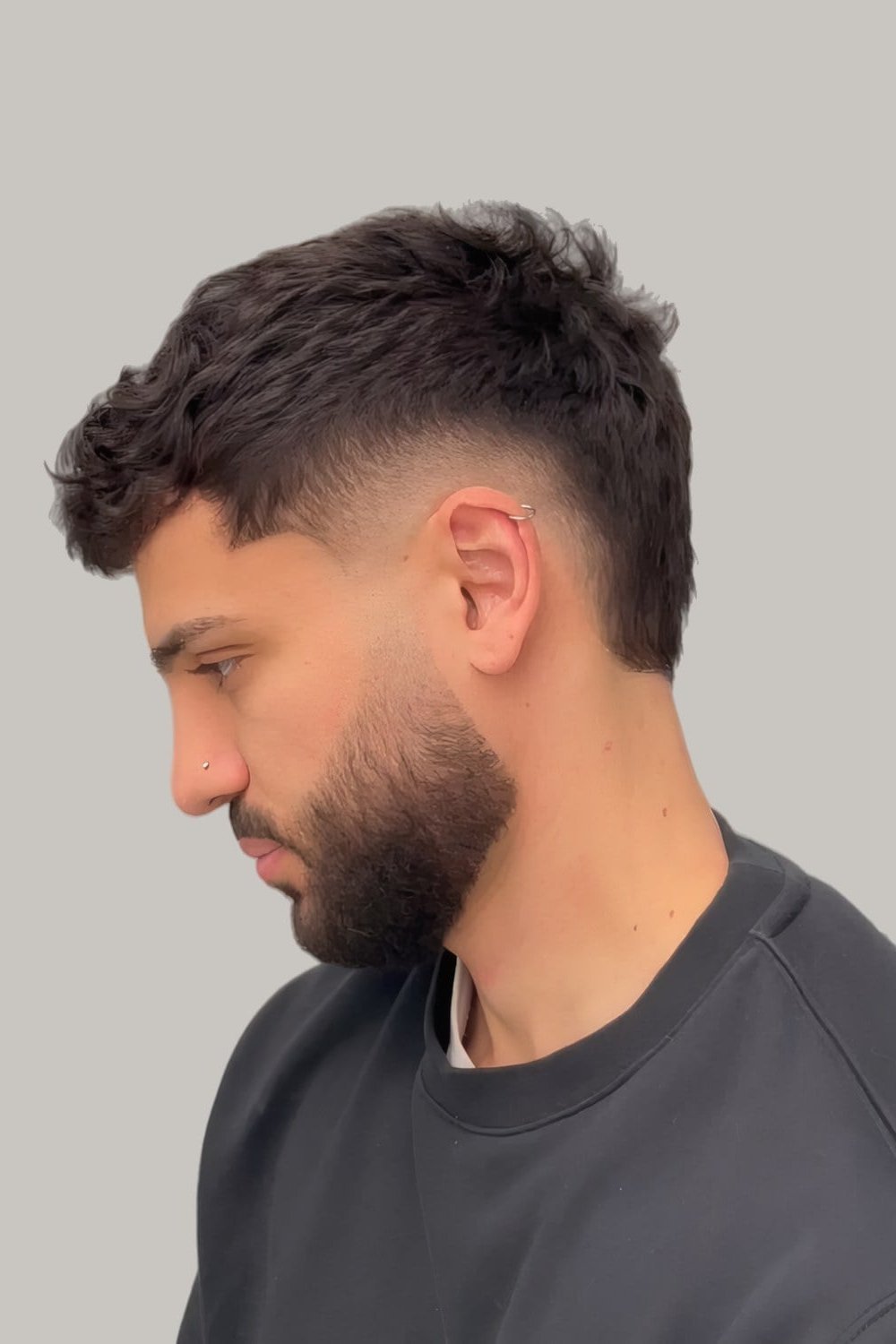
Photo: Luxe Digital — source
A neatly trimmed beard balances the low burst’s clean top with ruggedness along the jaw — and the low burst blends beautifully into a beard, which is why so many men choose this pairing. The key is the blend: the sideburns should flow into the beard so the sides and jaw read as one continuous line. Ask your barber to blend the burst down into the beard and keep the top short so the beard stays the co-star. Keep the beard’s neckline tidy weekly.
How to Ask Your Barber for a Low Burst Fade
Walk in with four things clear in your head, and say them in this order. First, the height: “I want a low burst fade — the arc stays just above my ear, low and tight.” Second, the finish: “Take the shortest point to skin” (sharpest), “a shadow” (softest), or “blend it into a taper”. Third, the back: “Keep the back full” or “take the back short” — the burst does not decide this for you, so say it. Fourth, the top: exact length and style — “an inch and a half, textured, forward.” Bring two or three reference photos from different angles, including a back view if the nape matters to you — they remove all guesswork. And ask one honest question before the clippers start: “Does this suit my growth pattern?” A good barber will flag a cowlick low on the neckline that could fight the blend.
Styling & Maintenance
The low burst fade’s whole appeal is low maintenance, but a little care keeps the curve sharp. Most versions need only a pea-sized amount of matte paste or clay worked through towel-dried hair — push the front up and forward with your fingers and you are done. Longer versions (pompadour, quiff, slicked back) reward a comb, a blow dryer, and a stronger-hold pomade. Book a tidy-up every three to four weeks: the low starting point means hair growth does not immediately destroy the shape, and you can stretch to five weeks if a professional appearance is not critical. Skin finishes sit at the two-week end — regrowth shows fast against skin. Between visits, keep the neckline tidy and leave the blend alone; home clippers and the burst line are a bad combination. Wash with a normal shampoo; if your scalp shows more now, a light moisturiser prevents dryness.
Low Burst Fade FAQ
What is a low burst fade?
A low burst fade is a fade whose curved blend stays low and close to the ear, concentrating the shortest hair in a rounded arc around the ear instead of running it in a straight band around the back. The arc starts just above the ear, more hair stays above and behind it than a mid or high burst leaves, and the back keeps its length. It is the gentlest, most office-friendly version of the burst fade.
What is the difference between a low burst fade and a low fade?
A low fade blends the whole side and back of the head in a straight band just above the ears. A low burst fade curves the short hair in a semicircle around the ear and leaves the back fuller. Same height, different shape — the burst hugs the ear, the low fade wraps the head.
Does a low burst fade have to go to skin?
No. “Low” describes where the arc sits, not how short its lowest point is. The finish can be skin (sharpest contrast), a short guard that leaves a faint shadow, or a soft taper blend. Tell your barber which finish you want — “low” on its own does not say it.
How often does a low burst fade need a trim?
Every three to four weeks for most versions. The low placement hides grow-out longer than mid or high fades. Skin finishes need a touch-up every two weeks, and line-ups or razor designs need refreshing every one to two weeks.
Is a low burst fade good for curly hair?
Yes — it is one of the best fades for curly hair. The low arc leaves more curl at the sides, so the pattern stays connected to the top, and the contrast stays gentle. Keep the curls full on top, use curl cream on damp hair, and let it air dry.
Can I get a low burst fade with a beard?
Absolutely — the low burst blends beautifully into a beard. Ask your barber to blend the fade down into the beard so the sideburns flow into it without a hard line at the cheek. A low burst suits a shorter, neater beard; pair a fuller beard with a slightly stronger finish for balance.
Final word
The low burst fade endures because it asks almost nothing of you and gives back a clean, confident look every single day. It is the burst for men who want the shape without the drama — subtle at the ear, full at the back, and at home in the office or out at night. Pick the variation that matches your hair type and your life — classic for tradition, skin finish for edge, textured for movement — show your barber a photo, and enjoy the easiest mornings of your grooming life.
By Derek Nolan