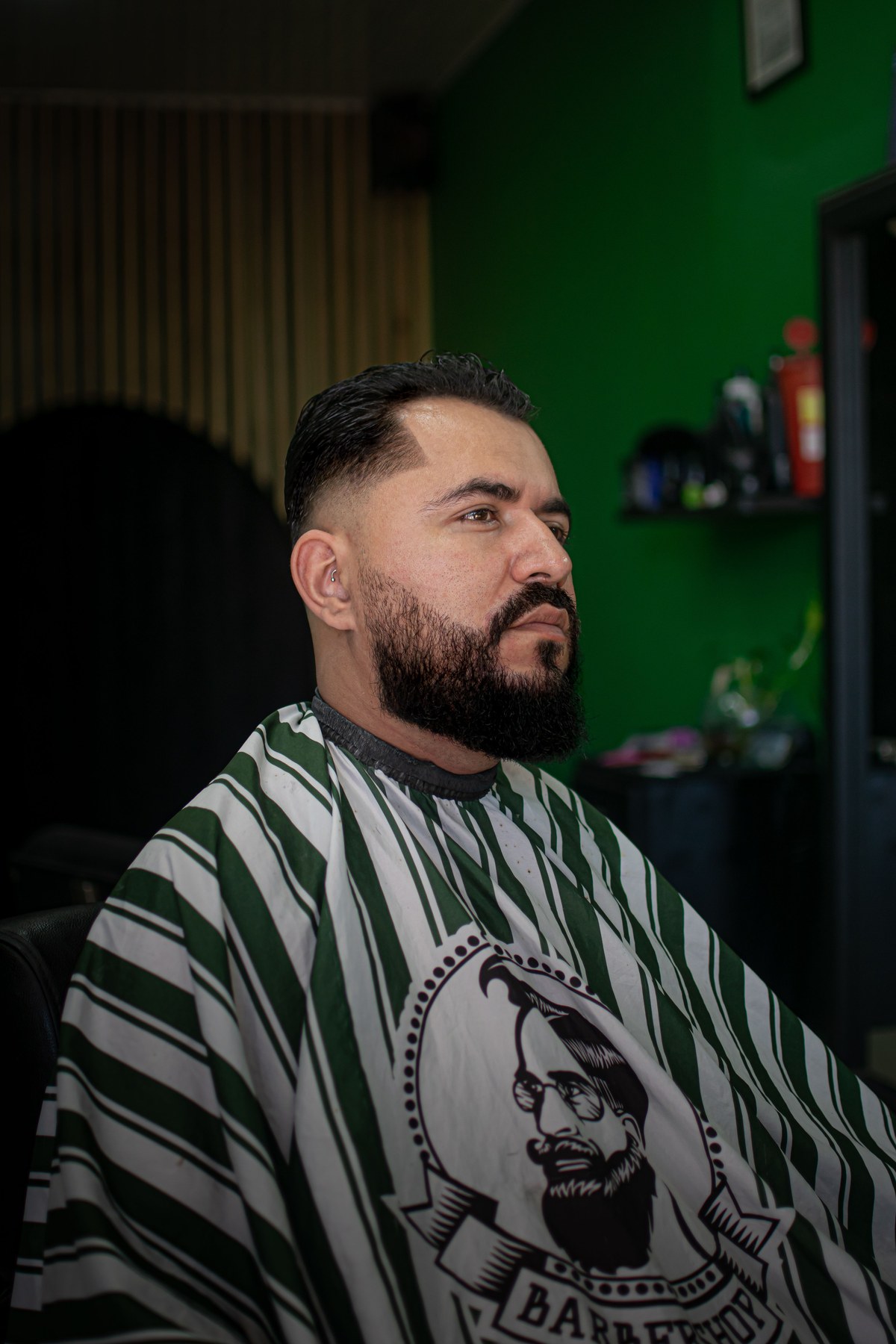
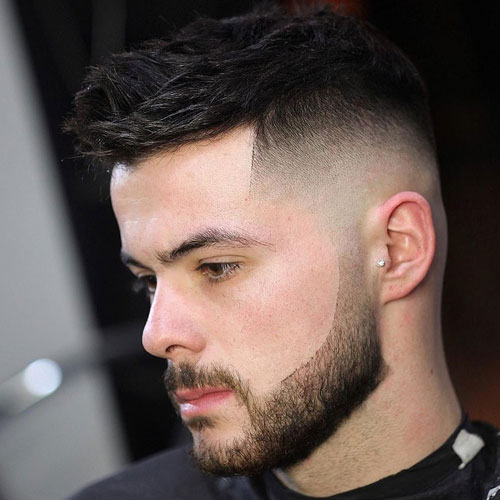
The skin fade is the boldest fade in the barber’s playbook. Where a taper leaves a soft edge of hair, a skin fade goes all the way down — blended from your chosen length to completely bare skin. Clean, high-contrast, and one of the most requested cuts in barbershops today.
But “skin fade” is not one haircut. It is a family: low, mid, high, and the extreme zero fade. Pick the wrong height for your face, hair, or lifestyle and you will feel it every time you look in the mirror. This guide covers each type, who it suits, exactly what to say to your barber, and how to keep it sharp.
What Is a Skin Fade?
A skin fade — also called a bald fade — is a haircut where the sides and back are blended down until the hair disappears completely: shaved to bare skin at its shortest point. Your barber starts at the bottom with a foil shaver or a no-guard trimmer, then works upward through longer guards for a seamless transition into the top.
Skin Fade vs Taper Fade vs “Bald Fade”
- Skin fade: sides blend to bare skin. Bold, high-contrast, needs regular upkeep.
- Taper fade: only the edges are shortened; length stays everywhere. Subtle and conservative — see our low taper fade guide.
- Bald fade: in most shops, simply another name for a skin fade.
- Zero fade: the shortest point is a no-guard clipper (a true #0), not a full shave. Some shops use the terms interchangeably — confirm with your barber.
The Four Skin Fade Heights
Fade “height” is where the shortest part of the blend begins. Low, mid, and high describe placement — and placement changes the whole character of the cut.
1. Low Skin Fade
The fade starts just above the ear and stays low. Most of the sides keep their length; only the bottom inch melts to skin. The subtlest skin fade — neat enough for offices, sharp enough to notice. Best for first-timers, professional settings, and longer faces.

2. Mid Skin Fade
The fade starts around the temple — the middle ground and the most popular choice. Crisp contrast without the drama of a high fade, and it works with almost every top: crops, quiffs, curls, side parts — and longer styles like the pompadour. If you are unsure which height to pick, start here.

3. High Skin Fade
The fade climbs toward the crown, leaving most of the sides faded to skin. Maximum contrast, maximum edge. It visually elongates the face — flattering for round and square faces — and pairs naturally with short tops like buzz cuts and textured crops. Going high and short? Our short fade barber brief helps you nail the top length too. The trade-off: grow-out shows fast, and it demands the most precise blending.

4. Zero Fade (Bald Fade)
The skin fade taken to its limit: the shortest point is a clipper with no guard at all, blended upward. The tightest, shortest fade possible while still being a fade. Ask for it by name, then confirm what you mean — “no guard at the bottom, blended up” — so you and your barber picture the same cut.

Skin Fade vs Taper vs Drop vs Burst Fade
- Skin fade: sides go to bare skin. Bold, highest maintenance. This guide.
- Taper fade: soft, keeps length at the edges. Subtle, low maintenance. See the low taper fade complete guide.
- Drop fade: the fade arcs down behind the ear instead of running straight — a curved, contoured shape.
- Burst fade: the fade curves in a rounded “burst” around the ear while the back stays fuller — our signature cut. See the burst fade complete guide.
Who Does a Skin Fade Suit?
Hair type matters more than face shape. Thick, straight, wavy, curly, and coily hair all take a skin fade — but curly and coily hair shows the contrast best, since texture on top does the visual heavy lifting. On very fine or thinning hair, a high skin fade can expose more scalp than you want; a low fade is the safer call.

Face shape is the fine-tuning: low fades suit longer faces, high fades elongate round faces, and mid fades rarely go wrong. Lifestyle is the real filter: the look depends on a crisp blend that blurs within two to three weeks, so commit to regular visits. A low skin fade passes in most offices; a high fade in a conservative industry deserves a second thought.
What to Tell Your Barber: The Exact Script
Cover these four points, in order:
- Height: “I want a low / mid / high skin fade.” Point to the spot if the terms feel fuzzy.
- Bottom: “Take it to skin” (fully smooth) or “zero, no guard” (a whisper of stubble stays).
- Top: exact length and style — “two inches, textured, forward.” Vague tops ruin good fades.
- Finish: lineup or natural hairline? Tapered or blocked neckline?
Bring two or three reference photos from different angles — they remove all guesswork. And if something feels off mid-cut, speak up then. Fixing a fade is easy at step two; it is a different haircut by step four.

Skin Fade and Beard: The Pairing Rule
A skin fade with a beard is one of the strongest combinations in men’s grooming — but only if the two connect. Ask your barber to blend the beard into the fade, not leave a hard line at the cheek. Balance the weight: a high skin fade pairs well with a fuller beard; a low fade suits a shorter, neater one.

Maintenance: Keeping a Skin Fade Sharp
The crisp blend starts blurring after about two weeks; by week four it reads as a different haircut. Plan a touch-up every two to three weeks — high and zero fades sit at the two-week end.
Between visits, keep the neckline tidy and do not touch up the blend yourself — the skin-to-length transition is the hardest part to execute, and DIY clipper work makes it worse. Control the top instead: matte clay for straight or fine hair, curl cream for curls and coils, or a pomade matched to your hair type for slicked styles.
Skin Fade FAQs
Is a skin fade the same as a bald fade?
In most barbershops, yes — both describe a fade that goes to bare skin. “Bald fade” is simply the older name.
What is the difference between a skin fade and a zero fade?
A skin fade’s shortest point is shaved smooth (usually with a foil shaver). A zero fade’s shortest point is a no-guard clipper — a true #0 — leaving the faintest stubble. Many shops use the terms interchangeably, so confirm with your barber.
How often does a skin fade need a touch-up?
Every two to three weeks to stay crisp. High and zero fades show grow-out fastest — budget for the two-week mark.
Can I get a skin fade with curly or coily hair?
Absolutely — it is arguably the best canvas for a skin fade. The contrast between tight texture on top and bare skin on the sides is exactly what the cut was made for.
Is a skin fade professional enough for the office?
A low skin fade reads neat and intentional in most workplaces. A high or zero fade is bolder — in a conservative industry, start low. You can always go higher next visit.
How do I grow out a skin fade without looking messy?
Let the top grow while getting one clean-up at the two-week mark — ask for the blend to be softened, not re-faded to skin. After four to six weeks you will have enough length to move into a taper or an even cut.
The Bottom Line
Nothing looks sharper than a perfectly blended fade melting into bare skin. Choose your height honestly — low for the office, mid for the all-rounder, high for impact, zero for the tightest finish — bring reference photos, use the four-point script, and commit to the upkeep. Do that, and the skin fade delivers exactly what it promises.
By Derek Nolan
Skin Fade Haircut: Key Takeaways
A skin fade haircut blends the sides to bare skin for maximum contrast. If you are considering a skin fade haircut, start with a low or mid height — a skin fade haircut at these heights suits most settings. A skin fade haircut needs a touch-up every two to three weeks to stay sharp. For inspiration, see how the pros style fades. For younger boys, our burst fade for kids guide covers age-appropriate styles with photos.