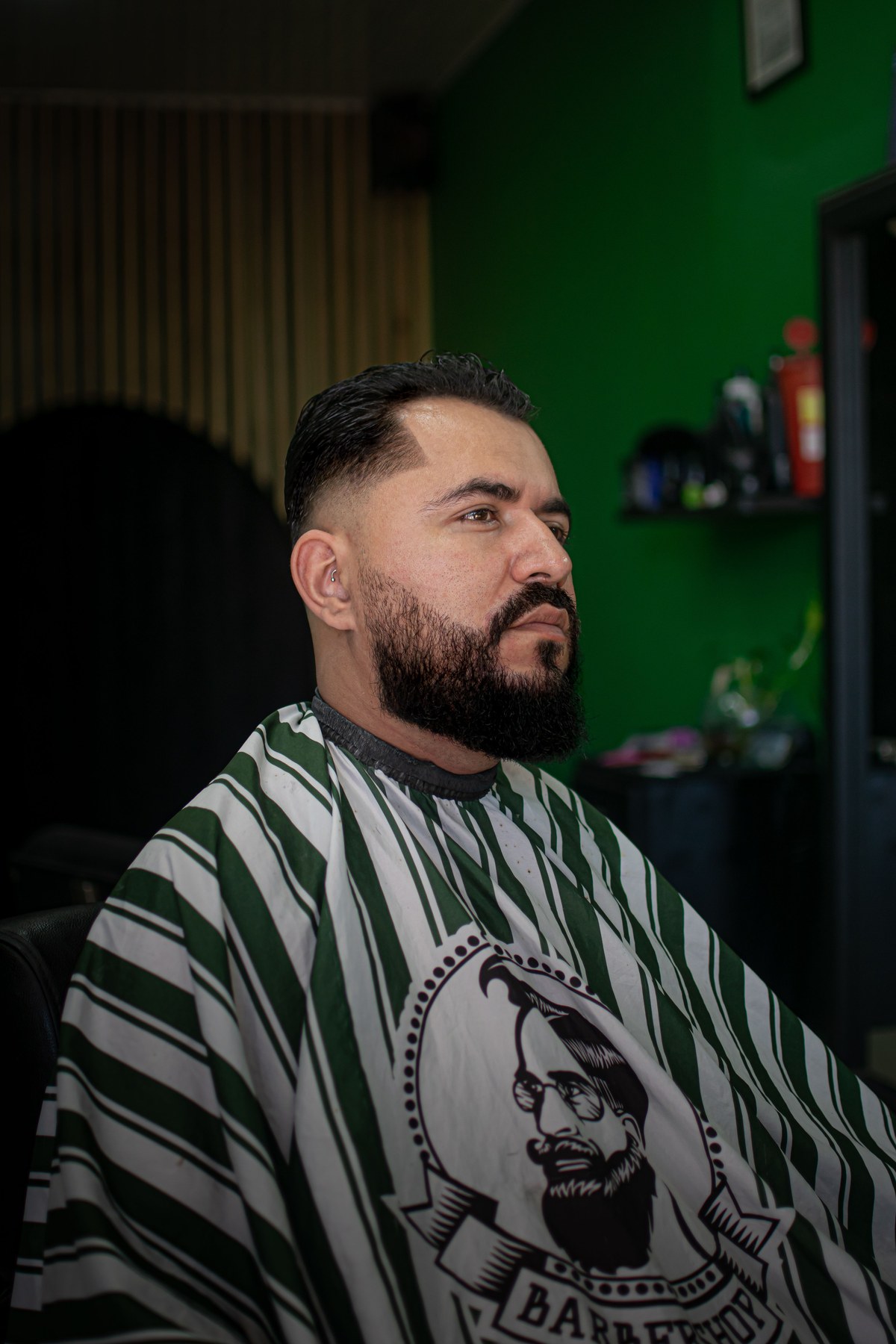
The textured fringe low taper is the haircut you see everywhere right now — on campuses, in barbershop chairs, all over your feed. The top is worn forward in messy, piecey layers while the sides melt away in a clean low taper around the ears and neckline. Effortless on top, sharp on the edges: that contrast is the whole trick.
But “textured fringe” is not one haircut. The fringe can be short and choppy or wavy and full, swept to the side or faded to skin underneath — and the taper has to be cut to match. This guide covers the 8 styles, who each suits, the exact barber script, and home styling.
What Is a Textured Fringe Low Taper?
A textured fringe low taper combines two ideas. The textured fringe is the top: hair worn forward over the forehead, textured so it falls in separated, piecey strands. The low taper is the sides: the hair gradually shortens around the ears and neckline while keeping length everywhere else — subtler than a fade, which suits the relaxed fringe.
How it differs from its cousins:
- Textured fringe vs French crop: a French crop is shorter, blunter, more uniform; a textured fringe is longer and deliberately messy. See our textured crop and French crop guide for the shorter version.
- Textured fringe vs curtains: curtains part in the middle and fall to the sides; a fringe falls forward. Our middle part taper guide covers the parted look.
- Low taper vs low fade: a taper only shortens the edges; a fade blends the whole side down. The low taper keeps the fringe cut feeling soft and grown-in — see the low taper fade complete guide for the full breakdown.
8 Messy Textured Fringe Low Taper Styles
1. The Classic Messy Textured Fringe

The classic messy textured fringe — forward layers with a clean low taper. Photo: @rpb.mcr via luxe.digital
The baseline and still the best starting point: medium-length top worn forward in tousled, separated layers, with a tidy low taper cleaning up the ears and neckline. It suits straight, wavy, and slightly curly hair; the forward fringe flatters long faces most. Tell your barber: “textured fringe, about two inches on top, point-cut for separation, low taper around the ears and neckline.” Style with a pea-sized amount of matte clay, worked through dry hair.
2. Wavy Textured Fringe

A wavy textured fringe with a soft low taper — the natural wave does half the work. Photo: @paul_barbercode via luxe.digital
If your hair has natural wave, this is the easiest version to own — the wave does half the texturizing for you. Keep the top two to three inches so the wave has room to bend, and keep the taper low and soft. Tell your barber: “keep the wave, take weight out with layering, low taper.” Sea-salt spray on damp hair, scrunched and air-dried, is all it needs.
3. Textured Fringe with a Skin Taper

The boldest version — a textured fringe over a taper that fades to skin at the temple. Photo: @wax.t_life via luxe.digital
Same messy fringe on top, maximum contrast underneath: the taper melts all the way to skin around the temples and ears. It is the edgiest take on this list — best for guys who like high-contrast cuts; on very fine hair, the skin taper can expose more scalp than you want. Tell your barber: “textured fringe on top, taper fade to skin around the temples and ears — keep the back natural.” Matte paste defines it best — skip shine.
4. Short Choppy Fringe

The short choppy fringe — jagged, piecey ends over a clean fade. Photo: @dima.shkyria via luxe.digital
The low-maintenance rebel: a shorter fringe with jagged, uneven ends and a tidy fade on the sides. It needs the least styling — the chop does the work — and stays office-safe with the fringe above the brows. Best on thick, straight hair that holds the chopped shape; on very fine hair it can read thin, so keep the choppiness shallow. Tell your barber: “short choppy fringe, aggressive texture on the ends, fade on the sides.” A dab of matte clay keeps it in place — most mornings it needs nothing.
5. Curly Textured Fringe

A curly textured fringe with a blowout taper — curls forward, edges clean. Photo: @thebreakdownbarber via luxe.digital
Curly hair was made for this cut — the curls supply the texture automatically, and the taper frames them instead of competing. Keep two-plus inches so curls fall forward instead of springing into a tight cap; ask your barber to cut curls dry or stretched. Tell your barber: “curly fringe worn forward, taper on the sides, cut for the curl pattern — do not thin it out.” Curl cream on damp hair, then hands off until dry.
6. Side-Swept Textured Fringe

The side-swept textured fringe — diagonal movement over a clean taper. Photo: Haircut Inspiration via haircutinspiration.com
Same cut, different direction: the fringe sweeps diagonally across the forehead instead of falling straight forward. The diagonal line flatters square faces and wider foreheads, and it is the easiest fringe to grow out — when it gets long, it just becomes a longer sweep. Tell your barber: “textured fringe swept to the side, longer on the sweeping side, taper to match.” Blow-dry in the sweep direction and lock it with light-hold paste.
7. Blowout Taper Fringe

The blowout taper from behind — the fringe cut reads sharp from every angle. Photo: @lolordrgz_ via luxe.digital
The taper is the star here: from behind, the blowout taper melts from the curly top into a clean neckline with no harsh lines. Show this to your barber if you care how the cut looks from behind — it proves the fringe cut is a full 360-degree haircut. Tell your barber: “curly textured fringe on top, blowout taper through the back — blend it smooth into the nape.” Our blowout taper guide breaks down the technique in detail.
8. Statement Choppy Fringe

The statement version — straight choppy fringe with bleached sideburn accents. Photo: Haircut Inspiration via haircutinspiration.com
The creative-field special: a straight, choppy fringe with bleached accents at the sideburns. The cut itself is classic textured fringe with a low taper — the color is what turns it into a statement. Skip the bleach for a sharp, wearable fringe; keep it for the boldest cut on this list. Tell your barber: “straight textured fringe, choppy ends, low taper — and if you want the accents, bleach just the sideburn pieces.” A close cousin of the K-style fringes in our two block haircut guide.
What to Tell Your Barber: The Exact Script
Cover these four points, in order:
- Fringe length: “I want the fringe here” — point at your forehead. Short (above the brows), medium (touching the brows), or long (past the brows).
- Texture level: “Point-cut it for separation” — or “keep it heavier” if your hair is fine.
- Taper: “Low taper around the ears and neckline — just clean the edges.”
- Finish: natural hairline or sharp lineup? Blocked or tapered neckline?
Bring two or three reference photos — they remove all guesswork. If the fringe feels too long mid-cut, say so then: taking length off is easy.
How to Style a Textured Fringe at Home
- Start with dry or slightly damp hair — wet styling flattens the texture you paid for.
- Warm a pea-sized amount of matte clay or paste between your palms. Matte finishes show separation; shiny products glue the pieces together.
- Work it through with your fingers, pushing forward — never a comb, which undoes the texture.
- Pinch a few individual strands at the ends to sharpen the piecey look.
Match the product to your hair: matte clay for straight or fine hair, curl cream for curls and waves, sea-salt spray for beach bend. Wash product out the same day.
Maintenance: Keeping It Sharp
The taper shows grow-out first: the clean edge around the ears softens after about two weeks. Plan a touch-up every three to four weeks — the fringe itself grows out gracefully. Between visits, keep the neckline tidy and do not trim the fringe yourself; one uneven snip ruins the layered shape.
Textured Fringe Low Taper FAQs
Does a textured fringe low taper suit straight hair?
Yes — but straight hair needs the most styling help. Ask for aggressive point-cutting so the fringe has built-in separation, and use matte clay daily.
Is a textured fringe low taper professional enough for the office?
The short choppy version (style 4) reads neat in most workplaces. The bolder versions lean casual — fine for creative fields, risky in conservative ones.
How long does my hair need to be for a textured fringe?
About two inches on top for the short versions, three-plus for wavy and curly ones.
Low taper or mid taper with a fringe — which is better?
Low taper keeps the cut soft and natural, which suits the relaxed fringe. A mid taper adds more contrast and edge.
How do I keep the fringe out of my eyes?
Keep the fringe at or above brow level, and sweep it slightly to the side on lazy days.
Can I get a textured fringe with thinning hair?
A light, short textured fringe can work — the forward fall covers the hairline and texture hides thin spots. Keep it honest: heavy choppy layering on thin hair exposes scalp.
The Bottom Line
The textured fringe low taper gives you two things at once: a top with personality and edges with discipline. Pick your fringe honestly — short and choppy for low effort, wavy or curly for texture, bold for the statement — bring reference photos, use the four-point script, and book a touch-up every few weeks.
By Derek Nolan