44 toddler boy haircuts that are cute, easy and actually work
A toddler haircut has one job: look good on a little boy who will not sit still. The best toddler boy haircuts are short enough to survive nursery, soft enough to grow out without looking messy, and simple enough that a busy morning needs nothing more than a quick comb. This guide has 44 of them — first cuts, gentle fades, cute crops, curly tops and mini quiffs — each with a real photo, the exact words to say to your barber, and honest notes on which hair types and ages each cut suits. Every style here is age-appropriate for boys from about 18 months to four years old, and every one is chosen to still look like a haircut even if your toddler calls time halfway through the appointment.
Before the list, one honest note: the best toddler cut is not the trendiest one. It is the one that fits your little one’s hair, his age, and your mornings. A buzz cut needs no styling at all. A quiff needs thirty seconds with a comb. A skin fade needs a still child and a touch-up every few weeks. Start with the version that matches your life, bring the photo from this guide on your phone, and tell your barber the length in plain words — because with toddlers, simple cuts done well beat complicated cuts done in a hurry.
What’s in this guide
Classic and easy (1–12): side parts, crew cuts, comb-overs, quiffs and the everyday favourites. Tapers, texture and shape (13–24): low tapers, high fades, afros, twists and waves. Crops, fringes and longer styles (25–36): brush-ups, French crops, fringes and longer tops. Short, simple and first cuts (37–44): one-length crops, scissor cuts, the number 4 all over and the first haircut itself.
What is a toddler boy haircut?
A toddler boy haircut is a cut shaped for a small child, not a small version of a man’s cut. Toddler hair is finer, softer and often thinner than adult hair, and it grows in every direction at once. The scalp shows more easily under short guards, the fringe grows into the eyes fast, and the back tends to grow shaggy while the top is still thin. A good toddler cut works with all of that: it keeps length where the hair is fullest, keeps the sides neat without going too short, and leaves a shape that still looks tidy two or three weeks later.
The other difference is the client. A toddler will sit for about ten to fifteen minutes if he is distracted, and he will end the haircut when he decides it is over — so the best toddler cuts are the ones that still read as a finished haircut if the session stops early. One-length shapes and soft crops survive that test. A full skin fade does not, because a fade only exists once every guard has been run and blended. That is why this guide leans towards cuts that can stop anywhere: scissor crops, gentle tapers, and shapes that look finished at whatever point you put the scissors down.
How to choose the right toddler boy haircut
Start with age. At 18 months to two years, keep it simple: a scissor crop, a soft one-length cut, or a gentle taper. The child cannot sit long, so the cut must be finishable in a few minutes. At two to three, you can add a little shape — a textured crop, a soft faux hawk, a side part. At three to four, most boys can sit for twenty minutes, and a low taper, a mini quiff or a design line becomes realistic. If you want the taper family explained in detail, our kids taper fade guide covers the gentle versions that work best at this age.
Next, hair type. Fine, straight hair looks best in short, neat cuts — a crew cut, a side part, a classic crop — because longer styles fall flat and show the scalp. Thick hair can carry a textured top or a quiff. Curly hair should keep its length on top; cut the curls too short and they lose their shape, so ask for a shape-up rather than a short crop. Wavy hair is the easiest of all — almost everything in this guide works. Then think about temperament. If your little one hates clippers, choose a scissor cut and say so when you book. If he loves the barber chair, a taper or a fade is fine. And think about mornings: a buzz cut or a crew cut needs no styling at all, while a quiff or a pompadour needs thirty seconds with a comb and a pea-sized amount of gentle product.
What to tell your barber
The words that work best are simple and specific: say the length first, then the sides, then the top. For example: “A textured crop, please — number 4 on the sides, scissor-cut on top, about an inch long, fringe just above the eyebrows.” Bring a photo from this guide on your phone; barbers cut better from a picture than from a description. Three things to always say: “scissor-cut only” if you do not want clippers near his ears; “keep it soft, no hard lines” if you want a gentle finish; and “leave the fringe long enough to sit above his eyebrows” — a fringe cut too short is the one mistake that takes weeks to grow out. Ask the barber to cut the fringe first, because it is the part you see in every photo, and check the blend in the mirror before the barber moves on.
Classic and easy cuts
These twelve are the safest place to start. They are the cuts barbers know by heart, they photograph beautifully, and they survive a wriggling toddler better than anything else in this guide.
1. Classic Side Part
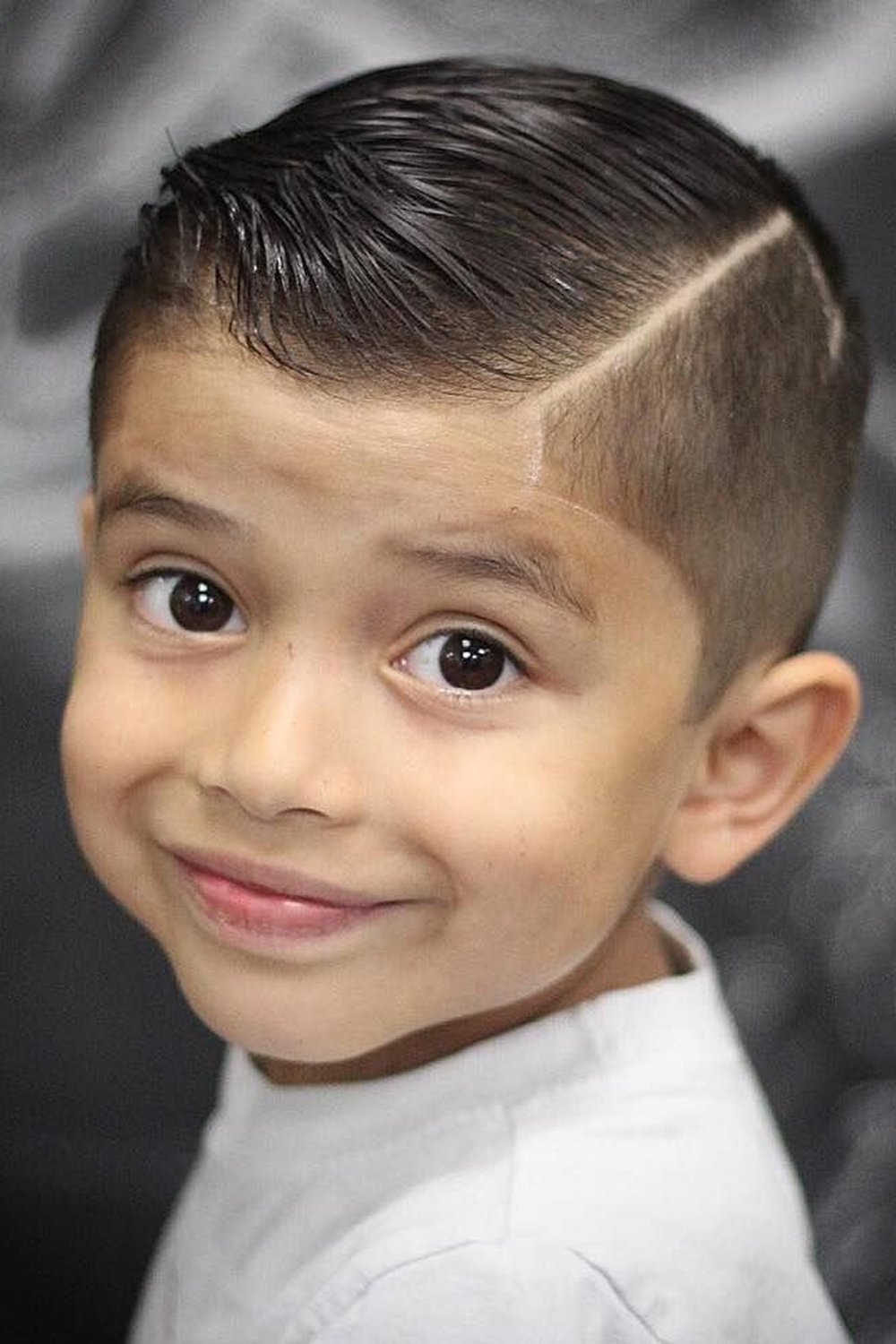
Photo: Pinterest — source
The classic side part is the timeless toddler haircut that never goes out of style, and in this photo it comes with a little extra sharpness: a shaved hard-part line runs from the part down through the faded sides, giving the neat comb-over a crisp edge. The top is left long enough to comb to one side, the sides are faded short and clean, and the whole cut reads as polished and picture-ready. It suits almost every toddler, especially boys aged two to four with straight or slightly wavy hair, and it is one of the easiest cuts to keep tidy — a quick comb in the morning and it is done. The hard-part line is optional; ask for it if you want the photo-ready finish, or skip it for a softer everyday version.
Ask for: “Classic side part, about two inches on top, number 3 on the sides, with a shaved part line if he will sit for it.” Best for: straight and wavy hair, family photos, weddings. Upkeep: tidy the part every four to five weeks; a comb and a drop of water is all the styling it needs.
2. Textured Crop with Mid Fade
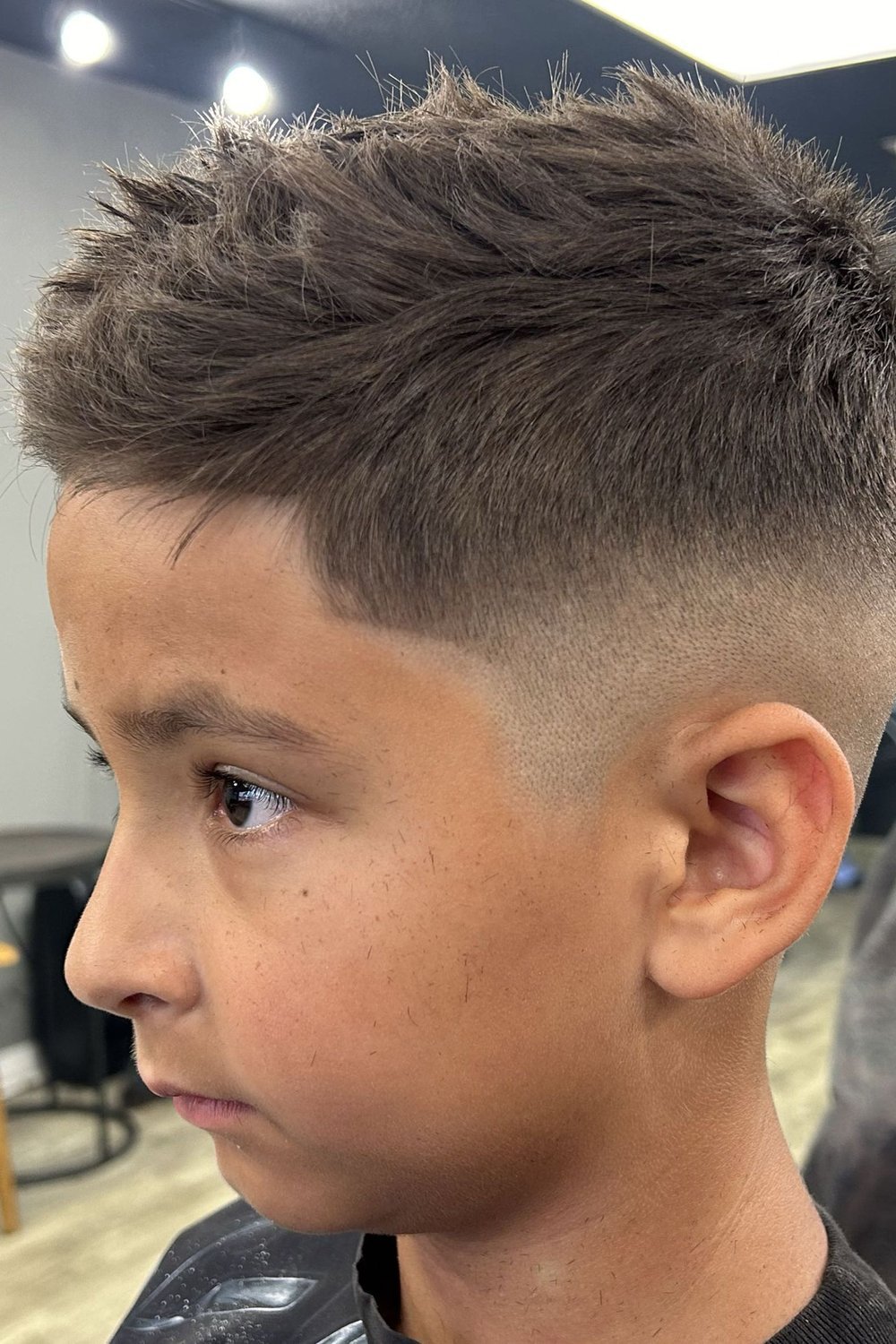
Photo: Booksy — source
The textured crop with a mid fade is 2026’s most popular toddler boy haircut for a reason: short, choppy layers on top give fine young hair instant shape and movement, while the mid fade keeps the sides clean without going too high or too short. In the side-profile photo you can see exactly how it works — the textured top has piecey, separated strands that catch the light, and the fade climbs to the middle of the head before blending into the top. It suits toddlers aged two to four with straight or wavy hair, and it works especially well for boys whose hair tends to lie flat, because the texture does the work that length cannot. It is also wonderfully low-maintenance: no combing, no product, just a quick finger-ruffle in the morning.
Ask for: “Textured crop, choppy on top, mid fade on the sides, fringe just above the eyebrows.” Best for: fine or flat hair, active boys, no-styling mornings. Upkeep: a tidy-up every four weeks keeps the fade crisp; the top grows out gracefully.
3. Curly Top
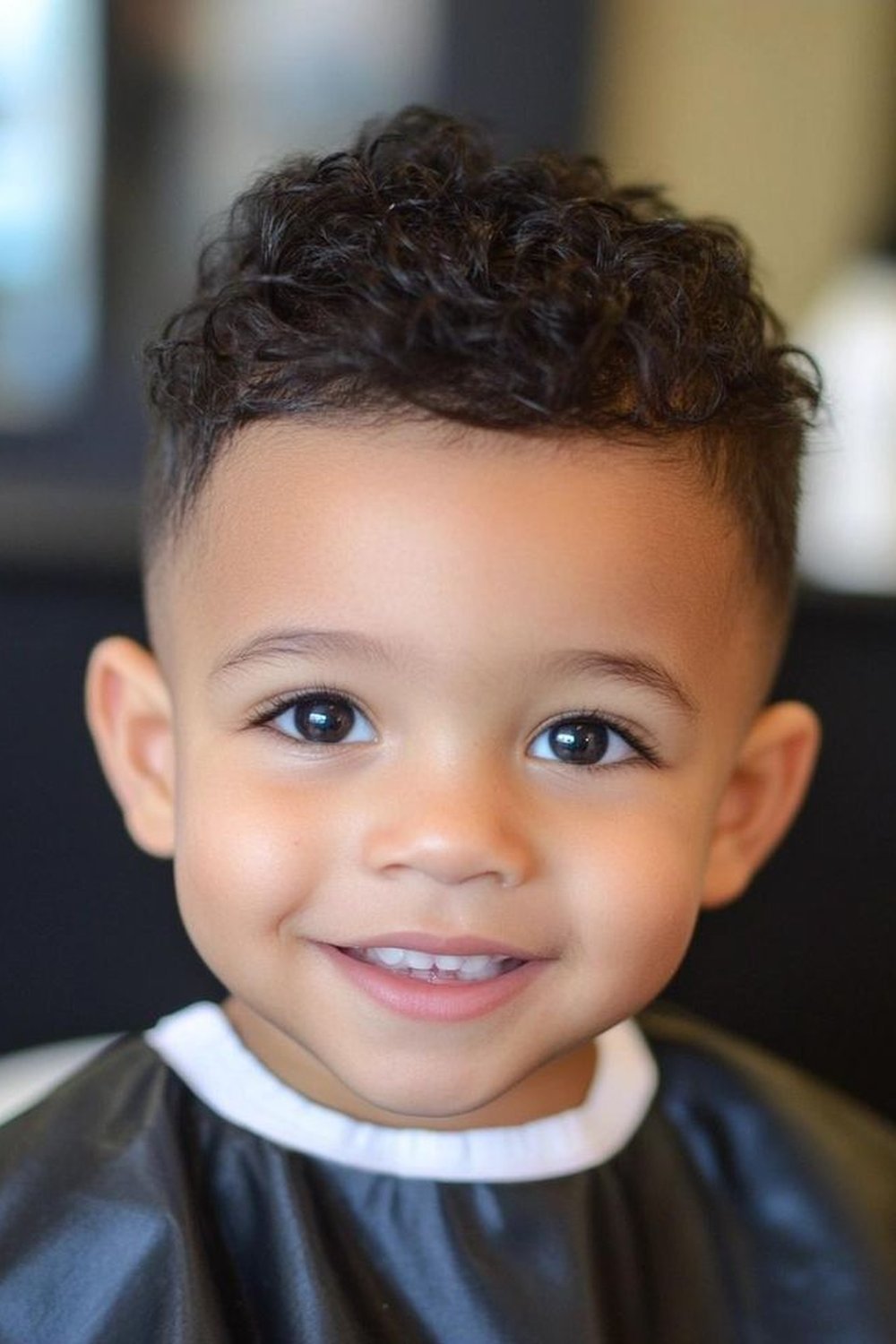
Photo: Pinterest — source
The curly top celebrates a toddler’s natural curls instead of fighting them. In this photo the smiling little boy wears a black barber cape, his curls kept generous and bouncy on top while the sides are faded short so the shape stays neat and controlled. The secret is length: cut the curls too short and they lose their spring, so the barber keeps the top long enough for the curls to form their own shape, and only the sides and back are taken short. It suits toddlers with naturally curly or coily hair of any density, and it is one of the most joyful cuts in this guide — the curls do all the styling by themselves. A little leave-in conditioner at bath time keeps them soft and defined.
Ask for: “Keep the curls long on top, shape the sides with a low fade, no thinning — just tidy the edges.” Best for: curly and coily hair, boys who hate combs. Upkeep: trim the sides every four weeks; moisturise the curls, never brush them dry.
4. Soft Faux Hawk
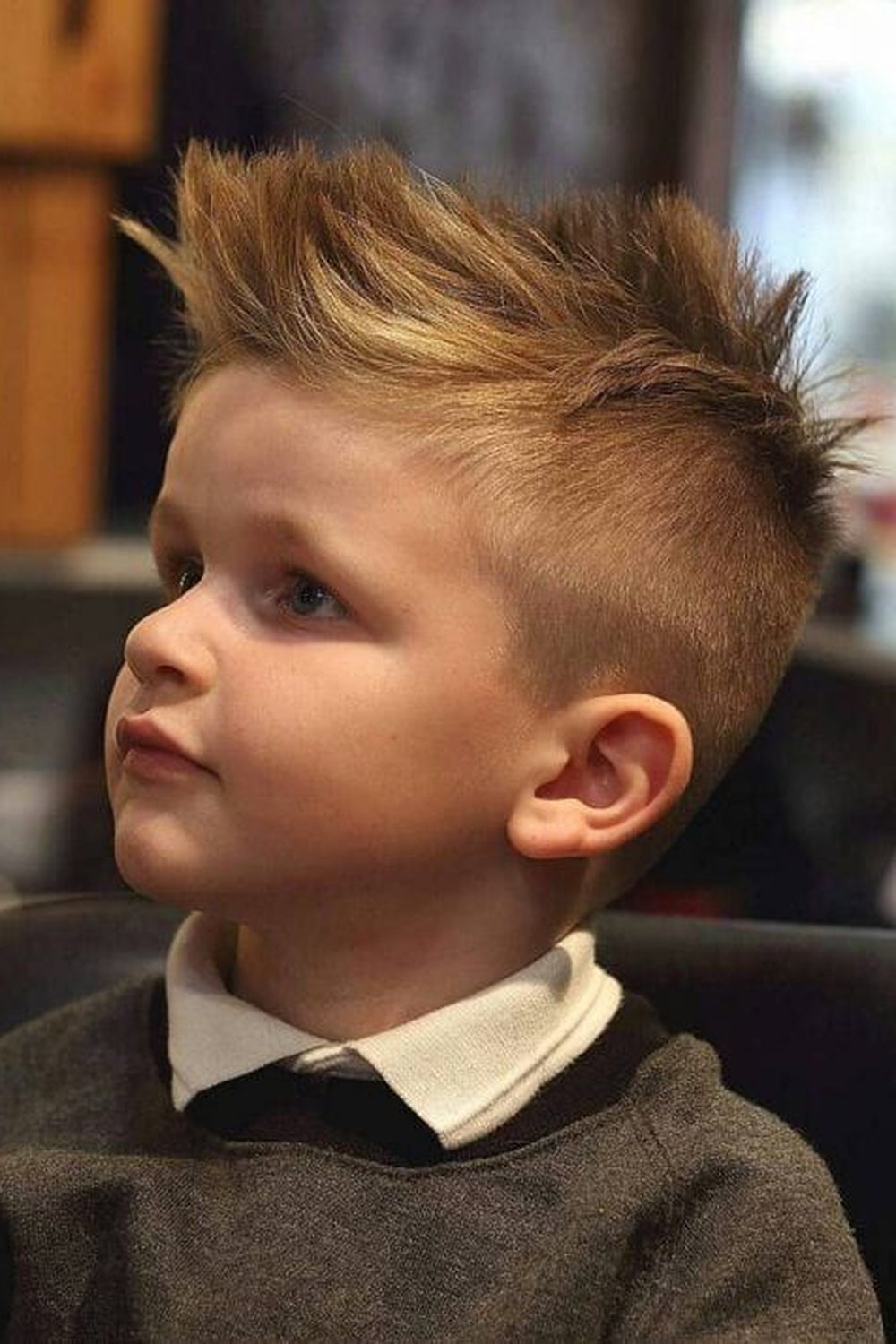
Photo: Pinterest — source
The soft faux hawk is the playful, pint-sized version of a rock-star cut, toned down so it stays sweet and age-appropriate. In this photo a blond toddler in side profile wears a tall, spiky strip down the centre of his head, with the sides kept short so the hawk stands out without looking harsh. The spikes are soft, not stiff — the hair is brushed up with fingers rather than gelled into points — so it reads as fun rather than fierce. It suits boys aged two to four with straight or slightly wavy hair, and it is a brilliant choice for a little boy with a big personality. It also photographs wonderfully, because the height of the hawk gives every picture energy. A pea-sized amount of gentle product holds it for a party; on normal days, leave it natural.
Ask for: “A soft faux hawk — longer strip down the middle, short on the sides, spikes brushed up soft, not stiff.” Best for: straight hair, confident little boys, party photos. Upkeep: finger-style in the morning; trim every four weeks.
5. Mini Quiff
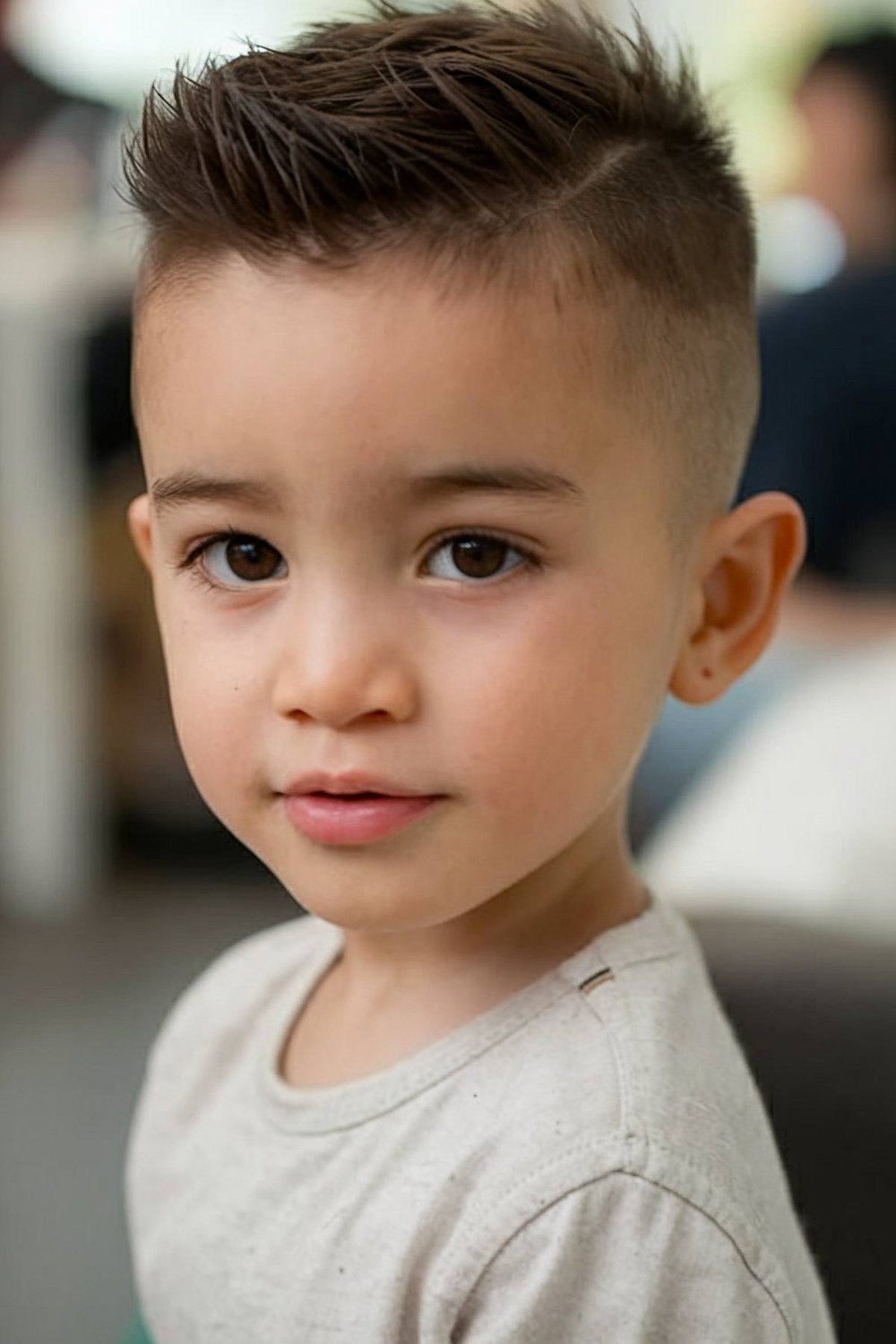
Photo: Latest Hairstyles — source
The mini quiff is a dapper little haircut that gives a toddler a smart, swept-up front with plenty of charm. In this photo the quiff rises tall from the forehead, brushed up and back with real height, while the sides are faded clean so all the attention goes to the top. It suits toddlers aged two to four of every hair type and face shape, and it is especially helpful for boys with very fine, thin or patchy toddler hair, because the swept-up front creates the illusion of fullness. It is the cut to choose for a wedding, a family portrait or a special occasion — and it is simpler to style than it looks. A comb and a tiny amount of gentle product, thirty seconds, and the quiff is up.
Ask for: “A mini quiff — longer at the front, swept up and back, faded sides, soft finish.” Best for: fine or thin hair, special occasions, photo days. Upkeep: thirty seconds with a comb each morning; a tidy-up every four weeks.
6. Buzz Cut (#2 All Over)
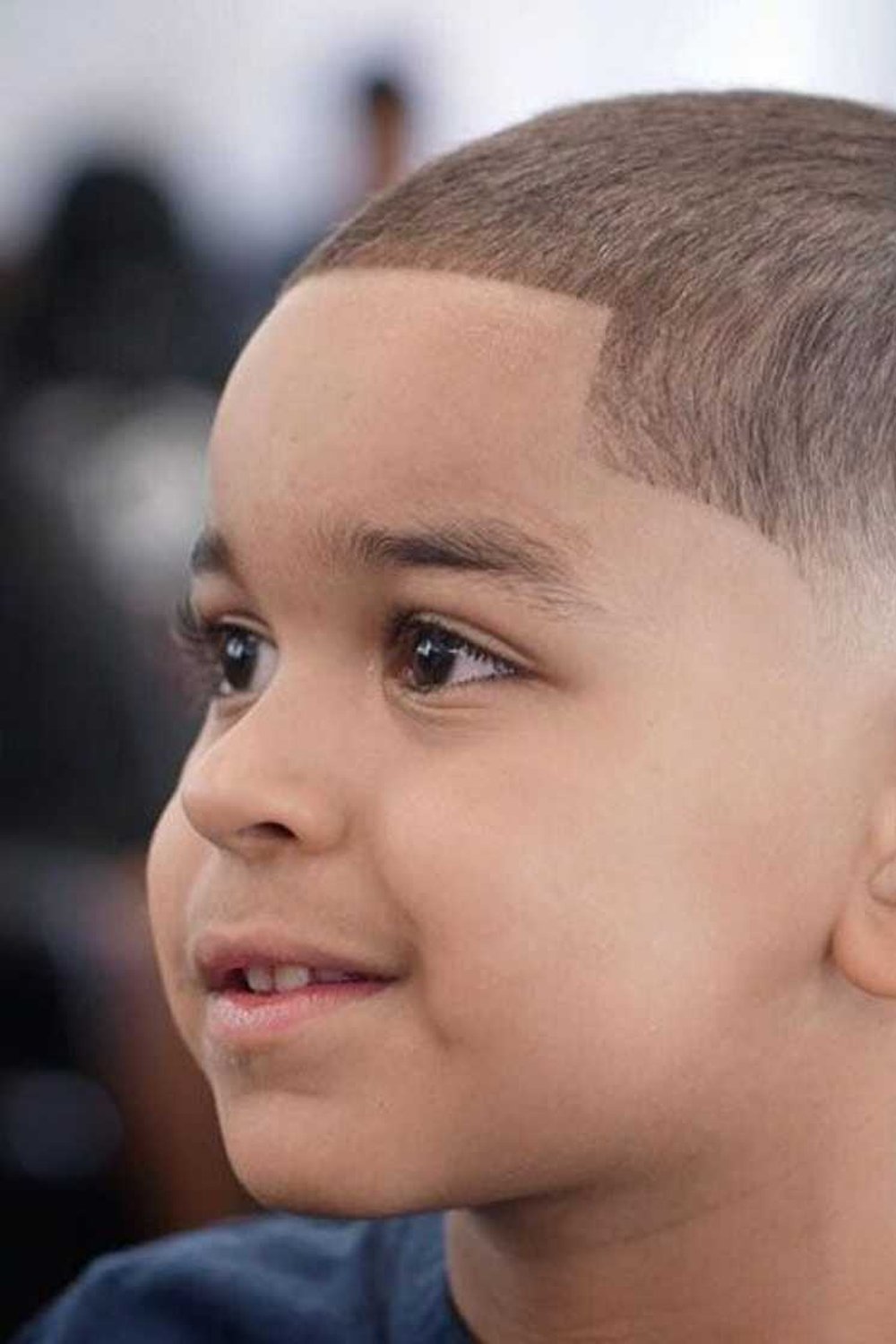
Photo: TUKO — source
The buzz cut is the ultimate low-maintenance toddler boy haircut, and in this close-up photo you can see why parents love it: one even length all over, a sharp lineup at the forehead, and nothing left to tangle, fall into his eyes or need combing. A number 2 guard all over leaves enough length to look like a haircut rather than a shave, and it is the fastest cut a barber can do — often finished in five minutes, which matters when your toddler’s patience runs out at minute six. It suits every hair type and every face shape, it is the easiest cut to keep clean during messy toddler phases, and you can even do it at home with clippers. The lineup in the photo is the detail that lifts it from plain to polished.
Ask for: “Number 2 all over, with a neat lineup at the forehead.” Best for: every hair type, hot weather, the easiest mornings. Upkeep: almost none; re-cut every four to six weeks.
7. Classic Crew Cut

Photo: Styling Vibe — source
The classic crew cut is the short, smart, all-American toddler haircut that has been a favourite for generations. In this side-profile photo the top is short and even, the sides are tapered neatly, and the whole shape is clean and tidy from every angle. It is slightly longer on top than a buzz cut, which gives it a little more shape, but it is still short enough that it needs nothing in the morning — no comb, no product, no battle. It suits toddlers of every hair type, it grows out evenly, and it is the cut barbers reach for when a parent says “short, neat, and easy.” For a first haircut it is one of the safest choices there is, because it is quick, it cannot go wrong, and it looks good on every little boy.
Ask for: “A classic crew cut — short on top, tapered on the sides, neat all round.” Best for: first haircuts, every hair type, zero-styling mornings. Upkeep: re-cut every five to six weeks; nothing to style.
8. Gentleman Comb-Over
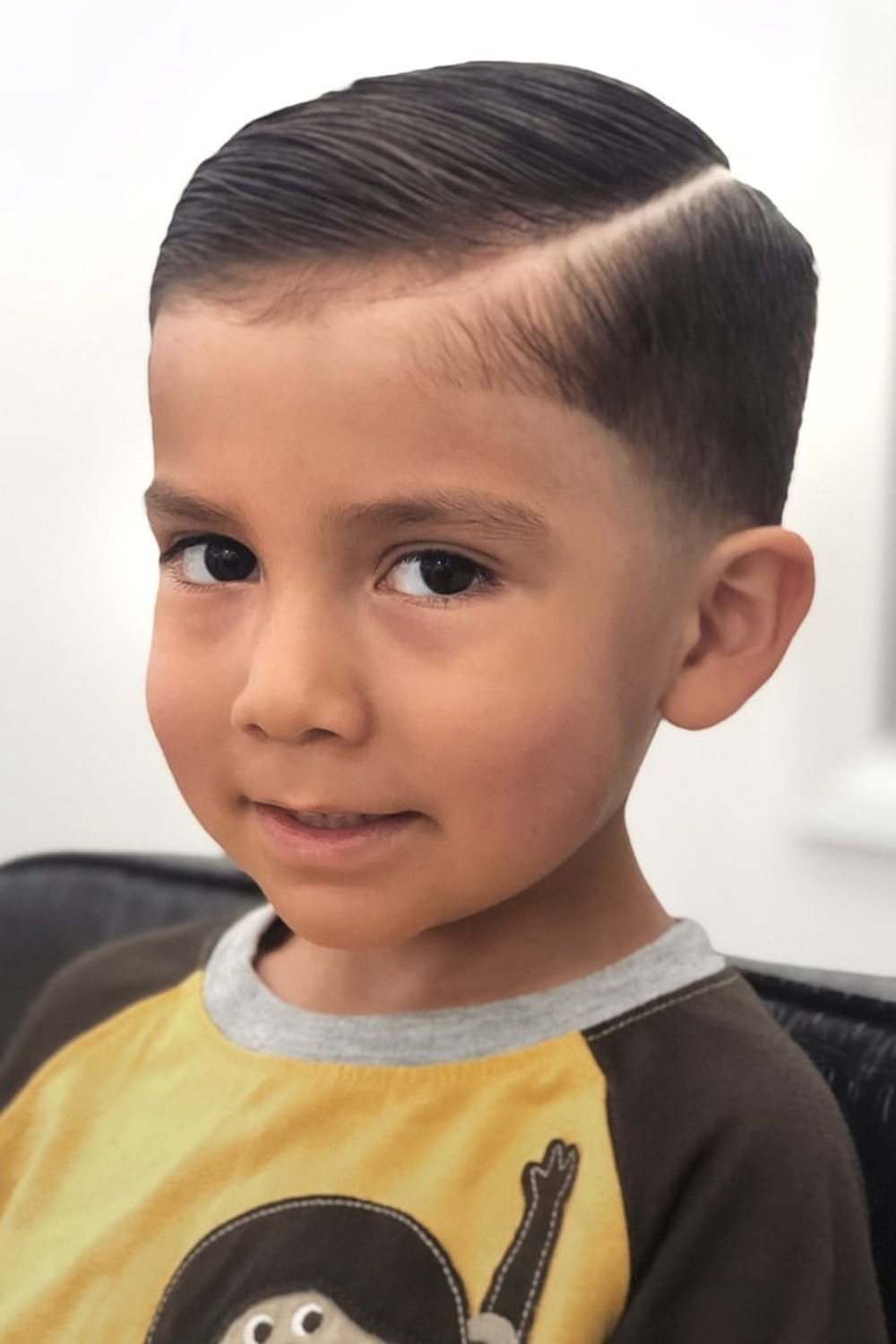
Photo: Maison Privée — source
The gentleman comb-over is the dressiest cut in this guide, and the smiling toddler in this photo wears it perfectly: the top is combed smoothly to one side, the sides are short and neat, and a shaved hard-part line runs from the part to sharpen the whole look. Comb-overs shine at weddings, portraits and holidays, but they are simple enough for every day too — a comb and a little water in the morning, and the part falls back into place. The hard-part line is the detail that makes it photograph so well, though you can skip it for a softer finish if you prefer. It suits straight and wavy hair best, and it is a lovely choice for a little boy’s first formal occasion.
Ask for: “A gentleman comb-over — top combed to one side, short sides, with a shaved part line if he will sit for it.” Best for: straight and wavy hair, weddings, portraits. Upkeep: comb it into place each morning; tidy the part every four weeks.
9. Ivy League Cut
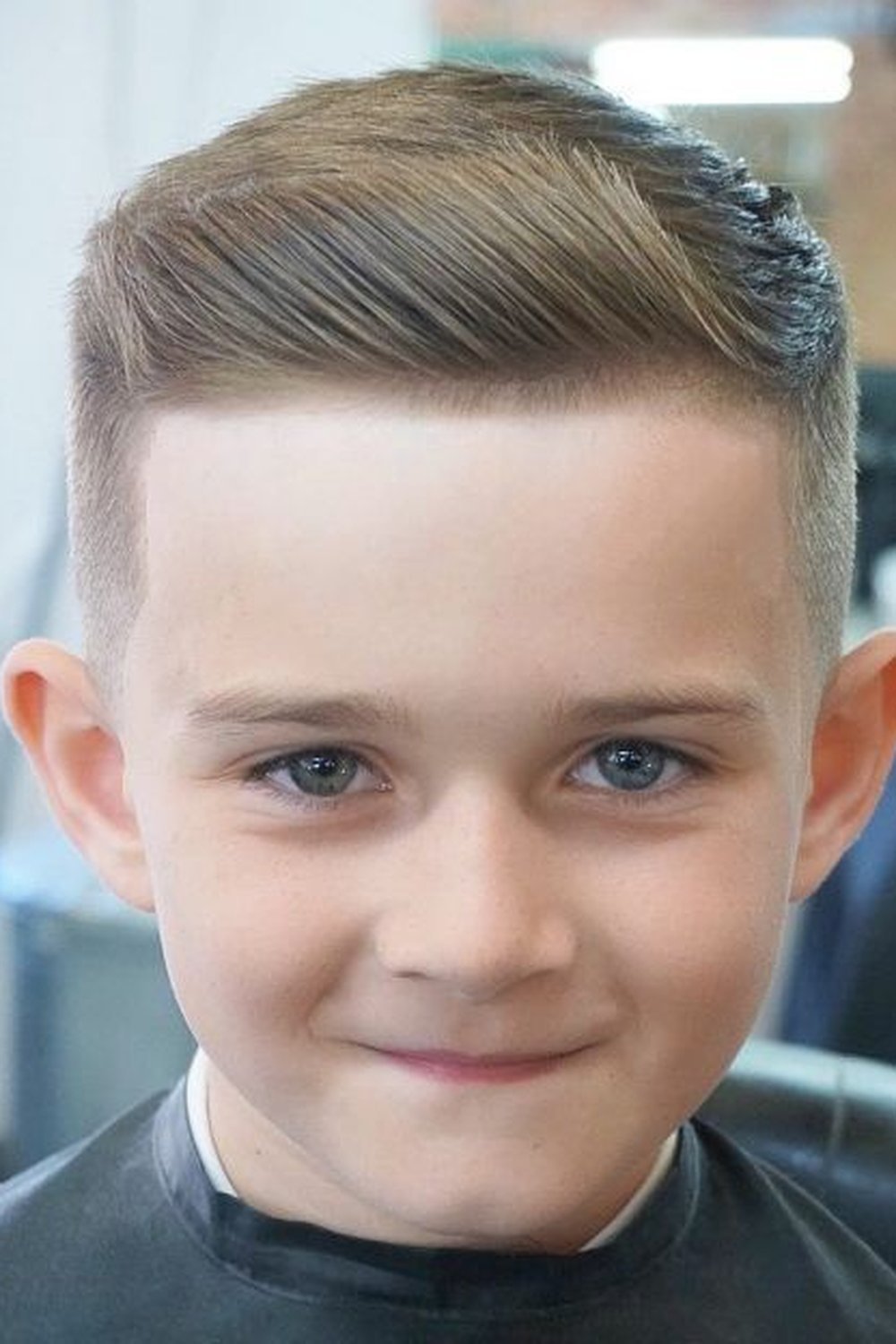
Photo: Fashionuer — source
The Ivy League cut is short, smart and very easy to manage — the toddler version of the classic college cut. In this photo the top is side-parted and left just long enough to comb neatly to one side, while the sides are tapered short for a clean finish. It is a smart pick for family photos or school pictures, since it holds its shape whether it is combed forward or pushed back, and it grows out cleanly without going shaggy at the edges. It suits straight and slightly wavy hair, and it is a good middle ground if a crew cut feels too short but a longer style feels too much work. Like the crew cut, it asks almost nothing of you in the morning.
Ask for: “An Ivy League — side part, a little length on top, tapered sides, neat and short.” Best for: straight hair, school pictures, easy mornings. Upkeep: comb it to the side; a tidy-up every four to five weeks.
10. Baby Caesar Cut
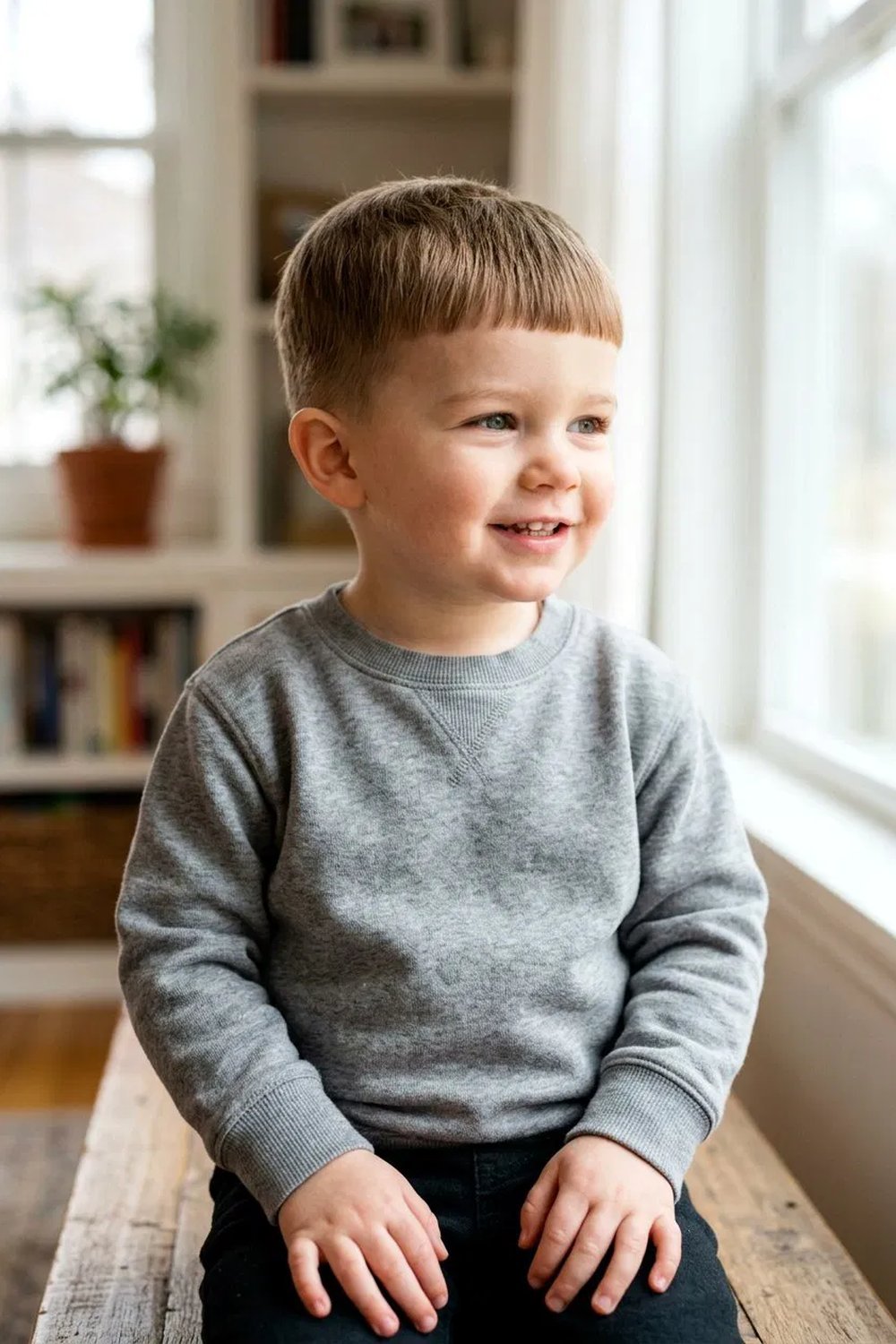
Photo: Lovelyish — source
The baby Caesar is one of the oldest toddler haircuts there is: short all over, with a straight fringe cut across the forehead. In this wider photo the little boy sits by a window in a grey sweater, and you can see the whole shape at once — the even length, the neat straight fringe line, and how tidy the cut looks from a little further back. It is a brilliant first haircut, because the fringe is the first thing a parent notices growing long, and the Caesar solves it in one clean line. It suits straight and slightly wavy hair, it needs no styling at all, and it is very forgiving if your toddler wriggles — a straight fringe can be finished in seconds. Keep the fringe just above the eyebrows, never shorter.
Ask for: “A baby Caesar — short all over, straight fringe across the forehead, just above the eyebrows.” Best for: first haircuts, straight hair, fringe that keeps growing into his eyes. Upkeep: trim the fringe between cuts if it drops below the eyebrows.
11. Spiky Top
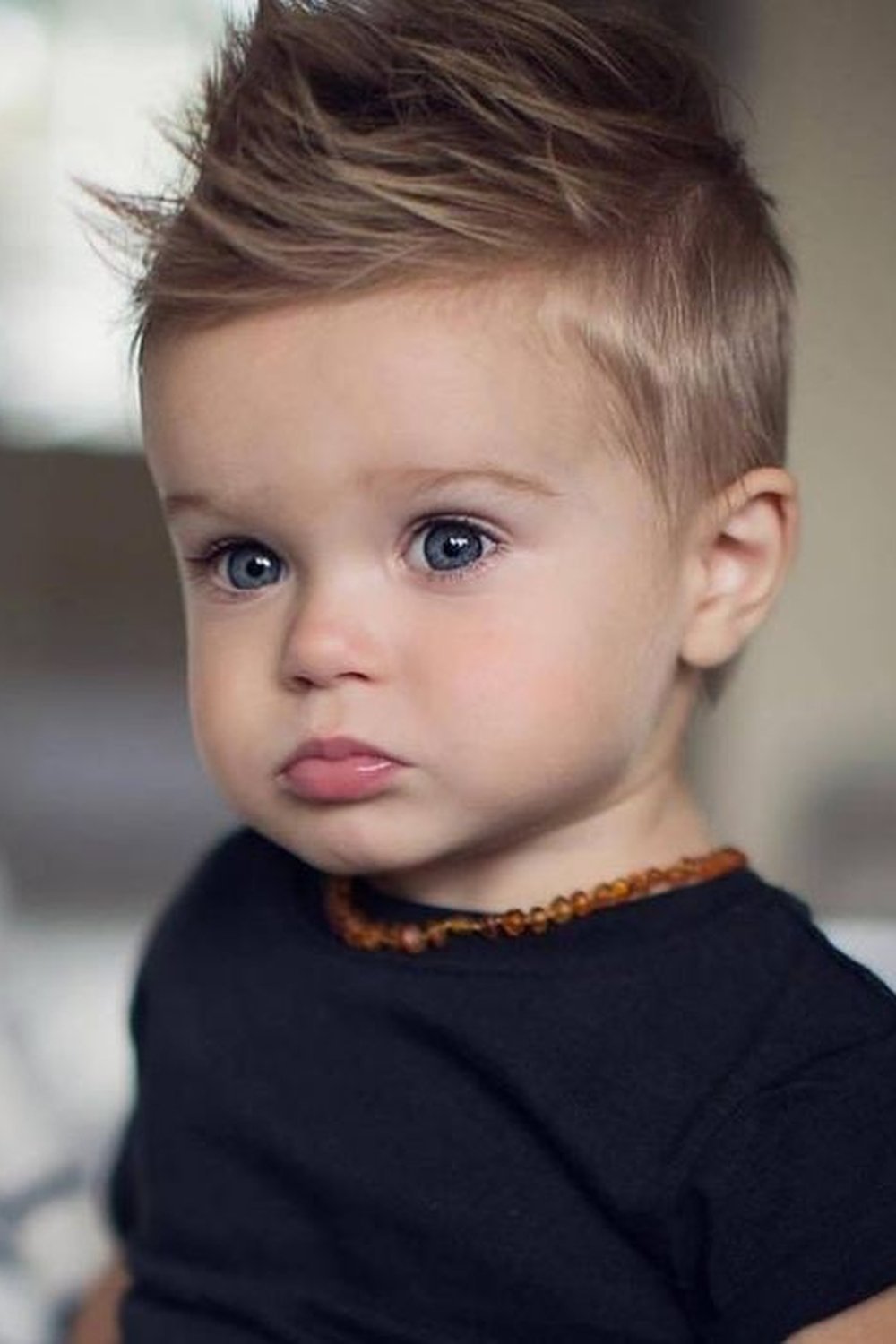
Photo: MyTour — source
The spiky top is a high-energy toddler haircut that turns short hair into a fun, textured crown of soft spikes. In this front-facing photo the spikes stand up all over the top, while the sides are faded short so the texture is the star of the show. It suits toddlers aged three to four with straight or slightly wavy hair and medium density, since very fine hair may struggle to hold spikes — for fine hair, ask for the spikes a little shorter and they will stand up on their own. It is the cut for a little boy who likes to look in the mirror and see his hair defying gravity, and it takes almost nothing to style: a quick rub with the fingers in the morning, and the spikes are up.
Ask for: “A spiky top — short textured spikes on top, faded sides, soft finish, no hard gel.” Best for: straight and wavy hair, energetic little boys. Upkeep: finger-style in the morning; trim every four weeks.
12. Surfer Cut
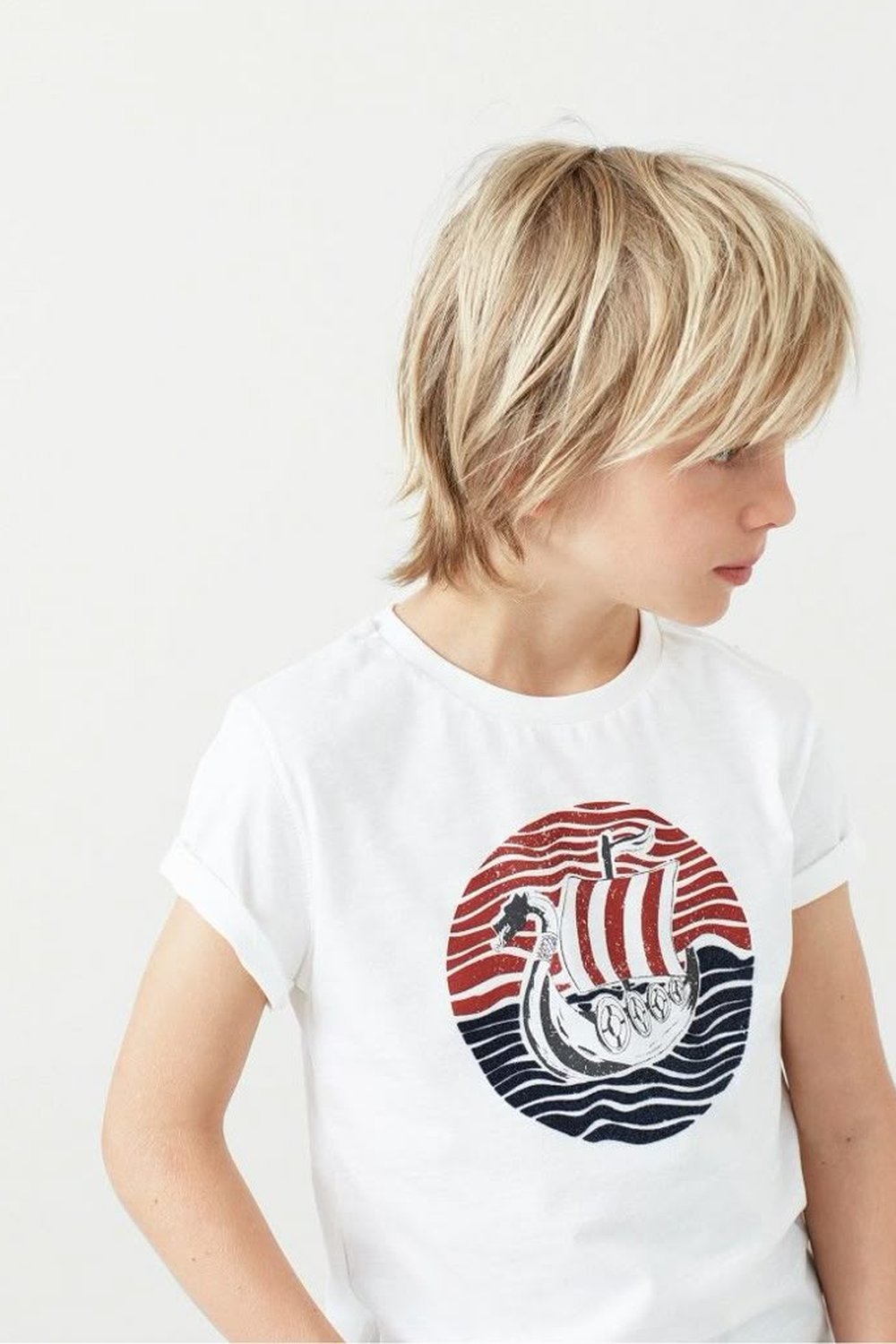
Photo: Pinterest — source
The surfer cut is the longer, free-flowing option in this guide — best saved for older toddlers and pre-schoolers who can sit still for a layered cut. In this side-profile photo the blond boy’s hair falls in long layers past the ears, with natural movement and a soft, sun-kissed look that no short cut can match. It suits wavy and thick hair best, and it is the right choice if you love your little one’s long hair and do not want to cut it short yet. The trade-off is honest: longer hair tangles, it needs brushing, and it falls into his eyes unless the front is layered back. Keep the layers soft, ask the barber to thin nothing, and be ready with a gentle brush in the morning.
Ask for: “A surfer cut — long layers past the ears, soft ends, nothing thinned, front layered back from the eyes.” Best for: wavy and thick hair, older toddlers (around four to five), parents who love long hair. Upkeep: brush daily; trim the ends every six weeks.
Tapers, texture and shape
This group is for parents who want a little more shape: gentle tapers, clean fades, and cuts that work with curls, coils and waves. A soft taper is the safest way into fades for a toddler — it grows out gracefully, and it never needs the stillness a skin fade demands. If your little one loves the barber chair, this is where the fun starts. For the burst-fade version of these shapes, our burst fade for kids guide covers the curved fade around the ear in detail.
13. Low Taper with Textured Top
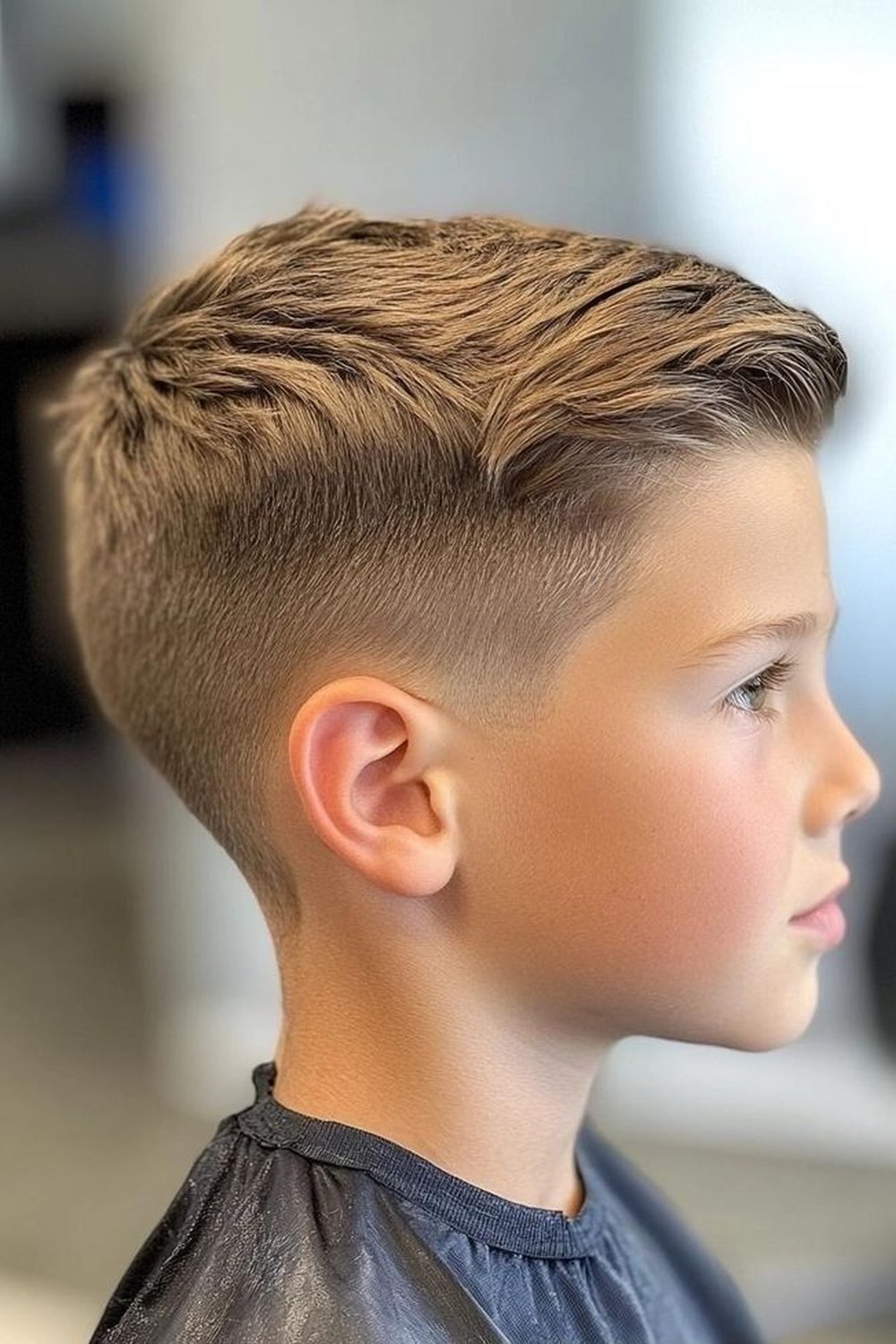
Photo: Pinterest — source
The low taper with a textured top is the gentlest fade in this guide, and the best first step into fades for a toddler. In this side-profile photo the textured top is choppy and piecey, while the taper starts low — just above the ear — and blends softly into the top, so the contrast is quiet rather than dramatic. Because the faded line sits so low, regrowth barely shows, which means this cut lasts longer between appointments than any other fade here. It suits toddlers aged two to four with straight or wavy hair, and it is the fade to choose if you are not sure your little one will sit still for a full fade — the barber can finish the taper in a couple of minutes, and the cut still looks complete. The textured top also hides the thin, patchy spots that fine toddler hair often has.
Ask for: “A low taper with a textured top — fade starting just above the ear, choppy texture on top, soft blend.” Best for: first fades, fine hair, longer gaps between cuts. Upkeep: tidy the taper every five weeks; the top needs nothing.
14. High Fade with Curly Top
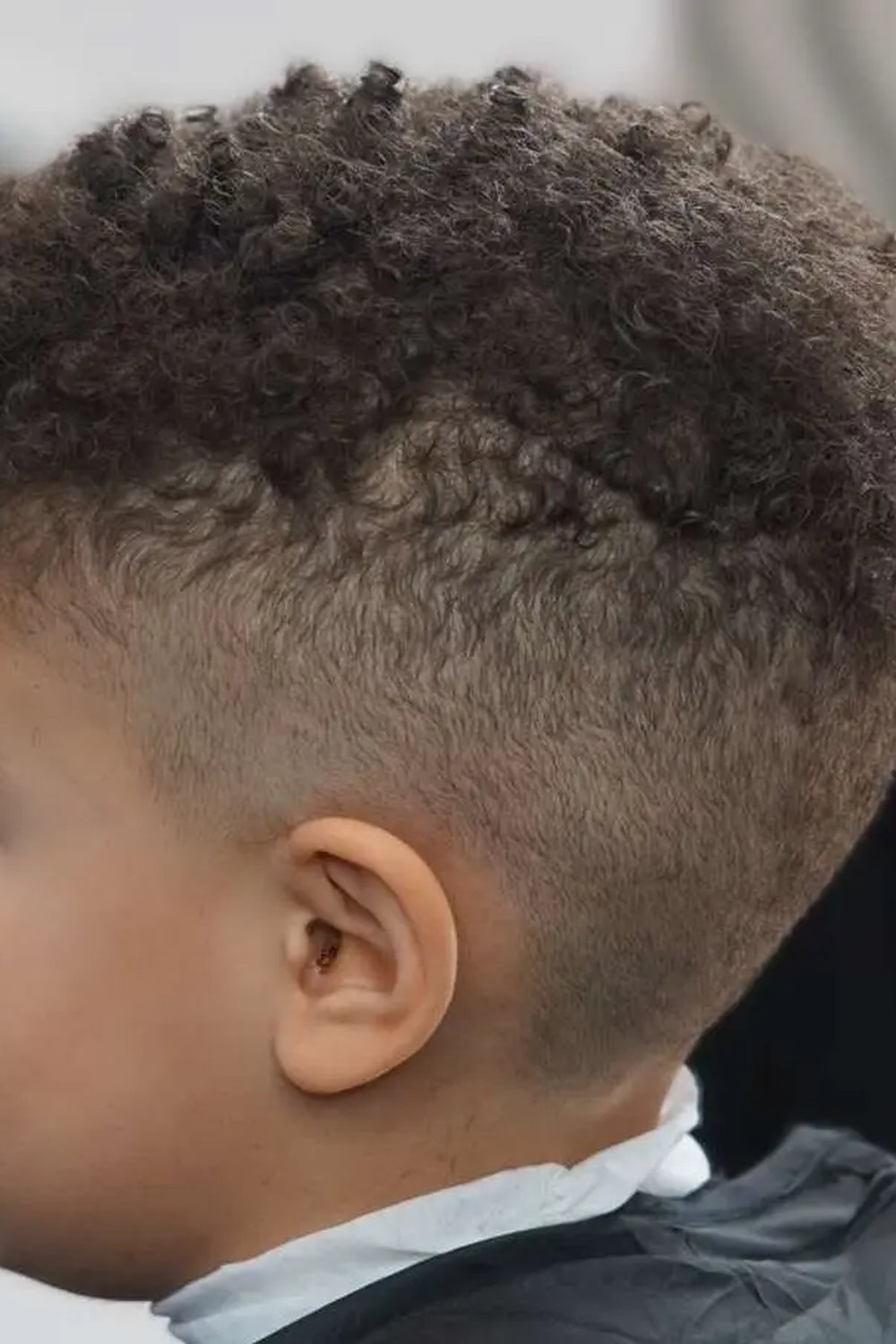
Photo: Setmore — source
The high fade with a curly top is the boldest combination in this guide — and this back-and-side photo shows exactly why it works: the curls pile up on top in their full, springy shape, while the high fade climbs the sides and back to meet them, giving the cut real contrast and drama. Seen from behind, the blend is the star: short at the neckline, lengthening step by step until it meets the curls. It suits toddlers with naturally curly or coily hair who can sit still for a proper fade, and it is a brilliant showcase for curls, because the short sides make the top look even fuller. Be honest about upkeep, though — a high fade shows regrowth fast, so it needs a touch-up every three to four weeks to stay sharp.
Ask for: “A high fade with a curly top — keep the curls long on top, fade high on the sides, blend into the curls.” Best for: curly and coily hair, boys who sit still for a fade. Upkeep: touch up the fade every three to four weeks; moisturise the curls.
15. Skin Fade with Short Crop
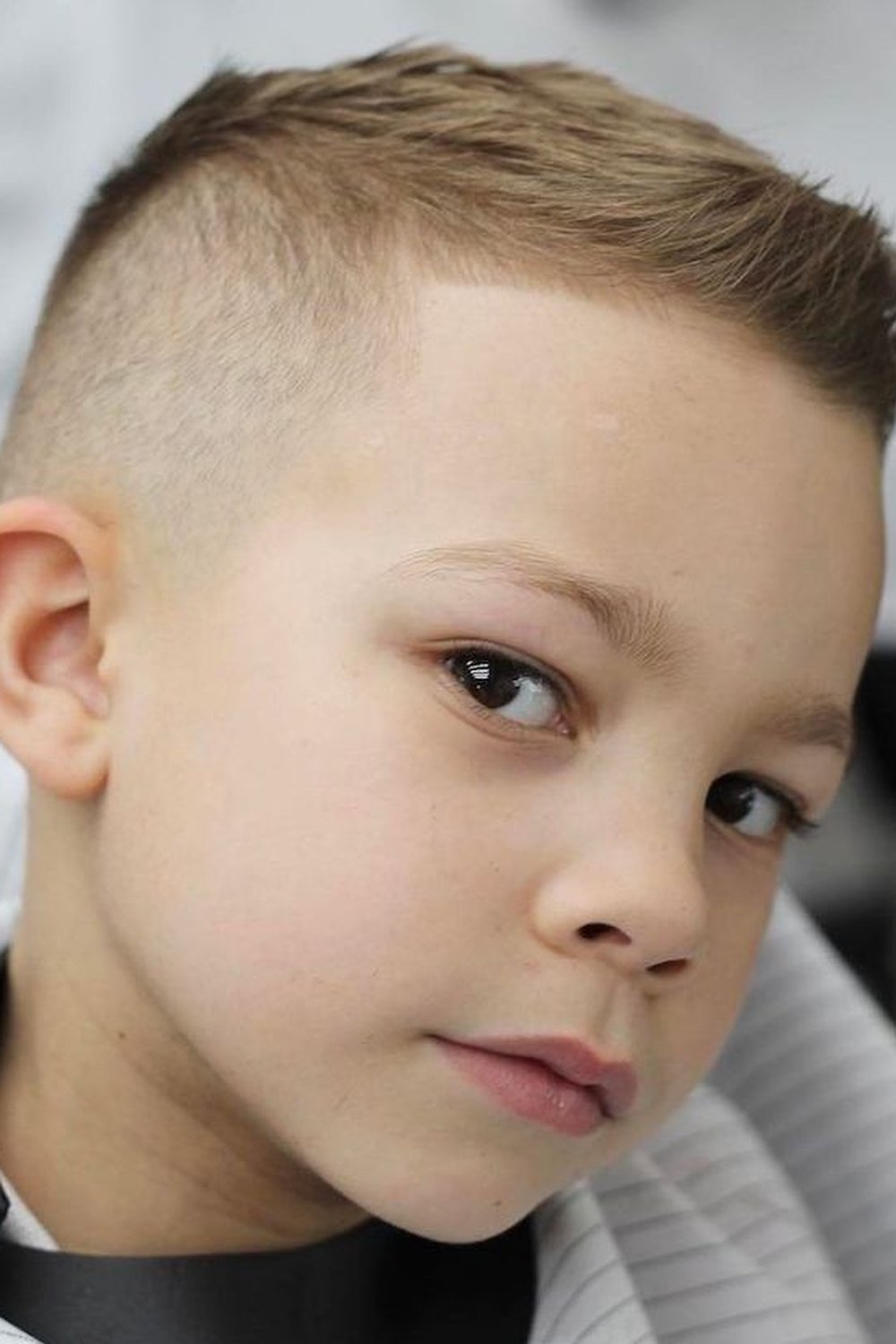
Photo: Pinterest — source
The skin fade with a short crop takes the sides all the way down to the skin, and in this close-up photo you can see the payoff: a razor-clean gradient from bare skin at the hairline up to the short textured crop on top. It is the sharpest finish in this guide, and it suits straight and thick hair best, because the contrast between the skin fade and the top is what makes it striking. But it comes with the clearest warning in this guide too: a skin fade needs a still child, a confident barber, and a touch-up every two to three weeks, because stubble shows within days. If your toddler wriggles, choose the low taper at number 13 instead — a half-finished skin fade looks like a mistake, while a half-finished taper looks like a haircut.
Ask for: “A skin fade with a short crop — to the skin at the hairline, blended up to a short textured top.” Best for: straight and thick hair, still sitters, sharp photo days. Upkeep: touch up every two to three weeks; this is the highest-maintenance cut here.
16. Mini Pompadour
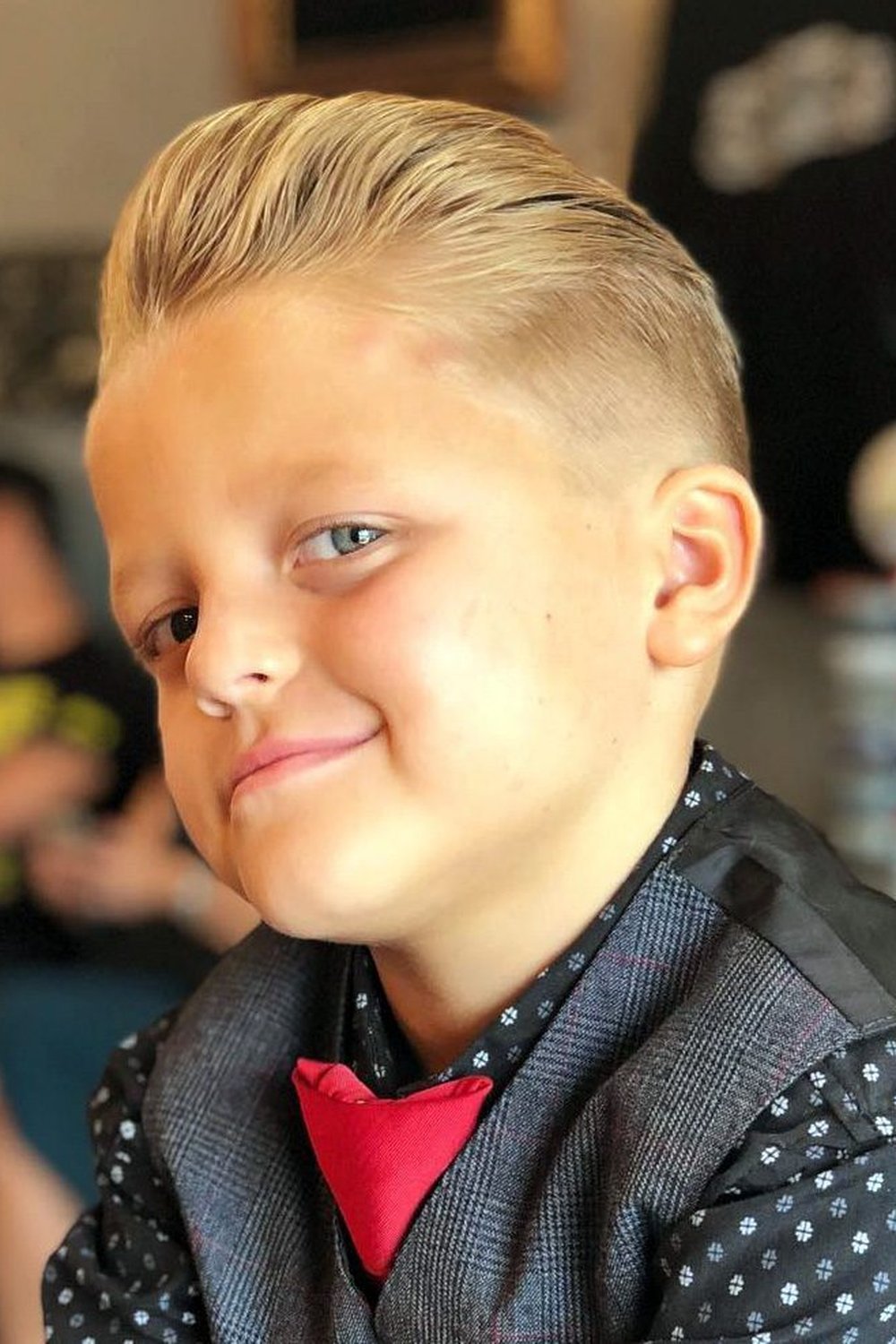
Photo: Haircut Inspiration — source
The mini pompadour is the showpiece of this guide — and the toddler in this photo knows it, dressed in a vest and a red bow tie with his hair swept up high. The pompadour takes the front of the hair and sweeps it up and back into a soft wave, while the sides are kept short so all the height sits at the front. It is the cut for a wedding, a christening, a family portrait, or any day you want your little one to look like the best-dressed person in the room. It needs a little more hair on top than most cuts here, and a little more patience: thirty seconds with a comb and a pea-sized amount of gentle product each morning. For everyday life it is more work than a crop — but for a special day, nothing photographs better.
Ask for: “A mini pompadour — longer at the front, swept up and back, short sides, soft finish.” Best for: weddings, portraits, special occasions. Upkeep: comb and a little product on special days; otherwise let it fall naturally.
17. Slicked-Back Gentleman Cut
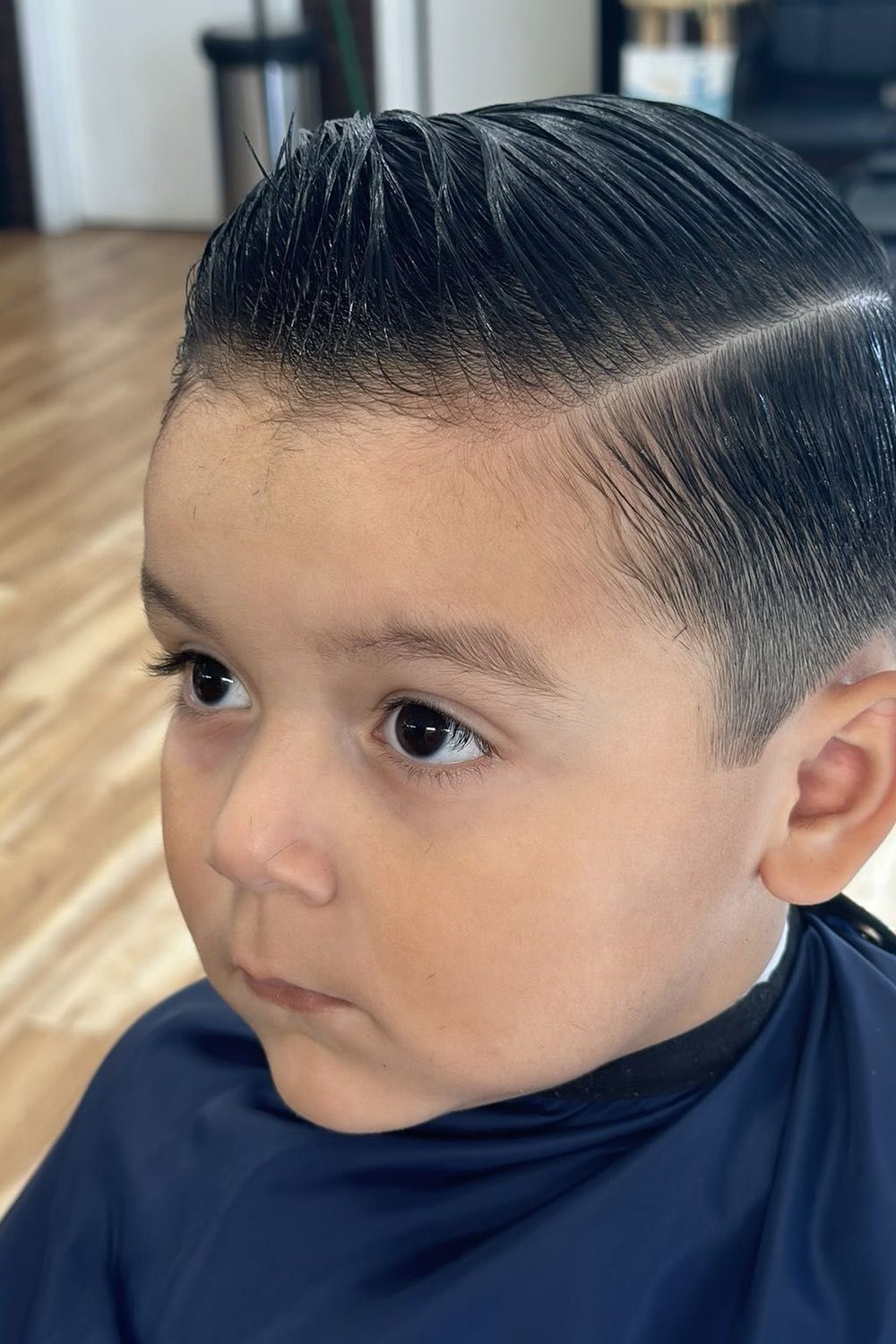
Photo: Booksy — source
The slicked-back gentleman cut is the classic grown-up style, sized down for a little boy — and in this photo the toddler in the blue barber cape wears it with a side part and a smooth, combed-back top. It suits straight and slightly wavy hair, and it is the cut to choose when you want your toddler to look polished for a formal occasion. The trick is length: the top needs to be long enough to comb back and stay there, which means about two inches, and a tiny amount of gentle product helps it hold. On a normal day you can let it fall forward into a soft side part instead — the same cut, two different looks, and neither one needs more than a comb.
Ask for: “Slicked back with a side part — about two inches on top, combed back, tapered sides.” Best for: straight hair, formal occasions, boys with enough length on top. Upkeep: comb it back each morning; a little product on special days.
18. Short Side Part with Taper
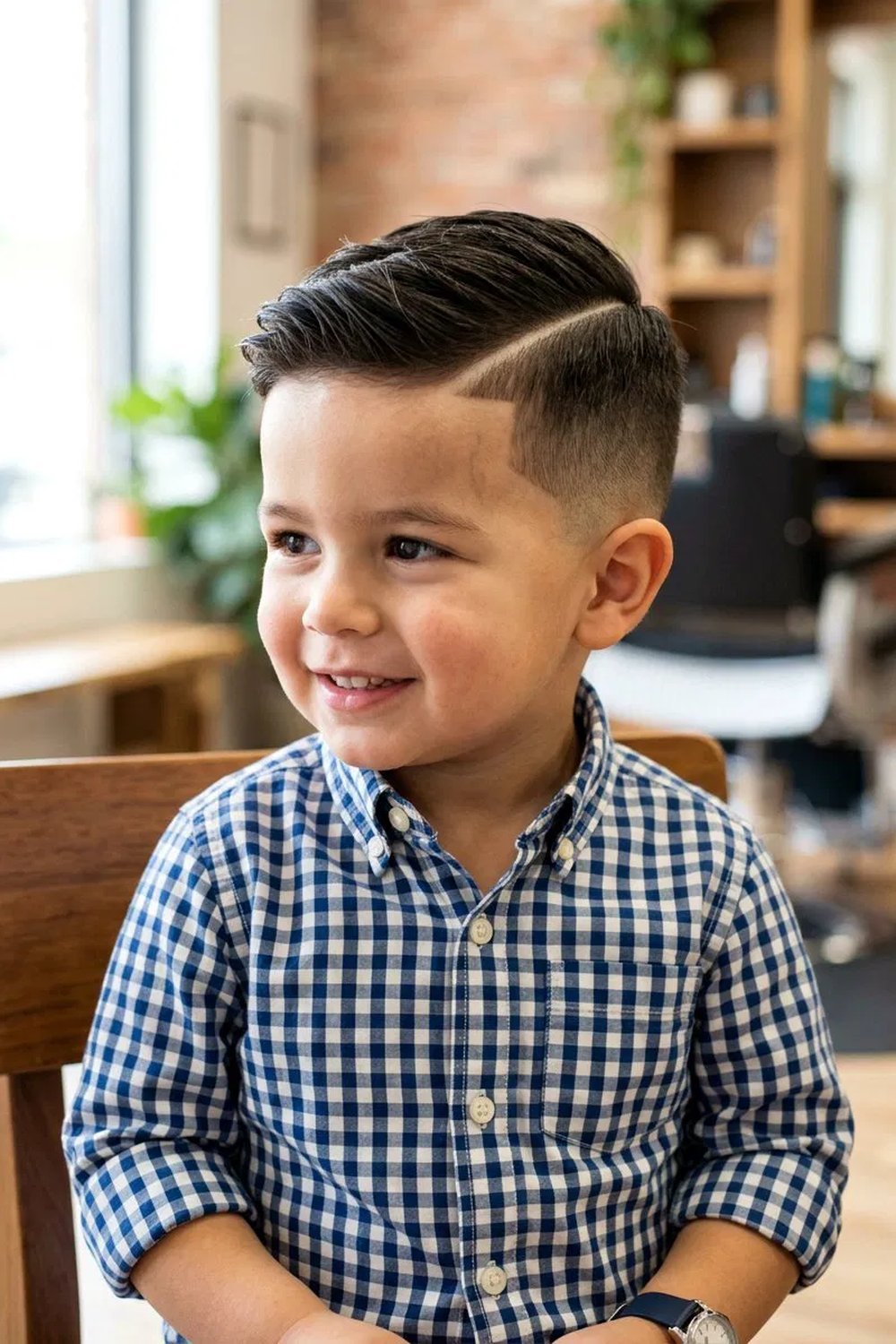
Photo: Lovelyish — source
The short side part with a taper is the everyday version of the classic side part — neater at the sides, easier in the morning, and just as smart. In this photo the smiling toddler in a checked shirt wears a crisp side part with a taper fade that keeps the sides short and clean, while the top stays long enough to comb to one side. It is the cut to choose if the classic side part feels a little too long at the sides, or if you want a part that survives nursery, naps and playgrounds without falling apart. It suits straight and wavy hair, it works for school pictures and Sundays alike, and it is one of the most reliable cuts in this guide — the taper does the tidying, so you do not have to.
Ask for: “A short side part with a taper — neat part, tapered sides, top long enough to comb over.” Best for: straight and wavy hair, everyday smart looks. Upkeep: comb the part in the morning; tidy the taper every four to five weeks.
19. Textured Fringe
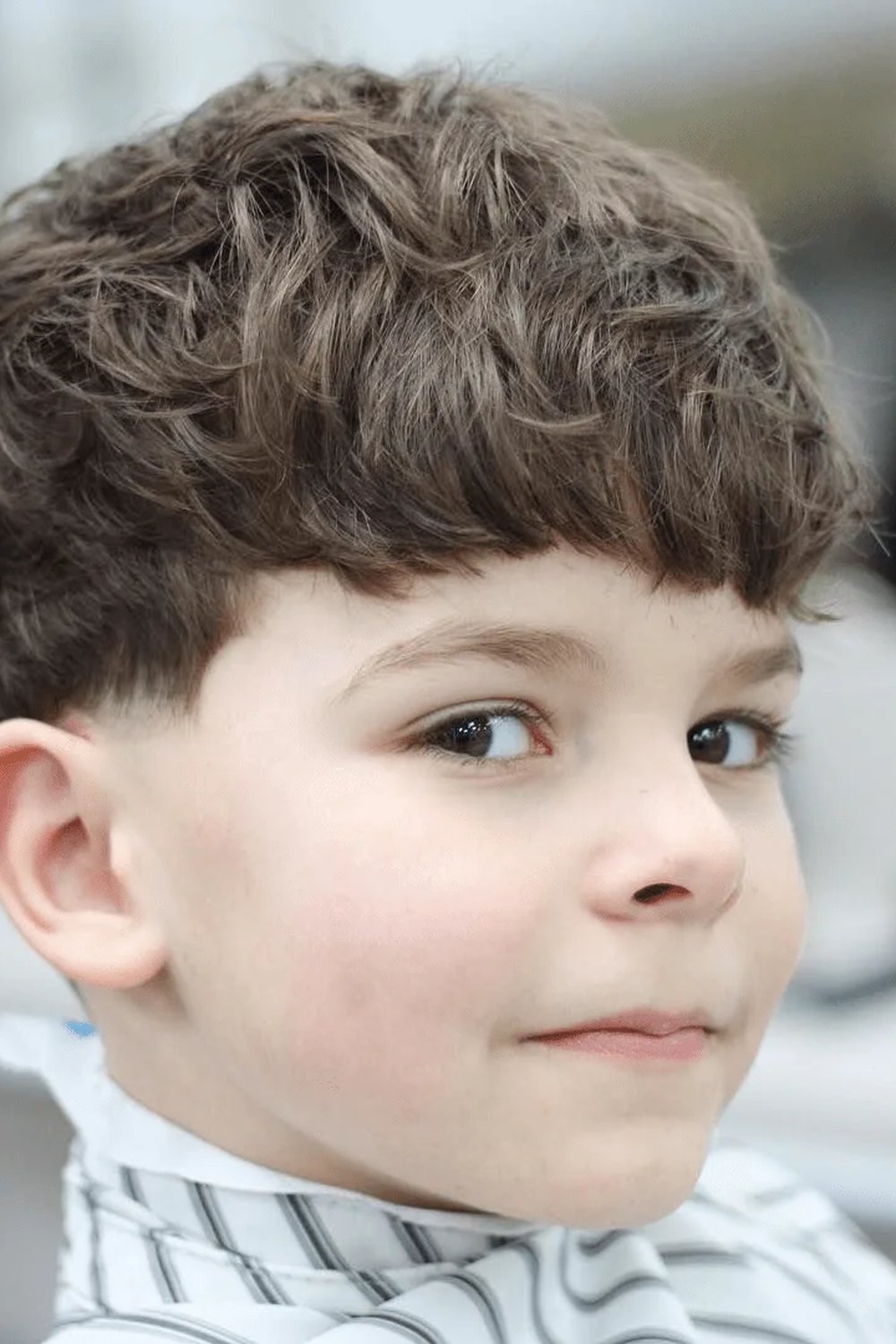
Photo: Styling Vibe — source
The textured fringe is the answer to the most common toddler hair complaint: hair in the eyes. In this photo the toddler in a striped barber cape wears a curly, textured fringe that falls softly over the forehead — long enough to have shape, short enough to stay out of his eyes, and full of movement. The texture is the point: instead of a straight, heavy fringe, the barber cuts choppy, separated pieces that fall naturally and never look blunt. It suits straight, wavy and curly hair alike, and it is especially good for boys whose fringe grows fast, because the textured ends grow out more gracefully than a straight line. Keep it just above the eyebrows, and trim it between cuts if it drops lower.
Ask for: “A textured fringe — choppy, piecey ends, just above the eyebrows, with a taper on the sides.” Best for: every hair type, fringe that keeps growing into his eyes. Upkeep: trim the fringe between appointments; finger-ruffle in the morning.
20. Modern Bowl Cut
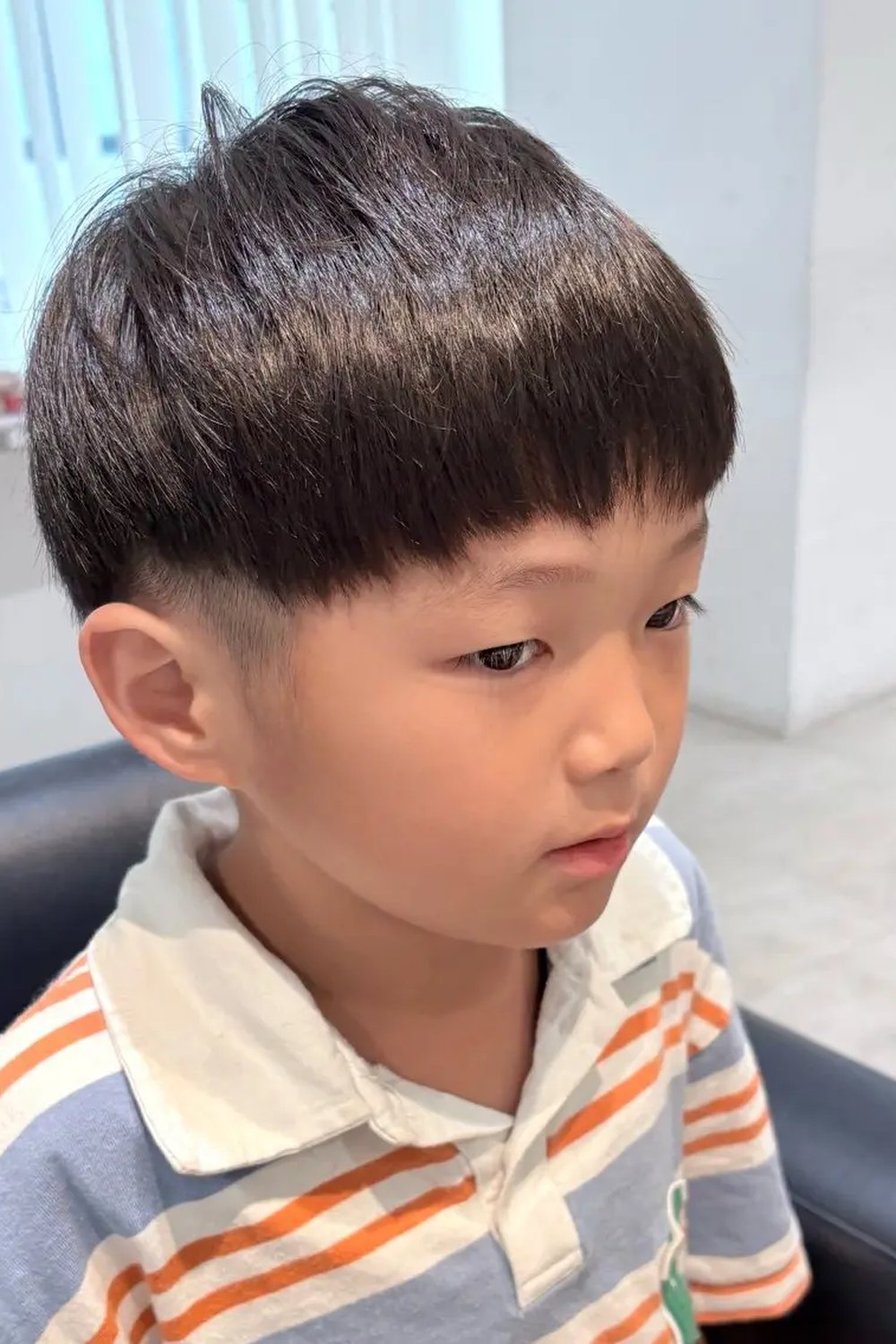
Photo: Minimodel — source
The modern bowl cut is nothing like the bowl cuts of old — and this side-profile photo proves it. The fringe is cut in a clean, straight line across the forehead, the top is rounded and even, and the sides are tapered rather than left long, so the whole shape looks deliberate and stylish instead of accidental. It suits straight and slightly wavy hair, and it is a lovely choice for a toddler with a round face, because the straight fringe and rounded top balance the shape. It needs a little more upkeep than a crop — the fringe line has to stay straight — but it is wonderfully easy in the morning: nothing to comb, nothing to style, just a fringe that sits where it was cut.
Ask for: “A modern bowl cut — straight fringe line, rounded top, tapered sides, no harsh edge.” Best for: straight hair, round faces, parents who love a strong shape. Upkeep: keep the fringe line straight with a trim every four weeks.
21. Shaggy Top with Tapered Sides
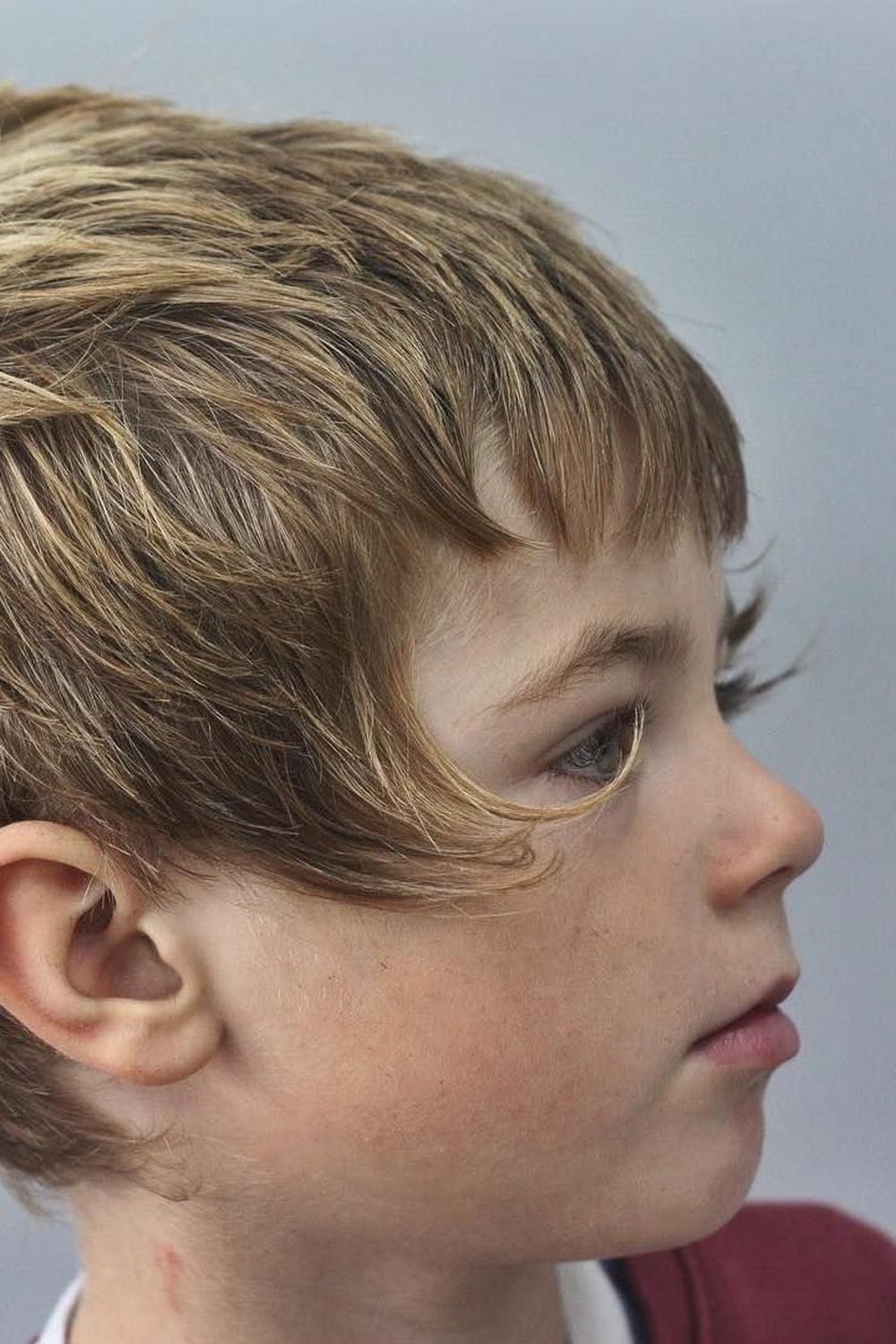
Photo: Pinterest — source
The shaggy top with tapered sides is the relaxed, lived-in cut in this guide — long enough on top to move, neat enough at the sides to look intentional. In this side-profile photo the layered top falls in soft, uneven pieces, while the tapered sides keep the shape clean around the ears and neckline. It suits wavy and thick hair best, because the layers give the hair room to do what it wants, and it is the cut to choose if your toddler hates having his hair combed — the shaggy top is supposed to look a little messy. It grows out beautifully too: the layers just get longer, and the taper is the only part that needs a tidy-up. Brush it once in the morning and leave it alone.
Ask for: “A shaggy top with tapered sides — soft layers on top, neat taper, nothing too short.” Best for: wavy and thick hair, boys who hate combs. Upkeep: one brush in the morning; tidy the taper every five weeks.
22. Afro with Tapered Sides
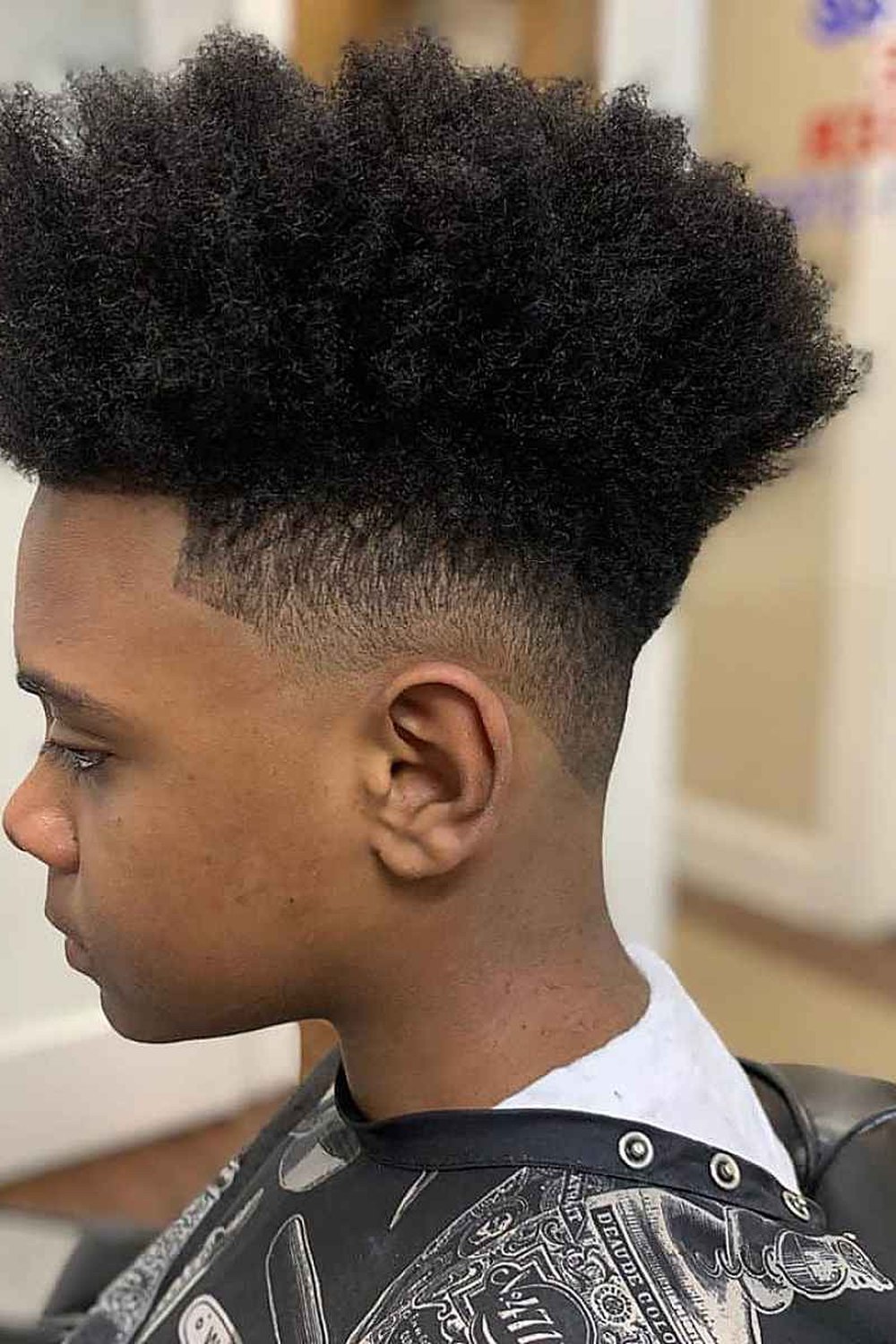
Photo: The Parenting Way — source
The afro with tapered sides lets a toddler’s natural hair be the star. In this side-profile photo the afro is large, rounded and full, while the taper fade at the sides keeps the shape clean and defined instead of letting it grow wild. The shape is the whole point: the barber rounds the afro evenly, tapers the sides and back, and leaves the top alone so the curls keep their natural volume. It suits toddlers with coily and tightly curled hair, and it is one of the proudest, most joyful cuts in this guide. Keep it moisturised — a little leave-in conditioner or hair butter at bath time — and pick it out gently with a wide-tooth comb or your fingers, never a fine brush. The taper is the only part that needs regular attention.
Ask for: “A rounded afro with tapered sides — shape the afro evenly, taper the sides, no thinning.” Best for: coily and tightly curled hair. Upkeep: moisturise daily; tidy the taper every three to four weeks.
23. Twist Top with Fade
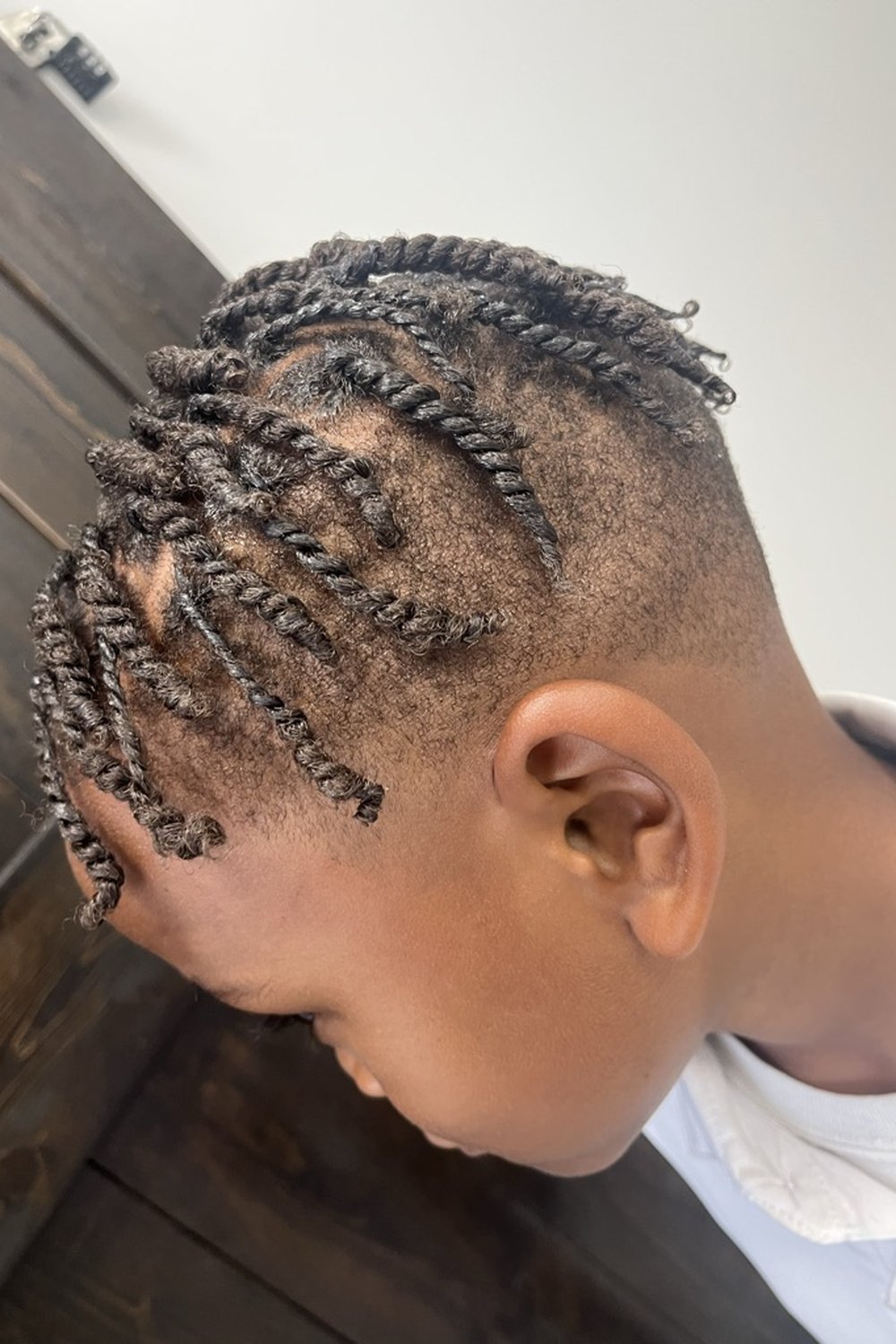
Photo: Beyond Braids by Angela — source
The twist top with a fade is a style best appreciated from above — and this top-back photo, with the little boy’s head bowed, shows exactly why: the twist pattern reads clearly across the crown, each small twist standing separate and defined, while the faded sides frame the pattern neatly. Twists are made by coiling small sections of hair, and they suit toddlers with coily and curly hair that holds a twist. The style lasts well: twists can stay in for a week or more with a little care, which means fewer barber visits and fewer battles in the morning. Keep the scalp moisturised, re-twist the front pieces when they loosen, and let the fade grow out — it softens gracefully rather than falling apart.
Ask for: “A twist top with a fade — small twists on top, faded sides, neat edges.” Best for: coily and curly hair that holds a twist. Upkeep: moisturise the scalp; re-twist loose front pieces; tidy the fade every four weeks.
24. 360 Waves
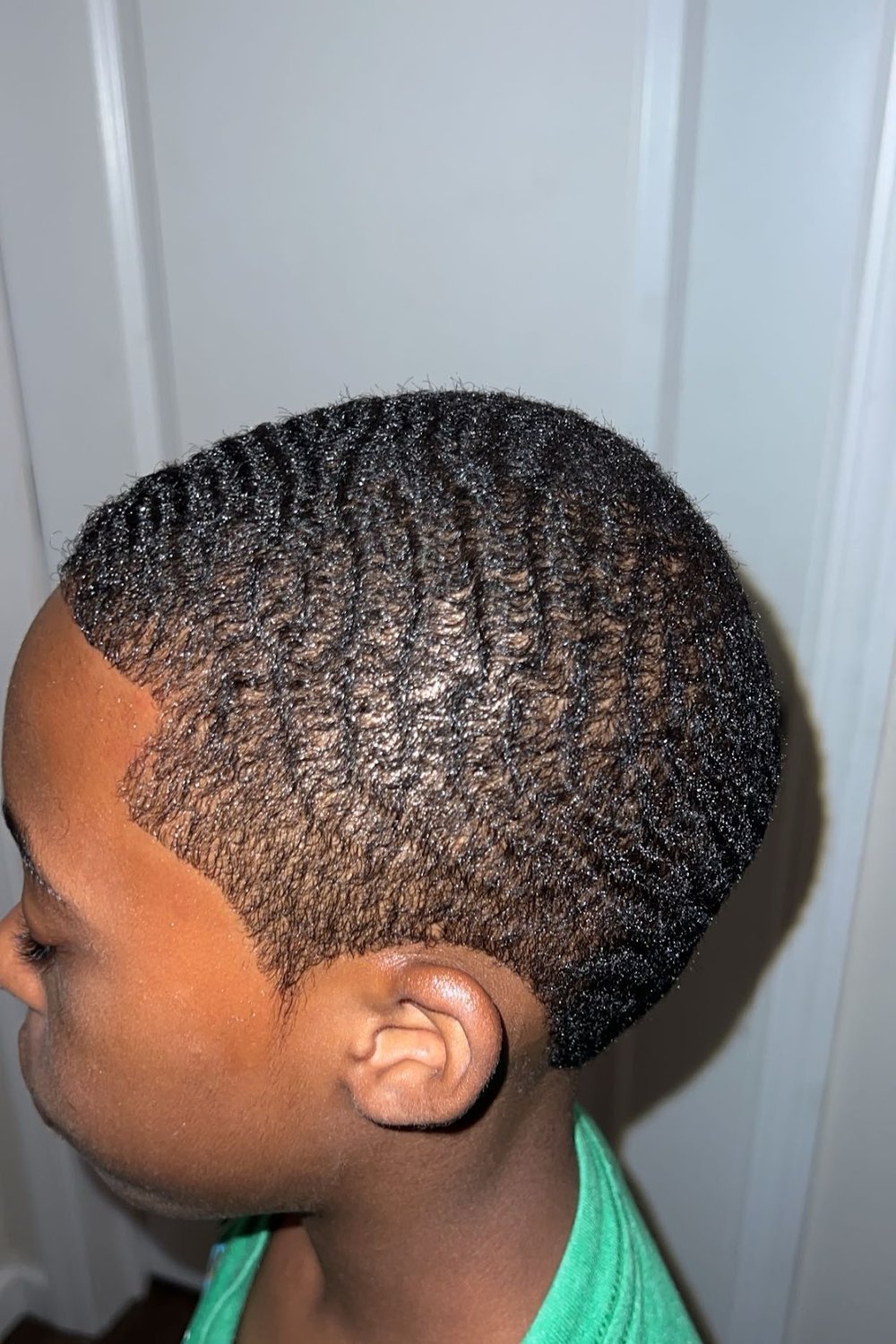
Photo: Best Pros in Town — source
360 waves are the ripple pattern that circles a little boy’s head, and this side-and-back photo shows the pattern at its best: soft, even waves curving around the crown, with a low fade underneath to keep the edges clean. Waves are created by brushing short hair in a circular pattern while it grows, so this cut suits toddlers with wavy and coily hair that is kept very short — a number 2 or 3 all over, brushed daily with a soft brush. It is a patient parent’s cut: the waves take a few weeks of brushing to appear, and they need a durag or a wave cap at night to hold their shape. But once they are in, they are one of the most impressive toddler styles there is, and the low fade means the cut still looks tidy as the waves grow.
Ask for: “A number 2 all over with a low fade, brushed for 360 waves — keep it short and even.” Best for: wavy and coily hair, parents happy to brush daily. Upkeep: brush in circles daily; a wave cap at night; re-cut every three to four weeks.
Crops, fringes and longer styles
This group covers the middle ground: crops that need no styling, fringes that stay out of his eyes, and longer styles for parents who are not ready to cut it all off. If your toddler’s hair is growing fast and you are not sure which direction to take it, start here.
25. Brush-Up Crop
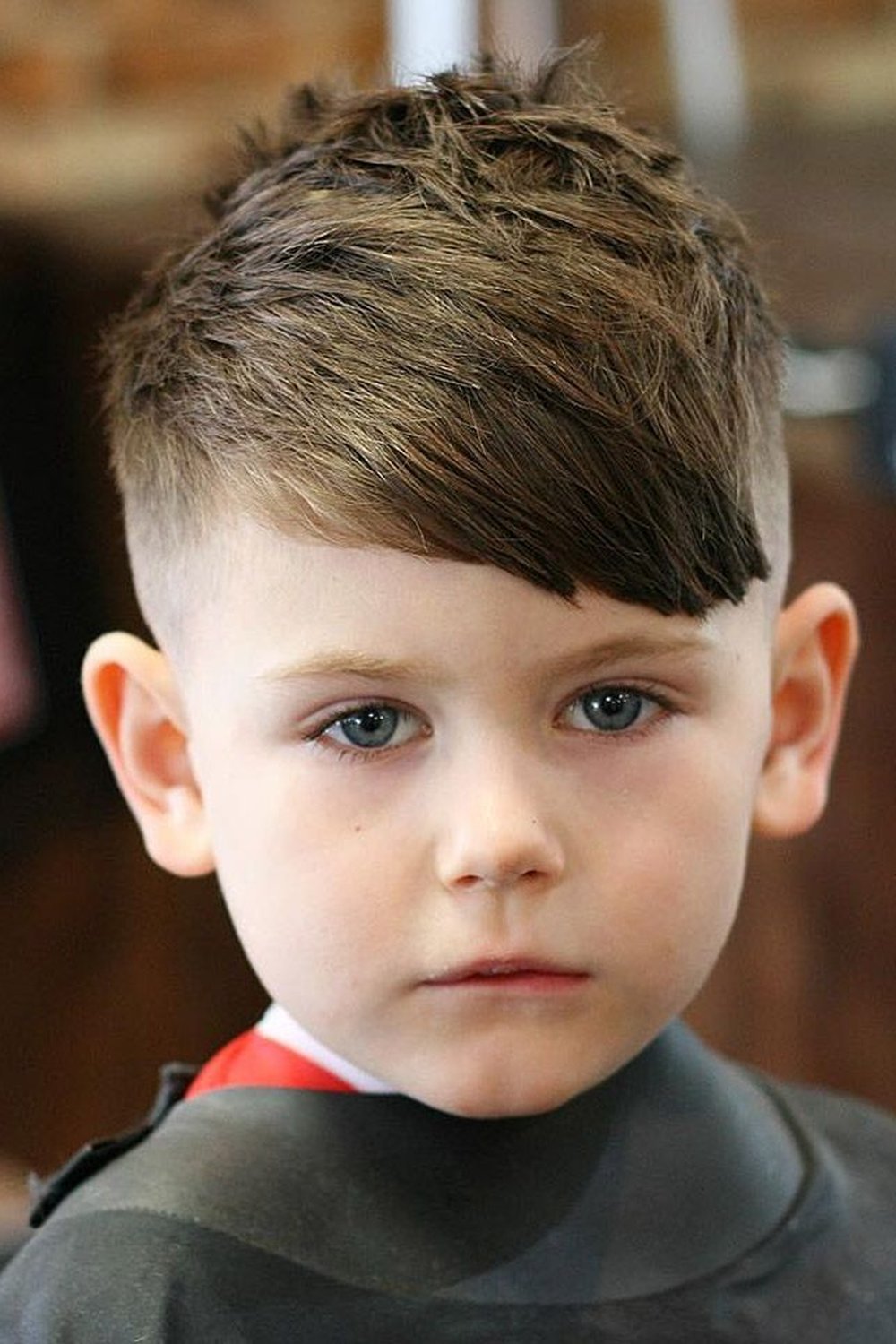
Photo: Pinterest — source
The brush-up crop is the textured crop’s taller, breezier cousin: the top is brushed up and forward into a soft, swept fringe, giving the cut height and movement without any gel or fuss. In this photo the brushed-up texture has real lift, the fringe sweeps gently to one side, and the sides are kept short so the top does all the talking. It suits toddlers aged two to four with straight or wavy hair, and it is a brilliant choice for fine hair, because brushing the top up creates volume that flat hair cannot manage on its own. It is also one of the easiest cuts to style: a quick brush-up with the fingers in the morning, and it is done. If the fringe falls into his eyes, ask the barber to take it a touch shorter next time.
Ask for: “A brush-up crop — textured top brushed up and forward, swept fringe, short sides.” Best for: fine and straight hair, mornings that need volume fast. Upkeep: finger-style in the morning; trim every four weeks.
26. French Crop for Toddlers
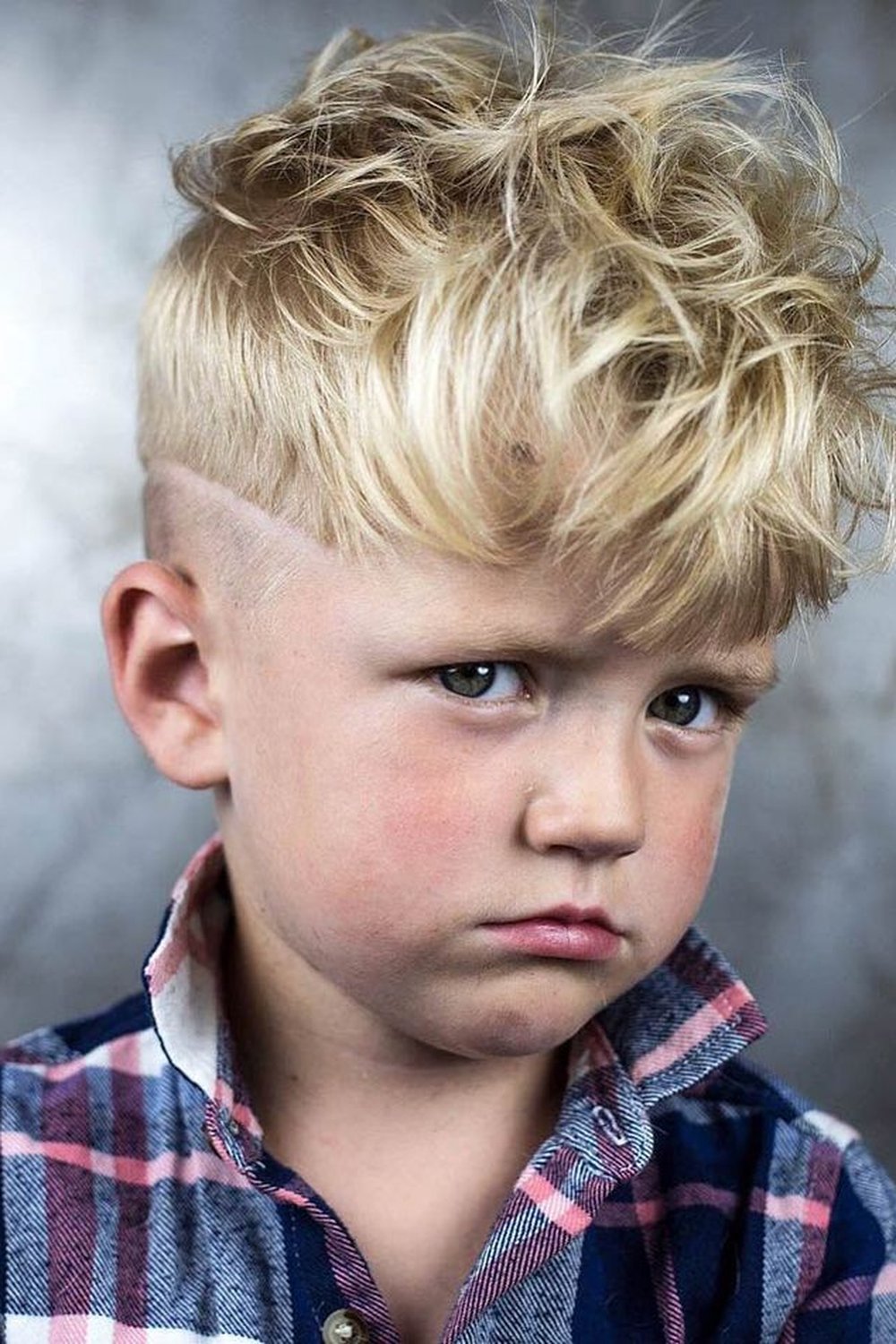
Photo: Pinterest — source
The French crop is the neat, European classic: short back and sides, a textured top, and a short straight fringe. In this photo the blond toddler wears it perfectly — the fringe sits in a clean, straight line across the forehead, the top has just enough texture to avoid looking flat, and the sides are faded short for a tidy finish. It suits straight and slightly wavy hair, and it is one of the best cuts for a toddler whose fringe keeps growing into his eyes, because the short fringe solves the problem by design. It needs almost nothing in the morning and it grows out evenly, which makes it a favourite with parents who want a smart cut without a weekly battle. Keep the fringe just above the eyebrows and the rest takes care of itself.
Ask for: “A French crop — short straight fringe, textured top, faded sides.” Best for: straight hair, fringe in the eyes, easy mornings. Upkeep: trim the fringe between cuts; nothing to style.
27. Long Top with Short Sides
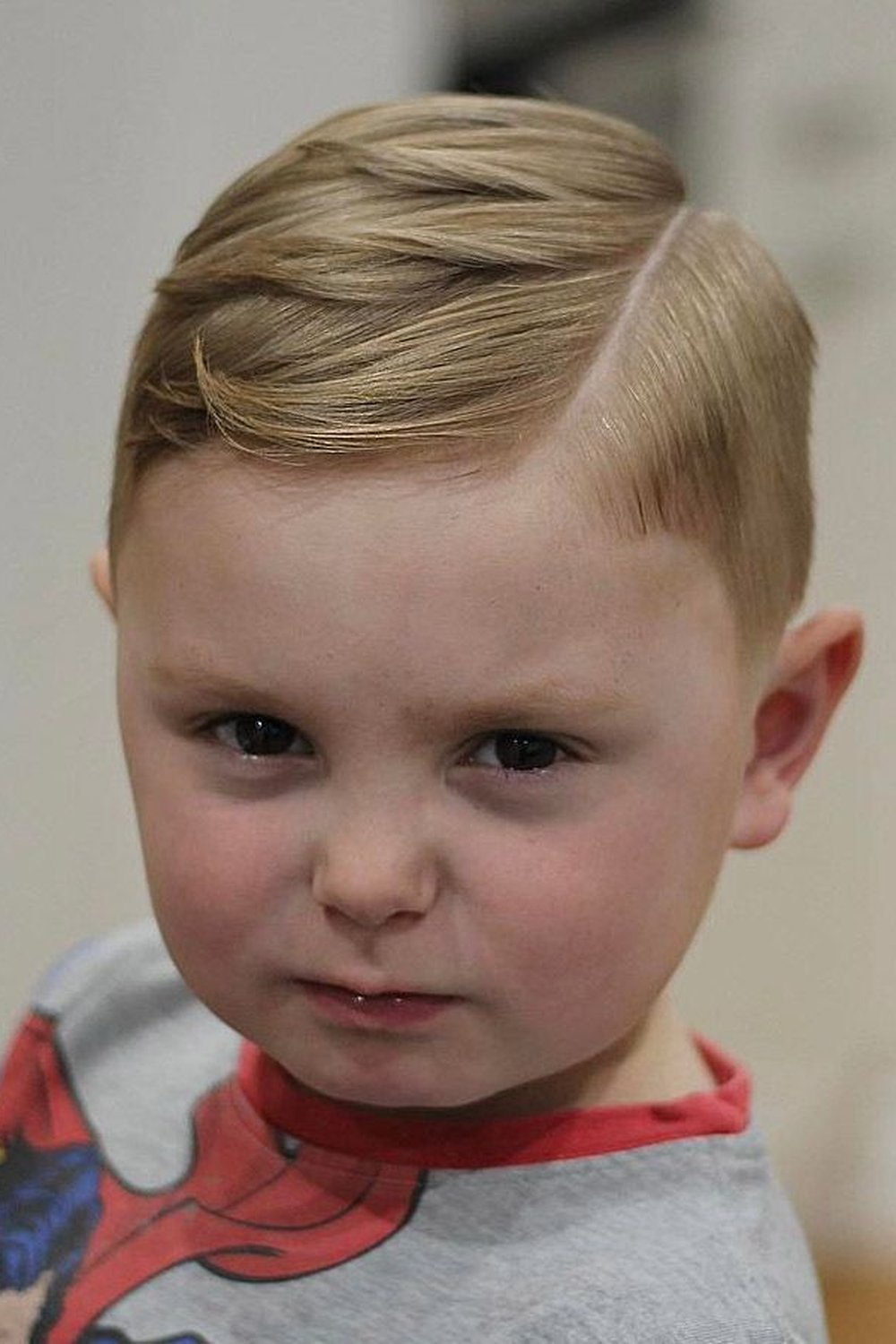
Photo: Pinterest — source
The long top with short sides is the perfect compromise: you keep the length you love on top, and the barber keeps the sides short so the cut still looks tidy. In this photo the long top is side-parted and swept across, with real length and movement, while the sides are clipped short and clean. It suits thick and wavy hair best, because the weight of the top gives it shape, and it is the cut to choose if you are growing his hair out but want it to look intentional rather than neglected. The styling is simple — comb the top to one side in the morning — and the sides are the only part that needs regular attention. If the top starts falling into his eyes, ask the barber to layer the front back rather than cutting the length off.
Ask for: “Long on top with short sides — side-parted top, keep the length, short tapered sides.” Best for: thick and wavy hair, growing hair out. Upkeep: comb the top to one side; tidy the sides every four weeks.
28. Side-Swept Fringe
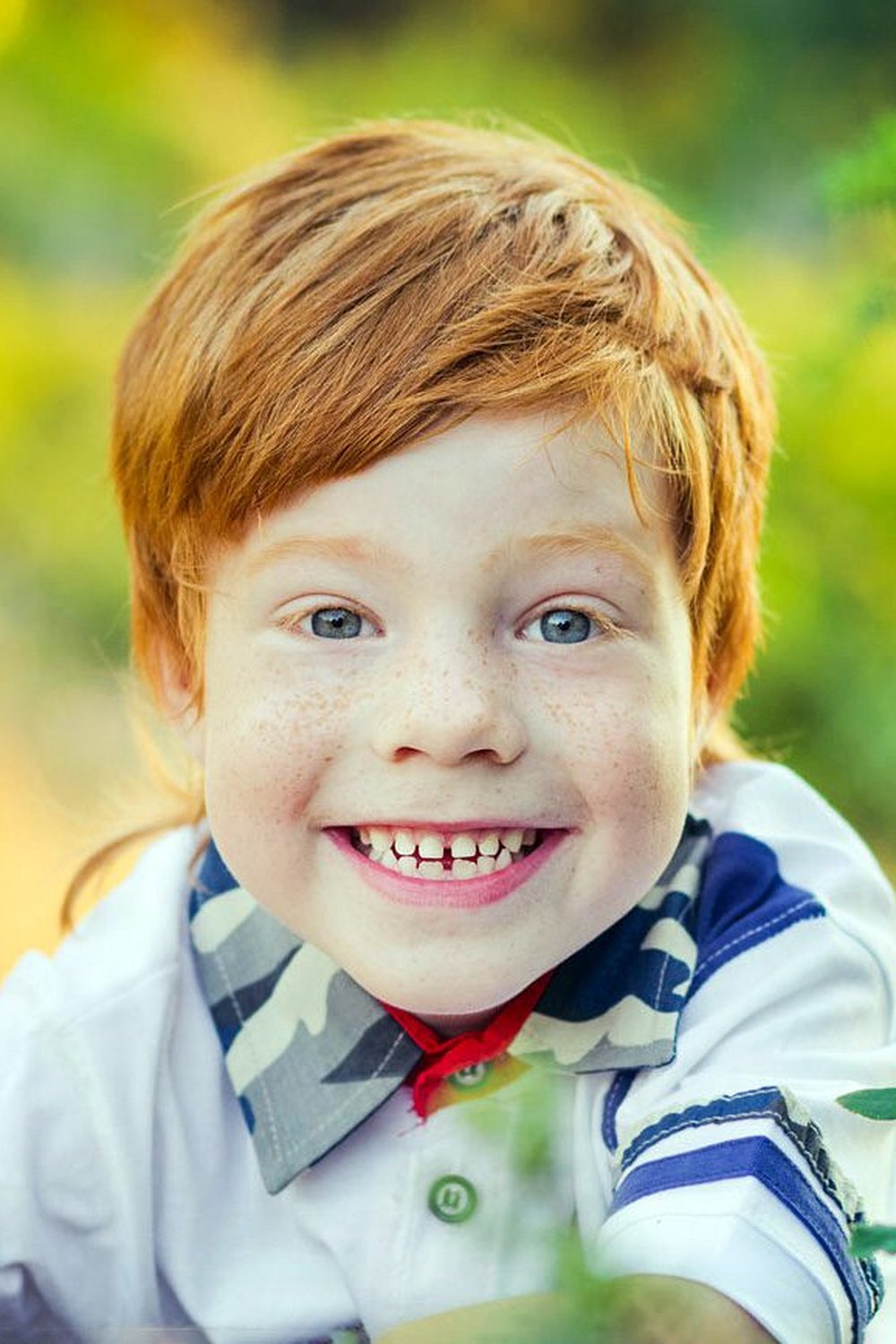
Photo: Haircut Inspiration — source
The side-swept fringe is the cutest fix for a fringe that will not behave: instead of fighting it straight across, the barber sweeps it to one side, where it falls naturally and stays out of his eyes. In this photo the smiling red-haired toddler wears it beautifully — the fringe sweeps across the forehead in soft, separated pieces, and the warm colour makes the whole cut glow. It suits every hair type, and it is especially good for wavy hair, which sweeps to the side on its own. It is also one of the most forgiving cuts in this guide: the fringe can grow a little long and still look right, because a swept fringe has no hard line to go wrong. A quick comb in the morning and it falls back into place.
Ask for: “A side-swept fringe — fringe swept to one side, soft ends, short sides.” Best for: every hair type, wavy hair, fringe that will not sit straight. Upkeep: comb it to the side each morning; trim every five weeks.
29. Messy Textured Top
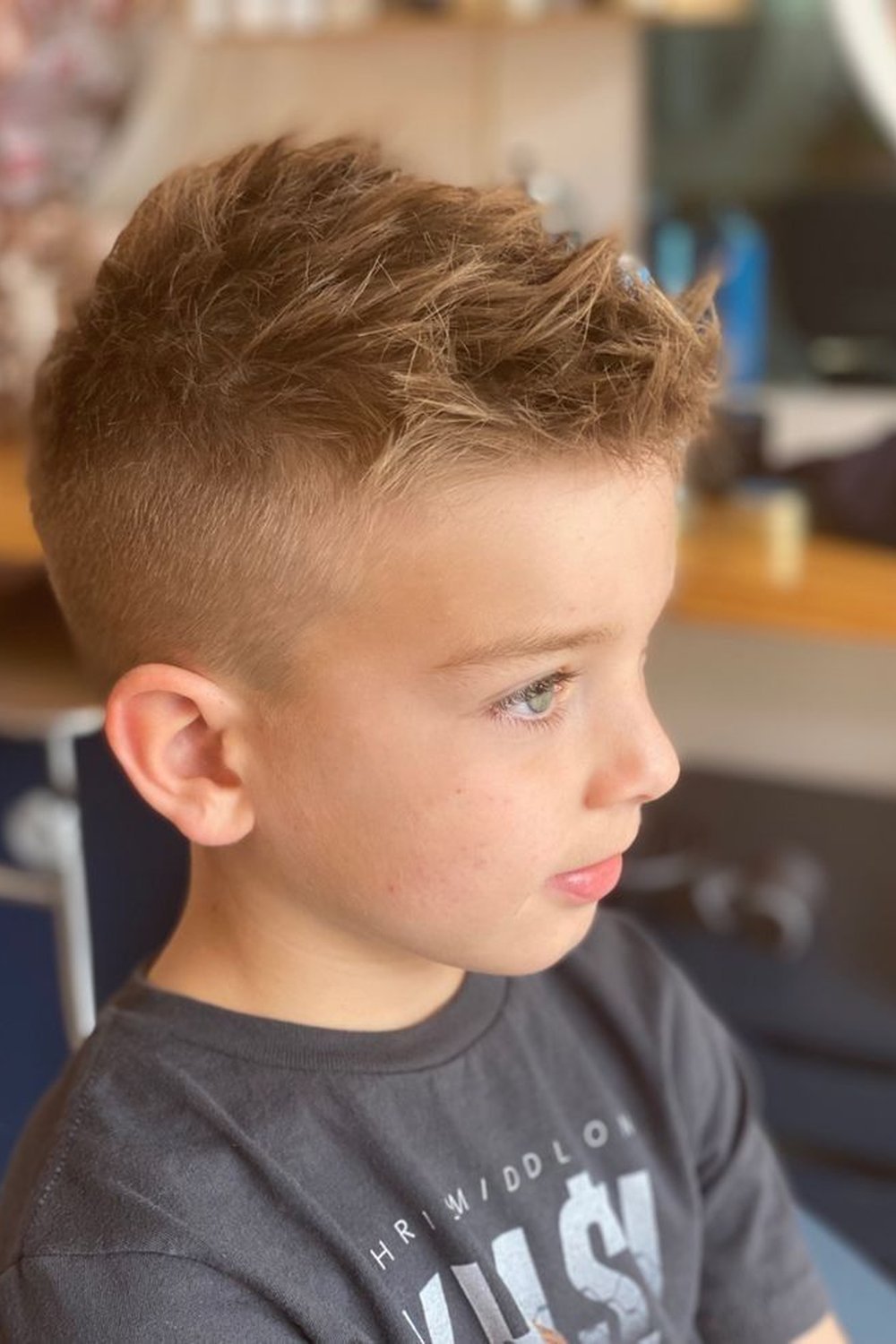
Photo: Pinterest — source
The messy textured top is the cut for parents who have given up on neat — in the best way. In this side-profile photo the top is all choppy, piecey texture, falling in different directions on purpose, while the fade at the sides keeps the whole thing looking like a haircut rather than bedhead. It suits straight and wavy hair, and it is the ideal choice for a toddler who will not sit still for combing, because the mess is the style: the more he moves, the better it looks. It also hides the thin patches and cowlicks that fine toddler hair often has, because the uneven texture breaks up the scalp line. Finger-ruffle it in the morning and walk away — that is the entire styling routine.
Ask for: “A messy textured top — choppy layers, piecey finish, faded sides, no combing needed.” Best for: straight and wavy hair, boys who hate combs. Upkeep: finger-ruffle in the morning; trim every four weeks.
30. Short Back and Sides
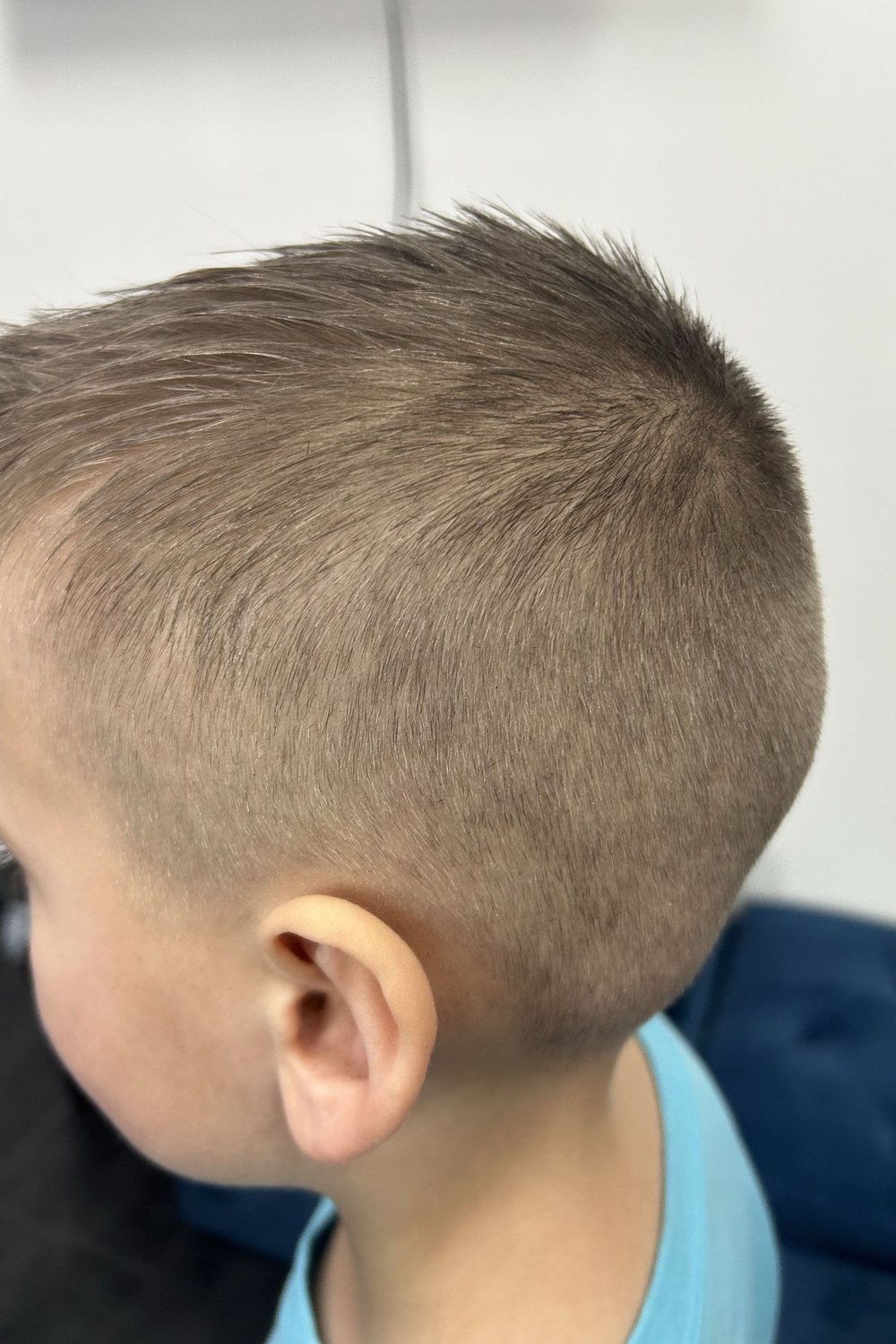
Photo: Booksy — source
The short back and sides is the barber’s bread and butter — and this back view shows why parents ask for it by name: the back is cut short and even, the neckline is clean, and the top keeps an even length that blends smoothly into the sides. Seen from behind, the cut is perfectly tidy, with no shaggy edges and no step where short meets long. It is the cut to choose when you want something classic, quick and impossible to get wrong. It suits every hair type and every age in the toddler years, it takes five minutes in the chair, and it grows out evenly. If you only remember one phrase from this guide, make it this one: short back and sides, a little longer on top.
Ask for: “Short back and sides, a little longer on top, neat neckline.” Best for: every hair type, first haircuts, the quickest appointment. Upkeep: re-cut every five to six weeks; nothing to style.
31. Taper Fade with Line-Up
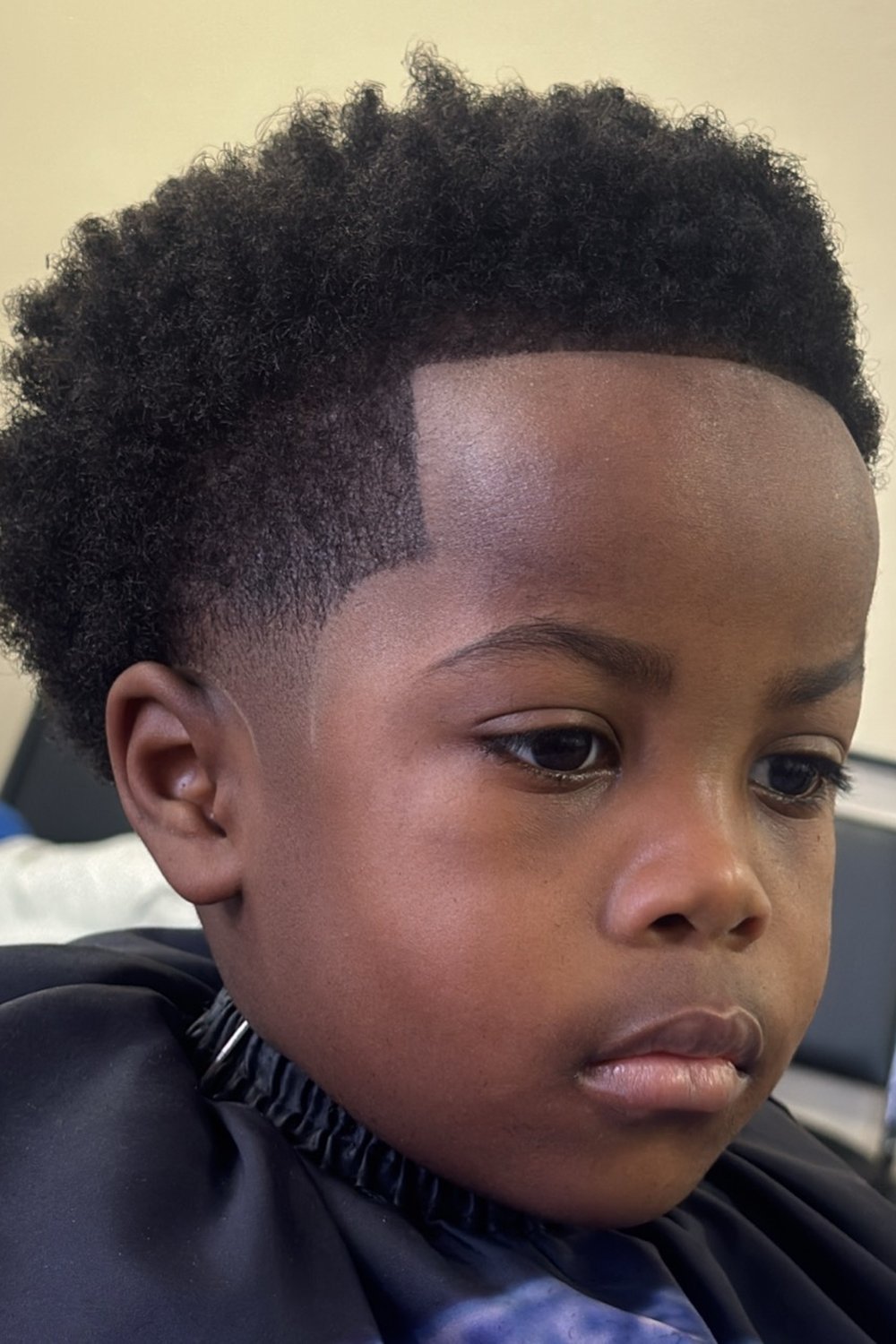
Photo: The Cut — source
The taper fade with a line-up pairs two barber details that make a toddler cut look razor-sharp: a soft taper at the sides, and a crisp lineup at the forehead and temples. In this photo the curly top is kept full and bouncy, while the lineup draws a clean, straight edge at the hairline and the taper fades the sides down neatly. The contrast is the point — soft curls on top, sharp lines at the edges — and it photographs beautifully. It suits curly and coily hair best, because the curls give the top its shape while the lineup gives the cut its polish. The lineup is the part that needs upkeep: it grows out in about two weeks, so book a quick edge-up between full cuts if you want it to stay crisp.
Ask for: “A taper fade with a line-up — curly top kept full, crisp lineup at the forehead, tapered sides.” Best for: curly and coily hair, sharp photo days. Upkeep: edge-up every two weeks; full cut every four weeks.
32. Soft Mini Mohawk
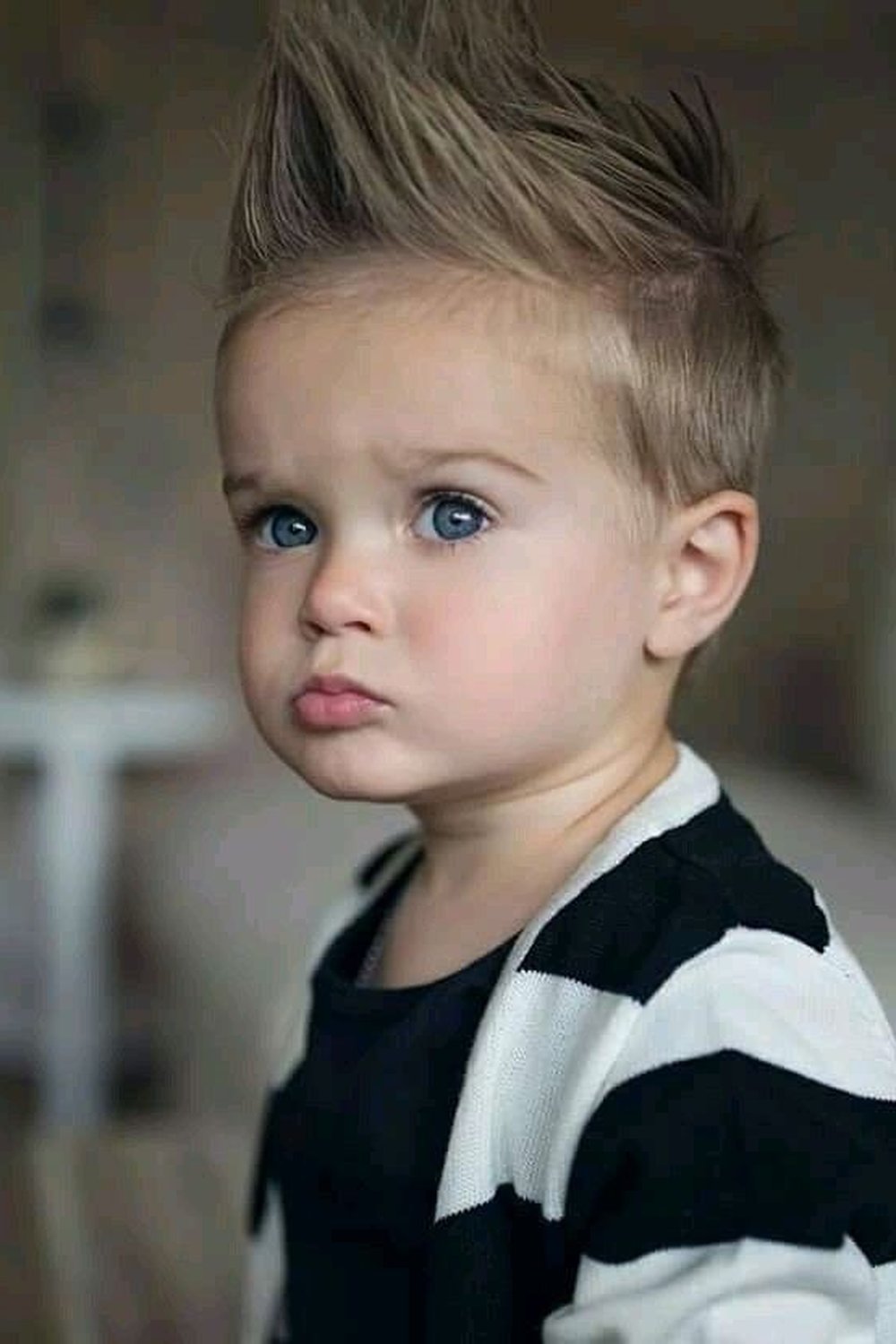
Photo: Pinterest — source
The soft mini mohawk is the boldest cut in this guide that still stays sweet: a tall, spiky strip runs down the centre of the head, with the sides faded short so the mohawk stands out. In this photo the spikes are tall and proud, but they are soft — brushed up with fingers, not gelled into points — so the cut reads as playful rather than punk. It suits boys aged three to four with straight or slightly wavy hair, and it is the cut for a little boy with a big personality, a birthday party, or a photo day. It needs a little more hair on top than a crop, and a little product on the day you want it to stand tall; on normal days, let it fall into a soft faux hawk instead. The same cut, two moods.
Ask for: “A soft mini mohawk — tall strip down the middle, faded sides, spikes brushed up soft.” Best for: straight hair, confident little boys, parties and photos. Upkeep: finger-style with a little product on special days; trim every four weeks.
33. Frohawk
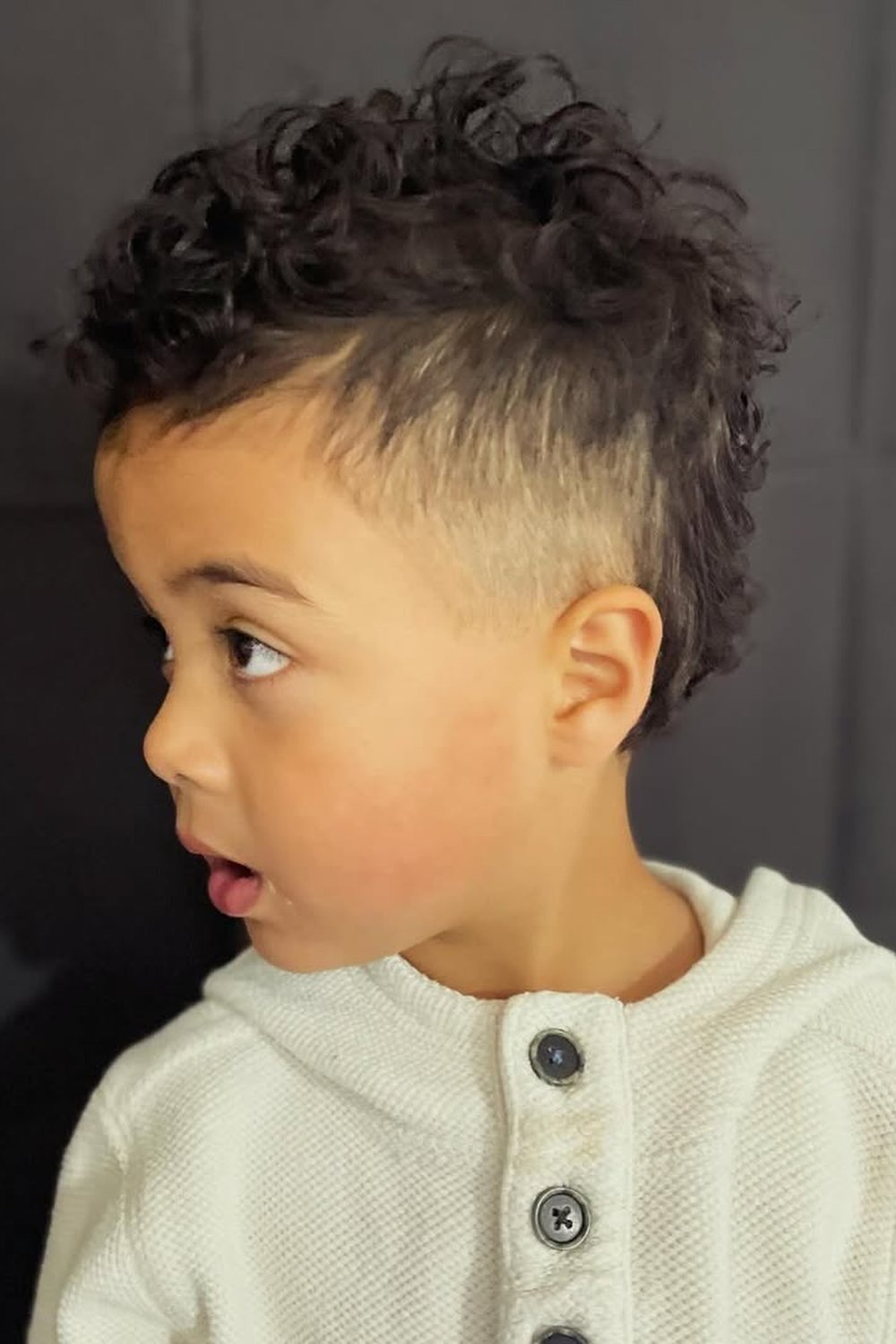
Photo: Favorite Hairstyles — source
The frohawk is the curly version of the mohawk: the curls are left long down the centre of the head and shaped into a tall, rounded strip, while the sides are faded short. In this side-profile photo the curly frohawk rises high and proud, with the curls doing all the work — no product, no spikes, just natural volume shaped into a mohawk. It suits toddlers with curly and coily hair, and it is one of the most joyful cuts in this guide, because it turns the hair’s natural shape into the style itself. Keep the curls moisturised so they hold their shape, and ask the barber to shape the frohawk with scissors rather than clippers, so the curls keep their spring. The sides are the only part that needs regular attention.
Ask for: “A frohawk — curls left long down the middle, shaped into a mohawk, faded sides.” Best for: curly and coily hair. Upkeep: moisturise the curls; tidy the sides every three to four weeks.
34. Curly Fro with Shape-Up
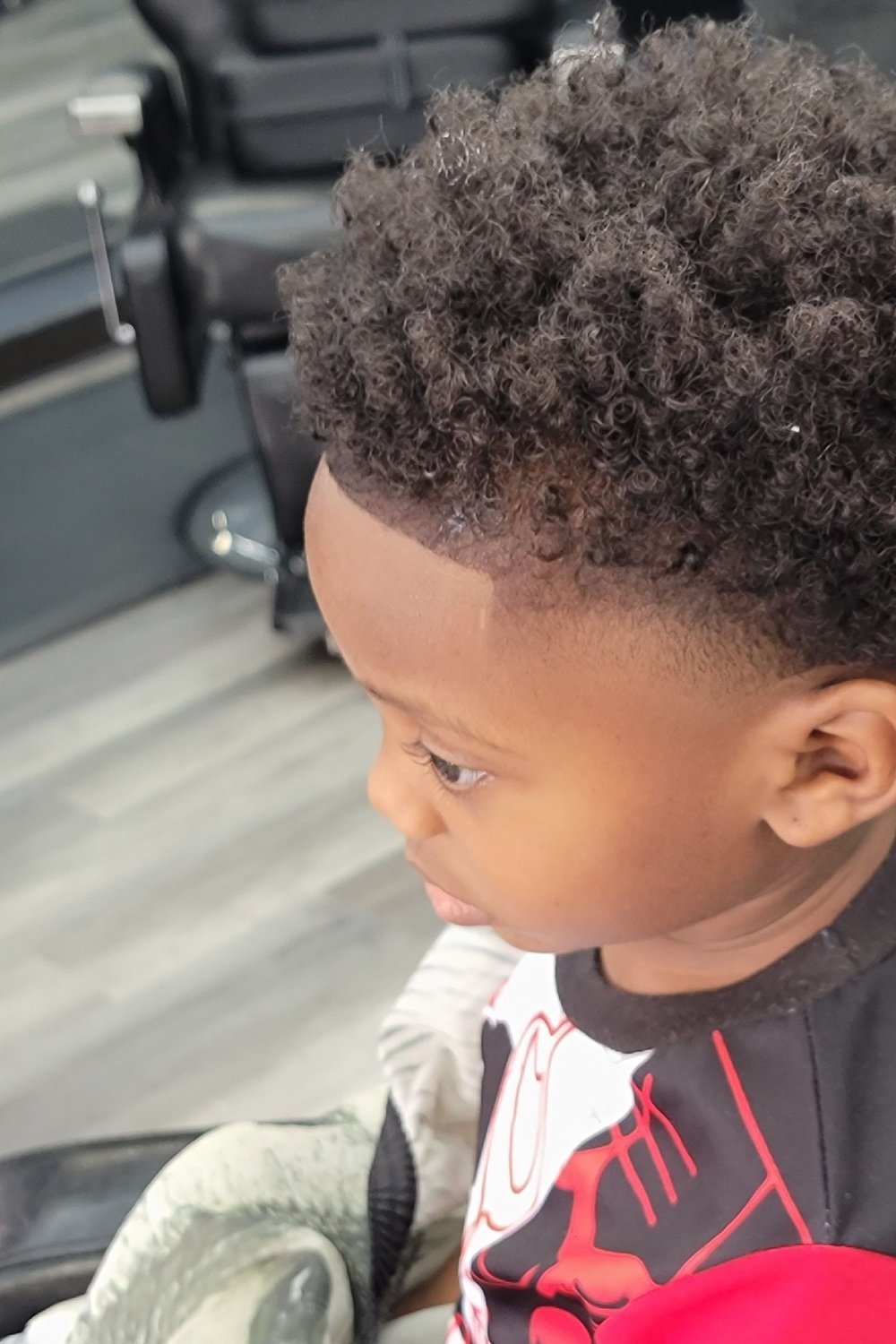
Photo: Booksy — source
The curly fro with a shape-up is the neat, polished version of the natural fro: the curls are kept full and rounded on top, while the hairline is shaped up into a clean, defined edge. In this side-profile photo you can see the contrast — soft, springy curls above, and a crisp, straight hairline at the forehead and temples. The shape-up is the detail that makes the cut look finished, and it is worth asking for by name: a barber who shapes the hairline will give you a cleaner edge than one who just trims around it. It suits toddlers with curly and coily hair, and it is a lovely everyday cut, because the fro needs nothing in the morning and the shape-up does all the polishing. Keep the curls moisturised and the edges will stay sharp.
Ask for: “A curly fro with a shape-up — keep the curls full, shape the hairline clean at the forehead and temples.” Best for: curly and coily hair, everyday polish. Upkeep: moisturise the curls; shape up the edges every two to three weeks.
35. Wavy Top with Low Fade
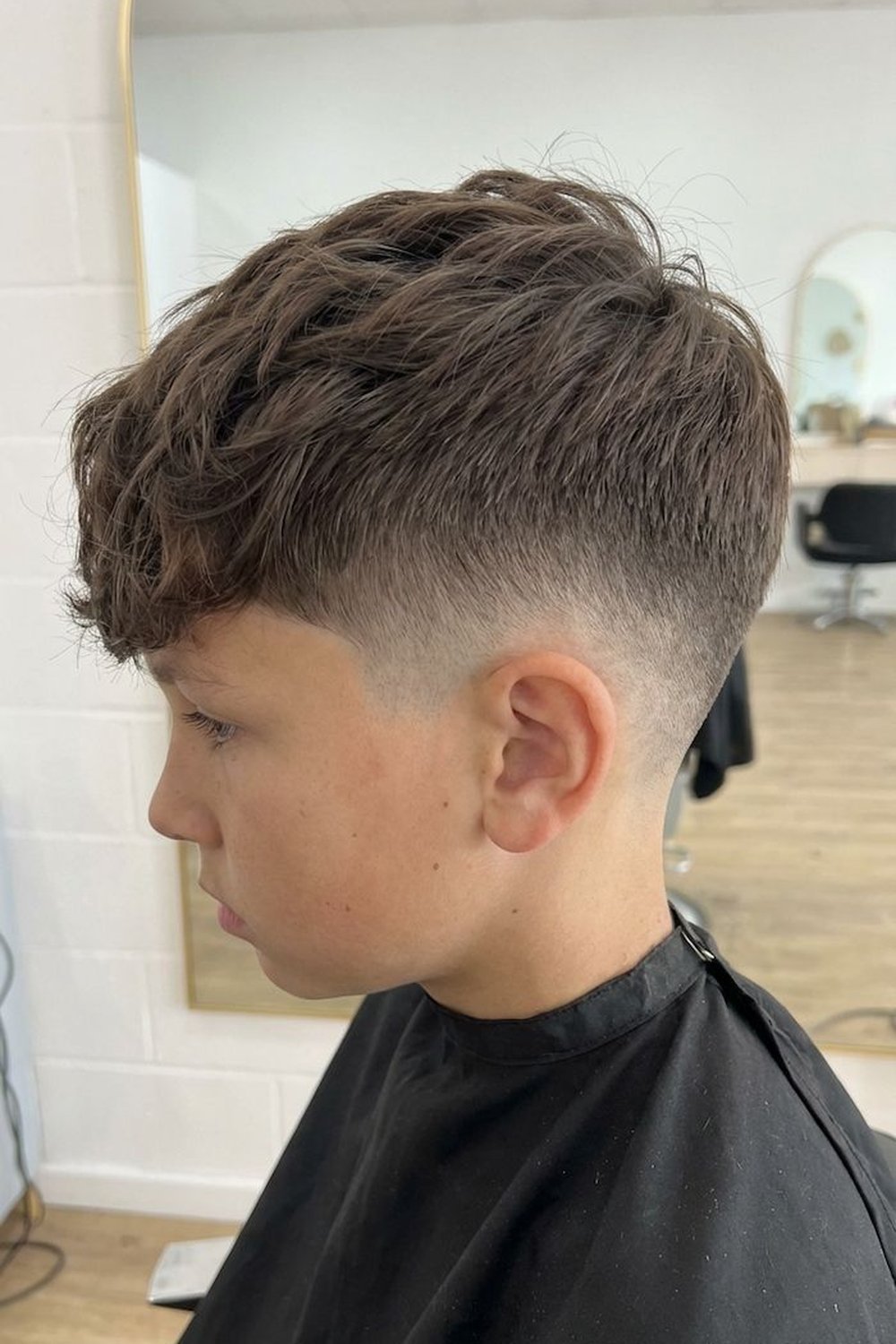
Photo: Pinterest — source
The wavy top with a low fade lets natural waves do the styling. In this side-profile photo the top falls in soft, natural waves, while the low fade keeps the sides short and clean without stealing attention from the texture above. It suits wavy hair best — the cut is built around the wave pattern, not against it — and it is one of the easiest cuts in this guide to live with: the waves fall where they want to fall, the low fade grows out gracefully, and the whole cut looks good for five weeks without a touch-up. Ask the barber to cut the top with the wave, not against it, and to leave enough length for the waves to form. A little leave-in conditioner at bath time keeps the waves soft and defined.
Ask for: “A wavy top with a low fade — keep the waves long on top, fade low on the sides, cut with the wave.” Best for: wavy hair, low-maintenance parents. Upkeep: a little conditioner; tidy the fade every five weeks.
36. Chin-Length Layers
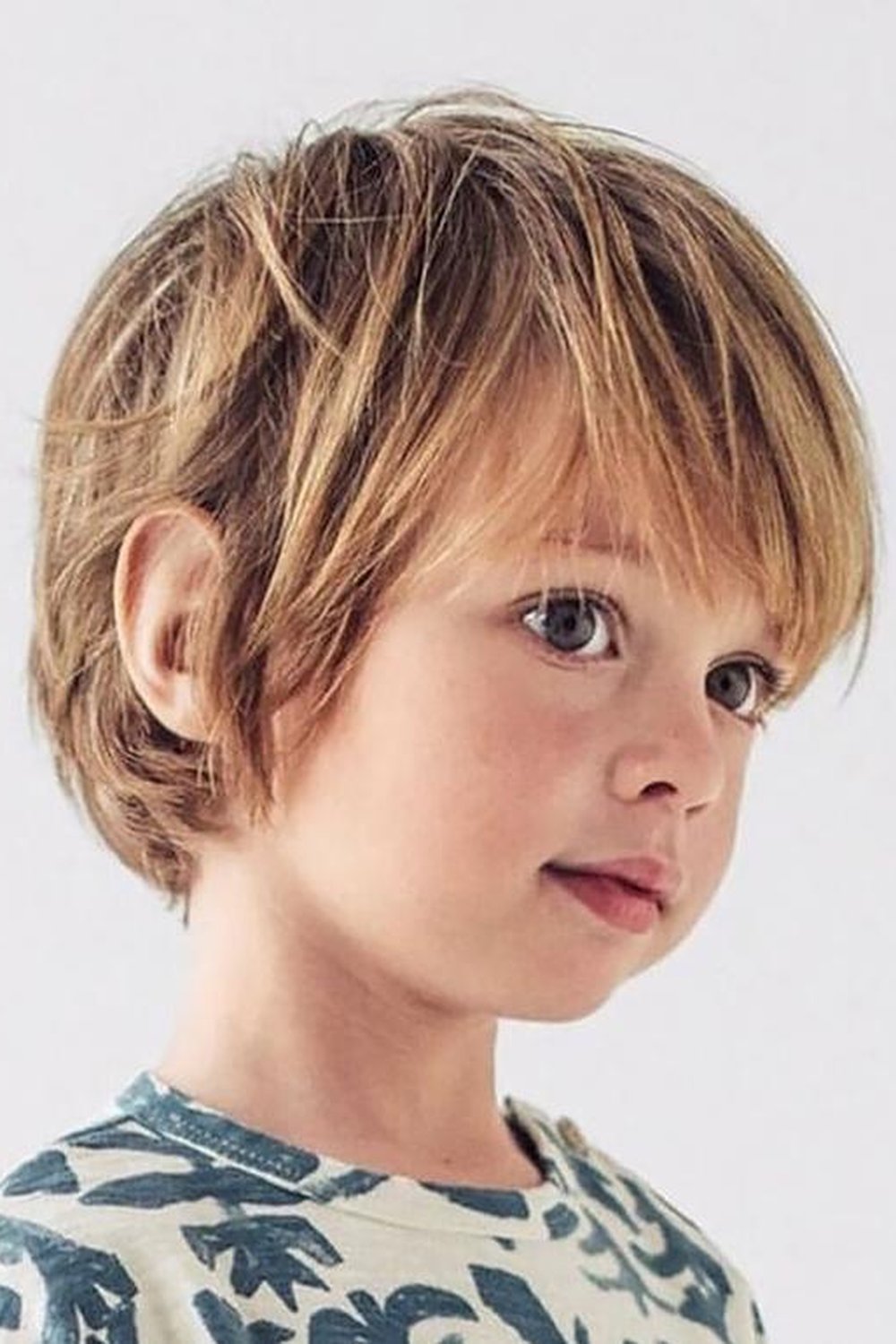
Photo: Mom.life — source
Chin-length layers are the longest cut in this guide, and the front-facing photo shows why some parents choose it: the layered hair frames the little boy’s face softly, falling to the chin in gentle, even layers, with no harsh lines anywhere. It suits thick and wavy hair best, because the layers give the hair shape and movement, and it is the right choice if you love your toddler’s long hair and want to keep it while still having a proper haircut. The trade-off is real: longer hair tangles, it needs brushing every day, and the front layers fall into his eyes unless they are swept back. Keep a soft brush handy, use a gentle detangling spray at bath time, and trim the ends every six weeks to keep the layers fresh.
Ask for: “Chin-length layers — soft layers framing the face, even ends, nothing thinned.” Best for: thick and wavy hair, parents who love long hair. Upkeep: brush daily; trim the ends every six weeks.
Short, simple and first cuts
The last eight are the simplest cuts in this guide — the ones to choose when your toddler will not sit still, when it is his very first haircut, or when you just want the easiest possible mornings. Simple does not mean boring: a well-cut one-length crop looks better than a rushed fade every time.
37. Blunt One-Length Crop
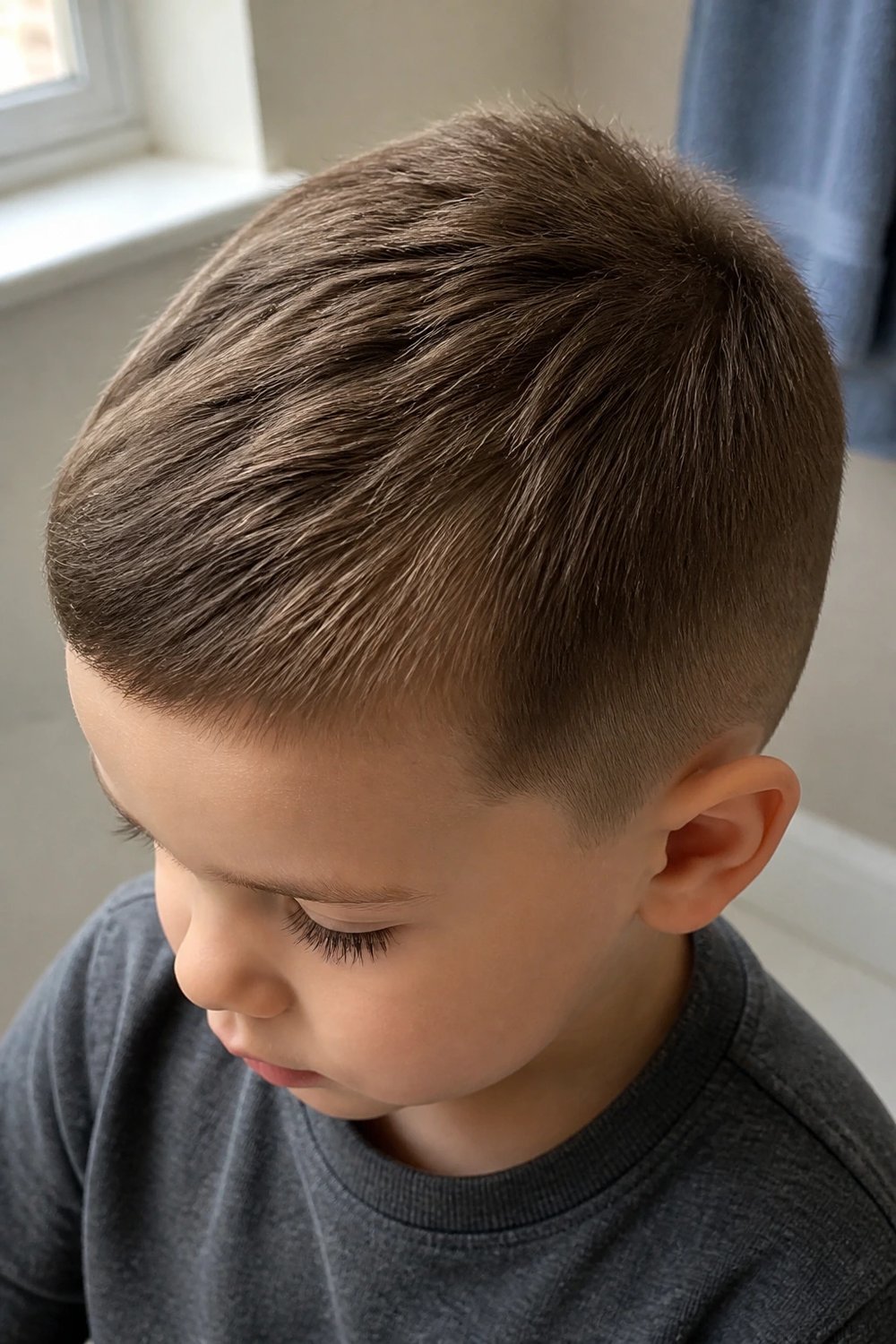
Photo: Hairstylematic — source
The blunt one-length crop is the simplest shaped cut there is: everything cut to a single level all the way round, with a neat, even edge. In this photo the toddler looks down, and you can see the clean, level line of the crop and how tidy it looks from above. The genius of the one-length cut is that it can stop anywhere — if your toddler ends the appointment after the front and one side, what is already done still reads as a finished shape, because every snip is complete in itself. There is no gradient waiting to be finished, no blend that needs completing. It suits every hair type, it is the easiest cut to do at home, and it is the most forgiving grow-out in this guide: as it grows, it just gets longer, evenly, all over.
Ask for: “A blunt one-length crop — one even length all round, neat edge, fringe just above the eyebrows.” Best for: every hair type, wriggly toddlers, at-home cuts. Upkeep: almost none; re-cut every five to six weeks.
38. Scissor Crop (No Clippers)

Photo: Paul Baker by Janet — source
The scissor crop is the cut for toddlers who hate clippers — and this photo shows it in action: the little boy sits in a black barber cape while the barber trims his fringe with scissors, no buzz, no vibration, no fear. A scissor-only cut is quieter, gentler and slower than a clipper cut, and for a toddler who is scared of the clippers’ sound, that difference is everything. The result is a soft, natural crop with no hard lines, and it suits every hair type. Say “scissor-cut only” when you book, so the barber knows before the appointment starts, and ask the barber to cut the fringe first — it is the part you see in every photo, and it is finished in seconds.
Ask for: “A scissor crop, no clippers at all — soft, natural finish, fringe cut first.” Best for: toddlers scared of clippers, sensitive little boys. Upkeep: trim the fringe between cuts; re-cut every five weeks.
39. Number 4 All Over

Photo: Booksy — source
The number 4 all over is the safest clipper cut for a toddler, and this back view — the little boy in a striped barber cape — shows why: the length is perfectly even all over, about 13 millimetres, with no steps, no lines and no patches. A number 4 is the shortest guard that still reads as a haircut rather than thin hair on a toddler, because fine baby hair shows scalp under a number 3. It is the fastest cut a barber can do, it needs no styling at all, and it is the easiest cut to do at home if you own clippers. One guard, one length, five minutes, done. It suits every hair type and it is the cut to choose for hot weather, for nursery, and for any parent who wants the morning routine to be zero.
Ask for: “A number 4 all over — one guard, even length, no shorter.” Best for: every hair type, hot weather, at-home cuts. Upkeep: nothing; re-cut every four to six weeks.
40. Faux Hawk with Skin Fade
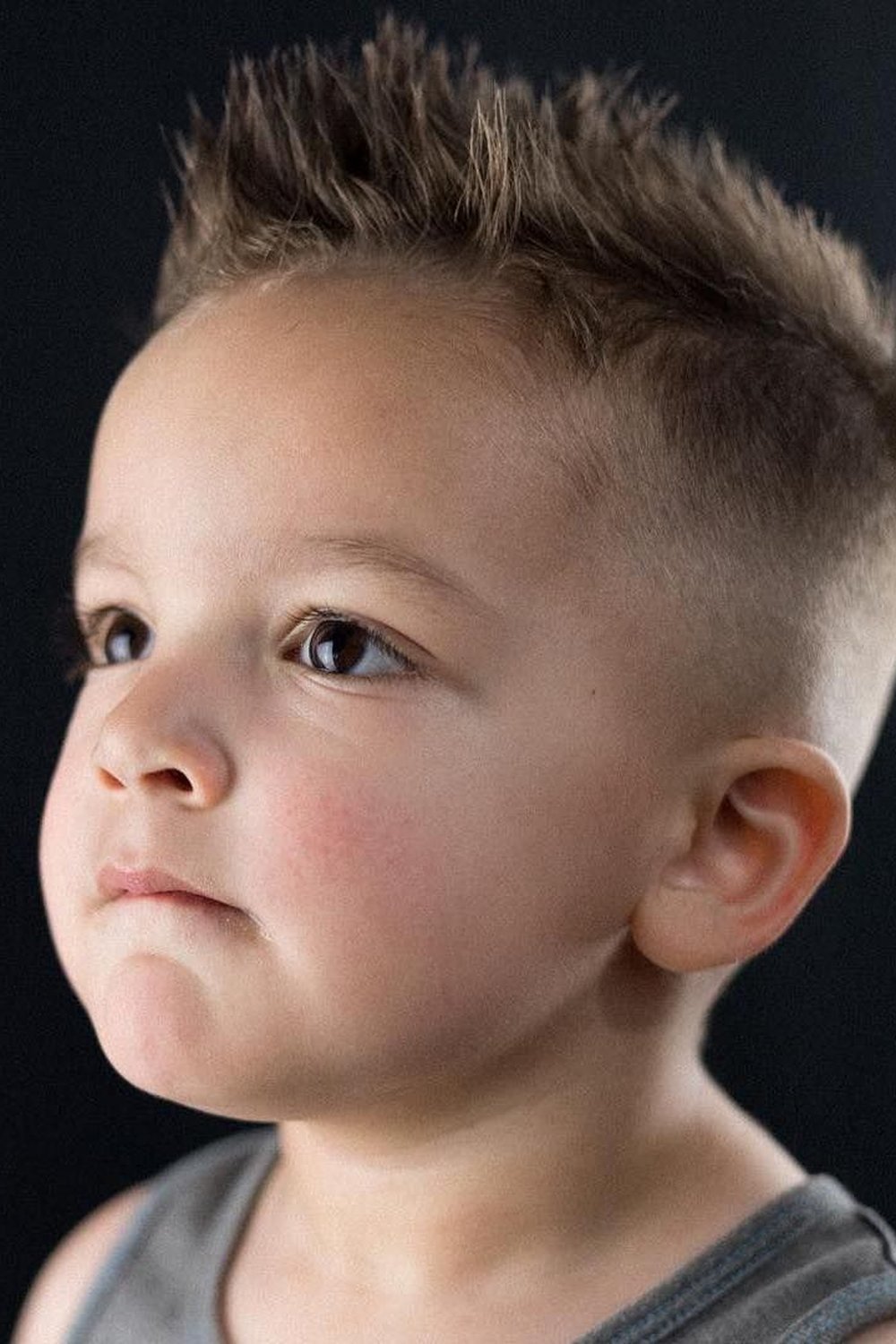
Photo: Pinterest — source
The faux hawk with a skin fade is the boldest cut in this guide — a spiky strip down the middle, with the sides faded all the way to the skin. In this front-side photo the faux hawk stands tall and spiky, and the skin fade gives it a sharp, high-contrast frame that makes the whole cut pop. It suits straight and thick hair, and it is the cut for a confident little boy, a birthday party, or a photo day when you want the pictures to have energy. Be honest about the trade-off: the skin fade needs a still child and a touch-up every two to three weeks, and the spikes need a little product on the day. For a special occasion it is unbeatable; for everyday nursery life, the soft faux hawk at number 4 is the easier twin.
Ask for: “A faux hawk with a skin fade — spiky strip down the middle, faded to the skin on the sides.” Best for: straight and thick hair, parties and photos. Upkeep: touch up the fade every two to three weeks; product on special days.
41. Textured Top with Design Line

Photo: Pinterest — source
The textured top with a design line adds one playful detail to an otherwise simple cut: a single shaved curved line on the fade. In this side-profile photo the textured top is choppy and full, the fade is clean, and the curved line sweeps across the side like a little signature. A single line is the right amount of design for a toddler — it is fun, it photographs brilliantly, and it grows out in about two weeks without looking messy. More complicated designs need a still child and a steady barber hand, so keep it to one line and let the texture do the rest. It suits straight and wavy hair, and it is a lovely choice for a birthday or a holiday photo.
Ask for: “A textured top with a single curved design line — one line only, on the fade.” Best for: straight and wavy hair, birthdays and photos. Upkeep: the line grows out in about two weeks; re-cut every four weeks.
42. Classic Scissor Taper
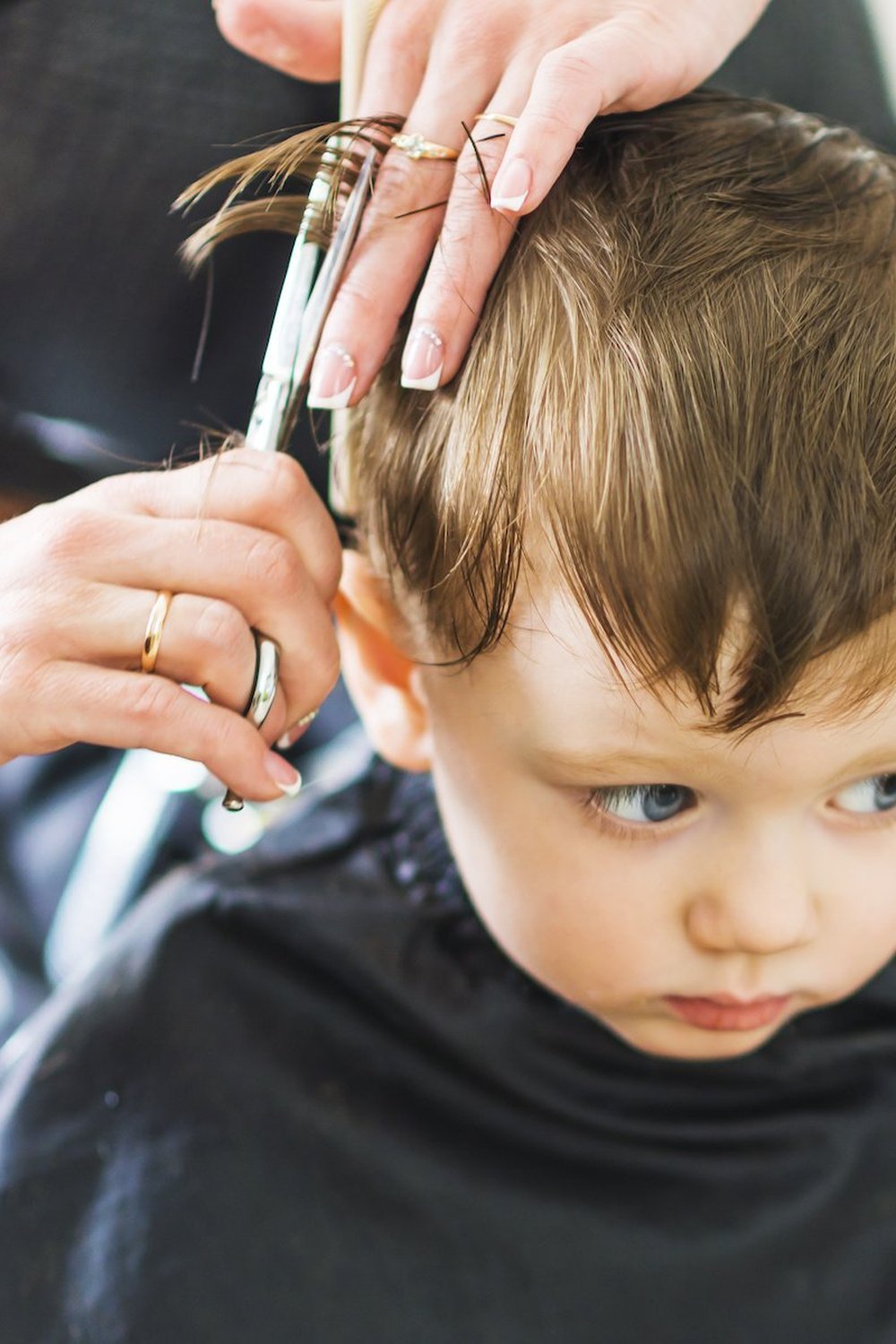
Photo: Clutch — source
The classic scissor taper is the oldest fade there is — no clippers, no skin, just scissors and a gradual taper at the sides and back. This photo shows it being made: the toddler in a black barber cape, the barber’s hands and scissors working at the crown, cutting the taper by eye. The result is the softest, most natural taper in this guide, and it suits every hair type, because scissors follow the shape of the head instead of forcing a guard line onto it. It is also the kindest cut for a toddler who dislikes clippers, and it grows out more gracefully than any clipper fade, because there is no hard line for regrowth to show against. If you want a taper but your little one hates the buzz, this is the one.
Ask for: “A classic scissor taper — scissors only, gradual taper at the sides and back, no skin, no clippers.” Best for: every hair type, toddlers scared of clippers. Upkeep: tidy the taper every five weeks; nothing to style.
43. Grown-Out Layers
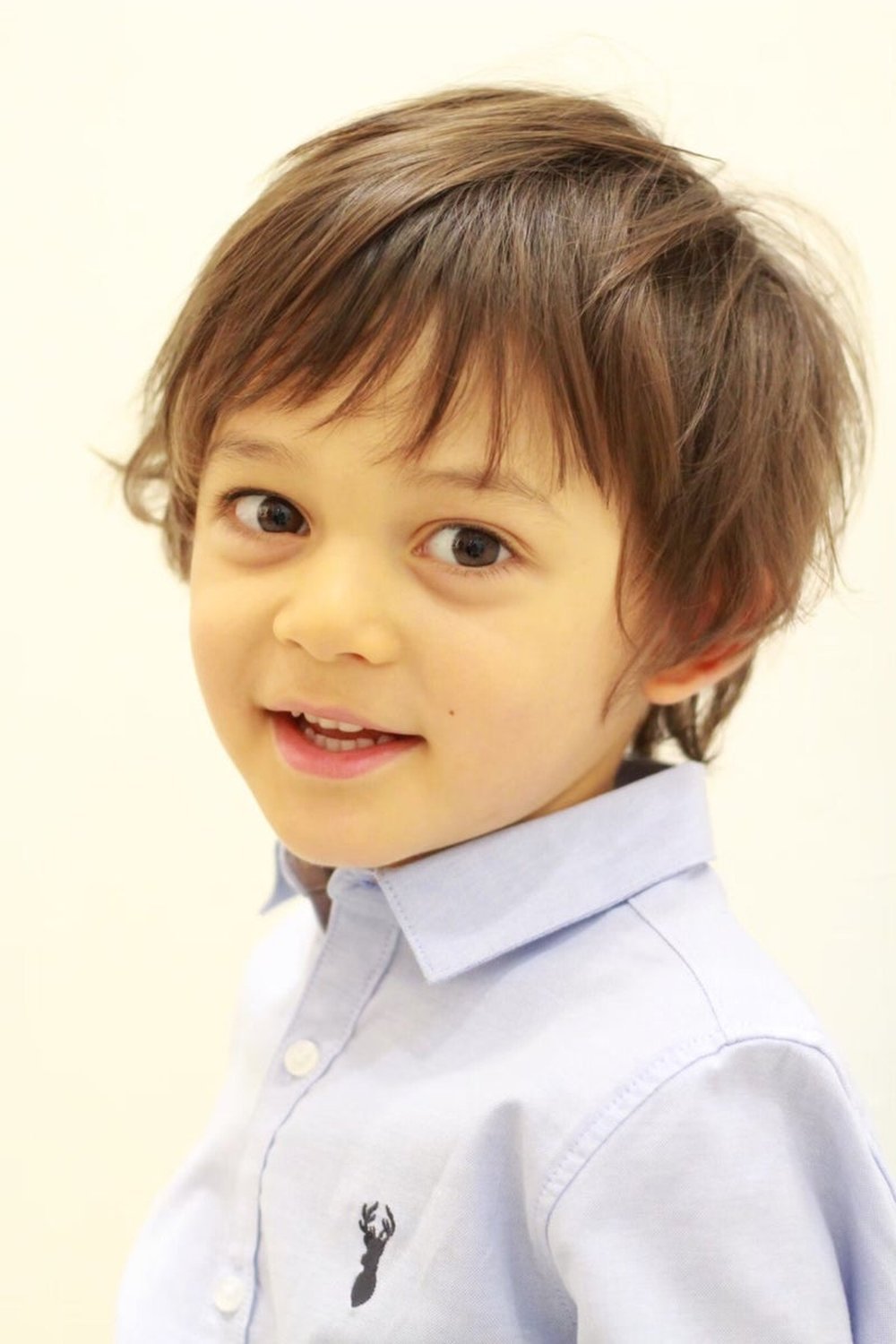
Photo: Chokkins Style — source
Grown-out layers are not a cut you ask for so much as a stage you enjoy: the hair has grown past the last haircut, the layers have softened, and the result is a relaxed, medium-length style with natural movement. In this photo the young boy’s grown-out layers fall softly around his face, smiling and easy, with no hard lines anywhere. It suits thick and wavy hair best, and it is the right choice if you are growing his hair out towards a longer style and want to enjoy the in-between stage rather than fighting it. The only work is brushing: a gentle brush each morning, a little detangling spray at bath time, and a trim every six to eight weeks to keep the ends healthy. If the layers start falling into his eyes, sweep the front back rather than cutting it short.
Ask for: “Just a tidy-up — keep the grown-out layers, trim the ends, sweep the front back from the eyes.” Best for: thick and wavy hair, growing hair out. Upkeep: brush daily; trim the ends every six to eight weeks.
44. First Haircut Trim
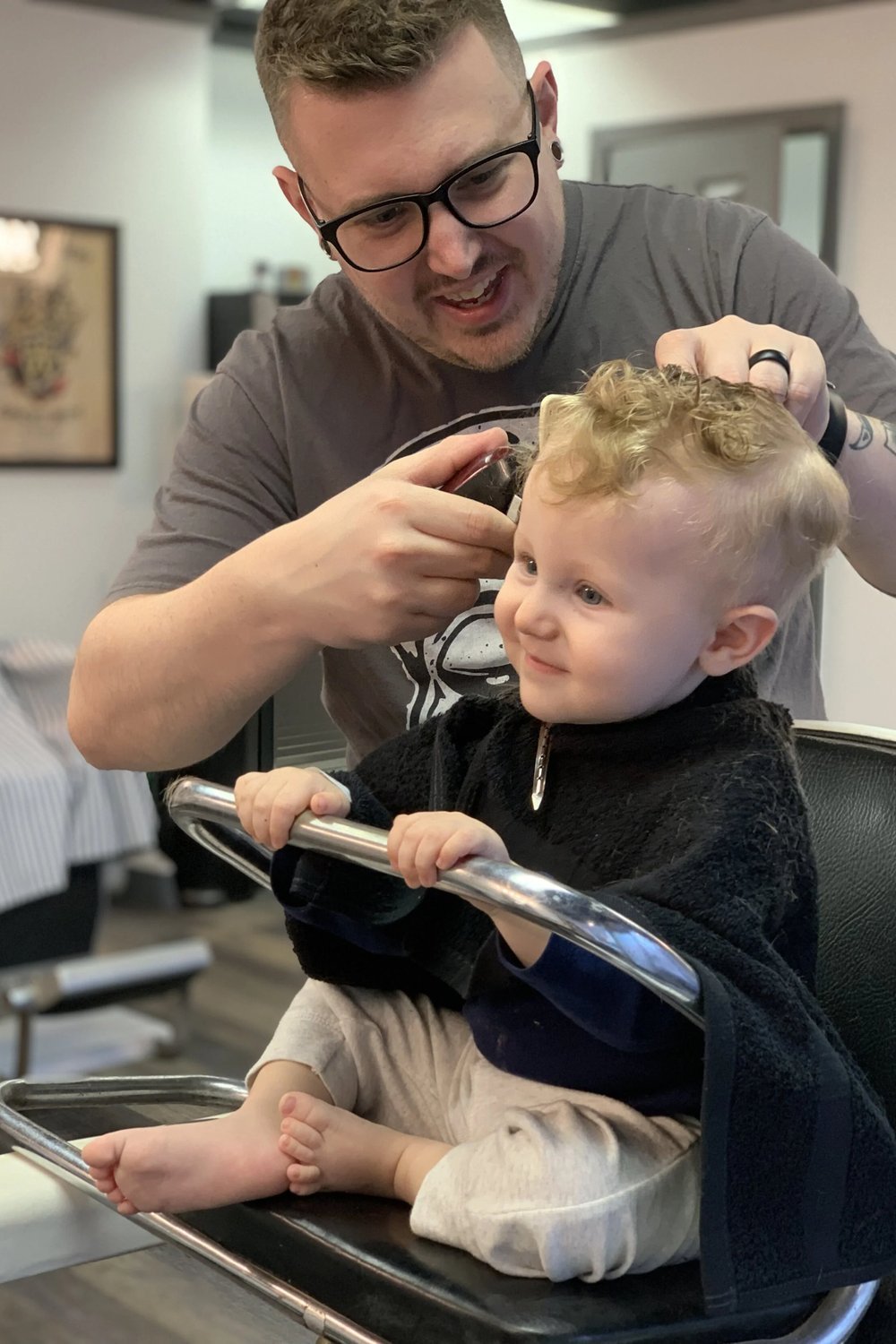
Photo: Squarespace — source
The first haircut trim is not a style — it is a moment. In this photo the barber trims a smiling toddler’s hair in the barber chair, and the little boy is happy, relaxed and proud of himself. That is the whole goal of a first cut: a tidy-up, not a transformation. The barber takes a little off the fringe so it clears the eyes, tidies the back and sides, and leaves the rest alone. It should be short, calm and quick — ten minutes at most — and it should end while your toddler is still happy, not after he has had enough. Bring a snack, a toy and a screen, let him sit on your lap if he wants to, and keep a little lock of hair if that matters to you. The cut itself is simple; the memory is the point.
Ask for: “Just a first-haircut tidy-up — fringe above the eyebrows, tidy the back and sides, leave the rest.” Best for: every toddler, the very first appointment. Upkeep: book the next cut before you leave, so it becomes a routine.
The first haircut: making it calm
Book the first appointment for the morning, when your toddler is rested and fed, not after nursery when he is tired. Choose a kids’ barbershop if there is one nearby — they expect wriggling and they have the chairs, the screens and the patience for it. Bring a snack, a favourite toy and a screen with a show he loves. Let him sit on your lap if he wants to; most barbers are happy with that for a first cut. Let him touch the clippers first so the buzz is not a surprise, and ask the barber to start with scissors if the sound worries him. Keep the first cut short and simple — a tidy-up, not a transformation — and keep a little lock of hair if that matters to you. If he cries, that is normal; a good kids’ barber has seen it a hundred times. Praise him afterwards, and book the next cut before you leave so it becomes a routine, not an event.
FAQ
How old should a toddler be for his first haircut?
There is no fixed age. Most boys have their first cut between 12 and 24 months, when the hair starts falling into the eyes or looking uneven. If the fringe is in his eyes or the back is shaggy, it is time — his age matters less than the hair.
Is a fade OK for a toddler?
A low, soft taper is fine, and it grows out gracefully. A high skin fade is harder: it needs a still child, it shows every millimetre of regrowth, and it only looks finished once the whole blend is done. If your toddler will not sit still, choose a scissor taper instead.
What guard should I ask for on a toddler?
For fine toddler hair, a number 4 guard (about 13 mm) is the shortest setting that still reads as a haircut rather than thin hair — a number 3 or shorter can show scalp. On the top, ask for scissor-cut length of about an inch, or longer for curly hair.
How often does a toddler need a haircut?
Every four to six weeks keeps most of these cuts tidy. Buzz cuts and crew cuts can stretch to six weeks; textured crops and fades look best with a tidy-up every four weeks. The fringe usually needs attention first.
Can I cut my toddler’s hair at home?
Yes, for a simple tidy-up. Use a number 4 guard on the sides, scissor-cut the top, cut the fringe first while he is distracted, and always go one guard longer than you think — you can re-clip, but you cannot re-attach hair. For a first cut or a shaped style, a barber is worth it.
What if my toddler will not sit still?
Choose a one-length scissor cut, which can stop anywhere and still look finished. Book a kids’ barber, bring a screen and a snack, let him sit on your lap, and keep the appointment short. Never force a fade on a wriggling child — a half-finished fade looks like a mistake, while a half-finished crop looks like a haircut.
Should I use product on toddler hair?
Only a tiny amount of gentle, child-safe product if a style needs it — a quiff or a pompadour, for example. Most cuts in this guide need nothing at all. Avoid adult pomades and gels, and wash product out at bath time.
Which toddler haircut is easiest in the morning?
The buzz cut, the crew cut and the classic crop. Nothing to comb, nothing to style, nothing to fall into his eyes. If mornings are a battle, start there.
The bottom line
The right toddler boy haircut is the one that fits your little one’s hair, his age, and your mornings. Start simple — a classic crop, a side part, a soft taper — and let the bolder styles wait until he can sit still long enough to enjoy them. Bring a photo, say the length first, cut the fringe first, and remember that the best toddler cut is the one that still looks good when the appointment ends early. Pick your favourite from these 44, show your barber the photo, and keep the next appointment booked — a good cut every few weeks beats one perfect cut once.
When he outgrows these toddler cuts, the next stage is already covered: our boys haircuts guide has 41 styles for school and play, our school haircuts guide covers neat, teacher-friendly cuts, and our teenage boy haircuts guide picks up where those leave off.