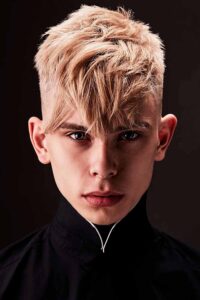
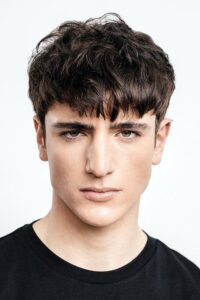
Teenage haircuts are about finding your own style
The teenage years are when a haircut stops being something your parents pick and starts being something you choose. The right cut does more than look good in photos — it fits your hair type, survives school dress codes, holds up through practice and games, and still looks sharp on a Friday night. The wrong one grows out badly, needs twenty minutes of styling you will never do, or gets you sent to the school office.
That is why this guide covers 35 teenage boy haircuts that actually work in real life — from school-safe textured crops and curtain cuts to blowout tapers, modern mullets and wolf cuts. Every style below comes with barber instructions you can read out word for word, styling tips that take minutes, and honest notes on who it suits best. If you love fades specifically, our guide to the burst fade for teenagers goes deeper on that one cut, and our round-up of the best haircuts for teen boys covers the classics in more detail.
Before the list, one quick rule: bring a photo to the barber. Show the exact style, point at the parts you like, and say what you do not want. A good barber will tell you honestly whether the cut suits your hair — listen to them. Now here are the 35 styles, organised from short to long, then bold.
What’s in this guide
Short & School-Safe
1. Textured Crop with Mid Fade

Photo: Haircut Inspiration — source
The most requested teen haircut in barbershops right now, and it is easy to see why. Short, choppy layers on top with a mid fade on the sides — clean enough for school, textured enough to look intentional. The top is cut with a point-cutting technique so the pieces separate naturally instead of sitting flat, and the fade starts around temple level, which keeps the shape neat without going too high. Ask your barber for a textured crop with a mid fade, top about one to two inches, and tell them whether you want the fringe straight across or slightly messy. It suits straight and wavy hair best, and works on round, oval and square faces. Styling: a pea-sized amount of matte clay, rubbed between your palms and pushed through damp hair — thirty seconds and you are done. Trim every three to four weeks.
2. Crew Cut with Taper Fade
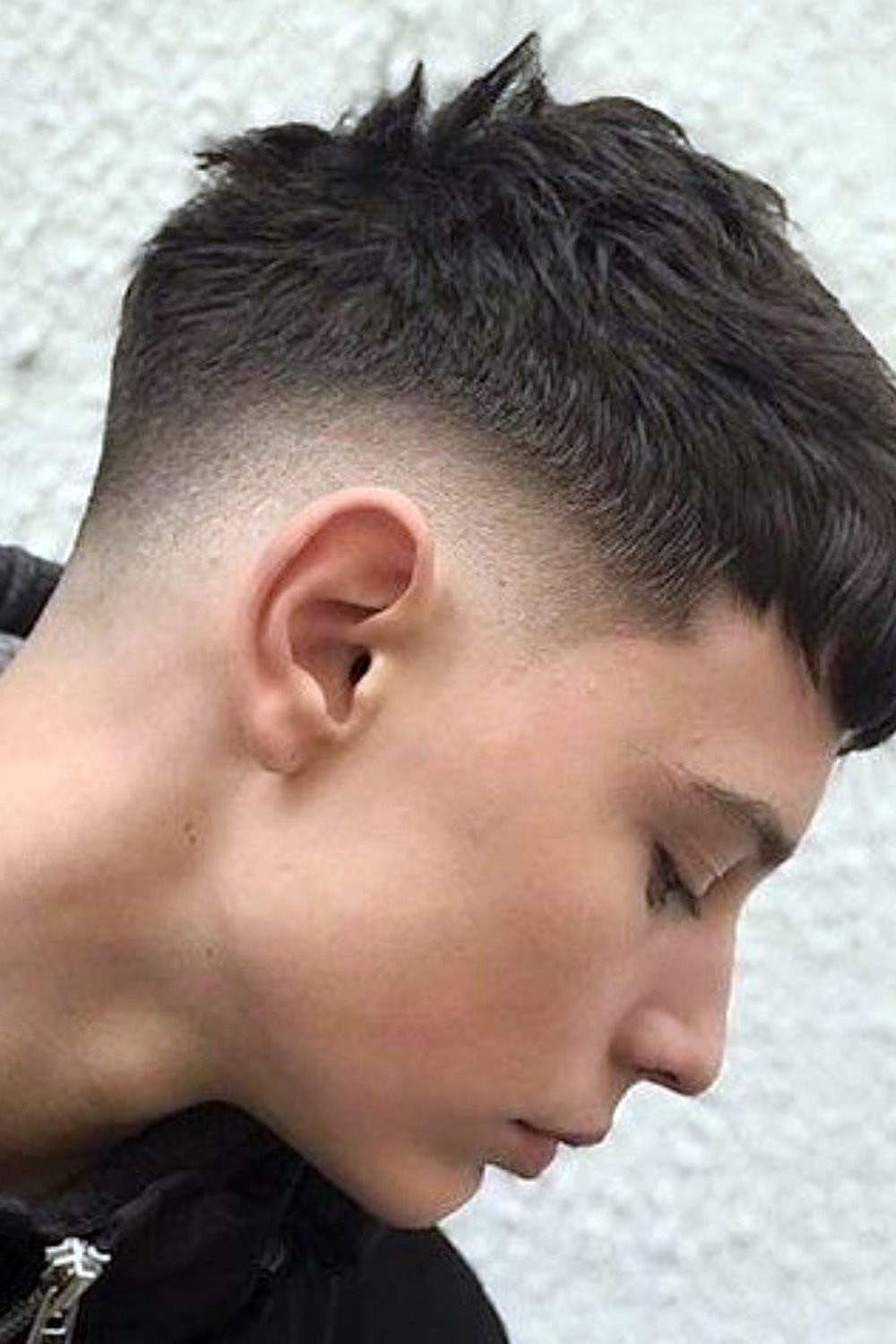
Photo: Haircut Inspiration — source
The crew cut is the classic that never leaves the top ten, and the taper fade is what keeps it looking modern instead of military. The top is short — usually a number 3 or 4 guard — slightly longer at the front than at the crown, and the sides taper down cleanly around the ears and neckline. It is the lowest-effort smart haircut a teenager can wear: it looks tidy when you wake up, survives helmets and hats, and passes every school dress code. Ask for a crew cut with a low taper, and have the barber blend the sideburns into the taper so there is no hard line. Best for guys who play sports, hate styling, or want their first grown-up haircut. Styling: none, honestly — towel dry and go. If you want a little texture, a drop of matte paste is enough. For more short options, see our crew cut styles guide.
3. Buzz Cut with Skin Fade

Photo: Barber’s Take — source
One guard all over, faded to skin at the sides — the buzz cut with a skin fade is the boldest simple cut on this list. The skin fade is what lifts it from plain to sharp: the sides blend down to bare skin, which makes the jawline look stronger and the whole head look deliberately shaped rather than just shaved. It is a summer favourite and a pre-season pick for athletes, because it needs nothing — no product, no comb, no bad hair days. Ask your barber for a number 1 or 2 buzz with a mid skin fade, and have them clean up the hairline with a shape-up if your school allows it. Best for strong jawlines, thick hair, and anyone who wants a reset. One honest warning: a buzz shows your head shape, so if you have bumps or scars you care about, the textured crop above is the safer first step. Styling: wash and go. Touch up the fade every two weeks.
4. French Crop with Blunt Fringe
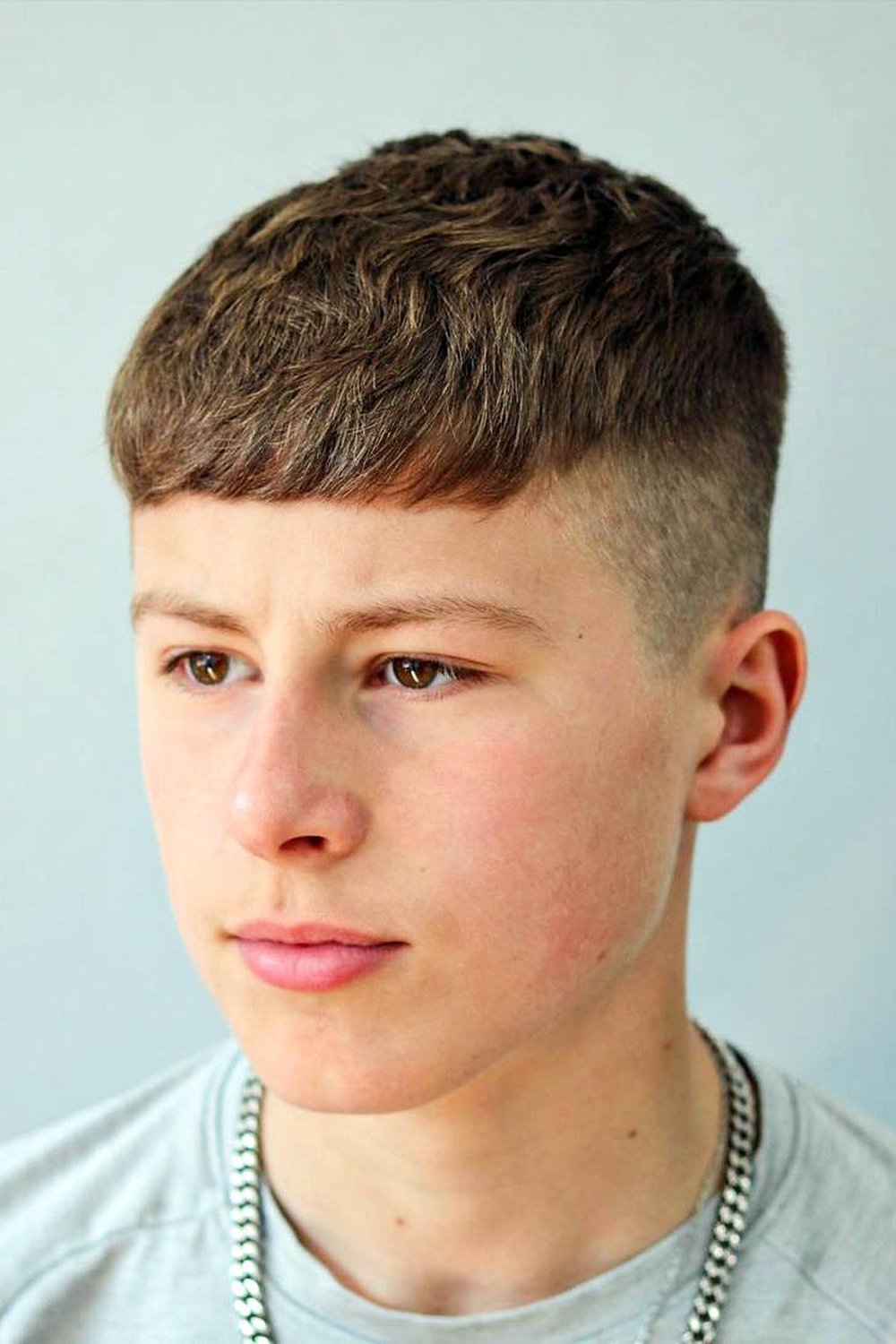
Photo: Haircut Inspiration — source
The French crop is short on top, faded at the sides, and combed forward into a blunt, straight fringe. It is one of the best cuts for hiding a high forehead or a hairline you are not happy with, because the fringe sits low and flat and frames the face. The top is usually one to two inches, textured just enough to stop it looking like a bowl cut, and the fade can be low or mid depending on how bold you want it. Ask your barber for a French crop with a blunt fringe and a low fade, and be clear about how long you want the fringe — just above the eyebrows is the safe spot. It suits straight hair best and works well on oval and longer faces, because the fringe shortens the face visually. Styling: comb forward while damp, a little matte clay to keep the texture, and you are done in a minute. Trim every three weeks to keep the fringe from falling into your eyes.
5. Caesar Cut with Fade

Photo: Haircut Inspiration — source
The Caesar cut is the French crop’s older, neater cousin — a short, even top with a short, straight fringe, named after Julius Caesar and worn by everyone from school kids to movie stars. The modern version adds a low fade on the sides, which keeps it from looking dated. The top is cut to about half an inch to an inch, all one length, and brushed forward. It is a great pick for thick hair that sticks up, because the short length and the forward direction tame it, and it is one of the easiest cuts to maintain. Ask for a Caesar cut with a low fade and a straight fringe, and tell the barber if you want the fringe cut blunt or slightly textured. Best for thick, straight hair and for guys with a strong forehead they want to balance. Styling: nothing, or a tiny bit of pomade if you want shine. It grows out evenly, so you can stretch trims to four weeks.
6. Ivy League Cut

Photo: Haircut Inspiration — source
The Ivy League is the grown-up short cut — a longer crew cut with a side part, neat enough for a school photo and sharp enough for a first job interview. The top is left one to two inches, swept to one side with a clean part, and the sides are tapered rather than faded, which keeps the whole look soft and classic. It is the cut to pick when you want to look put-together without looking like you tried hard. Ask your barber for an Ivy League with a side part and a taper on the sides, and mention whether you want the part on the left or the right — your natural part is usually the right answer. Best for straight to slightly wavy hair and for oval and square faces. Styling: a comb and a small amount of light-hold pomade on damp hair, swept to the side. Two minutes, and it holds all day. Trim every three to four weeks.
7. Short Spiky Crop
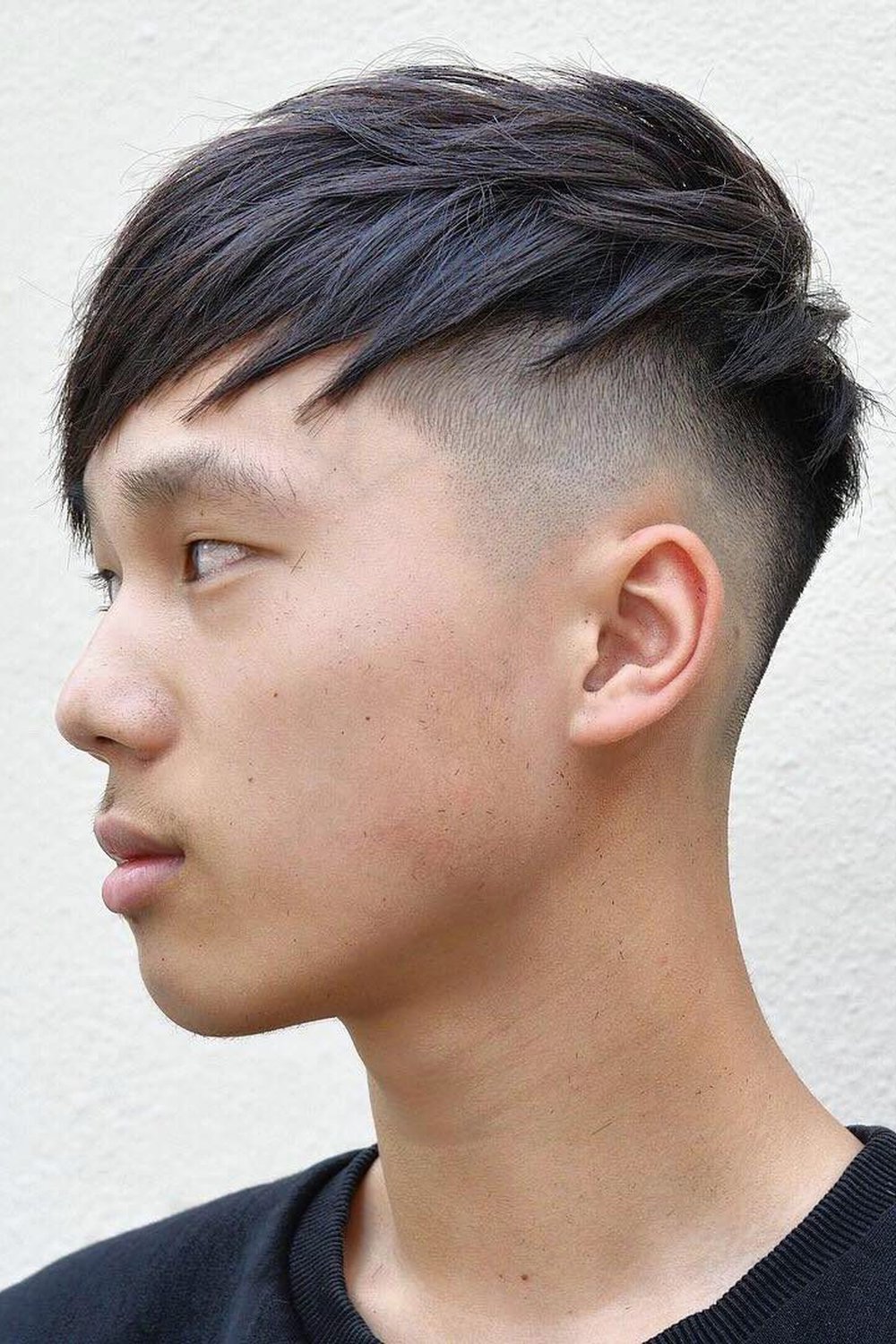
Photo: Haircut Inspiration — source
Short, spiky and full of energy — the spiky crop takes a textured top and pushes the pieces up into soft, separated spikes instead of laying them flat. The sides are faded, usually mid, so the height on top stands out and the head looks taller and leaner. It is a fun, confident cut that works for school and still looks good at a party, and it is one of the few short cuts that actually suits fine hair, because the spiking adds volume that the hair does not have on its own. Ask your barber for a short spiky crop with a mid fade, top about two inches, cut with texture so the pieces separate. Best for straight and fine hair, and for rounder faces, because the height lengthens the face. Styling: a fingertip of strong-hold matte clay, worked through damp hair and pinched upward — if the spikes fall flat by lunch, a little hairspray fixes it. Trim every three weeks.
Medium-Length Classics
8. Textured Quiff with Taper
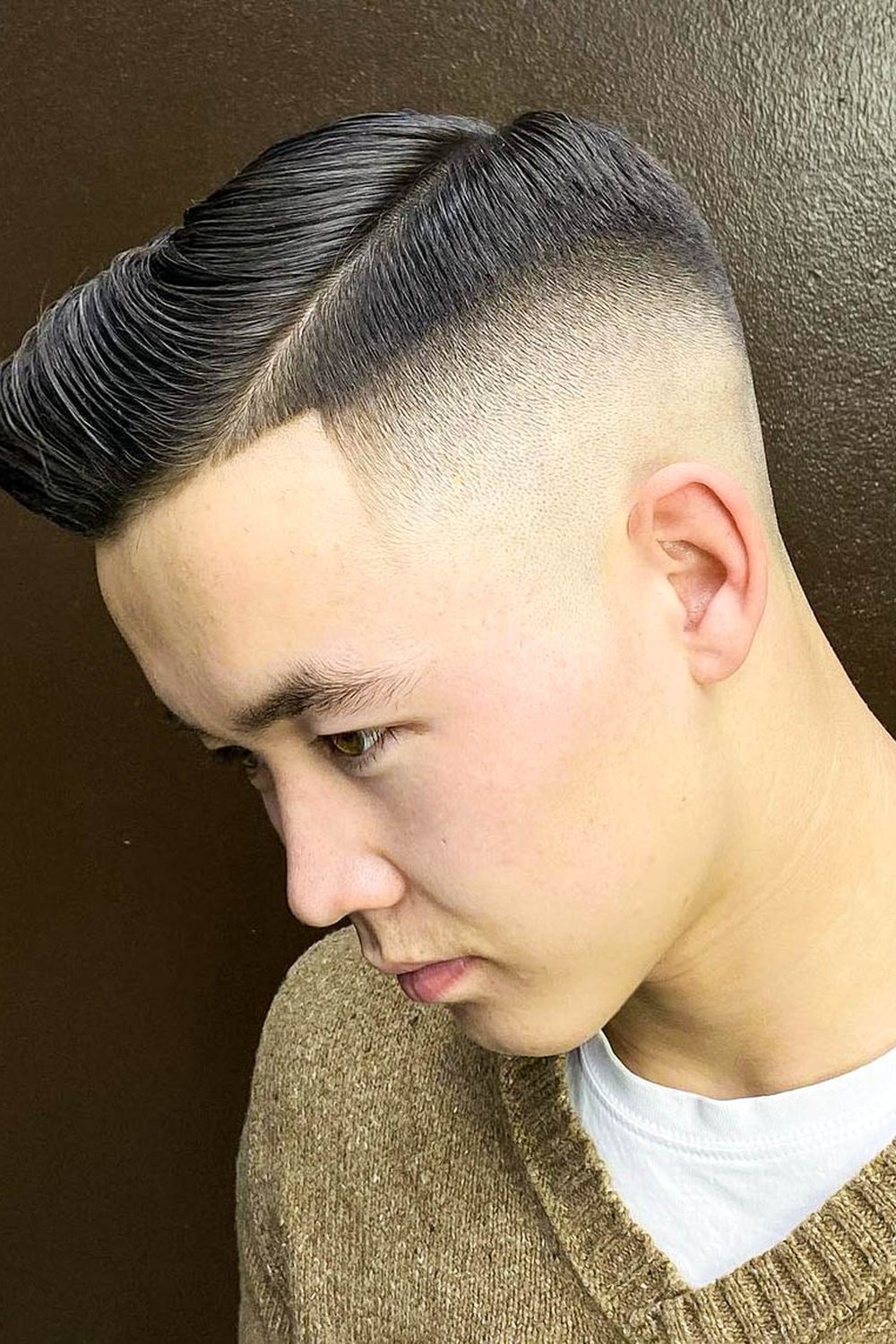
Photo: Haircut Inspiration — source
The quiff is the volume king of teen haircuts — hair swept up and back from the forehead, full of height and texture, with a clean taper keeping the sides tight. The modern version is textured, not slicked: the front is left three to four inches, cut in layers so it moves, and the back and sides are tapered low so the quiff is the star. It is the cut to wear when you want to look taller and more confident, and it photographs brilliantly. Ask your barber for a textured quiff with a low taper, and tell them how much height you want — a subtle lift for school, a full quiff for weekends. Best for straight and wavy hair with some natural volume, and for rounder faces, because the height stretches the face. Styling: blow-dry the front upward with a round brush, then work a little matte clay through from roots to tips. It takes three minutes once you have the habit. Trim every three to four weeks.
9. Side Part Brush Up
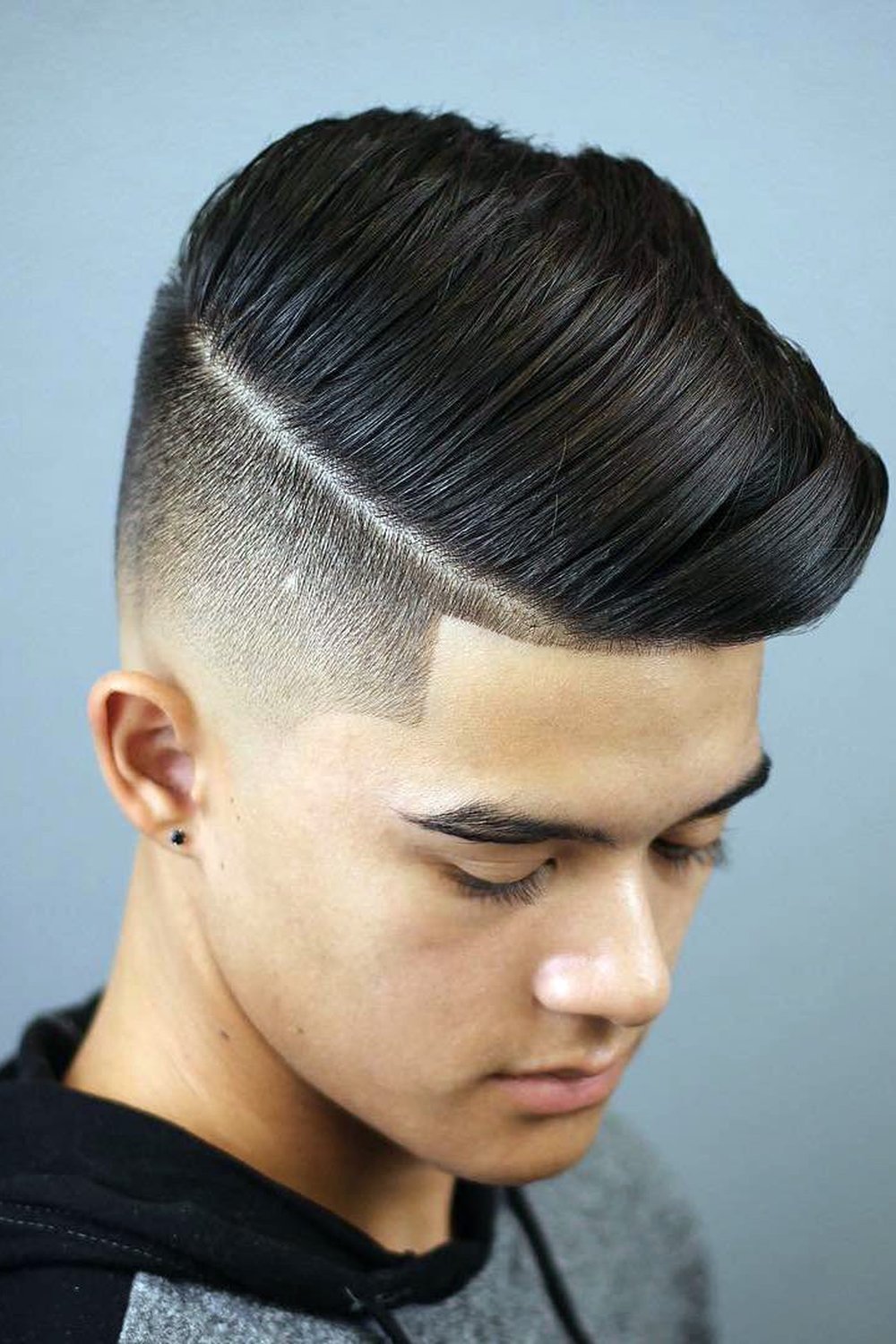
Photo: Haircut Inspiration — source
The side part brush up is the quiff’s calmer brother — the hair is swept up and across from a side part, giving you height and movement without the full drama. The top is two to three inches, the sides are faded or tapered, and the part gives the whole cut a clean, deliberate line. It is a great first step into longer hair for a teenager who has always had short cuts, because it feels familiar but looks completely different. Ask your barber for a side part with a brush-up top and a mid fade, and have them show you where your natural part sits. Best for straight and wavy hair, and it suits almost every face shape. Styling: comb the part in while damp, blow-dry the top up and across, and finish with a light-hold cream. If your hair falls flat, a little sea-salt spray before drying adds grip. Trim every three to four weeks.
10. Messy Fringe

Photo: Haircut Inspiration — source
The messy fringe is the “I woke up like this” cut — choppy, textured bangs falling over the forehead, with the sides kept short so the fringe is the focus. Nothing about it is neat, and that is the point: the fringe is cut in uneven, piece-y layers so it looks effortless even when you did nothing. It is one of the most popular teen cuts on social media right now, because it works with a hoodie and with a shirt, and it hides a big forehead without looking like you are hiding anything. Ask your barber for a textured fringe with a low fade, top three to four inches, and tell them you want the fringe choppy, not blunt. Best for straight and wavy hair, and for longer faces, because the fringe shortens the face. Styling: the easiest on this list — a little matte paste, pushed through with your fingers, and let it fall where it wants. Trim the fringe every three weeks or it starts getting in your eyes.
11. Curtain Hair with Taper
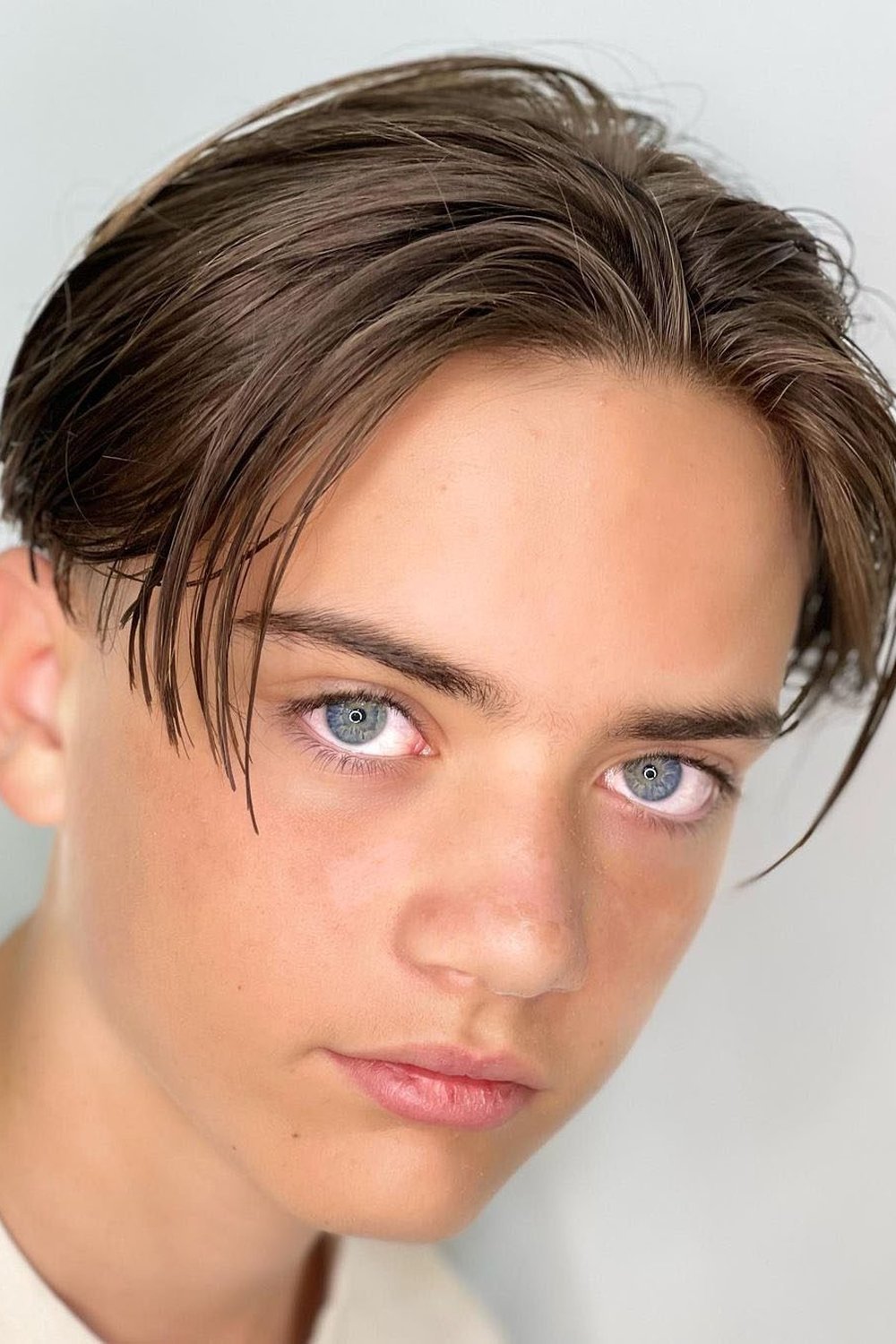
Photo: Haircut Inspiration — source
Curtain hair is back in a big way — a centre part with the front falling in soft curtains on either side of the face, paired with a clean taper at the sides and back. It is the 90s heartthrob cut, updated with faded sides so it looks current instead of costume. The top needs three to five inches of length to fall properly, and the part should follow your natural growth — your barber can find it in seconds. Ask for curtain hair with a taper fade, and be honest about whether you will actually let it grow: the awkward middle stage lasts a few weeks, and it is worth it. Best for straight and wavy hair, and for oval and longer faces, because the curtains frame the cheekbones. Styling: part it in the middle while damp, blow-dry the front forward and outward, and use a light cream to keep the pieces in place. It takes a few minutes but the payoff is a cut that looks great from every angle.
12. Middle Part Flow
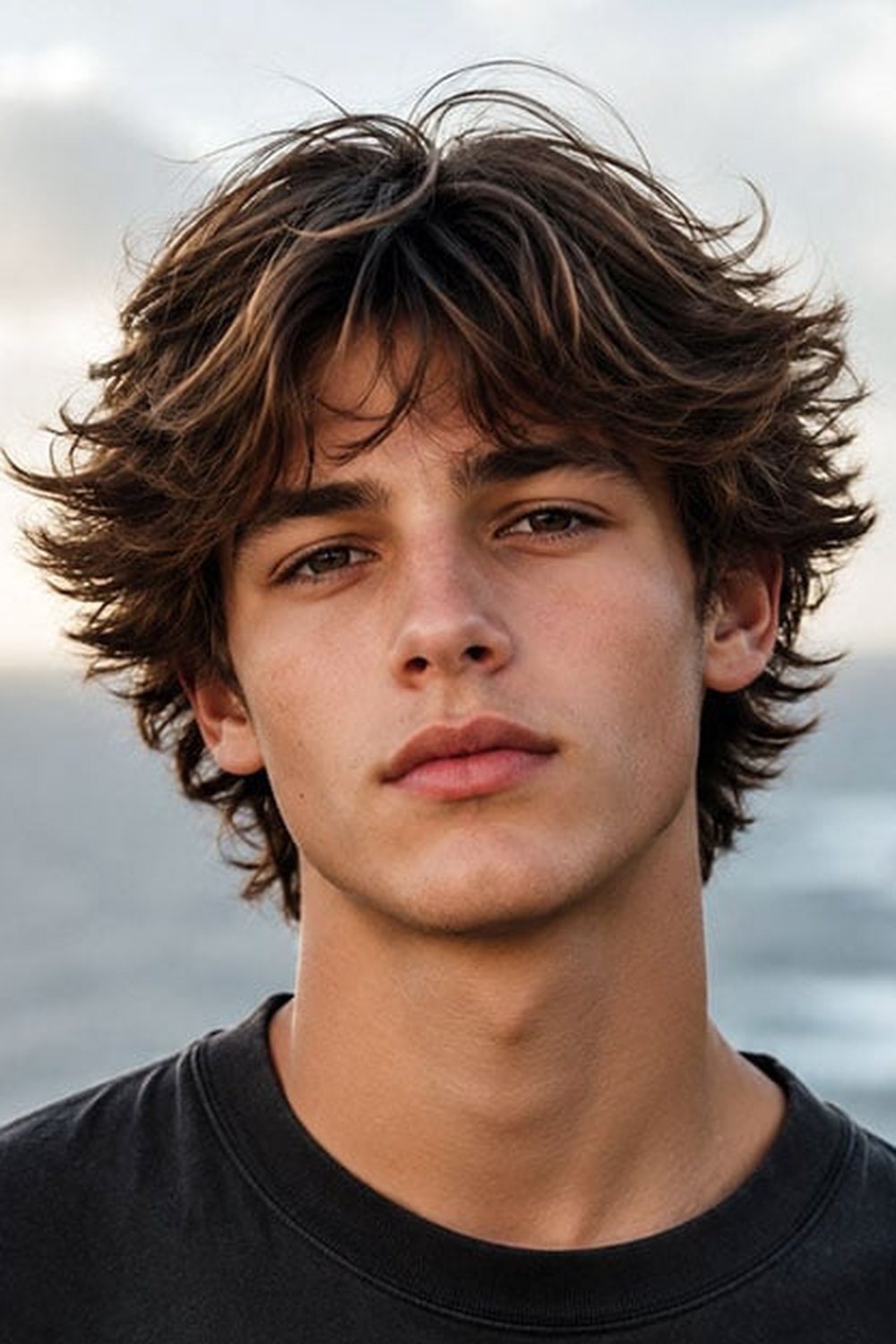
Photo: Barber’s Take — source
The middle part flow is curtain hair grown out — longer, looser, and more relaxed, with the hair falling past the ears and sweeping back from a centre part. It is the surfer-meets-school cut, and it is huge with teenagers right now because it looks good messy and needs almost no product. The top and sides are kept long, around four to six inches, with light layers so the hair moves instead of hanging in a sheet, and the back is tapered just enough to keep it tidy. Ask your barber for a middle part flow with light layers and a clean neckline, and expect a few months of growing if you are starting from short hair. Best for straight and wavy hair with some natural movement, and for guys who do not mind hair touching their ears. Styling: sea-salt spray on damp hair, scrunch, and let it air dry. Trim every six to eight weeks — this cut is meant to grow.
13. Slicked Back Undercut
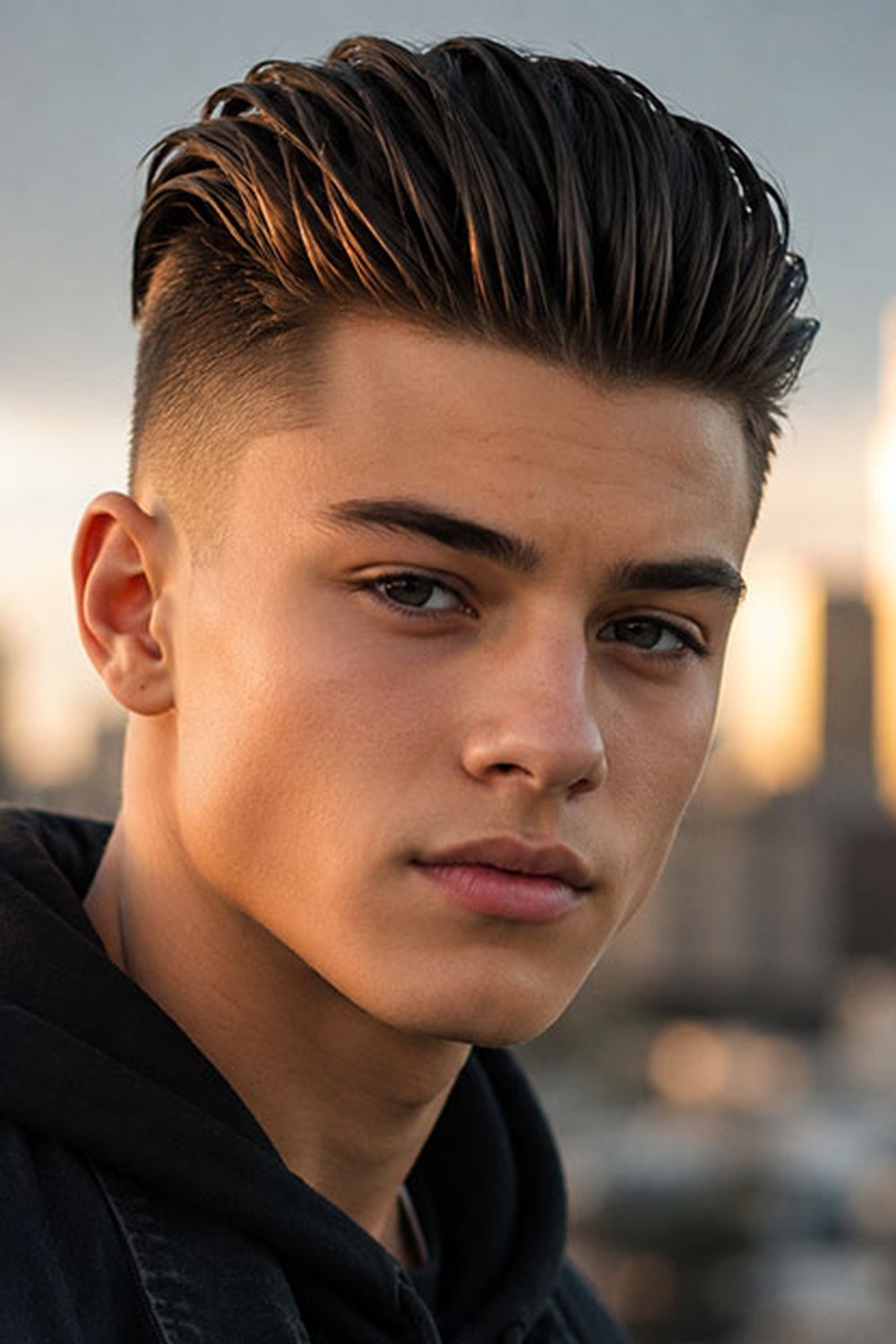
Photo: Barber’s Take — source
The slicked back undercut is the sharpest cut in this section — the top is left long, three to five inches, and combed straight back, while the sides and back are cut short in one clean length with no blending. That hard contrast between the long top and the short sides is what makes it look so bold. It is a confident, almost formal cut that works for school events and parties alike, but it does need daily styling, so it is not for anyone who wants to roll out of bed and go. Ask your barber for an undercut with the top left long and the sides disconnected, and tell them whether you want the sides faded or clipped to one guard. Best for thick, straight hair that holds its shape, and for oval and square faces. Styling: blow-dry the top straight back, then work a medium-hold pomade through from front to back. Keep the sides tight with a trim every two to three weeks.
14. Faux Hawk

Photo: Haircut Inspiration — source
The faux hawk is the mohawk you can wear to school — a strip of longer hair down the centre of the head, spiked upward, with the sides faded short instead of shaved. It gives you the edge of a mohawk without the commitment, and it looks great on teenagers because the height makes the face look longer and the fade keeps everything clean. The centre strip is two to three inches, and the sides fade up from low to mid, meeting the strip in a soft blend rather than a hard line. Ask your barber for a faux hawk with a mid fade, and say how tall you want the spikes — a low, messy version passes anywhere, a tall one is for weekends. Best for straight and wavy hair with some thickness, and for rounder faces. Styling: strong-hold matte clay, pinched upward along the centre strip, with the sides smoothed down. It takes two minutes, and a little hairspray keeps it up through the school day.
Curly & Wavy
15. Curly Crop Fade
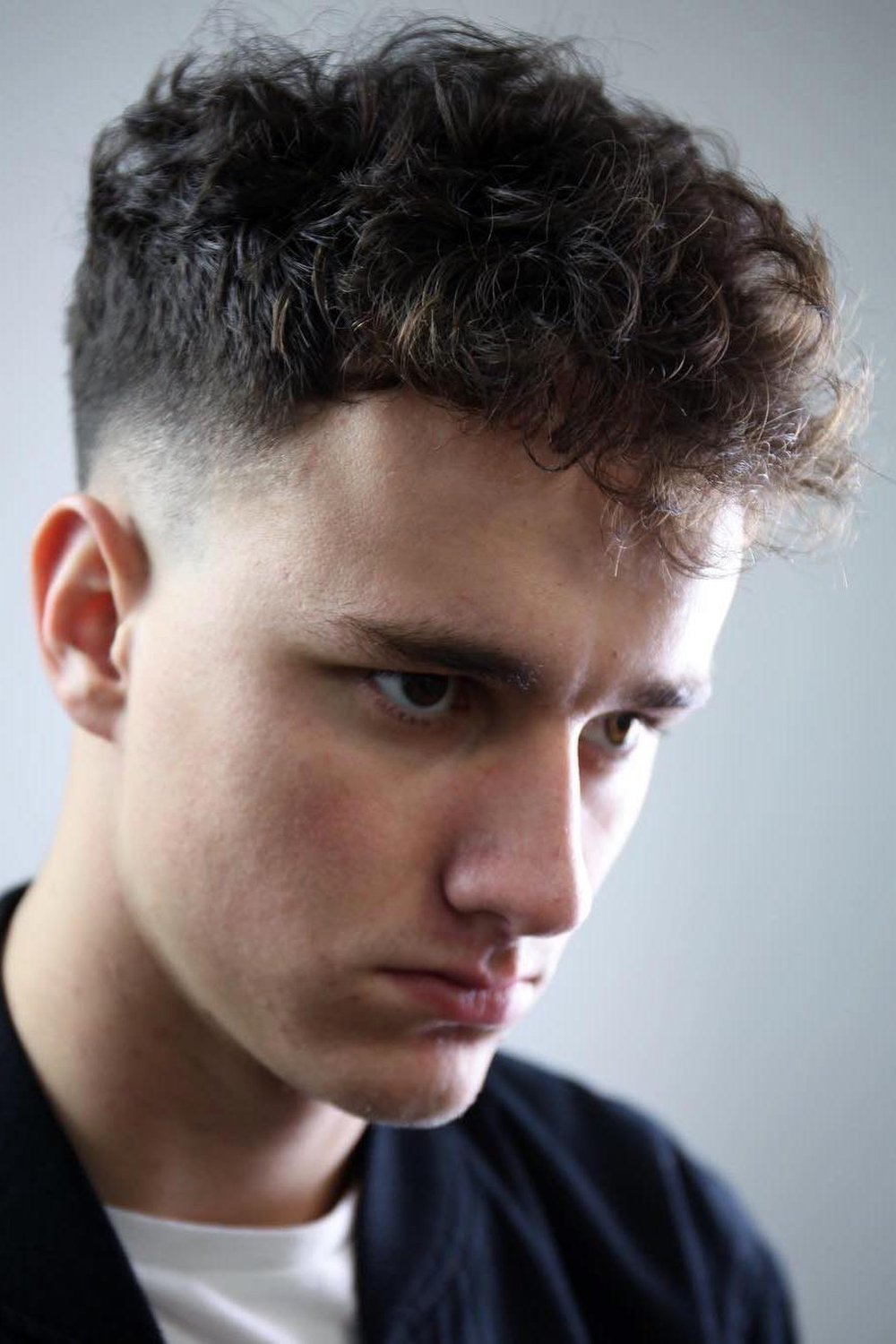
Photo: Haircut Inspiration — source
The curly crop fade lets natural curls do the talking. The top is kept short — about one to two inches of curl — and the sides fade down cleanly, so the curl pattern is the whole style. No straightening, no fighting the hair: the cut works with the curl instead of against it, and the fade keeps the outline sharp. It is one of the best cuts for curly-haired teenagers because it looks good on day one and still looks good three weeks later, as the curls just get a little fuller. Ask your barber for a curly crop with a mid fade, and make sure they cut the curls dry or barely damp — wet curls shrink as they dry, and a barber who cuts them soaking wet will take off too much. Best for 3A to 4A curls and for almost every face shape. Styling: curl cream on damp hair, scrunch, and leave it alone — the less you touch it, the better the curls hold. Trim every three to four weeks.
16. Low Skin Fade with Curly Crop

Photo: The Hairstyle Edit — source
This is the curly crop turned up a notch — the same short curls on top, but the sides are faded all the way down to skin, starting low around the ears. The skin fade adds a crisp, high-contrast frame that makes the curls pop, and it is especially flattering on darker hair, where the blend from skin to curl is dramatic. The top stays at one to two inches so the curls keep their shape, and the fade is kept low so the cut stays school-safe. Ask your barber for a curly crop with a low skin fade, and have them blend the fade up into the curls gradually so there is no harsh step. Best for tight curls and coily hair, and for guys who want their curls to be the first thing people notice. Styling: leave-in conditioner or curl cream, scrunched in while damp. The skin fade shows growth fast, so plan a touch-up every two weeks.
17. Messy Fluffy Curls

Photo: Barber’s Take — source
Messy fluffy curls are the curls cut loose — longer on top, two to four inches, left to fall where they want, with the sides kept short so the volume is the statement. It is a relaxed, confident look that suits teenagers perfectly, because it looks like you have great hair and you know it. The key is the cut: light layers through the top so the curls do not clump into one heavy mass, and a clean taper at the sides so the shape stays intentional instead of overgrown. Ask your barber for fluffy curls with a taper on the sides and layers on top, and tell them you want the natural shape kept — no thinning the curls out. Best for 3B and 3C curls with natural volume, and for longer faces, because the width balances the length. Styling: curl cream on damp hair, then hands off — seriously, touching it breaks the curls apart. Trim every four to six weeks.
18. Curly Top with Taper

Photo: Haircut Inspiration — source
The curly top with a taper is the neat version of curly hair — the curls stay on top, full and defined, while the sides and back taper down gradually so the whole head looks shaped rather than grown out. The taper is the quiet hero here: it tidies the edges around the ears and neckline without taking the sides to skin, which makes it the most school-friendly curly cut on this list. The top is left two to three inches, and the curls are shaped with scissors, not clippers, so the pattern stays intact. Ask your barber for a curly top with a low taper, and ask them to shape the curls while dry so they can see the real length. Best for all curl types, and especially good for guys whose curls are thick and need a tidy outline. Styling: a little curl cream or leave-in conditioner, scrunched in, and a pick at the roots for lift. Touch up the taper every three weeks.
19. High Top Fade with Texture

Photo: The Hairstyle Edit — source
The high top fade is a classic with real history — tall, flat-topped hair standing up from a clean fade, now worn with texture instead of the razor-sharp box shape of the 90s. The top is left two to four inches and shaped upward, with the sides faded high, which gives the head a long, strong silhouette. It is a bold, proud cut that looks incredible on coily and tight-curled hair, because the texture holds the height without product. Ask your barber for a high top fade with a textured top, and be clear about the height you want — a shorter high top is easier to wear daily, a taller one is a statement. Best for 4A to 4C hair and for rounder faces, because the height lengthens the face. Styling: pick the top out after washing, add a little curl cream or shea butter for definition, and shape the silhouette with your hands. The fade needs a touch-up every two weeks to stay crisp.
Long & Flowing
20. Modern Mullet

Photo: Barber’s Take — source
The mullet is back, and the modern version is nothing like the joke version from the 80s. Short and textured on top, faded at the sides, and longer at the back — usually to the collar or just past it — the modern mullet is clean, deliberate, and genuinely cool. The secret is the fade: it separates the mullet from a grown-out accident and makes the back length look like a choice. It is the most talked-about teen haircut of 2026, and it suits teenagers because it is rebellious without breaking any school rule. Ask your barber for a modern mullet with a mid fade, and decide the back length together — collar length is the safe start, longer is for the committed. Best for straight and wavy hair, and for guys who want a cut people actually comment on. Styling: matte clay on the top for texture, and let the back fall naturally. Trim the top and fade every three to four weeks; the back can grow.
21. Wolf Cut
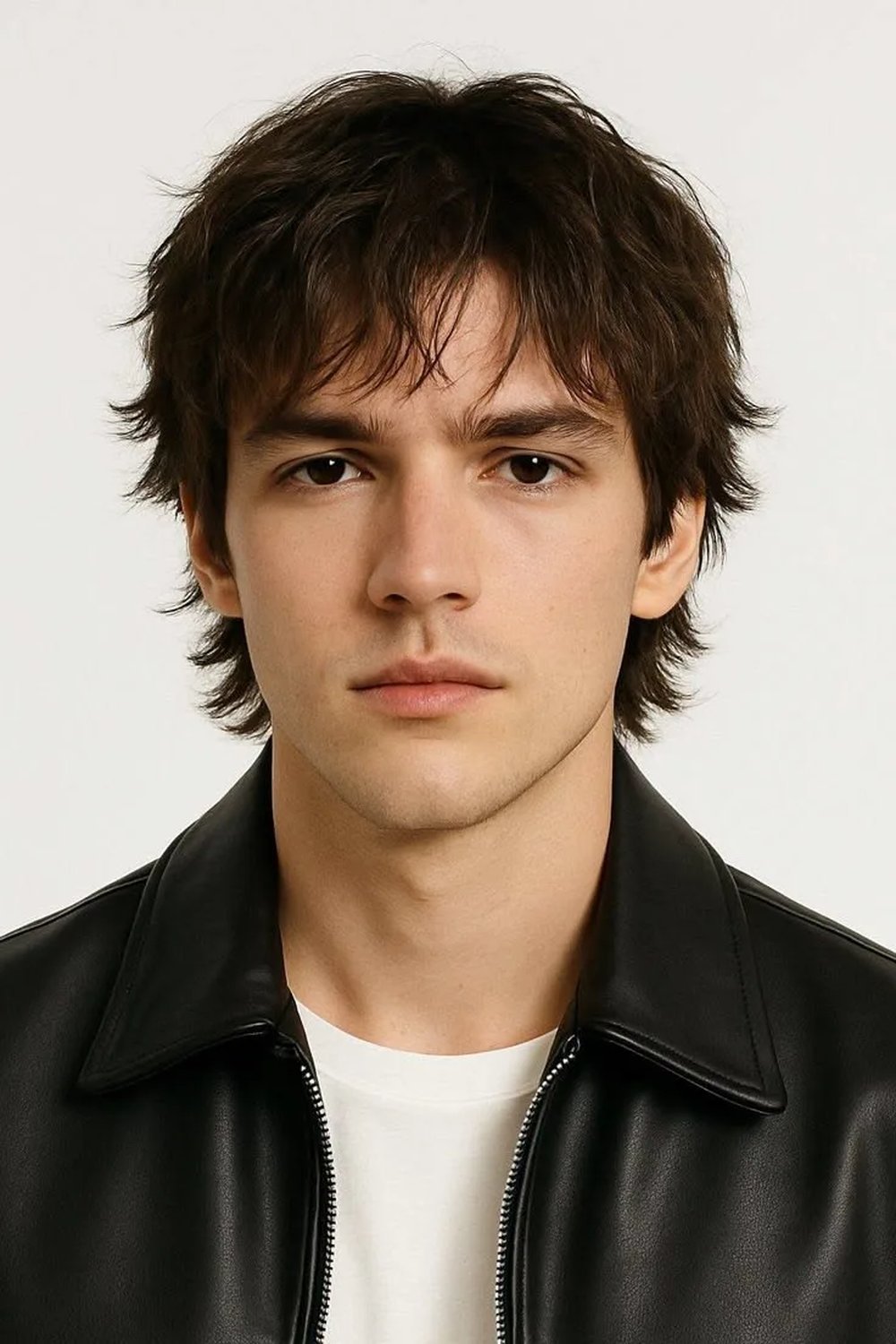
Photo: Low Fade Styles — source
The wolf cut is a mullet mixed with a shag — heavy layers all through, short and choppy on top, long and wild at the back, with a curtain fringe at the front. It is the messiest, most expressive cut on this list, and it is huge with teenagers because it looks like a rock star’s hair and needs almost no styling to look right. The layers are the whole cut: they create the volume on top and the movement at the back, so the barber needs to cut it with a razor or point-cutting technique, not blunt shears. Ask for a wolf cut with a curtain fringe and heavy layering, and warn your barber if your hair is very thick — it may need some weight taken out. Best for wavy and thick hair, and for guys who like their hair to look lived-in. Styling: sea-salt spray, scrunch, and done. It grows out well, so trims can stretch to six to eight weeks.
22. Eboy Hair

Photo: Barber’s Take — source
Eboy hair is the TikTok-era classic — a middle part with curtain bangs falling over the forehead, longer on top, with the sides left a little longer too, so the whole cut feels soft and a bit moody. It is basically the curtain cut with more attitude: the fringe is longer, the layers are choppier, and the finish is deliberately undone. It suits teenagers who live on social media, because it photographs from every angle and looks good in a selfie. Ask your barber for eboy hair with a middle part, curtain fringe to the eyebrows, and textured ends, and keep the sides long enough to tuck behind the ears. Best for straight and slightly wavy hair, and for oval faces, because the fringe frames the eyes. Styling: a little light cream or sea-salt spray, parted in the middle, and let it fall. It needs a trim every four to six weeks to keep the fringe out of your eyes.
23. Long Fringe with Undercut

Photo: Haircut Inspiration — source
The long fringe with an undercut is two cuts in one — a heavy, face-framing fringe on top, falling to the eyebrows or below, over sides that are clipped short and disconnected. The contrast is the drama: soft, long hair up top against sharp, short sides. It is a bold choice that works for teenagers who want to stand out, and it is surprisingly practical, because the fringe can be swept to the side for school and worn forward for everything else. Ask your barber for a long fringe with a disconnected undercut, and agree on the fringe length — just below the eyebrows is the sweet spot. Best for thick, straight hair that can hold the fringe’s weight, and for longer faces, because the fringe shortens the face. Styling: blow-dry the fringe forward, a little matte paste to keep it in place, and push it aside when it gets in the way. The undercut needs a touch-up every two to three weeks.
24. Surfer Flow Hair

Photo: Barber’s Take — source
Surfer flow is the relaxed, grown-out look — medium-length hair, swept back from the face, with natural waves and a sun-bleached, lived-in feel. It is the cut for teenagers who hate structure and love the idea of just shaking their hair dry and going. The hair is kept four to six inches all over, with light layers so it moves, and the back is left long enough to flick out at the collar. It works best on wavy hair, because the natural wave does the styling for you, but straight hair can get there with a little sea-salt spray. Ask your barber for flow hair with light layers and a natural neckline, and expect a few months of growing if you are starting short. Best for wavy hair and for guys who play outdoor sports. Styling: sea-salt spray on damp hair, scrunch, air dry. Trim every six to eight weeks to keep the ends healthy.
25. Shaggy Layers

Photo: Haircut Inspiration — source
Shaggy layers are the controlled-chaos cut — medium-length hair cut in uneven, choppy layers all over, falling over the forehead and around the ears, with no clean lines anywhere. It is the easiest long cut to wear, because the mess is the style: bedhead is not a problem, it is the goal. The layers give thin hair volume and thick hair movement, so it suits more hair types than most long cuts. Ask your barber for a shaggy layered cut with a textured fringe, and tell them you want the ends choppy, not blunt — the choppy ends are what make the layers move. Best for straight and wavy hair, and for guys who want long hair without the commitment of growing it past the collar. Styling: a little matte paste or sea-salt spray, worked through with your fingers. It grows out gracefully, so trims every six to eight weeks are enough.
Bold & Trending
26. Mohawk
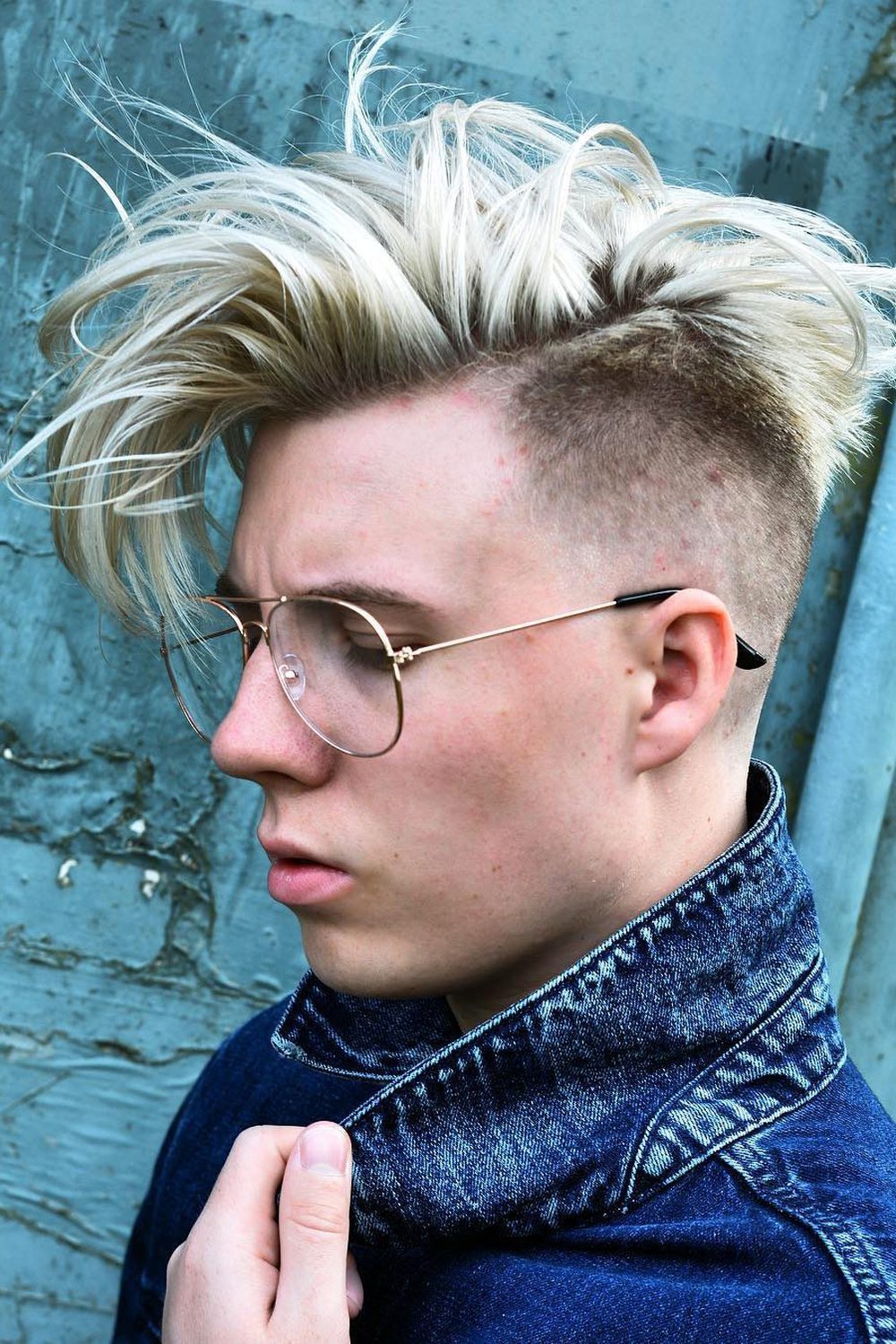
Photo: Haircut Inspiration — source
The mohawk is the original statement cut — a strip of long hair down the centre of the head, spiked straight up, with the sides shaved or faded short. It is the boldest style on this list, and it is not for every school, so check your dress code before you commit. The modern teen version is usually softer than the punk original: the sides are faded rather than fully shaved, and the strip is worn at two to three inches instead of six. Ask your barber for a mohawk with a mid fade on the sides, and decide the strip width together — narrower is bolder, wider is easier to wear. Best for thick, straight hair that can hold the spikes, and for guys who genuinely do not care what anyone thinks. Styling: strong-hold gel or clay, worked upward along the strip, and hairspray to lock it. The sides need a touch-up every one to two weeks to stay sharp.
27. Burst Fade with Curly Top

Photo: Barber’s Take — source
The burst fade is the fade that curves around the ear like a sunburst, and paired with a curly top it is one of the most requested teen cuts of 2026. The fade arcs around the ear and down to the neckline, leaving the hair longer at the back, while the curls on top stay full and defined. The shape is what makes it special — from the side, the fade looks like a clean crescent framing the ear, which is why it photographs so well. Ask your barber for a burst fade with a curly top, and make sure they understand the burst shape: it is not a regular fade, the arc around the ear is the whole point. Best for curly and wavy hair, and for guys who want a fade that looks different from everyone else’s. Styling: curl cream on damp curls, and keep the burst line crisp with a touch-up every two weeks.
28. Blowout Taper

Photo: Barber’s Take — source
The blowout taper is the volume explosion — the top is blown up and back into a big, airy shape, while the sides and back taper down cleanly. It is the cut all over social media right now, because the volume reads on camera and it makes any face look more defined. The top needs three to five inches and some natural lift to work, and the taper keeps it grounded — without the taper it would just be big hair, but with it, it is a style. The taper itself is a gradual blend around the ears and neckline, the same clean finish as a low taper fade, just paired with much bigger volume on top. Ask your barber for a blowout taper with plenty of length on top, and bring a photo of the volume you want. Best for straight and wavy hair with natural body, and for guys willing to blow-dry for three minutes a day. Styling: blow-dry up and back with a round brush, a little volumising powder at the roots, and matte clay to hold it. Trim every three to four weeks.
29. Two Block Cut
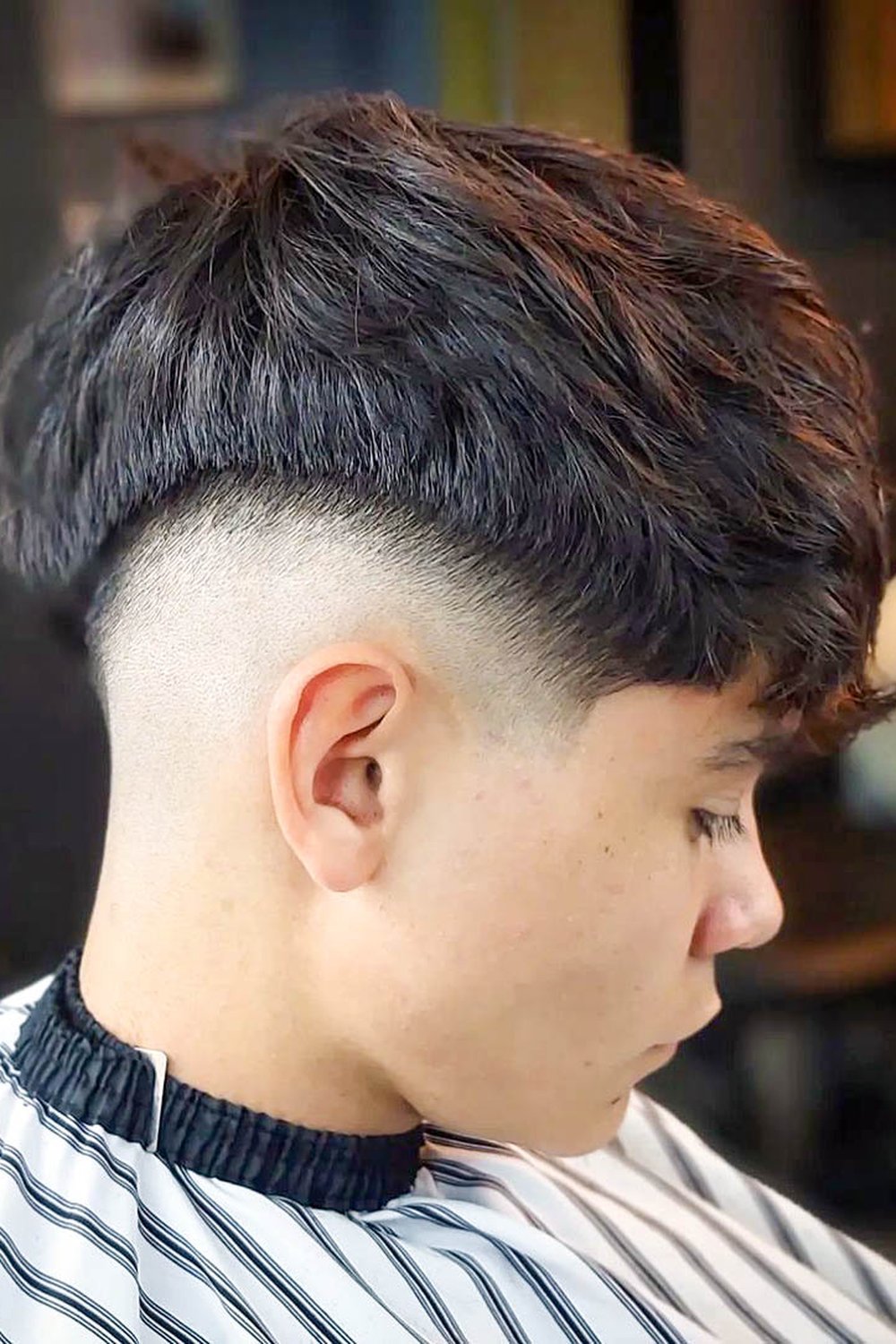
Photo: Haircut Inspiration — source
The two block cut comes from Korean hair trends — the top and sides are split into two distinct blocks: long, heavy hair on top that falls over the forehead, and short, faded sides underneath. The top is usually three to five inches with a curtain or side-swept fringe, and the sides are faded or undercut so the long top can fall over them. It is a clean, fashionable cut that suits teenagers because it looks polished without trying hard, and it works on almost every hair type. Ask your barber for a two block cut with a textured top and faded sides, and tell them how you want the top to fall — forward for a softer look, swept to the side for a sharper one. Best for straight and slightly wavy hair, and for oval faces, because the fringe frames the eyes. Styling: a little light cream, combed forward or to the side. It grows out well, so trims every four weeks are enough.
30. Edgar Cut
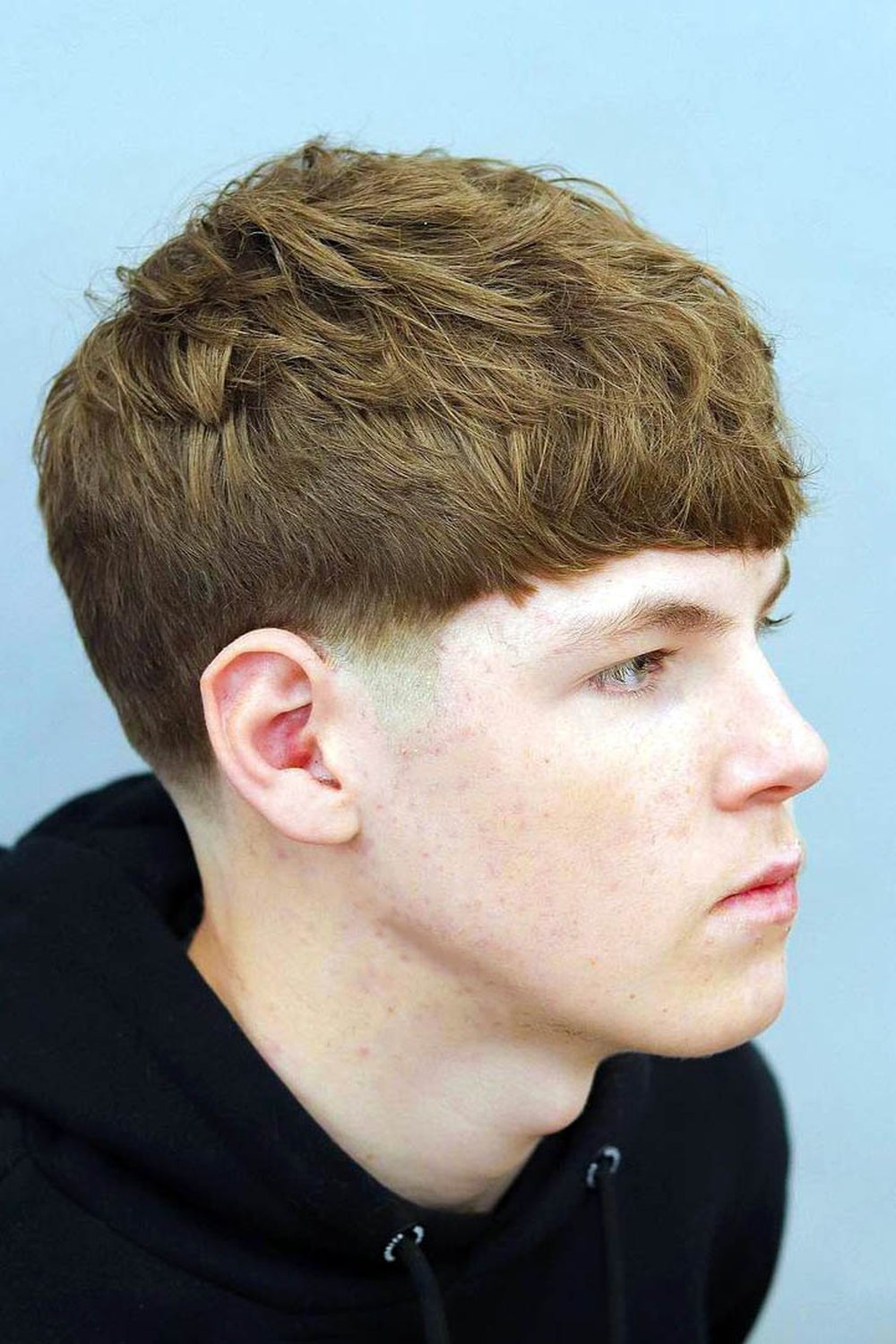
Photo: Haircut Inspiration — source
The Edgar cut is the sharpest fringe on this list — a straight, blunt line across the forehead, cut dead level, with the sides faded high and tight. It is a bold, graphic cut that looks like it was drawn with a ruler, and it is hugely popular with teenagers because it is instantly recognisable. The top is short, one to two inches, and the fringe is the feature: it should sit straight and even, with no texture softening the line. Ask your barber for an Edgar cut with a high fade, and be specific about the fringe — it should be cut straight across, not choppy. Best for straight, thick hair that can hold a sharp line, and for oval and longer faces, because the blunt fringe shortens the face. One warning: the line shows every bit of growth, so it needs a touch-up every two weeks to stay sharp. Styling: almost nothing — comb it forward and go.
31. Pompadour

Photo: Haircut Inspiration — source
The pompadour is the classic volume cut — hair swept up high at the front, full and rounded, with the sides kept short. It is the most formal cut on this list, the one that looks like you are going somewhere important, and it is a great pick for school events, photos and parties. The front needs three to five inches to build the height, and the sides are usually faded or tapered so the pompadour is the focus. Ask your barber for a pompadour with a low fade, and tell them how high you want it — a smaller pomp is easier for daily wear, a full one is for special days. Best for thick, straight hair with natural volume, and for rounder faces, because the height lengthens the face. Styling: blow-dry the front up and back, work a medium-hold pomade through, and shape it with a comb. It takes a few minutes, but it holds all day. Trim every three to four weeks.
32. Quiff with Low Fade

Photo: Haircut Inspiration — source
The quiff with a low fade is the everyday version of the pompadour — the same swept-up volume at the front, but smaller, messier and easier to live with, with the fade kept low so the whole cut stays subtle. The front is two to three inches, textured so it separates into pieces instead of sitting as one solid block, and the low fade tidies the sides without drawing attention to itself. It is the cut for teenagers who want volume without the morning routine of a full pompadour. Ask your barber for a textured quiff with a low fade, and say you want it messy, not slicked — the texture is what makes it modern. Best for straight and wavy hair, and for almost every face shape. Styling: blow-dry the front up with your fingers, a little matte clay, and you are done in two minutes. Trim every three to four weeks.
33. Brush Up with Fade
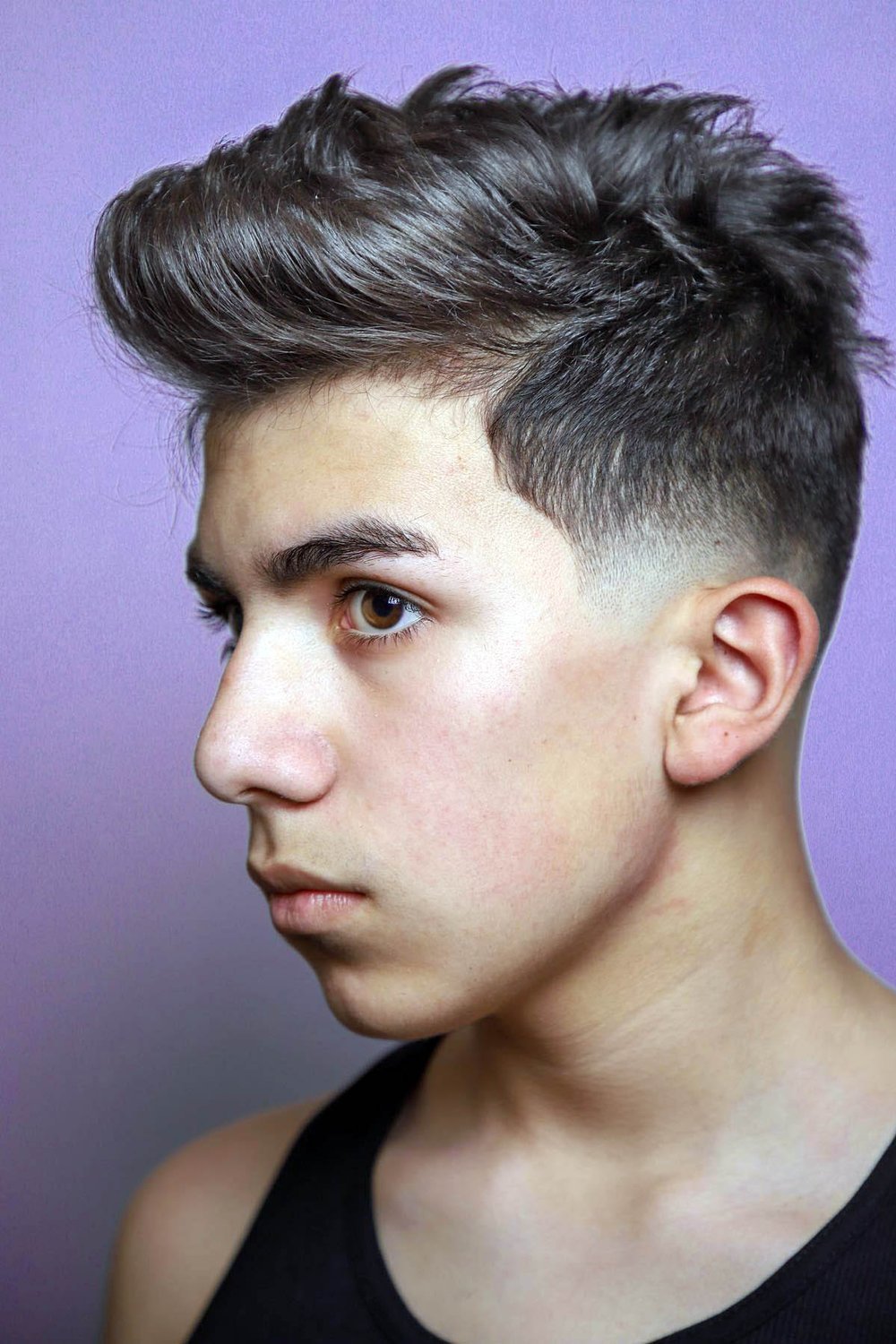
Photo: Haircut Inspiration — source
The brush up is the simplest volume cut — all the hair on top is brushed straight up, no part, no sweep, just height, with a mid fade keeping the sides clean. It is a confident, open look that shows the whole face, and it works because the height makes the head look taller and the fade keeps the shape tight. The top is two to three inches, cut with texture so the pieces stand up instead of flopping forward, and the fade starts at mid-height for a balanced shape. Ask your barber for a brush up with a mid fade, and tell them you want the top textured — blunt ends will not stand up. Best for straight hair with some natural stiffness, and for rounder faces, because the height stretches the face. Styling: blow-dry upward while damp, then a strong-hold matte clay pinched through the top. If it falls flat by afternoon, a little dry shampoo at the roots brings it back. Trim every three weeks.
34. Textured Mini Pompadour
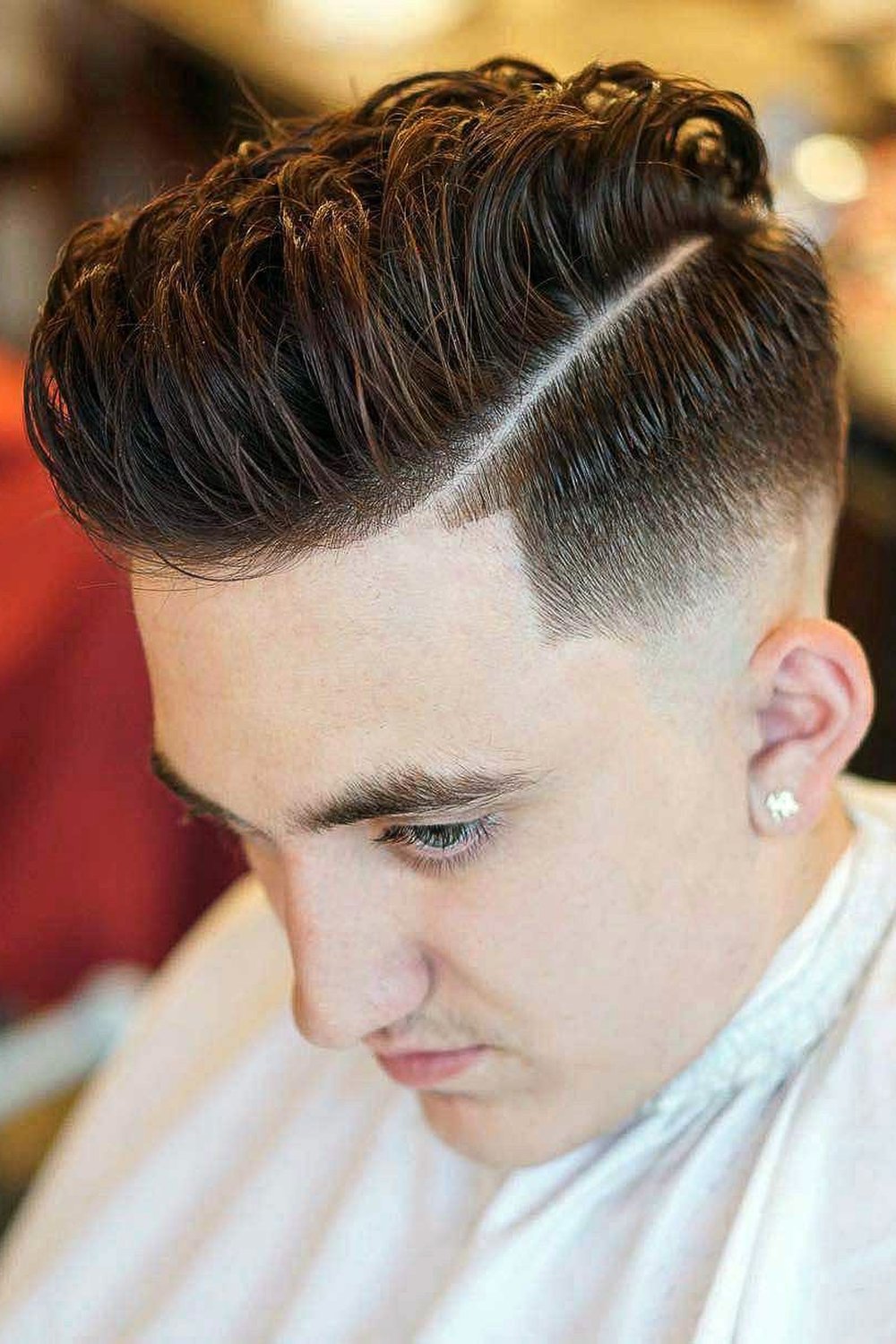
Photo: Haircut Inspiration — source
The mini pompadour is the pompadour shrunk down to daily size — a small, textured lift at the front, just enough height to look intentional, with tapered sides that keep it tidy. It is the cut for teenagers who like the pompadour look but do not want to spend ten minutes styling every morning. The front is two inches, cut in layers so it lifts easily, and the sides are tapered rather than faded, which keeps the whole thing soft and school-friendly. Ask your barber for a mini pompadour with a taper, and say you want it textured and easy — the barber will know you mean a small lift, not a full pomp. Best for straight and wavy hair, and for guys with thinner hair, because the small lift adds volume without needing much hair. Styling: a pea of matte clay, pushed up at the front, and done. Trim every three to four weeks.
35. Drop Fade with Textured Top
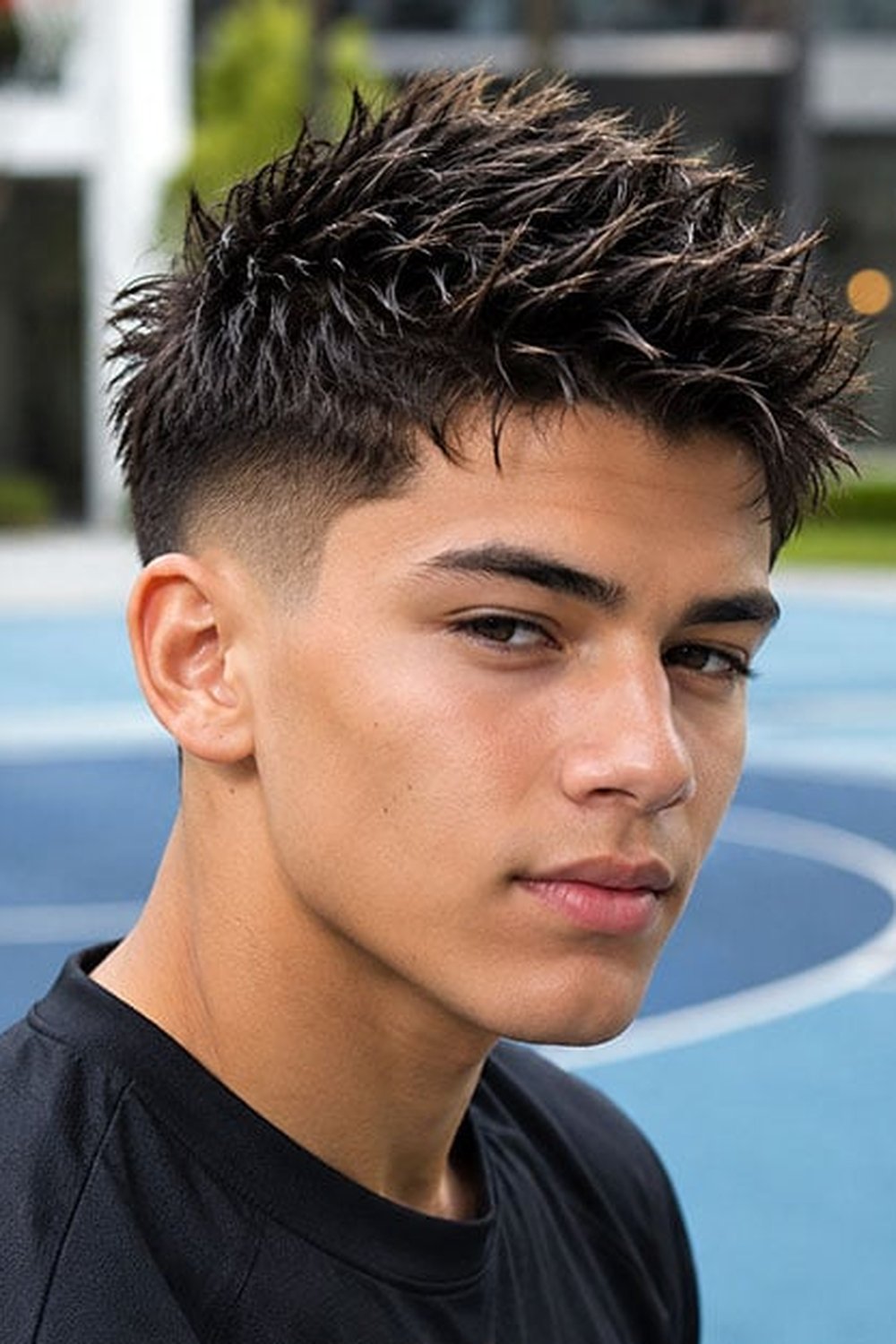
Photo: Barber’s Take — source
Last on the list, and one of the sharpest: the drop fade with a textured top. The fade drops down behind the ear as it curves around the head, following the natural shape of the skull, which gives the cut a curved, custom look that a straight fade does not have. On top, a textured crop — short, choppy, piece-y — keeps the focus on the shape of the fade. It is a great closing pick because it combines two of the most popular teen trends, the drop fade and the textured crop, into one cut that looks great from every angle. Ask your barber for a drop fade with a textured crop on top, and point out the curve behind the ear — that is the part that makes it a drop fade. Best for straight and wavy hair, and for guys who want a fade with a little more character. Styling: matte clay through the top, and keep the drop line clean with a touch-up every two to three weeks.
How to Ask Your Barber for a Teen Haircut
Most bad teen haircuts are not the barber’s fault — they are a communication problem. Here is how to get the cut you actually want. First, bring a photo, and bring two or three, not one: a front view, a side view, and one of a similar hair type to yours. Second, say the name of the cut, then describe it in your own words — “a textured crop with a mid fade, top about two inches, fringe a bit messy.” Third, tell the barber what you do not want: “no skin fade,” “keep the fringe above my eyebrows,” “I don’t want it too short on top.” Fourth, ask them if it suits your hair — a good barber will be honest, and that honesty saves you from a cut that fights your hair type. And finally, if you are trying a bold style for the first time, ask for the safer version first — a lower fade, a shorter fringe — and go bolder next time if you like it.
Styling & Maintenance
Teen haircuts live or die on maintenance, and the rules are simple. Fades need a touch-up every two to three weeks — they show growth faster than any other part of the cut. Longer styles like the flow, the wolf cut and shaggy layers can go six to eight weeks between trims, because they are meant to grow. Wash your hair two to three times a week, not every day — daily washing strips the natural oils that give hair its texture, and for curly hair, even less is fine. Use a small amount of product: a pea-sized amount of matte clay or cream is enough for most of these cuts, and too much product is the number one reason teen hair looks greasy by lunchtime. And keep the tools simple — a comb, a hairdryer, and one matte clay will cover almost every style on this list. If a cut needs more than three minutes of styling, it is probably the wrong cut for your mornings.
FAQ
What is the most popular teenage boy haircut in 2026?
The textured crop with a mid fade is the most requested teen haircut in barbershops right now, followed closely by the blowout taper and curtain hair. All three are in this guide — the textured crop is number 1, the blowout taper is number 28, and curtain hair is number 11.
What haircut should a 13-year-old get?
At 13 or 14, start with a safe, low-maintenance cut — the textured crop, crew cut with taper, French crop or Caesar cut. They are school-safe, easy to style, and grow out cleanly, so there is no risk of a cut you regret for a month.
What haircut should a 16 or 17-year-old get?
At 16 or 17 you can go anywhere on this list. The blowout taper, modern mullet, wolf cut, two block cut and curtain hair are all fair game, and this is the age to experiment — your hair grows back in weeks, and the worst outcome is a short cut you did not love.
How often should a teenage boy get a haircut?
Every three to four weeks for most cuts, and every two weeks if you wear a skin fade or a sharp line-up, because fades show growth fast. Longer styles like flow hair and shaggy layers can stretch to six to eight weeks.
Will a fade pass my school dress code?
Almost always, yes — a low or mid taper fade is one of the safest cuts for school. Skin fades, mohawks, shaved designs and dyed hair are the ones that can cause trouble, so check your school’s rules before booking those. When in doubt, ask the barber for the school-safe version.
How do I style my hair in the morning without taking forever?
Pick a cut that matches your effort level. If you will not style at all, get a crew cut, buzz cut or Caesar cut. If you will do two minutes, a textured crop or messy fringe with a little matte clay is perfect. Only pick the blowout taper or pompadour if you will actually blow-dry.
Conclusion
Thirty-five cuts, one rule: the best teenage boy haircut is the one that fits your hair, your school and your mornings. Start with the safe classics if you are new to choosing your own cut, try the bold ones when you are ready, and always bring a photo to the barber. Your hair grows back in weeks — the only real mistake is wearing a cut you never chose.