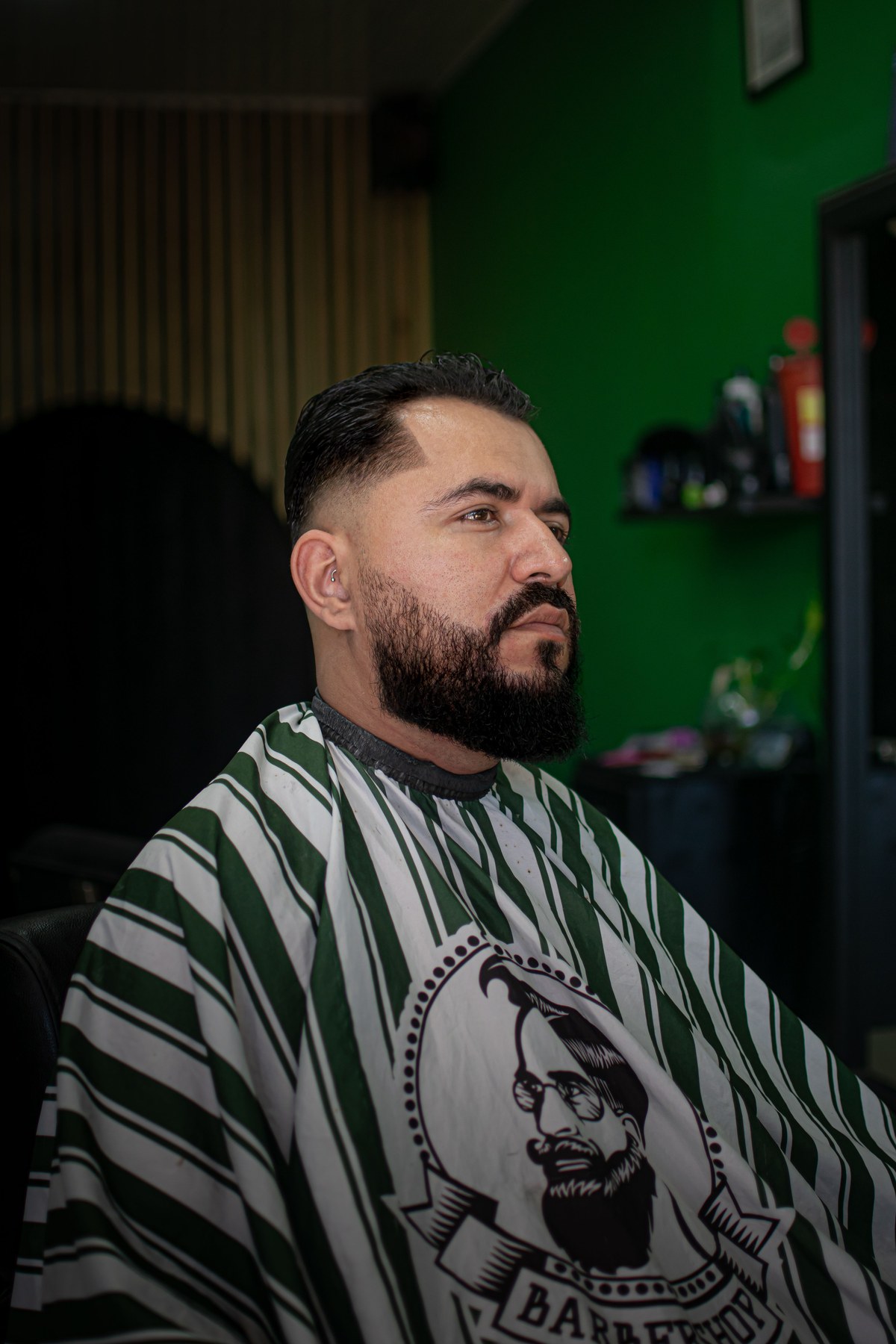
A low taper around the perimeter meets the burst fade’s signature arc around the ear. Learn what the combination looks like, who it suits, the best versions by hair type, an exact barber script and a realistic upkeep plan.
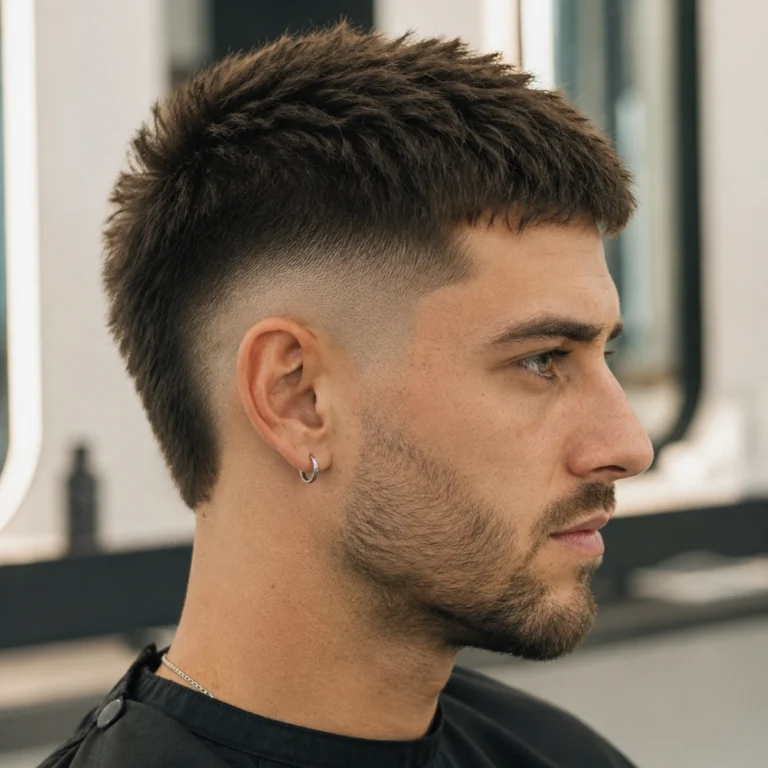
A taper low burst fade combines two classic barbershop ideas into one haircut. The burst fade supplies its signature move — a curved fade that arcs around the ear and radiates outward — while a low taper keeps the perimeter (the sideburns, the hairline around the ears and the neckline) graduated, neat and close without dropping to skin everywhere. The result reads as a burst fade from the side, but finishes cleaner at the edges than a skin-drop version — sharp enough for the barbershop photo, quiet enough for the office on Monday.
What the combination actually looks like
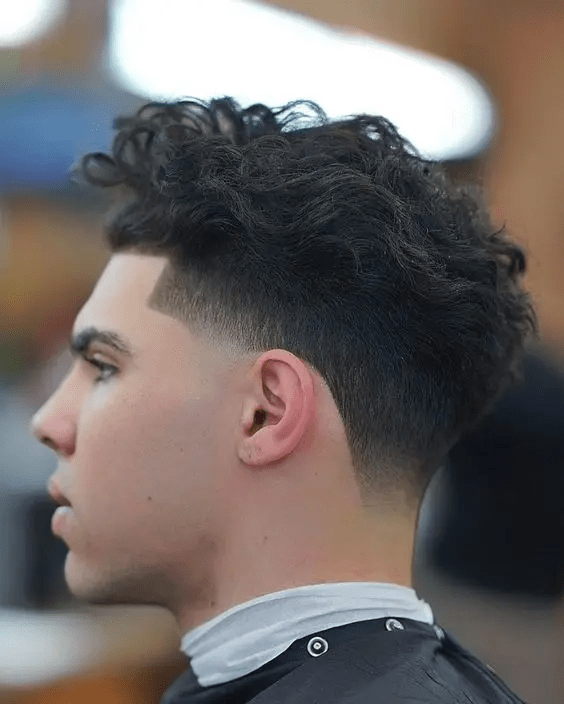
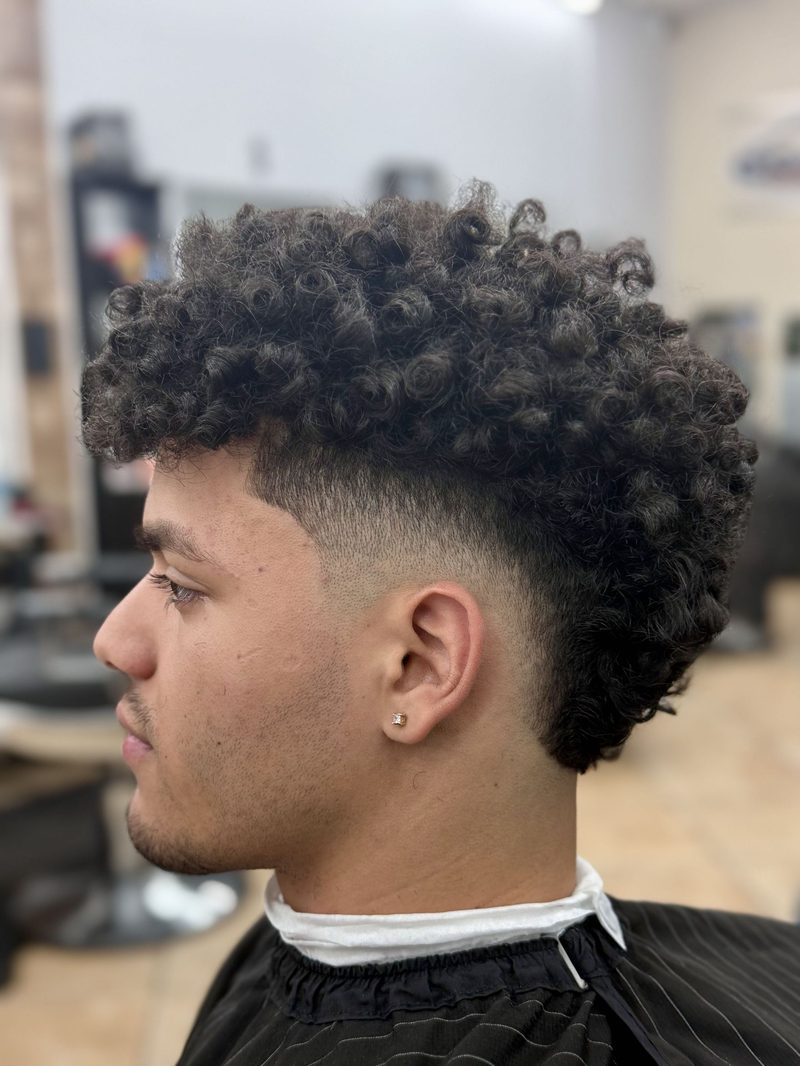
Picture three zones. Around the ear, the fade follows the burst’s curved path: shortest just behind and above the ear, blending outward in a semicircle toward the temple and down toward the sideburn. At the perimeter — sideburn, neckline and hairline — the cut switches to taper logic: hair gets progressively shorter toward the edges but stays visible, ending in a soft, natural finish rather than a hard skin line. On top, everything above the curve keeps its length, so the silhouette still belongs to the burst family.
The taper is what separates this from a standard burst fade. A classic burst often drops the neckline low or disconnects it entirely. The taper low burst fade keeps those edges connected and tidy: clean sideburns from the front, a neckline that fades rather than disappears. Same arc, better manners.
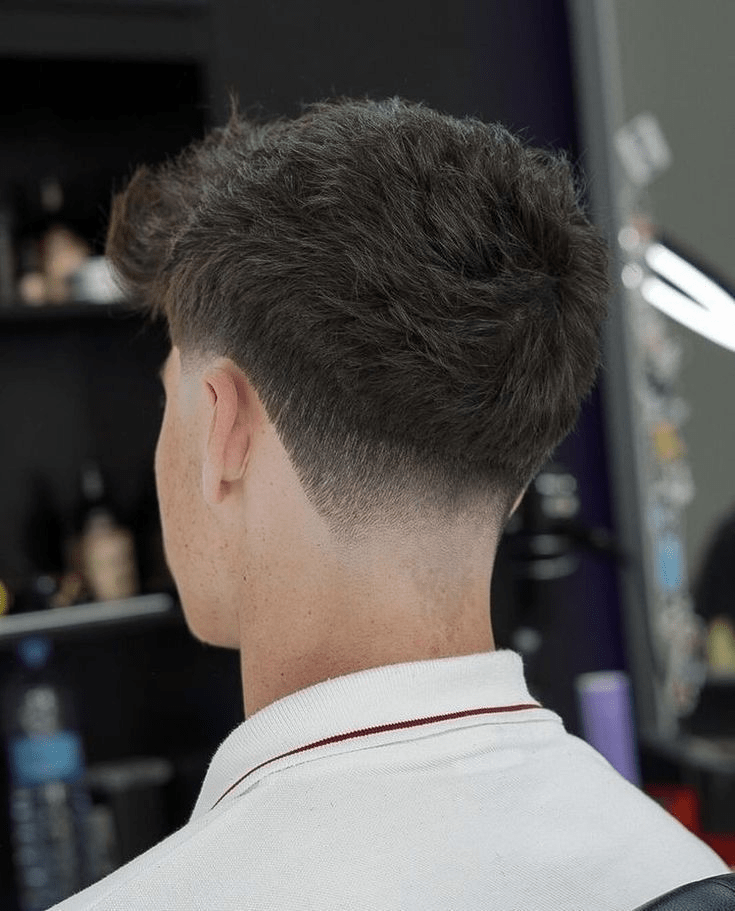
How it differs from a pure burst fade
A pure burst fade is defined by the arc alone — many versions let the back drop to skin or disconnect. The taper low burst fade makes the opposite commitment: the perimeter stays graduated and attached. That single difference changes the haircut’s personality. The pure burst can look dramatic; the taper version looks deliberate and finished.
Grow-out differs too. A skin-drop burst shows contrast within days; a tapered perimeter grows as a gradient and stays presentable longer — the compromise a good barber would suggest anyway.
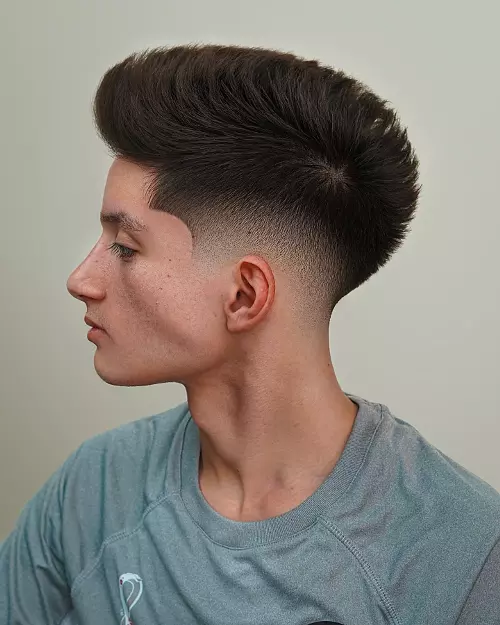
How it differs from a pure low taper fade
A pure low taper fade is perimeter work: the blend lives around the ears, sideburns and neckline while the sides above stay full — linear and quiet, no curved drama. Add the burst arc and the haircut gains a focal point.
Think of it as a spectrum: quiet low taper on one end, statement burst on the other. The taper low burst fade lives in the middle — more character than a taper alone, more discipline than a burst alone.
Who it suits best
Each half covers the other’s weakness: the burst arc adds structure for rounder profiles, while the tapered perimeter keeps the finish tidy where a skin-drop burst could read as too aggressive. Modern shape, classic edges.
Density matters more than face-shape charts. Thick hair blends easily and the arc shows crisply; fine hair benefits from the taper’s softness and a low arc that preserves side weight. Curly textures pair beautifully as the curve follows the curl; straight hair shows every line, so the blend must be seamless.
The best versions by hair type
Straight hair needs top length for direction and a seamless blend — it hides nothing. Ask the barber to check the transition in natural light, and keep the arc low to mid.
Wavy hair lets the wave do half the styling. A medium top pushed loosely back sits naturally above the arc; light product is enough, since heavy wax flattens the wave and clutters the fade.
Curly and coily hair is this combination’s natural home: volume on top, a clean curve beneath. The barber should cut with shrinkage in mind — curls spring up as they dry, so the transition sits slightly lower than its final position.
Thick hair may need internal weight removed above the fade so the top doesn’t mushroom over the arc. Fine hair should keep the arc low and the taper soft — taking the shortest zone too high makes the sides look hollow.
The exact barber script
Walk in with this ready: “I want a burst fade around the ear, but keep the perimeter as a low taper — graduated sideburns and tapered neckline, no skin drop. Keep the arc low to mid, leave the top long enough for texture, and show me the highest point of the curve before going shorter.” Adjust the top description to your choice.
Then settle the forgotten details: how the sideburn ends (faded out, faint shadow, or into facial hair), whether the neckline stays natural or gets a line, and how much scalp you’ll show at the shortest point. Bring two photos — arc from the side, taper from the back — and point at structure, not the model’s face. Let the barber choose guards; your job is shape, not clipper numbers.
Styling it at home
The sides need almost nothing — that’s the point. A brush or fingers keeps the tapered edges flat; all effort goes to the top. On damp hair, set direction first, then a little matte paste or cream — then leave curls alone.
Keep heavy product off the faded zones — wax and oil clump short hair and turn a smooth blend patchy. For lift, dry roots on low or medium heat with fingers or a vent brush. If you fight the cut daily, the top length or arc height needs adjusting next visit.

Upkeep and grow-out
Expect the perimeter to need attention every two to three weeks — the taper shows growth first, while the arc holds its shape a little longer. Watch three signals: the sideburn loses graduation, the neckline distracts from the shape, or the arc’s edge turns fuzzy.
Between visits, don’t carve into the curve yourself — home touch-ups push the fade higher than intended. A light neckline tidy is the most to attempt. Photograph the fresh cut from the side and back; that record beats memory.
Mistakes to avoid
The biggest mistake is ordering a “burst fade” and expecting the taper automatically — many barbers default to a skin drop unless you specify the low-taper perimeter. Say both words. Second: taking the arc too high on visit one — height is easy to add later, impossible to undo. Third: a top needing daily heat styling when your routine allows two minutes.
For the closest companion reading, compare Taper Burst Fade: A Complete Guide to the Burst Taper Fade, then settle the terminology with Burst Fade vs Taper Fade: Which Cut Fits You?. For placement-first thinking, see Burst Fade Low Taper: A Placement-First Guide.
Frequently asked questions
Is a taper low burst fade the same as a burst taper fade?
They are close cousins. “Burst taper fade” usually means a burst shape with tapered blending; “taper low burst fade” emphasizes the perimeter — burst arc plus a low, graduated taper at the sideburns and neckline. In the chair, describe the shape, not the name.
Does a taper low burst fade work for straight, fine hair?
Yes, with a low arc and soft taper — no harsh skin line to expose sparseness. Keep some side weight and ask for a seamless blend, since straight hair shows every line.
How often does a taper low burst fade need a trim?
The tapered perimeter usually needs tidying every two to three weeks; the arc holds a little longer. Watch for fuzzy sideburns, a distracting neckline, or a softened curve.
Can I wear a taper low burst fade with a beard?
Very well. Decide whether the sideburn fades out, holds a faint shadow, or connects into the beard — that small choice changes how finished the front looks.
What should I say if my barber has not heard the term?
Describe it in parts: “burst fade around the ear, low taper at the perimeter — graduated sideburns and neckline, no skin drop.” Any experienced barber can build that from two reference photos.
Conclusion
The taper low burst fade is the burst family’s most practical member: the signature arc, finished with a low taper’s tidy perimeter. Agree on arc height, perimeter finish and top direction before the cape goes on.
More verified free-stock references
Use these additional real photographs to discuss shape, placement and finishing details.


Written by Derek Nolan, an editorial pen name used for consistent authorship. No unverified barber credential or firsthand salon claim is presented. Visual references carry source credits with each image. Credited third-party photographs remain the property of their respective owners; source attribution is provided and rights concerns are handled through the Copyright Policy.