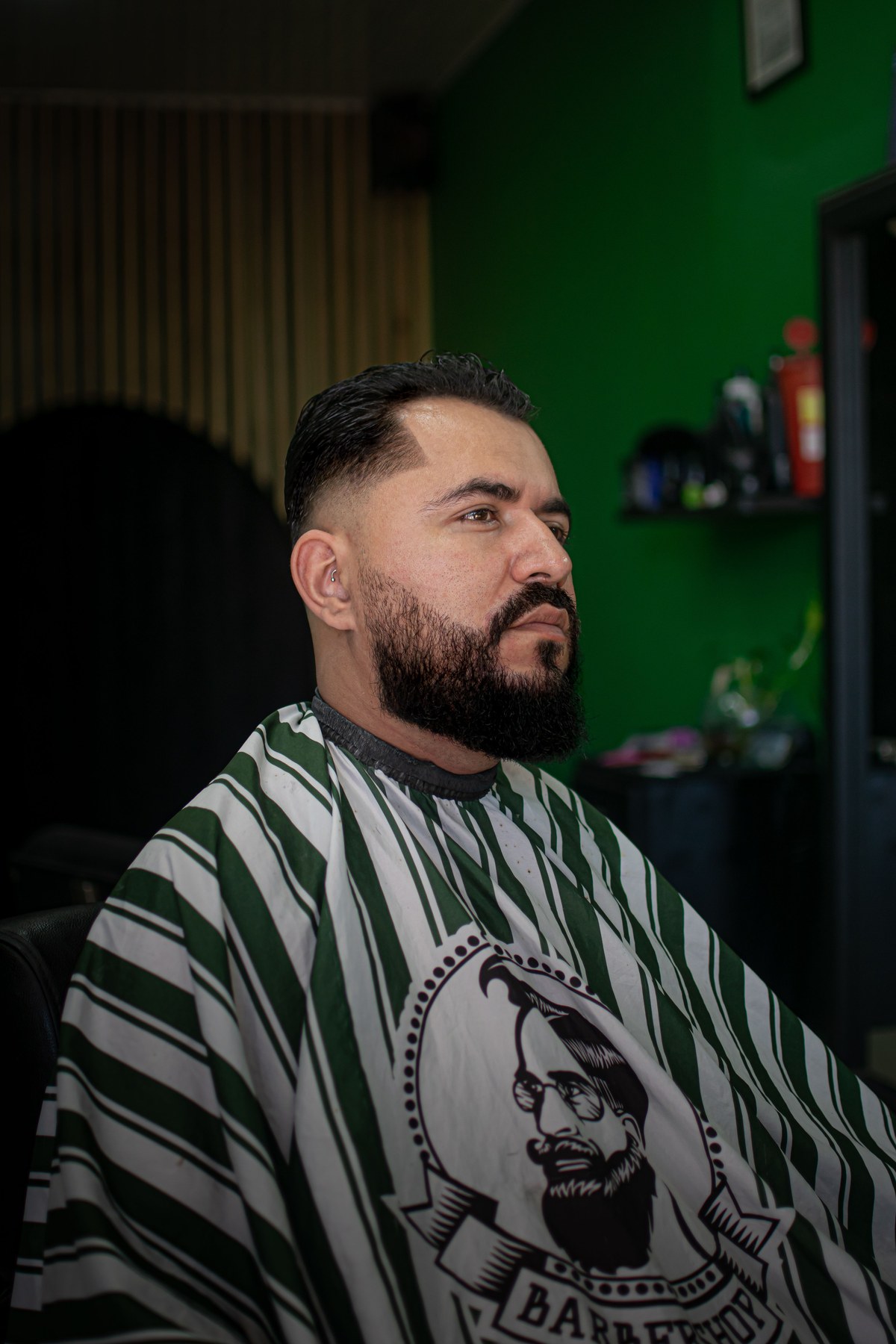
The low fade haircut is the quietest member of the fade family — and one of the most searched. Instead of pushing the blend high up the head, the low fade keeps the transition down near the ears, so most of your hair stays intact. You get the crisp, barbershop-clean edges of a fade without the dramatic contrast of a high or skin fade.
That low placement is why so many men ask for it: it suits conservative workplaces and first fades alike, grows out better than any other fade height, and pairs with everything from curls to pompadours. This guide explains what a low fade is, how it differs from the low taper, mid, and high fades, the best styles, the exact barber script, and upkeep.

What Is a Low Fade Haircut?
A low fade haircut starts its transition just above the ear — roughly an inch up from the ear line. Below that line the hair blends down through shorter guards to the shortest point; above it, the sides keep their length. The fade wraps all the way around the head, sides and back.
That is the point of the cut: clean edges where they matter — around the ears and neckline — with minimal change to how your hair looks from the front. It is the most conservative fade there is, and the one barbers suggest for a first fade.
Two variations you will hear named: a low skin fade takes the shortest point right down to bare skin, raising the contrast while keeping the low placement. A low drop fade curves the fade line down behind the ear instead of running it straight around the head, following the shape of the skull.
Low Fade vs Low Taper vs Mid Fade vs High Fade
These get mixed up constantly, and the low fade vs low taper confusion causes the most bad haircuts of all:
| Low fade | Low taper | Mid fade | High fade | |
|---|---|---|---|---|
| Transition starts | Just above the ear | Just above the ear | Around the temples | Near the crown |
| Coverage | Whole side + back, blended | Temples, sideburns & nape only | Whole side + back, blended | Whole side + back, blended |
| Contrast | Low — subtle | Lowest — barely there | Medium | High — bold |
| Shortest point | Often near skin | Usually a #1 or #2 | Near skin | Skin |
| Nape | Faded | Kept natural | Faded | Faded |
| Grow-out | Most forgiving | Very forgiving | Shows in ~2 weeks | Shows fastest |
The low fade vs low taper distinction is the key one. A low fade blends the entire side of the head — sides and back — down through the guards, and it usually goes short near the bottom. A low taper only tidies the temple, sideburn, and neckline zones and keeps the nape natural; the sides keep their length. Our low taper fade guide explains that cut in full.
At temple height, the mid taper fade is the taper family’s middle ground. If you want the fade that wraps around the ear instead of running straight, that is the burst fade — a different cut entirely — and our complete fade haircut guide maps the whole family.
The Best Low Fade Haircut Styles
The low fade is a side treatment, not a full haircut — the top is yours to choose. The pairings barbers cut most:
1. Curly Top
Curls and low fades are a natural match: the low placement keeps enough hair through the sides that the curls feel connected to the fade. It is the most forgiving first fade for curly hair. Curl cream, not gel, is the product.

2. Textured Crop
A short, choppy crop with the fringe worn forward. The low fade keeps the sides tidy without the aggressive contrast of a high fade, so the texture on top does all the talking. A matte clay finishes it.
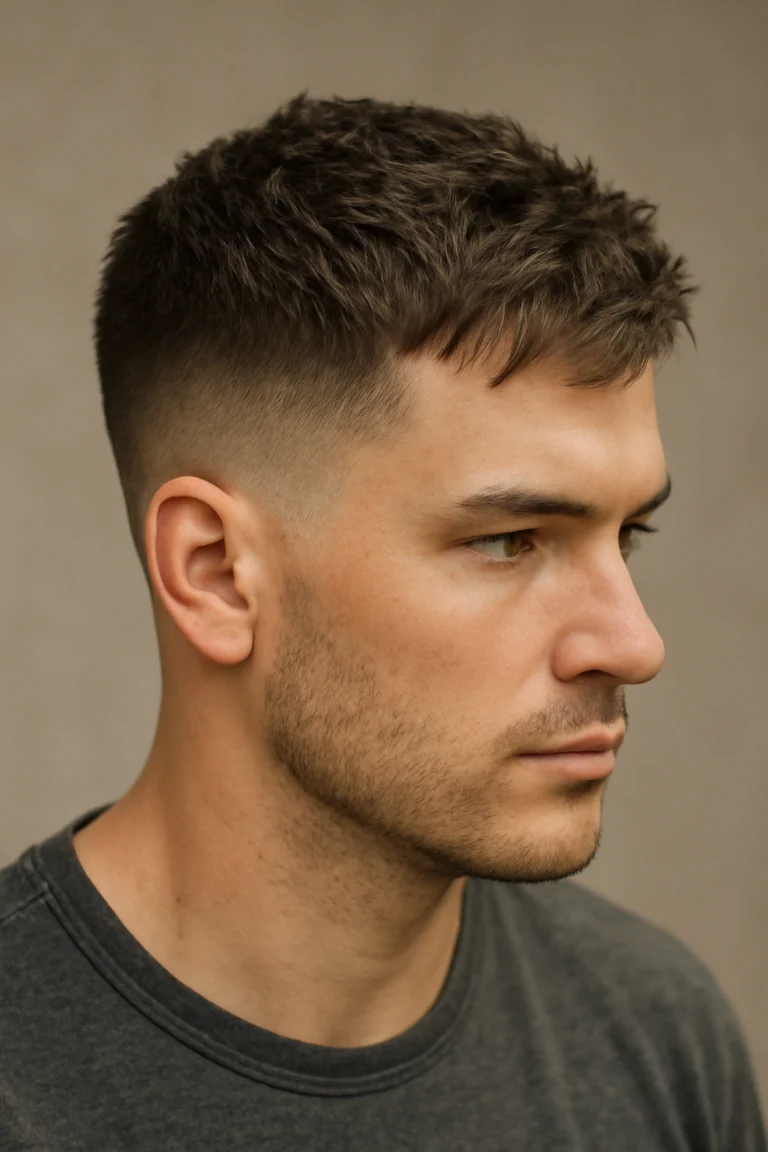
3. Slicked Back
Medium length swept back over a low fade. The low placement keeps the silhouette full through the top half of the head — wider and more classic than a high fade gives. Pomade or a medium-hold cream keeps it in place.

4. Pompadour
The pompadour needs weight through the sides, and the low fade preserves it — the blend stays low enough that the pomp keeps its height. Strong-hold pomade and a blow dryer are the tools.

5. Hard Side Part
A razored part with the low fade sitting underneath it. This is the boardroom version of the fade: all the sharpness, none of the drama. Best with straight or slightly wavy hair — a comb and a little pomade is the entire styling routine.

6. Buzz Cut
A buzz cut with a low fade around the edges is the neatest short haircut a man can wear: the fade cleans the sides while the buzzed top stays uniform, and it grows out evenly. Our low taper buzz cut guide covers the tapered take.
What to Tell Your Barber: The Exact Script
Walk in with these four points:
- Name the height: “I want a low fade — the transition just above my ears, low all the way around the back.”
- Set the bottom: “Take the shortest point down to [skin / a #0.5 / a #1].” (Skin or a #0.5 for visible contrast; a #1 for the subtlest version.)
- Rule out the taper: “Fade the whole side, not just the edges — I don’t want a taper.”
- Define the top: “Leave [your length] on top, cut for [curly top / crop / slicked back / pompadour / side part].”
Bring a reference photo — even with perfect words, a photo removes all doubt. And ask one honest question before the clippers start: “Does this suit my growth pattern?” A good barber will flag a cowlick low on the neckline that could fight the blend.

How Often to Maintain a Low Fade
The low fade is the lowest-maintenance fade in the family, but it still needs booking: a tidy-up every three to four weeks keeps the bottom edge crisp, and a full re-cut lands every four to five. Grow-out shows later than on a mid or high fade.
Between visits, keep the neckline tidy and leave the blend alone; home clippers and the low fade line are a bad combination. Control the top instead: matte clay for straight or fine hair, sea salt spray for waves, curl cream for curls.

Who Should Skip the Low Fade
It suits most men, but be honest about these cases:
- You want maximum contrast. The low fade is subtle by design. If you want drama, the skin fade goes all the way to bare skin — or the high taper fade pushes the line up.
- Your hair grows very fast at the nape. The bottom edge is the whole haircut on a low fade; fast growers will see it soften in under two weeks.
- You want zero barber visits. Even the most forgiving fade needs a tidy-up every few weeks — a longer even cut serves you better.
- You are after the ear-hugging curve. That is the burst fade — a different cut, worth a look before you decide.
Low Fade Haircut FAQs
Is a low fade haircut the same as a low taper fade?
No — and this mix-up causes the most bad haircuts. A low fade blends the entire side of the head down through the guards and usually goes short near the bottom. A low taper fade only tidies the temples, sideburns, and neckline while keeping the nape natural. Same height, different cut — say “fade” or “taper” clearly in the chair.
What number should I ask for with a low fade?
Placement matters more than the number, but most low fades bottom out at a #0.5, a #1, or skin. Ask for skin if you want visible contrast; a #1 keeps the whole thing subtle.
How long does a low fade last?
The edges stay crisp for about three weeks, and the cut holds its shape for four to five before it needs rebuilding. It outlasts mid and high fades because the low transition hides grow-out longer.
Does a low fade work with curly hair?
Yes — it is one of the best fades for curly hair, especially as a first fade. The low placement leaves enough hair through the sides that short curls still read as curls.
Can I get a low fade with long hair on top?
Absolutely — this is where the low fade shines. Pompadours, quiffs, and slicked-back length all pair beautifully because the fade leaves the upper sides full.
Is a low fade professional enough for the office?
Yes — it is the most workplace-friendly fade there is. The subtle contrast and intact top read neat and intentional; with a side part or tidy crop it fits even conservative dress codes. For office-ready styles built on exactly this fade height, see our business fade haircuts for professionals.
The Bottom Line
The low fade haircut earns its place as the missing pillar of the fade family: the subtlest fade, the most forgiving grow-out, and the one that pairs with the most tops. Say “low fade, transition just above the ears” — bring a photo — and book the tidy-up before the bottom edge goes soft.
By Derek Nolan