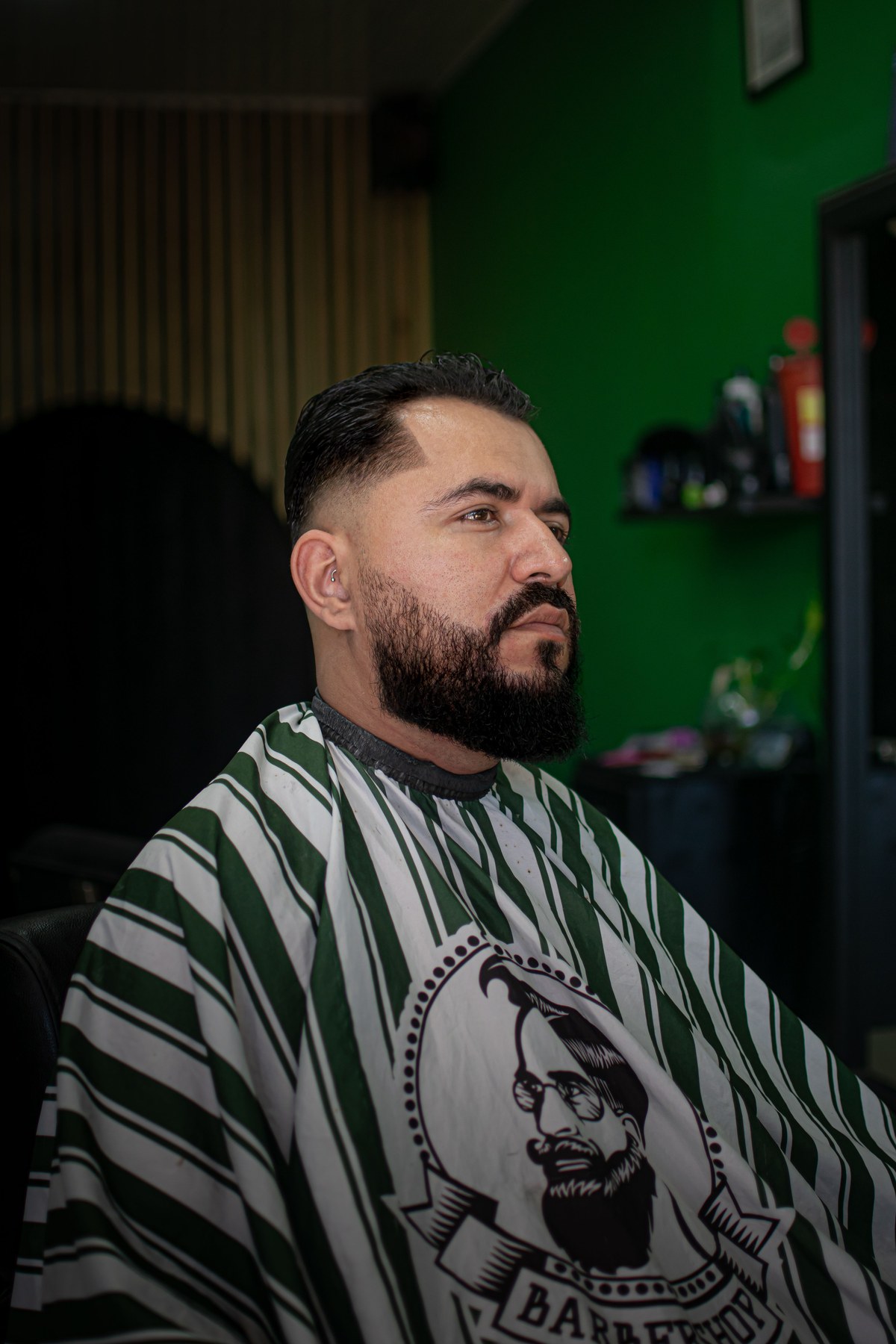
The pompadour is one of the few haircuts that has survived every trend cycle since the 1950s — and it keeps coming back stronger. Long hair swept up and back for height and volume, sides kept clean: it works for barbershop regulars and wedding days alike. This guide covers every version, who it suits, what to tell your barber, and how to style it so the volume actually lasts.

Photo: Vagazine
What Is a Pompadour?
A pompadour is defined by height and volume on top: the front section is worn long and swept upward and back, while the sides are kept shorter — faded, tapered, or slicked back tight. Named after Madame de Pompadour (the look took its male form with rock-and-roll icons like Elvis Presley in the 1950s), the cut is essentially a silhouette: big on top, controlled on the sides.
Why it keeps working:
- Instant height. The upward sweep lengthens the face visually, which flatters most face shapes.
- Photographs well. The shape reads clearly from any angle — a big reason barbers use it in portfolios.
- Surprisingly versatile. Slick it tight for formal events or wear it loose and textured for everyday life.
The trade-off is maintenance: a pompadour is a styled haircut, not a wash-and-go one. Plan on a few minutes with a hairdryer and product every morning.
Classic Pompadour vs Modern Pompadour
The two terms get mixed up, so here is the plain distinction. A classic pompadour is slick, polished, and neat — the hair is swept up and back in one smooth wave, sides slicked tight or with a low taper, usually finished with pomade for shine. Think 1950s: clean, controlled, high-shine.
A modern pompadour keeps the height but loosens everything else: the top is textured and piecey instead of glassy, the sides often faded rather than slicked, and the finish is matte instead of glossy. It is the same silhouette with a 2020s attitude. If you want a sharp-but-easy version, start here.
Key Pompadour Variations
Classic Pompadour
The original: long front swept up and back in a smooth wave, sides slicked or tapered neatly, high-shine finish. The formalwear version — weddings, suits, evenings out. It needs the most length and product of any version: strong-hold pomade and a comb keep the wave smooth all day.

Photo: Bangstyle
Modern Textured Pompadour
The everyday version. The top is point-cut and layered so it finishes piecey rather than smooth, the sides are usually faded, and the finish is matte clay or paste. Texture hides imperfect blow-drying, so this version is far more forgiving in the morning. It sits naturally beside textured styles like the textured crop — same philosophy, more height.
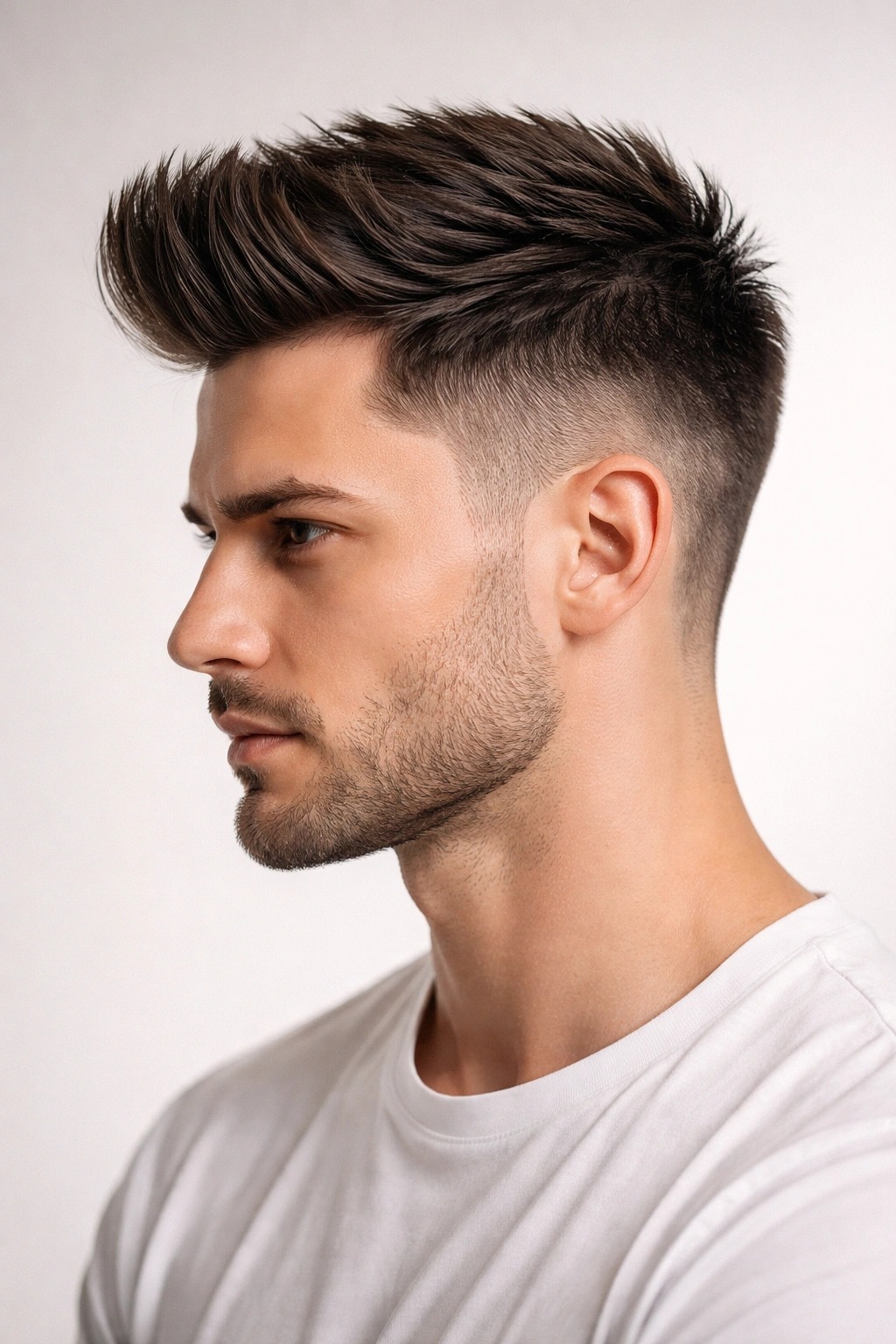
Photo: Hairtical
Short Pompadour Fade
A lower-volume take: the top is kept moderate (two to three inches), still swept up for shape but without the drama, and the sides are faded clean. This is the most office-friendly pompadour — it keeps the silhouette but cuts the styling time in half. Pair it with a skin fade for the sharpest version or a softer taper for something more subtle.

Photo: Vagazine
Long Pompadour
Maximum drama: the top is worn long, swept back into a tall wave with serious movement. This version needs the most blow-dry time and holds best on thick hair. Ask for internal layering so the length does not sit like a heavy slab.
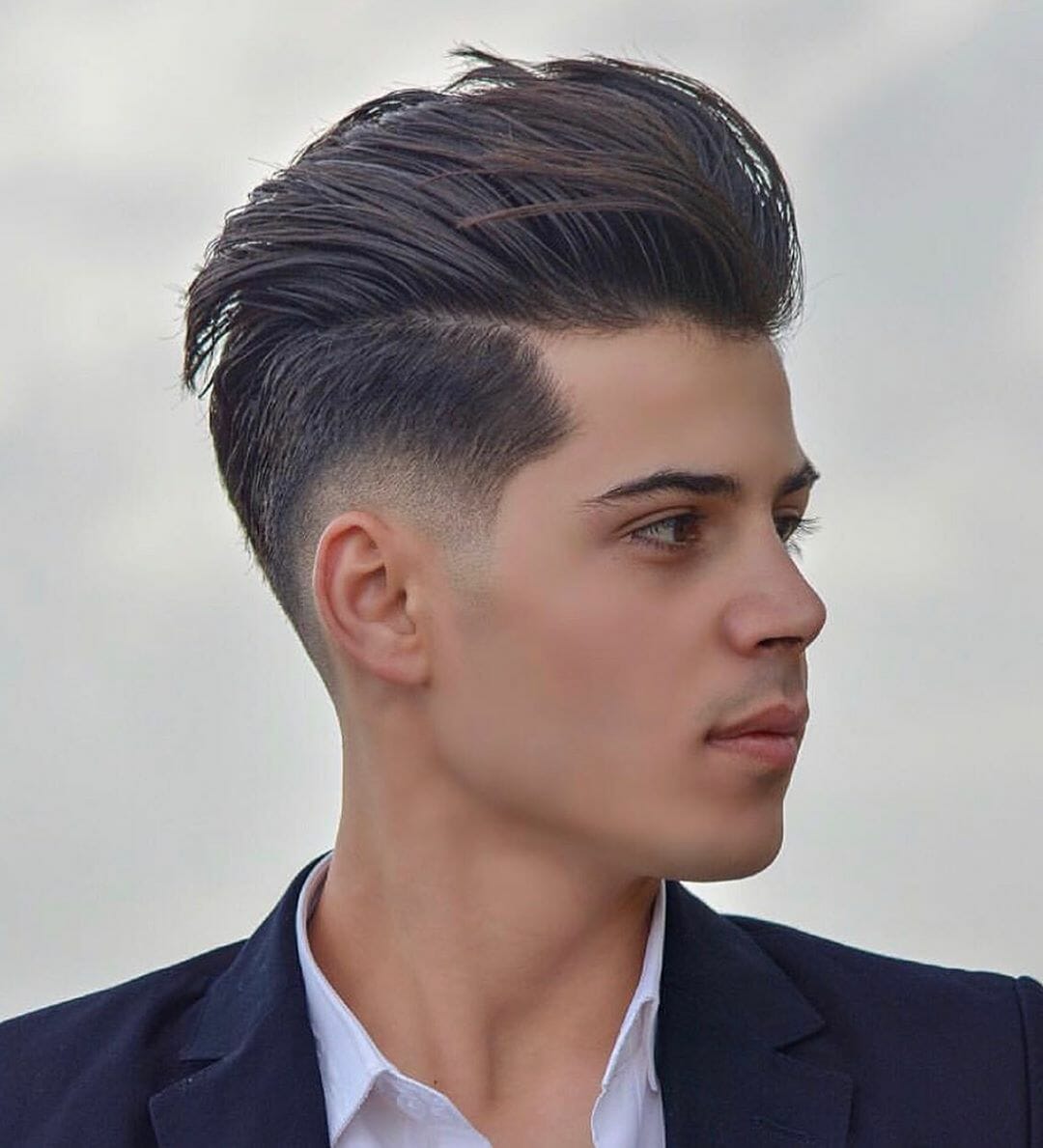
Photo: Outsons
Pompadour With Undercut
The high-contrast version: long swept-up top on a disconnected undercut, where the sides are clipped short and hard-parted from the top rather than blended. The disconnect makes the height look even taller by comparison. It is a statement cut, so plan touch-ups every three to four weeks.

Photo: Millennial Gentleman
Curly Pompadour
Curls do half the work for free — the volume comes naturally. The barber’s job is shaping: enough length on top for the curl pattern to read, sides faded or tapered to frame it. Blow-dry with a diffuser to set the shape, or let it air-dry for a softer finish. Light curl cream beats heavy wax here — heavy product drags curls down and kills the height.

Photo: Vagazine
Messy Pompadour
The laid-back version: the height is there, but the finish is deliberately tousled — separated pieces, natural movement, matte product. It suits men who like the pompadour’s silhouette but hate the polished look.

Photo: Vagazine
Who Suits the Pompadour?
Honest notes before you commit:
- Face shapes: The height on top lengthens the face, which flatters round and square faces in particular. Very long faces should keep the volume moderate — too much height exaggerates length.
- Hair types: Thick, straight-to-wavy hair is ideal — it holds height with the least effort. Curly hair works too, with a different technique. Very fine hair can struggle to hold big volume; keep the height realistic and use a volumising pre-styler.
- Forehead and hairline: The upward sweep exposes the forehead and hairline. If that bothers you, a fringe-forward cut is a better bet than forcing a pomp.
- Lifestyle: It is a daily-styling cut. Budget five to ten minutes with a hairdryer each morning.
How to Ask Your Barber
Use the formula: “pompadour” + version + top length + sides. For example: “A modern textured pompadour — top long enough for height, sides faded short.”
Then show a photo — barbers interpret “pompadour” differently. Tell your barber how you will style it — that decides how much length they build in. See our types of fades guide if you are still choosing how to finish the sides.
How to Style a Pompadour: Step by Step
- Start with damp hair. Towel-dry until damp, not dripping: styling soaking hair never sets properly.
- Apply heat protectant and a pre-styler. Protectant first — daily blow-drying is cumulative on hair health. Then a volumising mousse worked through the top from roots to mid-length.
- Blow-dry up and back. With a vented or round brush, lift sections at the root and direct airflow upward and slightly back.
- Lock it with cool air. Hit the cool-shot button and run it over the set shape for 15–20 seconds. Cool air sets the direction — skip this and the pomp collapses by lunch.
- Finish with product. A fingertip of pomade for the classic version (shine and hold), or matte clay for the modern version. Work it through lightly — too much product flattens what the dryer just built.
- For curly hair: swap the brush for a diffuser and scrunch upward; finish with curl cream instead of pomade.
Maintenance
The sides need refreshing more often than the top: faded or tapered sides lose their crisp line within a couple of weeks. Most men tidy the sides every three to four weeks and reshape the top every six to eight. Let the sides grow out and the cut loses its contrast — the silhouette softens and the height reads as ordinary long hair.
Daily heat styling dries hair out, so condition properly and keep the dryer moving rather than parking it on one spot. On off days, a quick restyle with water and a dab of product is enough.
Pompadour — FAQ
How long does the top need to be for a pompadour?
At least three to four inches for a modern pompadour, and four or more for a classic one. Shorter than that and there is not enough hair to build real height.
Is a pompadour the same as a quiff?
They are close cousins. A quiff is usually swept forward and up at the front; a pompadour is swept up and back with more height across the whole top. Barbers often blend the two, so a photo settles it faster than words.
Can thin or fine hair do a pompadour?
Yes, with realistic expectations. Keep the height moderate and use a volumising pre-styler — texture hides thinness better than a slick finish.
What product is best for a pompadour?
Classic versions want a strong-hold pomade for shine and structure; modern textured versions want matte clay or paste. Either way, a volumising mousse as a pre-styler before blow-drying makes the biggest difference.
Does the pompadour suit a round face?
It is one of the better cuts for a round face — the height on top adds the illusion of length. Keep the sides tight rather than wide to avoid adding width.
How often should I get the sides touched up?
Every three to four weeks for the sides or fade line; the top can go six to eight weeks. The contrast between top and sides is what keeps the cut looking intentional.
Conclusion
The pompadour has outlasted every trend since the 1950s because the formula is honest: height where you want attention, discipline on the sides. Pick the version that matches your hair and your mornings, bring a photo to your barber, and give the blow-dry a week to become routine.