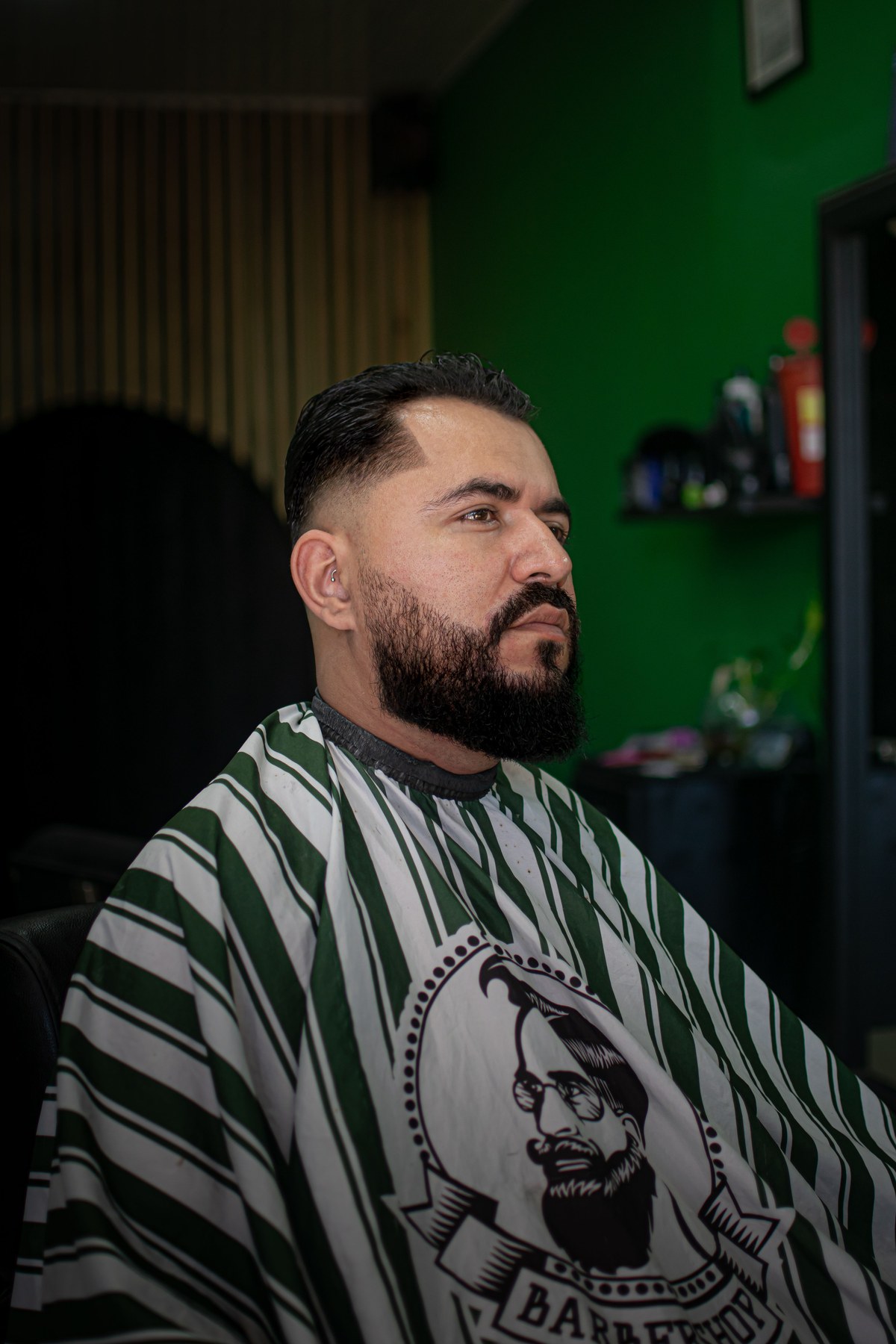
Photo: Modern Gentleman Magazine
The burst fade looks as good on a seven-year-old as on a grown man. Around the ears the hair melts from longer to shorter in a smooth, curved arc, while the top keeps enough length to style or simply leave alone. For parents, that combination is the whole appeal: a cut that looks sharp on day one, stays tidy for weeks, and needs no morning routine a child will actually follow.
This guide covers the burst fade for kids in full — what it is, the ages it suits, eight real styles for boys, the exact words to say to the barber, and how to keep it fresh between appointments. Every photograph below is a real haircut on a real kid, so you can point at the one you want.
What Is a Burst Fade?
A burst fade curves around the ear in a semi-circle — like a burst of sunlight — instead of running straight back along the sides. The shortest hair sits just above and behind the ear, blending upward into longer hair on top, while the neckline is usually left natural or softly tapered.
On a child the effect is softer than it sounds. The curve follows the natural shape of the head, so there are no harsh lines — just a clean, rounded transition that looks deliberate and neat, even when the top is left completely natural.
Why the Burst Fade Works So Well for Kids
Most children’s haircuts look fine leaving the barbershop and shapeless a week later. The burst fade avoids that trap. It keeps hair off the ears and neckline, where kids’ hair looks messy first. The blended sides hide uneven growth — children’s hair often grows at different speeds in different spots, and a good fade disguises it.
It needs no daily styling: nothing to part, nothing to slick down, nothing that falls apart during football practice. And it photographs well — school photos, family events, holidays — because the structure of the cut does the work, not styling product.
Best Ages for a Burst Fade
Ages 4–6: Keep everything soft — a gentle, low burst fade with no hard lines and a longer top that can be finger-combed. At this age the priority is a cut the child will sit still for, and the fade itself is quick, which helps with short attention spans.
Ages 7–9: The sweet spot. Hair is thick enough to show the fade’s curve clearly, and most boys this age start having opinions about their hair. A classic burst fade with a textured or curly top gives them a cool cut that still passes every school dress code.
Ages 10–12: Older boys can handle sharper versions — a slightly higher burst, a defined fringe, or a subtle shaved line — kept smooth so it still grows out gracefully between trims.
8 Burst Fade Styles for Kids
Every style below is shown on a real boy. Save the photo you like and show it to your barber — a picture removes all guesswork.
1. The Classic Burst Fade
The default first burst fade: neat sides melting in a curve around the ear, a few inches left on top to push forward or to the side. It suits every hair type, which is why barbers recommend it when you are unsure which style to pick. If in doubt, pick this one.
2. Burst Fade with Curly Top
Curly-haired boys get the best version of this cut. The burst fade carves a clean curve through the sides while the curls on top keep their natural shape. Ask the barber to keep the curls’ length and only tidy the outline — cutting curls too short makes the head look rounder. A little curl cream keeps the top defined.

Photo: Modern Gentleman Magazine
3. Textured Crop with Burst Fade
For straight or wavy hair, a textured crop top with a burst fade is the modern standard. Choppy layers on top fall naturally into place while the fade keeps the sides sharp. The lowest-effort style here: towel-dry, shake, and go.

Photo: Modern Gentleman Magazine
4. The Low Burst Fade (School-Friendly)
The answer for strict dress codes. The fade starts low and stays subtle — barely a fade from the front, just clean, tidy sides that grow out invisibly. Only the curved blend around the ear gives away that it is a proper burst fade.

Photo: Modern Gentleman Magazine
5. Burst Fade Mullet
The mullet’s comeback reached the playground, and the burst fade version is its most wearable form: faded sides in the classic curve, length kept flowing over the collar at the back. Check the school rules first — this one needs the back length to work.
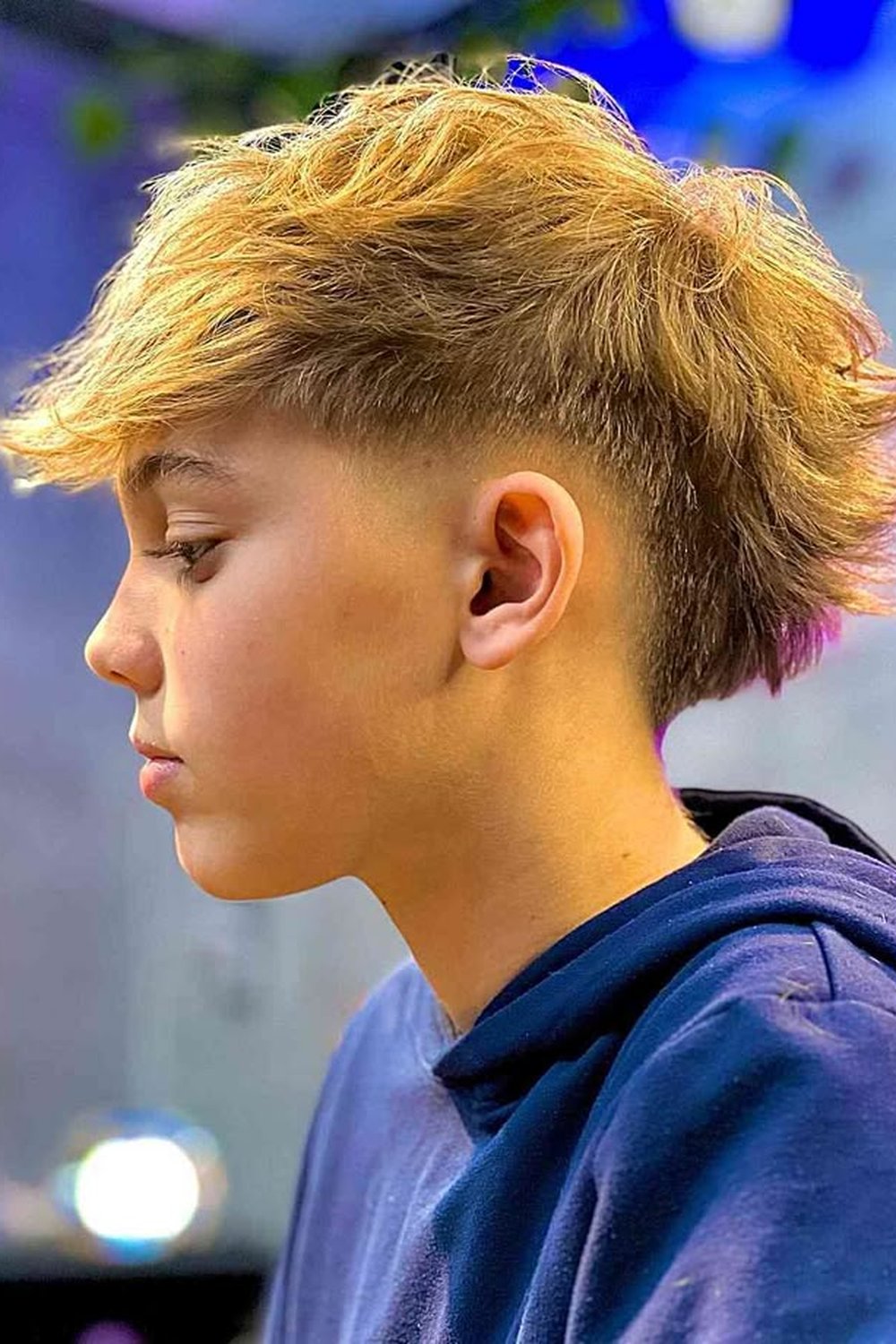
Photo: Pinterest (hair stuff board)
6. Burst Fade with Fringe
A forward fringe with a burst fade suits boys with straight, heavy hair that falls over the forehead. The fringe is cut blunt or slightly textured; the fade keeps everything behind the ears crisp. The fringe needs trimming sooner than the rest — plan a tidy-up between full cuts.

Photo: VAGA men’s magazine
7. Burst Fade with a Subtle Line Design
One clean shaved line curving through the fade — the smallest design that makes the biggest difference. It takes the barber an extra minute and makes the cut feel personal for the child. Keep it to a single line; anything more elaborate grows out unevenly within two weeks.

Photo: Modern Gentleman Magazine
8. Soft Burst Taper for Fine Hair
Fine-haired boys can absolutely wear a burst fade — the trick is a soft blend rather than an aggressive fade, so the sides do not look sparse. Our mid taper fade guide explains how the burst taper differs if you are deciding between the two. Ask the barber to blend, not carve.

Photo: Modern Gentleman Magazine
What to Tell the Barber: The Exact Script
Walk in with a reference photo and say this, adjusting the top length to taste:
“A burst fade for my son — fade curving around the ear, blended, not too high. Keep [two/three] inches on top, natural finish at the neckline. No hard lines.”
Also specify how high the fade goes, how short the shortest point gets (a #1 or #2 guard is plenty — skin-tight fades grow out faster and show scalp on fine hair), and the neckline (natural grows out better than a squared line).
Want something closer all over? Our skin fade haircut guide breaks down the low, mid, high and zero options. New to fade terminology? Our overview of the different types of fades is a good five-minute primer before the appointment.
Keeping the Cut Sharp Between Appointments
A kids’ burst fade holds its shape for three to four weeks. Book the next appointment at three weeks and you will never see the awkward in-between stage.
At home, keep it simple: a gentle children’s shampoo two to three times a week, no heavy gels or waxes — a pea-sized amount of light cream is enough if the top needs taming. Teach your son to shake his hair out after towel-drying rather than combing it flat, which keeps texture looking natural.
One practical tip: photograph the cut the day after the appointment, front, side and back. Next visit, those three photos tell the barber exactly what to recreate — better than any description.
Frequently Asked Questions
Is a burst fade good for kids?
Yes. It keeps hair off the ears and neckline, hides uneven growth, needs no daily styling, and grows out gracefully — one of the most practical sharp-looking cuts for boys aged roughly 4 to 12.
How often does a kids’ burst fade need trimming?
Every three to four weeks. The fade’s curve is what makes the cut, and it softens as hair grows — booking at three weeks keeps it looking intentional.
Will a burst fade pass my son’s school dress code?
The classic and low versions almost always pass as neat short haircuts. Shaved designs, very high fades and long backs can breach stricter rules — check the policy first.
What ages is a burst fade best for?
Roughly 4 to 12. Under fours, a simple tidy-up is usually more practical. Teenagers can wear the same cut but often prefer sharper, higher variations.
Does a burst fade work on curly or fine hair?
Both. Curly tops look excellent with length kept on top; for fine hair, ask for a soft burst taper blend so the sides do not look sparse.
How do I ask the barber for a burst fade for my son?
Bring a reference photo and say: “burst fade, curving around the ear, blended, not too high, a few inches on top, natural neckline.” A #1 or #2 guard at the shortest point keeps it age-appropriate.
The Short Version
The burst fade earns its place as a kids’ classic: tidy where it matters, forgiving as it grows, and stylish enough that your son will actually like it. Pick a style above, save the photo, use the barber script, and book the next trim for three weeks out. That is the entire system — and it works.