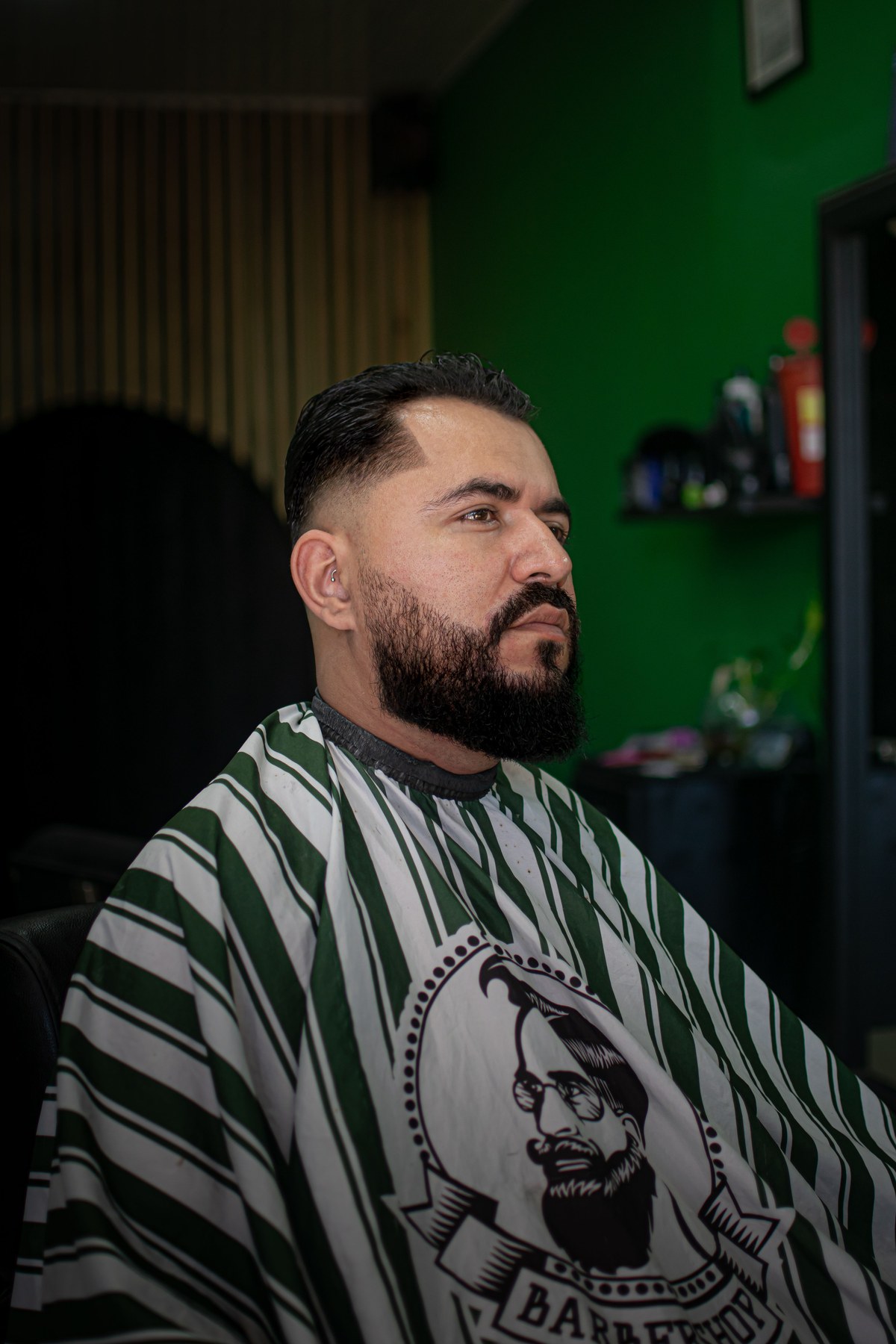
The fade that follows your head’s natural curve: what a drop fade haircut is, how it differs from a low fade, the main variations from low to skin, the exact words for your barber, and how to keep the arc sharp between visits.
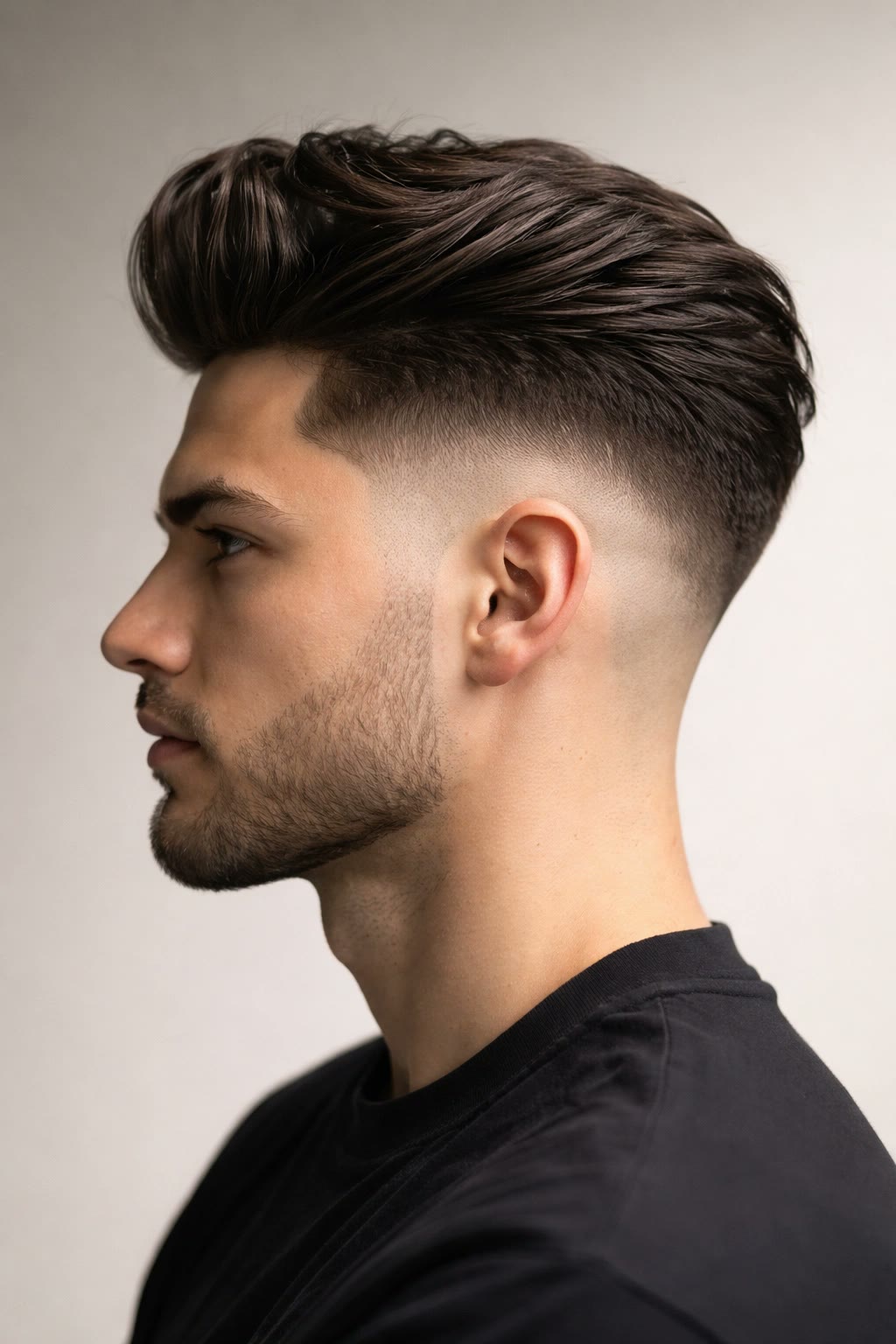
A drop fade is a fade haircut where the blend line dips down in an arc behind the ear instead of travelling straight around the head. That single curve is the whole identity of the cut: where a standard fade keeps its transition line roughly level, the drop fade lets it fall, following the natural round of the skull down toward the neckline. The result looks sculpted from every angle, especially in profile and from behind.
What a drop fade actually is
Picture the fade line — the boundary where short blends into shorter — as a road around your head. On most fades that road stays flat. On a drop fade it descends: starting near the temple, it sweeps downward behind the ear and settles lower at the back of the head before rising again on the other side. Barbers call this “dropping” the fade, and it mirrors the way the head itself curves.
Why does the shape matter? Because it changes the silhouette. The arc creates a sense of motion and makes the cut look deliberate rather than generic. It also flatters the back of the head, an area most fades ignore — a drop fade looks finished from behind, which is exactly what people see when you walk past them.

Drop fade haircut vs low fade: the key difference
This is the comparison that causes the most confusion, so let us settle it. A low fade describes height: the transition sits low on the head and stays roughly level all the way around. A drop fade describes shape: the transition line itself curves downward behind the ear. A drop fade can sit low, medium or high — “drop” tells the barber about the arc, not the altitude.
In practice, the drop reads as the more designed of the two. A low fade is clean and quiet; a drop fade has visible intention in its curve. If you want subtle, ask for a low fade. If you want people to notice the craftsmanship, ask for the drop. For the broader family of comparisons, our burst fade vs taper fade guide maps how the curved cuts relate to each other.
The main drop fade variations
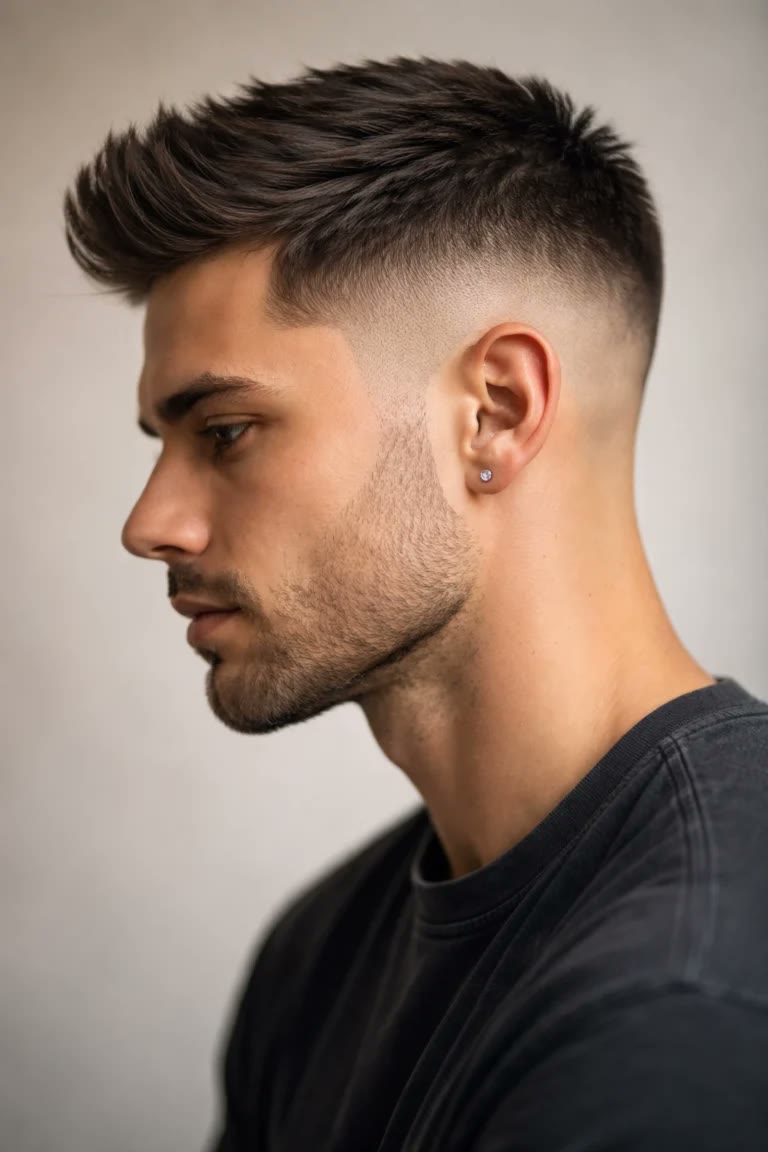
Low drop fade: the arc stays close to the ear and neckline. This is the most wearable version — the drop shape is visible but polite, and it grows out gracefully. Ideal first drop fade.
Mid drop fade: the arc starts around the temple and dips decisively. More contrast, more presence, still office-safe in most workplaces. The most requested version in barbershops.

High drop fade: the arc begins high and plunges. Bold, dramatic, and the version you see in most reference photos — but it demands frequent maintenance and suits confident dressers.
Skin (bald) drop fade: any of the above taken down to the skin at the bottom of the blend. The arc becomes razor-defined. Stunning on day one, visibly grown-out by day ten — book accordingly.
Who the drop fade suits
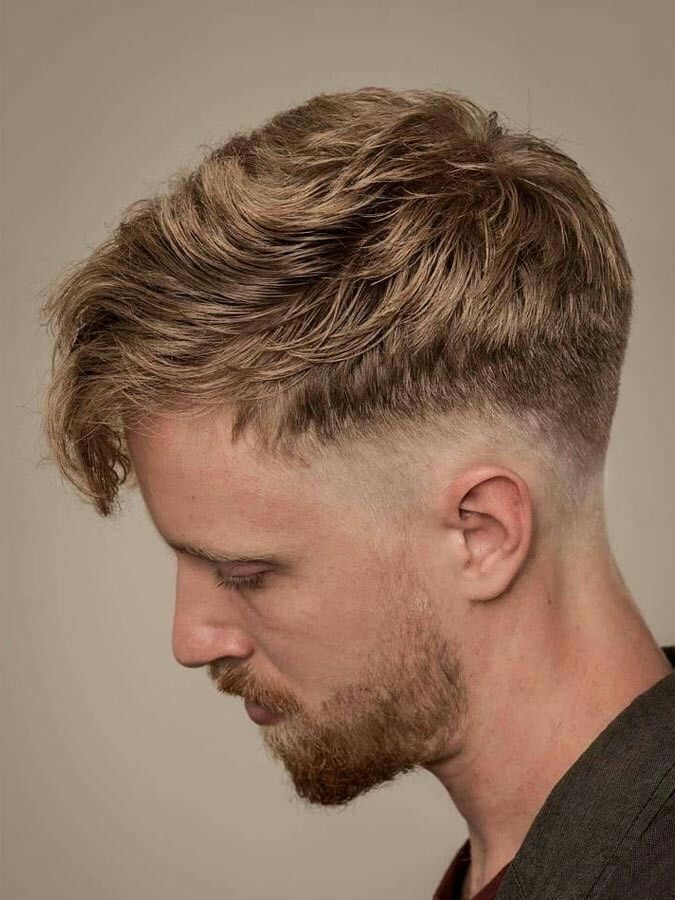
The drop fade is unusually forgiving across face shapes because the arc itself does visual work. On round faces, the downward sweep draws the eye lower and pairs well with height on top. On square faces, the curve softens the jaw’s geometry. On longer faces, keeping the drop low preserves side weight that balances length.
Hair texture matters more than face shape. Straight hair shows the arc crisply — beautiful when the blend is smooth, unforgiving when it is not. Wavy and curly hair wear the drop beautifully because texture disguides minor blend imperfections while the shape still reads clearly. Coily hair with a drop fade is a classic barbershop combination: the arc frames the texture above it like a picture frame.
How to ask your barber: the exact script
Use this sentence: “I want a drop fade — bring the fade line down in an arc behind my ear instead of keeping it level, at a [low/mid/high] height, finished [tapered/to the skin].” The bracketed choices are yours to fill. Then describe the top and the neckline separately, because the drop only covers the sides and back.
Bring a side-profile reference photo and point at the arc itself — that is the part clients describe badly and barbers need to see. Confirm the height with a finger on your own head: “the shortest part sits here.” For a calmer everyday cousin of this cut, see the low taper fade complete guide.
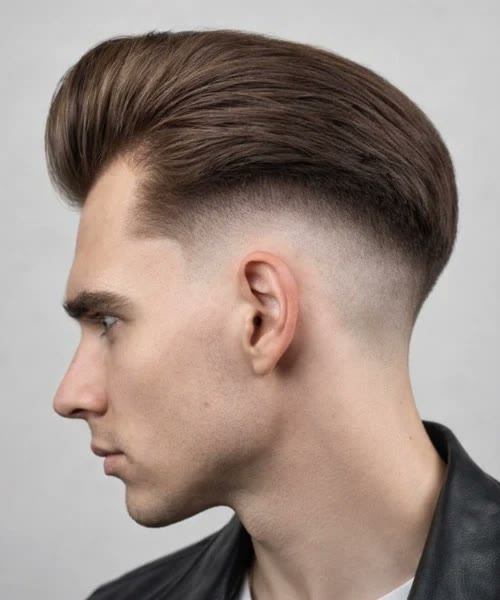
Styling a drop fade
Style the top; the drop takes care of itself. The arc looks best when the top has some intention — a textured crop, a quiff, waves, curls, or a neat side part all sit well above it. Work product through damp hair from roots to ends: matte clay or paste for texture, cream for waves and curls, pomade for classic shapes.
Keep heavy product off the faded zone. Oils and waxes clump short hair and blur the crisp arc you paid for. A light touch is all the blend needs — its shape is doing the talking.
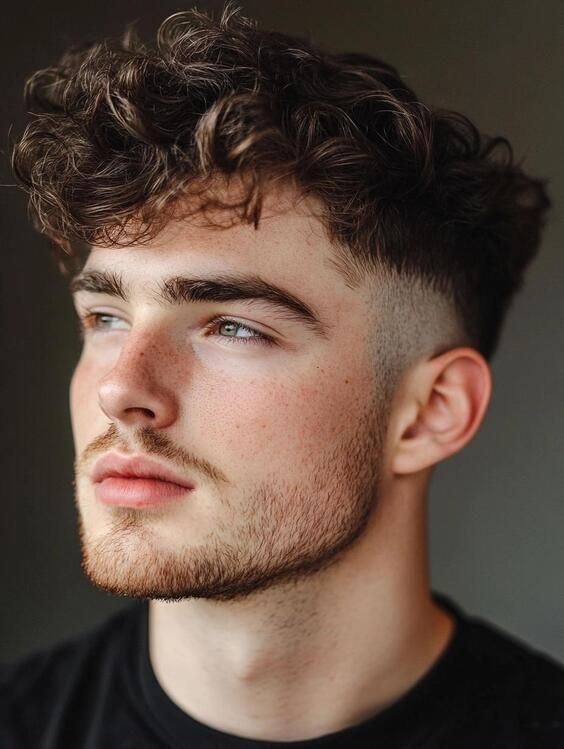
Upkeep schedule
The drop fade’s signature curve is also its maintenance burden: regrowth blurs the arc faster than it blurs a straight fade line. Plan a cleanup every two to three weeks, sooner for skin finishes. Ask the barber to refresh just the arc and neckline between full cuts — many shops offer this as a quick, cheaper service.
Common mistakes to avoid
The classic error is asking for a “low fade” while showing a drop fade photo — you will get a level line instead of the arc you wanted, and the difference is obvious. Name the shape, not just the height. Second: going straight to a high skin drop on the first visit. The arc is permanent for the next few weeks, so start at mid height and go bolder next time if you love it.
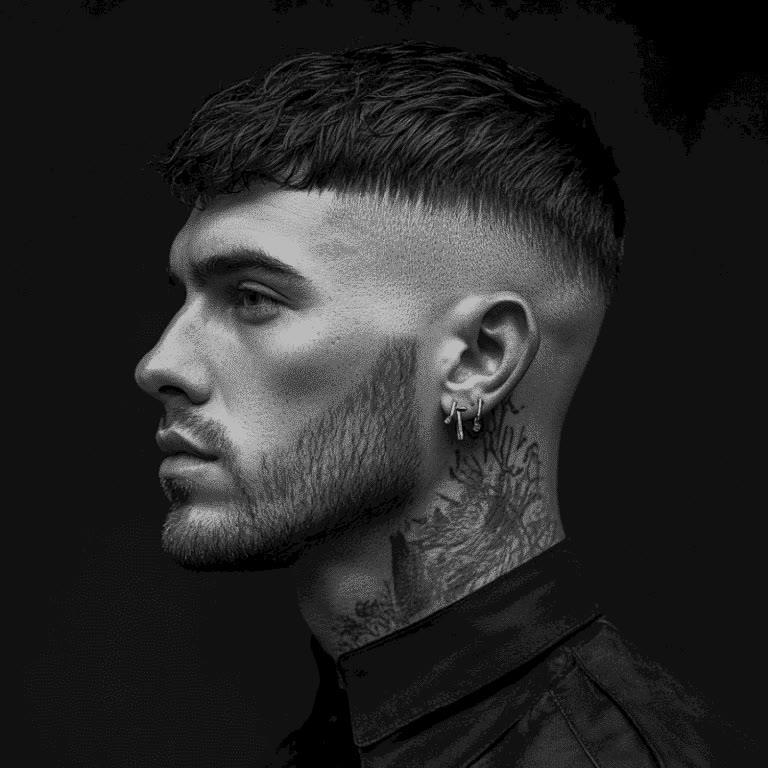
Finally, do not let the barber rush the back. The drop lives or dies behind the ear and at the nape — that is where the curve needs the most care, and it is the part you cannot see in the mirror at home.
Frequently asked questions
Is a drop fade the same as a low fade?
No. A low fade keeps its line roughly level around the head; a drop fade arcs the line downward behind the ear. “Low” describes height, “drop” describes shape — a drop fade can be low, mid or high.
How often does a drop fade need a touch-up?
Every two to three weeks for most people, sooner for skin finishes. The curved arc shows regrowth faster than a straight fade line, especially around the ears and neckline.
Does a drop fade suit a round face?
Yes. The downward arc draws the eye lower and the cut keeps volume on top, both of which balance rounder face shapes nicely.
What exactly do I ask my barber for a drop fade?
Ask for the fade line to drop in an arc behind the ear rather than staying level, specify low/mid/high height and a tapered or skin finish, and bring a side-profile reference photo pointing at the arc.
Conclusion
The drop fade is what happens when a fade gets a sense of design: the same clean blend, but with a curve that follows your head and finishes the back properly. Name the arc, choose your height, and keep the touch-ups regular — the shape rewards the effort.
If the drop feels too bold for everyday life, its calmer sibling waits in the low taper fade complete guide.
Written by Derek Nolan, an editorial pen name used for consistent authorship. No unverified barber credential or firsthand salon claim is presented. Visual references carry source credits with each image. Credited third-party photographs remain the property of their respective owners; source attribution is provided and rights concerns are handled through the Copyright Policy.