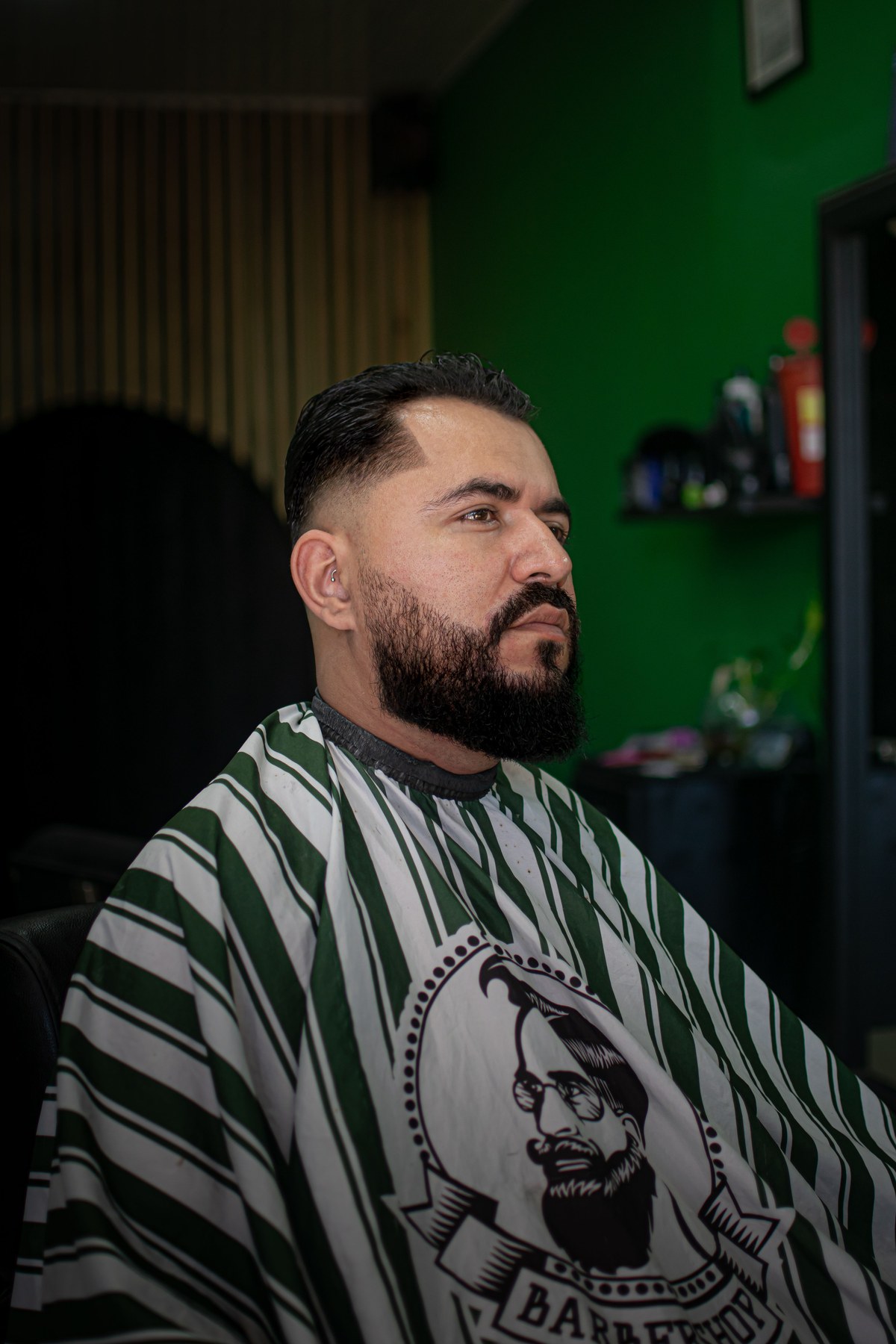
The precision cut for the temple zone: what a temple (temp) fade is, why it is its own distinct haircut and not just a small taper, the low/mid/skin variations, the exact words for your barber, and how to keep the temples sharp.

A temple fade — usually shortened to “temp fade” — is a haircut where the fade is concentrated in the temple area: the zone between the corner of the forehead and the top of the ear. Instead of blending the entire side of the head, the barber fades just that patch, typically connecting it to a cleaned-up sideburn and a sharp neckline. Everything else can stay as full as you like.
What a temple fade actually is
Think of the temple fade as detail work. The barber takes the hair at the temple down through a short, clean gradient — often to the skin at the very bottom of the zone — while the hair just centimetres away stays at full length. Because the faded area is small and precisely placed, it reads as sharpness rather than as a “faded haircut.” It is the difference between tailoring a suit and just buying a smaller size.
The classic temp fade also tidies the sideburn into the blend and finishes the neckline, so the three zones feel like one intentional design. Done well, it makes even an untouched top look freshly cut — which is why it is a favourite touch-up between full haircuts.
Temple fade vs taper fade: its own distinct cut
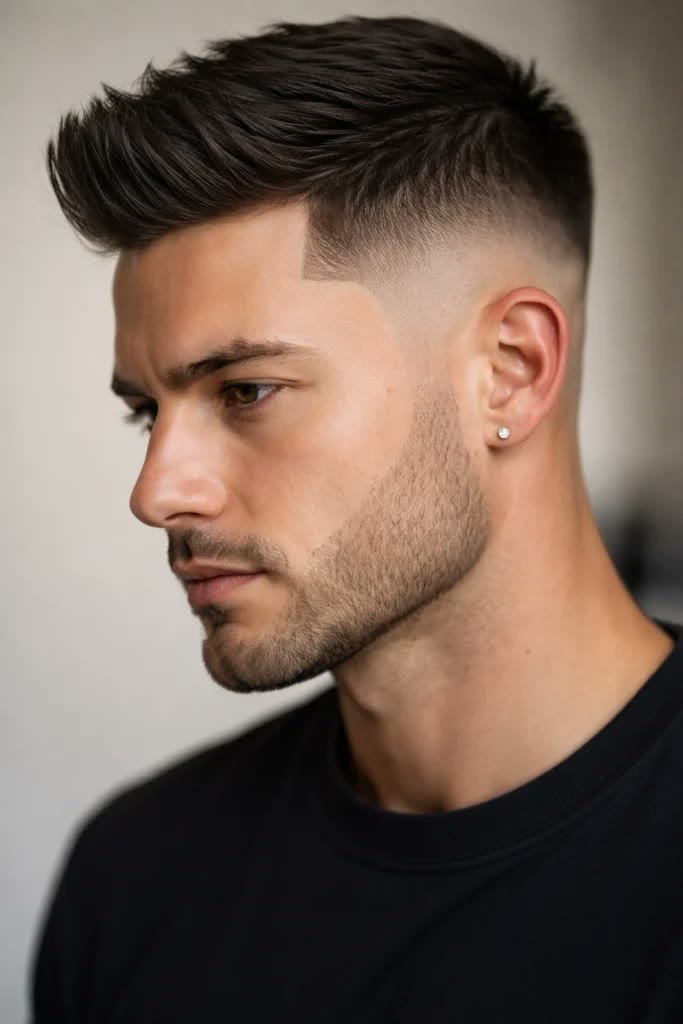
People often file the temple fade under “taper,” but it deserves its own drawer. A taper fade is a gradual shortening applied around the whole perimeter of the haircut — temples, ears, sideburns and neckline all get the treatment as one continuous blend. A temple fade is targeted: the fade lives at the temples (plus the sideburn and neckline as supporting acts) while the rest of the sides can keep their full length and weight.
The practical difference is freedom. With a taper, the entire perimeter gets shorter — the silhouette changes everywhere. With a temple fade, you keep your sides and change only the detail zone, so it pairs with haircuts a taper would fight: long tops, full sides, even grown-out lengths that just need the edges rescued. It is not a small taper; it is a different idea — precision instead of perimeter. If you want the full-perimeter version, start with the low taper fade complete guide and compare.
The main temple fade variations
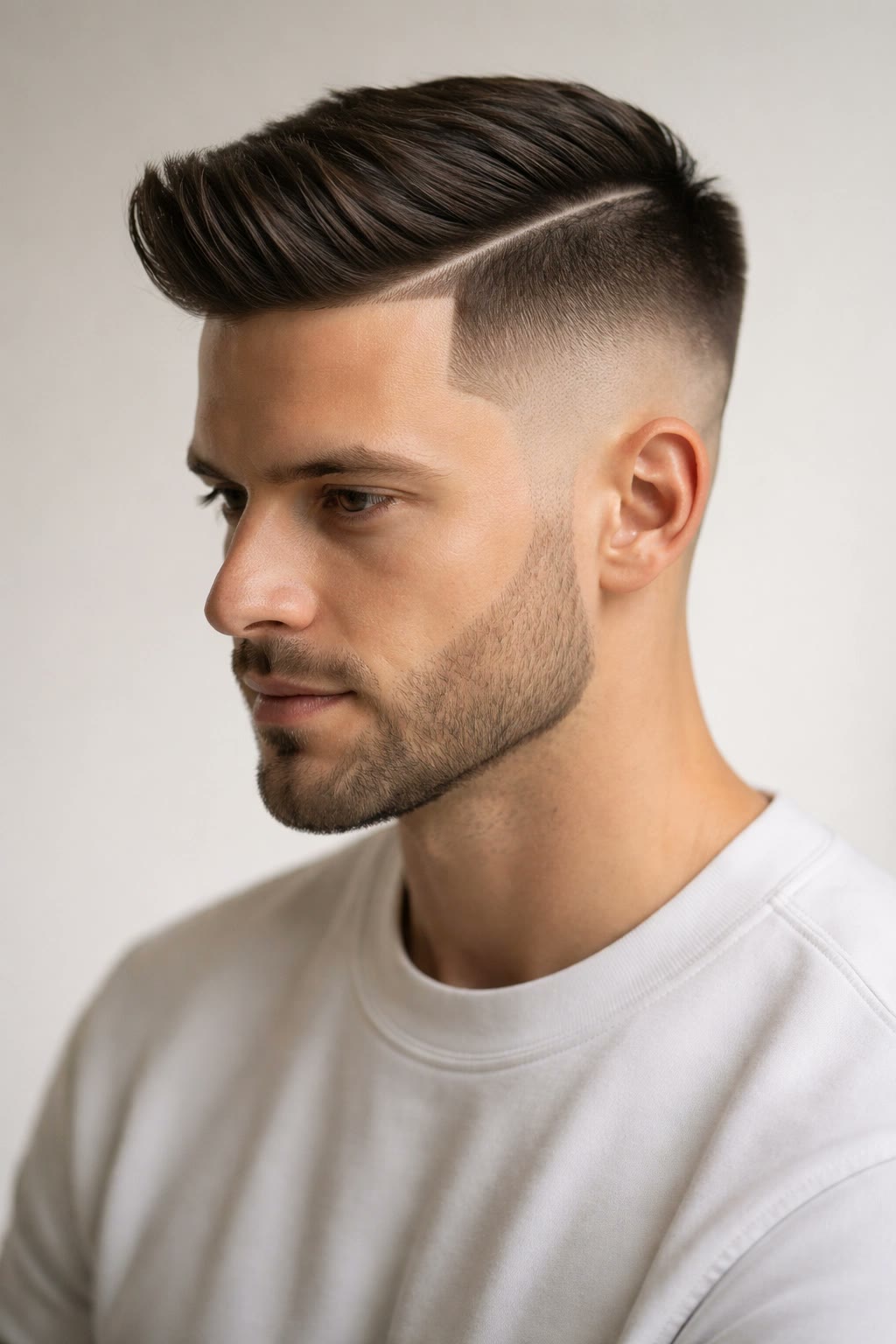
Low temp fade: the blend stays tight to the temple corner and sideburn. Subtle, workplace-safe, and the best version for a first temp fade — it sharpens the face without announcing itself.
Mid temp fade: the faded zone climbs a little higher and the contrast increases. The most versatile version: visible intention, easy maintenance, works with nearly every top.
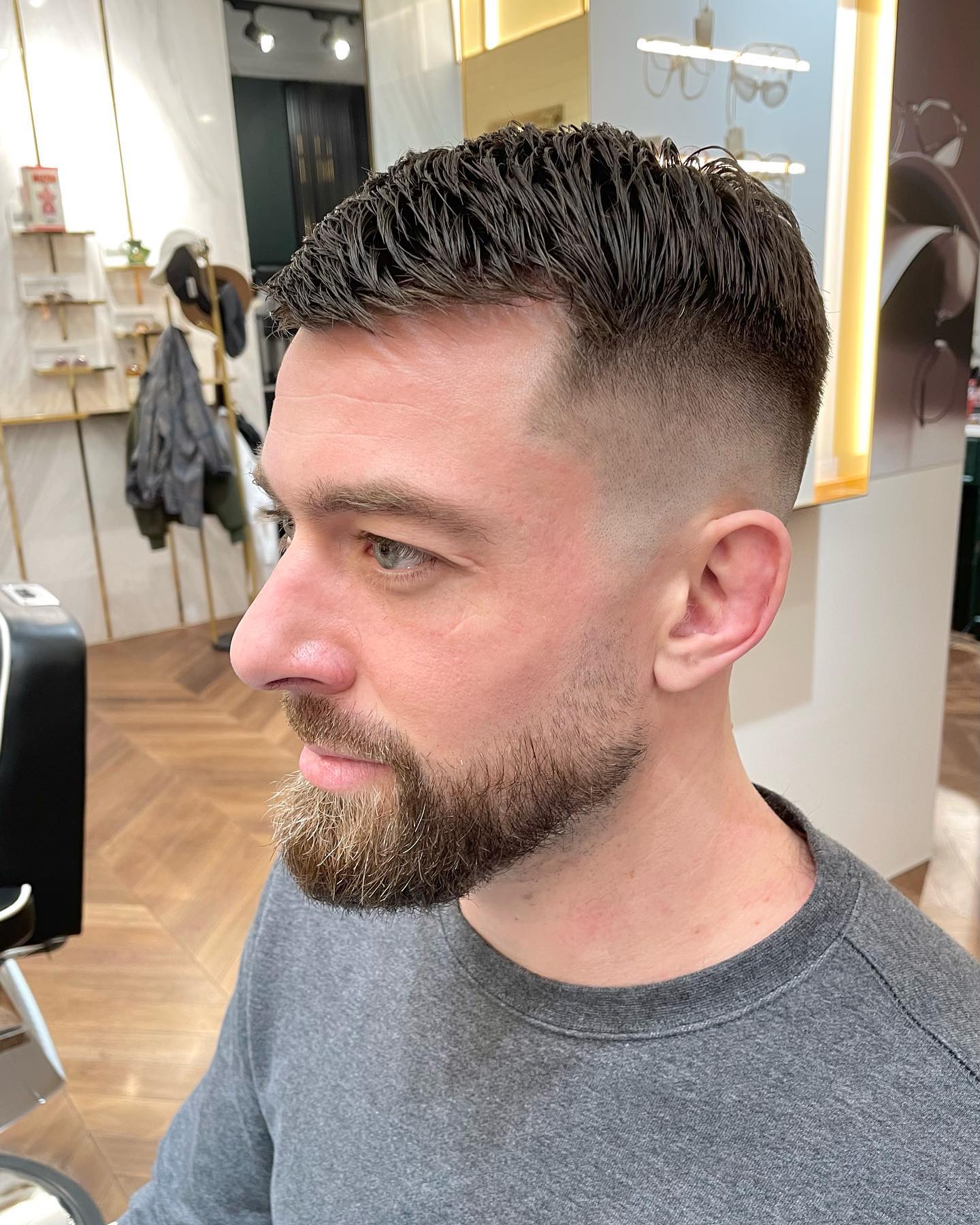
Skin (bald) temp fade: the temple zone goes all the way to the skin. Maximum crispness, maximum contrast against the top — and the fastest to show regrowth. This is the version in most reference photos.
Temp fade with design: because the zone is small and flat, it takes a hard part or a shaved line beautifully. One clean line above the blend turns the temp fade into a statement.
Who the temple fade suits
Almost anyone who wants sharpness without commitment. The temp fade flatters square and round faces by defining the temple corner, which gives the face structure. It is kind to longer faces too, because unlike a full fade it does not strip weight from the sides.

Hair type is barely a constraint here. Straight hair shows the blend crisply; wavy and curly hair wear it well because the small zone keeps the texture’s character intact; coily hair with a temp fade and a lineup is one of the sharpest combinations in the barbershop. The main requirement is simply wanting the temple area to look deliberate.
How to ask your barber: the exact script
Say: “I want a temple fade — concentrate the fade at my temples and blend it into the sideburn, at a [low/mid/skin] height, and clean up the neckline to match. Keep the rest of the sides full.” The last clause is the important one: without it, some barbers will taper the whole perimeter out of habit.
Bring a front three-quarter reference photo — the temple zone is best judged from the front, not the side. Point at exactly where you want the shortest hair to sit. For the closest full-perimeter alternative, compare with the burst fade vs taper fade guide.
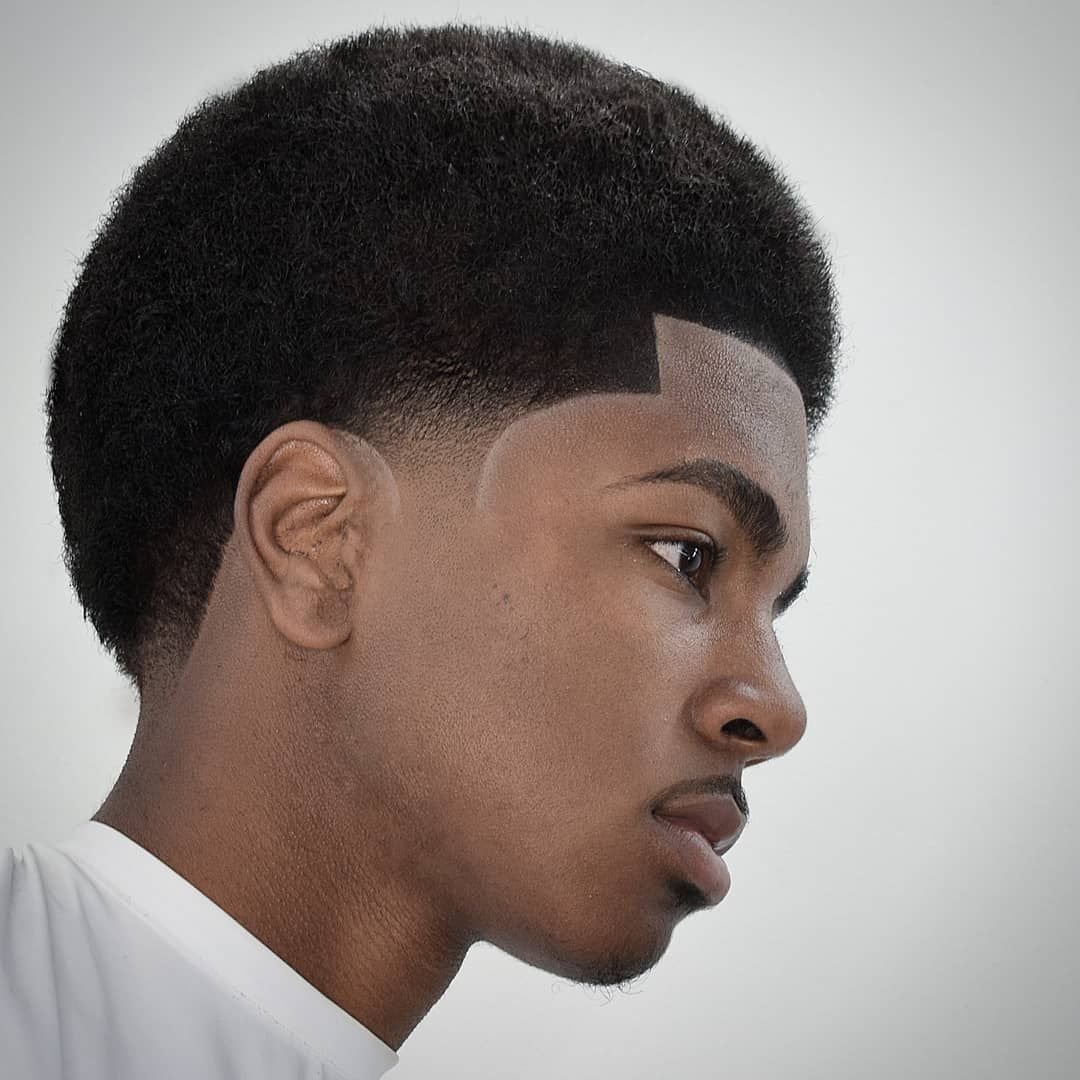
Styling a temple fade
There is almost nothing to style in the faded zone — that is the point. Put your effort into the top: texture it, slick it, let curls do their thing. The temp fade frames whatever is above it, so a little product on the top goes a long way.
One maintenance tip with outsized payoff: keep the temple zone moisturised if you have dry skin. Flaking on freshly faded skin draws the eye for all the wrong reasons.

Upkeep schedule
The temple area betrays regrowth fast — pale new hair against faded skin is visible within two weeks. Plan a touch-up every two to three weeks; many barbers will refresh just the temples and neckline as a quick service between full cuts. Do not try to re-fade the temple yourself with trimmers unless you have practised: the zone is small, curved and very public.
Common mistakes to avoid
The biggest mistake is saying “taper the sides” when you mean “fade the temples” — you will get a full-perimeter blend instead of the targeted cut. Name the zone. The second is going skin on the first visit; a tapered (non-skin) temp fade is more forgiving while you learn how fast your hairline grows.
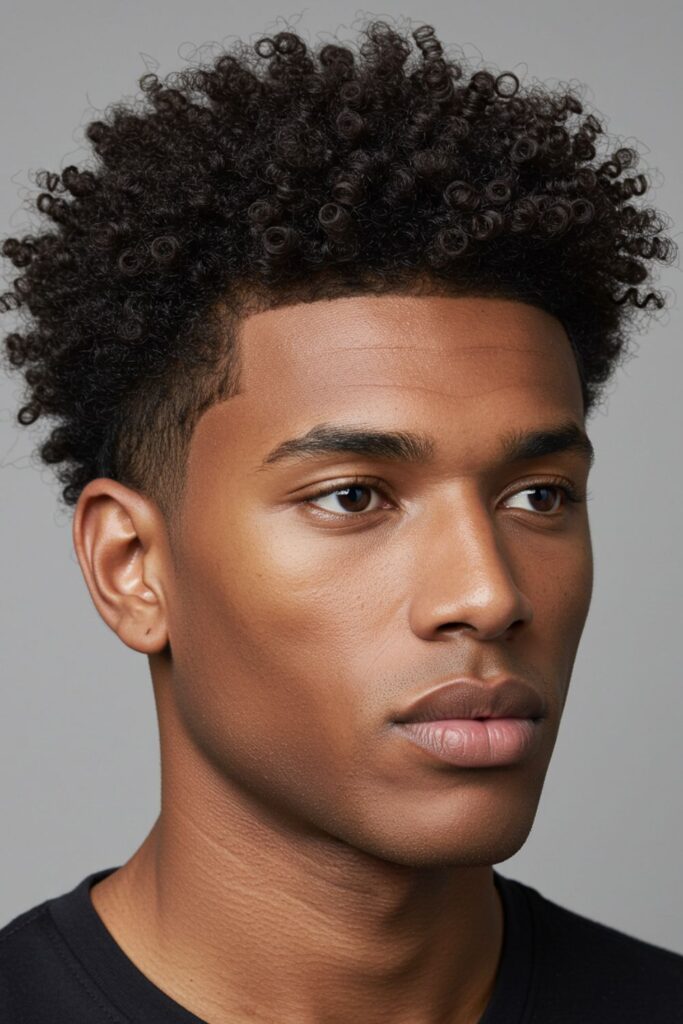
Finally, watch the symmetry. Because the temp fade sits right next to the face, even a slightly uneven blend is noticeable — check both temples in the mirror before you leave the chair.
Frequently asked questions
Is a temple fade the same as a taper fade?
No. A taper fade blends the whole perimeter of the haircut gradually; a temple fade concentrates the fade at the temples (with the sideburns and neckline). It is a distinct, targeted cut — not just a smaller taper.
How long does a temple fade last?
Two to three weeks for most people. The temple zone shows regrowth quickly, so the sharp look softens first exactly where the cut is meant to be crisp.
Can a temple fade work with long hair on top?
Yes — that is one of its strengths. The fade only reshapes the temple zone, so the top can be any length, from a crop to long flowing hair.
What exactly do I ask my barber for a temple fade?
Ask for the fade concentrated at the temples, specify low, mid or skin height, decide whether the sideburns and neckline match, and add “keep the rest of the sides full.” A front three-quarter reference photo helps.
Conclusion
The temple fade proves that small zones make big statements: a precisely faded temple corner sharpens the whole face while leaving everything else alone. Name the zone, pick your height, and keep the touch-ups regular.
Want the blend to travel the full perimeter instead? The low taper fade complete guide is your next read.
Written by Derek Nolan, an editorial pen name used for consistent authorship. No unverified barber credential or firsthand salon claim is presented. Visual references carry source credits with each image. Credited third-party photographs remain the property of their respective owners; source attribution is provided and rights concerns are handled through the Copyright Policy.