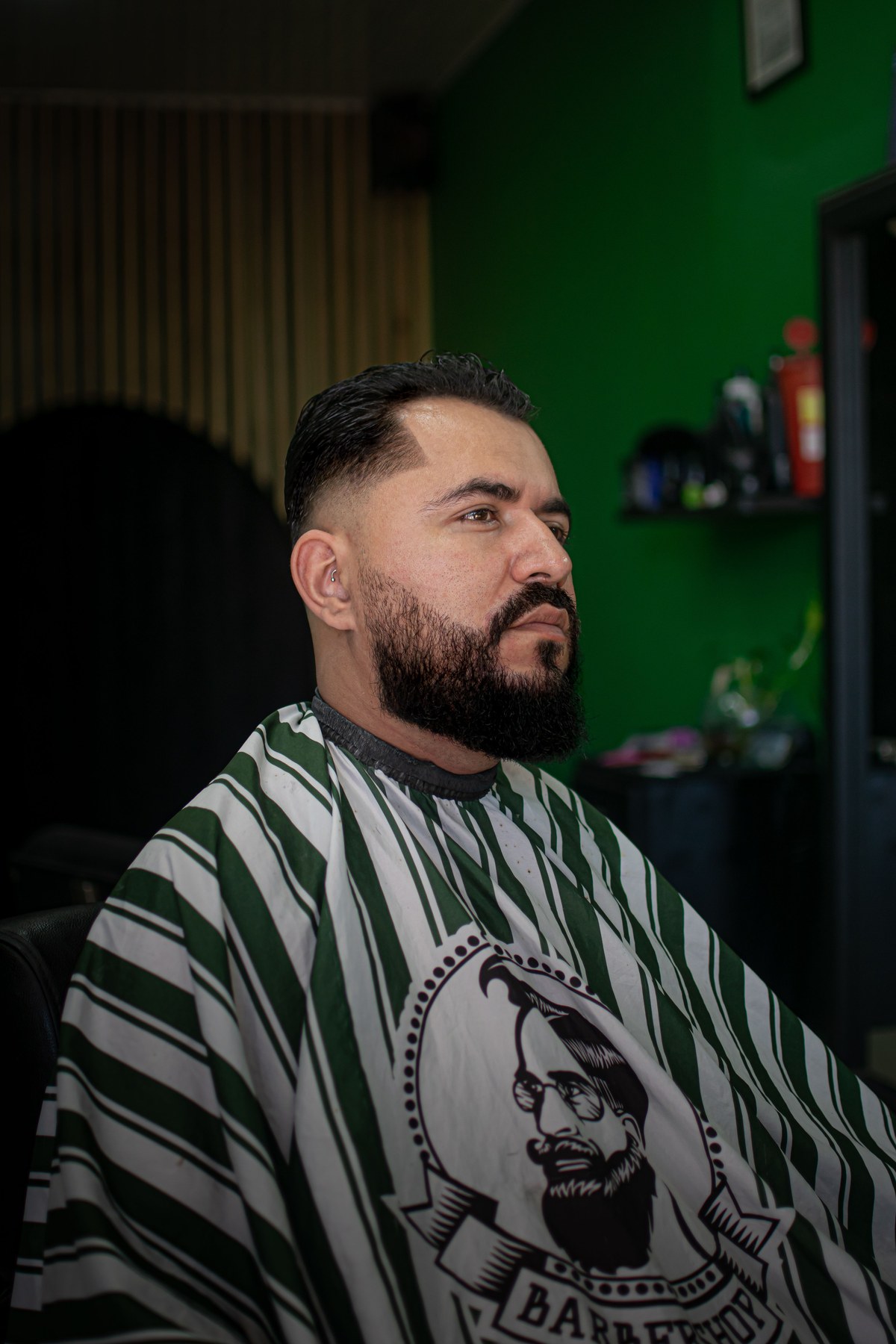
Every fade is defined by two choices: how short it goes at its shortest point, and how high the blend starts. Low, mid, high, and skin fades all follow this one principle, yet each gives you a completely different look. This guide breaks down every type of fade, who each one suits, exactly what to tell your barber, and how to keep the cut looking sharp between visits.

What Is a Fade Haircut?
A fade haircut is a technique rather than a specific style. The barber uses clippers with progressively shorter guards to blend the hair from longer on top to shorter at the bottom, creating a smooth gradient with no visible lines. The top can be almost anything — a crop, a quiff, a side part, curls, a pompadour — because the fade is what happens on the sides and back.
The signature of a good fade is the blend: you should not be able to see where one guard length becomes the next. That is the difference between a professional fade and a rushed one.
Fade vs Taper vs Undercut
- Fade: the sides and back are blended down through several lengths to very short or bare skin. Bold, high-contrast, modern.
- Taper: only the edges — the sideburns, around the ears, and the neckline — are shortened, and length stays everywhere else. Subtle and conservative. See our low taper fade guide for the full comparison.
- Undercut: the sides are cut to one short length all over with no blending, sharply disconnected from the longer top.
The Four Main Types of Fade
Fade “height” is where the shortest part of the blend sits. Low, mid, and high describe placement on the head — and placement changes the entire character of the cut. The fourth option, the skin fade, describes the shortest point: bare skin.
1. Low Fade
The low fade keeps the blend near the bottom: the shortest part starts just above the ear and hugs the hairline. Most of the sides keep their length, so the contrast is subtle. It is the most professional and office-friendly fade, and the most forgiving if you are getting a fade for the first time.

2. Mid Fade
The mid fade starts around the temple — the middle ground and the most popular fade on this list. Crisp enough to look intentional, balanced enough to work in most settings. It flatters most face shapes and works with nearly every top style, from crops to quiffs. If you cannot decide on a height, start here.

3. High Fade
The high fade climbs toward the crown, leaving most of the sides faded. Maximum contrast, maximum edge. It visually elongates the face, which flatters rounder faces, and it pairs naturally with short tops like buzz cuts and textured crops. The trade-off: grow-out shows faster, and it needs the most precise blending — see our high taper fade guide for the subtler alternative.

4. Skin Fade (Bald Fade)
The skin fade — also called a bald fade — takes the shortest point all the way down to bare skin. It is the sharpest and highest-contrast fade, and the highest maintenance. Low, mid, and high can all be skin fades; the height sets the placement and “skin” sets the bottom. Our complete skin fade guide covers low, mid, high, and zero fades in detail.

Other Fade Styles Worth Knowing
Beyond the four main types, a few named styles use the same fading technique in specific shapes. For the full taxonomy — all 14 fade types defined side by side — see our types of fades guide.
- Drop fade: the fade line arcs downward behind the ear instead of running straight — a curved, contoured shape that suits round heads.
- Taper fade: a hybrid — the tapered neckline and sideburns of a taper, faded into short sides.
- Burst fade: the fade curves in a rounded “burst” around the ear while the back stays fuller. Our signature cut — see the burst fade complete guide.
- Temple fade: the fade is concentrated at the temples, blending into a longer or Afro-textured top.
- Two block: Korea’s K-style cut — a long, textured top worn over short sides with a visible disconnect. Read our two block haircut guide.


Choosing the Right Fade for You
Face shape: high fades elongate — good for round and square faces. Low fades keep width — better for long or oval faces. Mid fades are the safe middle ground for most shapes.
Hair type: thick, straight, wavy, curly, and coily hair all take a fade. Thick and curly hair shows the contrast best; on very fine or thinning hair, a high skin fade can expose more scalp than you want — go low or keep some length.
Lifestyle: office jobs and formal settings favor low and mid fades with textured or side-parted tops. Creative fields and bold style lean toward high and skin fades. And fades need upkeep — a fade starts looking grown out after two to three weeks, so budget for regular barber visits.
What to Tell Your Barber (The Barber Script)
The biggest mistake men make is sitting down and saying “give me a fade.” Be specific instead:
- Name the height: “a low fade,” “a mid fade,” or “a high fade.”
- Name the shortest point: “blended to skin” for a skin fade, or ask for a guard number — “a #1 at the bottom, blended up to a #3.”
- Describe the top: keep the length you have, or name a target — “about two inches on top, textured, forward.”
- Mention the shape: if you want a drop, burst, or temple fade instead of a standard fade, say so by name.
- Bring a photo. It takes ten seconds and removes all guesswork — show your barber exactly the fade you mean.
If your barber asks “what guard on top?” or “how far up?” — these are the decisions you are making above.
How to Keep Your Fade Sharp
- Get it touched up every 2–3 weeks. A fade’s sharpness lives in the blend; grow-out softens it fast. A quick lineup between full cuts extends the life.
- Style the top daily. The top is what people actually see — a little product goes a long way. Our pomade guide breaks down hold and shine by hair type, and the advice applies to any fade.
- Wash and condition properly. A clean scalp and healthy hair make the blend look crisper.
- Protect the hairline at night. A durag or satin pillowcase keeps the lineup clean longer.
Frequently Asked Questions
What is the most popular fade haircut for men?
The mid fade is the most commonly requested — it sits between subtle and bold, works with most tops, and suits most face shapes.
Is a fade the same as a taper?
No. A fade haircut blends the sides and back down through several short lengths (sometimes to skin). A taper only shortens the edges — sideburns, around the ears, and the neckline — while keeping length everywhere else.
How long does a fade last?
A fade haircut looks its sharpest for about two to three weeks. After that the blend softens and the contrast drops. Most men book a touch-up or a new cut on that schedule.
What fade should I get for a professional job?
A low fade haircut or a conservative mid fade with a textured or side-parted top. Keep the top length moderate and avoid skin-level blends.
Can I get a fade with curly or coily hair?
Absolutely — curls and coils on top with faded sides is one of the most popular combinations, because the texture adds visual weight that balances the tight sides.
What guard number should I ask for?
There is no single right answer — it depends on your hair and the look you want. A common starting point for a skin fade is a no-guard or #1 at the bottom, blending up; for a softer fade, a #1 or #2 at the bottom. Ask your barber to confirm on your hair before they cut.
Final Word
The fade haircut is the most versatile cut in men’s hair — one technique, endless combinations. Pick your height, name your shortest point, describe your top, and show your barber a photo. Do that, and the fade stops being a gamble and becomes your most reliable haircut.
Choose the fade haircut that suits your face shape and lifestyle.