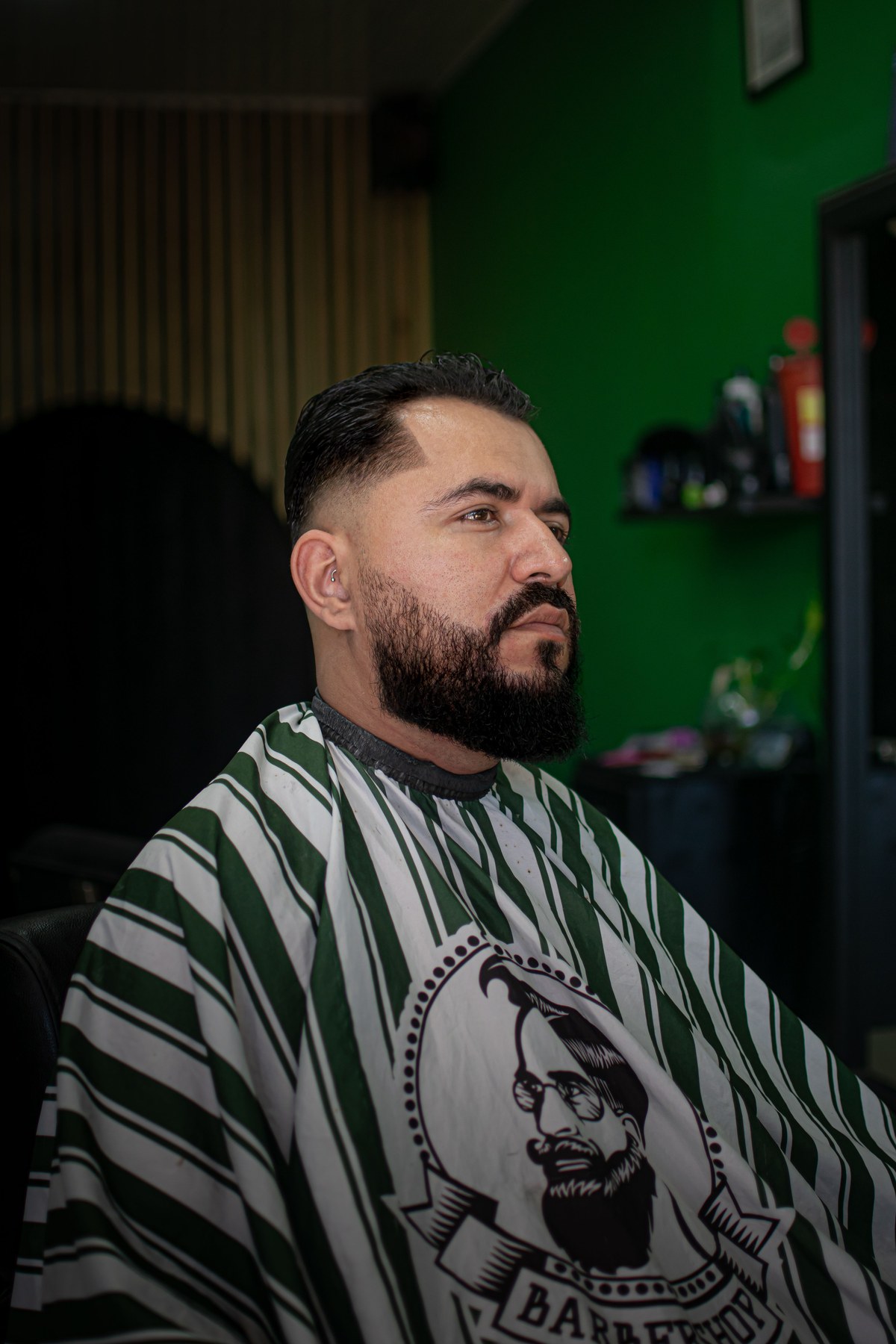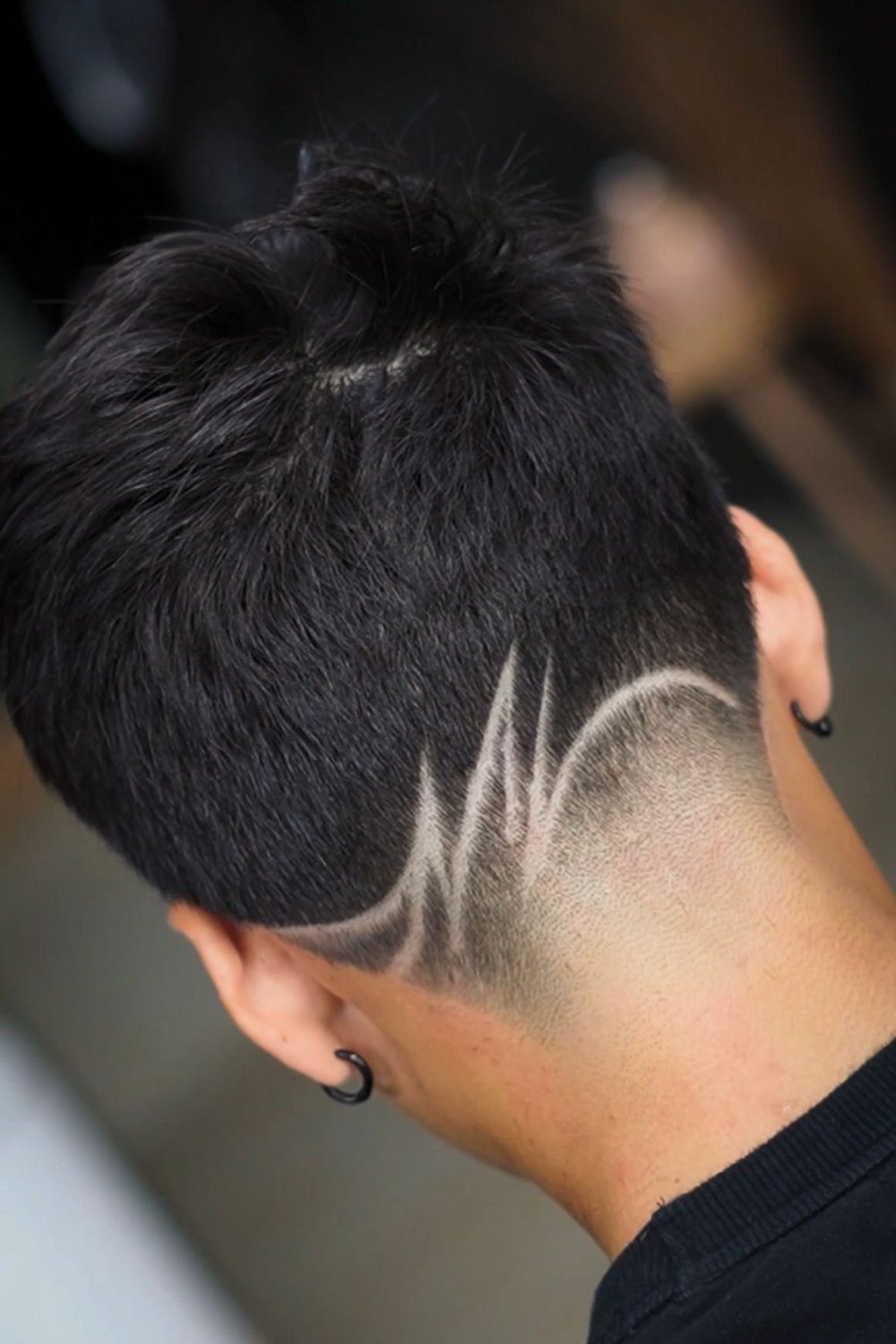
A taper fade is clean. A design makes it yours
A taper fade is already one of the sharpest cuts a man can wear: short at the edges, blended smooth, longer on top. Add a shaved design and it stops being just a haircut — it becomes a signature. A single hard line, a lightning bolt, a star behind the ear, a full geometric pattern across the side: the design is the part people remember, and the part strangers ask about. The best taper fade designs for men work because they are simple ideas executed with a steady hand — one clean shape, placed exactly where the fade is shortest, so the contrast does the talking.
This guide covers 37 of them — from the quietest single line to full-side art that covers temple to nape — each one with a real photo, barber instructions you can read out word for word, and honest advice on who it suits and how long it lasts. If you are new to fades, start with our guide to the low taper fade, the safest base for a first design, and our mid taper fade guide if you want more contrast. A design lasts about one to two weeks before growth softens the lines, so pick one you will enjoy showing off — and a barber you trust with a trimmer.
One honest note before the list: a design is only as good as the fade underneath it. The lines are shaved into the shortest part of the fade, so a patchy blend will show. Book a barber who does designs regularly, bring the photo from this guide, and point at the exact lines you want — “this line, this length, this spot.” Say what you do not want too. That one sentence prevents most bad designs.
What’s in this guide
Classic line designs (1–8): single lines, double lines, curves, lightning, zigzag, cross, star and arrow — the shapes every barber knows. Geometric and freestyle (9–16): patterns, tribal curves, swirls, diamonds, grids and waves for a bolder look. Symbols and lettering (17–22): initials, crowns, hearts, flames, feathers and leaves. Placement and style combos (23–37): designs matched to low tapers, temples, napes, buzz cuts, curls, waves, skin fades and colour.
Classic Line Designs
1. Single Hard Line

Photo: Curated Barbers — source
The single hard line is where every fade design starts, and it is still one of the best. One clean shaved line runs through the back of the taper, and because there is nothing else competing with it, the eye goes straight to it. The photo here is in black and white, which suits the cut — there is no colour to hide behind, just the shape of the fade and the line. What to ask for: a low taper fade with one hard line shaved through the back, kept straight and clean, top left natural. Best for: a first design, straight or wavy hair, and anyone who wants an edge without a loud statement. It grows out gracefully, and a barber can refresh the line in two minutes at your next trim.
2. Double Parallel Lines

Photo: Booksy — source
Two short parallel lines above the ear do what one line cannot: they create rhythm. The pair reads as a deliberate pattern rather than a single accent, and the gap between the lines shows off the blend of the fade itself. Keep the lines short and close together, as in the photo, and they stay sharp even as the hair grows. What to ask for: a taper fade with two short parallel lines above the ear, evenly spaced, about an inch long. Best for: young men who want a visible design that still looks neat at work or college. It pairs well with a short textured top and needs a line-up touch-up every ten days or so to stay crisp.
3. Curved Line Design

Photo: OP Salon — source
A curved line follows the shape of the head instead of fighting it, which is why it looks so natural. In this photo the main arc sweeps across the side of a slicked-back taper fade, crossed by two short diagonal lines that give it movement. The curve softens the whole cut — it feels designed rather than drawn on. What to ask for: a taper fade with one curved line arcing across the side, plus two short diagonal crosses if you want the extra detail. Best for: slicked-back and side-part tops, and for men who want a design that reads as stylish rather than sporty. The curve must be freehand, so check your barber’s line work first.
4. Lightning Bolt Design

Photo: idvibra — source
The lightning bolt is the most asked-for fade design in barbershops, and this close-up shows why: a bold zigzag bolt shaved into the side above the ear, with the fade dropping away cleanly underneath it. It is loud, it is fast to do, and it photographs brilliantly. The bolt works because it uses the whole side of the head — short at the ear, wider toward the temple — so the shape stays readable from across the room. What to ask for: a taper fade with a lightning bolt above the ear, sharp points, no extra lines. Best for: bold personalities, short tops, and anyone who wants the design to be the first thing people notice. Expect to refresh it every week to ten days; bolts blur fast as hair grows.
5. Zigzag / Z Design
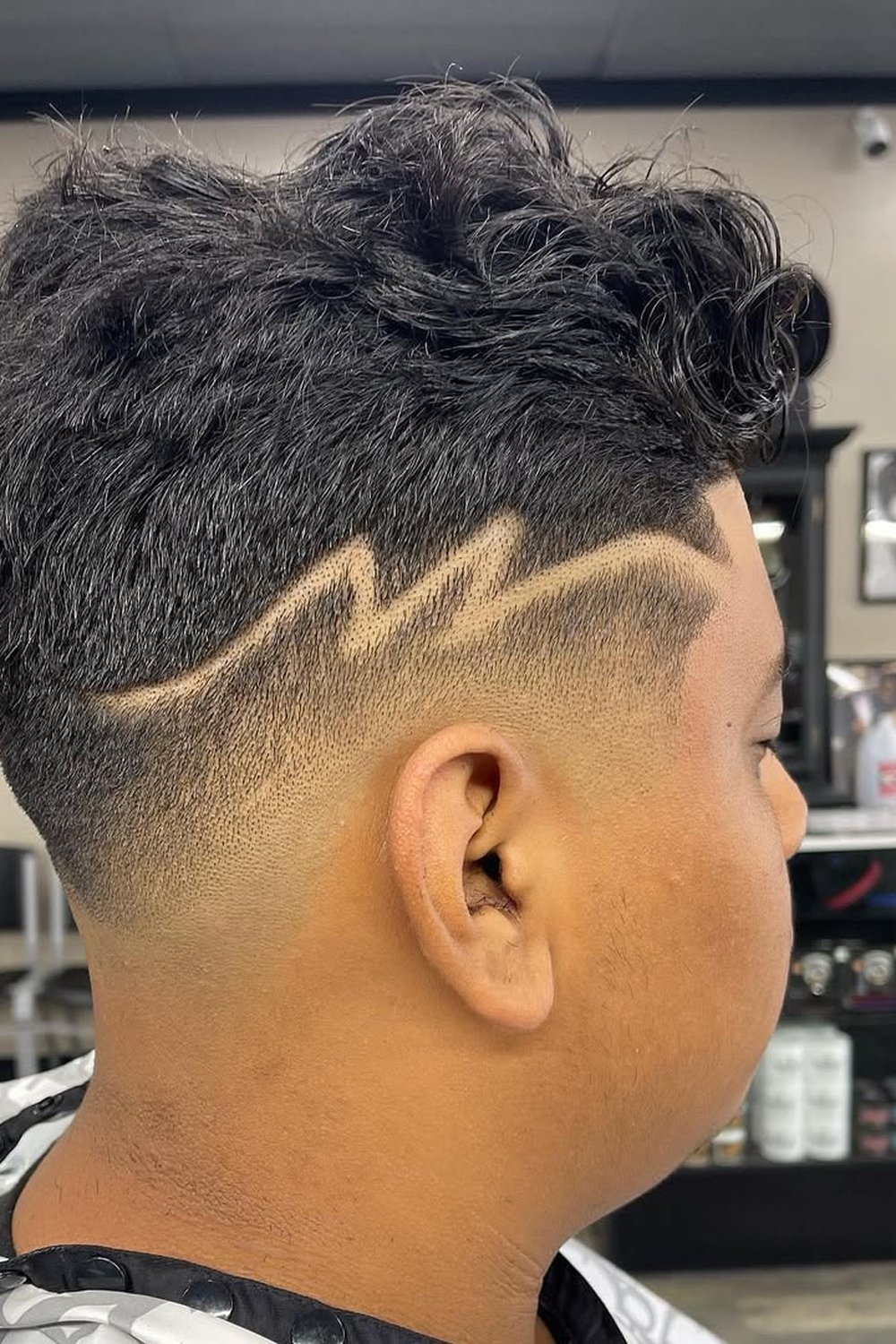
Photo: Favorite Hairstyles — source
The zigzag is the lightning bolt’s wider, calmer cousin: a broad Z-shaped line that runs across the whole side of the head instead of sitting in one spot. In this photo the zigzag stretches from the temple toward the back, and its wide angles make it look deliberate and clean rather than busy. It is one of the easiest designs to get right, because the lines are long and the angles are forgiving. What to ask for: a taper fade with one wide zigzag line across the side, from temple to back. Best for: young men, textured tops, and first-timers who want a big design with a low risk of it going wrong. It also hides growth well — the shape holds for a full two weeks.
6. Cross Design

Photo: Domi Barberz via Booksy — source
A small cross at the nape is the quiet classic of fade designs. In this photo it reads as an X, shaved small and sharp into the nape below the taper, where it only shows when you turn around — a detail for people who look twice. That hidden quality is the whole point: it is personal, not performative. What to ask for: a taper fade with a small cross shaved into the nape, kept small and centred. Best for: men who want a design with meaning, and for anyone whose workplace frowns on visible designs — the nape hides under a collar or a cap. It is also one of the cheapest designs to maintain, since a single small shape is quick to re-shave.
7. Star Design

Photo: Lex Get Faded via Booksy — source
A large star shaved behind the ear is impossible to miss, and that is exactly why men ask for it. In this photo the star sits in the fade behind the ear under a curly top, its five points clean and symmetrical, with the curls on top giving it a soft frame. Stars need a steady hand — one crooked point ruins the shape — so this is a design to trust only to a barber who has done it before. What to ask for: a taper fade with a large five-point star behind the ear, curly or textured top left long. Best for: curly hair, confident dressers, and summer, when the star is on show. Book a touch-up every ten days; the points are the first thing to blur.
8. Arrow Design
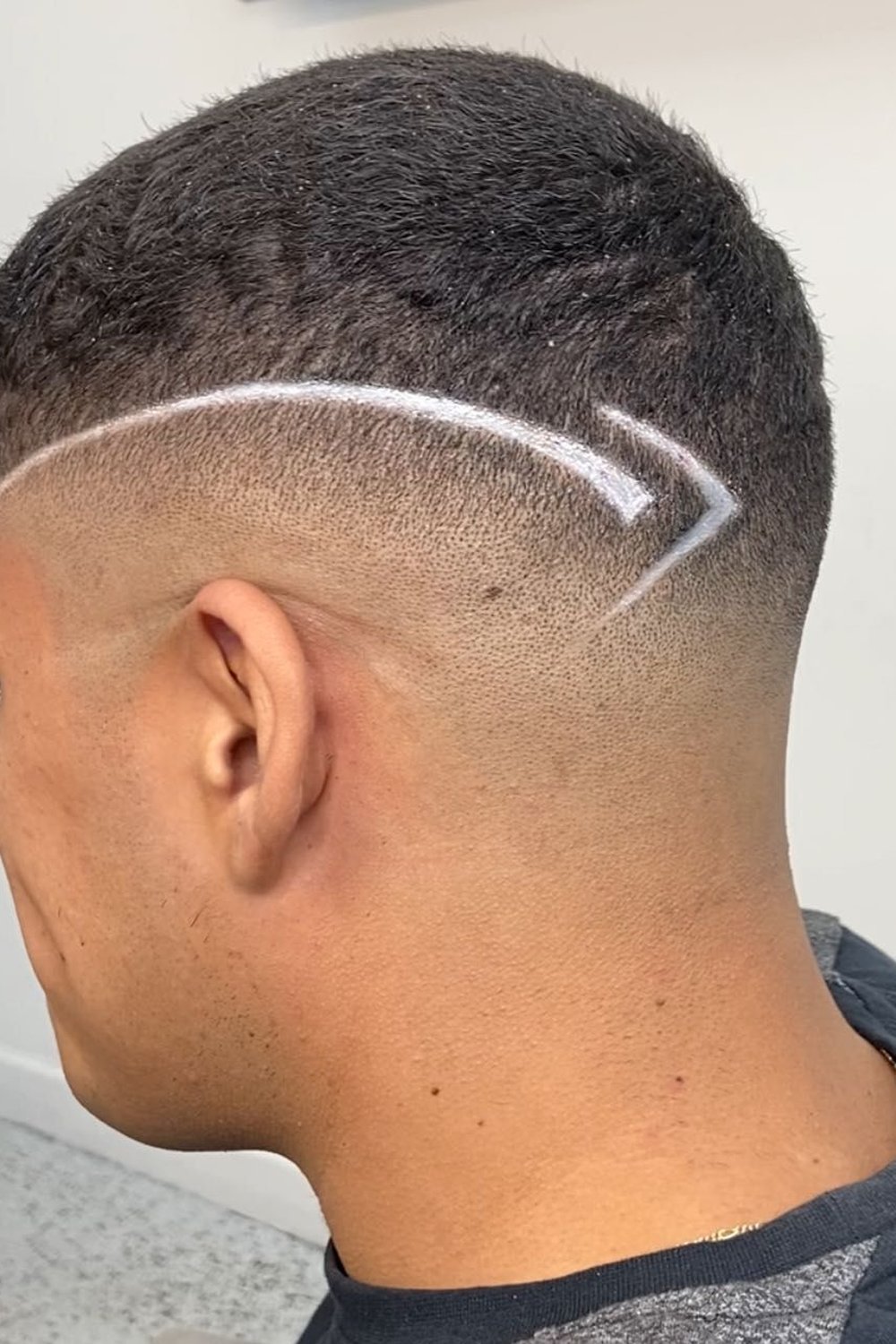
Photo: Esca Barber Studio via Booksy — source
An arrow pointing toward the back of the head does something clever: it pulls the eye along the fade and makes the whole cut look longer and sharper. In this photo the arrow is bold and clean, a chevron shape with a clear point, sitting in the middle of the side where the fade is shortest. It is a design with direction, and it suits men who like their haircut to look intentional from every angle. What to ask for: a taper fade with a bold arrow shaved into the side, pointing back, with a clean chevron head. Best for: sharp dressers, short to medium tops, and anyone who wants a design that looks like it means something. Keep the point crisp with a weekly trimmer pass.
Geometric & Freestyle Designs
9. Geometric Pattern
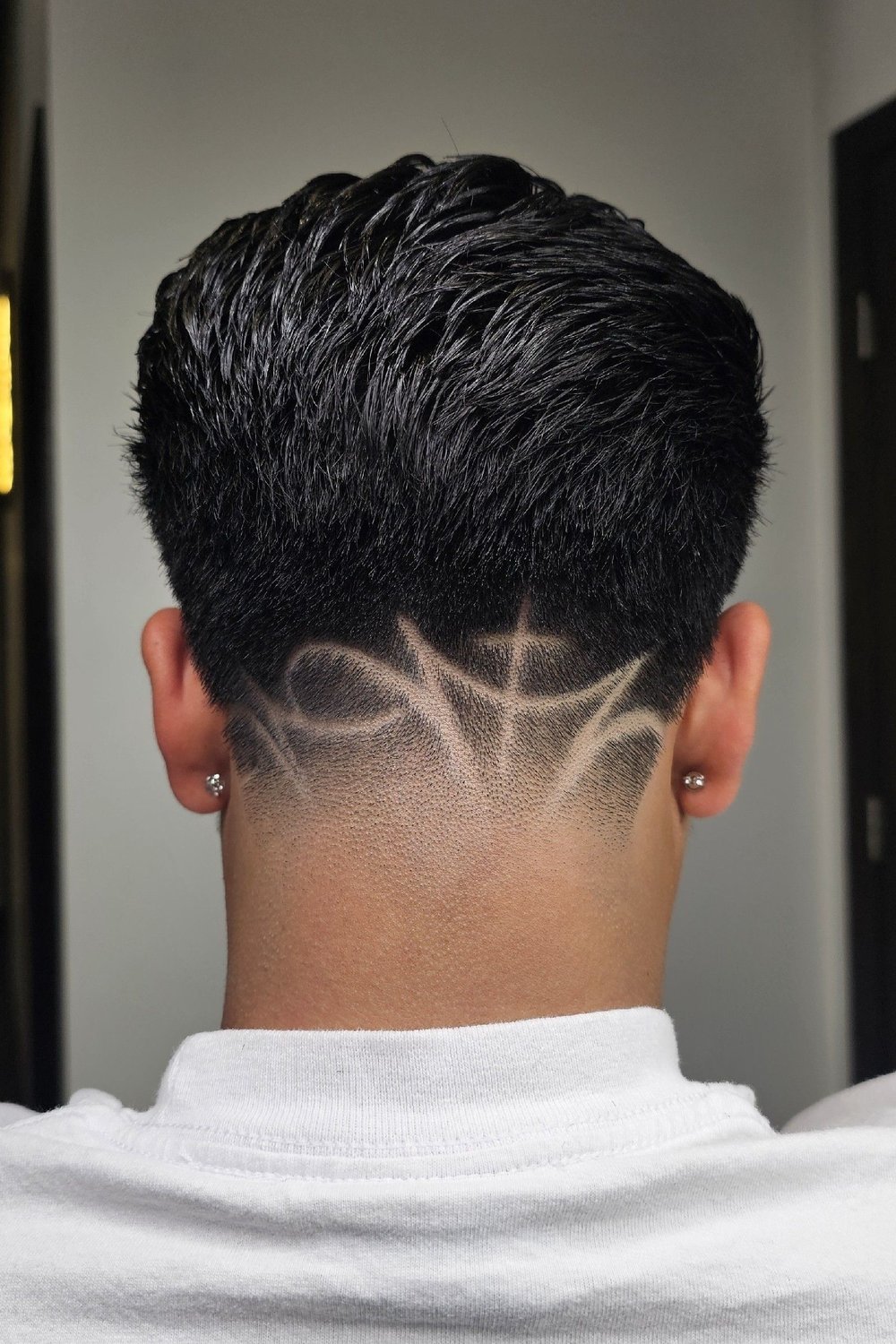
Photo: Karina Salas via Booksy — source
Geometric patterns are where a fade design becomes real art. In this photo an intricate web-like pattern of straight lines and angles is shaved symmetrically into the nape, turning the back of the head into a piece of line work. The symmetry is what makes it — every line mirrors the one opposite, so the pattern reads as planned rather than random. What to ask for: a taper fade with a symmetrical geometric pattern at the nape, drawn first in pencil so you can approve the layout. Best for: men who want the most impressive design in the room, and for special occasions — this is a showpiece, not an everyday cut. It takes the longest in the chair and needs the most upkeep, but nothing else photographs like it.
10. Tribal Design
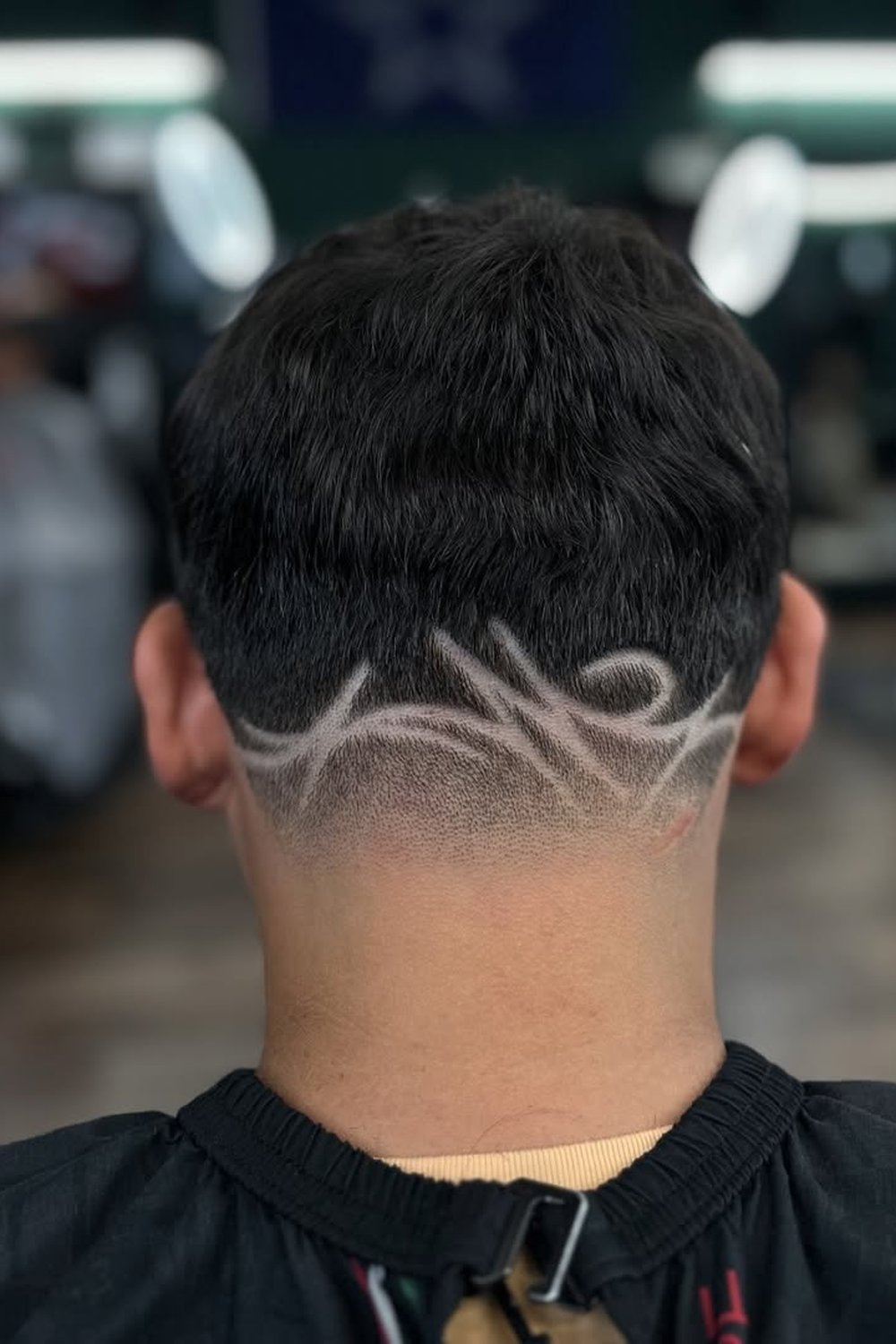
Photo: Favorite Hairstyles — source
Tribal designs borrow the flowing curved lines of traditional tattoo art and put them into the fade. In this photo the curves sweep across the nape in long, confident strokes, wider in some places and tapering to points in others. The curves follow the shape of the neck, so the design moves with the head instead of sitting flat on it. What to ask for: a taper fade with flowing tribal curves across the nape, freehand, with the lines tapering to points. Best for: Black men and men with coarse or curly hair, where the contrast between the shaved lines and the dark hair is strongest, and for anyone who likes tattoo-style art. Ask the barber to sketch the curves first — tribal work lives or dies on flow.
11. Freestyle Abstract Art

Photo: Favorite Hairstyles — source
Freestyle art is the barber’s version of a blank canvas: no template, just lines drawn freehand into the fade. In this photo a symmetrical abstract star-and-web design fills the nape under a curly top, part star, part web, entirely original. It is distinct from the geometric pattern (item 9) because the lines are organic rather than measured, and from the tribal curves (item 10) because the shape is centred and symmetrical. What to ask for: a curly taper fade with a freestyle abstract design at the nape — and give the barber freedom on the exact lines. Best for: curly tops, creative types, and men who want a design nobody else has. Because it is freehand, no two freestyle designs ever come out the same.
12. Swirl Design

Photo: Cristhian Fadeking via Booksy — source
Swirls are the most playful design on this list: spiral curls shaved into the nape on both sides, like the curls in a cartoon wave. In this photo the spirals sit symmetrically on either side of the neck, and their round shapes soften the hard edges of the fade underneath. The trick is keeping both sides the same size — a good barber will mark the centres first, then build the spirals outward. What to ask for: a short taper fade with matching spiral swirls shaved into the nape on both sides. Best for: younger men, short tops, and anyone who wants a design that makes people smile. Swirls blur quickly as hair grows, so plan a touch-up within a week.
13. Diamond Pattern
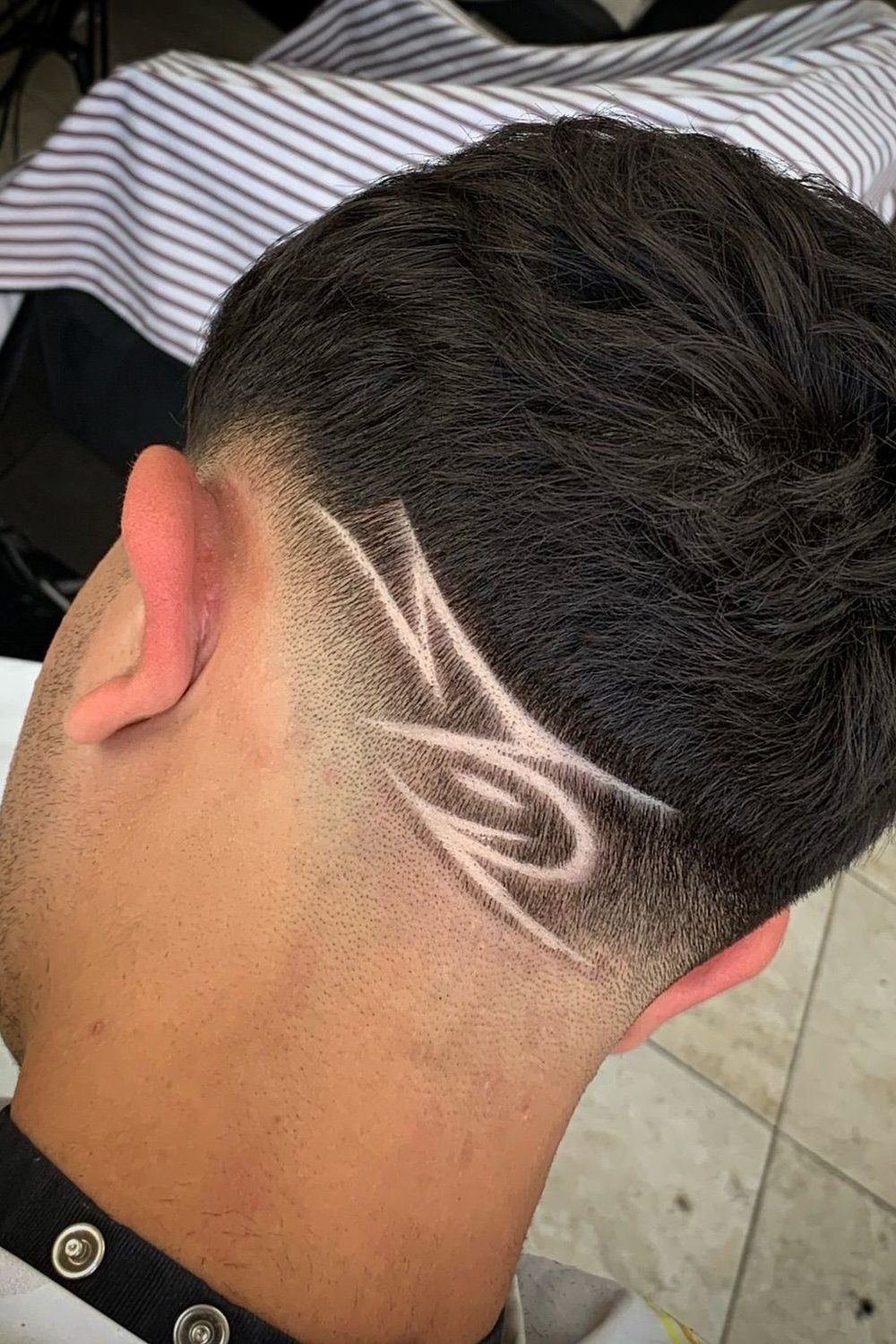
Photo: Pinterest — source
The diamond design uses sharp angular lines to carve a diamond shape into the side of the fade — closer to tribal line work than to a repeating diamond grid, and stronger for it. The angles catch the light as the head turns, so the shape seems to shift. One diamond, done well, is more striking than a whole grid of them. What to ask for: a taper fade with one sharp angular diamond shaved into the side, clean points top and bottom. Best for: men who like geometric shapes but want something simpler than a full pattern, and for straight hair, where the angles stay crisp. Keep the points sharp with a weekly edge-up.
14. Checkerboard Design

Photo: Pinterest — source
The checkerboard design in this photo is a dotted grid across the top of the fade rather than classic black-and-white squares — a field of small dots arranged in a grid, which reads as a checkerboard from a step back. It is a clever take: the dots are easier to shave evenly than squares, and they give the cut texture as well as pattern. No true square checkerboard photo exists in real barber work that holds up at this size, and this dotted version is the one barbers actually do. What to ask for: a taper fade with a dotted checkerboard grid across the top of the fade, dots evenly spaced. Best for: short tops, statement cuts, and men who want a pattern that looks different up close and from a distance. The dots need a steady hand and a fine trimmer.
15. Spiderweb Design

Photo: Booksy / DomBlend — source
The spiderweb design here is made of bold lines radiating out from the temple like the spokes of a web, rather than a textbook web of concentric circles. The radiating lines are what make it work on a fade: they follow the direction the hair is cut, so the design and the fade reinforce each other. It is dramatic without being complicated, and it reads clearly even in a quick glance. What to ask for: a taper fade with radiating web lines fanning out from the temple. Best for: Halloween season, bold dressers, and men with dark hair, where the shaved lines show the strongest contrast. A full concentric web is harder to keep clean — the radiating version ages better between trims.
16. Wave Lines Design
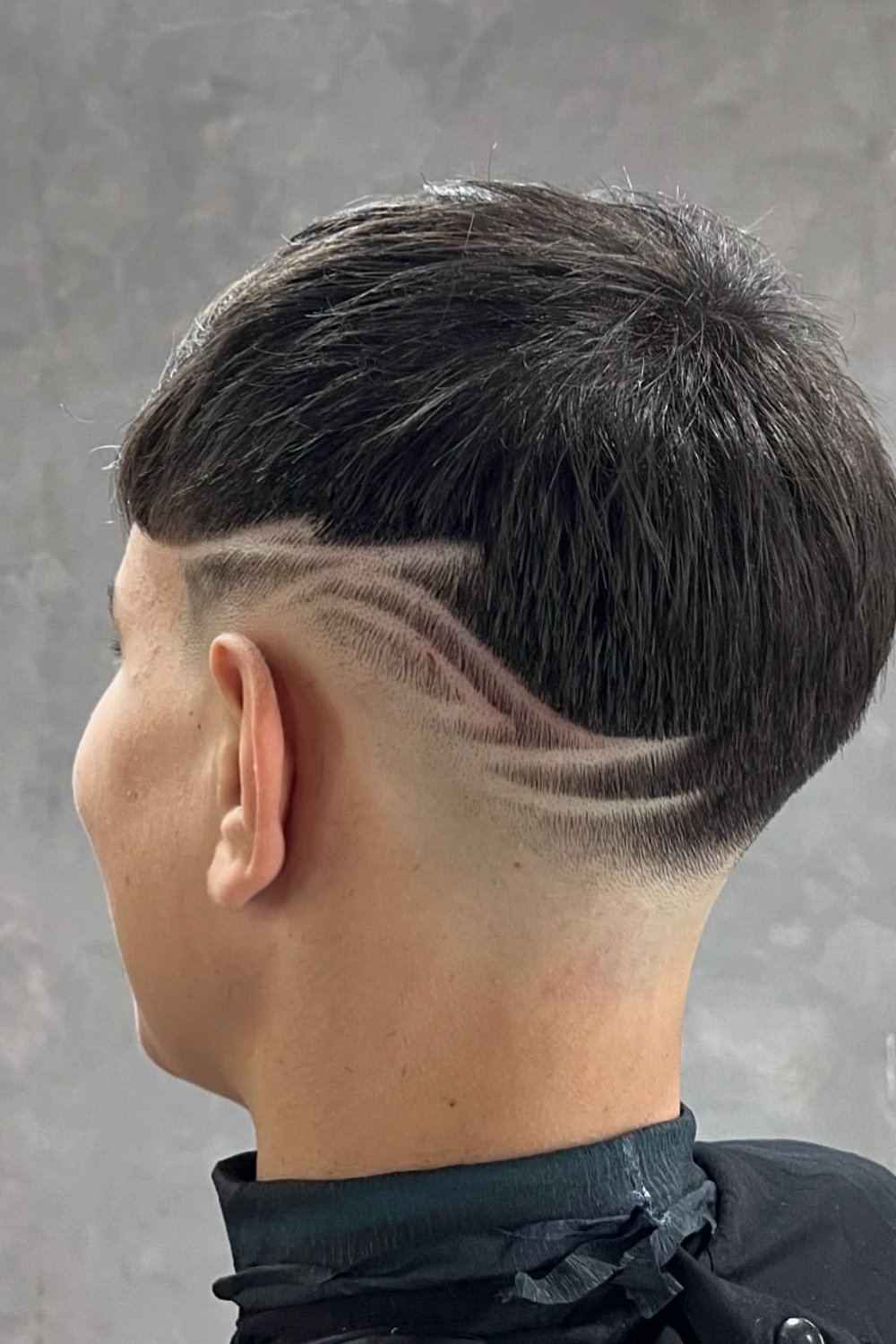
Photo: Pinterest — source
Wave lines are the calmest design in the geometric section: two or three curved lines that roll across the side of the fade like water. In this profile photo the waves sit high on the side, following the curve of the head, and they make the whole cut feel relaxed and fluid. There is nothing aggressive about them, which is exactly their charm — they add art without adding attitude. What to ask for: a taper fade with two or three smooth wave lines across the side, evenly spaced. Best for: wavy-haired men, surfers and relaxed dressers, and for a first geometric design — waves are forgiving if the lines are not perfectly even. They also grow out more gracefully than straight lines do.
Symbols & Lettering Designs
17. Initial / Letter Design

Photo: Pinterest — source
A shaved initial is the most personal design on this list. In this photo a cursive letter is scripted into the nape, flowing like handwriting rather than a stencil. Your own initial, your partner’s, your child’s — the letter turns the haircut into something that means something only to you. Script letters work best because their curves are forgiving; block capitals show every wobble. What to ask for: a taper fade with one cursive initial shaved into the nape, sized to fit the space. Best for: anyone marking an occasion — a birthday, an anniversary, a new baby — and for men who want a design with a story. Bring the letter written out on paper so the barber can copy the exact shape.
18. Crown Design
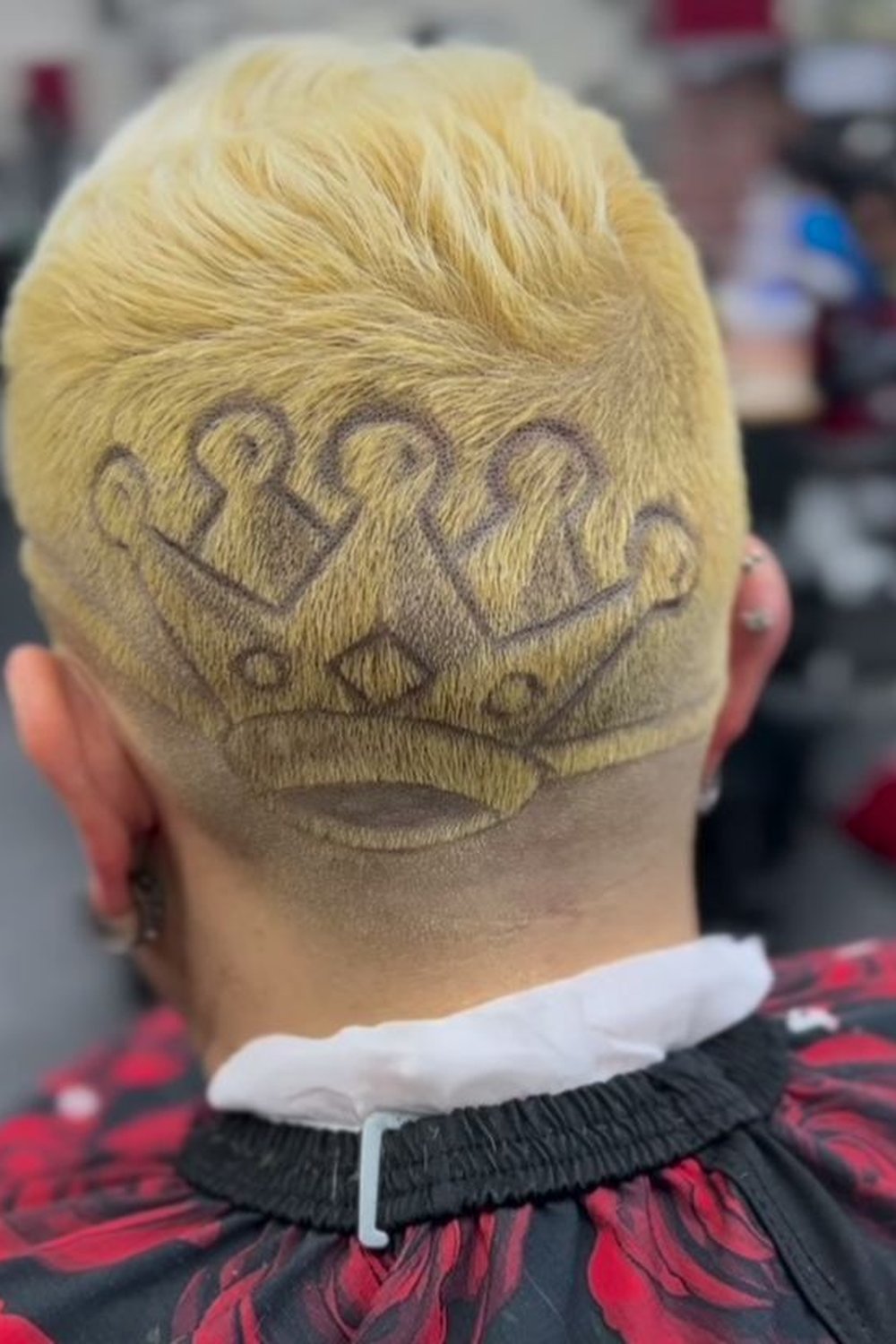
Photo: Pinterest — source
A crown shaved into the back of the head is a bold claim, and this photo pulls it off: a clear crown outline on blond hair, its points sharp against the fade. The crown works especially well on lighter hair, where the shaved lines show as clean pale shapes. It is a design that says confidence, so wear it like you mean it. What to ask for: a taper fade with a crown shaved into the back of the head, points kept sharp and even. Best for: blond and light-brown hair, confident dressers, and celebrations. The crown’s points blur first, so book a touch-up within ten days if you want it to stay royal.
19. Heart Design
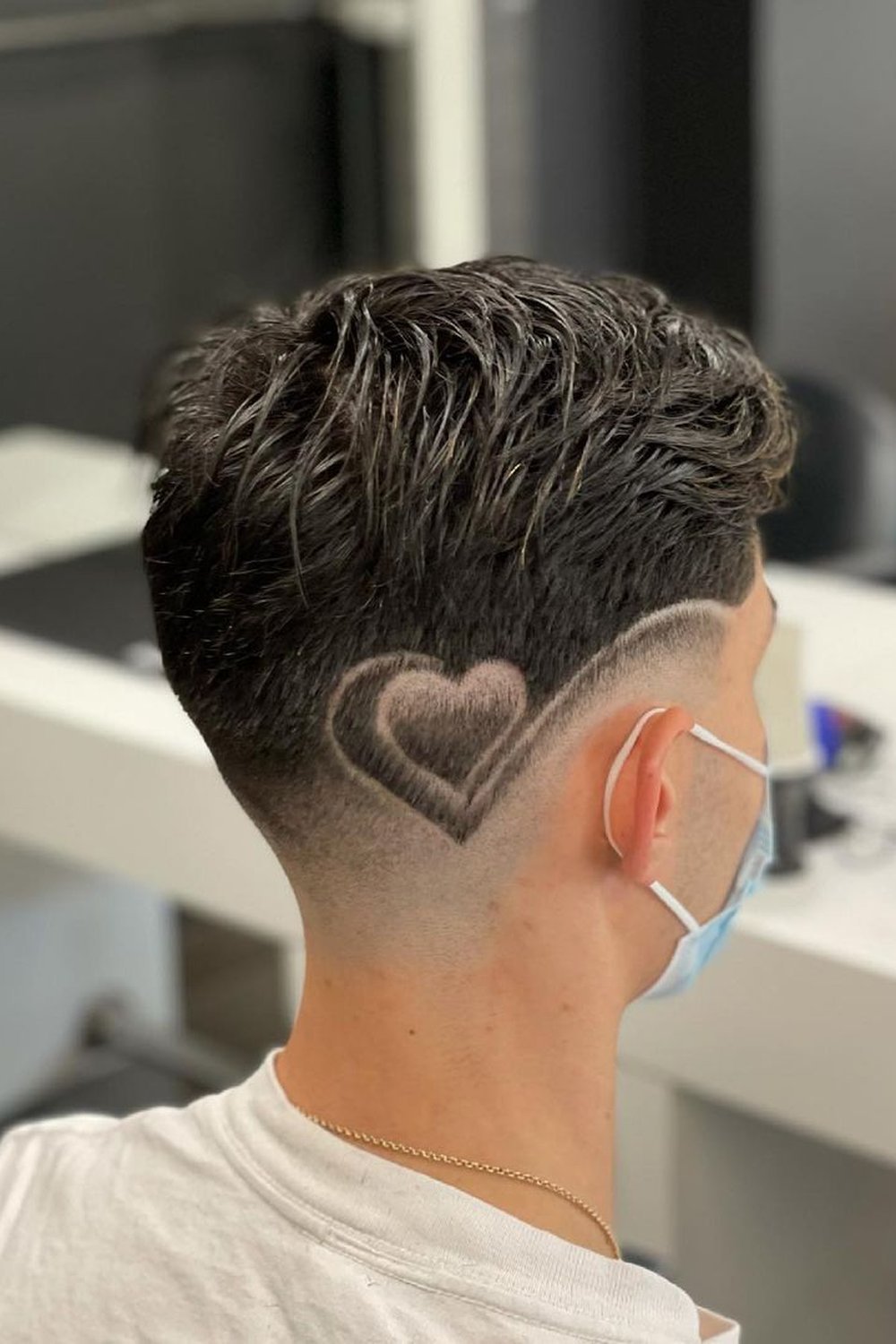
Photo: Pinterest — source
A heart shaved into the side of a fade is simple, sweet and instantly readable — there is no mistaking the shape. In this photo the heart sits clean in the fade, its curves smooth and its point sharp. It is the design men get for Valentine’s Day, for anniversaries, or just because they like the shape, and it works on any hair type. What to ask for: a taper fade with one heart shaved into the side, medium size, curves smooth. Best for: romantic occasions, younger men, and anyone who wants a design that makes people smile rather than stare. The curves need a light touch — a heavy hand makes the heart lopsided.
20. Flame Design
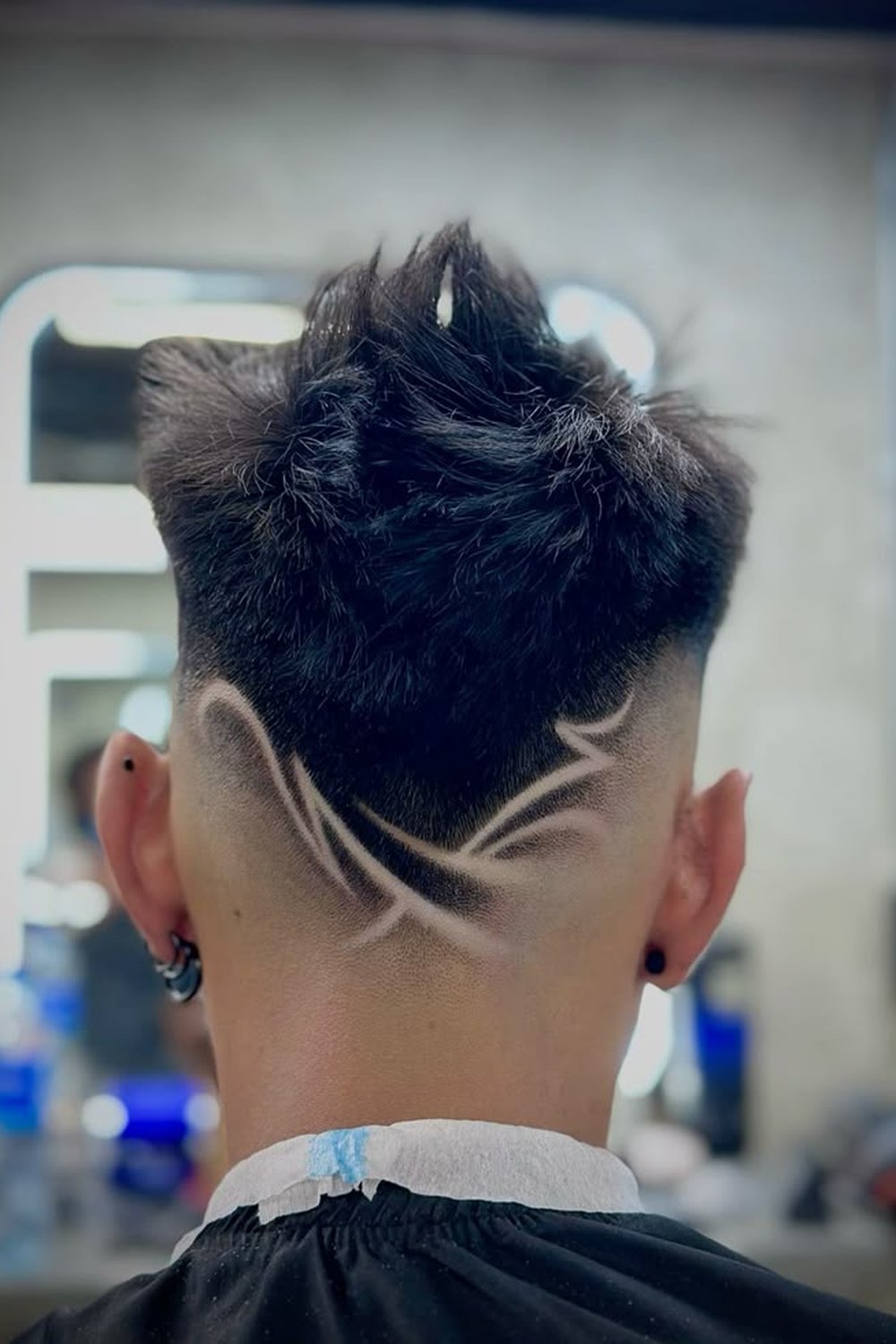
Photo: Pinterest — source
The flame design here is stylised rather than literal: flame-tongue curves licking upward across the nape, suggesting fire without drawing an actual flame. That suggestion is what makes it wearable — it reads as flowing art from a distance and as flames up close. The curves rise with the shape of the head, so the design looks like it is moving. What to ask for: a taper fade with stylised flame-tongue curves shaved into the nape, rising upward. Best for: bold dressers, summer cuts, and men who like tribal-style flow with a hotter edge. The curves must stay smooth — jagged lines turn flames into scratches.
21. Feather Design

Photo: Pinterest — source
A large feather with visible barbs shaved into the side of the fade is one of the most detailed designs a barber can do. In this photo the feather runs down the side of the head, its fine barb lines fanning out from the central shaft, and the detail is what makes people lean in for a closer look. It is delicate work — the barbs need a fine trimmer and a very steady hand — so this is a design to book with extra time. What to ask for: a taper fade with a large feather shaved into the side, barbs detailed, and allow extra chair time. Best for: men who appreciate fine detail, longer tops that frame the feather, and anyone who wants a design that rewards a second look. It is the first design on this list where the barber’s skill matters more than the idea.
22. Leaf Design

Photo: Booksy / Thomas Barber — source
A large leaf with vein lines shaved into the side of the fade is nature’s answer to the feather: same fine detail, softer feeling. In this photo the leaf outline is clear and the vein lines run through it like a real leaf, genuinely razor-shaved rather than drawn on. It suits men who like organic shapes and quiet detail, and it pairs beautifully with a natural, unstyled top. What to ask for: a taper fade with a large leaf and vein lines shaved into the side. Best for: nature lovers, textured and wavy tops, and autumn — the leaf reads as seasonal without being a costume. The veins are the detail that sells it, so make sure your barber does them last, when the outline is set.
Placement & Style Combos
23. Low Taper with Side Design
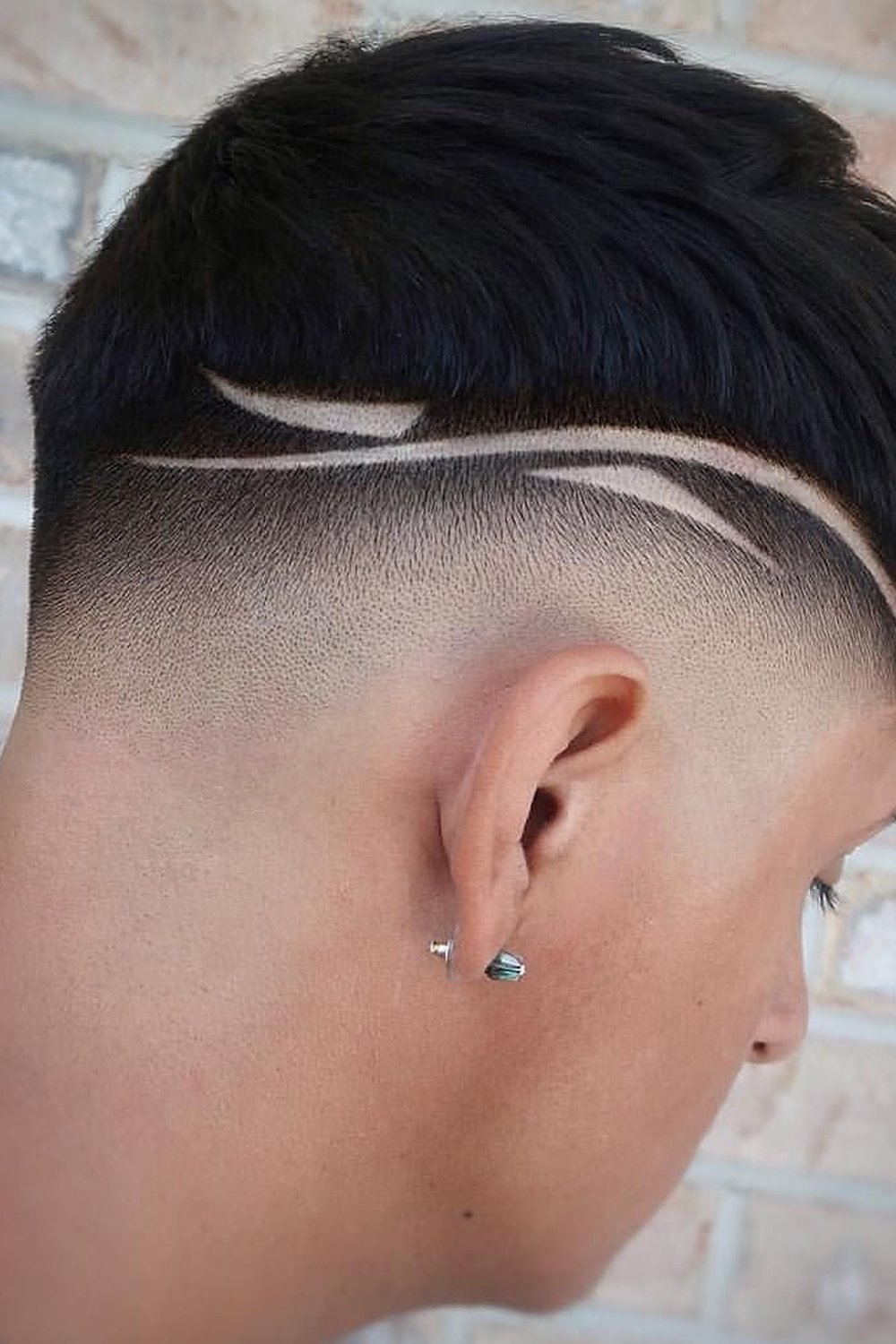
Photo: Pinterest — source
The low taper is the best base for a first design, because the fade sits low and the design has a clean, short canvas to sit on. In this photo curved line designs run across the side of a low taper, and the low fade keeps the whole cut looking neat and workplace-friendly even with the art in it. If you want a design but you also need to look respectable on Monday morning, this is the combination to choose. What to ask for: a low taper fade with curved line designs on the side, kept above the ear. Best for: first designs, office workers, and straight hair. Our guide to the low taper fade explains the base cut in full, and the design simply sits on top of it.
24. Back-of-Head Design
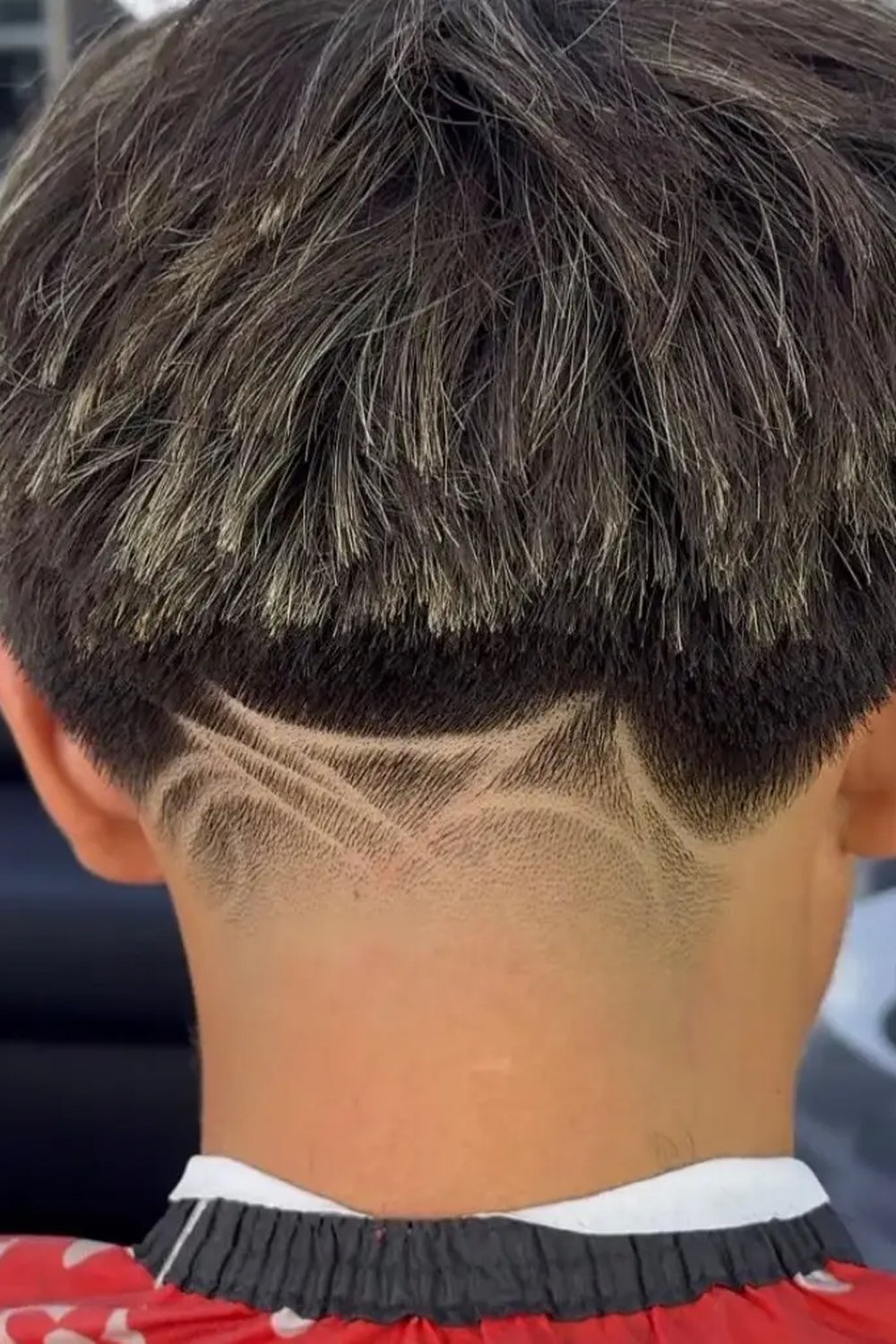
Photo: Barajas Blends via Setmore — source
A back-of-head design is the secret design: nobody sees it from the front, and everyone sees it when you walk away. In this photo a bold V-shaped line design runs across the nape, wide and confident, filling the whole back of the head. The back of the head is the biggest flat canvas a barber gets, so it suits the largest, boldest shapes — the V here uses all of it. What to ask for: a taper fade with a bold V-shaped design across the nape, centred and symmetrical. Best for: men who want a big design that stays hidden from the front, and for anyone who wears their hair up or short at the back. Check it with two mirrors before you leave the chair — you cannot see your own nape.
25. Temple Design

Photo: Tucker Cuts — source
The temple is the smallest canvas on the head, and that is its strength: two short lines above the temple, as in this photo, add a sharp detail without changing the whole haircut. The temple fade itself is already clean and precise, and the lines sit exactly where the fade is shortest, so the contrast is strong. It is the design for men who like detail but not drama. What to ask for: a temple fade with two short shaved lines above the temple. Best for: short tops, sharp dressers, and men who want a design that reads as grooming rather than art. The lines are small, so they blur fast — a weekly touch-up keeps them visible.
26. Nape Design

Photo: Booksy (Luisi) — source
The nape is where the taper ends and the neck begins, and a V-shaped line design there frames the whole cut like a signature at the bottom of a letter. In this rear-view photo the V sits cleanly below the taper, symmetrical and sharp, turning the back of the neck into the finishing touch. It is subtle from the front and striking from behind — the ideal balance for a design you live with every day. What to ask for: a taper fade with a V-shaped line design shaved into the nape, centred on the neck. Best for: short hair, men who wear collared shirts, and anyone whose design needs to hide at work — a collar covers the nape completely. It also grows out neatly, since the V simply softens.
27. Design with Buzz Cut

Photo: Volady Barber — source
A buzz cut and a design are a natural pair: the top is so short that the fade and the design become the whole haircut. In this photo a bold lightning-bolt line runs through the side of a buzz cut fade, and because there is no long top to distract from it, the bolt is the star. Buzz cuts also make designs cheaper to maintain — there is no styling, no product, just the shape. What to ask for: a buzz cut with a taper fade and a lightning-bolt line design on the side. Best for: low-maintenance men, summer, and anyone who wants maximum impact for minimum effort. The whole cut, design included, needs redoing every two weeks, but each visit is quick.
28. Design with Curly Top

Photo: @sami_barbershop via Pinterest — source
Curly tops and fade designs are made for each other: the curls give the top texture and volume, and the design gives the sides structure. In this photo a white chevron line cuts through the nape below a curly top, and the contrast between the soft curls above and the sharp line below is what makes the cut work. (You can see the barber’s handle, @sami_barbershop, watermarked on the photo itself.) What to ask for: a curly top with a taper fade and a chevron line design at the nape. Best for: curly and coily hair, young men, and anyone who wants the design to balance the volume on top. Keep the curls moisturised so the top stays defined against the sharp lines.
29. Design with 360 Waves

Photo: Pinterest — source
360 waves are already a design in themselves — the ripples circling the head take weeks of brushing to build — so the shaved design here is deliberately modest: a small cross at the back of a low taper fade, visible but never competing with the waves. That restraint is the lesson. With waves, the design is an accent, not the main event. What to ask for: 360 waves with a low taper fade and one small cross design at the back. Best for: men who already have waves spinning, and for Black men, where the wave-and-fade combination is a classic. Keep brushing daily and duragging at night — the waves are the real work, the cross is just the signature.
30. Design with Faux Hawk
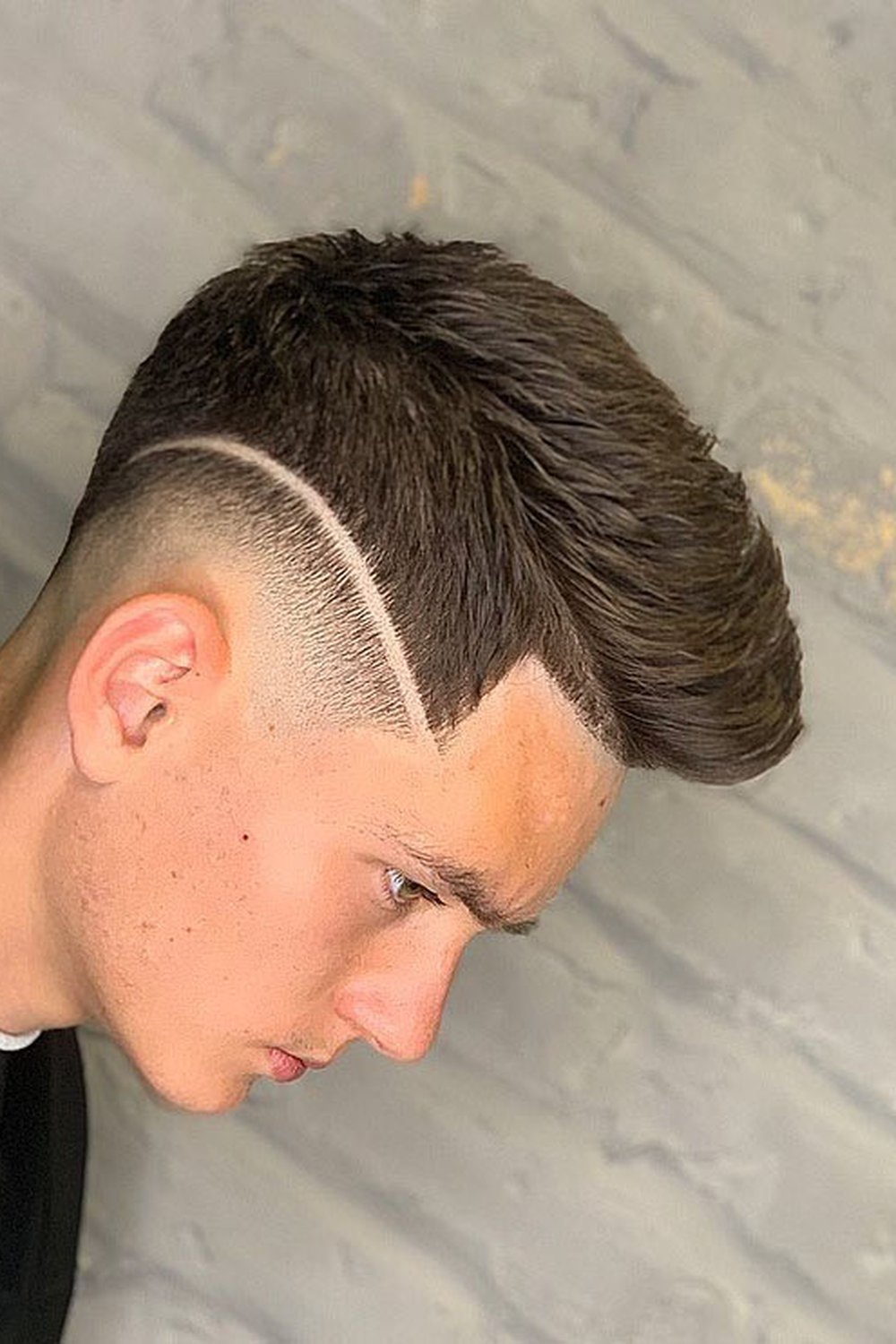
Photo: Barbarian Style — source
The faux hawk is already a bold cut — hair swept up into a ridge down the middle — and a bold curved line in the skin fade beside it doubles the attitude. In this photo the curve sweeps through the side of the fade while the hawk rises above it, and the two shapes balance each other: height on top, line on the side. The photo is shot at a tilt, which suits the cut — nothing about a faux hawk is straight. What to ask for: a faux hawk with a skin fade and a bold curved line design on the side. Best for: nights out, festivals, and young men who want the loudest cut on this list. It needs product every morning and a design refresh every week — this is a high-maintenance combination.
31. Design with Textured Crop

Photo: Pinterest — source
The textured crop is the most popular men’s cut of the last few years — short, spiky, messy on top — and one clean straight line through the fade is all it needs. In this photo the spiky top does the talking up top while a single sharp line runs through the side, and the combination feels modern without trying too hard. It is the design for men who want to look current, not costume. What to ask for: a spiky textured crop with a taper fade and one straight line shaved through the side. Best for: straight and wavy hair, everyday wear, and men who style with matte clay in under a minute. The line is the only part that needs upkeep — the crop itself grows out well.
32. Design with Burst Taper

Photo: Booksy (Erick the Barber) — source
The burst taper curves around the ear in a semicircle, and that curve creates a natural stage for a design: in this photo a bold fan of shaved lines spreads above the burst, following its arc. The fan and the curve work together — the lines echo the shape of the fade — so the whole side reads as one planned piece. Our guide to the low burst fade covers the base shape if you are new to it. What to ask for: a burst taper curving around the ear with a fan of shaved lines above it. Best for: men who already love burst fades and want to take theirs further, and for round faces, where the curve adds structure. The fan lines need a barber who understands the burst shape — the design must follow the curve, not fight it.
33. Design with Skin Fade

Photo: Pinterest — source
A skin fade is the highest-contrast base a design can have: the fade goes all the way down to bare skin, so shaved lines show up in bright white against the hair above. In this close-up, bold lightning-style line art cuts across the side of a skin fade, and the contrast is so strong the lines look painted on. Nothing else on this list shows a design this clearly. What to ask for: a skin fade with bold lightning-style line art on the side, foil-shaved for maximum contrast. Best for: maximum impact, photos, and men with dark hair, where the pale lines pop hardest. It is also the highest-maintenance combination here — a skin fade needs redoing every seven to ten days, and the design goes with it.
34. Two-Tone Colour Design
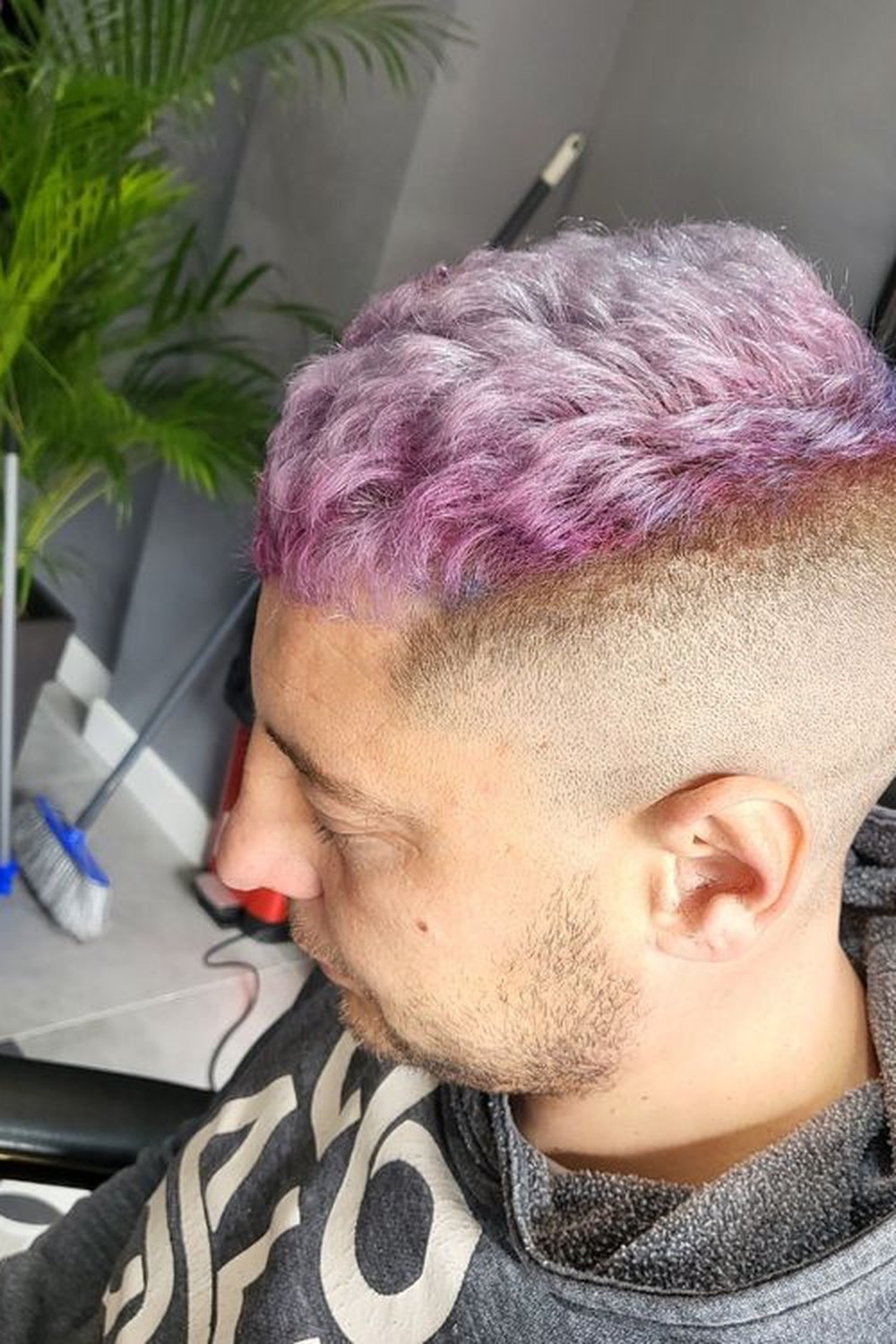
Photo: Mons Barber — source
Not every design is shaved. In this photo the design is the colour itself: a pink and purple two-tone dye across a textured top, sitting over a clean natural taper fade. There is no razor line in the picture at all — the colour does the work a line would do, splitting the top into two bold halves. It is the loudest look on this list and the only one that needs a colourist, not just a barber. What to ask for: a textured top with a taper fade, dyed in two tones — pink and purple as shown, or any two colours that suit you — with the fade left natural. Best for: creative types, festivals, and men who want a design that lasts longer than a shaved line, since colour fades over weeks rather than days. Use colour-safe shampoo and expect the brightest tones to soften after a few washes.
35. Subtle Hidden Design

Photo: Pinterest — source
The subtlest design in this guide is also one of the smartest: fine double curved lines, shaved quietly into the side of a taper fade under a spiky top. From a distance it reads as a clean fade; up close, the lines appear. There is no true “hidden under longer hair” design in real barber work — a design has to be visible to exist — but this is as close as it gets: a design you can show or hide depending on how you stand. What to ask for: a taper fade with fine double curved lines, kept thin and low on the side. Best for: workplaces with strict rules, first-timers who are nervous about a bold design, and men who like detail for its own sake. It is also the easiest design to grow out — the lines simply fade into the blend.
36. Minimal Single-Line Accent
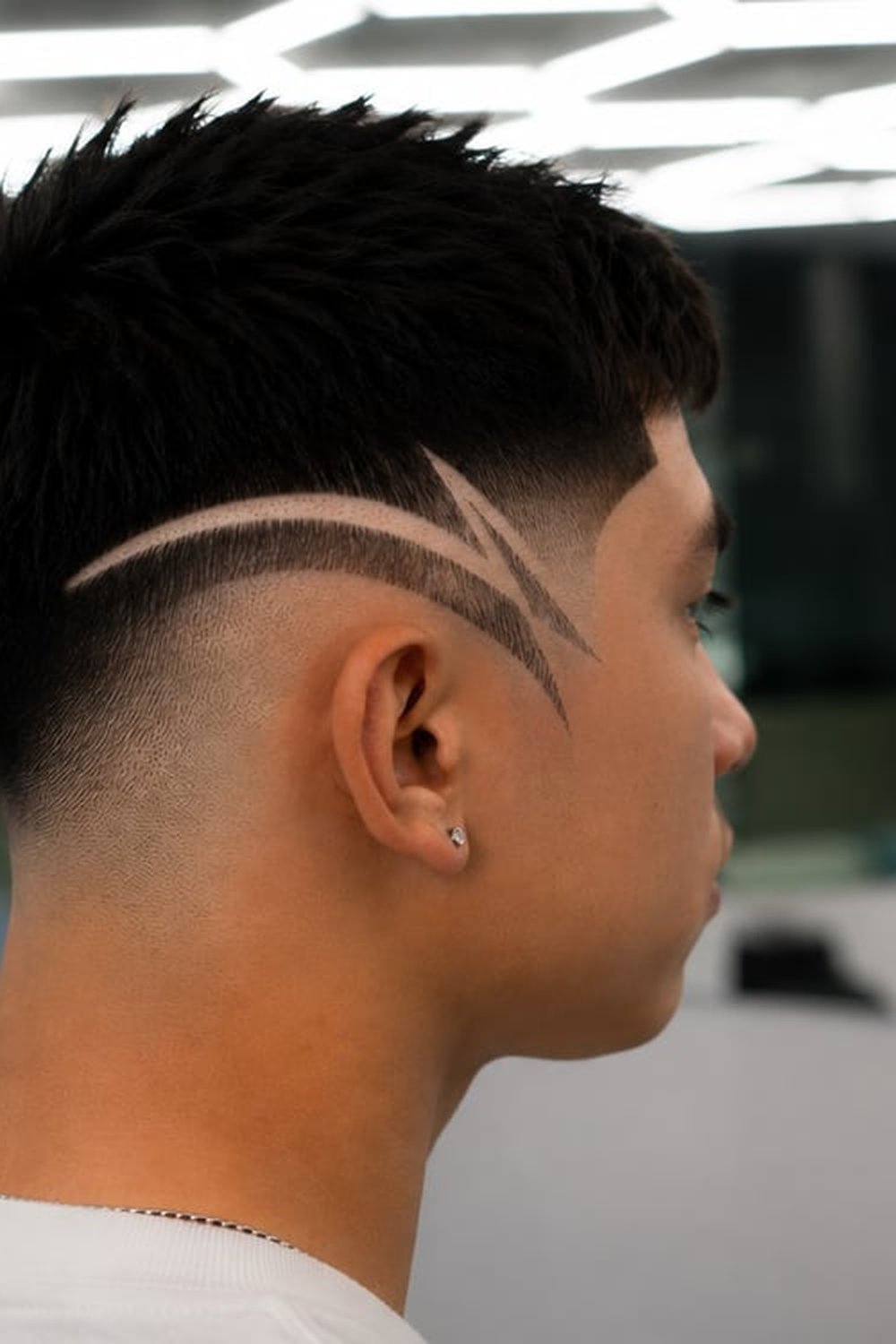
Photo: Klandestino Academy — source
Minimal does not mean boring. In this photo one curved line with a small lightning flick at the front is the entire design, shaved into the fade of a spiky crop — and it is enough. The single line gives the cut a focal point without any clutter, and the little flick at the front adds just enough mischief to make it memorable. It is the design equivalent of a single piece of jewellery: one accent, worn well. What to ask for: a spiky crop with a taper fade and one curved line with a small flick at the front. Best for: minimalists, young men, and anyone who wants a design that works with a suit as well as streetwear. It is quick to do, cheap to refresh, and hard to get wrong.
37. Bold Full-Side Art

Photo: Hairstyle Camp — source
The last design is the biggest: a full-side geometric triangle grid shaved across the entire fade, from temple to nape, covering the whole side of the head. In this photo the triangles form a complete pattern with no empty space, and the man wears sunglasses — the whole look is a statement, top to bottom. This is not a design you get on a whim. It takes the longest in the chair, costs the most, and needs the most upkeep, but it is also the only design on this list that is a complete work of art rather than an accent. What to ask for: a taper fade with a full-side triangle grid, temple to nape, and book a long appointment. Best for: special occasions, photoshoots, and men who want the most extreme design a barber can do. Bring the photo, agree the pattern before the clippers start, and plan your next visit before you leave.
How to Choose the Right Design for You
Start with your life, not the photo. If your workplace bans visible designs, pick a nape design (items 6, 24, 26) or a subtle one (item 35) — both hide under a collar. If you want maximum impact and you do not mind the upkeep, go for a full-side or geometric design (items 9, 37) on a skin fade base (item 33), where the contrast is strongest. Match the design to your hair: dark hair shows shaved lines best, blond hair suits crowns and larger shapes, curly tops pair beautifully with nape designs, and 360 waves need only a small accent (item 29). Finally, be honest about upkeep — a design lasts one to two weeks, and the bolder it is, the faster it blurs. A single line you can refresh cheaply beats a masterpiece you let grow out messy.
How to Ask Your Barber for a Fade Design
Bring the photo from this guide on your phone and point at the exact lines you want. Then say three things: the fade height (“low taper”), the design (“lightning bolt above the ear”), and the top (“textured crop, two inches”). Ask the barber to draw the design first with a pencil or a trimmer outline so you can approve it before it is shaved in — a good barber will offer this without being asked. Say what you do not want too: “no extra lines” or “keep it small.” And ask the price before the clippers start: designs add time, and a full-side pattern can double the cost of the cut. If your barber has never done the design you want, ask to see their photos first. A design is permanent for two weeks — it is worth a five-minute conversation.
Styling & Upkeep: Keeping the Lines Sharp
A fade design is a short-lived cut, and that is part of its charm. The lines are shaved into the shortest hair on your head, so they blur as soon as the hair grows — usually within seven to fourteen days. To keep them sharp, book a line-up touch-up every week to ten days; most barbers will re-shave the lines for a small fee between full cuts. Between visits, keep the fade clean with a light moisturiser on the shaved areas and avoid heavy pomades near the lines, which can clog the pattern. Wash with a gentle shampoo, pat dry rather than rubbing, and wear a durag or a cap carefully — tight headwear can flatten fresh lines. When the design has grown out, do not try to re-shave it yourself with a home trimmer unless you have done it before; one slip turns a bolt into a scratch. Let it grow out cleanly, then pick your next design from this guide.
FAQ
What is a taper fade design?
A taper fade design is a pattern shaved into the faded sides or back of a taper fade haircut — lines, shapes or pictures cut with a trimmer into the shortest part of the fade. The taper fade itself is a cut where the hair gets gradually shorter down the sides and back; the design sits inside that faded area, where the contrast between shaved lines and hair makes the pattern stand out. Common designs include single lines, lightning bolts, stars, crosses, geometric patterns and initials.
How long does a taper fade design last?
About one to two weeks. The design is shaved into very short hair, so it starts to soften as soon as the hair grows — usually within seven days for bold designs and up to fourteen days for simple lines. A weekly line-up touch-up from your barber keeps it sharp. Skin fade designs fade fastest, while low taper designs last a little longer because the hair around them is longer.
How much does a taper fade design cost?
Most barbers charge extra on top of the haircut — a simple line or cross is often a small add-on, while a geometric pattern or full-side design can double the price of the cut because it takes much longer. Always ask the price before the clippers start, and expect to pay for the barber’s time, not just the haircut. Touch-ups between full cuts are usually cheaper.
Can I get a taper fade design for work?
It depends on your workplace. Nape designs and subtle designs hide under a collar and are safe for most offices, while side and full-side designs are visible from every angle. If your job has strict grooming rules, choose a small nape design or a subtle double line, and check your workplace policy first. A low taper with a small design is the safest combination for professional settings.
What should I tell my barber for a taper fade design?
Bring a photo, then say the fade height, the design and the top length: for example, “low taper fade, lightning bolt above the ear, textured crop on top.” Ask the barber to outline the design first so you can approve it, and say what you do not want. Our guide to the high taper fade is useful if you want a higher, bolder base for your design.
Do taper fade designs work on all hair types?
Yes — designs work on straight, wavy, curly and coily hair, because the design is shaved into the faded sides rather than the top. Dark hair shows the lines with the strongest contrast, while blond and light hair suits larger shapes like crowns. Curly tops pair well with nape designs, and 360 waves need only a small accent so the waves stay the focus. The one thing that matters more than hair type is the barber’s skill with a trimmer.
Conclusion
Thirty-seven designs, one rule: the best taper fade design for you is the one that fits your life, your hair and your barber’s skill — and that you actually enjoy wearing. A single line wins when you want something quiet and sharp. A lightning bolt or a star wins when you want to be noticed. A geometric pattern or full-side art wins when you want a masterpiece, and you accept the upkeep that comes with it. Pick the section that matches your style, show the photo to your barber, agree the lines before the clippers start, and book your touch-up before you leave the chair. A good fade design does not need to last forever. It just needs to look razor-sharp while it lasts.