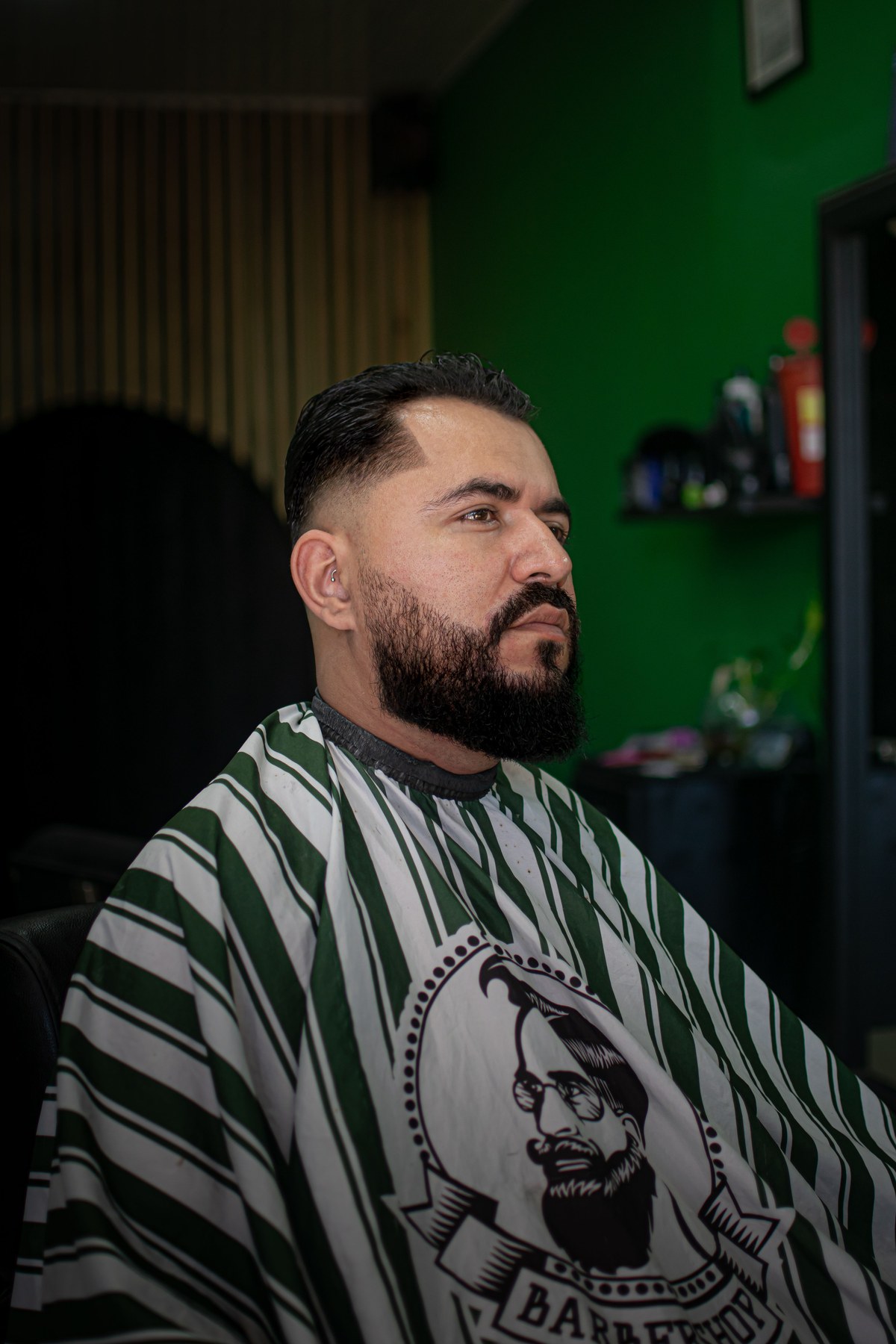
A single shaved line changes the whole haircut
A fade on its own is clean. Add a hard part and it becomes deliberate. A hard part is a thin line shaved with a trimmer or straight razor along your natural parting, and it does something no amount of combing can do: it makes the part visible from across the room. The top falls to one side, the fade blends down the other, and the razor line sits between them like a full stop. That is why the hard part fade has stayed a barbershop favourite for years — it works on a classic side part, a pompadour, a quiff, a buzz cut and even curly hair, and it suits an office as well as a night out.
This guide covers 26 of them — from the quietest low fade with a soft part to a skin fade with a double razor line — each one with a real photo, barber instructions you can read out word for word, and honest advice on who it suits and how long it lasts. If you are new to fades, start with our guide to the low taper fade, the safest base for a first hard part, and our business fade guide if you need the cut to pass in a formal office. A hard part usually needs a touch-up every one to two weeks, because the line fills in as the hair grows — so pick a style you will enjoy maintaining, and a barber you trust with a razor.
One honest note before the list: a hard part is only as good as the fade underneath it. The line is shaved into the shortest part of the cut, so a patchy blend will show. Book a barber who does hard parts regularly, bring the photo from this guide, and point at the exact line you want — “this line, this length, this spot.” Say what you do not want too. That one sentence prevents most bad hard parts.
What’s in this guide
Fade heights (1–5): classic side part, low, mid, high and skin fades with a hard part. Classic tops (6–10): comb over, pompadour, quiff, slick back and textured crop. Texture and length (11–14): buzz cut, curly top, natural waves and beard fade. Bold variations (15–20): undercut, disconnected, double line, taper, burst fade and military high and tight. Finishing looks (21–26): spiky top, faux hawk, thinning hair, long top, subtle office part and side-swept fringe.
What is a hard part fade?
A hard part — also called a razor part or shaved part — is a line shaved into the hair along the parting, usually 1–2 mm wide. Unlike a soft part, which is just hair combed to one side and disappears the moment the wind hits it, a hard part stays visible until it grows out. Your barber creates it with a trimmer or a straight razor after the fade is blended, following the line where your hair naturally wants to separate. That is the first rule of a good hard part: it should follow your natural part, not fight it. A line placed against the grain of your growth will look forced and grow out awkwardly.
The “fade” half of the cut is the gradual blend on the sides and back, from very short or skin at the bottom up into the longer top. The hard part sits at the top of that blend, so the two work together: the fade gives the cut its clean edges, and the part gives it its structure. The combination is why the style photographs so well and why it reads as sharp in person — every edge is defined. Most barbers charge a small amount extra for the line itself, and the whole cut takes only a few minutes longer than a standard fade.
How to ask your barber for a hard part fade
Walk in with three decisions made: the fade height, the top length, and how bold you want the line. “Low fade, two inches on top, hard part” is a complete request. “High skin fade, pompadour on top, hard part” is another. Bring the photo from this guide — a side-profile photo is the most useful, because it shows the fade height and the line placement at the same time. Tell your barber where your hair naturally parts, and let them check it with a comb before they shave anything. If you have a cowlick near the part, say so: the line may need to start just past it.
Ask how the line will be maintained. A razor line is crisper than a trimmer line but grows out the same way, and either way you will want a clean-up in one to two weeks. If you style the top yourself, ask which product the barber used — a matte clay for texture, a pomade for shine — and how much to use. A hard part looks best when the top is styled away from the line, so the shaved channel stays visible instead of being covered by falling hair.
Fade Heights
1. Classic Side Part with Hard Part

Photo: Pinterest — source
The classic side part with a hard part is the original, and it is still the one to get if you only ever get one hard part fade. The top is slicked back with a wet look, the part is shaved in a clean straight line, and the sides fade to skin. Nothing about it shouts; everything about it is tidy. The photo shows an East Asian man in a cream turtleneck, and the wet-look finish is what makes the part read so clearly — the shine on top contrasts with the matte skin of the fade, and the razor line sits exactly on the border between them.
Ask your barber for a side part on your natural parting, a skin fade on the sides, and a razor line along the part. Keep about two to three inches on top so the hair has enough weight to lie flat when it is slicked back. This is the safest hard part for a first-timer: if the line ever feels too bold, it softens within a week, and the underlying side part still looks good on its own. Style it with a medium-shine pomade, combed straight back and slightly to the side, away from the line.
2. Low Fade Hard Part
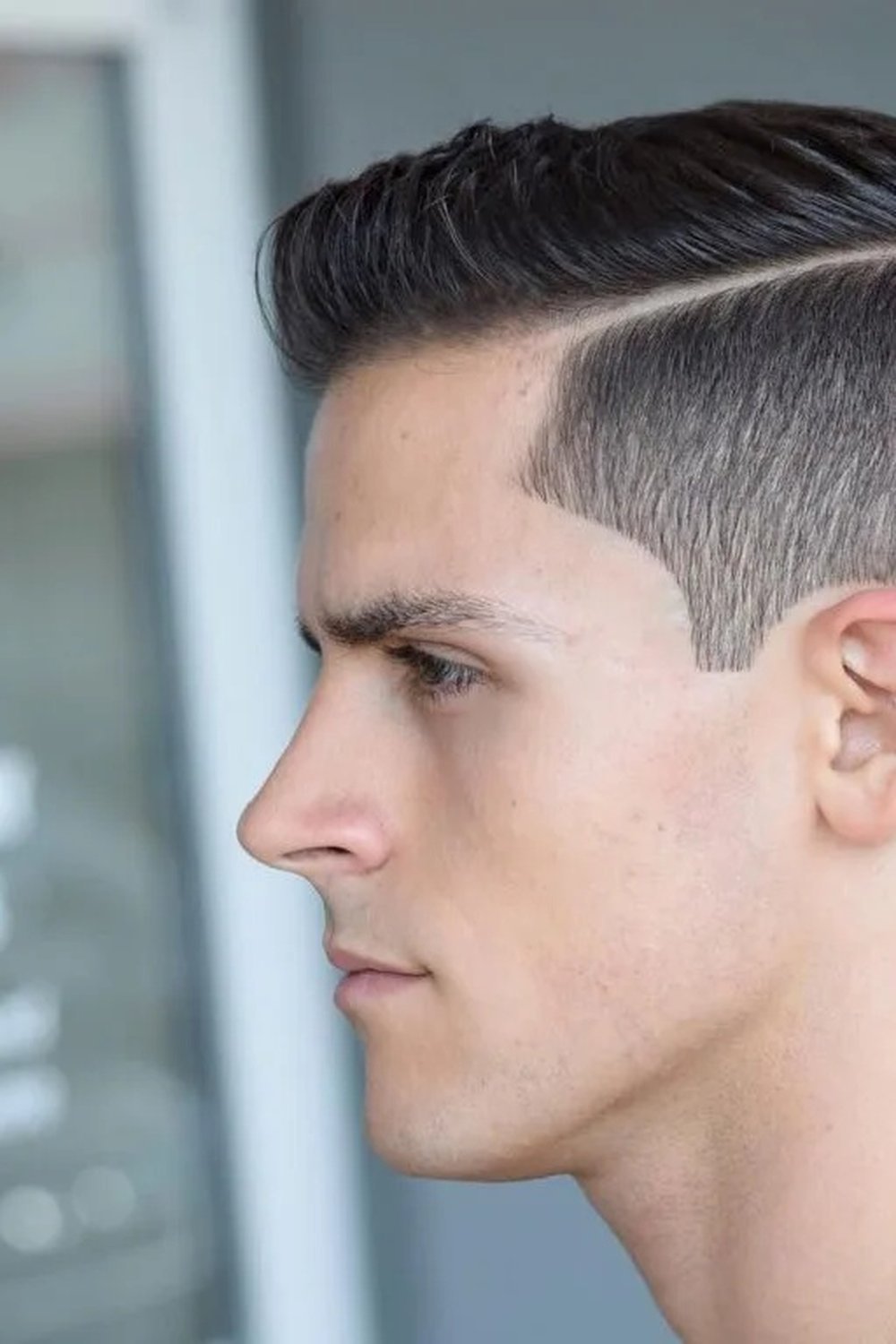
Photo: Low Fade Styles — source
A low fade hard part keeps things subtle. The fade starts just above the ear, so most of the side keeps its length, and the hard part does the talking instead of the fade. In the photo, the part line is razor-sharp and the top is neatly combed to the side — the whole cut reads as polished without reading as severe. It is the best version of this style for men who want a hard part but work somewhere the cut still needs to look conservative.
Ask for a low fade, a side part on your natural line, and a trimmer line rather than a full razor line if you want the part a touch softer. The low fade grows out gracefully, so this is also the lowest-maintenance hard part in the guide: the fade stays tidy for three weeks, and only the line itself needs a touch-up at the two-week mark. A light-hold matte product keeps the top in place without the wet shine, which suits the understated feel of the cut.
3. Mid Fade Hard Part
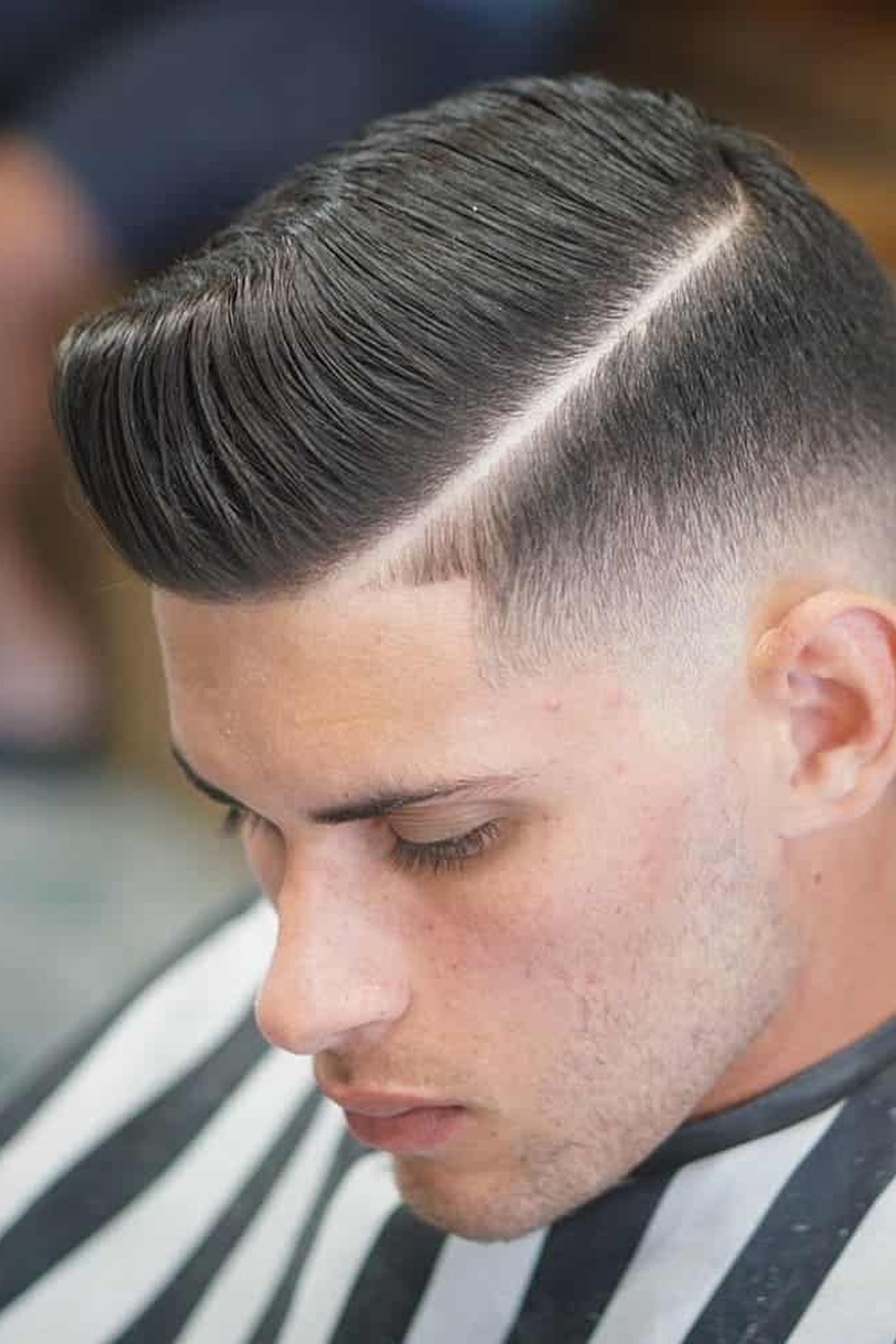
Photo: Beard Beasts — source
The mid fade hard part strikes the balance most men actually want. The fade begins around temple level, so there is real contrast between the short sides and the longer top, but the cut never looks aggressive. The photo has the boldest hard part line in this whole guide — a bright white channel cut through dark hair, with a slicked comb-over top above it. The barber cape and the clean blend show what the cut looks like fresh from the chair: crisp, defined, and hard to miss.
Ask for a mid skin fade and a hard part, and decide on the top before the line goes in — a comb over like the photo, or a textured top if you want something less slick. The mid fade is the most forgiving height if your head shape is uneven, because the blend sits where the head starts to curve and hides small bumps. Keep the line touched up every two weeks; at this height, a grown-out line is more visible than on a low fade, because the contrast around it is stronger.
4. High Fade Hard Part

Photo: Flickr / Bastard Corner — source
A high fade hard part is a statement. The fade starts well above the temples, so the sides are short almost all the way up, and the long top stands out sharply against them. The hard part line runs along the top of the fade, which makes it look even longer and cleaner than it is. In the photo, the top is slicked back with texture, the beard is trimmed to match, and the whole cut has a sharp, confident feel — this is the version to pick when you want the hard part to be the first thing people notice.
Ask for a high fade — and be clear whether you want it to skin or to a short clipper length, because the two look very different at this height. A high skin fade is the boldest option in the guide; a high fade to a number one guard is the same shape with a softer edge. The top needs at least two inches to balance the short sides, and a textured finish works better than a flat slick-back here, because the texture stops the top looking like a single solid block. For more on the height itself, see our high taper fade guide.
5. Skin Fade Hard Part

Photo: Mando Barber — source
The skin fade hard part takes precision to the extreme. The sides fade completely down to bare skin, so the contrast between the shaved sides, the razor part line and the longer top is as strong as it gets. The photo shows the cut from the back and side, and there is an extra detail worth noting: a curved razor design line runs down the back of the head below the part. That is an optional flourish — the skin fade and hard part alone are already the full look, and the extra curve is there for men who want one more detail.
Ask for a skin fade with a hard part, and tell your barber whether you want any extra line work or a clean finish. A skin fade shows every flaw in the blend, so this is a cut to get from a barber you trust, not a first visit to a new shop. It also grows out the fastest of any fade in this guide — the skin section starts to shadow within a week — so budget for a clean-up every seven to ten days if you want it looking like the photo. For the full breakdown of the base cut, see our skin fade guide.
6. Hard Part Comb Over
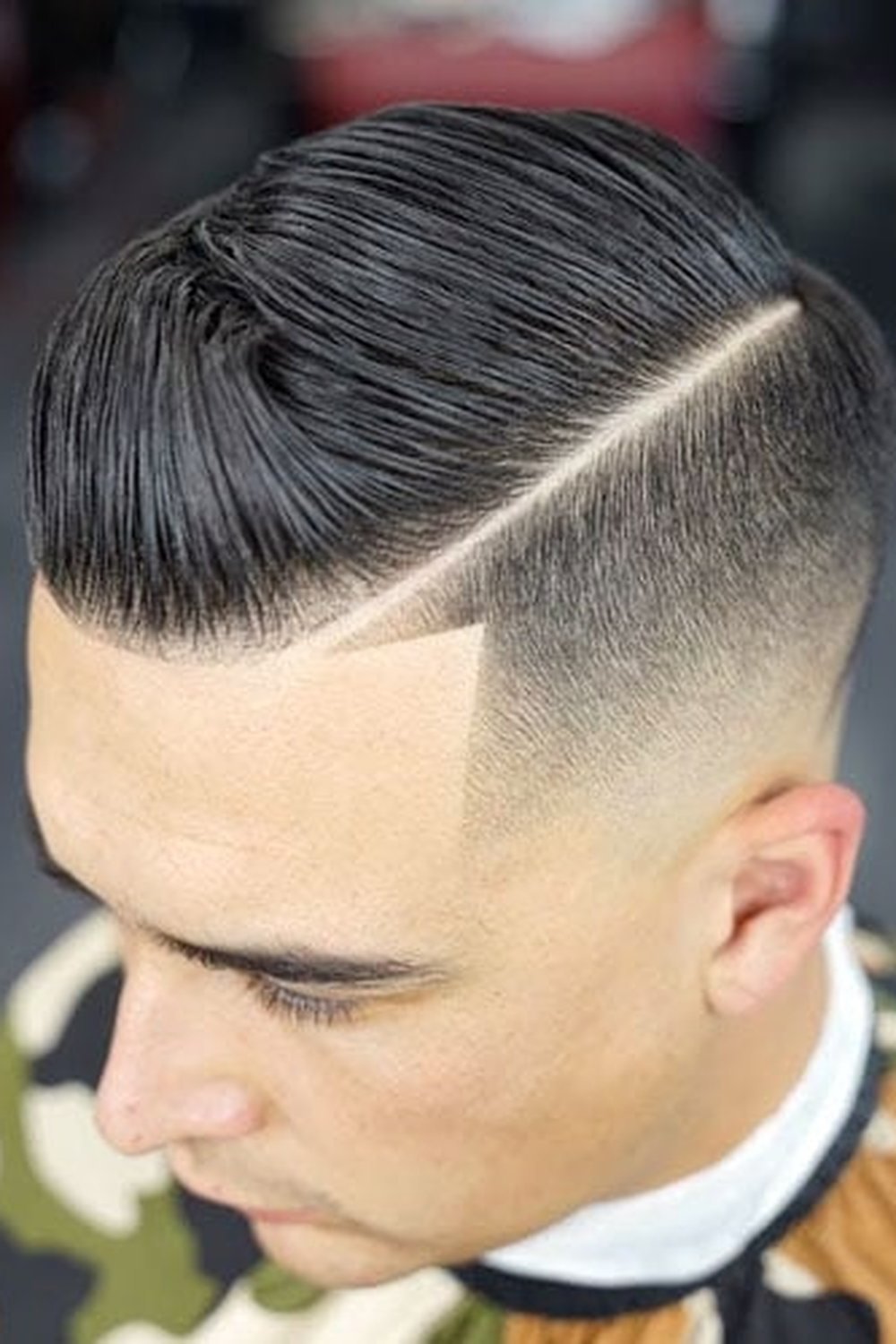
Photo: Men’s Hairstyles Now — source
The hard part comb over is the textbook version of this whole style. The top is swept to one side from the part, the hairline is lined up sharp at the front, and the hard part is the hinge the whole cut swings on. It is the look most people picture when they hear “hard part,” and the photo shows why: a crisp part, a clean shape-up, and a top that lies exactly where it is supposed to. Nothing is left to chance, and that is the point.
Ask for a comb over with a hard part and a lined-up hairline, and keep the top long enough to comb — about two to three inches. This cut suits straight and slightly wavy hair best, because the hair needs to lie flat in one direction. Style it with pomade and a fine comb, working from the part outward, and finish with a little hairspray if your hair is thick enough to lift during the day. It is one of the most office-friendly looks in this guide, and it pairs naturally with the cuts in our professional haircuts guide.
Classic Tops
7. Hard Part Pompadour

Photo: Pinterest — source
A pompadour with a hard part is the most dramatic classic in this guide. The top is swept up and back into real volume, the sides fade to skin, and the razor part draws a clean line between the two. The photo shows the volume at its best — the pompadour has height and shape, the part is unmistakable, and the skin fade keeps the whole cut from looking heavy. It is a bold look, but it is a classic bold look: barbers have been cutting this combination for decades.
Ask for a pompadour with a hard part and a skin fade, and keep three to four inches on top — a pompadour needs length to stand up. Blow-dry the top upward and back with a round brush, then set it with a strong-hold pomade. The hard part does half the styling work for you, because it fixes the direction the hair sweeps from. This cut takes the most morning effort in the guide, so it suits men who enjoy styling their hair rather than men who want to wash and go.
8. Hard Part Quiff
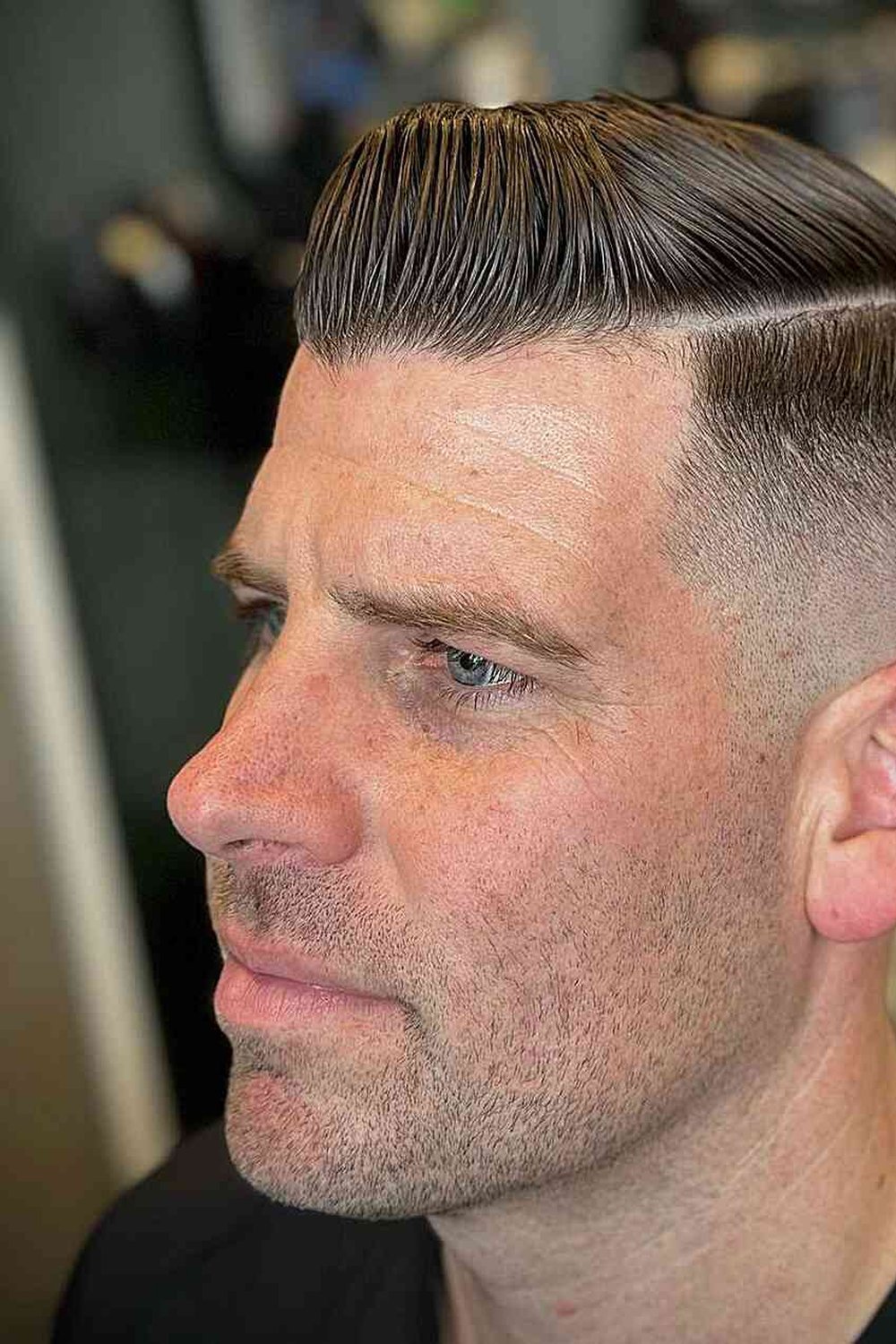
Photo: Latest Hairstyles — source
The hard part quiff is the pompadour’s easier-going cousin. The front is swept up and back, but the volume is softer and the finish is more textured, so the cut looks styled without looking set in place. In the photo, the quiff lifts off the forehead, the hard part is clean and visible, and the high skin fade gives the sides their sharp edge. It is a modern cut that still reads as neat — the kind of style that works at work and at the weekend without any change.
Ask for a textured quiff with a hard part and a high fade. Two to three inches on top is enough; longer than that and the quiff starts to flop forward instead of lifting. Style it with a matte clay, pushing the front up and back with your fingers rather than a comb — the slight messiness is what separates a quiff from a pompadour. If your hair is fine, a little volumising powder at the roots before the clay will help the front hold its lift all day.
9. Hard Part Slick Back
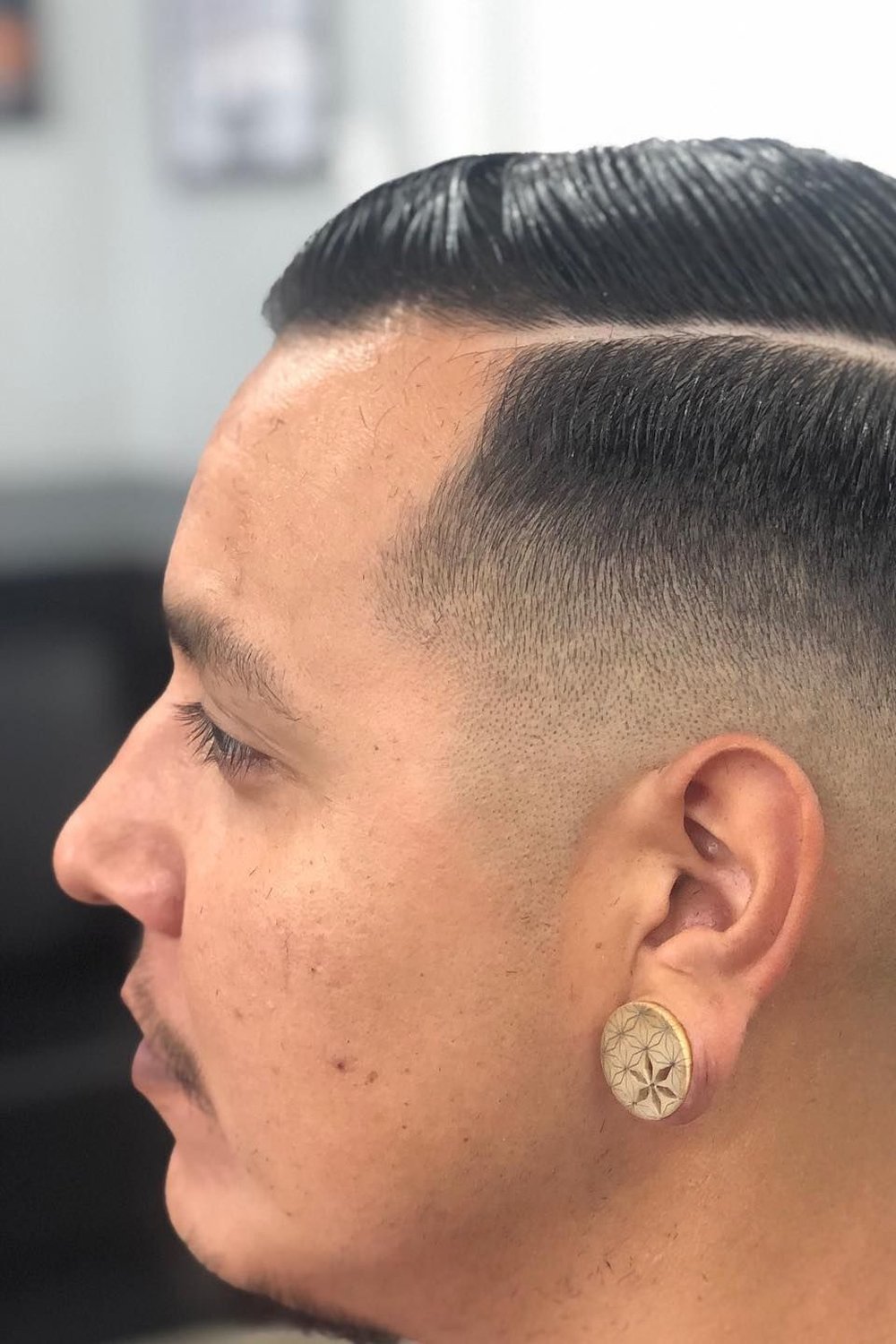
Photo: Booksy — source
The hard part slick back is the slickest cut in this guide, in the best sense. The hair goes straight back from the forehead, glossy and smooth, with the hard part cutting a sharp line along the side and a skin fade underneath. The photo shows the classic side profile: the top lies flat and shining, the part is razor-crisp, and the fade is seamless. The subject wears a large ear gauge, which suits the bold, clean finish of the cut — but the cut itself needs no accessories to make its point.
Ask for a slick back with a hard part and a skin fade, with two to three inches on top. This style lives or dies on product: a high-shine pomade, combed straight back while the hair is slightly damp, is what gives it the glossy finish in the photo. It suits straight hair best; very curly hair will fight the slick-back direction and is better served by one of the textured looks later in this guide. Keep a comb in your pocket — a slick back is easy to fix, but it does need fixing after a windy walk.
10. Hard Part with Textured Crop

Photo: Boss Hunting — source
A textured crop with a hard part is the modern answer to the classic side part. The top is short and choppy, with the fringe pushed forward, and the hard part is the one classic element that keeps the cut from looking like every other crop. The photo shows a young man with a bold shaved line, a short forward fringe and a skin fade — the contrast between the messy texture on top and the razor line on the side is what makes the cut work. It is sharp without being formal.
Ask for a textured crop with a hard part and a skin fade, with the top cut choppy and about one to two inches long. This is the lowest-effort top in the guide: a pea-sized amount of matte clay, worked through with your fingers, is the whole styling routine. It suits men with straight or slightly wavy hair, and it is a good choice if you like the hard part look but do not want to spend time with a comb every morning. The fringe sits forward, so tell your barber if your forehead is something you would rather keep covered or show.
Texture and Length
11. Hard Part with Buzz Cut

Photo: VAGA — source
A buzz cut with a hard part proves that a short cut does not have to be a plain cut. The top is a uniform short buzz, the sides fade to skin, and a single straight razor line is shaved across the top. That one line is the whole design — it turns a cut that takes ten minutes into a cut that looks intentional. The photo is studio-lit against a plain background, and the line still stands out: straight, clean, and exactly where the part would be on a longer cut.
Ask for a buzz cut with a hard part and a skin fade, and agree the guard length first — a number two or three on top keeps enough hair for the line to read, while a number one makes the line subtler. This is the easiest hard part to maintain day to day, because there is no styling at all, but it is also the one that shows regrowth fastest: the line softens within a week as the buzz grows. It suits men who want the sharpest possible look with the least possible effort, and it is a strong option if your hair is thinning, since the uniform short length hides little and the line adds structure.
12. Hard Part with Curly Top
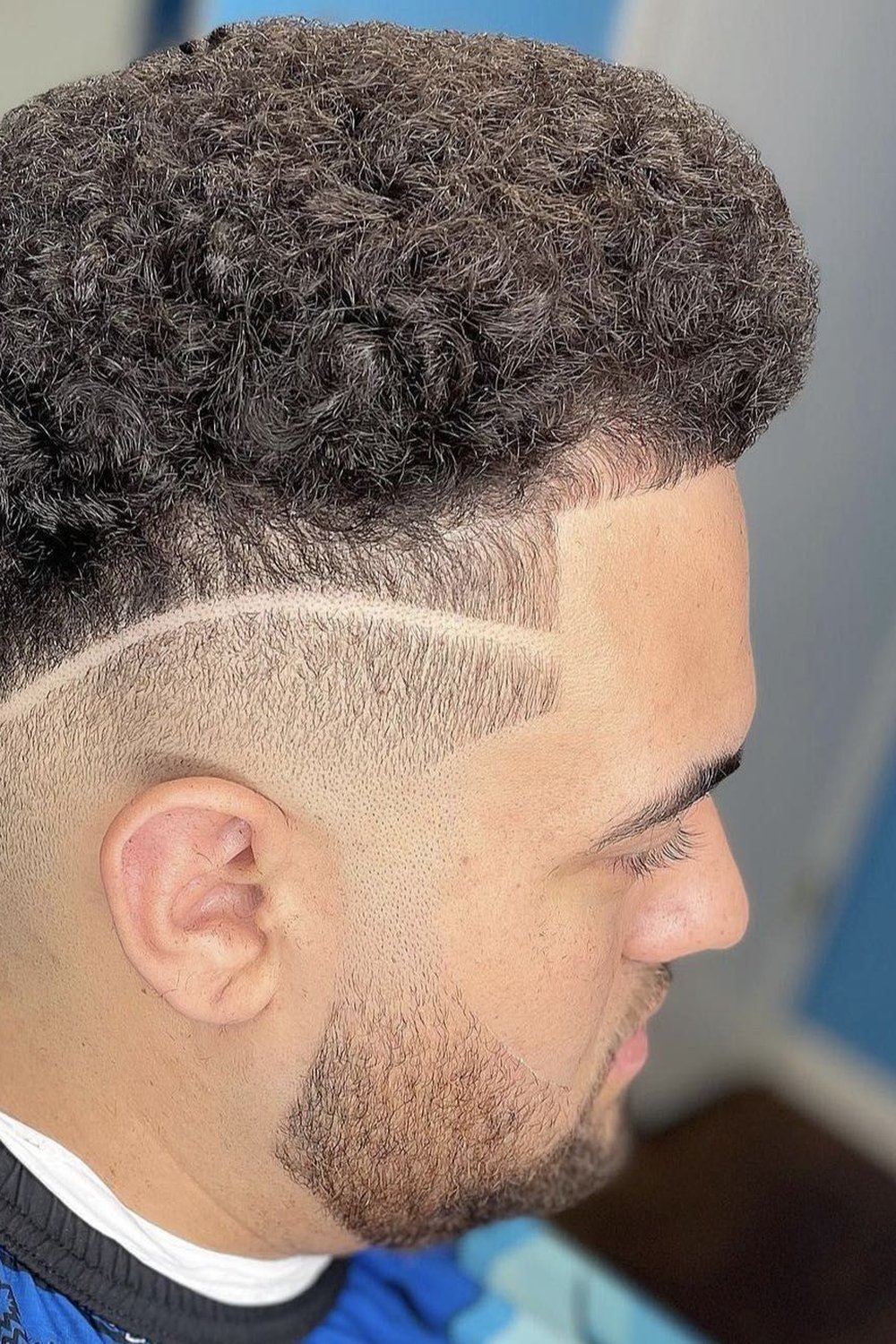
Photo: Booksy — source
Curly hair and a hard part are a better match than most men expect. The curls give the top natural volume and texture, the fade keeps the sides tight, and the shaved line gives the whole cut a clean edge that curly styles often lack. The photo shows dense tight curls on top, a very clear hard part line, a skin fade and a trimmed beard that matches the sharpness of the cut. The contrast between the soft curls and the hard line is exactly what makes it work.
Ask for a curly top with a hard part and a skin fade, and keep enough length on top for the curls to form — at least two inches, more if your curls are loose. The barber should cut the curls dry or nearly dry, because curly hair shrinks as it dries and a wet cut can end up shorter than planned. Style it with a curl cream rather than a heavy pomade, and let the curls do the work: the hard part is there to add structure, not to force the curls into a shape they do not want.
13. Hard Part with Natural Waves

Photo: Pinterest — source
Wavy hair is the easiest hair to style with a hard part, because the wave gives the top movement without any effort. The photo shows natural waves swept up and back, a crisp hard part and a skin fade — the top looks full and alive, while the part and the fade keep the cut looking deliberate rather than accidental. It is the most relaxed look in the first half of this guide, and one of the most flattering.
Ask for a wavy top with a hard part and a skin fade, with two to three inches on top. Let the barber work with the wave direction, not against it: the part should sit where the hair already wants to separate, and the waves should sweep away from it. A sea-salt spray or a light matte cream is enough to bring out the wave — heavy products will weigh it down and flatten the movement that makes this cut good. If your hair is straight, this is not the look to force; pick the textured crop or the quiff instead.
14. Hard Part with Beard Fade
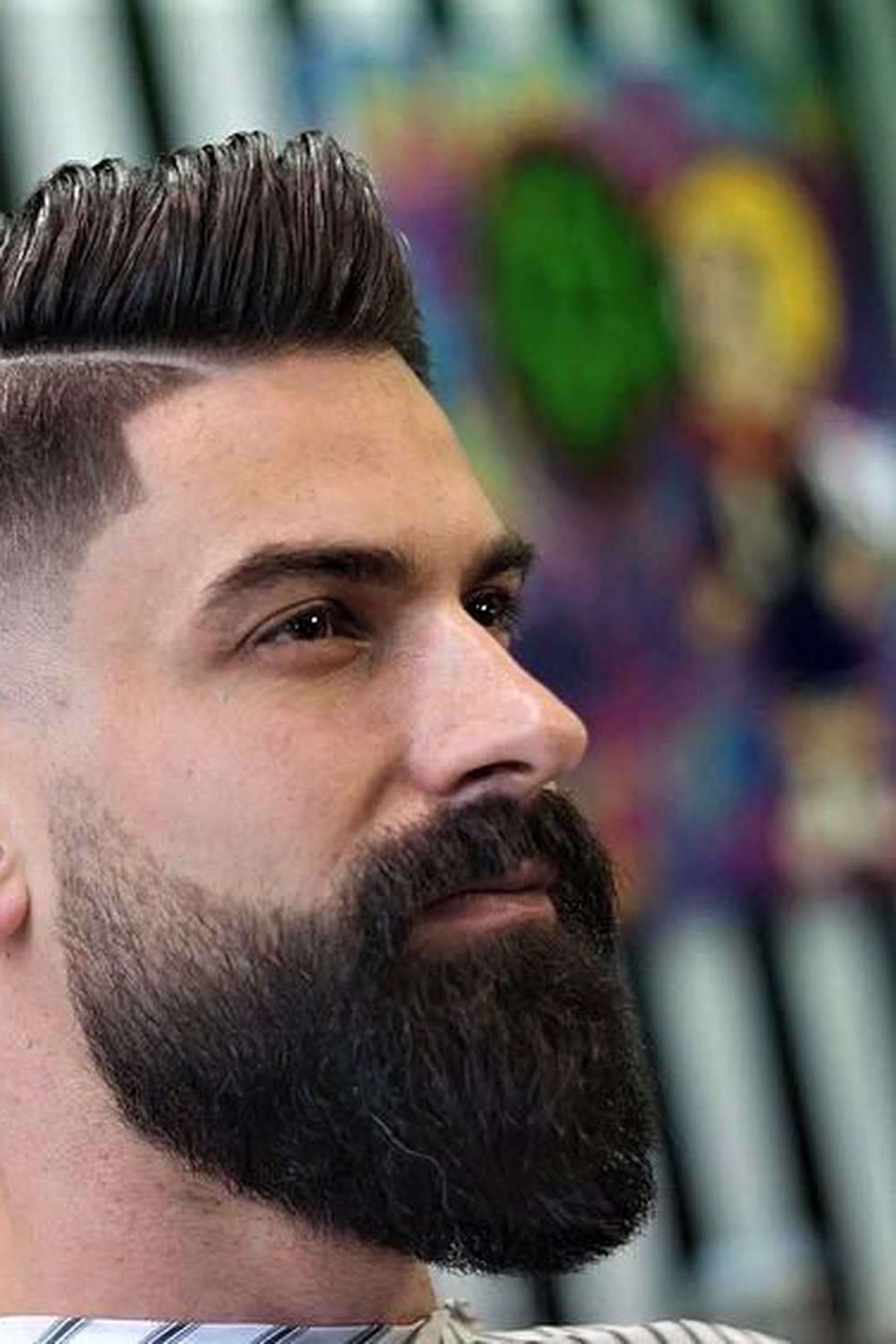
Photo: Pinterest — source
A hard part with a beard fade connects the whole look from the top of the head to the chin. The hair is slicked back with a sharp part and a skin fade, and the fade continues down into the beard, so there is no hard edge where the hair ends and the beard begins. The photo shows a full groomed beard in profile, and the flow from the part line down through the faded sideburn into the beard is what makes the cut feel complete rather than two separate styles.
Ask for a hard part fade with a beard fade, and agree where the beard fade starts — usually at the sideburn, blending down into the full beard. The barber should shape the beard neckline and cheek line at the same visit, because a sharp haircut with an unshaped beard looks unfinished. Keep the beard oiled and brushed, and book the beard clean-up on the same schedule as the hard part touch-up: every one to two weeks. If your beard is patchy on the cheeks, tell your barber — they can keep the fade higher so the patchiness is less visible.
Bold Variations
15. Hard Part Undercut

Photo: FashionBeans — source
The hard part undercut is the boldest classic in this guide. The top is long and slicked back into a pompadour, the sides are cut short with no blend — that is what makes it an undercut rather than a fade — and the hard part marks the border between the two. The photo is taken from the back, and it shows the shape clearly: a long slicked top, a clean part line, and faded sides that drop away sharply. There is no soft transition here, and that is the whole appeal.
Ask for an undercut with a hard part, and keep the top long — three to four inches at least — because the contrast only works when the top is visibly longer than the sides. This cut suits thick hair best; fine hair can look thin when it is slicked back over a short undercut. Style it with a strong-hold pomade and a comb, and expect the grow-out to be more obvious than with a fade: the line where the undercut meets the top will start to look untidy after two to three weeks, so book the next cut before this one grows out.
16. Disconnected Hard Part
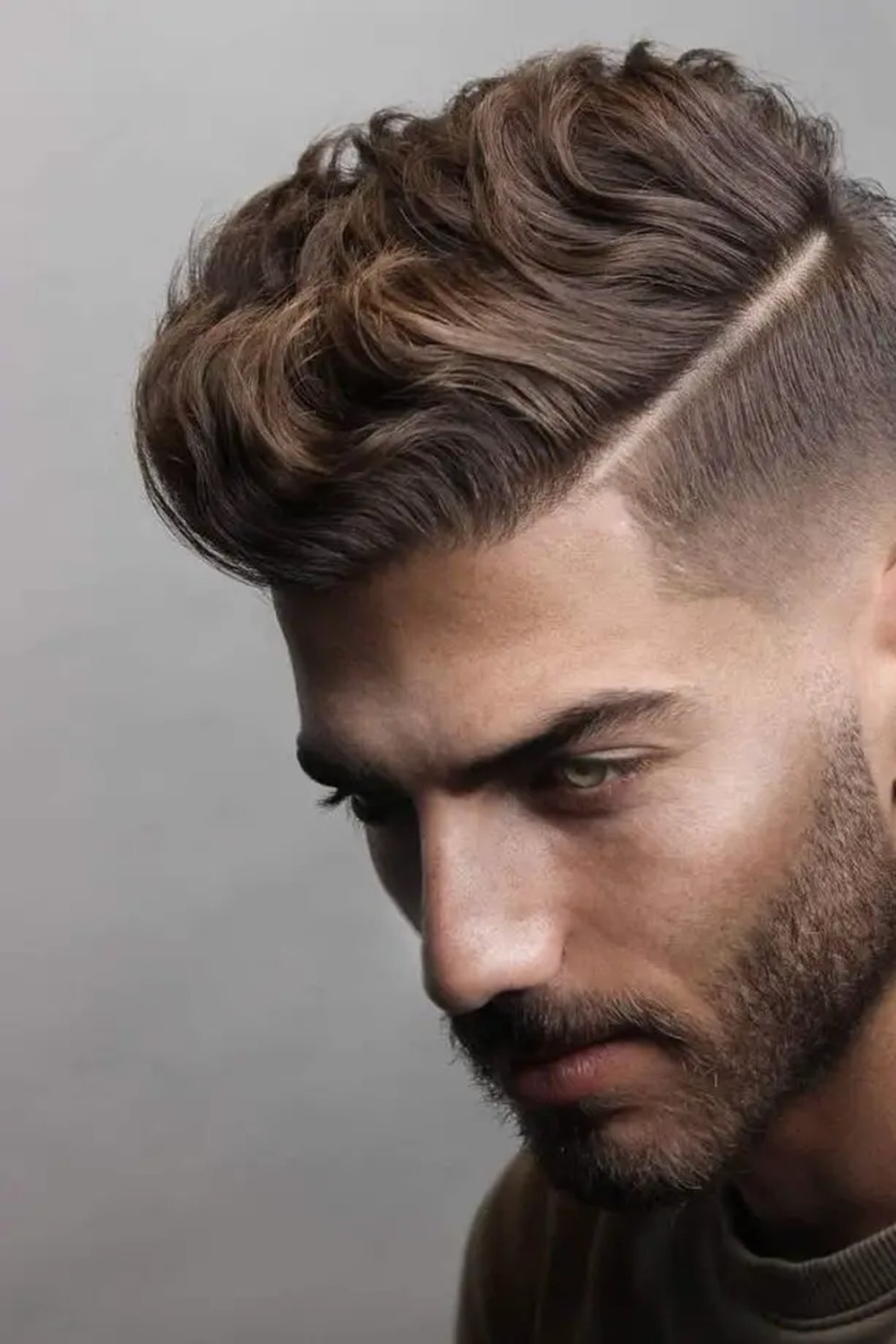
Photo: GentsOsprey — source
A disconnected hard part takes the undercut idea and pushes it further. The long wavy top is not blended into the sides at all — it sits on top of a skin fade with a sharp step between them, and the hard part line marks that step. The photo shows a wavy disconnected top, a crisp part and skin-faded sides, and the effect is deliberately dramatic: the top and the sides look like two different haircuts that happen to share a head, and the hard part is the seam that joins them.
Ask for a disconnected cut with a hard part and a skin fade, and be clear that you want no blend between the top and the sides. The top needs length — three inches or more — and the waves in the photo are a good guide: texture on top stops the disconnect looking flat. This is a fashion-forward cut rather than an office cut, and it needs confidence to carry. It also needs regular cuts: the disconnect grows out into a messy blend within three weeks, so this is a two-week haircut, not a monthly one.
17. Double Hard Part

Photo: Hairstyle on Point — source
The double hard part is the single-line look with one more detail: two parallel lines instead of one. In the photo, the two lines are curved — a double-line design shaved above the ear on a short buzz cut, seen from the back — rather than two straight classic part lines. That curve is what makes this version interesting: it reads as a design as well as a part, and it suits a short cut where a single line might get lost in the buzz.
Ask for a double hard part and point at the photo, because “double” can mean two straight part lines or two parallel design lines, and the two look very different. The lines need to be evenly spaced and the same depth, or the pair will look like a mistake rather than a design. Keep the rest of the cut simple — a buzz or a short crop, like the photo — so the double line stays the focus. Touch-ups matter even more here than with a single line, because two lines growing out unevenly is twice as visible. For more line work in this spirit, see our taper fade designs guide.
18. Hard Part with Taper Fade

Photo: JLR Cuts via Booksy — source
A hard part with a taper fade is the gentlest version of this style. Instead of fading to skin, the sides graduate gradually from short to longer, keeping more hair at the edges — around the sideburns and the neckline — than a skin fade does. The photo shows the taper from the side and back: a slicked-back top, a clear hard part, and sides that step down gradually rather than disappearing. The whole cut feels softer and more old-school than the skin-fade versions, and it grows out the most gracefully of any cut in this guide.
Ask for a taper fade with a hard part, and say how short you want the shortest point — a taper can end at a number two guard or a number zero, and the difference is visible. This is the best hard part for men who are trying the style for the first time, and the best one for men whose workplace is strict: it reads as a neat traditional cut with a sharp detail, not a statement. The taper also suits men with a rounder face, because the longer sides add width where a skin fade would narrow the head. Style the top with a light pomade and a comb.
19. Hard Part with Burst Fade

Photo: Adrian Barber via Booksy — source
A hard part with a burst fade pairs the straightest line in hairdressing with the curviest fade. The burst fade arcs around the ear in a semicircle, leaving the hair longer at the nape, while the hard part runs straight along the side. The photo shows the combination at its best: a slicked-back pompadour, a razor-sharp part line, and the burst fade curving cleanly around the ear. The straight line and the curved fade frame each other, and the contrast is what makes the cut stand out in a photo.
Ask for a burst fade with a hard part, and make sure your barber is comfortable with burst fades — the arc has to be even on both sides, or the asymmetry will show. The top should be long enough to slick back, two to three inches, and the hard part should sit just above the start of the arc so the two lines do not run into each other. This is the sharpest photo in the set for a reason: the burst fade is the hardest fade here to execute well, and when it is done right, it is also the most impressive.
20. Military High and Tight Hard Part

Photo: MensHaircuts.com — source
The military high and tight with a hard part is the most disciplined cut in this guide. The sides are clipped high and tight to the skin, the top is short and flat, and the hard part is a single clean line that keeps the cut from looking like a plain buzz. The photo shows a soldier in camouflage, and the cut does exactly what a military cut should do: it looks the same from every angle, it needs no styling, and it stays within regulation. The hard part is the one personal touch, and it is a small one — a line, not a design.
Ask for a high and tight with a hard part, and check the regulations first if you are serving — the part line is usually allowed, but the length on top and the fade height are regulated, and the rules vary. For civilians, this is the lowest-maintenance hard part after the buzz cut: wash, dry, done. The line is the only part that needs upkeep, and it needs it weekly, because on hair this short a grown-out line is visible within days. It suits men with a strong jawline and a square face best, because there is no length on top to soften the shape of the head.
Finishing Looks
21. Hard Part with Spiky Top
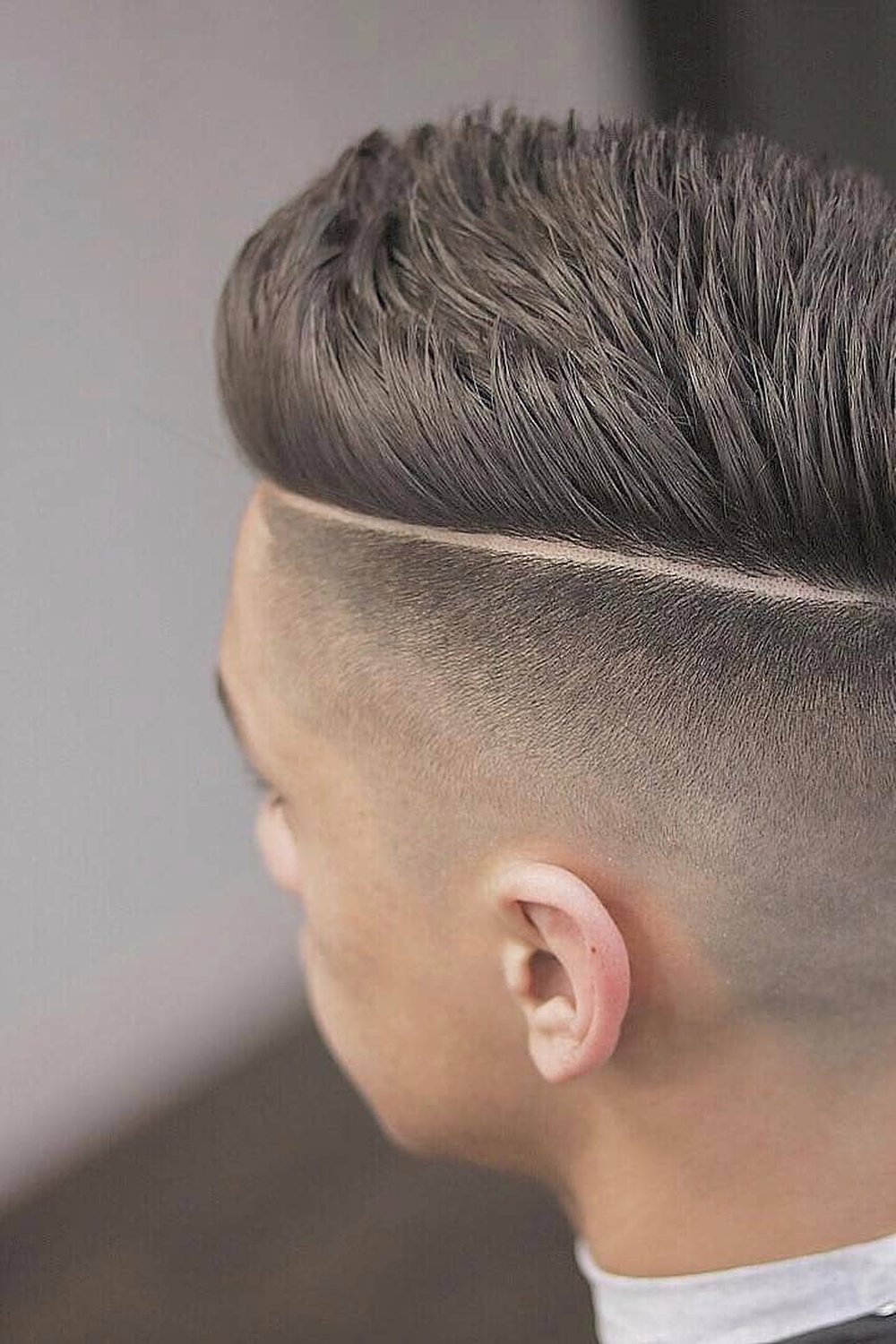
Photo: StylesRant — source
A spiky top with a hard part is the youngest-feeling cut in this guide. The top is cut short and textured, then pushed up into spikes, while the sides fade to skin and the hard part draws its clean line along the side. The photo is taken from the back, and it shows the spikes at their best: short, separated, and standing up with texture rather than gelled into points. The hard part keeps the cut from looking like a purely casual style — it adds the structure that makes the spikes look deliberate.
Ask for a spiky textured top with a hard part and a skin fade, with one to two inches on top. Style it with a matte clay or a fibre paste, working the product through with your fingers and pushing the hair up in small sections — a comb will flatten the spikes. This cut suits thick, straight hair best, because fine hair will not hold the spikes for long. It is a good choice for younger men and for anyone who wants the hard part look without the formality of a slicked side part.
22. Hard Part with Faux Hawk

Photo: StylesRant — source
The faux hawk with a hard part is the boldest look in this guide after the skin fade. The hair is swept up into a ridge down the centre of the head, the sides fade high to skin, and the hard part runs along one side of the ridge. The photo shows the ridge clearly in profile, with the part line and the high skin fade underneath it. There is faint barbershop wall lettering in the background and a bright corner in the frame, but the cut itself is the clear subject — the ridge, the line and the fade are all sharp.
Ask for a faux hawk with a hard part and a high skin fade, and keep the centre strip long enough to stand up — two to three inches. Style it with a strong-hold matte product, pushing the hair up and toward the centre from both sides. This is not an office cut, and it is not a subtle one: the faux hawk is a statement, and the hard part makes it a sharper statement. It suits men with an oval or square face, because the height on top lengthens the face — if your face is already long, the quiff or the textured crop will suit you better.
23. Hard Part for Thinning Hair
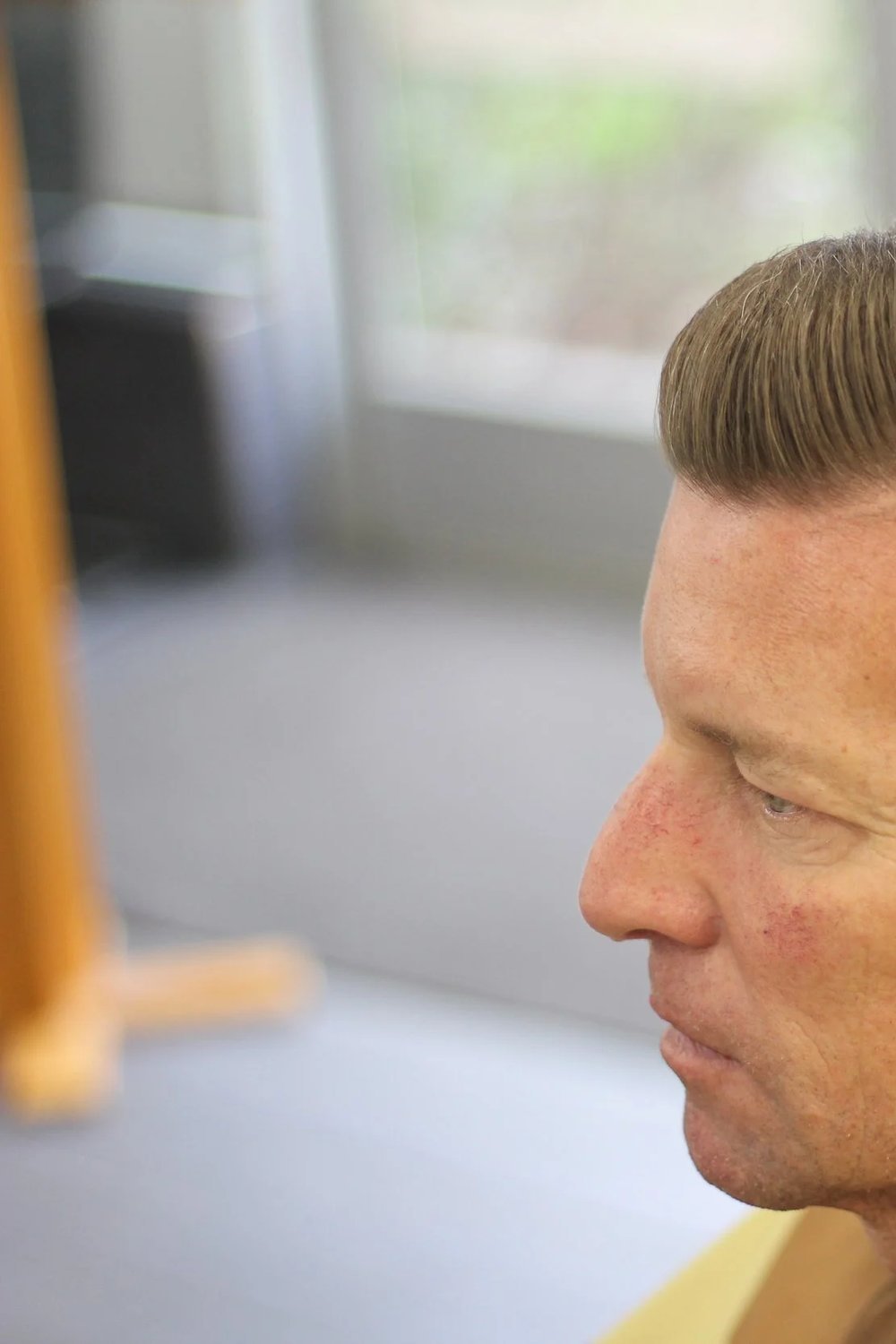
Photo: VIP Barbers — source
A hard part is one of the best tools a barber has for thinning hair, because it makes the thinness look deliberate. Instead of hair that is simply getting thinner, the cut has a clean shaved line and a clear direction — the eye follows the part, not the thinning. The photo shows a middle-aged man with thinning, greying hair at the temples, a sharp hard part and a faded flat top. The thinning is visible but subtle, and the cut treats it honestly: nothing is combed over to hide it, and nothing pretends it is not there.
Ask for a hard part with a short faded top, and keep the top short — an inch or less — because long thin hair shows the scalp more, not less. A matte product with light hold will add texture without weighing the hair down, and a sea-salt spray can add the appearance of thickness. Avoid heavy pomades and wet looks on thinning hair: the shine makes the scalp more visible. This is also the cut in the guide that most benefits from a barber who understands thinning hair — ask them where the part should sit to make the most of the hair you have, rather than fixing it where it used to be.
24. Hard Part with Long Top

Photo: Hairstyle on Point — source
A hard part with a long top is the most versatile cut in this guide, because the length gives you options. Wear it slicked back, as in the photo — the long top swept over, the hard part line and the skin fade all visible from the back — or wear it swept to the side, tied back, or left loose on a day off. The hard part is what holds the style together through all of those options: it fixes the direction of the part, so the long hair always has a place to fall from.
Ask for a long top with a hard part and a skin fade, with at least four inches on top. The sides need to stay short — a skin fade works best — or the long top will make the whole cut look heavy. Style it with a medium-hold pomade for the slicked-back look in the photo, or a matte cream if you want the length to move more naturally. Long hair needs conditioning, so use a conditioner every wash and a little leave-in product on the ends; dry long hair on top of a sharp fade looks neglected rather than relaxed.
25. Subtle Office Hard Part
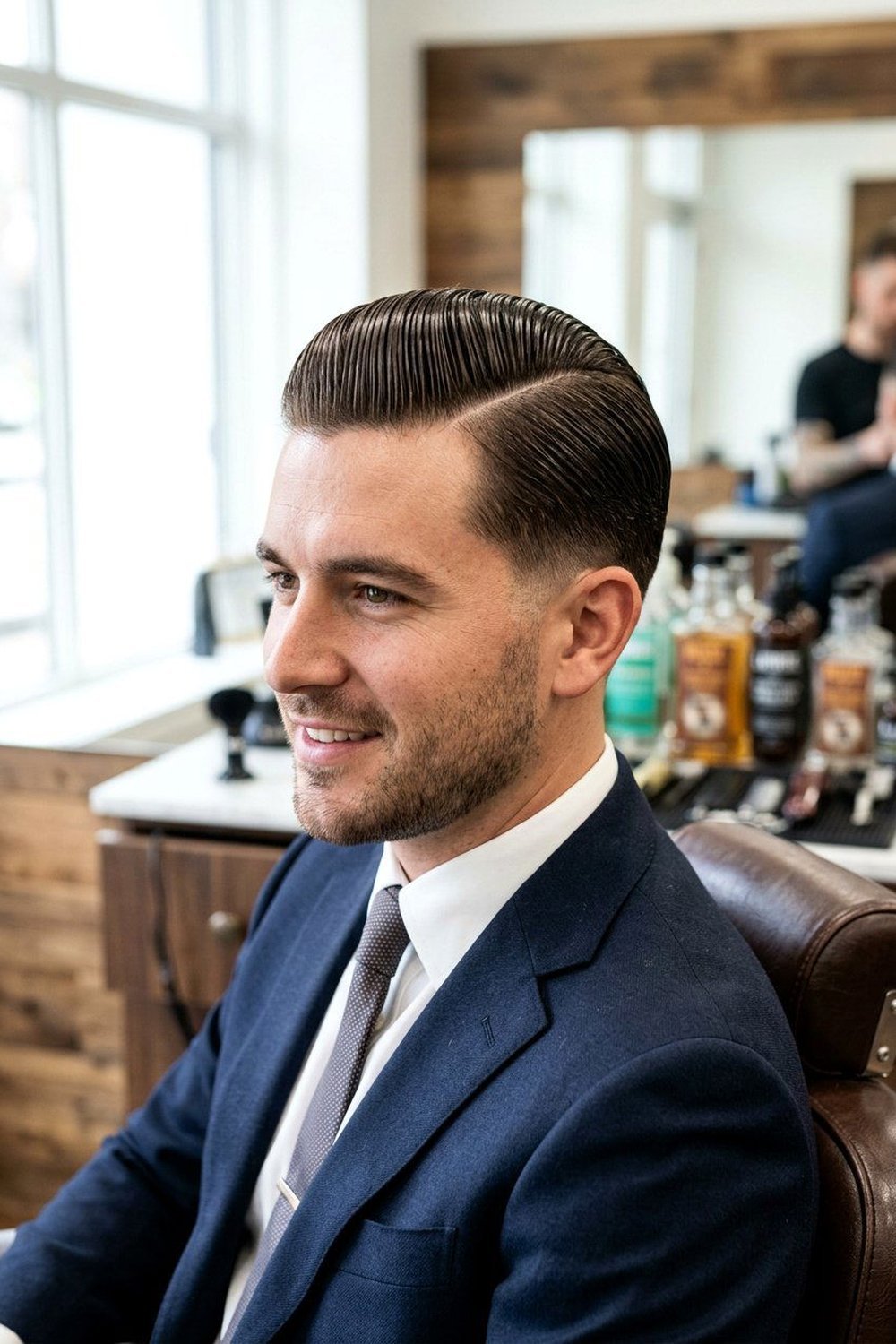
Photo: Lovelyish — source
The subtle office hard part is the quietest cut in this guide, and for many men it is the right one. The part line is soft rather than razor-deep, the fade is gentle, and the top is a neat slicked side part. The photo makes the office fit obvious: the man is smiling in a suit and tie, and the cut looks like it belongs in a boardroom rather than a barbershop portfolio. Nothing about it is trying to impress anyone — and that is exactly why it impresses in a professional setting.
Ask for a soft hard part with a low fade, and tell your barber you want the line done with a trimmer rather than a razor — that is what makes it subtle. Keep the top at two inches, slicked to the side with a light-hold product that has a natural finish rather than a high shine. This is the hard part to pick if your workplace is formal, if you meet clients, or if you simply prefer your haircut to be noticed for being neat rather than for being bold. It pairs with everything in our business fade guide, and it is the version of this style that needs the least confidence to wear — just a comb and a suit.
26. Hard Part with Side-Swept Fringe
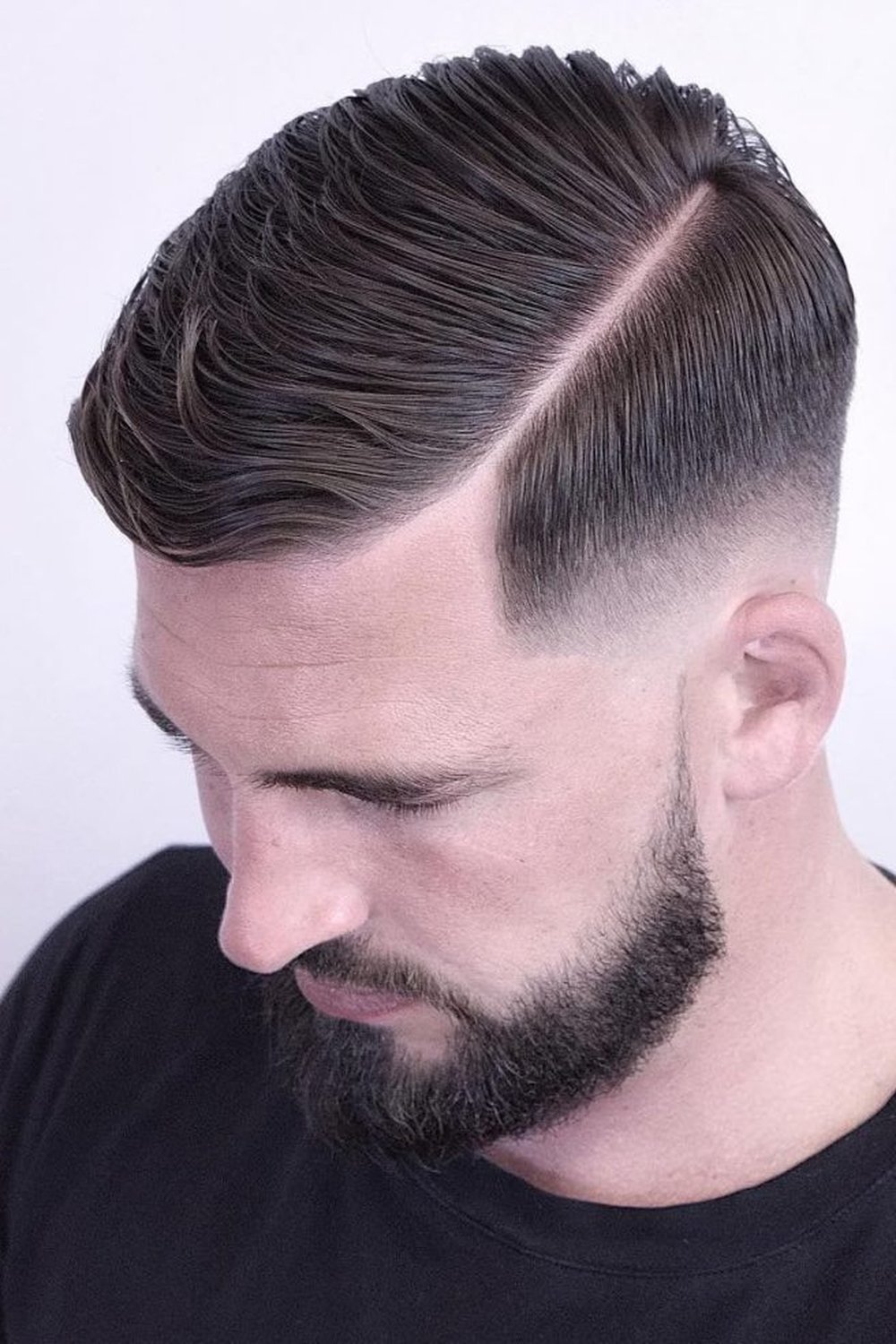
Photo: Men’s Hairstyles Web — source
The side-swept fringe with a hard part is the softest finish in this guide. The top is long and swept sideways, falling forward into a fringe over the forehead, while the hard part draws its sharp line along the side and the fade keeps the edges clean. The photo shows a bearded man with the fringe falling forward and the part line clearly visible — the fringe softens the face, the beard adds weight at the bottom, and the hard part keeps the whole cut structured. It is the best look in the guide for men who want the sharpness of a hard part without the formality of a slicked side part.
Ask for a side-swept fringe with a hard part and a fade, with three inches or more on top so the fringe has enough length to fall forward. Style it with a light matte cream, sweeping the top to the side with your fingers and letting the fringe settle where it falls — do not comb it flat, or it will lose the movement that makes it work. This cut suits men with a high forehead, because the fringe covers it, and men with straight or slightly wavy hair, because the fringe needs to lie in one direction. Keep the beard trimmed to match, as in the photo, so the top and the bottom of the look balance each other.
How long does a hard part last, and how do you keep it sharp?
A hard part line stays crisp for about one to two weeks. After that, the hair grows back into the shaved channel and the line starts to soften — on dark hair it softens faster, because the regrowth is more visible against the skin. The fade underneath grows out on its own schedule: a skin fade starts to shadow within a week, a low taper can look tidy for three. The practical answer is to book a clean-up every two weeks if you want the cut looking like the photos, or every three weeks if you are happy with the line a little softer. A clean-up is a short appointment — the barber re-shaves the line, tidies the fade edges and the neckline, and you are out in fifteen minutes.
Between cuts, style the top away from the line so the channel stays visible, and do not try to re-shave the line yourself with a razor unless you have done it before — a wobbly at-home line is harder to fix than a grown-out one. If the line has grown out and you cannot get to the barber, comb the top firmly to one side: the soft part underneath will carry the style until the next visit. Use the product your barber used, in the amount they used — most men use too much, which weighs the top down and covers the line.
Frequently asked questions
What is a hard part fade?
A hard part fade is a fade haircut with a thin line shaved along the parting using a trimmer or straight razor. The line makes the part visible and permanent until it grows out, while the fade blends the sides down to short or skin length.
How much does a hard part cost?
Most barbers charge a small amount on top of a regular fade for the line itself, and the cut takes only a few minutes longer. The exact amount varies by barbershop — ask when you book, so there are no surprises at the chair.
How often does a hard part need a touch-up?
Every one to two weeks for the line itself. The fade can usually go a week longer, but the line is the first thing to soften, so most men book a short clean-up appointment between full cuts.
Does a hard part suit all hair types?
It suits straight, wavy and curly hair, as this guide shows — the line works on all of them. It suits thinning hair well, too, because the part gives the cut a clear direction. Very fine hair can struggle to hold the longer tops, so keep the top shorter if your hair is fine.
Is a hard part appropriate for the office?
Yes — the subtle office hard part (look 25) and the classic side part (look 1) are both work-appropriate. Tell your barber you want a trimmer line rather than a razor line if your workplace is formal, and keep the fade low.
Hard part vs soft part — what is the difference?
A soft part is just hair combed to one side; it disappears when the hair moves. A hard part is a shaved line, so it stays visible between cuts and gives the haircut a sharp, defined edge that combing alone cannot create.
Can I get a hard part with a beard?
Yes — look 14 in this guide shows a hard part with a beard fade, where the fade continues from the sideburn down into the beard. Ask your barber to blend the sideburn into the beard so there is no hard edge between the two.
Conclusion
A hard part fade is a small detail with a large effect. One shaved line turns a good fade into a deliberate haircut — and as these 26 styles show, that line works on almost any top, any fade height and any hair type, from the classic side part to a faux hawk. Pick the version that fits your life: the subtle office part if you need to look neat at work, the skin fade if you want maximum sharpness, the textured crop if you want the easiest mornings. Bring the photo, tell your barber the fade height and the top length, and keep the line touched up every two weeks. The cut does the rest.