36 taper fade styles that never go out of fashion
Of all the taper fade styles for men, the taper itself is the quiet hero. It is the gradual shortening of the hair at the sides and back — short near the hairline, longer as it climbs — and it works with almost any top: a crop, a quiff, curls, long hair, a beard. That is why the taper fade has outlasted every trend that tried to replace it. It looks clean in an office, sharp on a night out, and it grows out gracefully instead of falling apart after two weeks.
This guide covers 36 of them — every height from low to skin, every texture from straight to afro, and every finish from a classic scissor taper to a hard part and a freehand design — each one with a real photo, barber instructions you can read out word for word, and honest notes on who it suits and how much upkeep it needs. If you want to start with the heights, our guide to the low taper fade covers the gentlest version in detail, the mid taper fade is the balanced middle ground, and the high taper fade is the boldest of the three. If you want the cut taken all the way to the skin, our skin fade guide explains that finish, and our taper fade designs guide covers shaved lines and patterns for men who want a detail.
One honest note before the list: the best taper fade is the one that fits your hair and your mornings, not the one with the most likes. A skin taper looks razor-sharp on straight hair and needs a touch-up every two weeks; a classic scissor taper is quieter, lasts longer, and suits almost everyone. Start with the version that matches your hair, bring the photo, and tell your barber the height in plain words — low, mid or high — because the height is the one detail that changes everything.
What’s in this guide
Classic heights (1–5): the low, mid, high and skin tapers plus the classic scissor taper. Texture and volume on top (6–10): textured crops and fringes, quiffs, pompadours and slicked-back tops. Parts and fringes (11–14): side parts, curly and afro tops and wavy finishes. Short and neat (15–18): buzz cuts, crew cuts, French crops and brush-ups. Sharp details (19–24): faux hawks, beards, line-ups, hard parts, designs and blowouts. Long and expressive (25–30): long hair, man buns, braids, 360 waves, twist tops and highlights. By hair type (31–34): straight, thick, Black and Asian hair. Special mentions (35–36): the temple taper and the low taper with a curtain fringe.
What is a taper fade?
A taper fade is a gradual blend. The hair at the sides and back is cut very short near the hairline — sometimes down to the skin, sometimes just short — and it lengthens step by step as it moves up the head, until it meets the longer hair on top. There is no single line where short becomes long; the blend is the point. The word “taper” describes that gradual change, and “fade” describes how smoothly the short hair disappears into the longer hair above it. A good taper looks clean from every angle, and the transition should be smooth enough that you cannot see where one guard length ends and the next begins.
What makes the taper fade different from other fades is its range. A burst fade curves around the ear in an arc; a drop fade follows the curve of the head down behind the ear; a taper fade is the straight, classic version, and it comes in three heights. Low starts just above the ear and the sideburns. Mid starts around the temple. High starts up near the crown. The higher the fade, the more contrast between the short sides and the long top — and the more often it needs a touch-up, because regrowth shows faster on a high fade than on a low one.
How to choose the right taper fade
Start with your hair, not the photo. Straight hair shows the taper line most clearly and suits the neat, slicked-back and classic versions. Wavy hair adds natural movement and makes textured crops and brush-ups look effortless. Curly and coily hair gives the top its fullest shape — ask the barber to keep weight on top so the curls can form, and taper only the sides. Thick hair can carry almost any version; fine or thin hair looks best with texture cut into the top and a lower taper, so the cut does not go flat.
Then think about your face. A low taper keeps the sides slim, which suits round faces; height on top — a quiff, a pompadour, a brush-up — balances a long face; and a fringe or curtain front softens a strong jaw. And be honest about mornings: the textured and messy versions need little more than a pinch of matte clay, while the slicked-back, quiff and pompadour versions need a blow-dry and a stronger product. If you work in a strict office, start low and classic; if you want the boldest version, go high or skin — just know it needs a touch-up every two to three weeks.
Classic heights
These five are the foundation. Every other style in this guide is one of these heights with a different top, so if you are new to the taper fade, start here.
1. Classic Low Taper Fade

Photo: VAGA Magazine — source
The original and still the most versatile taper fade of all. In the photo the top is neatly combed with a natural side sweep, the sides taper gently down to the sideburns, and the fade starts low — just above the ear — so the contrast between short and long is quiet rather than dramatic. From the front it reads as a tidy, classic men’s cut; the taper only shows from the side, which is exactly why it works everywhere: offices, classrooms, weddings, and anywhere a louder fade would feel out of place. It is also the most forgiving version to grow out, because the faded line sits so low that regrowth barely shows.
Ask for: “Classic low taper — short at the sideburns, fading up gradually, top left long enough to comb to the side, no skin.” Best for: straight to slightly wavy hair, first-time fades, and men who need the cut to pass at work. Upkeep: touch up the taper every four to five weeks; a little matte clay keeps the top in place.
2. Mid Taper Fade
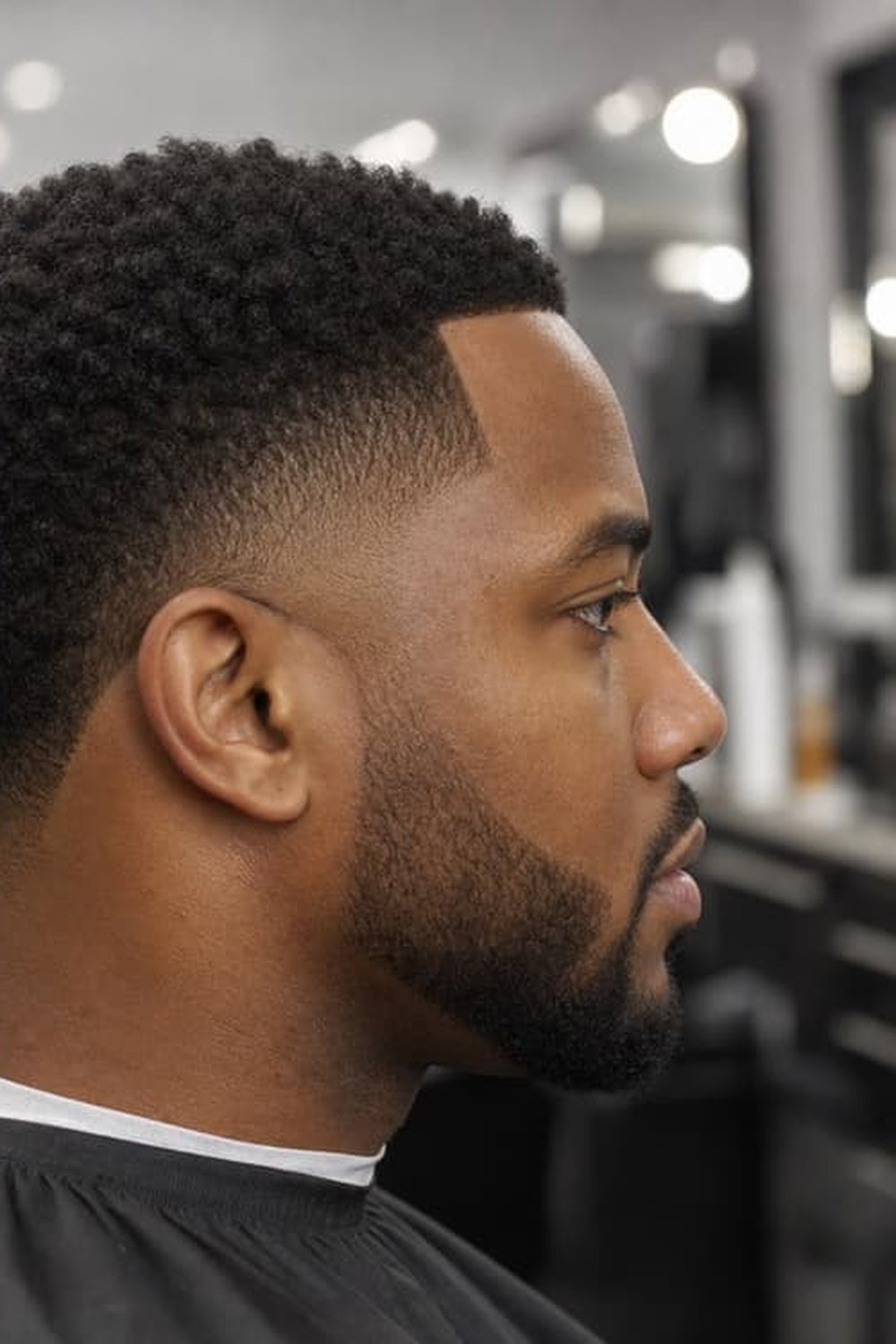
Photo: TaperMode — source
The balanced middle of the taper family, and one of the most popular heights for good reason. The fade starts around the temple — higher than a low taper, lower than a high one — so you get visible contrast without the drama of a skin fade. In the photo the textured top sits over a clean mid blend that frames the face neatly, and the cut works with almost any top: a crop, a quiff, curls, or a side part. It suits men who want their haircut to look sharp on purpose, not just tidy, and it is the safest height to ask for if you cannot decide between low and high.
Ask for: “Mid taper fade — start the fade at the temple, blend it smooth, keep the top textured.” Best for: most hair types and face shapes, and men who want a clear fade without going extreme. Upkeep: trim every three to four weeks to keep the mid line crisp; regrowth shows sooner than on a low taper.
3. High Taper Fade

Photo: The Taper Fade — source
The boldest of the three heights. The fade climbs high up the sides, close to the crown, so the contrast between the very short sides and the long top is the whole point of the cut. In the photo the long textured top stands in sharp relief against the closely faded sides, and the shape is strong from every angle. It is a statement cut: it looks brilliant on thick, straight or wavy hair that can hold height on top, and it pairs naturally with a beard, because the beard balances the bare sides. It is also the highest-maintenance height — the line grows out fast, so it needs regular visits.
Ask for: “High taper fade — take the fade up near the crown, keep the top long and textured, blend it clean.” Best for: thick hair, oval and square faces, and men who like a sharp, confident look. Upkeep: touch up every two to three weeks; the high line shows regrowth quickly.
4. Skin Taper Fade
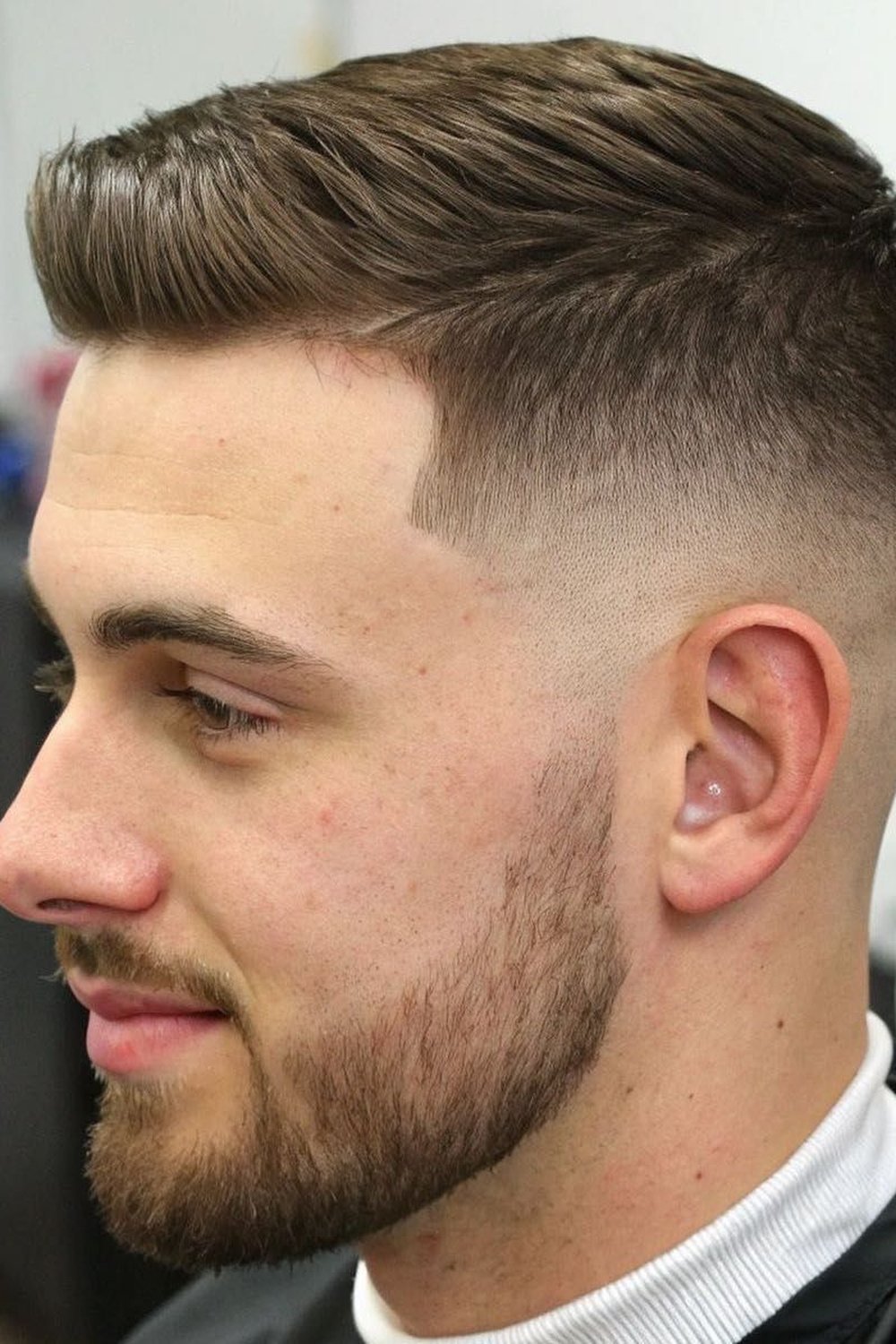
Photo via Booksy — source
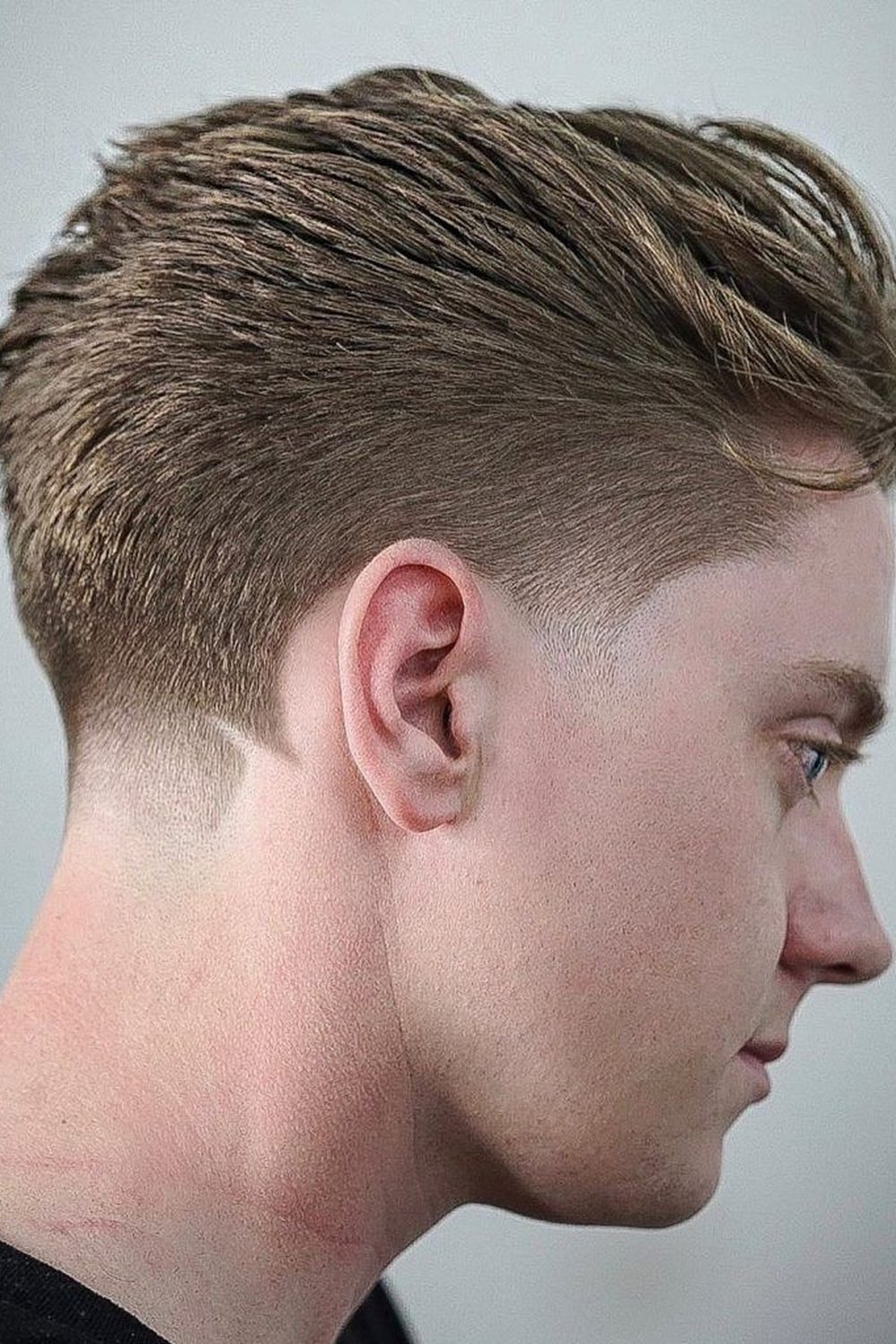
The sharpest finish in this guide. A skin taper fades the hair all the way down to bare skin at the hairline — no stubble, no shadow — before blending up into the longer hair above. In the photo the skin-clean sides make the styled top look even more deliberate, and the contrast is striking in the best way. It is the version barbers reach for when a client wants the freshest possible cut, and it photographs beautifully. The trade-off is maintenance: bare skin shows stubble within days, so this is the version for men who are happy to visit the barber every two weeks, or to tidy the edges themselves between visits.
Ask for: “Skin taper fade — down to the skin at the hairline, smooth blend up to the top, no harsh line.” Best for: straight and thick hair, strong hairlines, and men who want the sharpest finish. Upkeep: edge-up every one to two weeks; a full re-fade every two to three weeks.
5. Classic Taper (scissor taper, no skin)

Photo: Edgar Hairstyle — source
The gentleman’s version — the cut your grandfather wore, and the one that has never gone out of fashion. A classic scissor taper is cut mostly with scissors rather than clippers, and it never goes down to the skin: the shortest hair at the sideburns still has visible length, and the blend is soft and natural. In the photo the neat side part and the natural length at the sides give the cut a quiet, polished feel that no skin fade can match. It is the longest-lasting taper of all, because there is no harsh line to grow out, and it is the best choice for men who want a taper that looks like a haircut rather than a statement.
Ask for: “Classic scissor taper — scissors only on the sides, no skin, natural length at the sideburns, side part on top.” Best for: fine hair, older men, conservative workplaces, and anyone who hates frequent barber visits. Upkeep: a trim every five to six weeks; it grows out more gracefully than any other version here.
Texture and volume on top
Five ways to wear height and movement over a taper — the textured tops that dominate barbershop requests in 2026.
6. Textured Crop with Taper Fade
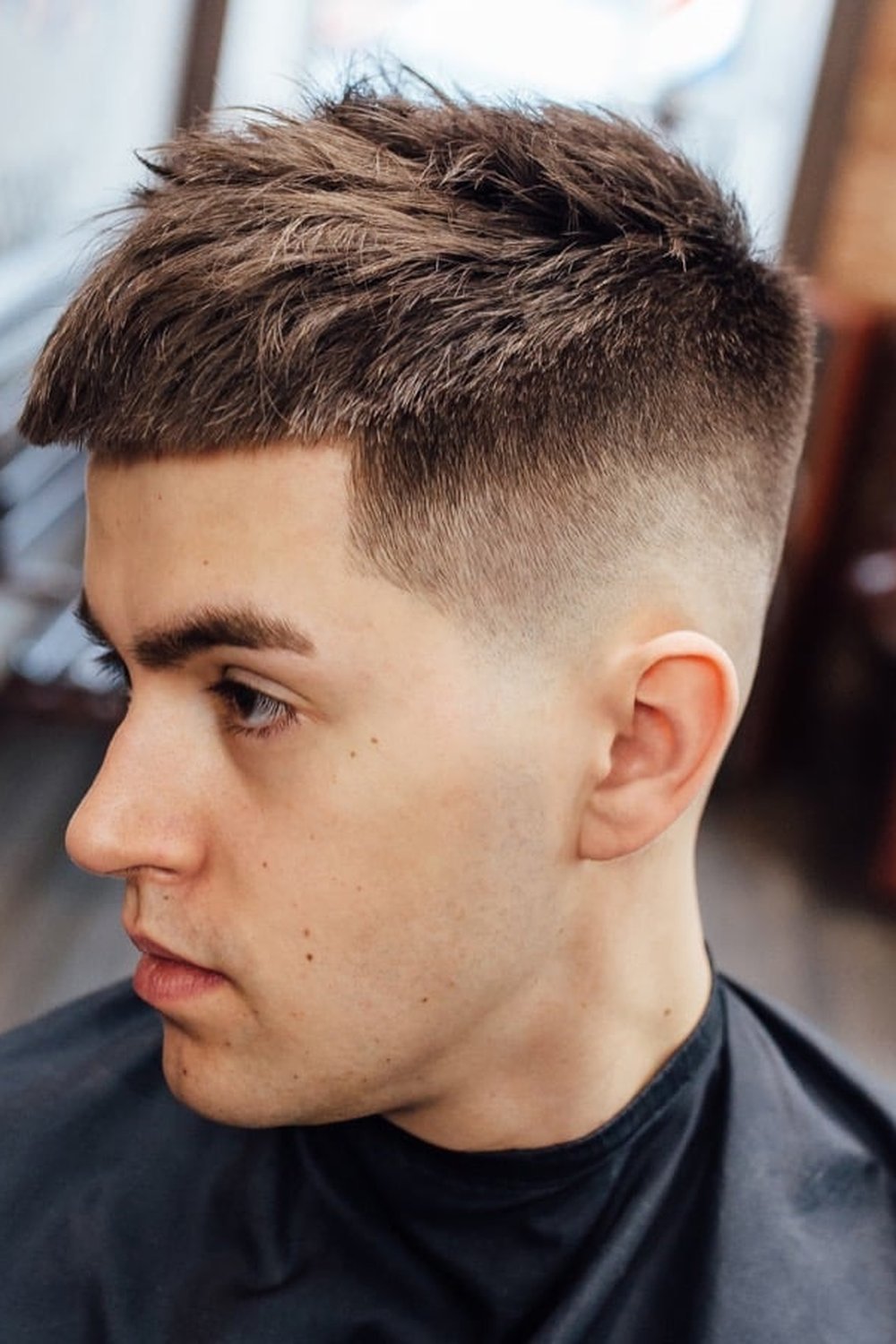
Photo: The Fashionisto — source
One of the most requested combinations in barbershops right now. A textured crop is a short top cut with choppy, uneven ends so the hair has movement instead of sitting flat, and over a taper fade it looks clean from every angle. In the photo the short crop has visible texture through the front and crown, while the faded sides keep the shape tight. It is the easiest version in this guide to style — push the top forward with your fingers and a little matte clay, and you are done — and it suits straight and wavy hair best, because the texture is cut in rather than relying on natural curl.
Ask for: “Textured crop on top with a choppy finish, taper fade on the sides, fringe pushed forward.” Best for: straight and wavy hair, low-maintenance mornings, and men who want a modern look without length. Upkeep: a pinch of matte clay or texture powder; trim every three to four weeks to keep the crop crisp.
7. Textured Fringe with Taper Fade
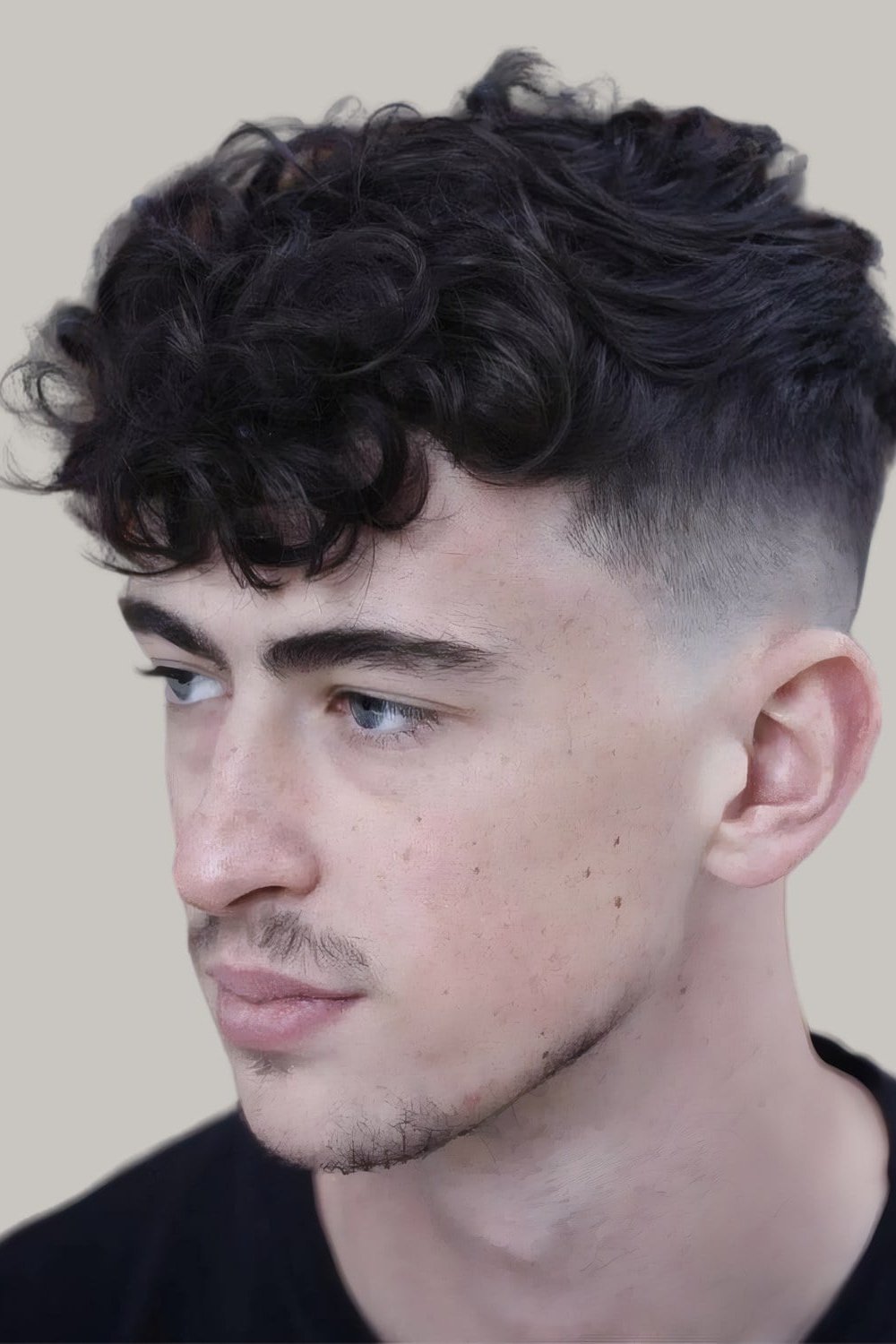
Photo: Luxe Digital — source
The fringe version — and the one that suits a high forehead best. The photo shows a choppy, textured fringe falling over the forehead with uneven ends, while the taper keeps the sides clean and the back tidy. The fringe softens the whole cut: it hides the hairline, shortens a long face, and makes the taper feel younger and more casual than the slicked-back versions. It is also one of the most forgiving versions to style — push the fringe forward with your fingers and leave it — and it works on straight, wavy and even slightly curly hair, as long as the barber textures the ends instead of cutting them blunt.
Ask for: “Textured fringe — choppy ends over the forehead, taper fade on the sides, keep the fringe light, not heavy.” Best for: straight hair, high foreheads, long faces, and younger men. Upkeep: matte clay on the fringe to keep the texture; trim the fringe every three weeks so it stays out of your eyes.
8. Quiff with Taper Fade

Photo: Haircut Inspiration — source
Height at the front, clean lines at the sides — the quiff is the most polished top you can pair with a taper. In the photo the front is swept up and back into a tall, voluminous quiff, while the tapered sides keep the shape tight and the contrast strong. It is the best version in this guide for a round face, because the height lengthens the face, and it suits thick, straight hair that can hold volume. The quiff is also the top that needs the most morning work: a blow-dry with a round brush and a strong-hold product, every day, no shortcuts.
Ask for: “Quiff on top — swept up and back, tall at the front, taper fade on the sides, keep the back of the top short.” Best for: thick straight hair, round faces, and men who enjoy styling. Upkeep: blow-dry the quiff up each morning with a strong-hold product; trim every three to four weeks.
9. Pompadour with Taper Fade
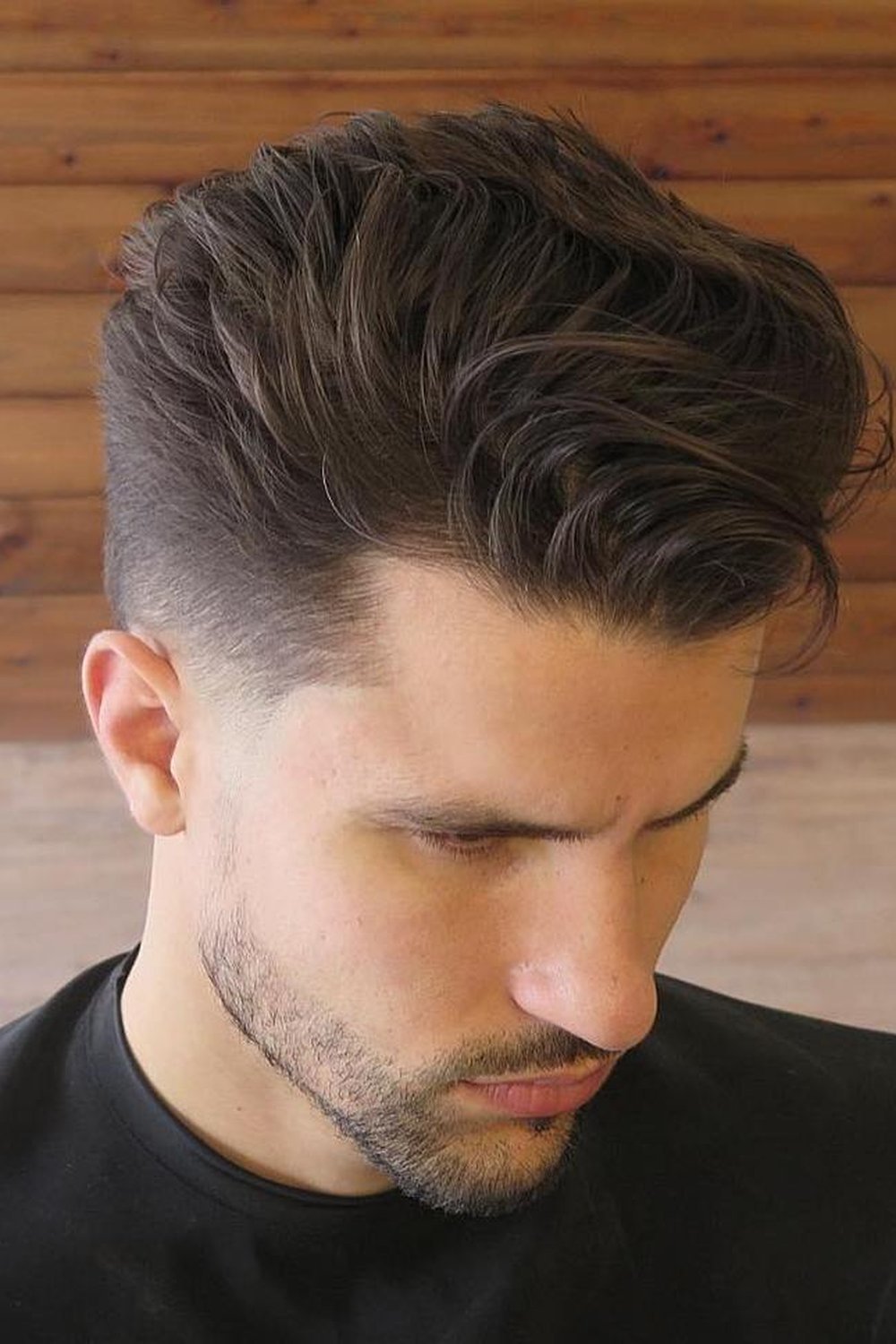
Photo: The Right Hairstyles — source
The pompadour is the quiff’s older, glossier brother — more volume, more shine, more drama. In the photo the tall pompadour sweeps back from the forehead in one smooth, glossy wave, while the taper fade keeps the sides short and clean so all the attention stays on top. It is a retro shape that has stayed current because it suits strong features so well: a square jaw, a straight hairline, thick hair that holds its shape. It needs length on top — at least four inches at the front — and it needs product with shine, which is the one version in this guide where a pomade is the right call rather than a matte clay.
Ask for: “Pompadour — tall at the front, swept back, taper fade on the sides, finish with a shine pomade.” Best for: thick straight hair, square faces, and formal occasions. Upkeep: blow-dry back with a round brush and pomade each morning; it takes five to ten minutes and lasts all day.
10. Slicked-Back Taper Fade

Photo via Booksy — source
The boardroom version of the taper fade. In the photo the top is glossy and combed straight back from the face, the taper is clean, and the whole look is finished and deliberate. From the front it is indistinguishable from a classic slick-back; the taper only shows from the side. That is the point — it is the one version in this guide you can wear to a client meeting, a wedding or a job interview without a second thought. It needs length on top, at least three to four inches, and it needs a product with hold and a little shine, plus a blow-dry back to set the direction. On wavy hair it has natural movement; on straight hair it is at its sharpest.
Ask for: “Slicked back — taper fade on the sides, top grown long enough to comb straight back, finish with pomade.” Best for: straight and wavy hair, professional settings, and men with beards. Upkeep: blow-dry the top back with a strong-hold pomade each morning; it takes five minutes and lasts all day.
Parts and fringes
Four versions where the front of the cut does the work — a part or a fringe changes the whole feel of the taper.
11. Side Part Taper Fade

Photo: Styleoholic — source
The most classic parted cut in this guide, and the easiest taper to wear every day. In the photo a neat side part divides a combed-over top, the taper is clean, and the whole shape is tidy without being stiff. It is the cut that suits almost every face and every workplace, and it is the version to pick if you want a taper fade that nobody will ever question. The part itself is the detail that matters: ask the barber to find your natural part rather than forcing one, and the cut will fall into place on its own. It works on straight, wavy and fine hair alike, and it grows out better than almost any other version here.
Ask for: “Side part — natural part, top combed to the side, taper fade, keep it neat, not severe.” Best for: straight to wavy hair, oval and square faces, and every workplace. Upkeep: a little cream to hold the part; trim every four to five weeks.
12. Curly Top Taper Fade

Photo: Beard Beasts — source
Curly hair and a taper fade were made for each other. The photo shows tight dark curls with real volume on top, the front falling toward the forehead, and a clean taper around the ears that stops the shape from going wide. The curls give the top its body, so the cut looks full without needing much length — and the taper is what keeps the whole thing tidy instead of puffy. The one rule is to keep weight on top: ask the barber to taper only the sides and neckline, never to thin the curls themselves, and use curl cream on damp hair rather than clay, so the curls stay defined instead of turning to frizz.
Ask for: “Curly top — taper around the ears only, keep the weight on top so the curls can form, fringe left long.” Best for: naturally curly and coily hair, round and oval faces. Upkeep: curl cream on damp hair, scrunch and air-dry; never brush it dry.
13. Afro Taper Fade
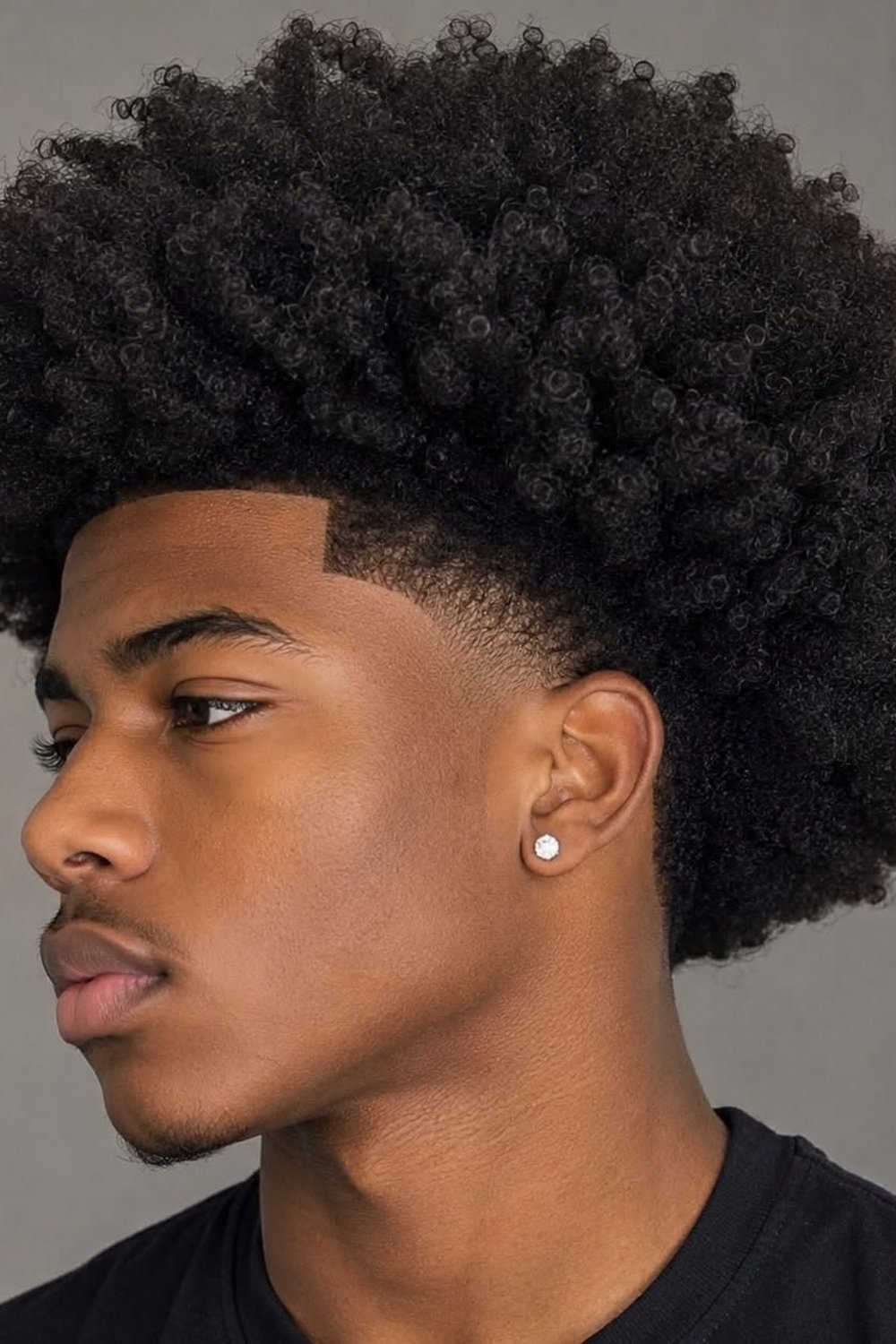
Photo via Pinterest — source
The afro taper is the shape that proves a taper works with any volume. In the photo a rounded, natural afro sits over a clean low taper, and the contrast between the full crown and the short sides gives the cut its structure. The taper is what keeps the afro from spreading wide at the sides — it frames the shape instead of letting it go shapeless — and the top can be worn picked out and full, or shaped into a neat, rounded silhouette. It suits men who want to keep their natural texture on full display while still looking sharp, and it is one of the most distinctive cuts in this guide precisely because the shape is so recognisable.
Ask for: “Afro with a taper — low taper at the sides, keep the top full and rounded, shape the outline, don’t thin the afro.” Best for: coily and afro-textured hair, and men who want to keep their natural volume. Upkeep: moisturise the afro regularly and pick it out; reshape the taper every three to four weeks.
14. Wavy Top Taper Fade

Photo: Luxe Digital — source
The most effortless version in this guide. In the photo loose, natural waves fall over the forehead over a clean taper, and the waves do most of the styling themselves — they give the top movement that straight hair has to fake with product, and the cut looks just as good slightly grown out as it does on day one. Wavy hair is the easiest texture to pair with a taper because the wave hides the blend line and softens the contrast, so even a mid or high taper looks natural rather than severe. It is the version to pick if you hate styling but still want to look like you made an effort.
Ask for: “Wavy top — taper on the sides, top left long enough for the waves to move, layer it lightly.” Best for: naturally wavy hair, men who hate styling, and longer faces that suit the extra movement. Upkeep: sea salt spray on damp hair, air-dry; trim the taper every four to five weeks.
Short and neat
Four short versions where the taper does most of the work — low effort, high polish, and the easiest cuts in this guide to maintain.
15. Buzz Cut with Taper Fade

Photo via Pinterest — source
The simplest cut in this guide, made sharper by the taper. A plain buzz cut is one even length all over; add a taper fade and the sides blend down to the skin while the top stays a touch longer, so the head has shape instead of looking flat. In the photo the short, even top sits over a clean taper that gives the cut its definition, and the result is the lowest-maintenance style here — no product, no styling, nothing to go wrong in the morning. It suits men with a good head shape and a strong jaw, and it is the best choice if you want to try a fade for the first time without committing to any length on top.
Ask for: “Buzz cut with a taper — one short length on top, fade the sides down low, keep the top a guard longer than the sides.” Best for: any hair type, strong jawlines, and men who want zero styling. Upkeep: almost none — a quick clipper pass at home keeps it tidy; a barber touch-up every three weeks.
16. Crew Cut with Taper Fade
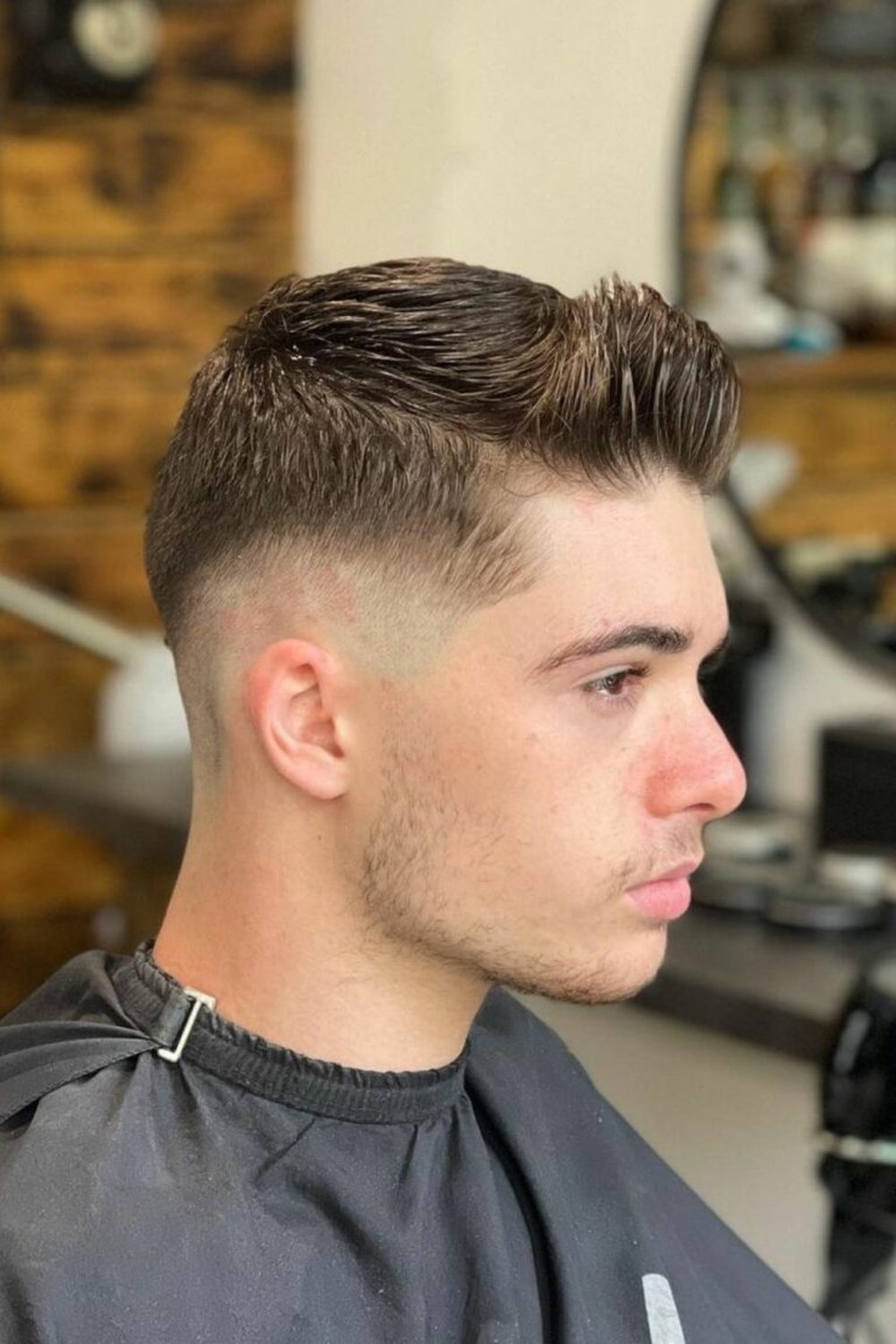
Photo: Lookosm — source
The crew cut is the short classic that never leaves the barbershop top ten, and the taper fade is what keeps it current. In the photo the short top is neat and slightly longer at the front, the sides fade cleanly down, and the whole cut reads as tidy and athletic. It is the short version to pick if a buzz cut feels too bare for you: the crew cut keeps enough length on top to show texture and direction, while the taper gives it the same sharp finish. It suits almost every face shape, works in every workplace, and needs nothing more than a towel-dry in the morning.
Ask for: “Crew cut — short on top, a little longer at the front, taper fade on the sides.” Best for: straight and wavy hair, first fades, and men who want a smart short cut. Upkeep: none — towel-dry and go; trim every three to four weeks.
17. French Crop with Taper Fade

Photo via Pinterest — source
The French crop is the blunt, straight-fringe version of the textured crop — and over a taper fade it looks sharper than ever. In the photo a straight, blunt fringe runs across the forehead, the top is short and flat, and the faded sides keep the shape tight. The blunt fringe is the detail that sets it apart: it shortens a long face, hides a high hairline, and gives the cut a clean, geometric edge that the choppy crop does not have. It is a popular short cut, and it suits straight hair best, because straight hair holds the blunt line cleanly.
Ask for: “French crop — blunt straight fringe across the forehead, short top, taper fade on the sides.” Best for: straight hair, long faces, high foreheads, and men who like a sharp, modern short cut. Upkeep: a little matte clay pushed forward; trim the fringe every three weeks.
18. Brush-Up with Taper Fade

Photo: Luxatic — source
The brush-up is the quiff’s relaxed cousin — height, but without the stiffness. In the photo the top is brushed up and slightly forward from the forehead, with natural texture through it, while the tapered sides keep the shape clean. It has the lift of a quiff but the finish is looser and more casual, so it works in an office and on a night out alike. It suits thick hair that holds volume, and it is the best version in this guide for men who want height on top but do not want to spend ten minutes with a blow-dryer every morning — a little matte clay and your fingers are usually enough.
Ask for: “Brush-up — top brushed up and forward, textured, taper fade on the sides.” Best for: thick and wavy hair, oval and square faces, and men who want height without the fuss. Upkeep: matte clay worked through the top with your fingers; trim every three to four weeks.
Sharp details
Six versions where one crisp detail — a point, a beard, a line-up, a part, a design or a blowout — changes the whole cut.
19. Faux Hawk with Taper Fade

Photo: Favorite Hairstyles — source
The faux hawk takes the mohawk’s attitude and makes it wearable. In the photo a curly, textured strip runs down the centre of the head, pushed up with product, while the tapered sides keep the cut grounded — no shaved sides, no costume, just a strip of height over a clean fade. It is the version to pick if you want to stand out without going all the way to a real mohawk, and it suits thick hair that holds a spike. The taper is what makes it work day to day: the sides are blended, not shaved bare, so the cut still looks deliberate when the strip is worn down flat.
Ask for: “Faux hawk — centre strip pushed up, taper fade on the sides, keep the strip long enough to spike.” Best for: thick hair that holds a spike, confident wearers, and nights out. Upkeep: strong-hold product to keep the strip up; it needs restyling every morning.
20. Taper Fade with Beard

Photo: Edgar Hairstyle — source
The beard does half the work here. In the photo a full beard is the dominant feature, paired with a short textured top and faded sides, and the taper is what connects them — fading the sideburns cleanly into the beard instead of leaving a gap. The beard frames the face from below while the taper frames it from above, so the whole head reads as one deliberate shape. If you already grow a beard, this is the easiest taper to add: the top stays short, the sides stay clean, and the beard carries the style. The one detail to get right is the blend at the sideburns — ask the barber to fade the beard into the taper, not to cut a hard line between them.
Ask for: “Taper fade that blends into the beard — fade the sideburns into the beard, short textured top, beard shaped to match.” Best for: bearded men, round faces that suit the extra framing. Upkeep: beard oil and a weekly line-up of the beard edges; the taper needs a touch-up every four weeks.
21. Taper Fade with Line-Up

Photo via Pinterest — source
The line-up is the detail that makes this one look freshly cut even a week later. In the photo the line-up runs razor-sharp along the temple and the nape, the taper is crisp, and the top is short and textured. The sharp front edge contrasts with the soft blend of the taper, so the cut looks deliberate from every angle — neat at the front, smooth at the sides. It suits men with a strong, straight hairline best; if your hairline is receding, a softer edge will flatter you more than a hard line. The line-up is also the detail that fades fastest, so book a quick edge-up between full cuts if you want it to stay sharp.
Ask for: “Taper fade with a line-up — razor-sharp hairline across the forehead, crisp taper, short textured top.” Best for: straight hair, strong hairlines, and men who like a fresh-cut look. Upkeep: the line-up blurs in about a week, so book a quick edge-up between full cuts.
22. Taper Fade with Hard Part
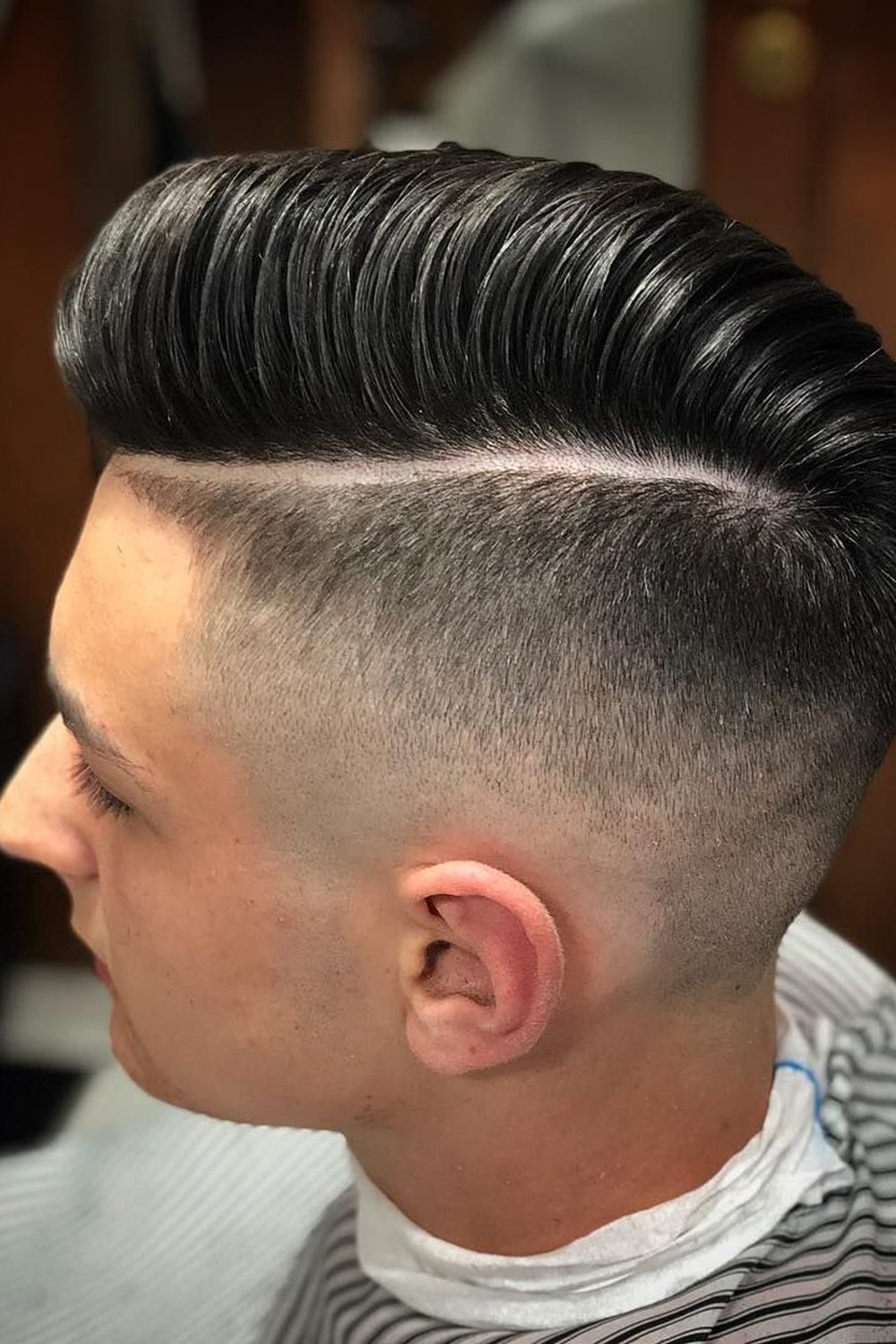
Photo via Pinterest — source
A hard part adds a razor line to the taper — and this photo shows it at its best. The top is slicked to one side, a neat shaved line marks the part, and the taper is sharp, with the sides kept tidy. The line is visible but clean rather than a deep razor trench, which keeps the cut wearable: you get the crisp, barbershop detail without the look shouting. It suits straight hair best, because straight hair shows the part line most clearly, and it pairs naturally with a side part or a slicked-back top. Note that some schools and workplaces ban razor-cut parts, so check the rules before you ask for one.
Ask for: “Hard part — shaved part line, top slicked to one side, sharp taper fade.” Best for: straight hair, men who like crisp barber details. Upkeep: the part line grows out in one to two weeks, so book touch-ups every three weeks if you want the line to stay sharp.
23. Taper Fade with Design

Photo: AQM Copper — source
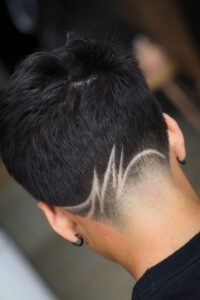
The design is the taper’s way of showing off. In the photo a shaved line pattern is carved into the faded sides — a clean, deliberate detail that turns a standard taper into something personal. Designs range from a single curved line to geometric patterns and freehand shapes, and the best ones are simple: one or two lines that follow the shape of the head, cut with a trimmer into the faded area where the contrast is strongest. It is the version to pick if you want a taper that is unmistakably yours, and it is also the version that needs the most skill from the barber — a bad design cannot be hidden, so pick someone who has done them before.
Ask for: “Taper fade with a design — one clean shaved line through the fade, keep it simple, follow the shape of the head.” Best for: men who want a personal detail, and anyone happy to visit the barber often. Upkeep: the design grows out in one to two weeks, so it needs a fresh carve at every visit.
24. Blowout Taper Fade

Photo: Gatsby — source
The blowout taper is all about volume. In the photo the top is blow-dried into a soft, airy shape with gentle height and movement, while the tapered sides keep the cut from going wide. It is the closest thing in this guide to a salon finish: the hair is dried with a round brush so it lifts at the roots and falls with a soft, full shape, and the taper underneath is what gives the volume its structure. It suits thick, wavy hair best, because that hair holds the blow-dried shape longest, and it is the version to book before an event rather than as an everyday cut — the blowout itself takes time, and the shape softens by the next morning.
Ask for: “Blowout taper — blow-dry the top for volume, taper fade on the sides, keep the shape soft, not stiff.” Best for: thick and wavy hair, special occasions, and men who like big volume. Upkeep: a blow-dry with a round brush each morning to keep the lift; the taper needs a touch-up every three to four weeks.
Long and expressive
Six versions where the top does the talking — long hair, buns, braids, waves, twists and colour, all held together by a taper.
25. Taper Fade with Long Hair

Photo: Lovelyish — source
Long hair and a taper fade are a better pair than most men expect. In the photo the long top is worn loose over the shoulders, the tapered sides keep the shape tidy, and the contrast between the short sides and the long top is the whole style. The taper is what makes long hair look deliberate rather than neglected: it frames the length instead of letting it spread, and it means you can wear the top down, tied back, or in a bun without the sides going wild. It needs patience — the top has to be long enough to tie back, which takes months of growing — but once it is there, the taper is the easiest part of the cut to maintain.
Ask for: “Long top with a taper — fade the sides, leave the top long, layer it lightly so it moves.” Best for: men growing their hair out, thick and wavy hair, and anyone who wants length with structure. Upkeep: conditioner on the length, a wide-tooth comb, and a taper touch-up every four to five weeks.
26. Taper Fade with Man Bun
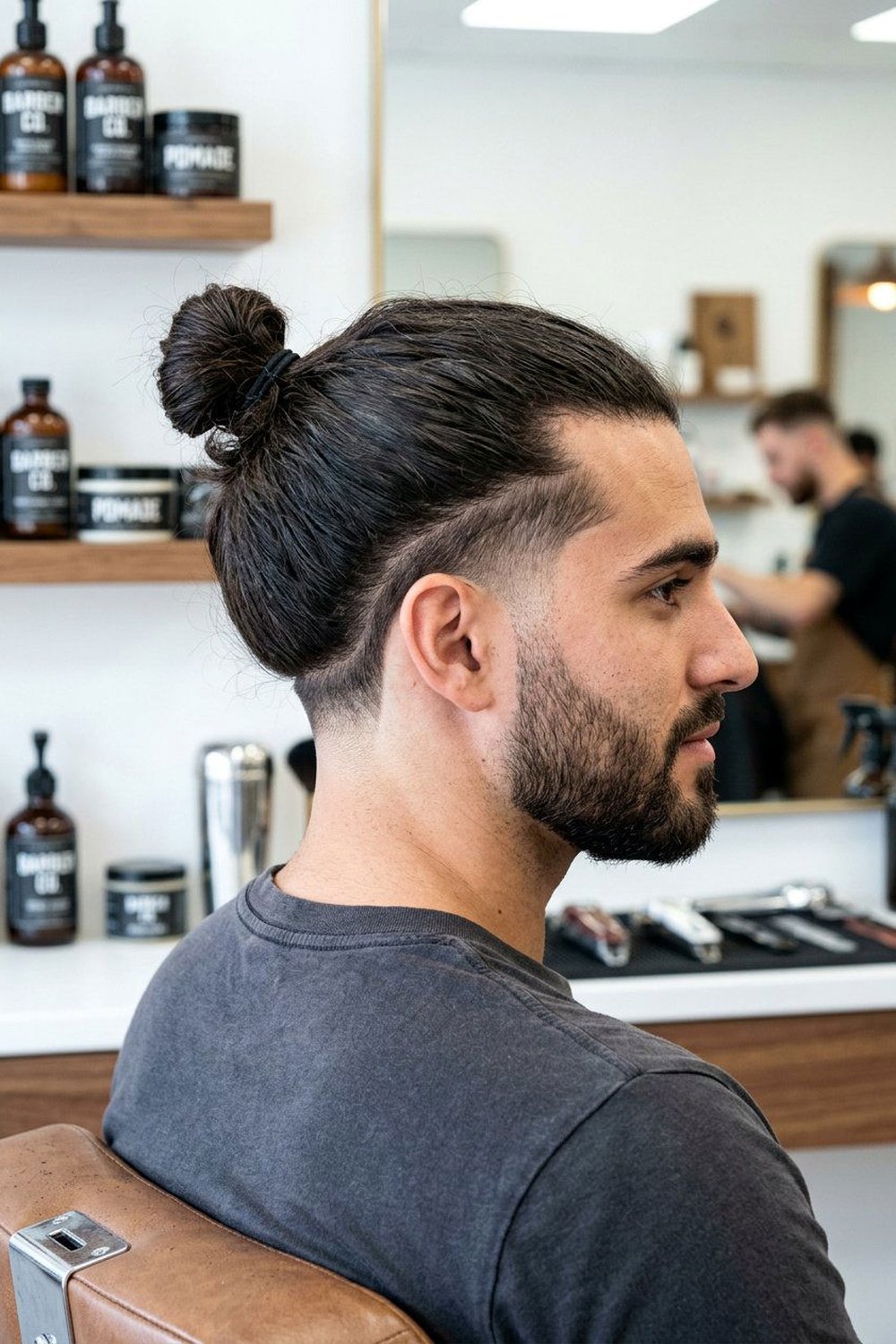
Photo: Lovelyish — source
The man bun works because the taper does the tidying. In the photo the long hair is gathered into a neat bun at the crown, the sides are faded clean, and the whole look is sharp rather than scruffy. Without the taper, a man bun can look unfinished; with it, the bun reads as a deliberate style, because the short sides frame the long top and give the head its shape. It needs real length — the top has to reach at least six inches to gather into a bun — so this is a long-term version, not a one-visit change. It suits thick hair best, and it is the version to pick if you want long hair that still looks smart at work.
Ask for: “Man bun with a taper — fade the sides, leave the top long enough to gather into a bun, keep the neckline clean.” Best for: thick hair, men with long hair, and anyone who wants a smart long style. Upkeep: tie the bun with a snag-free band, condition the length, and touch up the taper every four weeks.
27. Taper Fade with Braids

Photo via Booksy — source
Braids and a taper fade are one of the sharpest combinations in this guide. In the photo neat cornrows run back over the crown, the sides are faded clean, and the contrast between the patterned top and the smooth sides is striking. The taper is what makes the braids look finished: it frames the pattern instead of letting it blur into the sides, and it keeps the shape crisp as the braids grow out. It suits coily and curly hair best, because that hair holds braids well, and it is a protective style as well as a fashionable one — the braids keep the hair tucked away while the taper keeps the edges clean. Ask the barber to keep the braids neat at the hairline and to fade the sides short enough that the pattern stands out.
Ask for: “Braids on top — cornrows back over the crown, taper fade on the sides, keep the hairline edges sharp.” Best for: coily and curly hair, and men who want a protective style with a sharp finish. Upkeep: moisturise the scalp, re-braid every two to four weeks, and keep the taper edges lined up between visits.
28. Taper Fade with 360 Waves

Photo: Hairtical — source
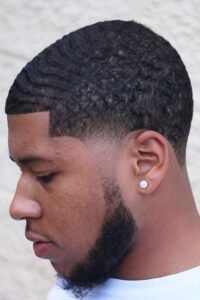
360 waves are a craft in themselves, and the taper fade is the frame that shows them off. In the photo the rippling wave pattern runs across the whole top, catching the light in rings, while the faded sides keep the shape tight and the waves are the star. The taper matters here because it gives the waves a clean border — without it, the pattern bleeds into the sides and loses its definition. It suits coarse, coily hair best, and it is the most high-maintenance version in this guide in terms of daily routine: a wave brush, a durag at night, and regular moisturising are not optional, they are the cut. But when the waves are spinning properly, there is no sharper finish in this guide.
Ask for: “360 waves with a taper — cut the top to wave length, fade the sides, keep the hairline sharp.” Best for: coarse, coily hair, and men willing to brush daily. Upkeep: brush daily, wear a durag at night, moisturise, and touch up the taper every two to three weeks.
29. Taper Fade with Twist Top

Photo via Setmore — source
The twist top is the textured, coily answer to the crop — short twists on top, clean taper underneath. In the photo short two-strand twists sit over a clean taper, and the twists give the top a defined, patterned texture that a plain crop cannot match. It suits coily and curly hair best, because the twists form naturally from that texture, and it is a protective style too: the twists keep the hair settled and the taper keeps the edges sharp. It is also one of the most versatile tops in this guide — the twists can be worn short and neat, or grown longer and fuller, and the taper works with either length.
Ask for: “Twist top — short two-strand twists on top, taper fade on the sides, keep the twists neat at the hairline.” Best for: coily and curly hair, and men who want a protective style with texture. Upkeep: moisturise the twists, re-twist every two to three weeks, and keep the taper touched up.
30. Taper Fade with Highlights
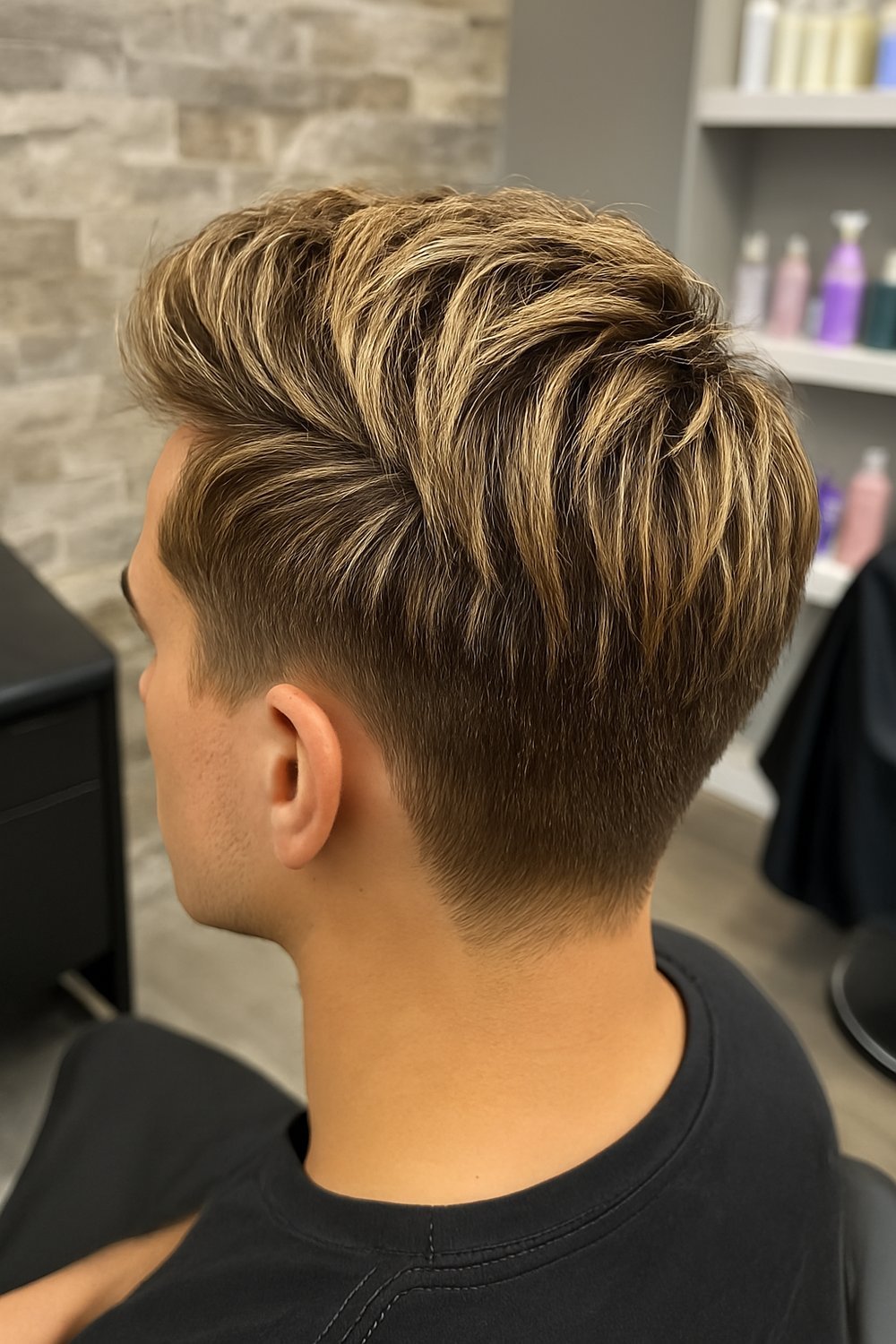
Photo via GlossGenius — source
Colour changes the taper more than any cut detail. In the photo lightened strands run through the textured top, with strong contrast against the dark roots, and the faded sides keep the whole look grounded. The highlights make the texture visible in a way dark hair cannot — every piece of the top reads separately — and the dark roots keep it from looking bleached all over. It is the most high-maintenance version in this guide because the colour needs upkeep, but it also photographs strikingly, and it suits straight and wavy hair best, because those textures show the highlights most clearly.
Ask for: “Taper fade with highlights — lightened strands through the top, dark roots left natural, taper on the sides.” Best for: men happy to pay for colour, and straight or wavy hair that shows the highlights. Upkeep: purple shampoo to stop the blonde going brassy, and a colour refresh every six to eight weeks.
By hair type
Four versions chosen for the hair you actually have — straight, thick, Black and Asian hair each get their best taper.
31. Taper Fade for Straight Hair

Photo: Naos Barber — source
Straight hair shows a taper at its cleanest, and this version is built around that fact. In the photo the smooth, straight top is combed back, the taper line is sharp and visible, and the whole cut reads as precise and deliberate. Because straight hair has no wave to hide behind, the blend has to be exact — and when it is, the result is the sharpest-looking taper in this guide. The trick for straight hair is texture: ask the barber to cut texture into the top so it does not sit flat, and use a little matte clay for hold. A low or mid taper suits straight hair best, because the gentler heights keep the contrast from looking too severe.
Ask for: “Taper for straight hair — low or mid taper, texture cut into the top so it doesn’t sit flat, neat finish.” Best for: straight hair, and men who want the sharpest, cleanest taper. Upkeep: light matte clay to keep the top in place; the straight hair shows regrowth, so keep the taper touched up every four weeks.
32. Taper Fade for Thick Hair

Photo: TaperMode — source
Thick hair is the taper’s best friend, and this photo shows why: dense, voluminous hair on top, full and heavy, held together by a clean taper that keeps the sides from going wide. The weight that makes thick hair hard to manage in other cuts is the whole point here — it gives the top its fullness and its height. The barber’s job is to remove just enough weight with thinning shears so the shape sits down instead of puffing out, and to keep the taper strong enough to balance the volume above it. A mid or high taper works best on thick hair, because the higher fade gives the volume a clear frame.
Ask for: “Taper for thick hair — mid or high taper, thin the weight through the top, keep the length and volume.” Best for: thick, wavy or curly hair. Upkeep: a heavier cream or leave-in conditioner to control the volume; a reshape every four to five weeks.
33. Taper Fade for Black Men
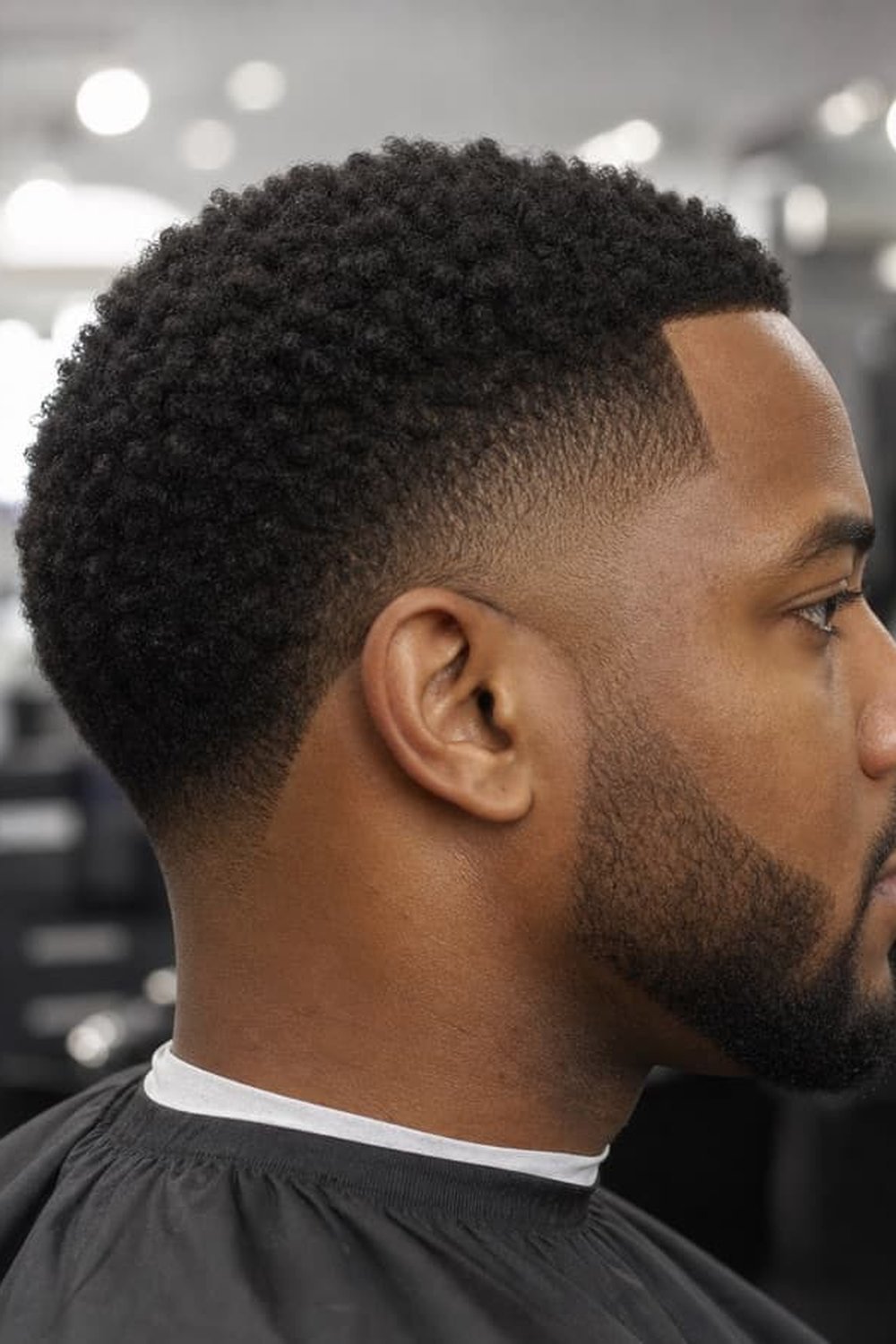
Photo: TaperMode — source
The taper fade is a cornerstone of Black barbering, and this version shows why it has stayed that way. In the photo a sharp low taper frames a textured top, finished with a crisp line-up across the forehead, and the whole cut is clean, deliberate and unmistakable. The taper works so well on coily hair because the short sides give the texture a clear border, and the cut pairs naturally with the details Black barbershop culture perfected: the line-up, the beard blend, the wave pattern, the twist top. Whether the top is a crop, curls, waves or twists, the taper underneath is what holds the shape together — and the line-up is what makes it look freshly cut.
Ask for: “Taper fade — low or mid taper, textured top, sharp line-up across the forehead, blend the beard into the taper if you have one.” Best for: coily and curly hair, and men who want the classic Black barbershop finish. Upkeep: a line-up touch-up every week, moisturise the hair, and a full re-fade every two to three weeks.
34. Taper Fade for Asian Hair

Photo via Pinterest — source
Straight, thick Asian hair suits a taper better than almost any other hair type. In the photo straight black hair with a textured, spiky top sits over a clean taper, and the hair holds its shape so well that the top stays where it is put and the taper keeps its line for weeks. Asian hair is strong and straight, so the barber needs to texturise the ends — otherwise the thick hair sits like a helmet — and the taper underneath does the rest, giving the cut its structure. It is also the version most often seen in K-style and two-block looks, which is why it feels so current: a textured fringe or a curtain front over a clean taper is a cut often seen in Korean barbershops.
Ask for: “Taper for Asian hair — textured fringe or curtain front, ends thinned so the thick hair moves, clean taper on the sides.” Best for: straight, thick Asian hair and men who like K-style cuts. Upkeep: light wax on the fringe; the thick hair holds the shape for weeks.
Special mentions
Two versions that deserve their own place — the temple taper and the curtain fringe finish.
35. Temple Taper Fade

Photo: Ape to Gentleman — source
The temple taper is the quietest fade in this guide — and often the smartest. Instead of fading the whole side, it fades only the small area around the temples and sideburns, leaving the rest of the sides longer. In the photo the short taper around the temple gives the cut a clean edge, while the longer hair above it keeps the shape soft and natural. It is the version to pick if you want a fade but not a full one: it cleans up the edges, sharpens the hairline, and grows out so gracefully that you can go six weeks between visits. It also pairs with almost any top — a crop, a side part, curls — because it changes so little of the overall shape.
Ask for: “Temple taper — fade only around the temples and sideburns, leave the rest of the sides longer, keep the top as it is.” Best for: any hair type, conservative workplaces, and men who want the subtlest possible fade. Upkeep: almost none — a touch-up every five to six weeks keeps the temples clean.
36. Low Taper Fade with Curtain Fringe
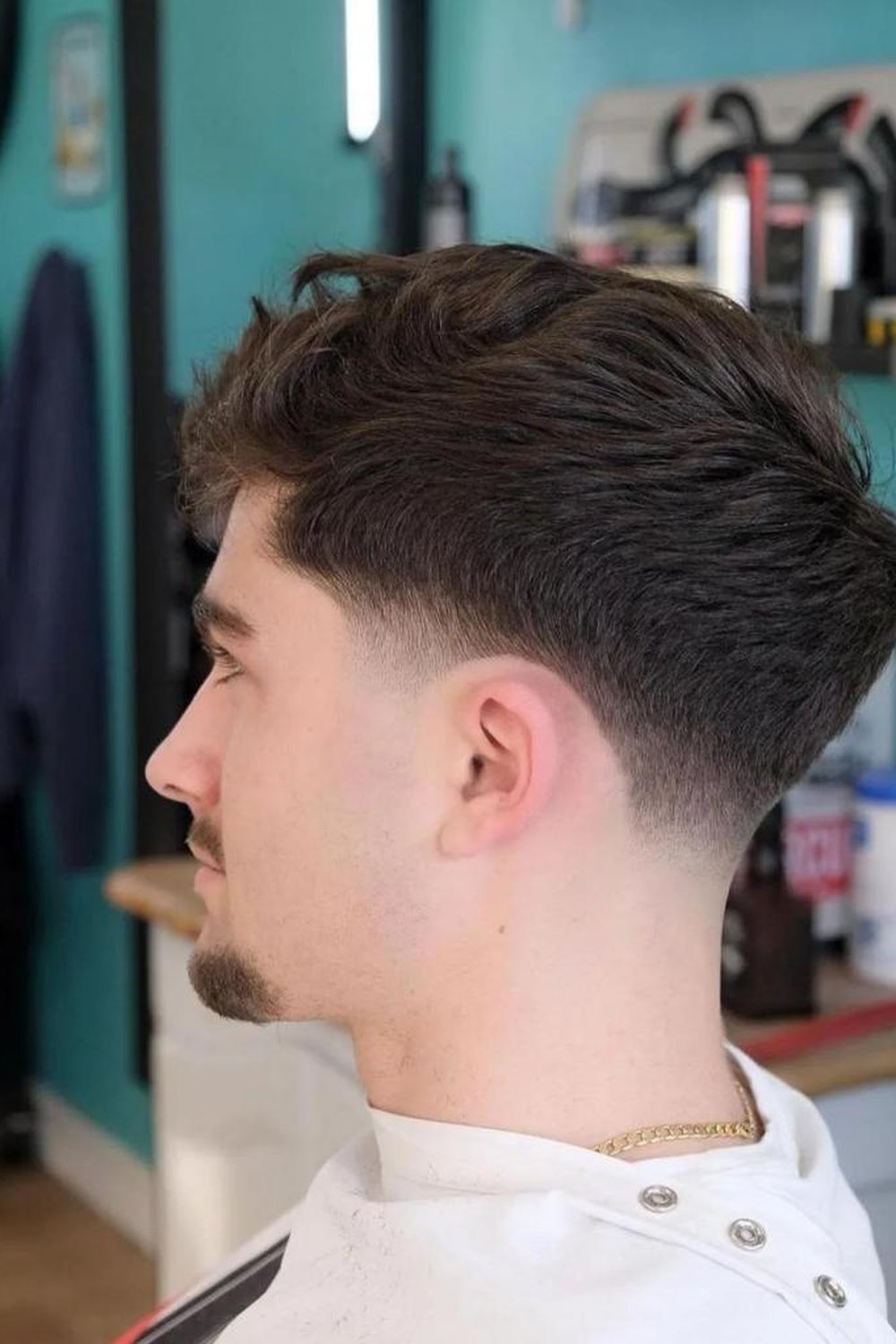
Photo via FB.ru — source
The curtain fringe is the softest front in this guide, and over a low taper it is one of the most flattering combinations here. In the photo a curtain fringe falls forward over the forehead, framing the face, and the low taper keeps the sides neat, and the whole cut has a relaxed, 90s feel that suits almost everyone. It borrows the curtain look and pairs it with the taper’s clean edges, so the face is framed instead of exposed — it suits men with a wide forehead or a strong jaw, and it is the version that looks most like a hairstyle rather than a statement. It needs the top long enough to fall past the cheekbones, so grow the front out before you ask for it.
Ask for: “Curtain fringe with a low taper — centre part, fringe framing the face on both sides, low taper, keep the front long.” Best for: straight to wavy hair, wide foreheads, and men who like a softer look. Upkeep: a little cream to keep the curtain pieces in place; trim the fringe every four weeks.
How to ask your barber for a taper fade
Say it in one breath: “Taper fade, please — low on the sides, about three inches textured on top, blend it smooth, no skin.” Then add the details that matter: the height (low, mid or high), whether you want it taken to the skin, how long you want the top, and whether the neckline should be tapered or left natural. Bring the photo from this guide on your phone — barbers cut better from a picture than from a description. If your barber has never cut the exact version you want, ask for the taper first and the top second; the taper is the part that has to be exact.
One warning: do not ask for a skin fade by accident. A taper gradually shortens the hair without going to the skin; a skin fade takes it down to bare skin and doubles the contrast — and doubles how often you need a touch-up. If you want the quiet, office-friendly version in this guide, say “taper”, not “fade”, and check the blend in the mirror before the barber moves on.
Styling and maintenance
Most versions in this guide take five minutes or less. Towel-dry the hair, work a pea-sized amount of matte clay or texture powder through the top, and push the top in the direction you want it — forward for a fringe, back for a slick, up for a quiff. Sea salt spray on damp hair adds grit and helps wavy versions hold their shape without looking stiff. Skip heavy gels and shiny pomades unless you are going for the slicked-back or pompadour look; shine makes a taper look greasy fast.
Book a touch-up every three to five weeks to keep the taper crisp — low tapers last longest, high and skin tapers need visits every two to three weeks. Between visits, trim the neckline yourself only if you are confident with clippers; a crooked neckline ruins the whole shape. Wash two to three times a week, not daily, so the hair keeps its natural oils and does not go fluffy, and use a light conditioner on the length only.
Frequently asked questions
What is a taper fade?
A taper fade is a gradual blend: the hair at the sides and back is cut very short near the hairline and lengthens step by step as it moves up the head, until it meets the longer hair on top. The blend should be smooth, with no visible line where one length ends and the next begins. It comes in three heights — low, mid and high — and it can be taken down to the skin or kept as a classic scissor taper with no skin showing.
What is the difference between a low, mid and high taper fade?
The height where the fade starts. A low taper starts just above the ear and the sideburns, so the contrast is quiet and it grows out slowly. A mid taper starts around the temple, giving visible contrast without going extreme. A high taper starts up near the crown, so the contrast between the short sides and the long top is strong — and it needs a touch-up every two to three weeks. Low is the safest first taper; high is the boldest.
Does a taper fade suit curly hair?
Yes — curly hair is one of the best matches. The curls give the top natural volume and shape, and the taper keeps the sides tidy so the shape does not go wide. Ask the barber to keep weight on top so the curls can form, taper only the sides and neckline, and use curl cream instead of clay so the curls stay defined rather than frizzy.
How often do I need a trim?
Every three to five weeks for most versions. Low tapers and classic scissor tapers last longest — four to six weeks — because the faded line sits low and regrowth barely shows. High tapers and skin tapers need a touch-up every two to three weeks, because the high line and the bare skin show stubble fast. Line-ups and designs fade fastest of all, in about one to two weeks.
Can I get a taper fade with a beard?
Yes — it is one of the best pairings in this guide. The taper fades the sideburns cleanly into the beard instead of leaving a gap, so the hair and the beard read as one deliberate shape. Ask the barber to blend the beard into the taper rather than cutting a hard line between them, and keep the beard shaped and oiled so the two parts match.
What should I tell my barber?
Say the height first — low, mid or high — then whether you want skin or not, then the top: “Mid taper fade, not to the skin, three inches textured on top, fringe pushed forward.” Bring a photo from this guide on your phone, because barbers cut better from a picture than from a description. And check the blend in the mirror before the barber moves on.
Is a taper fade good for work?
Yes — it is one of the most workplace-friendly fades. A low taper or a classic scissor taper passes in almost any office, and the side part, crew cut and slicked-back versions are all safe choices. If your workplace is strict, avoid skin tapers, hard parts cut with a razor, and shaved designs, and keep the top neat. A low taper with a textured crop is the safest version in this guide for a formal office.
The bottom line
The taper fade has lasted because it asks for so little and gives back so much: clean sides, a smooth blend, and a top that can be anything you want it to be. Pick the height that matches your life — low for the office, mid for the balance, high for the statement — show your barber the photo, and give the top time to grow into the version you want. The cut only gets better as you learn which height suits you.