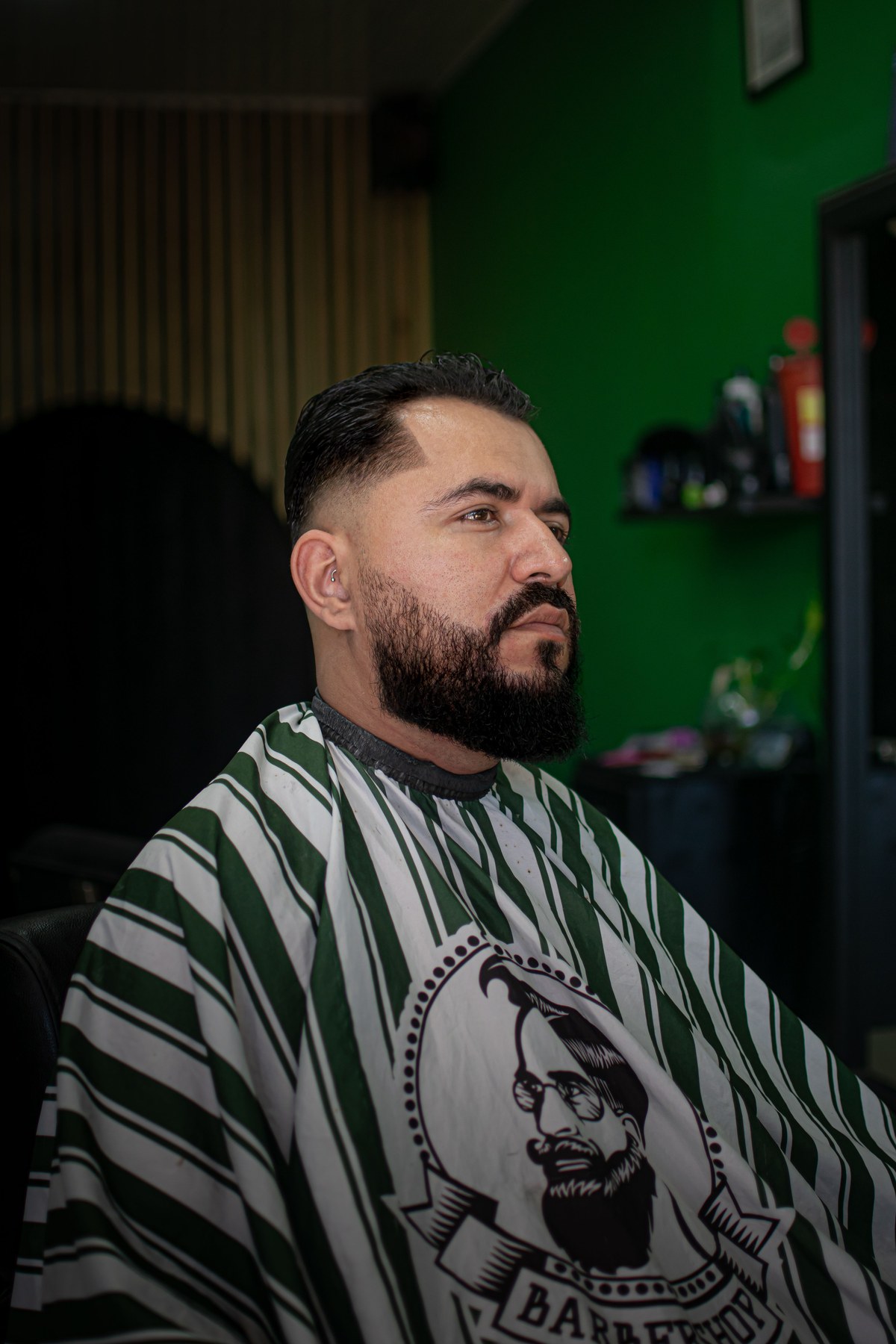
27 mullets that stay neat at the front and bold at the back
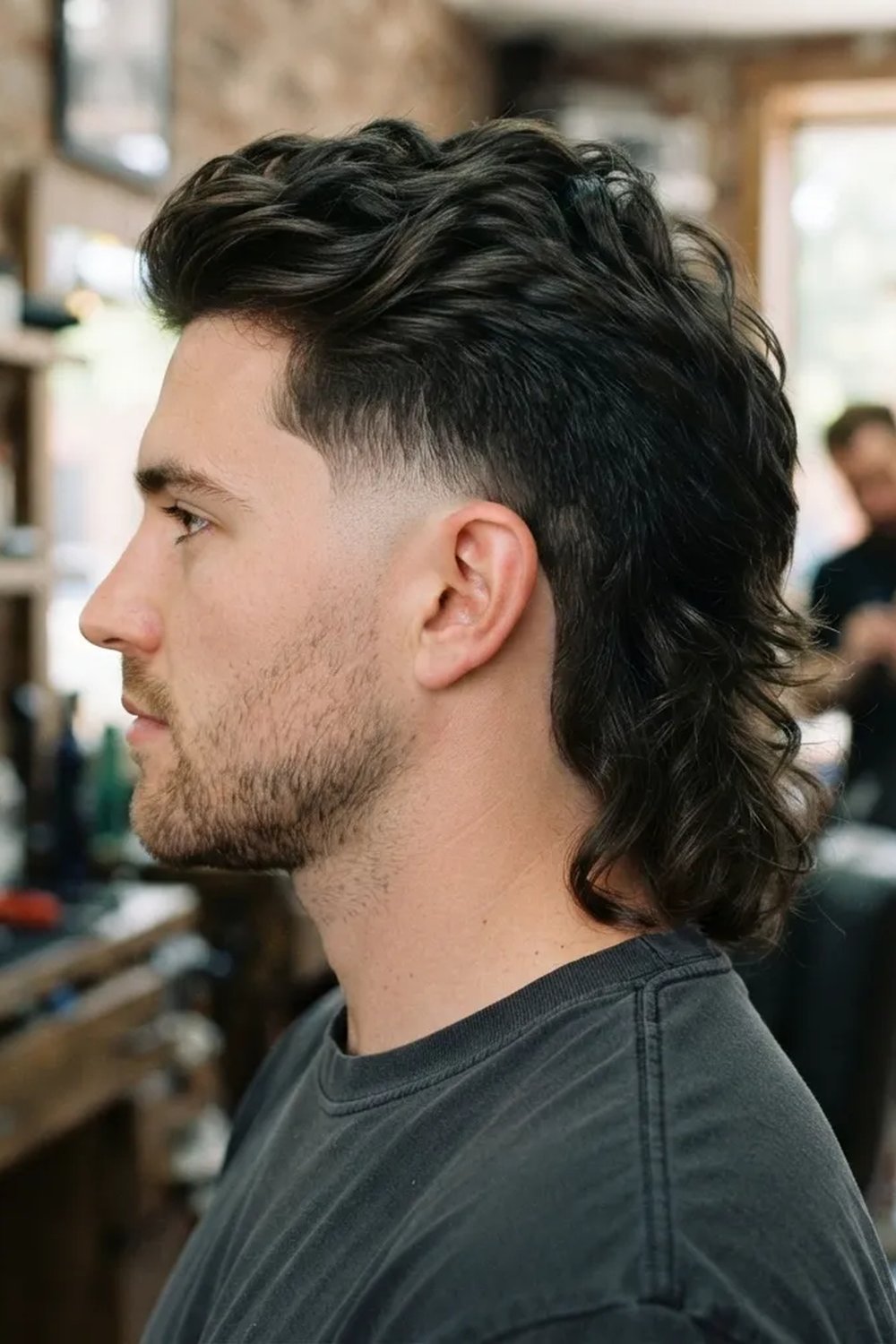
The low taper fade mullet is the mullet for men who want the shape without the shouting. The sides stay clean — a soft taper that fades out just above the ears and around the sideburns — while the back keeps the length that makes a mullet a mullet. From the front it reads as a neat, tidy cut; from the back it has all the personality. That split is why it has become one of the most requested cuts of 2026, with teenagers, students and young professionals all asking for it by name.
This guide covers 27 of them — from the classic and the curly to textured, slicked-back and wolf-cut hybrids — each one with a real photo, barber instructions you can read out word for word, and honest notes on who it suits and how much upkeep it needs. If you want the wider family of low fades first, our guide to the low taper fade covers every style and texture in one place, and our mid taper Edgar is the sharper Gen-Z cousin of this cut. If mullet length is what you are after but you want the rounded burst shape instead, our burst fade mullet guide covers that version in detail.
One honest note before the list: the best mullet is the one that fits your hair and your mornings, not the one with the most likes. A long back looks brilliant on thick, wavy hair and can fall flat on fine, straight hair; a slicked-back version needs a blow-dry, while a messy one needs almost nothing. Start with the version that matches your hair, bring the photo, and let the back grow — this cut only gets better as the length settles in.
What’s in this guide
Classic and clean (1–6): the classic, textured crop, curly, wavy, straight and slicked-back business mullets. Long and free (7–10): shaggy surfer, wolf cut hybrid, short and long-back versions. Parts and fringes (11–13): middle part, textured fringe and the fine-hair mullet. Thick, bearded and textured (14–17): thick hair, beard pairing, Asian and messy versions. Sharp details (18–22): side-swept, hard part, layered, line-up and mohawk mullets. Statement finishes (23–27): highlights, curtain fringe, disconnected, quiff top and the school-safe mullet.
What is a low taper fade mullet?
A low taper fade mullet stitches two barbering ideas into one shape. The “low taper fade” describes the sides and back of the head: the hair is cut very short near the hairline, then lengthens gradually as it climbs — and because it is low, that blend starts within an inch of the hairline, just above the ear. The mullet half is the back: noticeably longer than the sides, from a subtle two-inch drop to length that brushes the collar. The blend between short and long should be gradual, never choppy. The top is usually left long enough to style — often three to five inches — and can be worn textured, pushed forward, swept back or left loose.
What makes it different from a high fade mullet is restraint. A high fade pushes the transition up toward the temple and creates stark contrast; a low taper keeps the contrast quiet, which is why this version works in classrooms and offices where louder mullets would not. It also grows out gracefully: because the faded line sits near the hairline, regrowth barely shows, so most men go four to six weeks between touch-ups instead of two or three.
How to choose the right low taper fade mullet
Start with your hair, not the photo. Straight hair shows the taper line most clearly and suits the neat, slicked-back and classic versions. Wavy hair adds natural movement and makes the shaggy and surfer versions look effortless. Curly hair gives the mullet its fullest shape — ask the barber to keep weight in the back so the curls can form. Thick hair can carry the longest backs; fine or thin hair looks best with texture cut into the top and a shorter back, so the cut does not go flat.
Then think about your face. The low taper keeps the sides slim, which suits round faces; a little height on top balances a long face; and a fringe or curtain front softens a strong jaw. And be honest about mornings: the messy and textured versions need little more than a pinch of matte clay, while the slicked-back and quiff versions need a blow-dry and a stronger product. If you want the full range of fade heights explained before you decide, our guide to the low burst fade is a useful comparison — same low fade idea, different shape around the ear.
Classic and clean
These six are the safest first mullets. The taper does the neat work, the back does the talking, and none of them needs more than a few minutes of styling.
1. Classic Low Taper Mullet
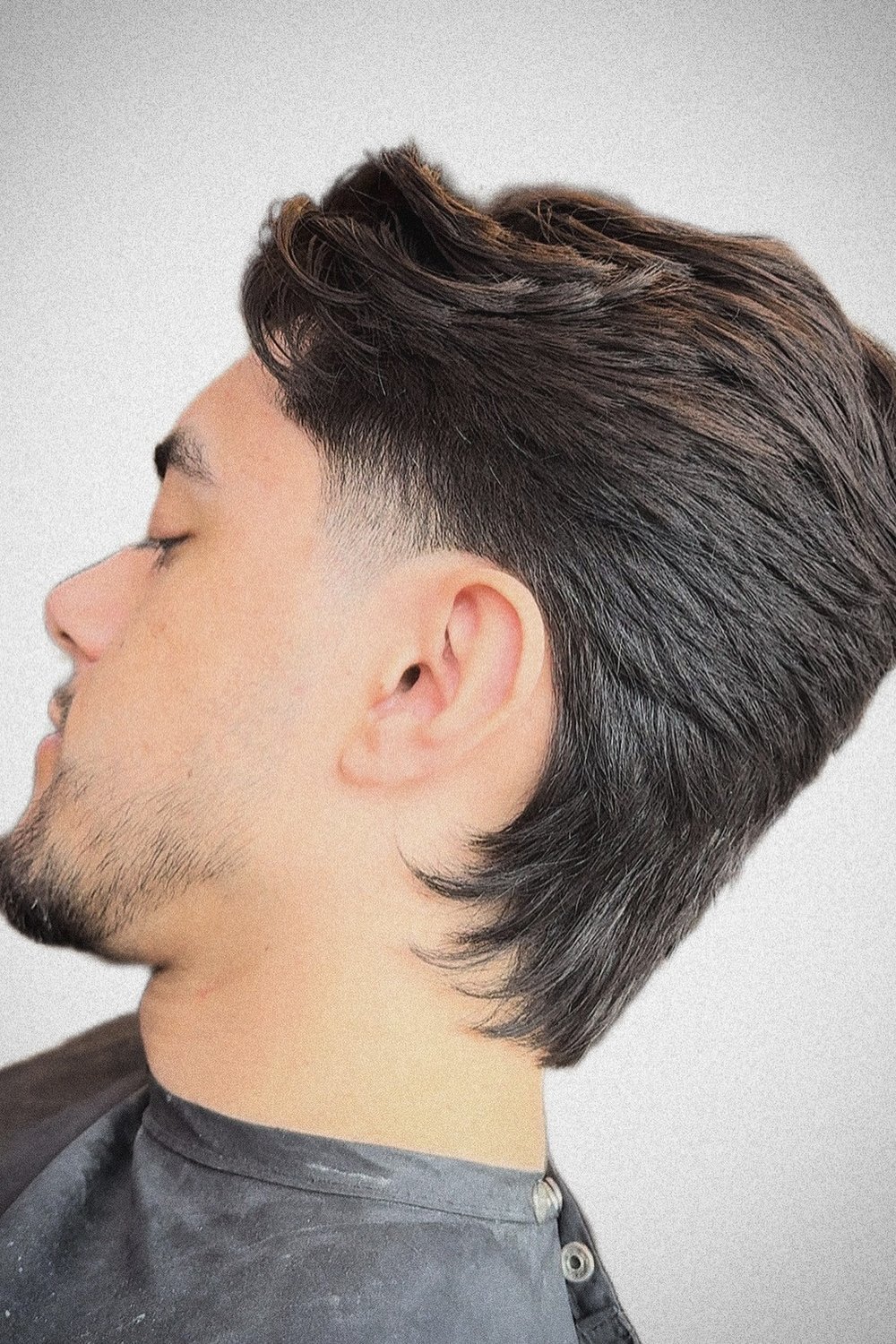
Photo: Just Mens Stuff — source
The original and still the best place to start. In the photo the dark top is slicked back from the face, the sides taper neatly down to the sideburns, and the back runs straight to the collar with a clean, even edge. Nothing is overdone: no hard lines, no heavy texture, just the mullet shape done properly. It is the version to pick if you have never had a mullet and want to test the shape without committing to anything loud.
Ask for: “Classic modern mullet — low taper on the sides, top slicked back, back left to the collar and blended, no hard step.” Best for: straight to slightly wavy hair, first-time mullets, and men who need the cut to pass at work. Upkeep: touch up the taper every four to five weeks; a little matte clay keeps the top in place.
2. Textured Crop Low Taper Mullet
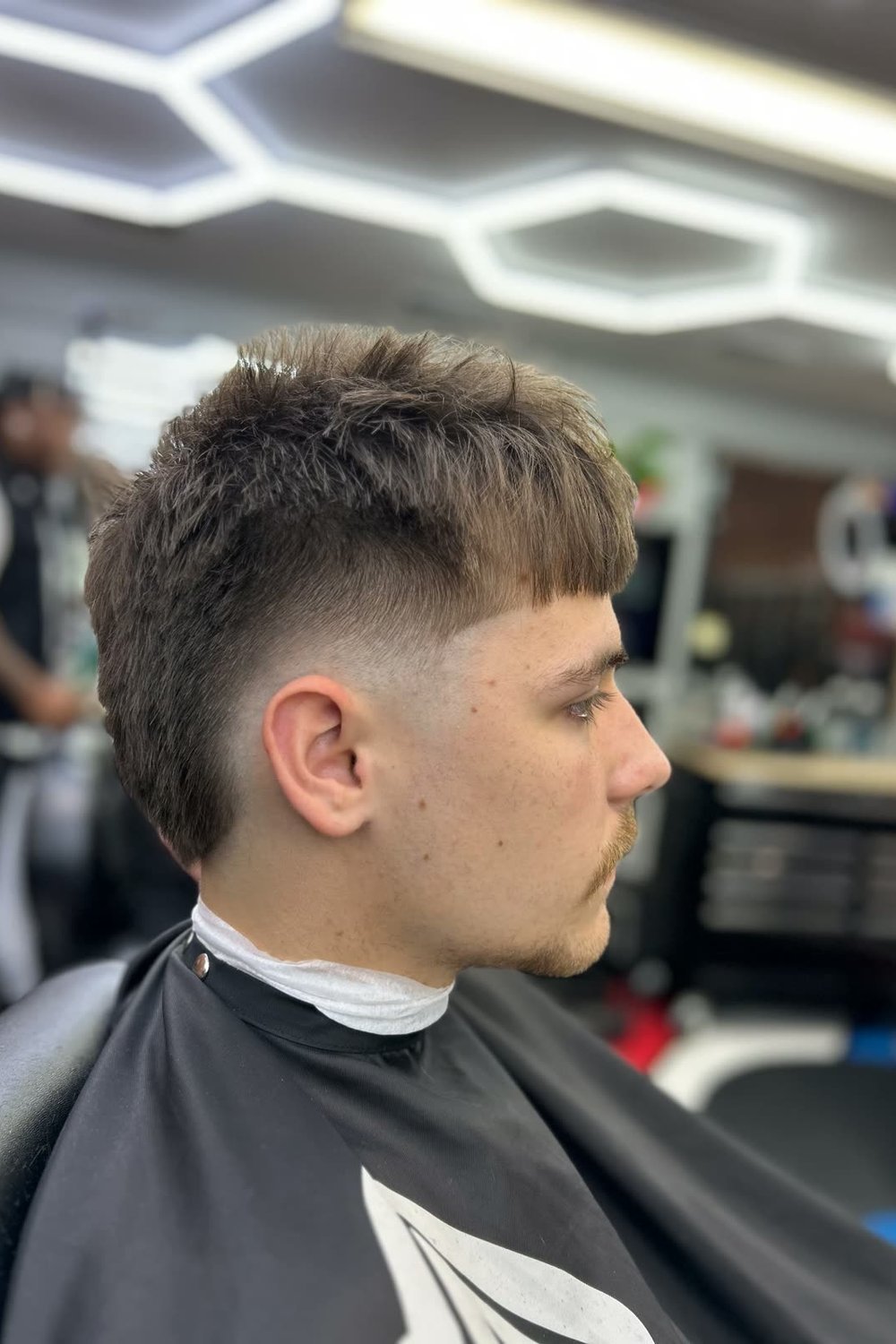
Photo: Smoove Jones — source
This one trades length for texture. The photo shows a short, choppy crop on top with a textured fringe, clean faded sides, and a back that keeps just a hint of mullet length at the nape. It reads more like a crop from the front and only reveals the mullet from the side — which makes it the easiest version in this guide to wear every day, and a good pick for men who want the idea of a mullet without the full commitment.
Ask for: “Textured crop on top with a choppy fringe, low taper on the sides, short mullet at the back — keep the nape length subtle.” Best for: straight hair, thick hair that needs weight removed, and low-maintenance mornings. Upkeep: a pinch of texture powder is enough; trim every four weeks to keep the crop crisp.
3. Curly Low Taper Mullet
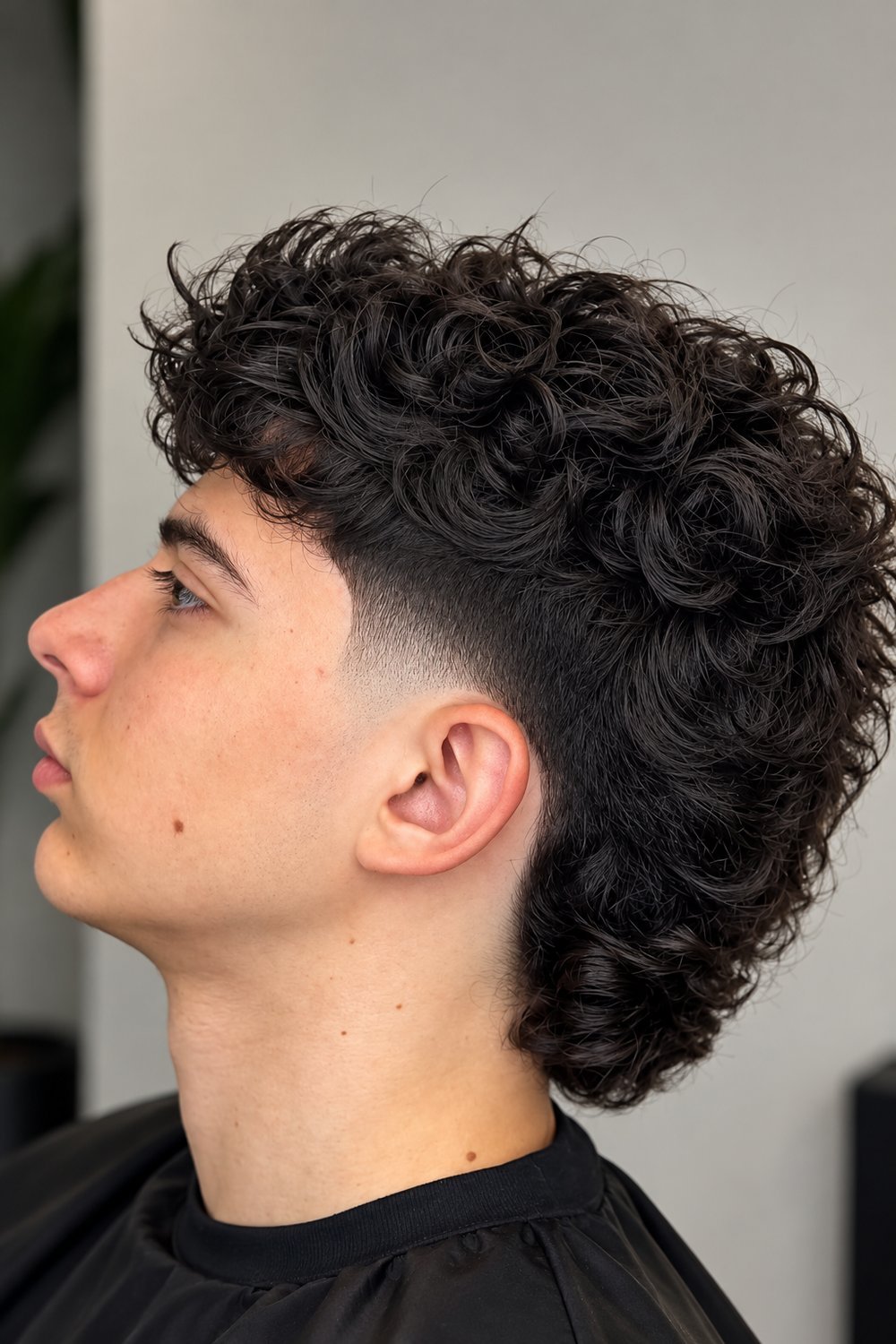
Photo: Icon Barbershop — source
Curly hair and this cut were made for each other. The photo shows tight dark curls with real volume on top and at the back, a curly fringe falling over the forehead, and a clean low taper around the ears that stops the shape from going wide. The curls give the back its body, so the mullet looks full without needing length past the collar — and the taper keeps the whole thing tidy instead of puffy.
Ask for: “Curly mullet — low taper around the ears, keep the weight in the back so the curls can form, fringe left long over the forehead.” Best for: naturally curly and coily hair, round and oval faces. Upkeep: curl cream on damp hair, scrunch and air-dry; never brush it dry or the curls turn to frizz.
4. Wavy Low Taper Mullet
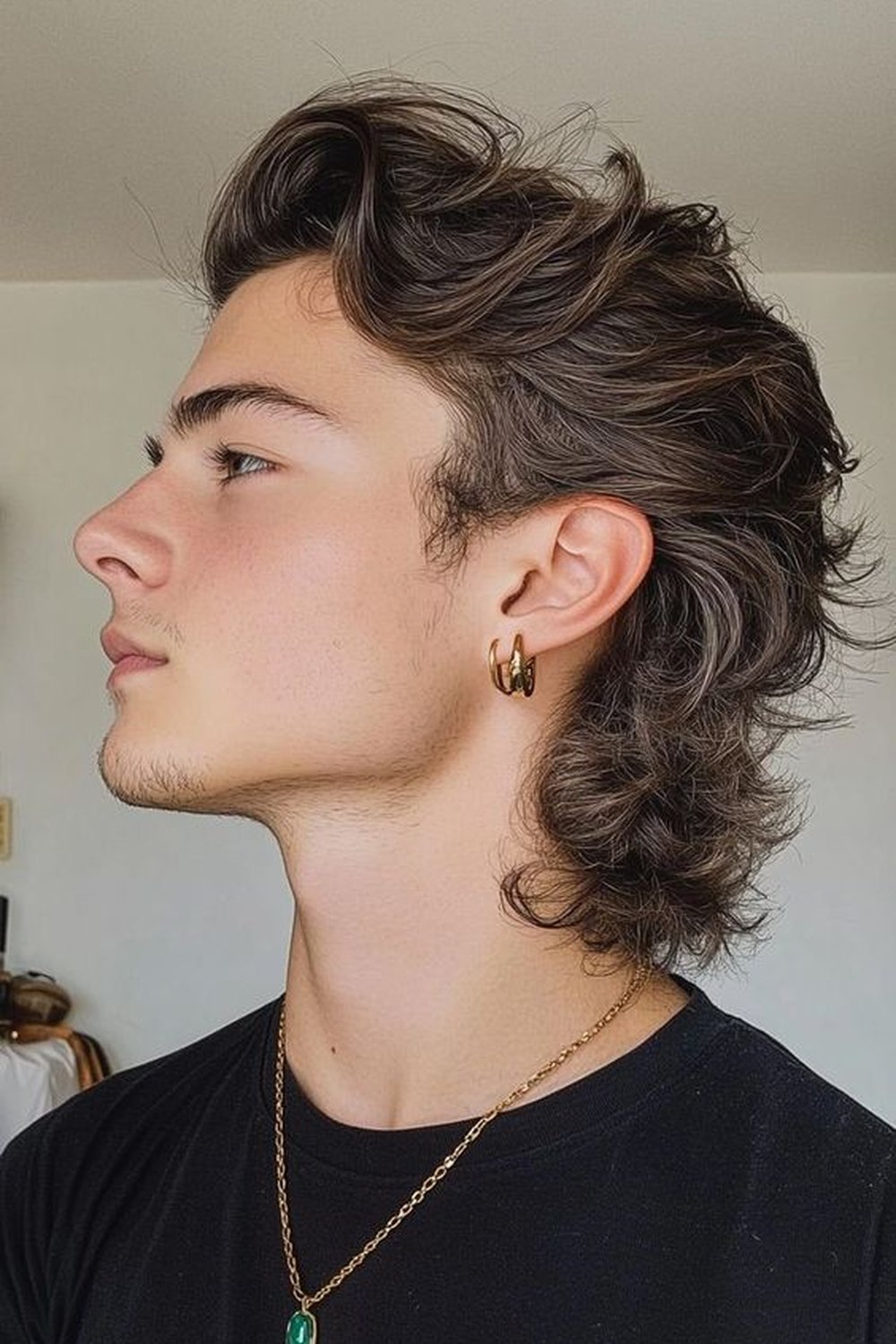
Photo: New Old Man — source
The most effortless version in the guide. In the photo, long loose waves sweep back from the face and fall past the collar at the back, with a clean low taper keeping the sides neat and a gold hoop earring finishing the look. Wavy hair does most of the styling itself here — the waves give the back movement that straight hair has to fake with product, and the cut looks just as good slightly grown out as it does on day one.
Ask for: “Wavy mullet — low taper on the sides, top and back left long and layered so the waves can move, no blunt edge at the back.” Best for: naturally wavy hair, men who hate styling, and longer faces that suit the extra length. Upkeep: sea salt spray on damp hair, air-dry; trim the taper every five weeks.
5. Straight Hair Low Taper Mullet
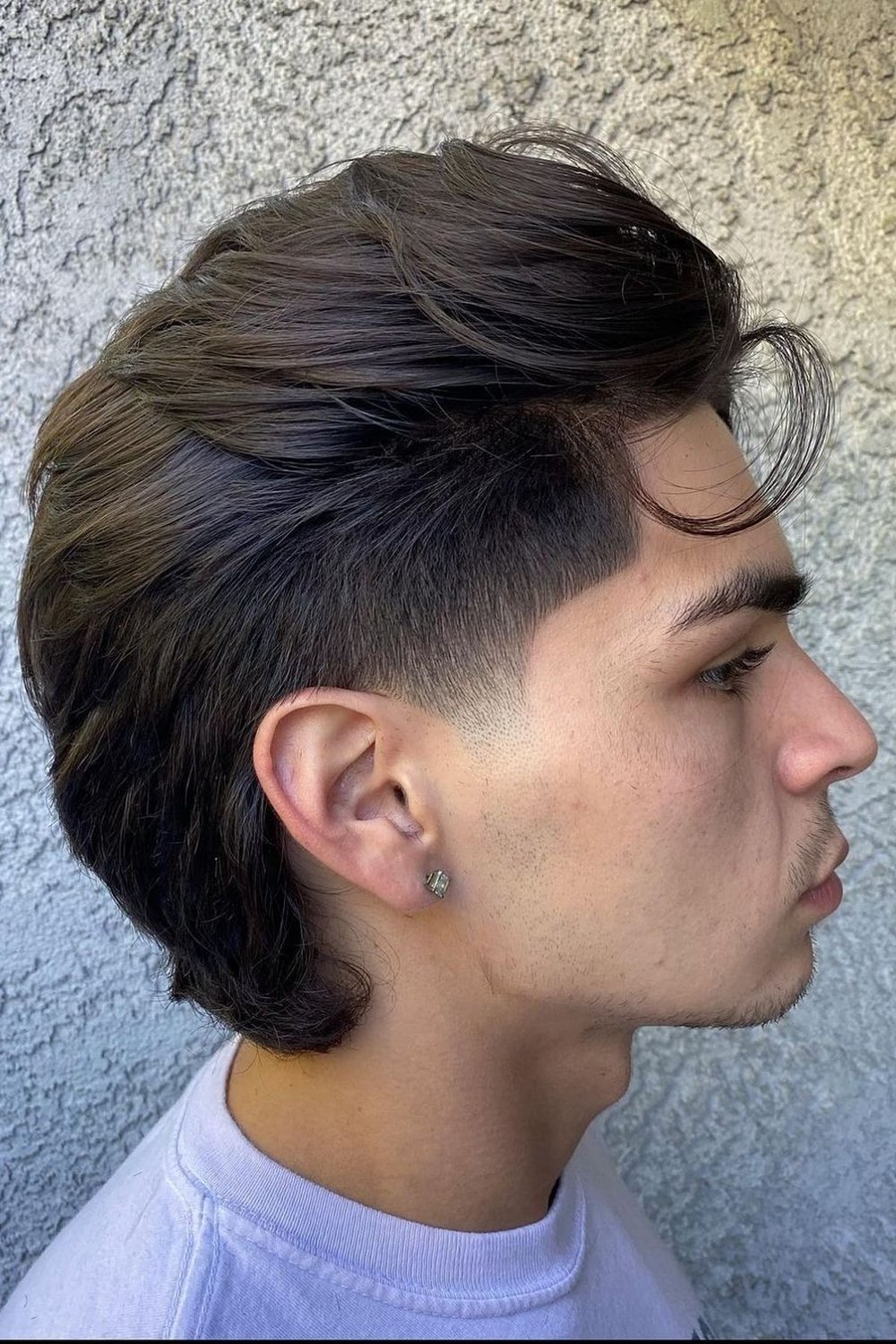
Photo: Tecnet — source
Straight hair shows this cut at its cleanest. The photo shows smooth dark hair swept back from the face, a sharp low taper at the sides, and a straight back that reaches the collar in one even line. Because straight hair has no wave to hide behind, the taper line and the back edge have to be exact — and when they are, the result is the sharpest, most deliberate-looking mullet in this guide. It suits men who like a tidy, finished look.
Ask for: “Straight-hair mullet — low taper, top swept back, back cut straight to the collar with a clean edge.” Best for: straight, thick hair and men who want a sharp, neat mullet. Upkeep: light pomade or matte clay to keep the top swept back; the straight back shows regrowth, so keep the taper touched up every four weeks.
6. Slicked-Back Business Mullet

Photo: Lovelyish — source
The boardroom version of the mullet. In the photo the top is glossy and slicked straight back, the back runs long and straight, and the whole look is finished with a navy suit and a trimmed beard. From the front it is indistinguishable from a classic slick-back; the mullet only shows from the side and back. That is the point — it is the one mullet in this guide you can wear to a client meeting without a second thought, and it proves the cut is about the shape, not the attitude.
Ask for: “Slicked-back mullet — low taper, top grown long enough to comb straight back, back left long, finish with pomade.” Best for: straight hair, professional settings, and men with beards. Upkeep: blow-dry the top back with a strong-hold pomade each morning; it takes five minutes and lasts all day.
Long and free
These four let the back do the talking. They need the most length, but the low taper keeps them from looking unkempt.
7. Shaggy Surfer Mullet

Photo: Pinterest — source
The beach version. The photo shows long, sun-bleached, tousled layers flowing past the shoulders at the back, with a soft taper at the sides that keeps the shape from turning into a mop. It is the longest back in this guide, and it works because the layers are cut to move — the hair has different lengths through the back, so it falls in pieces instead of one heavy sheet. Best in summer, best on hair that already has a wave to it.
Ask for: “Surfer mullet — low taper at the sides, long layered back past the shoulders, lots of texture so it moves.” Best for: wavy hair, thick hair, and men happy to grow the back out for months. Upkeep: almost none — sea salt spray, air-dry, and a trim every six to eight weeks to stop the ends splitting.
8. Wolf Cut Hybrid Mullet

Photo: Ecolchi — source
The newest variation in this guide, and one of the most asked-for among teenagers. The photo shows a layered wolf-cut shag with wispy ends, face-framing layers around the cheeks, and a longer shaggy back over a soft taper at the sides. It borrows the wolf cut’s heavy layering through the whole head and the mullet’s long back, so the shape is shaggy from every angle. It is deliberately messy — if you like clean lines, pick the classic instead.
Ask for: “Wolf cut mullet — heavy layers through the top, face-framing pieces, low taper at the sides, shaggy back.” Best for: medium to thick hair, younger men, and anyone who wants the most current version of the cut. Upkeep: texture powder or matte clay scrunched through the layers; the shag hides regrowth well, so touch-ups can wait five to six weeks.
9. Short Low Taper Mullet
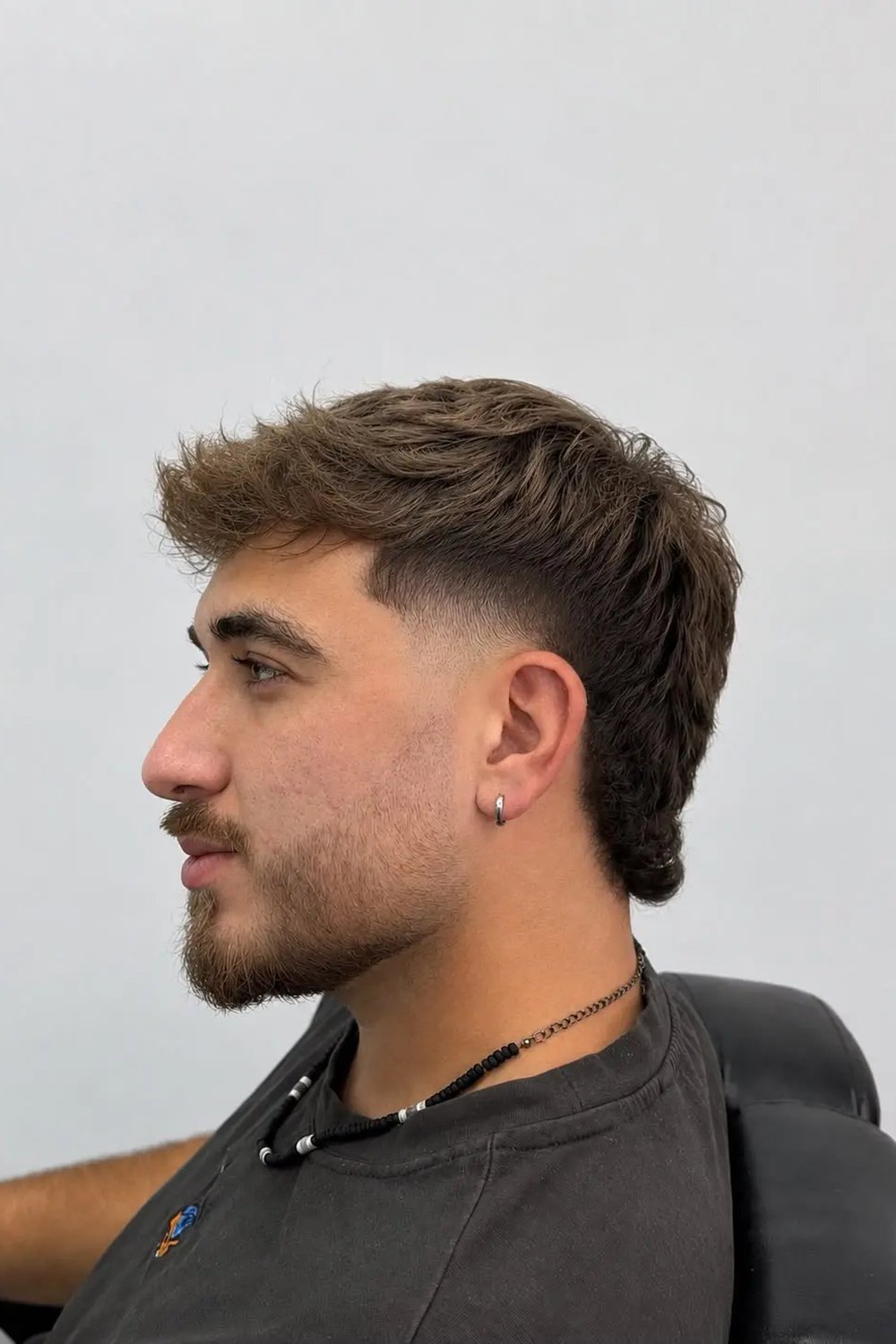
Photo: Malka Barber — source
The mullet for men who do not want a mullet — quite. The photo shows a short textured crop on top, a tight low taper, and a very short, neat back with just a hint of extra length at the nape, finished with a short beard. It is the quietest version in this guide, and the best first step: if you like the shape, grow the back out next time; if you do not, it grows into a normal crop in two weeks. No one will call it a mullet unless you tell them.
Ask for: “Short mullet — textured crop on top, tight low taper, back just past the nape, keep it subtle.” Best for: first-timers, strict workplaces, and men with short hair who want a change without a commitment. Upkeep: trim every three to four weeks — short versions show regrowth faster than long ones.
10. Long Back Low Taper Mullet
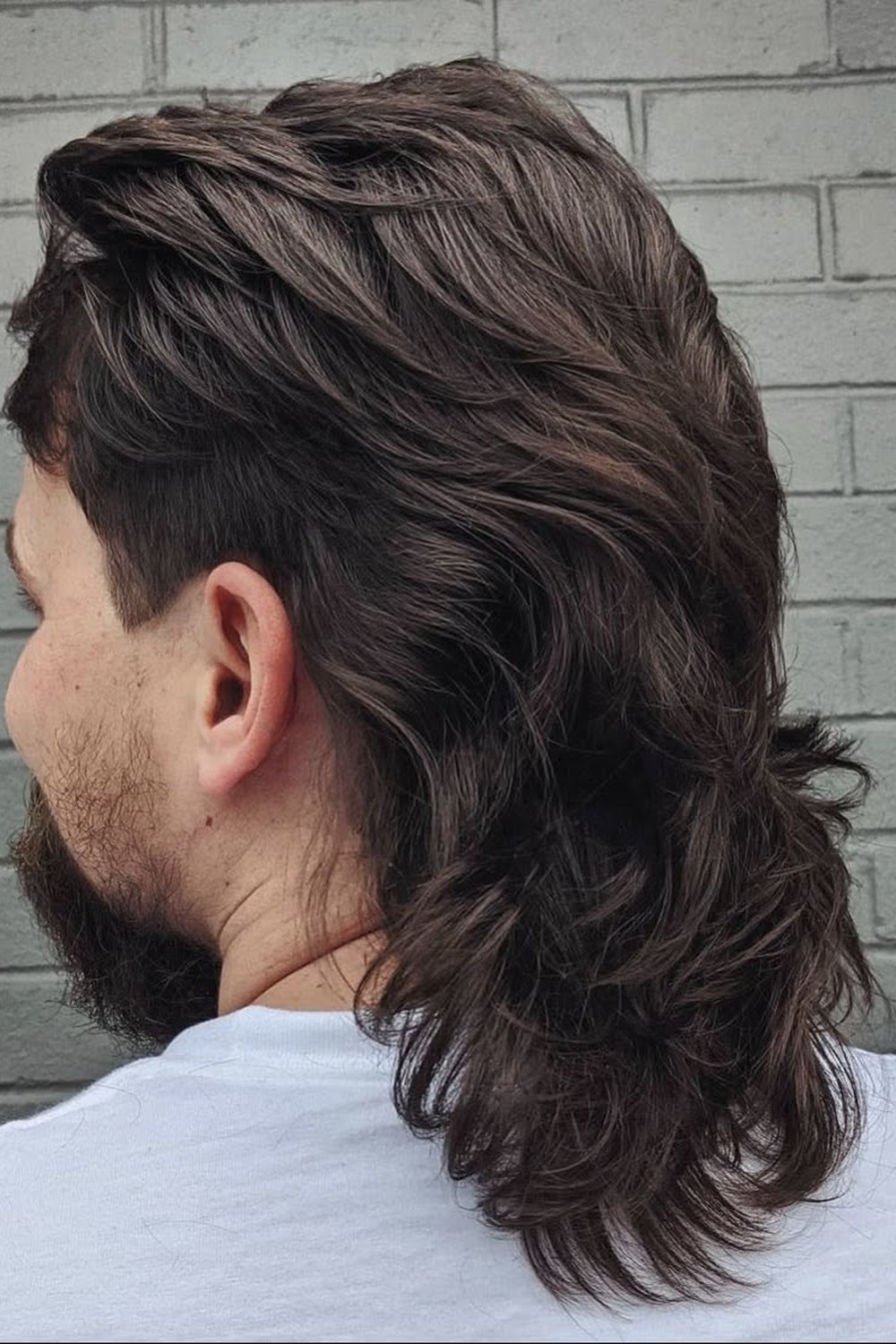
Photo: Jafi — source
The full commitment. In the photo the thick, wavy back reaches well below the collar, full and heavy, while the sides stay tapered and tidy — the contrast between the short sides and the long back is the whole point of the cut. This is the mullet for men who have been growing the back for months and want it to show. It needs thick hair to carry the weight; on fine hair the same length would hang limp and thin.
Ask for: “Long-back mullet — low taper on the sides, back left long below the collar, layers through the back so it does not go heavy.” Best for: thick, wavy hair and men who have already grown the back out. Upkeep: conditioner on the length, a wide-tooth comb, and a reshape every eight weeks so the back keeps its shape.
Parts and fringes
Three versions where the front of the cut does the work — a part or a fringe changes the whole feel of the mullet.
11. Middle Part Low Taper Mullet
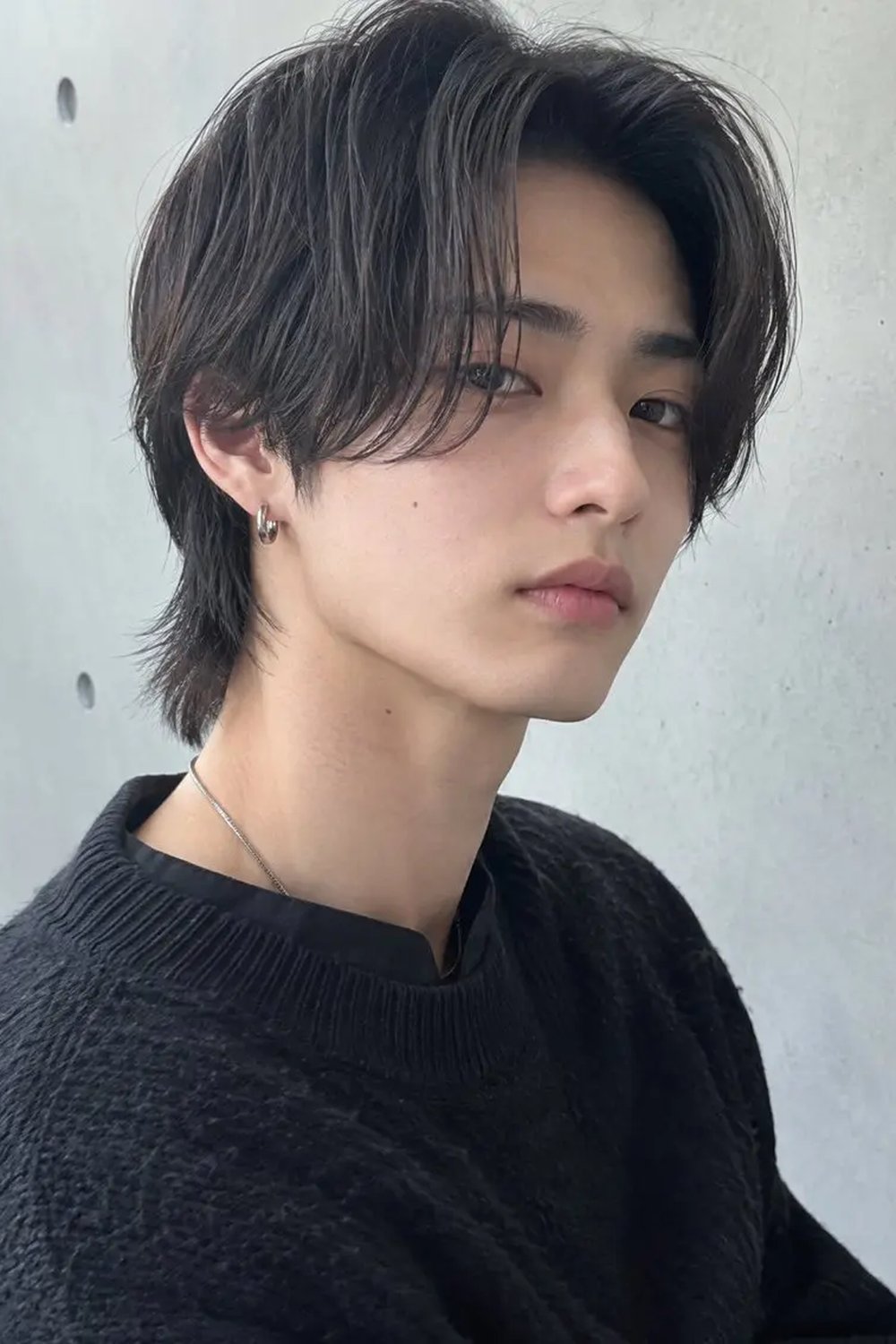
Photo: Minimodel — source
The centre part gives this mullet a softer, almost 90s feel. The photo shows a centre-parted top flowing down either side of the face, tapered sides, and mullet length at the back. It frames the face instead of exposing it, which suits men with strong cheekbones or a long face, and it works best on hair long enough on top to fall past the ears. It is also the easiest version to grow out — the part keeps the top tidy while the length builds.
Ask for: “Middle part mullet — centre part, top left long to fall either side of the face, low taper on the sides, back left long.” Best for: straight to wavy hair, long and oval faces. Upkeep: a little light cream to stop the part from splitting unevenly; otherwise, let it fall naturally.
12. Textured Fringe Low Taper Mullet

Photo: Squire — source
The fringe version — and the one that suits a high forehead best. The photo shows a choppy, textured fringe falling over the forehead with uneven ends, a clean low taper at the sides, and a short back. The fringe softens the whole cut: it hides the hairline, shortens a long face, and makes the mullet feel younger and more casual than the slicked-back versions. It is also the most forgiving version to style — push the fringe forward with your fingers and you are done.
Ask for: “Textured fringe mullet — choppy fringe over the forehead, low taper on the sides, short back.” Best for: straight hair, high foreheads, and long faces. Upkeep: matte clay on the fringe to keep the texture; trim the fringe every three weeks so it stays out of your eyes.
13. Thin Hair Low Taper Mullet
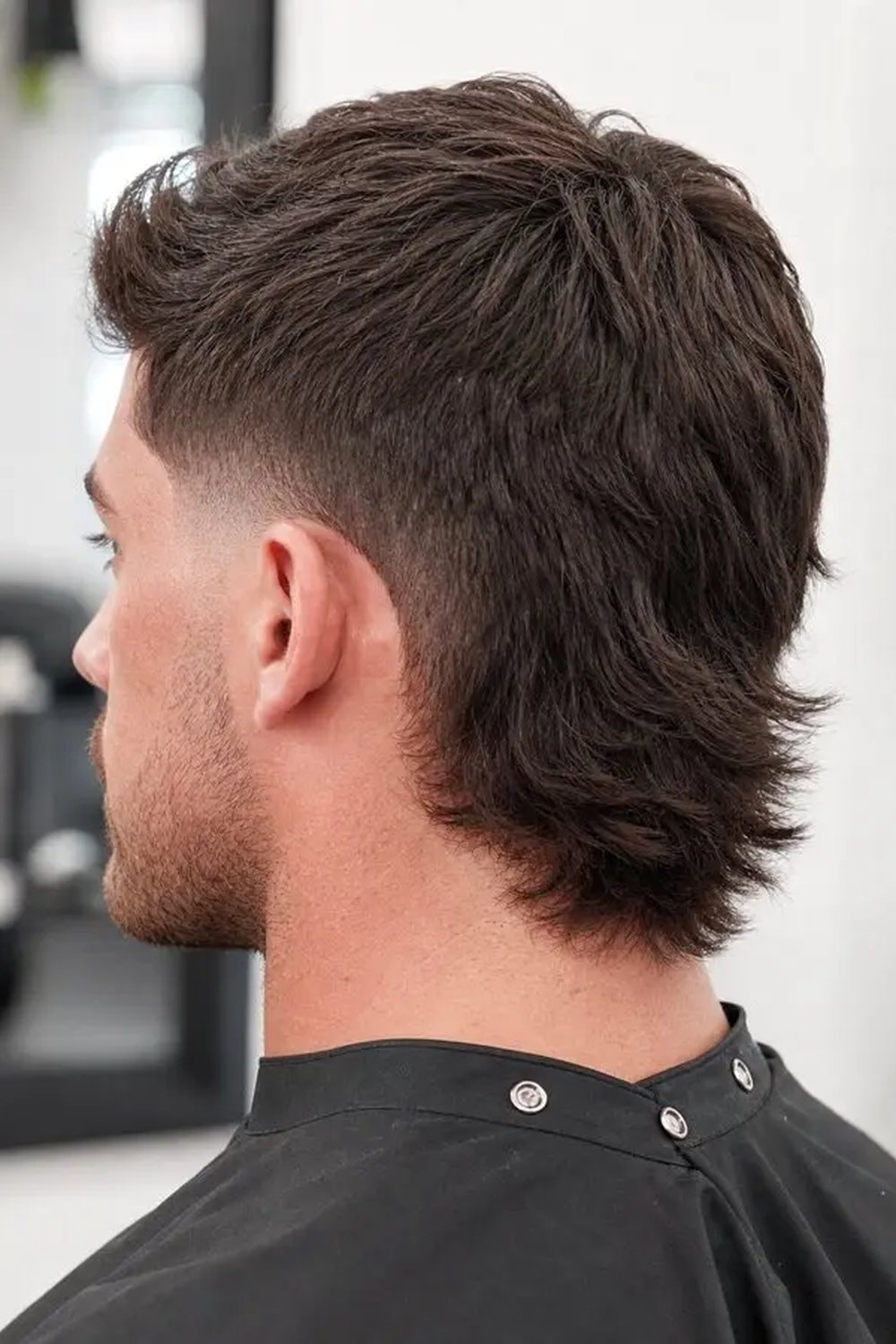
Photo: Tapermode — source
Yes, finer hair can wear a mullet — with the right version. The photo shows finer, lighter-density dark hair swept to the side, a neat taper and a short back. The trick is honesty about the hair: the taper keeps the sides clean, the top is textured rather than left heavy, and the back is kept short, so the cut never asks the hair to do more than it can. It will not give you the thick, flowing back of the long versions, and that is fine — this is the neat, wearable mullet for finer hair.
Ask for: “Mullet for fine hair — low taper, textured top swept to the side, short back, take weight out so it does not go flat.” Best for: fine hair, and men who want the shape without the bulk. Upkeep: texture powder at the roots for lift; wash with a light shampoo so the hair is not weighed down.
Thick, bearded and textured
Four versions built around what your hair — or your beard — already does well.
14. Thick Hair Low Taper Mullet
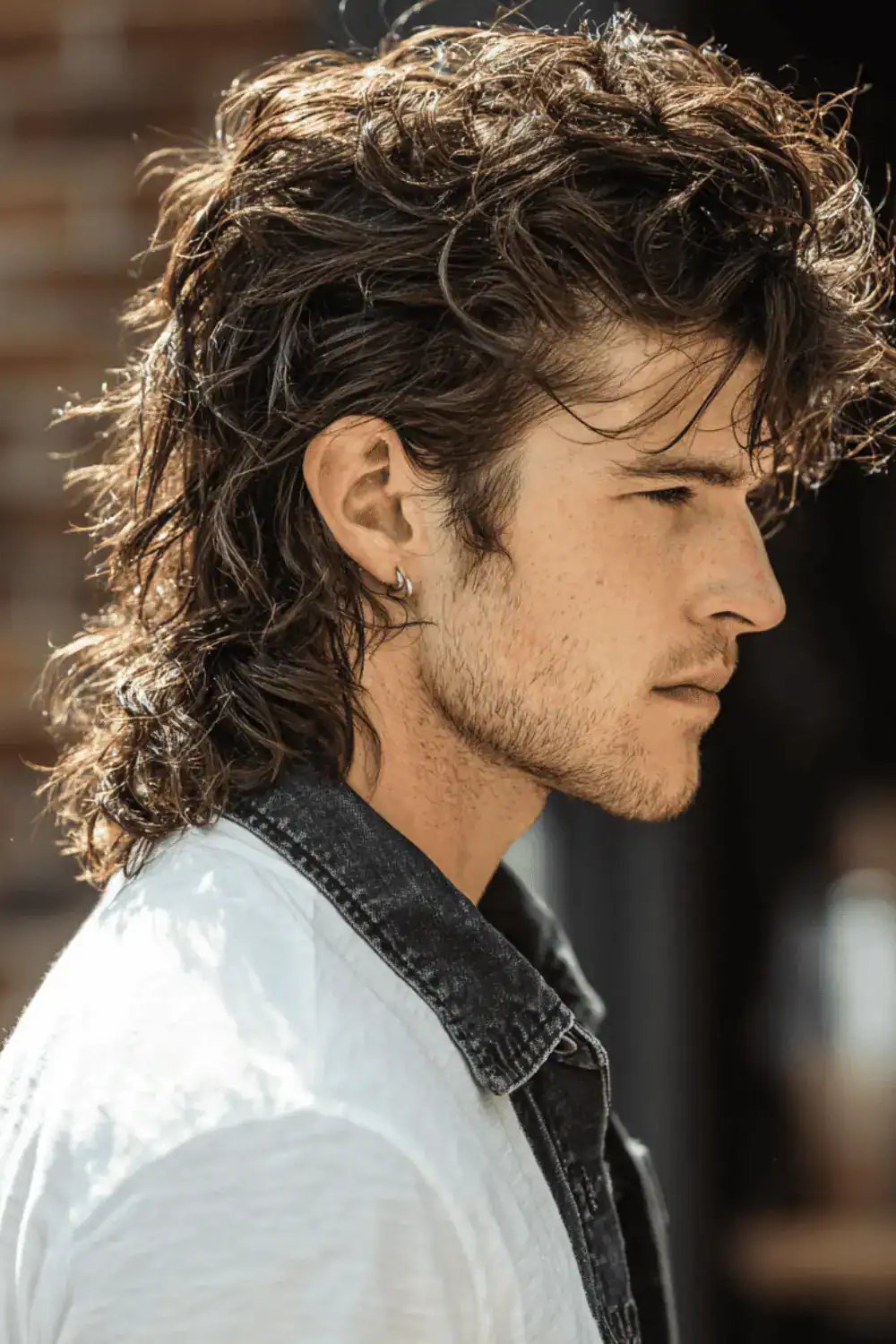
Photo: Beard Beasts — source
Thick hair is the mullet’s best friend, and this photo shows why: dense, curly-wavy volume on top and a heavy, long back, all held together by a clean low taper. The weight that makes thick hair hard to manage in other cuts is the whole point here — it gives the back its fullness and the top its height. The barber’s job is to remove just enough weight with thinning shears so the shape sits down instead of puffing out.
Ask for: “Thick-hair mullet — low taper, thin the weight through the top and back, keep the length.” Best for: thick, wavy or curly hair. Upkeep: a heavier cream or leave-in conditioner to control the volume; a reshape every five to six weeks.
15. Low Taper Mullet with Beard
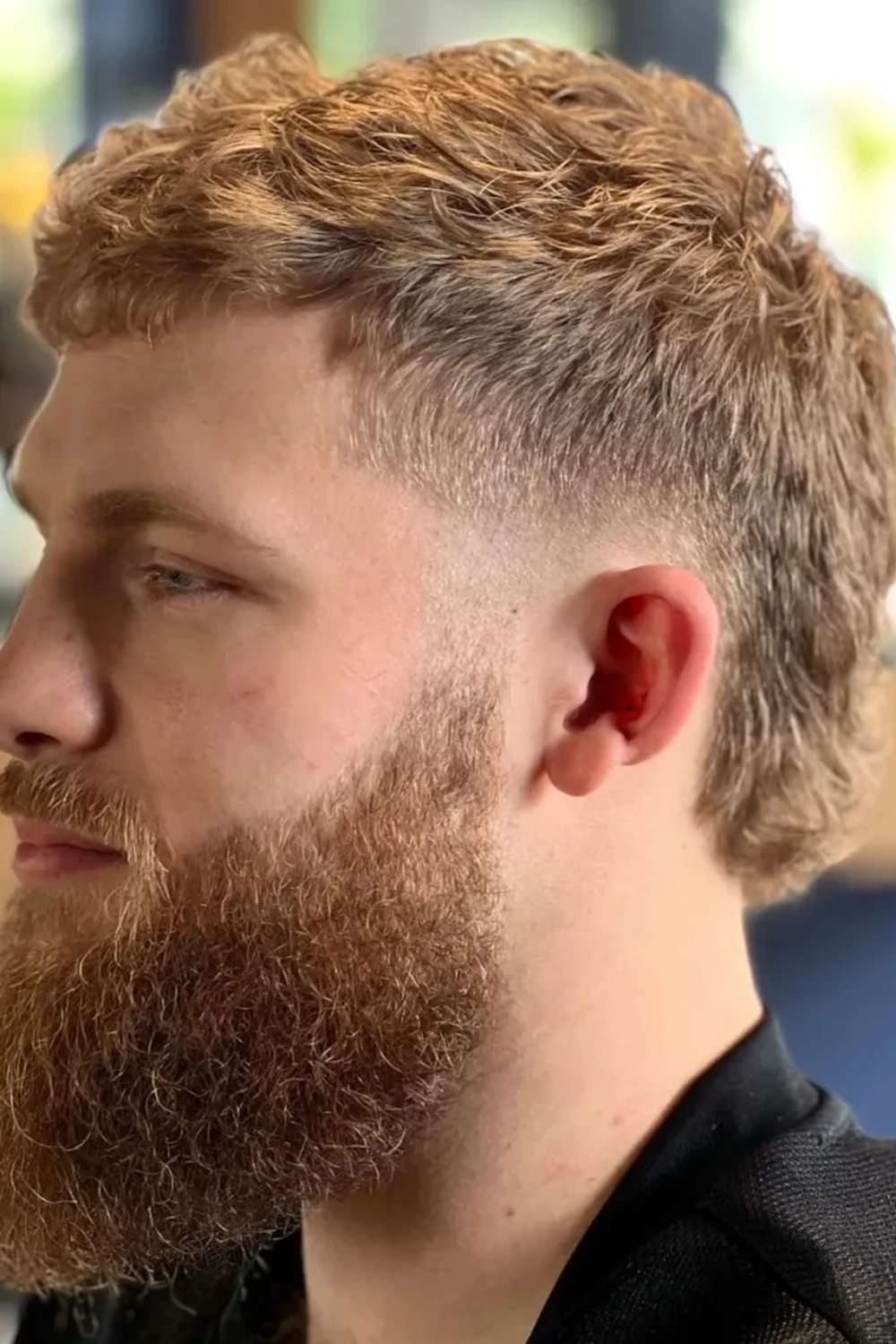
Photo: Pretty Scale — source
The beard does half the work here. In the photo a full ginger beard is the dominant feature, paired with a short textured mullet top and faded sides. The beard frames the face from below while the mullet frames it from above, so the whole head reads as one deliberate shape — and the taper is what connects them, fading the sideburns cleanly into the beard instead of leaving a gap. If you already grow a beard, this is the easiest mullet to add: the top stays short, the back stays short, and the beard carries the style.
Ask for: “Mullet with beard — low taper fading into the beard, short textured top, back left neat, beard shaped to match.” Best for: bearded men, round faces that suit the extra framing. Upkeep: beard oil and a weekly line-up of the beard edges; the taper needs a touch-up every four weeks.
16. Asian Low Taper Mullet
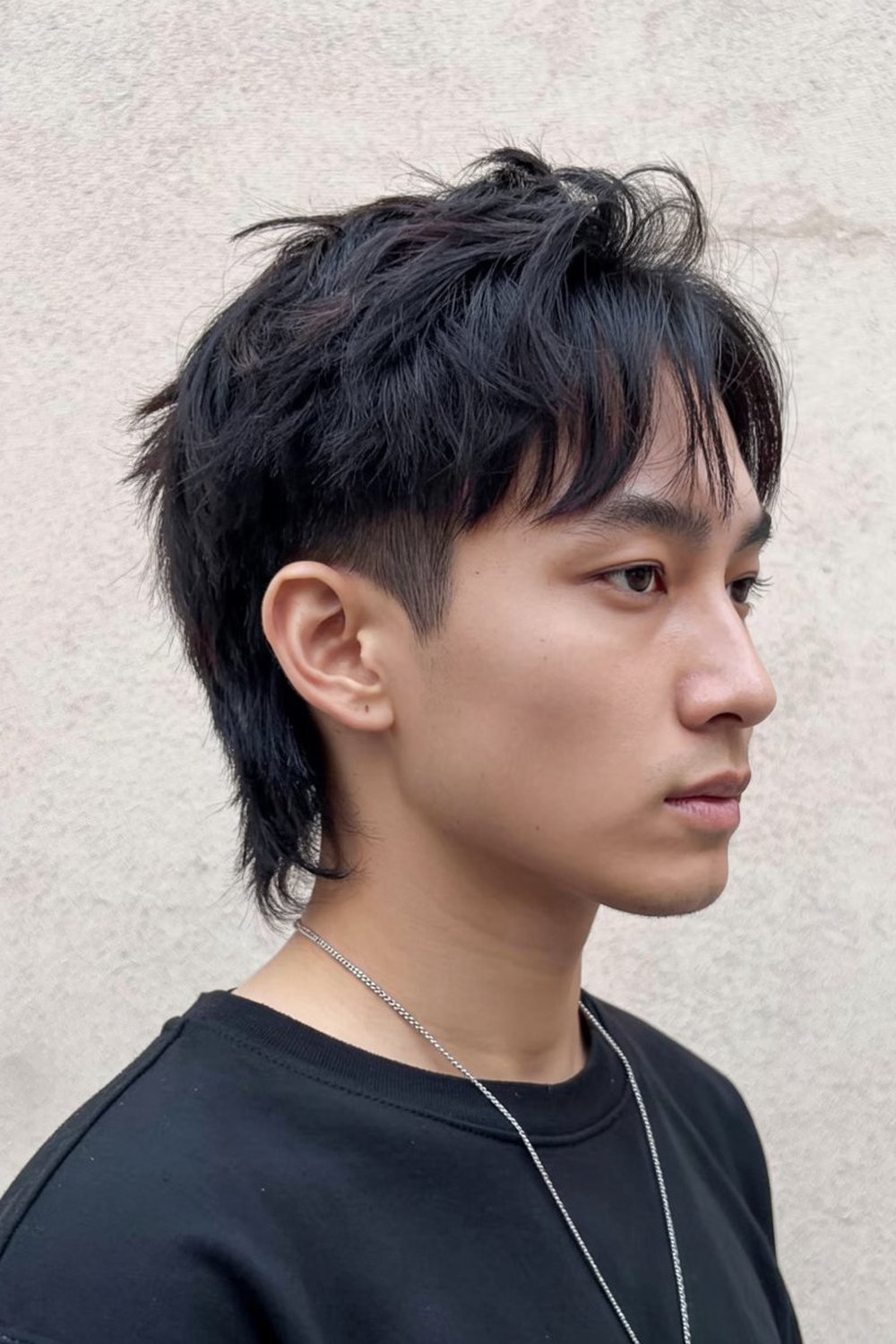
Photo: Gents Osprey — source
Straight, thick Asian hair suits this cut better than almost any other hair type. The photo shows straight black hair with a textured fringe, a clean low taper, and a neat back reaching the collar, finished with a silver chain. Asian hair holds a shape well, so the fringe stays where it is put and the back keeps its line — the barber just needs to texturise the ends so the thick hair does not sit like a helmet. It is also the version most often seen in K-style and two-block looks, which is why it feels current.
Ask for: “Asian mullet — low taper, textured fringe, ends thinned so the thick hair moves, back to the collar.” Best for: straight, thick Asian hair and men who like K-style cuts. Upkeep: light wax on the fringe; the thick hair holds the shape for weeks.
17. Messy Low Taper Mullet
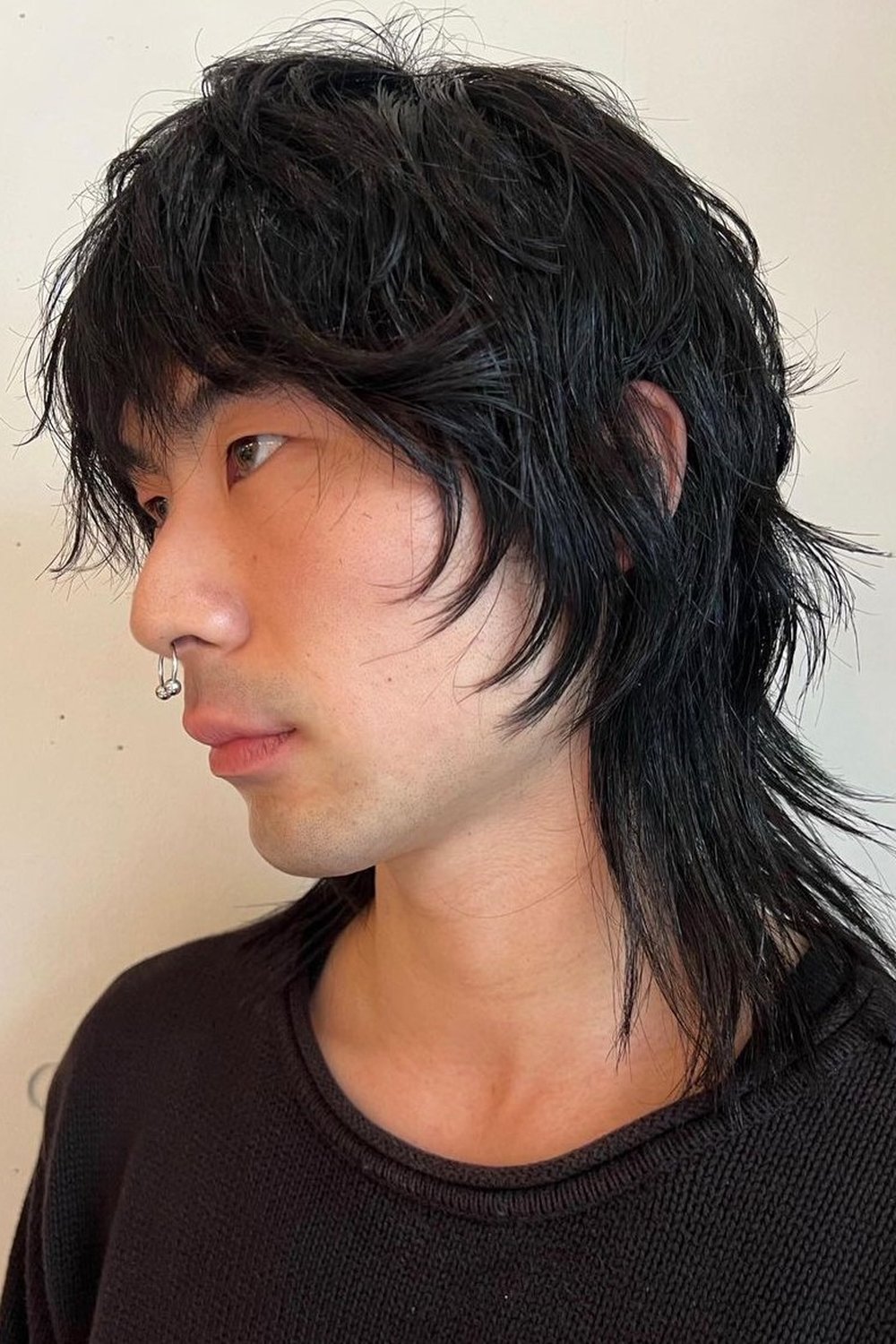
Photo: Braids Connect — source
The deliberately undone version. The photo shows long, tousled shaggy layers, a fringe falling over the face, a nose ring, and a long back — the whole cut looks like it was styled by shaking the head, and that is the idea. Underneath the mess there is a real shape: the layers are cut to fall in pieces, and the low taper keeps the sides from going wild. It is the lowest-effort version in the guide to maintain, and the highest-effort one to cut well — a bad messy mullet just looks uncut, so pick a barber who has done this one before.
Ask for: “Messy mullet — long shaggy layers, fringe over the face, low taper, cut it to fall apart naturally.” Best for: medium to thick hair, younger men, and anyone who hates combing their hair. Upkeep: nothing — a little matte clay if you want, or just leave it.
Sharp details
Five versions where one crisp detail — a part, a line-up, a strip — changes the whole cut.
18. Side-Swept Low Taper Mullet
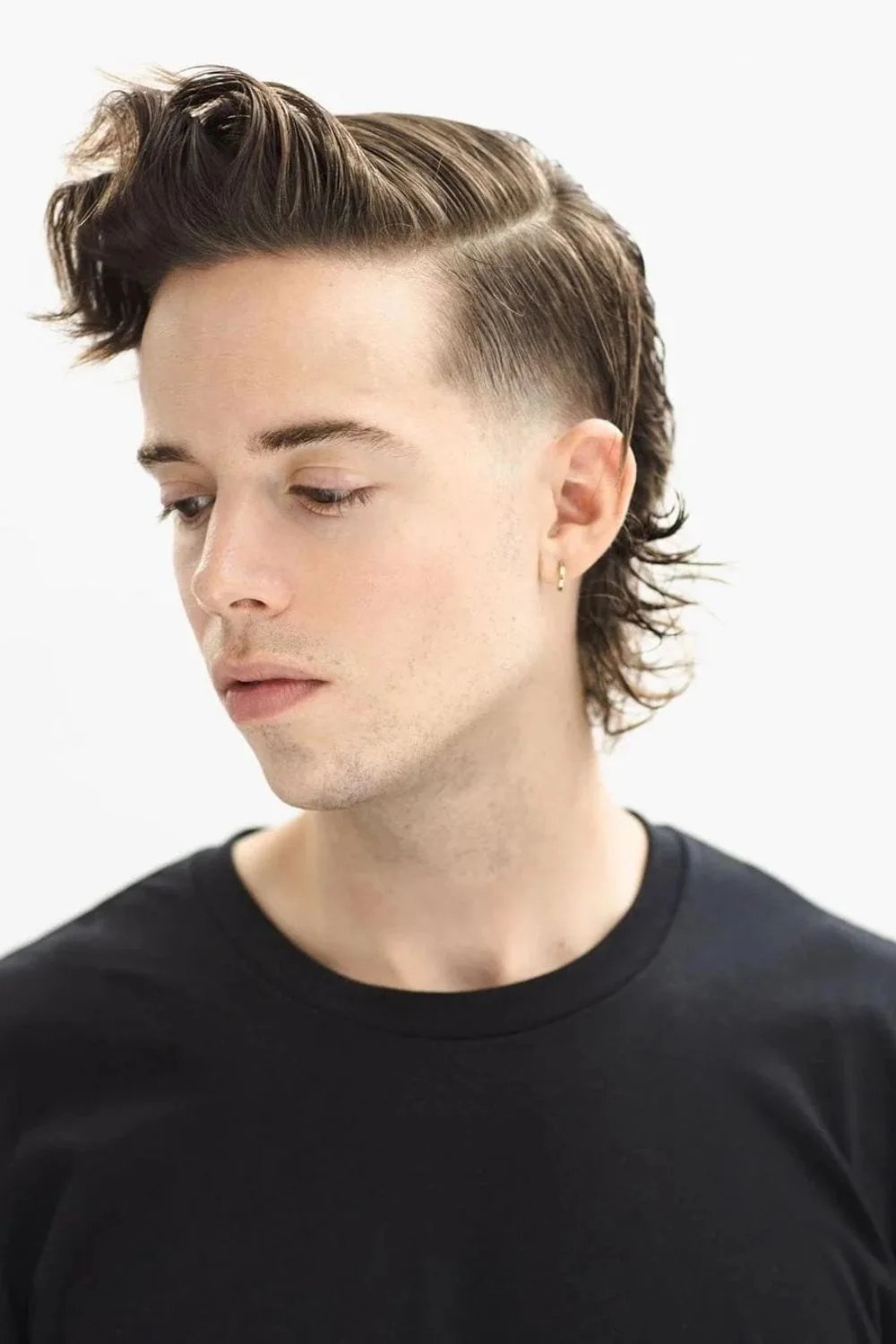
Photo: Lifestyle by PS — source
The grown-up version of the messy mullet. In the photo the top is swept to one side with a soft side part and a smooth finish, the taper is clean, and the back runs to the collar. It has the height and sweep of a quiff without the stiffness — the hair is pushed across, not up — so it reads smart from the front and relaxed from the back. It is a good pick for men who like the mullet shape but want to look polished at work.
Ask for: “Side-swept mullet — soft side part, top swept to one side, low taper, back to the collar.” Best for: straight to wavy hair, oval and square faces. Upkeep: blow-dry the top to the side with a little cream; it holds all day.
19. Hard Part Low Taper Mullet
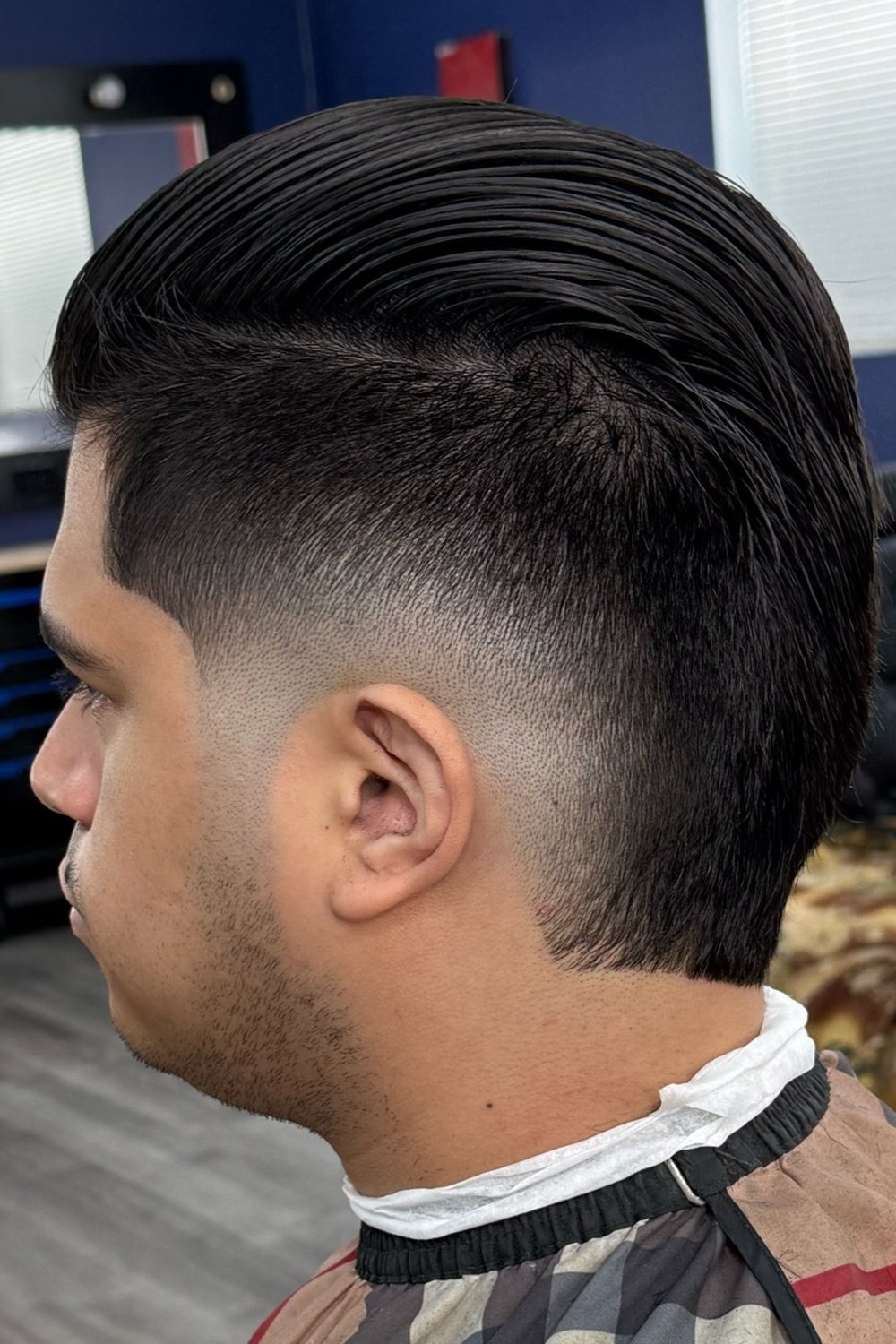
Photo: The Cut — source
A hard part adds a razor line to the mullet — and this photo shows the quieter end of it. The top is slicked to one side, a neat shaved line marks the part at the crown, and the taper is sharp, while the back is kept shorter and tidier than the classic mullet versions. The line is visible but subtle rather than a deep razor trench, which keeps the cut wearable: you get the crisp, barbershop detail without the look shouting. Note that some schools and workplaces ban razor-cut parts, so check the rules before you ask for one.
Ask for: “Hard part mullet — slicked top, shaved part line at the crown, sharp low taper, back kept short and neat.” Best for: straight hair, men who like crisp barber details. Upkeep: the part line grows out in one to two weeks, so book touch-ups every three weeks if you want the line to stay sharp.
20. Layered Low Taper Mullet
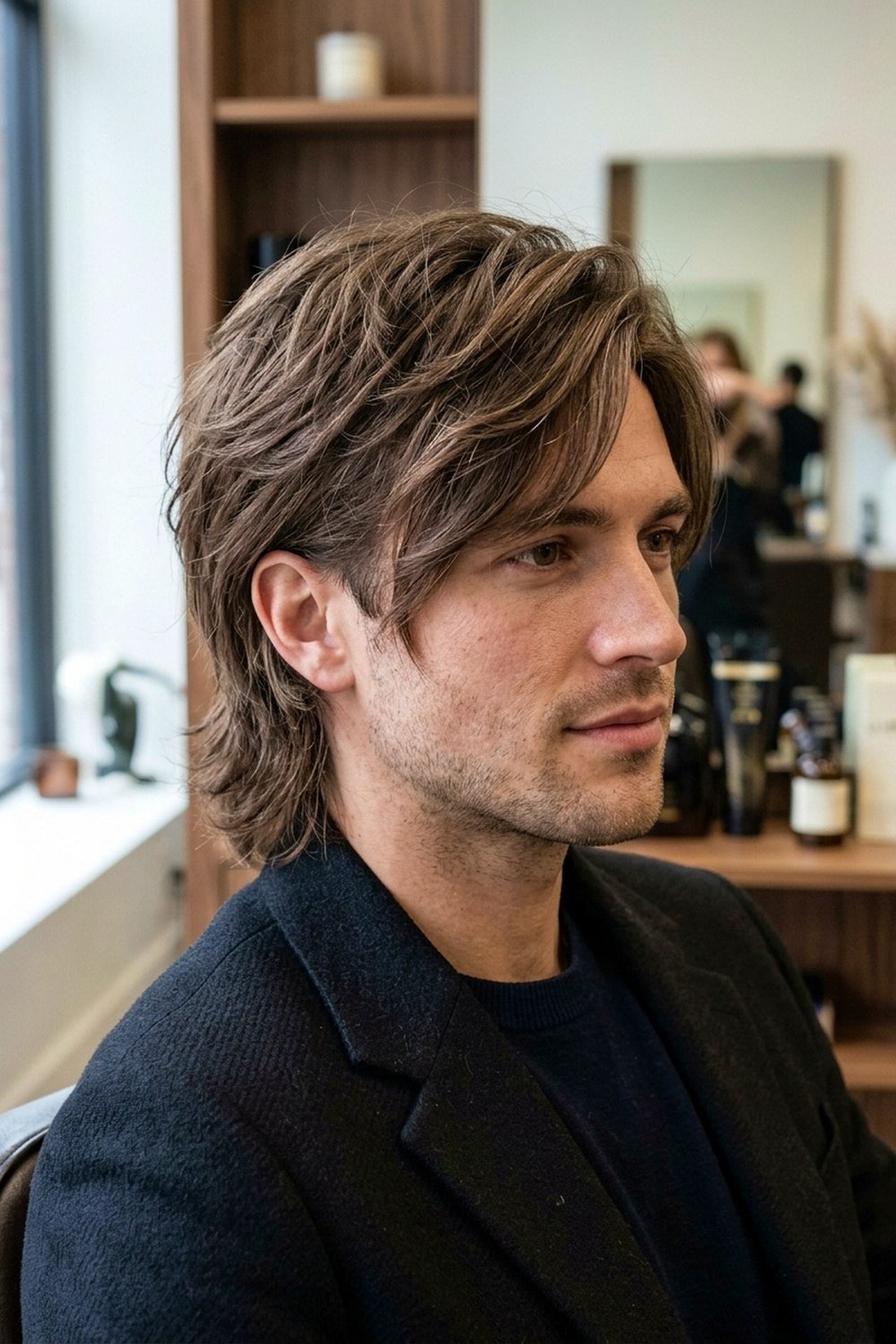
Photo: Wo Styles — source
Layering is what stops a mullet from looking like a single heavy block. The photo shows a mid-length cut with feathered layers through the top and back, a soft taper, and a barbershop background. The layers give the hair movement in every direction — the top lifts, the back falls in pieces — and they make the cut look good from any angle, not just the side profile. It is the best version for men growing the mullet out, because the layers keep the shape tidy at every length.
Ask for: “Layered mullet — feathered layers through the top and back, low taper, keep the movement.” Best for: medium-length hair, men growing a mullet out. Upkeep: light cream to define the layers; a reshape every six weeks.
21. Low Taper Mullet with Line-Up
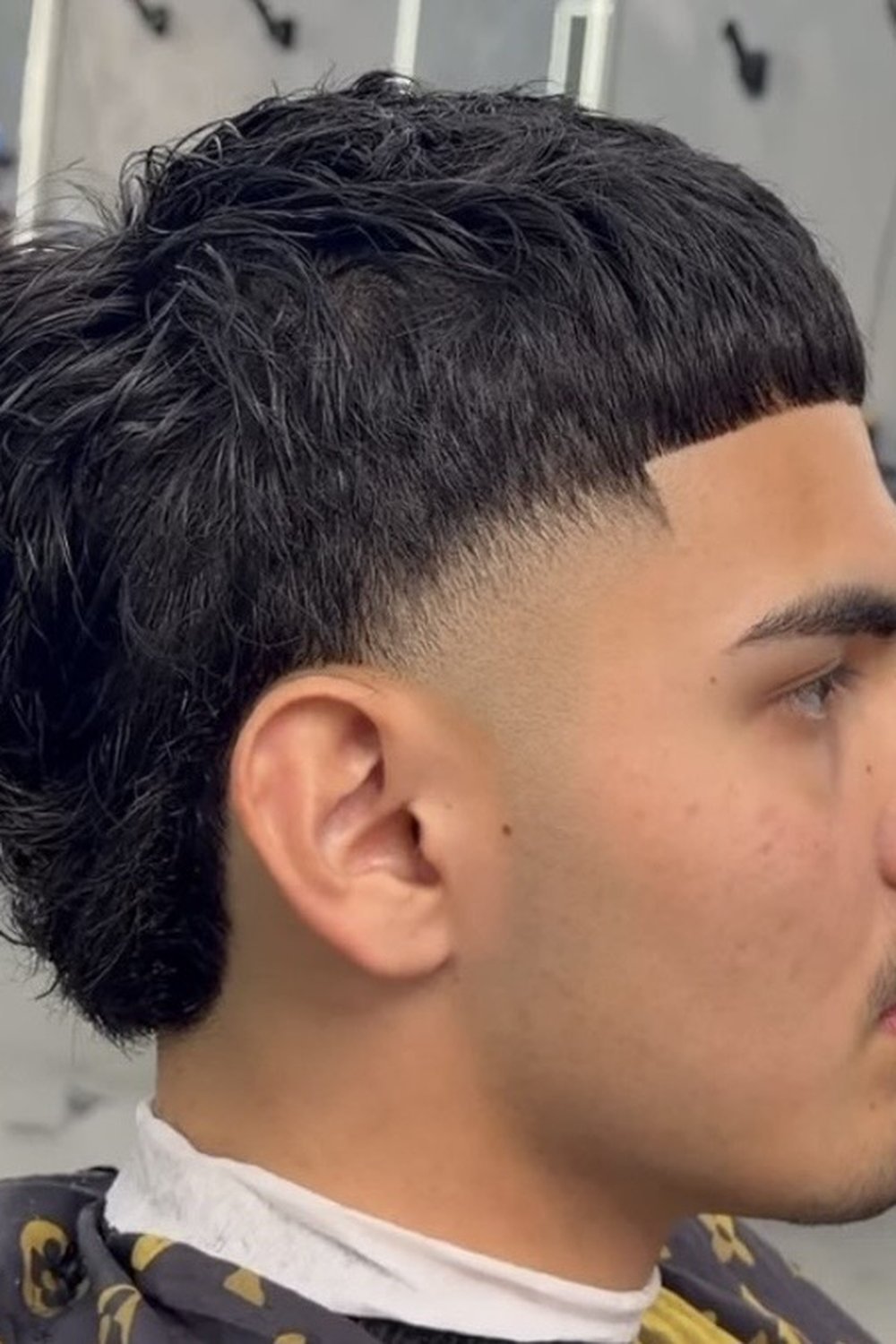
Photo: Jorge Cutz — source
The line-up is the detail that makes this one look freshly cut even a week later. In the photo the hairline across the forehead is razor-straight, the taper is crisp, and the mullet back is kept short. The sharp front edge contrasts with the longer back, so the cut looks deliberate from every angle — neat at the front, relaxed at the back. It suits men with a strong hairline best; if your hairline is receding, a softer edge will flatter you more than a hard line.
Ask for: “Mullet with a line-up — razor-sharp hairline across the forehead, crisp low taper, short mullet back.” Best for: straight hair, strong hairlines, and men who like a fresh-cut look. Upkeep: the line-up blurs in about a week, so book a quick edge-up between full cuts.
22. Mohawk Low Taper Mullet
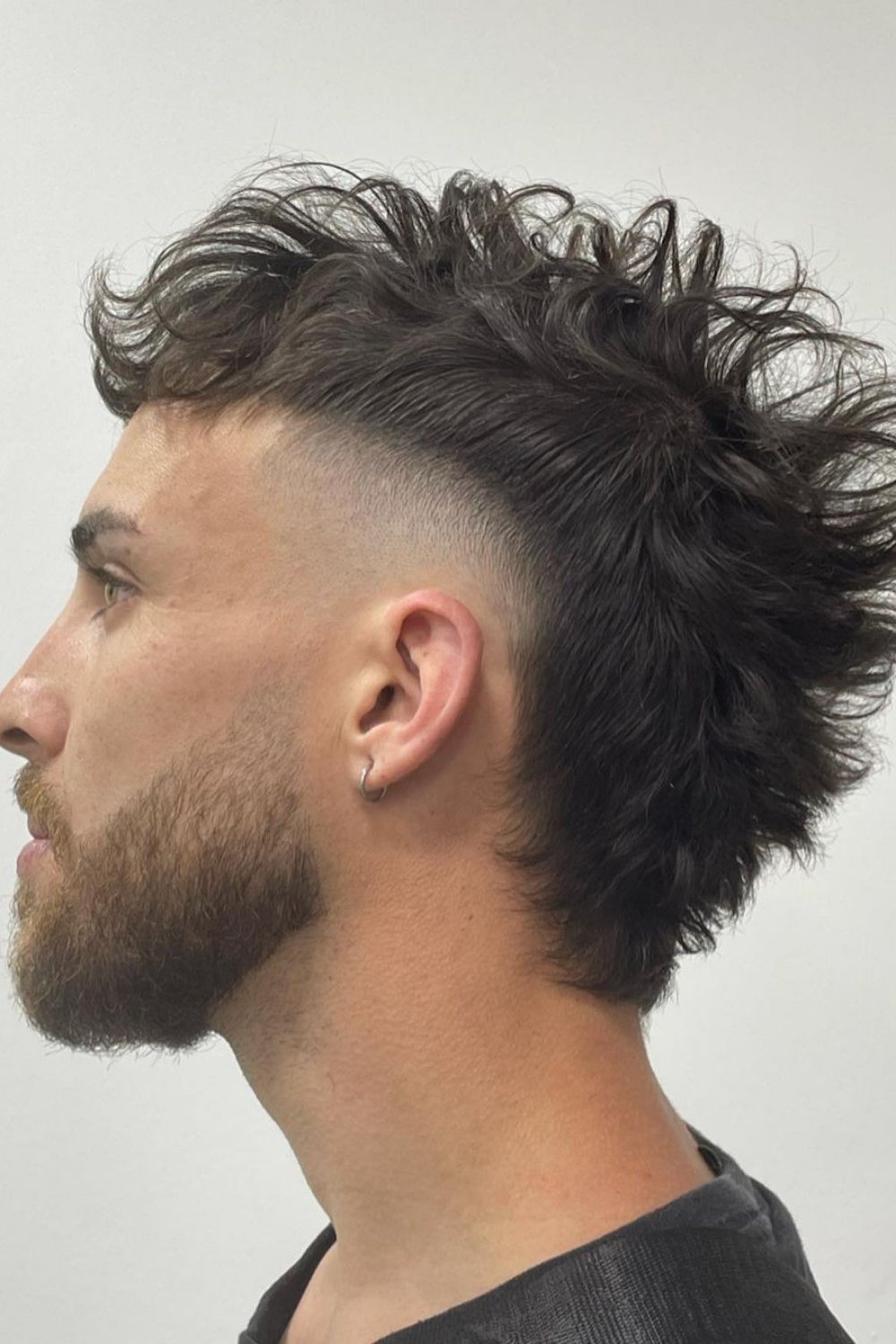
Photo: Elabftw — source
The boldest version in this guide. The photo shows a spiky mohawk strip running front to back, tapered sides, a short mullet tail at the nape, and a beard finishing the look. It takes the mullet’s length and the mohawk’s height and puts them together, so the cut has two statements instead of one — which is exactly why it is not for everyone. Wear it if you want to be noticed; pick the classic if you do not. The taper is what keeps it from looking like a costume — the sides are blended, not shaved bare.
Ask for: “Mohawk mullet — spiky strip front to back, low taper on the sides, short mullet tail at the nape.” Best for: thick hair that holds a spike, confident wearers, nights out. Upkeep: strong-hold product to keep the strip up; it needs restyling every morning.
Statement finishes
Five ways to finish the mullet — colour, a curtain fringe, a disconnect, height, or the school-safe version.
23. Low Taper Mullet with Highlights
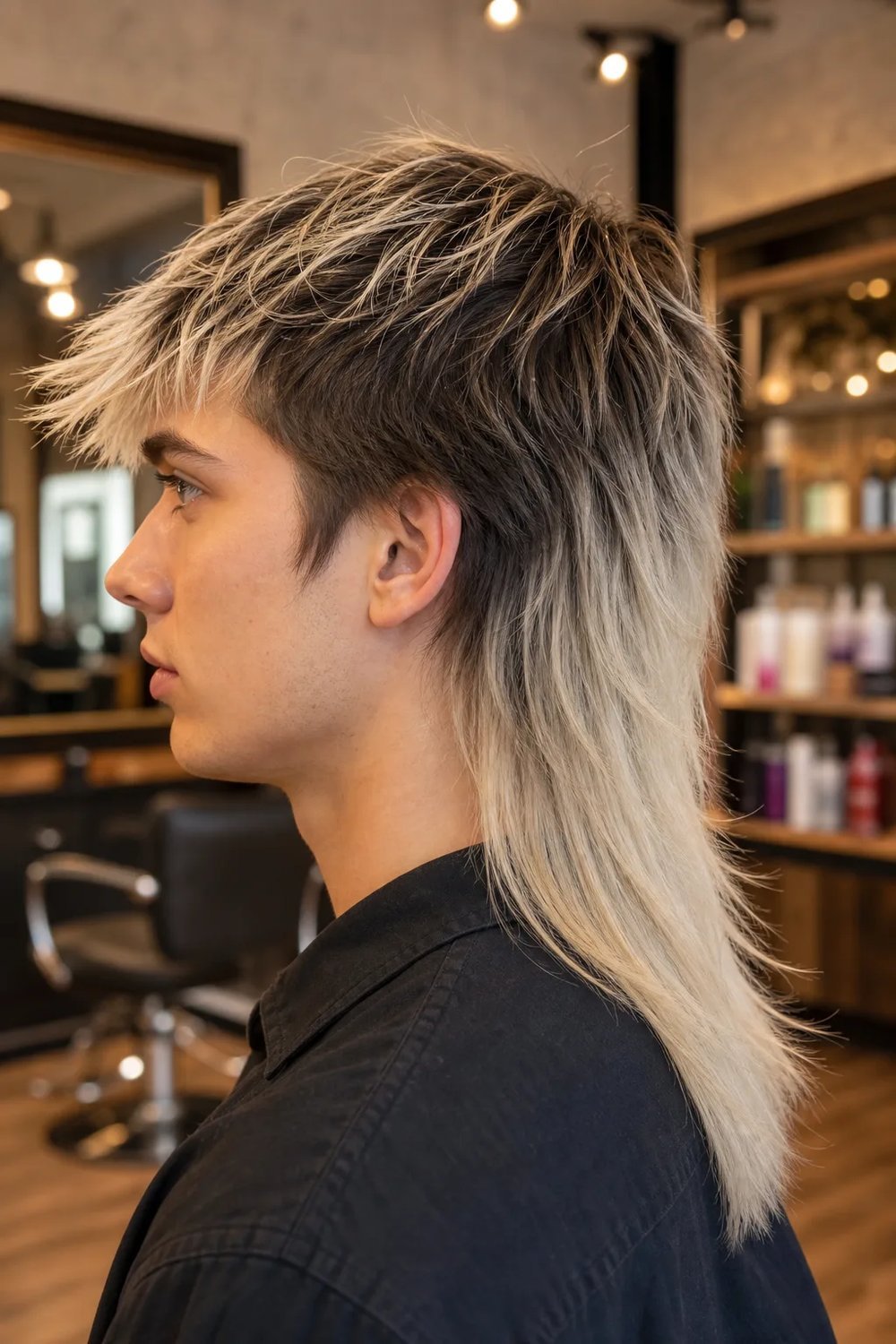
Photo: Hairstyle Atlas — source
Colour changes the mullet more than any cut detail. The photo shows blonde highlights through the top and a long blonde back, with strong contrast against the dark roots. The light ends make the layers and the length visible in a way dark hair cannot — every piece of the back reads separately — and the dark roots keep it from looking bleached all over. It is the most high-maintenance version in this guide because the colour needs upkeep, but it is also one of the most shared versions on social feeds.
Ask for: “Mullet with highlights — blonde through the top and back, dark roots left natural, low taper.” Best for: men happy to pay for colour, and straight or wavy hair that shows the highlights. Upkeep: purple shampoo to stop the blonde going brassy, and a colour refresh every six to eight weeks.
24. Low Taper Mullet with Curtain Fringe
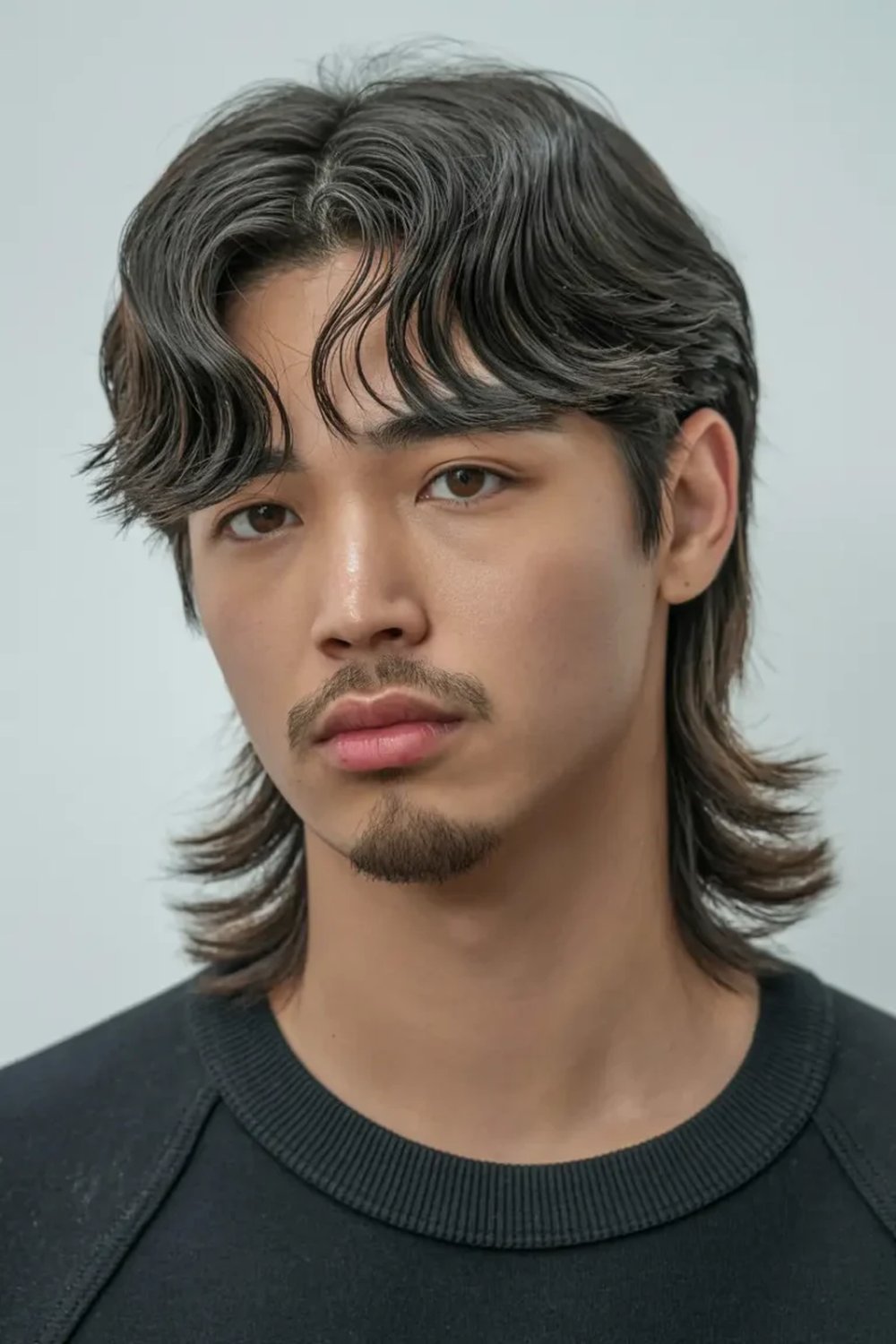
Photo: Daily Hairstyle — source
The curtain fringe is the softest front in this guide. The photo shows a centre-parted fringe framing the face on both sides, tapered sides, and back length to the collar. It borrows the 90s curtain look and pairs it with the mullet’s long back, so the face is framed instead of exposed — it suits men with a wide forehead or a strong jaw, and it is the version that looks most like a hairstyle rather than a statement. It needs the top long enough to fall past the cheekbones, so grow the front out before you ask for it.
Ask for: “Curtain mullet — centre part, fringe framing the face on both sides, low taper, back to the collar.” Best for: straight to wavy hair, wide foreheads, and men who like a softer look. Upkeep: a little cream to keep the curtain pieces in place; trim the fringe every four weeks.
25. Disconnected Low Taper Mullet
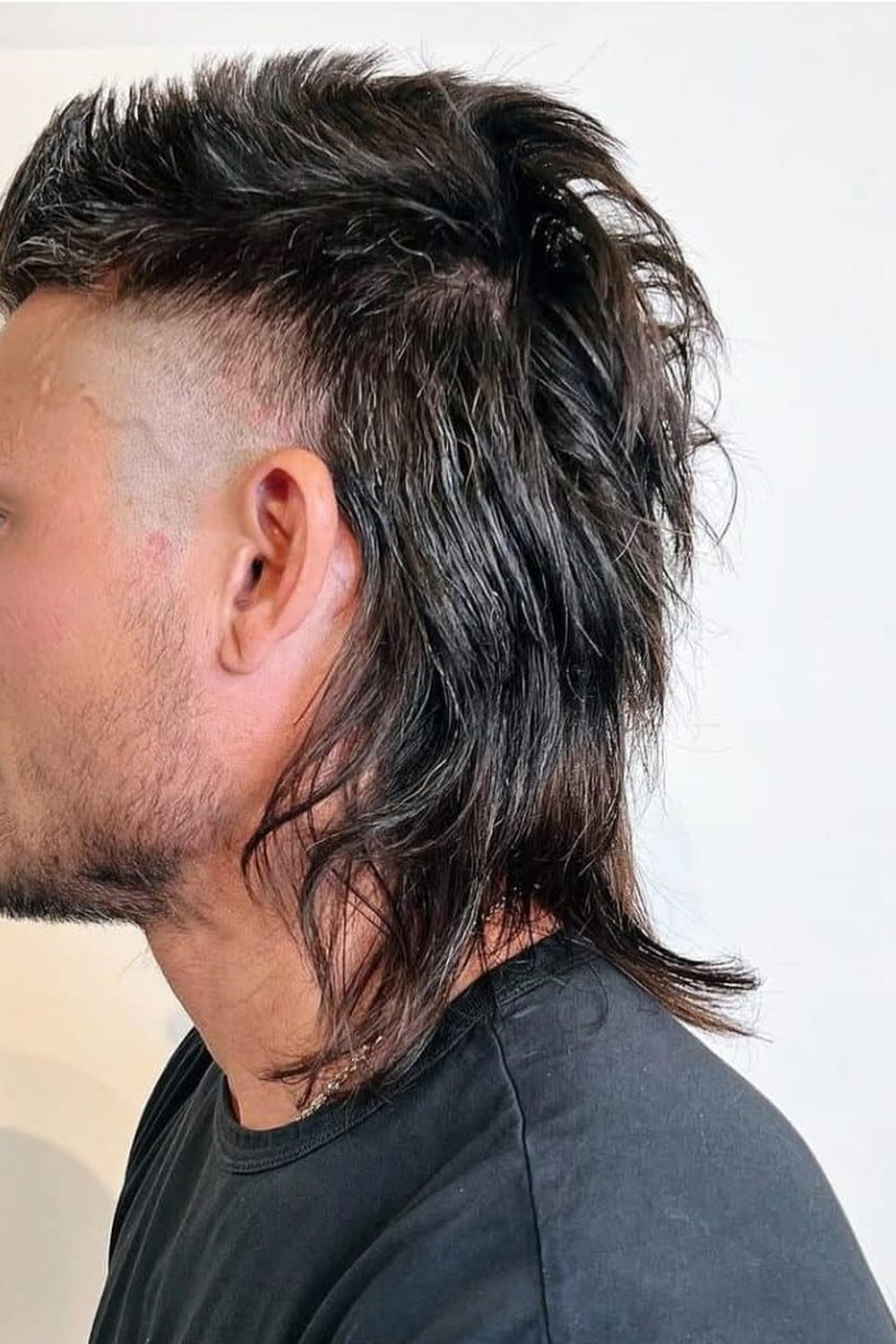
Photo: Hairy Diary — source
The disconnect is the contrast itself. In the photo a long, wavy top sits sharply against short faded sides, and the long wavy back carries the mullet length — the difference between the top and the sides is the whole style, with no gradual blend to soften it. It reads bolder than the classic because the eye jumps straight from short to long, and it works best on hair with enough wave to keep the long top from falling flat over the short sides. It is the version to pick if the classic mullet feels too safe for you.
Ask for: “Disconnected mullet — long top, short faded sides with no blend between them, long wavy back.” Best for: wavy or thick hair, confident wearers. Upkeep: the contrast grows out fast, so the sides need a touch-up every three weeks to keep the disconnect sharp.
26. Low Taper Mullet with Quiff Top

Photo: Lustsnap — source
Height at the front, length at the back — this one has both. The photo shows a tall, swept-up quiff at the front, tapered sides, and mullet length at the back. The quiff gives the cut a polished, almost retro finish from the front, while the back keeps it firmly a mullet. It is the best version for men with a round face, because the height lengthens the face, and for anyone who likes a bit of morning styling — the quiff is the part that needs the work, the mullet is the part that takes care of itself.
Ask for: “Quiff mullet — tall swept-up quiff at the front, low taper on the sides, mullet back.” Best for: straight hair that holds height, round faces. Upkeep: blow-dry the quiff up with a round brush and a strong-hold product each morning.
27. School-Safe Low Taper Mullet
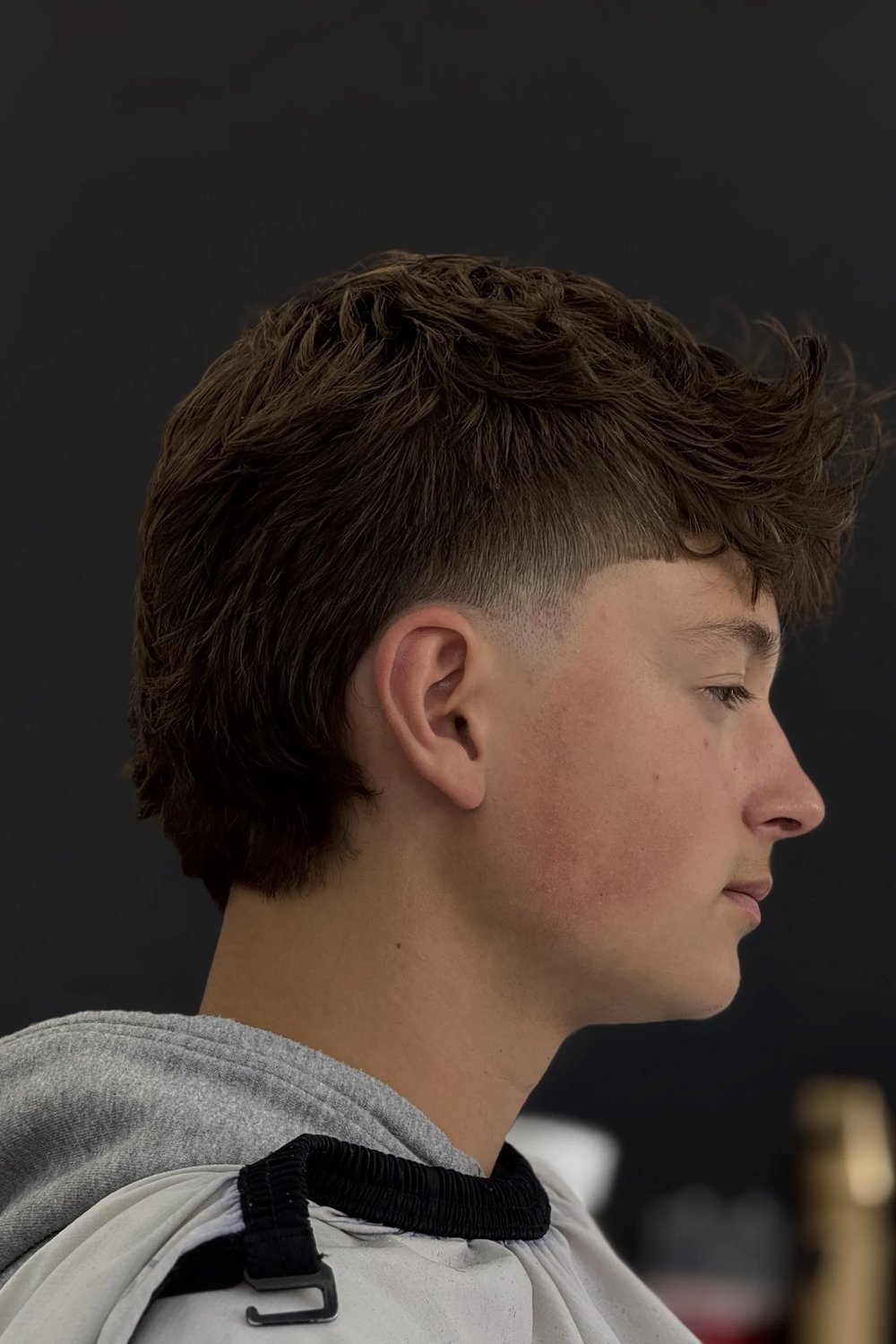
Photo: Fade Artist — source
The mullet a teenager can actually wear to school. The photo shows a young boy with a neat, short textured mullet, a clean low taper and a tidy back — short enough to pass a dress code, long enough at the back to read as a mullet. There are no shaved lines, no hard parts, no extreme length: just a tidy cut with the mullet shape in miniature. It is the version to book if the school bans skin fades, razor parts or long hair, and it grows into the longer versions in this guide as the back gets longer.
Ask for: “School-safe mullet — short textured top, low taper, back just past the collar, no shaved lines.” Best for: teenagers, school dress codes, and first mullets. Upkeep: almost none — a little clay on the top, and a trim every four to five weeks.
How to ask your barber for a low taper fade mullet
Say it in one breath: “Modern mullet, please — low taper on the sides, about three inches textured on top, and leave the back long and blended. No hard step.” Then add the details that matter: how long you want the back (two inches past the collar is a safe first mullet; shoulder length is a commitment), whether you want the neckline tapered or left natural, and whether the top should be textured with thinning shears or kept blunt. Bring the photo from this guide on your phone — barbers cut better from a picture than from a description. If your barber has never cut a mullet, ask for the taper first and the length second; the taper is the part that has to be exact.
One warning: do not ask for a skin fade by accident. A taper gradually shortens the hair without going to the skin; a skin fade takes it down to bare skin and doubles the contrast. If you want the quiet, office-friendly version in this guide, say “low taper”, not “low fade”, and check the blend in the mirror before the barber moves on.
Styling and maintenance
Most versions in this guide take five minutes or less. Towel-dry the hair, work a pea-sized amount of matte clay or texture powder through the top and back, and push the top in the direction you want it — forward for a fringe, back for a slick, loose for a shaggy finish. Sea salt spray on damp hair adds grit and helps wavy and surfer versions hold their shape without looking stiff. Skip heavy gels and shiny pomades unless you are going for the slicked-back business look; shine makes a mullet look greasy fast.
Book a touch-up every four to six weeks to keep the taper crisp — the back can grow for months without a reshape, which is half the appeal. Between visits, trim the neckline yourself only if you are confident with clippers; a crooked neckline ruins the whole shape. Wash two to three times a week, not daily, so the back keeps its natural oils and does not go fluffy, and use a light conditioner on the length only.
Frequently asked questions
Is a low taper fade mullet good for school?
Yes — it is one of the most school-friendly mullets. The low taper keeps the sides neat and the front tidy, and most school dress codes allow low tapers and textured tops. Keep the back at collar length or shorter for strict schools, and skip hard parts cut with a razor or shaved designs if your school bans them. Check your school’s grooming rules before booking.
What is the difference between a low taper fade mullet and a burst fade mullet?
The shape around the ear. A low taper fade blends straight down the sideburns and neckline with a gradual, quiet transition. A burst fade curves around the ear in a rounded arc and creates more contrast. The taper version is subtler and grows out more gracefully; the burst version is bolder. Our burst fade mullet guide shows the burst shape in detail.
Does a low taper fade mullet suit straight hair?
Yes. Straight hair shows the taper line cleanly and suits the classic, slicked-back and textured versions best. Ask for texture cut into the top so straight hair does not sit flat, and use a little matte clay for hold.
How long does the back need to be for a mullet?
The back should be visibly longer than the sides — at minimum about two inches longer than the top, and most versions in this guide run from a two-inch drop to collar length. You can start short and grow the back out between cuts; the low taper keeps it looking intentional while it grows.
How often do I need a trim?
Every four to six weeks for the taper. Because the faded line sits low near the hairline, regrowth barely shows, so this mullet lasts longer between visits than a high fade mullet, which usually needs a touch-up every two to three weeks. The back only needs reshaping when it starts to look heavy.
Can I get a low taper fade mullet with curly hair?
Yes — curly hair is one of the best matches. The curls give the back natural volume and shape. Ask the barber to keep weight in the back, taper only the sides and neckline, and use curl cream instead of clay so the curls stay defined rather than frizzy.
What should I tell my barber if I have never had a mullet before?
Say “modern mullet, low taper on the sides, textured top, back left long and blended” and show a photo. Ask for the shortest back you are comfortable with — around two inches past the collar — so your first mullet is easy to live with. You can always grow it longer next time.
The bottom line
The low taper fade mullet works because it asks for so little and gives back so much: a clean front, a quiet taper, and a back with real personality. Pick the version that matches your hair and your mornings, show your barber the photo, and give the back time to grow — the cut only gets better as the length settles in.